Capítulo 4
The "Sharing" Economy's False Promises
The "sharing economy" has joined the lexicon of innovative waves at the intersection of technology, economy and future. This vast array of companies spans transport (Uber, Lyft), delivery (Postmates, Instacart), day labor (TaskRabbit, Upwork), property sales and rental (Etsy, Airbnb), and more. Despite industry differences, all share one dominant feature: innovative web and app platforms connecting buyers and sellers of goods and services. These "peer-to-peer" transactions bypass traditional businesses, with platform companies charging 10-25% fees for matchmaking services.
Airbnb epitomizes the sharing economy ethos, with CEO Brian Chesky emphasizing "belonging" as its core value: "A house is just a space, but a home is where you belong." This modern business miracle began haphazardly in 2007 when unemployed design graduates Chesky and Joe Gebbia placed air mattresses on their San Francisco apartment floor during a conference housing shortage. In under eight years, Airbnb reached a $25 billion valuation-equal to the century-old Hyatt chain.
However, Airbnb's claims about being primarily a platform for "regular people" sharing their homes have been thoroughly debunked by data from cities worldwide. Studies from Portland, Chicago, San Diego, and 18 major global cities reveal the same pattern: 40-60% of Airbnb's revenue comes from professional operators with multiple listings, not homeowners renting spare rooms. In cities like Rome, Barcelona, and Tokyo, the figure exceeded 60%.
In San Francisco, North Beach resident Theresa Flandrich fights eviction from her rent-controlled apartment of 30 years as her neighborhood is transformed by landlords buying buildings and evicting tenants to convert units into lucrative Airbnb rentals. On her block alone, five buildings have received eviction notices, with telltale lockboxes appearing outside converted Airbnb "hotels." Elderly residents like 80-year-old Diego Deleo, who helped "build this city," face what he calls "a death sentence" as they're forced from homes filled with decades of memories.
Despite knowing these facts from their own data, Airbnb continues pushing its "regular people" narrative while enabling professional landlords who displace tenants and undermine housing markets. The company could easily identify and remove these professional operators but refuses to "kill their golden goose."
Capítulo 5
Uber's Aggressive Disruption and Driver Exploitation
If Airbnb is the "belonging" company of the sharing economy, Uber is its "take-no-prisoners" counterpart. Led by Travis Kalanick, a CEO described as "ego personified" and "an asshole," Uber has grown to operate in 300 cities across 58 countries, with a staggering $51 billion valuation-higher than Facebook at a similar growth stage and nearly matching General Motors.
Unlike traditional taxi companies, Uber owns no vehicles and employs no drivers directly, instead acting as a matchmaker between drivers (classified as contractors) and passengers while taking an increasingly large cut of fares (now 20-25% versus the original 5%). The company claims to thoroughly screen drivers through a "rigorous process" including criminal background checks, charging customers an extra $1 "Safe Rides" fee. However, district attorneys in San Francisco and Los Angeles filed a consumer protection lawsuit alleging these claims are misleading, with San Francisco DA George Gascon calling Uber's background checks "completely worthless" due to lack of fingerprinting.
Despite Uber's many outrageous behaviors, its ultimate success hinges on one critical resource: its drivers. Without sufficient drivers, Uber's $51 billion valuation will collapse. Yet Kalanick's interests fundamentally clash with his "driver-partners"-while drivers benefit from limited competition, Uber wants to flood streets with cars to reduce wait times and crush competitors.
This contradiction is already manifesting as drivers complain about oversaturation. Message boards like UberPeople.net feature frustrated drivers waiting hours without getting "pinged" for rides. One posted a photo of idle Uber cars clustered together, lamenting "We're all on top of each other, begging for pennies."
Uber routinely slashes fares while simultaneously increasing its commission from drivers (from an original 5% to 25-28%), telling drivers to simply work harder and complete more rides to maintain income. This "speed-up" approach forces drivers to work longer hours with fewer breaks just to earn the same pay. Many drivers now earn so little they qualify for food stamps, effectively having taxpayers subsidize Uber's business model.
Facing declining pay, broken promises, and disrespectful treatment, Uber and Lyft drivers have begun openly rebelling worldwide. In 2014, protests erupted across major cities: 50 drivers demonstrated in Los Angeles over fare cuts from $2.50 to $1.10 per mile; 200 protested outside Uber's Santa Monica office; and 60 New York City drivers carried signs reading "Uber: the most valuable asset is the drivers."
Capítulo 6
The Digital Labor Auction: Racing to the Bottom
While Upwork and Elance pioneered online job auctions for international freelancers to undercut each other, TaskRabbit brought this model to domestic service work. Launched in 2008 in San Francisco, TaskRabbit connected local freelancers with customers needing specific tasks done-painting, grocery shopping, furniture assembly. Despite marketing itself as "neighbors helping neighbors," TaskRabbit created a race-to-the-bottom bidding system where desperate workers undercut each other, often earning below minimum wage.
TaskRabbit's workers-initially called "rabbits"-were highly educated (70% had bachelor's degrees, 20% master's degrees), but faced exploitation. The company took a 20% cut (sometimes higher) of earnings, while workers complained about job misrepresentations, customer abuse of the rating system, and unpredictable income. As one former rabbit said, "It's basically blind bidding... The job winds up going to the lowest bidder." Another compared it to being "the gum on the bottom of the shoe."
The sharing economy's troubles extended far beyond TaskRabbit, with numerous "Uber for X" startups experiencing similar difficulties. Companies like Cherry (carwashes), Prim (laundry), SnapGoods (gear rental), and Rewinery (wine) went bust entirely. Others like Zaarly and Exec, once darlings of venture capitalists with lofty ambitions about revolutionizing work, underwent dramatic pivots.
These companies failed to recognize that worker quality depends on fair compensation and treatment. The Economist reports 40% of freelancers are paid late, contributing to uncertainty and feeling undervalued. These on-demand companies, trying to minimize costs, struggle with worker management, motivation and retention.
The most sinister aspect is how these platforms chop traditional jobs into discrete tasks, paying workers only for "productive moments" while eliminating paid downtime. Unlike regular jobs where workers are paid for their full time including breaks and meetings, gig workers are valued only for the exact minutes they're completing specific tasks.
This system represents the culmination of an anti-labor backlash dating to post-WWII temp agencies like Manpower and Kelly Girl Services, which portrayed permanent employees as "costly burdens." Platform companies defend themselves by claiming "it's not meant to be a real job, just extra money"-the same rhetoric used in the 1960s to justify unequal pay for women's work. This giant loophole allows businesses to dump W-2 employees and hire 1099 freelancers, cutting labor costs by 30 percent.
Capítulo 7
The Rise of Automation: When Robots Take Your Job
Meet PillPick, a robot pharmacist at the University of California, San Francisco's medical center that works 24/7 filling approximately 10,000 pill prescriptions daily. This towering machine, resembling a giant vending machine rather than a cinematic robot, operates in a secure, sterile room with a labyrinth of conveyor belts, pneumatic pipes, and suction-powered arms that grab medications from hundreds of stock boxes. Human involvement is limited to filling these boxes. The $7 million pharma-bot has made many of UCSF's 100+ pharmacists (earning $111,000 annually) redundant, though they've been temporarily reassigned to other tasks.
Beyond traditional robots, we're witnessing a software-driven revolution of "smart machines" incorporating robotics, automation, faster processing, big data, and artificial intelligence. These technologies are transforming industries like advertising, where "programmatic ads" now target consumers through complex algorithms that process user data and deliver personalized content within 200 milliseconds. Similarly, algorithmic trading has replaced thousands of human stock traders and brokers, executing trades at speeds impossible for humans.
Contrary to assumptions that automation primarily threatens less-educated workers, many professional jobs held by college graduates with advanced degrees are increasingly vulnerable to "robotization." Medical specialists face direct challenges: radiologists in Bangalore can read MRIs for a quarter of U.S. prices, but now smart machines perform these tasks even faster and cheaper. IBM's Watson scours medical literature to suggest diagnoses based on symptoms. As these technologies improve, fewer medical specialists will be needed across multiple disciplines.
Journalism has been infiltrated by algorithms that write news stories with remarkable speed and accuracy. The Los Angeles Times uses "Quakebot" to report earthquakes within minutes of occurrence, along with other automated reporting tools. Automated Insights created nearly 400 sites covering sports, producing 300 million content pieces in 2013 alone. Studies show readers often can't distinguish between human and bot-written articles.
The legal profession faces disruption through e-discovery software that analyzes millions of documents at a fraction of the time and cost of human lawyers. Bill Herr, formerly of a major chemical firm, found that human lawyers reviewing documents had only a 60% accuracy rate-"slightly better than a coin toss"-while computers achieve far greater precision without fatigue. Mike Lynch of Autonomy estimated that e-discovery reduces legal manpower requirements by 99.9%, with one lawyer now doing work that once required 500.
Even the creative arts aren't safe from algorithmic invasion. Dr. David Cope from UC Santa Cruz has built algorithms composing classical music that so convincingly mimics Bach, Mozart and Beethoven that audiences and critics can't distinguish the difference. Music labels now use Music X-Ray's algorithms to assess potential hit songs, while movie studios employ Epagogix to evaluate screenplays and predict box office performance.
Capítulo 8
The Economic Singularity: When Consumer Demand Collapses
Modern capitalism depends on a virtuous feedback loop where good jobs and high wages redistribute purchasing power from businesses to workers-as-consumers, driving continuous growth. The micro-gigs of the new economy are reversing this dynamic, returning millions to pre-New Deal conditions. As workers become part-time, underemployed or laid off, they consume less, forcing businesses to cut more workers' hours-a downward spiral that threatens economic growth.
This dangerous cycle could lead to an "Economic Singularity"-a tipping point where the economy implodes from severe imbalance between overproduction and reduced consumer demand, as wealth concentrates among elites. When workers are replaced by automation or reduced to 1099 status, aggregate consumer demand falls dangerously. As Larry Summers warns, without government intervention, inequality will result in "insufficient aggregate demand."
The trajectory toward Economic Singularity is already visible: the top 5 percent of households now account for 30 percent of consumer spending, up from 23 percent in 1992. During the Great Recession, corporate profits climbed 25-30 percent while wages fell to their lowest share of national income since World War II. A two-tiered economy has emerged with wealthy households thriving while middle and lower-income Americans struggle, creating economic polarization across all consumer sectors.
The conditions making a society vulnerable to Economic Singularity mirror what economists Daron Acemoglu and James Robinson call "extractive economies" in their book "Why Nations Fail." After 15 years of historical research, they concluded that nations prosper when they develop inclusive economic and political institutions that provide incentives for innovation and investment with a level playing field. In contrast, extractive institutions are designed by elites to siphon resources from the rest of society, discouraging innovation and equal opportunity.
For years, economists have promoted education and training as key to reducing inequality. However, many experts doubt education alone will provide middle-class access as it once did. Martin Ford believes that past solutions to technological disruption won't work because robotized and AI-dominated companies will eliminate jobs regardless of worker education levels. Even Google's Eric Schmidt admits STEM education will have limited impact, suggesting government safety nets for displaced workers.
Capítulo 9
A New Social Contract for the New Economy
Lawrence Summers introduced a crucial concept for addressing the challenges of today's economy: the "portability" of the social contract. Unlike other nations, the U.S. uniquely provides economic security through employer-employee relationships, leaving workers vulnerable as these traditional relationships unravel. With workers increasingly having multiple employers-sometimes several in a single day-and businesses incentivized to use independent contractors to avoid safety net costs, we need a new approach that doesn't depend on any single employer.
The solution is straightforward: when businesses hire 1099 workers, they should pay a few dollars per hour into Individual Security Accounts (ISAs) for each worker's safety net. This elegantly sidesteps the employee/contractor classification debate by making all employers contribute to workers' security regardless of classification. For workers with multiple employers, each would contribute based on hours worked or percentage of wages. These accounts would fund Social Security, Medicare, unemployment insurance, workers' compensation, health insurance, and paid time off.
The cost is surprisingly modest-only $2.91 per hour for service workers or $5.37 for office workers to provide comprehensive benefits. A minimum safety net of legally required benefits (Social Security, Medicare, unemployment, workers' comp) would cost less than $2 per hour. These costs could decrease further through economies of scale and competitive "central administrator companies" offering different safety-net packages.
This approach creates universal legal parity between all worker classifications, reducing employers' incentives to misclassify workers while maintaining hiring flexibility. Despite business objections about costs, this system would level the playing field domestically while matching practices already common among international competitors.
Hill also proposes "Social Security Plus," which would double benefits by removing the payroll cap that currently exempts income above $118,500. This regressive structure means millionaires pay less than 1% of income while average workers pay 6.2%. Eliminating this cap would create a more equitable system and help fund expanded benefits. Private pensions could become unnecessary, and the $130 billion annual tax subsidy for them could be redirected to Social Security Plus.
Capítulo 10
Reclaiming Our Economic Future
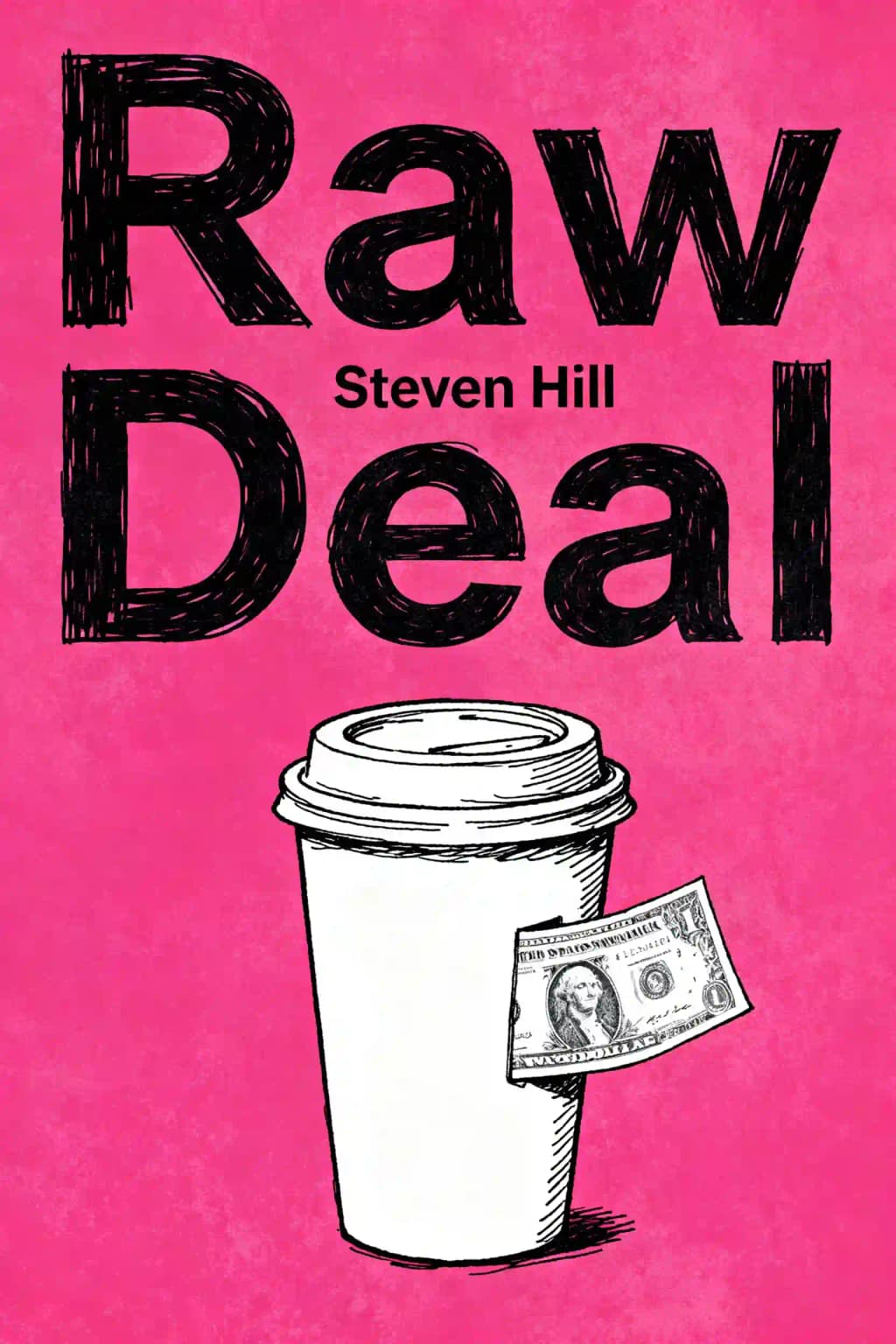
Hill proposes bundling all his reforms into the "Maria Fernandes Matters Act," honoring the Dunkin' Donuts worker who died at 32 while sleeping in her car between shifts at her three part-time jobs. Her tragic death symbolizes the precarious existence facing too many Americans, with 47% unable to cover an unexpected $400 expense and over 30% foregoing medical care due to cost constraints.
Hill challenges the deterministic narrative promoted by new economy evangelists who claim technological disruption is inevitable and immutable. He argues these changes aren't natural but "path dependent"-the result of specific laws and regulations that have defined relationships between business, workers, and society. America has a long history of shaping the economy through government policy, from Jefferson and Hamilton to Lincoln's infrastructure initiatives and the Roosevelts' battles against corporate monopolies.
Beyond establishing Individual Security Accounts, we must prepare for potential technological unemployment by implementing several key strategies. Job sharing allows employees to reduce their hours by 5-10% so others can be hired. In Germany, this strategy kept millions employed during the 2008 crash. While 28 U.S. states permit job sharing, it remains underutilized compared to Europe.
America also lags far behind countries like Germany, Switzerland, Austria and Denmark in vocational training and apprenticeships. In Germany, 65-70% of teenagers enter "dual track" apprenticeship programs combining on-the-job training with classroom time, with companies paying for this education. The U.S. has only 375,000 apprentices, mostly older males in construction trades, with inconsistent standards nationwide.
With wages and productivity growth increasingly diverging, most business profits now go to shareholders and CEOs rather than workers. Hill suggests companies like Uber could implement profit sharing through employee stock-ownership plans (ESOPs) or profit-and-gain sharing programs that distribute company earnings without granting ownership.
In our job-constrained era, decisions about technology deployment, layoffs, and job sharing should include worker input. Germany and Sweden implemented codetermination, allowing workers to elect up to half of corporate board representatives. They also established workplace "works councils" providing employee input at the job-site level. These practices foster information sharing and consensus building between management and workers.
The challenge of automation isn't technological but political. What constitutes true economic efficiency? The New Deal's genius was creating a virtuous circle where workers kept a sizable portion of productivity gains, becoming middle-class consumers who purchased the goods they produced. But today's economy-"automated, robotized, freelanced, Uber-ed, contracted, shared, '1099-ed'"-threatens this balance. The robots aren't the problem; humans and their values are. We're "sleepwalking into a tragedy" as algorithms slowly encircle us.