Capítulo 4
Curiouser and Curiouser: Problem-Posing Education
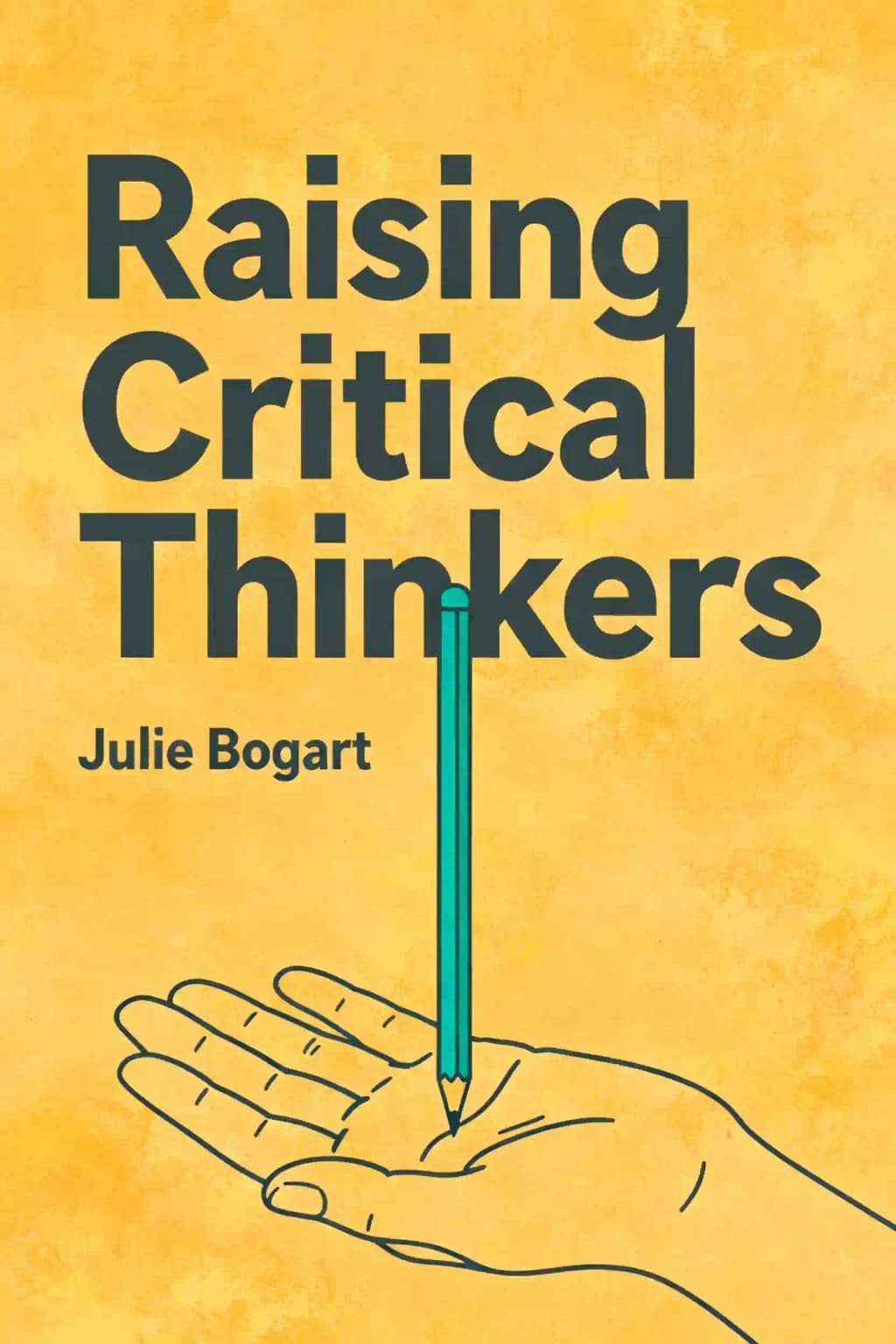
Bogart laments how traditional education extinguishes children's natural curiosity, transforming them from inquisitive learners into either compliant test-takers or labeled "poor students." By age sixteen, they've become opinionated know-it-alls with rigid answers. She argues this isn't merely developmental but results from an educational system that systematically replaces wonder with answer-giving. Traditional education prioritizes mastery of methods and correct answers over nurturing persistent curiosity. Asking questions-"the deconstructing, provocative, and curiouser and curiouser kind"-is key to vibrant education, leading to breakthrough insights and happiness.
Bogart critiques what Paulo Freire calls the "banking concept" of education, where all-knowing teachers make deposits of information into students' supposedly empty minds. Students are then evaluated based on their ability to regurgitate this information through tests and presentations, rather than on their own meaning-making. This approach assumes there's correct information to be mastered, treating reality as "motionless, static, compartmentalized, and predictable." Bogart reminds us that children come to class already filled with experiences and beliefs that guide how they engage with material.
As an alternative, Bogart advocates for Paulo Freire's "problem-posing" approach, where children become trusted partners in solving meaningful problems alongside adults. She explains that teachers should take students "on the adventure of critical thinking" in a collaborative environment. Critical thinking flourishes when teachers ask good questions and provide challenging problems in emotionally supportive settings.
Bogart introduces the concept of an "itch to fit" in learning, based on George Loewenstein's "gap theory of curiosity." Our curiosity follows an inverted U-shaped curve-we're most curious when we know a little about a subject but not too much. This knowledge gap creates what Loewenstein calls "a mental itch," driving us to seek new knowledge to scratch it. When the right piece of knowledge finally "snaps into place" (like finding the perfect LEGO piece), the itch is scratched and learning happens in a timely, relevant way that addresses the moment's question.
Capítulo 5
Silent Films: The Hidden Curriculum of Perception
Bogart explores how our mental "silent films"-unconscious impressions that control our reactions-form the hidden curriculum influencing how children understand everything from politics to history to daily interactions. She argues that critical thinking requires expanding our field of vision, noticing emotional reactivity, and questioning our deeply held judgments. Through carefully designed activities where readers imagine walking on various trails and in city alleys under different conditions (daylight versus night, alone versus accompanied, familiar versus unfamiliar locations), she demonstrates how our bodies physically react to scenes created purely in our imagination. These visceral reactions-increased heart rate, muscle tension, sweating-reveal our true beliefs and biases, whether built from verifiable facts or unconscious assumptions passed down through family, media, and culture.
Bogart introduces "keen observation" as the foundational practice of paying careful attention to perceptions while consciously reserving judgment. She traces how children develop from basic sensory experiences (identifying bright, loud, soft, rough, smooth) to increasingly complex personal interpretations as they age and gain experience. These interpretations become heavily influenced by personal experience and emotional associations-a fragrant perfume might trigger comfort or threat depending on associated memories, while a crowded street might evoke excitement or anxiety based on past experiences. Bogart presents the N2I2 framework (Notice, Name, Identify, Interpret) as the essential foundation for critical thinking, emphasizing that careful observation combined with awareness of personal experience inevitably leads to interpretation. She provides extensive examples of this framework in action, from analyzing artwork to examining social interactions to understanding media messages.
For teenagers, Bogart shifts from concrete objects to more abstract and complex topics, focusing on the mental images that unconsciously influence interpretation and judgment. Teens select contemporary social issues (like college athlete compensation, social media influence, photo editing ethics, immigration policies, or climate change) and methodically explore the silent films playing in their minds about these topics. Through structured guided questions, they describe in detail the people they imagine (their appearance, clothing, living situations, emotions, motivations), settings (urban/rural, wealthy/poor), weather conditions, and visual representations that automatically come to mind. This comprehensive exercise helps teens recognize how their unconscious mental images-often formed through media exposure, family attitudes, and limited personal experience-profoundly shape their opinions on complex social and political issues. Bogart provides specific examples of how students' perspectives shift when they become aware of these underlying mental constructs and begin to question their origins and validity.
The section concludes with practical strategies for expanding one's mental library of images through direct experience, intentional exposure to diverse perspectives, and regular practice in conscious observation. Bogart emphasizes that understanding our "silent films" is crucial for developing genuine critical thinking skills and making more informed judgments about both personal and societal issues.
Capítulo 6
Caring to Think Well: The Heart of Critical Thinking
Toni Morrison's clarifying question "What can I do where I am?" exemplifies how education enables meaningful contribution. Morrison used her position as an editor to solicit biographies of civil rights activists, advancing social change through her unique talents. This question transforms education from mere accumulation to purposeful action-using one's knowledge and position to better humanity. Learning isn't primarily for amassing wealth or power but for gaining wisdom to improve life for all people.
Games provide ideal conditions for developing critical thinking because children voluntarily engage with them and are motivated to overcome their challenges. As Bernard Suits defines it, "Playing a game is the voluntary attempt to overcome unnecessary obstacles." Games foster flexibility of mind, persistence, questioning, accuracy, innovation, and precision-all in a pleasurable, low-threat environment that creates what researchers call a "relaxed alert state."
Today's information landscape requires children to make rapid judgments about facts, opinions, ethics, and research validity. They must navigate a world filled with both wonderful resources and deceptive content-from propaganda and biased statistics to conspiracy theories and exploitation. Young people need to develop skills to evaluate social media platforms and other information sources, often making these assessments in seconds.
To evaluate statistics, Joel Best explains two requirements: understanding how data is measured and knowing its benchmarks (fundamental measures in a field). Without these, we're susceptible to misinformation. Teaching children to ask "How's the data measured?" and "What are its benchmarks?" helps them spot exaggerated claims or outright lies.
Critical thinkers must vet their sources before accepting or sharing information. Stanford researchers recommend "reading laterally" to evaluate website reliability-instead of being drawn into a single page, gather information about the writer or organization first by opening multiple browser windows. Fact-checkers use a practice called "taking bearings," similar to how hikers orient themselves in unfamiliar terrain.
Capítulo 7
Identity: The Force to Reckon With
Identity forms the foundation of how we perceive and interact with the world. Our backgrounds, experiences, and communities create "invisible, silent films" that play in our minds when we encounter new information, unconsciously shaping our responses to fit what we expect or want to be true. These mental films act as powerful filters, influencing everything from our initial reactions to complex decision-making processes, often without our conscious awareness.
We learn "at the knee"-absorbing outlooks, trust patterns, and worldviews from our families and communities through both explicit teaching and implicit modeling. As sociologist Pierre Bourdieu explains through the concept of "habitus," we internalize unwritten rules that structure our "common sense" without explicit instruction. Children imitate parents' political views, religious beliefs, and social attitudes; adults emulate those they admire professionally and personally; and cultural beliefs get passed down through generations via stories, traditions, and daily practices. This process is so natural and ingrained that we often mistake our learned perspectives for universal truths.
Bogart identifies four key influences that shape worldviews, which she categorizes as "lenses" through which we view the world:
• As an individual (from personal perspective): Including our unique experiences, traumas, successes, and personal history
• In a community (shaped by collective values): Encompassing cultural norms, social expectations, shared beliefs, and group identities
And "filters" that adjust these lenses:
• Via perception (how our body, emotions, and mind make meaning): Including physical sensations, emotional responses, and cognitive processing
• Using reason (how communities interpret facts into logical narratives): Through shared frameworks of understanding, cultural logic systems, and collective meaning-making
Understanding worldviews is crucial for raising critical thinkers because a child's worldview profoundly influences how and what they learn. Parents and educators bring their own belief structures to teaching, making complete objectivity impossible-even lesson content selection reflects bias. For example, a teacher's choice of historical events to emphasize, literary works to study, or scientific theories to explore all carry implicit messages about what knowledge is valuable.
Drawing on Dr. Gholdy Muhammad's work, Bogart presents three key features of identity essential to critical thinking: "who we are, who others say we are (both positive and negative), and whom we desire to be." These aspects interact dynamically, creating complex self-perceptions that influence learning and development. Identity becomes even more complex for those experiencing discrimination, who must navigate multiple portraits of themselves from both inside and outside their communities. They often develop what W.E.B. Du Bois called "double consciousness," seeing themselves through both their own eyes and society's potentially biased lens. Critical thinking requires representation-seeing oneself reflected in learning materials, role models, and educational contexts-to develop a strong sense of self and the confidence to engage with diverse perspectives.
Capítulo 8
Read, Experience, Encounter: A Real Education
Bogart uses bears as a metaphor for different levels of learning. She describes how her children first encountered bears through books-two-dimensional, safe, often anthropomorphized characters like the Berenstain Bears or Paddington. Their understanding deepened at the zoo, where real bears with their size, smell, and sounds created "a new appreciation for the scary scale and majesty of the bear."
The most profound understanding, however, comes from her mother's direct wilderness encounters with bears while backpacking-like unexpectedly meeting an eight-foot bear while trying to pee in the woods. This direct encounter "completely overwhelmed and simultaneously overturned anything my mother thought she understood about bears from field guides and zoos." Though reading provides detailed information, the visceral experience delivered "a kind of message no book could."
The author explores three levels of learning: reading, experience, and encounter. Reading is the "handiest, safest way to learn" but limited-reading about violins doesn't equal knowing them. Experience brings us closer through activities like watching performances or visiting instrument makers. Encounter involves direct engagement-actually playing the violin-which transforms understanding and builds respect. Each level puts more of ourselves at risk but creates a more skillful relationship with the subject.
Reading is essential for education, but it can also be dangerous to academic growth if we draw tidy conclusions without testing them in the real world. Experience puts ideas to the test, driving us to precision and revealing what we truly know. Direct experiences are learned in the body, by the body, for the body. Indirect experiences through historical fiction, documentaries, and interviews add complexity to our reflections. Our imaginations provide a third path when direct or indirect experiences aren't possible.
Capítulo 9
The Rhetorical Imagination and Self-Awareness
The rhetorical imagination represents a sophisticated cognitive capacity that allows individuals to examine subjects through multiple lenses - creative, analytical, and empathetic. Bogart observes with concern how this natural imaginative capacity, vibrant in young children who readily engage in creative play and questioning, gradually diminishes as they progress through formal education. The educational system, she argues, often transforms from a space of exploration and discovery into one focused on information retention and standardized responses, particularly in secondary and higher education where testing metrics dominate.
The rhetorical imagination enables students to perceive and navigate multiple relationships simultaneously. For instance, when analyzing historical documents, students might consider the author's personal biases, the historical context, and how contemporary interpretations might differ. In statistical analysis, they learn to recognize how numbers can simultaneously represent factual truth while potentially misleading through presentation or context - such as when employment statistics might be technically accurate but fail to account for those who have stopped seeking work.
Bogart's personal revelation about cognitive resistance comes through vivid physiological descriptions. She details how challenging conversations trigger physical responses: jaws clench, hearts race, faces flush, and breathing becomes shallow - all biological indicators of our mind's defensive posture. Drawing from her undergraduate experience, she candidly shares how she once deliberately avoided compelling evidence that contradicted her thesis on gender roles in Victorian literature, exemplifying what psychologists term the "ostrich effect" - a cognitive bias where we actively avoid information that challenges our existing beliefs.
Rather than advocating for traditional "open-mindedness," which she considers problematic given our minds are already filled with deeply ingrained perspectives and biases, Bogart champions self-awareness as the cornerstone of critical thinking. This involves actively recognizing our emotional and intellectual reactions to new information and opposing viewpoints. She provides practical exercises for developing this awareness, such as journaling immediate reactions to challenging texts or practicing "pause and notice" techniques during heated discussions.
The concept of "generating insight" becomes central to Bogart's approach. These moments of revelation - when connections suddenly become clear or when we see familiar ideas in new ways - bring intellectual excitement and deeper understanding. She encourages readers to approach learning with curiosity rather than judgment, comparing it to exploring a new city with wonder rather than trying to memorize its street map. This shift from "getting it right" to "getting it" fundamentally changes how we engage with knowledge and opposing viewpoints.
Bogart's critique of conventional empathy draws on philosopher Iris Marion Young's concept of "asymmetrical reciprocity." This sophisticated understanding of human interaction suggests that truly respecting others' experiences means acknowledging their fundamental uniqueness rather than attempting to project ourselves into their position. For example, a middle-class person trying to understand poverty might need to recognize that their imagination of being poor likely differs significantly from the lived experience of someone in poverty. This approach promotes a more nuanced and respectful form of critical thinking that values diverse perspectives while acknowledging the limitations of our own understanding.
Capítulo 10
The Courage to Change Your Mind
The believing game offers an alternative to our tendency to combat errors in thinking-instead of using propositional language, it asks us to understand viewpoints from the inside through imaginative language, metaphors, narratives, and sometimes simply listening without reply. Though we rely on logic to persuade others, we can advance conversations more effectively by withholding immediate responses and experiencing others' meaning-making.
Our greatest challenge in raising critical thinkers is making room for dissent in the adult-child relationship. When children think their way away from our worldview, we must handle this carefully to maintain closeness. Families should be the one community that won't reject children for being critical, nuanced thinkers. We can ask good questions that help kids examine their thinking, urge them forward with heart rather than suspicion, and trust that better data will follow honest exchanges.
The evidence of critical thinking is changing one's mind about previously held viewpoints-a process that often comes with costs like altered social standing or habits. Our children need to know they can survive challenges from others when they overturn beliefs. We must stand by them even when finding their reasoning incomplete, or they'll learn to be propagandists or secretly hold subversive beliefs. The ideal context for critical thinking is humility-the flexibility of thought and heart that enables ongoing rethinking rather than certitude.
Interpretation represents the apex of critical thinking-our continuous effort to make meaning from everything we encounter. While most interpreting happens intuitively, Bogart frames it as an art rather than a scientific exercise. Interpretation involves a dance between the messenger and receiver, where the original message collides with the interpreter's context to create fresh meaning. This process is continuously renewed rather than fixed for all time.