Capítulo 1
The Mind's Blueprint: How Jung Revolutionized Personality Theory
Have you ever wondered why your friend thrives in social gatherings while you crave solitude? Or why your partner seems to make decisions based on cold logic while you follow your gut feelings? Carl Jung's "Psychological Types," published in 1921, not only introduced the world to terms like "extrovert" and "introvert" but fundamentally transformed how we understand human consciousness. The book became an instant sensation, influencing fields from business (where the Myers-Briggs Type Indicator would later emerge) to literature and popular culture. Even today, celebrities from Meryl Streep (who identifies as an introvert) to Will Smith (a self-proclaimed extrovert) reference Jung's concepts when discussing their creative processes. More than a century later, this revolutionary work continues to provide the vocabulary through which millions understand themselves and others.
Capítulo 2
The Fundamental Split: Extraversion and Introversion
At the heart of Jung's typology lies a fundamental distinction: the direction in which psychic energy naturally flows. For extraverts, this energy (which Jung calls "libido") moves outward toward objects and people in the external world. For introverts, it flows inward toward concepts, ideas, and the subjective inner landscape.
The extravert is characterized by an outward movement of interest toward the object, which works like a magnet, sometimes even alienating the subject from himself. External objects and people become the primary source of motivation and energy. The introvert, conversely, maintains the subject as the center of every interest, as though drawing energy away from the object toward himself. The introverted standpoint values the subjective psychological process above the object, while the extraverted standpoint subordinates the subject to the object.
Jung emphasizes that these mechanisms are naturally present in everyone as expressions of life's rhythm-what Goethe called "systole and diastole," the heart's contraction and expansion. Ideally, these would alternate rhythmically, but life's complex conditions favor one mechanism over the other, creating types. No pure type exists, only the relative predominance of one mechanism. The extravert appears open, sociable, and readily influenced by their environment, while the introvert seems reserved, reflective, and resistant to external influences.
This fundamental split manifests across history, cultures, and disciplines. Jung identifies it in ancient philosophical disputes, religious schisms, and artistic movements. The fourth-century theological battle between Arius (who emphasized Christ's human nature) and Athanasius (who insisted on his divine nature) exemplified this psychological division. Similarly, the sixteenth-century Holy Communion controversy between Luther and Zwingli revealed the same pattern: Luther (the extravert) insisted on Christ's actual presence in communion, while Zwingli (the introvert) advocated a purely symbolic interpretation.
The extravert's psychology tends toward empiricism, concrete facts, and adaptation to external conditions. The introvert's psychology gravitates toward idealism, abstract concepts, and subjective principles. Each type naturally assumes their perspective represents reality, creating an inevitable tension between these fundamentally different modes of experiencing the world.
Capítulo 3
The Four Functions: How We Perceive and Judge
Beyond the attitudes of extraversion and introversion, Jung identifies four fundamental psychological functions that represent the different ways consciousness orients itself in experience. These functions fall into two categories: the rational (or judging) functions of thinking and feeling, and the irrational (or perceiving) functions of sensation and intuition.
Thinking establishes what something is through logical connections and conceptual understanding. It seeks to comprehend the world through principles, laws, and objective analysis. Feeling determines the value of something through subjective appreciation. It evaluates the worth of experiences and objects based on a personal value system. Both are rational functions because they operate according to laws of reason and judgment, though feeling follows laws of valuation rather than logical principles.
Sensation perceives what exists through the senses, establishing that something is. It focuses on concrete reality, actual experience, and tangible facts. Intuition perceives possibilities, origins, and where things are heading through unconscious processes. It focuses on patterns, meanings, and future potentials. Both are irrational functions because they are concerned with perception of what is, without judgment, evaluation, or logical ordering.
Jung explains that while all four functions exist in every psyche, individuals typically develop one function as superior or dominant, with a second function serving in an auxiliary role. The remaining functions stay relatively undeveloped and unconscious. This creates distinct psychological types based on which function predominates in consciousness, combined with whether the individual's general attitude is extraverted or introverted.
For example, the extraverted thinking type subordinates everything to intellectual formulas and objective facts, often neglecting personal relationships and emotional needs. The introverted feeling type appears quiet and inaccessible, with rich inner emotional lives that rarely show on the surface. The extraverted sensation type is the ultimate realist, living in the moment and accumulating concrete experiences without much reflection. The introverted intuitive type often appears as the mystical dreamer or visionary artist, perceiving profound inner images that others cannot see.
Jung emphasizes that the inferior, undeveloped functions don't simply disappear-they operate unconsciously, often in primitive and problematic ways. The thinking type's repressed feeling emerges as irrational emotional outbursts. The sensation type's neglected intuition manifests as superstitious fears. This creates an internal tension that drives psychological development.
Capítulo 4
The Shadow Side: Unconscious Compensation
One of Jung's most profound insights is that the conscious and unconscious attitudes stand in a compensatory relationship. When a person identifies too strongly with their dominant function and attitude, the opposite pole develops in the unconscious, creating an internal counterbalance that can eventually disrupt conscious intentions.
For the extravert, excessive focus on external objects and collective values leads to the development of a primitive, egocentric unconscious that eventually erupts in symptoms, dreams, or emotional disturbances. Jung describes how an extravert businessman who single-mindedly pursued commercial success eventually suffered a breakdown when repressed childhood interests in collecting insects and plants suddenly overwhelmed him. The unconscious had stored these rejected aspects of his personality, which returned with destructive force when his conscious attitude became too one-sided.
Similarly, the introvert who excessively devalues external reality and overvalues subjective factors develops an unconscious extraversion that manifests as an unhealthy attachment to certain objects or people. Despite conscious attempts to maintain independence from the external world, the introvert becomes unconsciously enslaved to it. The more the ego struggles for superiority, the more the object exerts overwhelming influence, seizing the individual unawares.
Jung notes that this compensatory relationship explains many psychological disturbances. When the conscious attitude becomes extreme, the unconscious compensation becomes correspondingly powerful. This creates what Jung calls enantiodromia-the principle that everything eventually turns into its opposite. Historical examples include St. Paul's transformation from persecutor to apostle of Christianity and Nietzsche's shift from critic of Christianity to identifying with Christ in his final mental breakdown.
This compensatory relationship serves a purpose: it prevents one-sided development that would make psychological adaptation impossible. The unconscious constantly works to balance conscious one-sidedness, providing the neglected perspectives necessary for complete psychological functioning. In healthy individuals, this compensation operates subtly, enriching consciousness with complementary content. In neurosis, the compensation becomes antagonistic and disruptive, requiring therapeutic intervention to restore balance.
Capítulo 5
The Problem of Opposites in Religion and Philosophy
Throughout "Psychological Types," Jung demonstrates how the fundamental opposition between psychological attitudes has shaped human culture, particularly in religion and philosophy. He examines how different traditions have attempted to reconcile these psychological opposites through symbols, rituals, and philosophical systems.
In Eastern traditions, Jung finds sophisticated approaches to the problem of opposites (dvandva). The Sanskrit term dvandva refers to pairs of opposites in the psychological sense-merit and demerit, pleasure and pain, love and hate. According to the Laws of Manu, the world-creator separated these opposites and caused creatures to be affected by them. The essential ethical task in this tradition is to become nirdvandva-free and untouched by these opposites-which leads to redemption.
This liberation requires transcending not just external opposites like heat and cold but also extreme emotional fluctuations. The ultimate goal is to free the individual from the opposites inherent in human nature to attain a new life in Brahman-the state of redemption that is also God. Brahman represents an irrational union of opposites, containing within itself both being and non-being, reality and unreality, the formed and formless, the mortal and immortal.
In Chinese philosophy, Jung identifies the concept of tao as a similar mediating principle between opposites. The Chinese conception of the soul's division into shen (heavenly) and kwei (earthly) parallels Goethe's Faust with his two conflicting souls-one craving sensual passion, the other spiritual heights. The sage strives to live in harmony with tao to avoid falling into the conflict of opposites. Since tao is irrational, it cannot be attained through willpower, leading to the concept of wu-wei ("not-doing").
In Western traditions, Jung examines how Christianity attempted to resolve the problem of opposites through the symbol of Christ. However, he argues that the Christian solution remained incomplete, creating psychological tensions that continued to manifest in theological disputes, heresies, and eventually in the modern scientific worldview. The medieval mystic Meister Eckhart represents a significant attempt to transcend these opposites by recognizing the "relativity of God"-understanding God not as absolute and separate from humanity, but as dependent on man, with reciprocal relations between them.
Jung sees these religious and philosophical systems as attempts to create what he calls "uniting symbols"-images or concepts that can bridge the gap between opposing psychological functions and attitudes. These symbols emerge from the collective unconscious when the tension between opposites becomes acute, providing a path toward psychological integration.
Capítulo 6
Psychological Types in Art and Literature
Jung demonstrates how the type problem manifests in artistic creation, analyzing works like Carl Spitteler's "Prometheus and Epimetheus" as poetic expressions of psychological types. Prometheus clearly follows the introverted life-line, sacrificing immediate gratification and social connection to create a distant future through forethought and inner vision. Epimetheus, conversely, orients himself to the world and its values, trading his soul's authenticity for conventional social conscience and external validation. This mythological parallel serves as a profound illustration of the fundamental tension between introversion and extraversion.
In aesthetics, Jung identifies two fundamental approaches: empathy and abstraction. Empathy represents the objectification of myself in an external object-a perceptive process where psychic content is projected into the object, assimilating it to the subject. This corresponds to extraversion, where the individual finds meaning by engaging with and relating to external phenomena. The empathetic approach manifests in art that emphasizes realistic representation, emotional resonance, and connection with lived experience. Abstraction stands as empathy's counter-pole-arising from a tendency directly opposed to it, suppressing life through life-denying, inorganic forms. This urge stems from "immense spiritual dread of space" and inner uneasiness toward external phenomena, with religious counterparts in transcendental thinking. This corresponds to introversion, where meaning is found by distancing from immediate experience to access universal principles and archetypal forms.
Jung also examines Schiller's distinction between "naive" and "sentimental" poets, Goethe's treatment of the Prometheus myth, and Nietzsche's Apollinian and Dionysian principles. In each case, he reveals how these artistic categories reflect fundamental psychological attitudes. The naive poet "is Nature," "simply follows Nature and sensation," and "confines himself to mere copying of reality," representing an immediate, unmediated relationship with experience characteristic of extraversion. The sentimental poet seeks Nature, reflecting upon it rather than simply embodying it, demonstrating the introverted tendency toward contemplation and psychological distance. Nietzsche's Apollinian principle represents form, order, and individuation, while the Dionysian represents fusion, chaos, and collective experience - another manifestation of the typological divide.
These artistic expressions reveal how deeply the type problem penetrates human culture, appearing across different periods and artistic movements. Artists and writers intuitively grasp psychological types and express them through characters, aesthetic principles, and creative approaches. Jung suggests that creative minds often anticipate psychological insights before they are formally articulated in scientific terms, serving as cultural forerunners who give voice to fundamental psychological patterns. This understanding helps explain why certain artistic works resonate across cultures and time periods, speaking to universal psychological dynamics that transcend individual experience.
Capítulo 7
Types in Modern Psychology and Science
Jung extends his analysis to modern psychology, examining how different psychological theories reflect the type orientations of their creators. He provides a detailed contrast between Freud's psychology of instinct (extraverted) with Adler's ego-psychology (introverted). Freud's approach reduces fantasy to elementary instinctive processes, emphasizing external factors, biological drives, and the influence of early experiences. In contrast, Adler's approach reduces it to elementary aims of the ego, focusing on internal psychological structures and individual power dynamics. Each approach is valid only within its limited domain, as fantasies contain elements of both sides - both the instinctual drives emphasized by Freud and the ego-oriented compensations highlighted by Adler.
In the scientific realm, Jung draws extensively on Wilhelm Ostwald's comparison of "classic" and "romantic" scientists, providing a framework that illuminates fundamental differences in scientific approaches. The classic type produces meticulously perfected works but has a retiring disposition with little immediate influence, often spending years refining their theories before publication. The romantic type, conversely, creates varied, original works in rapid succession with powerful influence on contemporaries, frequently publishing preliminary results and engaging actively in scientific discourse. Reaction speed serves as a decisive criterion - romantics have rapid reactivity while classics react more slowly, preferring careful consideration to quick responses.
Jung correlates Ostwald's types with his own psychological types, suggesting that the romantic type corresponds to the extravert and the classic type to the introvert. He provides numerous historical examples: scientists like Humphry Davy and Liebig exemplify the romantic-extravert type, characterized by their prolific output and extensive scientific networks. In contrast, Mayer and Faraday represent the classic-introvert type, known for their methodical work and groundbreaking but initially overlooked discoveries. The extraverted scientist reacts outwardly with little difficulty expressing themselves, almost involuntarily projecting both valuable and worthless psychic contents into their work, often leading to numerous publications and active scientific discourse. The introverted scientist reacts internally, suppressing immediate reactions, preferring to elaborate theories inwardly before presenting a finished, depersonalized product that often represents years of careful consideration.
These fundamental differences explain why some scientific work gains immediate recognition while other equally valuable contributions are initially overlooked or misunderstood. The extravert builds valuable relationships quickly that enrich their work in breadth, fostering collaborative networks and rapid dissemination of ideas. The introvert's limited personal connections, while potentially restricting immediate impact, allow greater depth and lasting value through careful theoretical development. The classic (introverted) type makes a poor teacher, not primarily from slow reactivity but from inability to empathize with students' immediate needs and questions, being absorbed in their own theoretical problems rather than addressing immediate practical questions. This tendency can make their work more difficult to access initially but often results in more comprehensive and enduring contributions to scientific knowledge.
Capítulo 8
The Transcendent Function: Toward Psychological Integration
Throughout "Psychological Types," Jung points toward the possibility of psychological integration-a state where the opposing attitudes and functions are brought into conscious relationship rather than remaining split between consciousness and the unconscious. This integration happens through what Jung calls the "transcendent function"-the psychological process that mediates between opposing attitudes and enables genuine psychological growth and development.
The transcendent function emerges from the tension of opposites. When conscious and unconscious attitudes become polarized, creating psychological conflict, a third position arises that transcends both. This process often manifests during periods of intense inner conflict or life transitions, where established patterns of thinking and behaving no longer serve effectively. The tension creates an energetic charge that forces the psyche to seek a new solution, much like how pressure creates diamonds in nature. This doesn't mean eliminating the differences between psychological functions or attitudes, but rather developing a higher standpoint that can accommodate their contradictions and harness their creative potential.
Jung describes this process using alchemical and religious symbolism, drawing parallels between psychological integration and ancient transformation practices. The "uniting symbol" that emerges from the unconscious represents this transcendent function, appearing in dreams, active imagination, or creative work. It manifests as images, ideas, or insights that bridge seemingly irreconcilable opposites. Examples include the spiritual conflicts of religious founders like Jesus, Buddha, and Luther, who developed new symbolic systems that transcended existing psychological oppositions. The cross in Christianity, for instance, represents the union of divine and human, spiritual and material, vertical and horizontal dimensions of existence.
The transcendent function operates through various psychological mechanisms. Sometimes it appears as a mediating figure in dreams - a wise person or guide who shows a way forward. Other times it manifests as a sudden insight or understanding that reframes a problem entirely. The key is that it doesn't simply compromise between opposites but creates something new that transforms the entire psychological situation. This might occur when an extremely rational person begins to value and integrate their emotional experiences, or when an extravert discovers the richness of their inner world without abandoning their external orientation.
The transcendent function doesn't eliminate psychological types but allows for their conscious integration. The individual remains fundamentally oriented toward either extraversion or introversion, with certain functions more developed than others. However, they gain access to the complementary attitude and functions through conscious recognition rather than being unconsciously possessed by them. This integration enables greater psychological flexibility and adaptability while maintaining one's core typological nature.
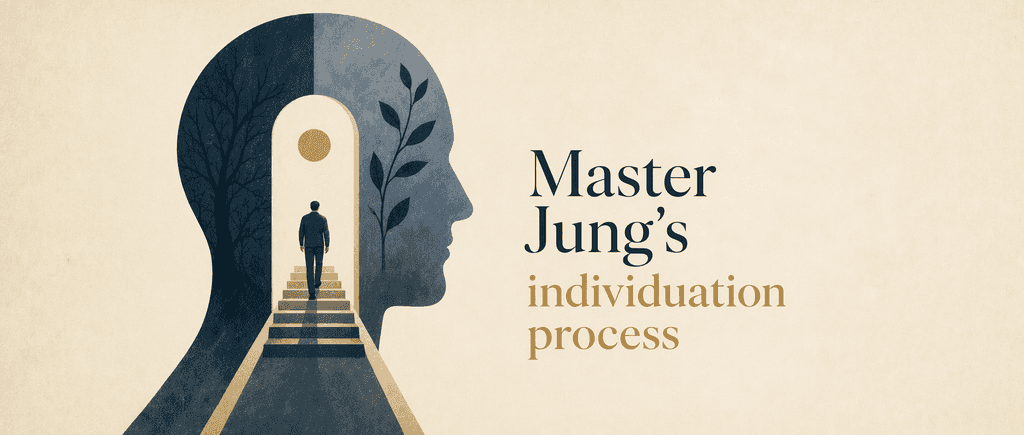
This integration represents the goal of what Jung later developed as the individuation process-the psychological journey toward wholeness. It doesn't create a uniform psychological state but rather a dynamic balance between opposing tendencies, much like an ecosystem maintains harmony through diverse elements. The integrated personality can move between different psychological functions and attitudes as appropriate to the situation, rather than being rigidly confined to a single mode of consciousness. This flexibility allows for a more complete engagement with both inner and outer reality, leading to greater psychological maturity and effectiveness in life.
Capítulo 9
The Practical Significance of Psychological Types
In the concluding sections of "Psychological Types," Jung addresses the practical significance of his typological system. He emphasizes that the purpose isn't to classify humans into categories-which would be pointless-but to provide a critical psychology enabling methodical investigation and presentation of empirical material.
For the practicing psychologist, understanding typology helps determine their own "personal equation," allowing them to avoid serious blunders when dealing with patients by recognizing their own biases and blind spots. It also provides insight into why certain therapeutic approaches work for some patients but not others. A therapeutic method developed by an extraverted thinking type might be ineffective for an introverted feeling type, who requires a fundamentally different approach.
In everyday life, typology offers a framework for understanding interpersonal conflicts. Many relationship difficulties stem from typological differences rather than moral failings or character flaws. The extravert who criticizes their introverted partner for being antisocial misunderstands the introvert's need for solitude and reflection. The thinking type who dismisses the feeling type's emotional responses fails to recognize a valid alternative mode of judgment.
Jung concludes that acknowledging psychological types would require us to accept that our explanations represent just one of many equally valid perspectives. This creates what he calls "the paradox of psychological theory"-multiple contradictory theories of the same process can simultaneously be true when understood as expressions of different psychological types.
This relativistic conclusion might seem unsatisfying, but Jung suggests it represents a more mature understanding of human psychology. The intellect is just one of many psychic functions and provides at best only half-truths. Rather than denying the existence of psychological types, Jung proposes accepting each psychological theory as itself a psychic process expressing a specific type of human psychology with its own justification. Only by collecting these diverse self-representations of the psyche can we approach a higher synthesis.
Capítulo 10
Jung's Enduring Legacy: Types in Contemporary Life
Jung's typological system has proven remarkably resilient over the century since its publication. While many psychological theories have fallen into obscurity, the concepts of extraversion and introversion have become part of everyday language. The Myers-Briggs Type Indicator, based on Jung's typology, remains one of the most widely used psychological assessments, with millions taking it annually despite academic criticisms.
What accounts for this enduring appeal? Perhaps it's because Jung's typology captures something fundamental about human experience-the tension between inner and outer worlds, between different modes of perception and judgment. It provides a non-pathologizing framework for understanding human differences, acknowledging that various psychological orientations represent valid adaptations rather than deficiencies.
In our increasingly polarized world, Jung's insights about psychological types offer a path toward greater understanding and tolerance. Recognizing that others may perceive and evaluate the world through fundamentally different psychological lenses doesn't eliminate disagreements, but it can transform how we engage with them. Rather than dismissing alternative viewpoints as irrational or immoral, we might recognize them as expressions of different but equally valid psychological orientations.
Jung's work reminds us that psychological diversity serves an evolutionary purpose. Different types excel in different environments and tasks, providing human communities with complementary strengths. The extravert's facility with external adaptation balances the introvert's depth of inner reflection. The thinking type's logical analysis complements the feeling type's value-based judgments. The sensation type's attention to concrete reality works alongside the intuitive type's grasp of possibilities.
Understanding psychological types doesn't confine us to rigid categories but opens possibilities for greater self-awareness and development. By recognizing our typical patterns and blind spots, we can consciously develop our less differentiated functions and gain access to the full range of human psychological capacities. This represents Jung's ultimate goal-not classification, but integration; not limitation, but expansion of consciousness to embrace the rich diversity of human experience.