Capítulo 1
The Land That Never Forgets: Palestine's Three Millennia of Identity
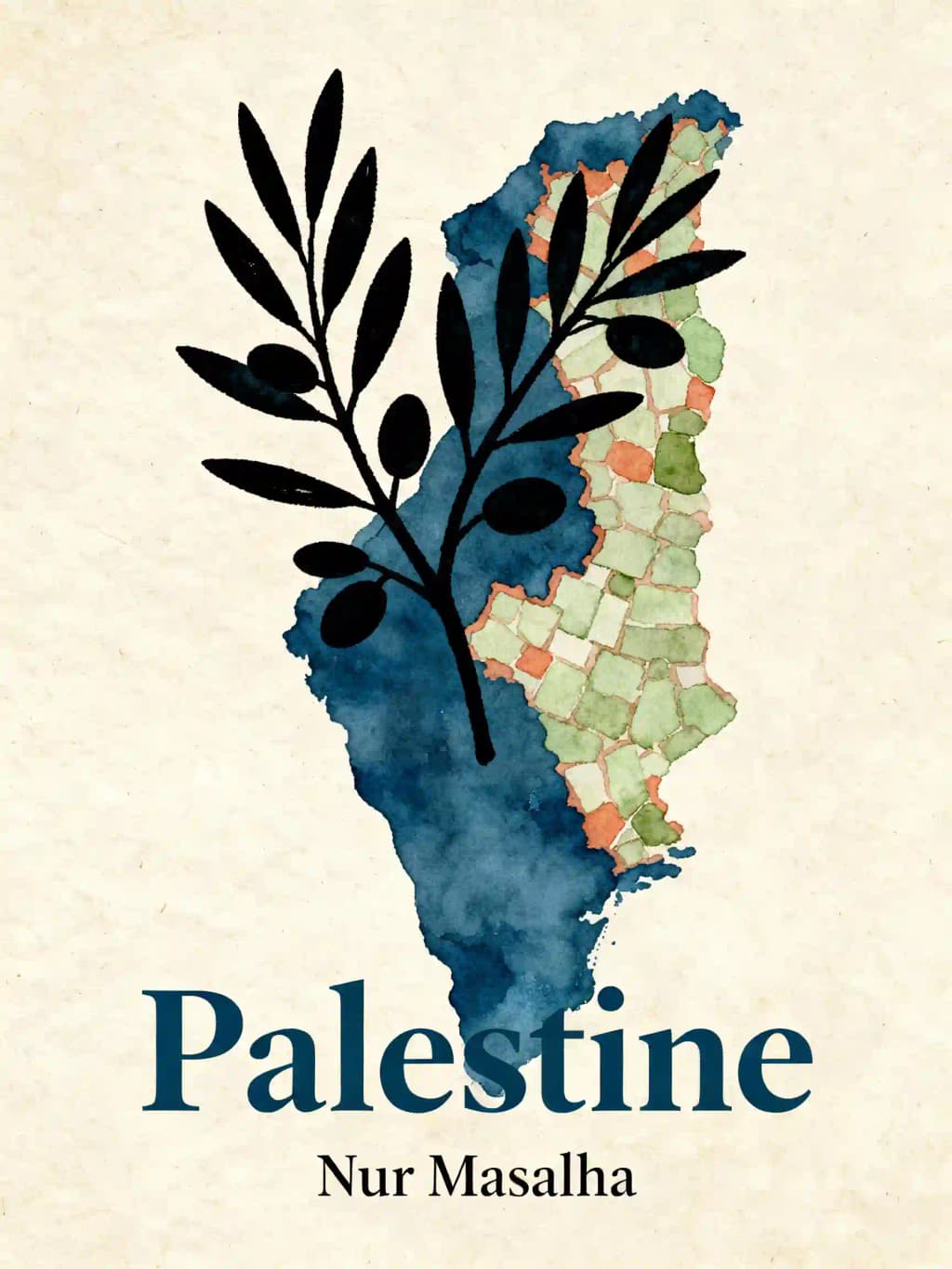
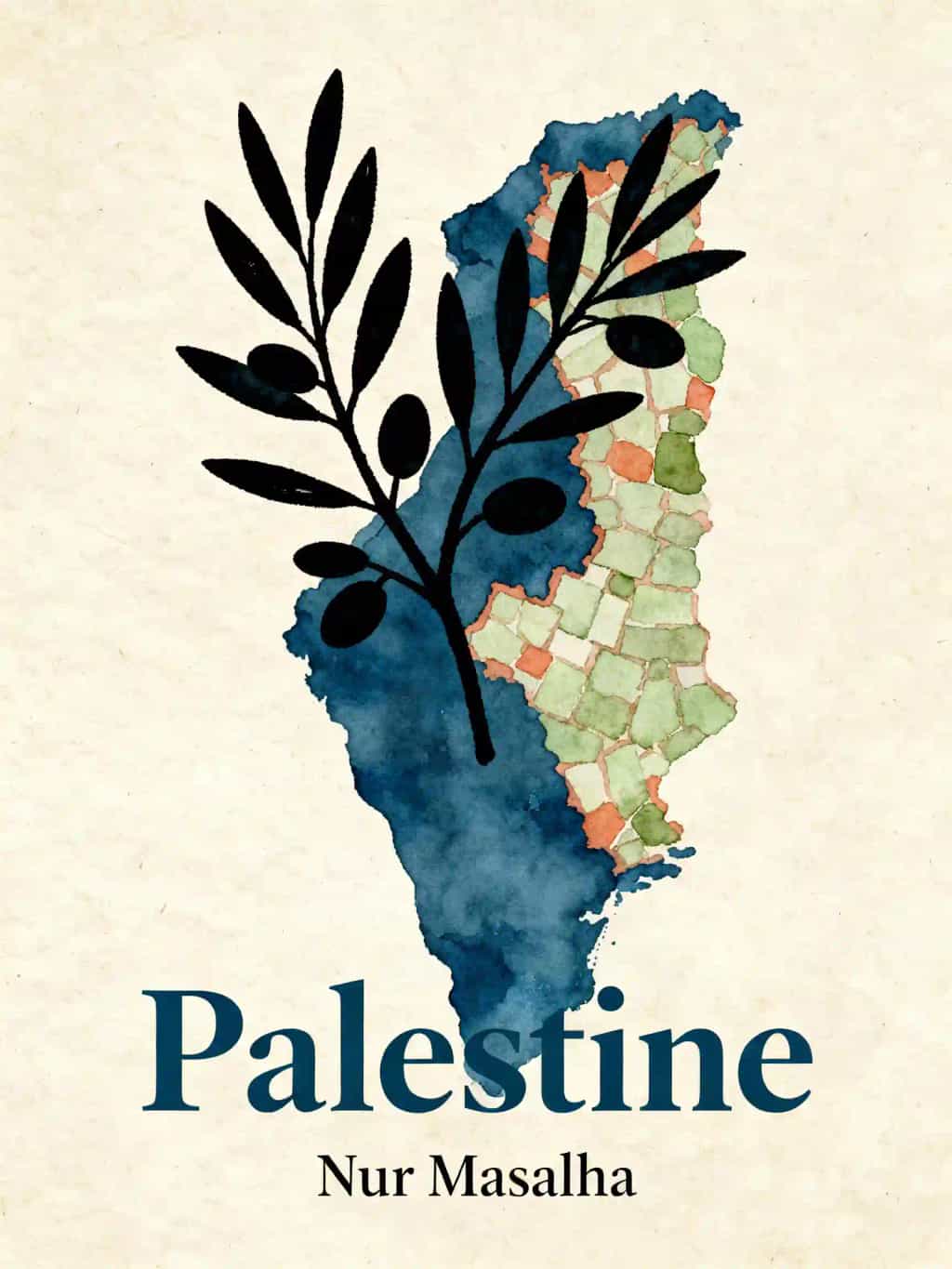
When Mahmoud Darwish, Palestine's national poet, wrote that Palestine is "a land that makes life worth living," he wasn't merely expressing poetic sentiment. His words captured the profound connection between a people and their homeland that has persisted across three millennia. While mainstream narratives often present Palestine as a contested territory without historical coherence, Professor Nur Masalha's groundbreaking work reveals a different story-one of remarkable continuity and resilience. Recently featured in The Guardian's "Books That Changed How We Understand History" list, this work has become essential reading for anyone seeking to understand the Middle East beyond simplistic political frameworks. Even celebrities like Gigi Hadid and Roger Waters have cited it as transformative to their understanding of Palestinian history.
Capítulo 2
A Name Written in Stone: Palestine's 3,200-Year Documentary Record
The name "Palestine" first appeared in Egyptian inscriptions around 1150 BCE, referring to the "Peleset" people of the southern Levant. This wasn't some vague geographical term but a specific reference to a distinct territory and its inhabitants. The Peleset were one of the Sea Peoples who settled along the coastal plain, establishing sophisticated urban centers at Gaza, Ashkelon, Ashdod, Ekron, and Gath. These cities formed a pentapolis that would define the region's political landscape for centuries. From Ramesses III's detailed temple inscriptions at Medinat Habu to Assyrian clay tablets mentioning "Palashtu" and "Pilistu," Palestine has been continuously documented for over three millennia.
The persistence of this name across empires and languages reveals its deep cultural roots. When Herodotus, the "Father of History," visited the region around 450 BCE, he called it "Palaistine" and distinguished between Phoenicians and "Syrians of Palestine." His detailed accounts describe the region's unique agricultural practices, including the cultivation of date palms and the harvesting of bitumen from the Dead Sea. A century later, Aristotle described the unique properties of the Dead Sea in "Palestine" in his scientific work Meteorology, noting its unusual salinity and mineral content. These weren't casual references but deliberate identifications of a recognized geo-political entity with distinct natural resources and economic activities.
While many ancient place names vanished with changing empires, "Palestine" demonstrated remarkable resilience. Through the Ptolemaic period, local administrative documents continued using variations of the name. Roman sources consistently referred to Provincia Palaestina, and Byzantine texts maintained this nomenclature. The Islamic period saw the Arabic "Filastin" become a key administrative district (jund) of the Umayyad and Abbasid caliphates, preserving the ancient name's essence.
The archaeological record provides tangible evidence of this continuity. From the urbanized centers of the Early Bronze Age (3200 BCE), archaeologists have uncovered sophisticated city planning, advanced water management systems, and extensive trade networks. The Philistine cities developed unique architectural styles, distinctive pottery forms, and complex burial practices that set them apart from neighboring cultures. By the 6th century BCE, cities like Gaza were minting their own "Philisto-Arabian" coins featuring local motifs and symbols. These coins, found throughout the Mediterranean basin from Egypt to Greece, demonstrate Palestine's economic autonomy and its integration into international trade networks. Recent excavations have revealed specialized craft workshops, imported luxury goods, and evidence of written administrative systems, indicating a sophisticated urban society with established political and economic institutions.
The material culture shows continuous development rather than abrupt changes, suggesting that despite political upheavals, the basic social and economic fabric of Palestinian society remained intact across millennia. Inscriptions in multiple languages - Egyptian hieroglyphs, Phoenician script, Greek, Latin, and later Arabic - all referring to Palestine demonstrate its enduring identity as a distinct geographical and cultural entity.
Capítulo 3
Palestine as Official Province: From Rome to Islam
When Emperor Hadrian officially designated the province of "Syria Palaestina" in 135 CE, he wasn't inventing a name but formalizing one that had already existed for centuries. This administrative recognition marked a pivotal moment in Palestinian history, establishing a formal provincial structure that would endure for generations. The region's importance was reflected in its strategic location at the crossroads of major trade routes and its significance to multiple religious traditions.
Under Byzantine rule, Palestine was organized into three interconnected provinces: Palaestina Prima, centered around Jerusalem and the coastal plain; Palaestina Secunda, encompassing the Galilee and northern regions; and Palaestina Tertia, covering the Negev and southern areas. This "Three in One" structure proved remarkably resilient, influencing administrative divisions for centuries to come. Each province developed its distinct character while maintaining strong interconnections through trade, pilgrimage routes, and cultural exchange.
The Byzantine period witnessed Palestine's emergence as a cultural and intellectual powerhouse. Caesarea-Palaestina became the Mediterranean's premier center of learning, housing the magnificent Library of Caesarea with its 30,000 manuscripts. This library attracted scholars from across the empire, including Origen, who established his famous theological school there, and Eusebius, whose "Ecclesiastical History" became foundational to understanding early Christianity. The library's scriptoria produced some of the finest biblical manuscripts of the era, including the Hexapla, Origen's monumental comparative study of biblical texts.
Gaza earned its reputation as the "Athens of Asia" through its renowned School of Rhetoric, where scholars like Procopius and Choricius taught. The school became famous for its unique synthesis of Hellenistic philosophical traditions with Christian Neo-Platonism, fostering an environment of remarkable intellectual freedom. Students came from as far as Constantinople and Alexandria to study there, making Gaza a crucial node in the Mediterranean's intellectual network.
The Arab Muslim conquest of Palestine in 637-638 CE brought significant changes while preserving much of the existing administrative framework. The new province of Jund Filastin maintained many Byzantine Palestine's boundaries, demonstrating the pragmatic approach of early Islamic governance. The capital was moved to the newly founded city of al-Ramla, which grew into a magnificent urban center. For nearly five centuries, Palestine maintained its distinct identity as Jund Filastin, becoming an integral part of the Islamic world while preserving its unique character.
Al-Ramla in the 10th century exemplified this cultural synthesis. The city's White Mosque, with its distinctive square minaret, dominated the skyline, while its markets buzzed with activity. Merchants traded in local Palestinian products - from the prized olive oil of the hill country to the fine silks produced in local workshops. The city's diverse population included Muslims, Christians, and Jews, all contributing to its cosmopolitan character. Contemporary geographers like al-Maqdisi praised it as "the capital of Palestine... a beautiful and well-built city" noting its "abundant" fruits and "prosperous" commerce. Archaeological evidence confirms this description, revealing a sophisticated urban center with advanced water systems, public buildings, and extensive commercial quarters.
Capítulo 4
Palestine's Forgotten Golden Age: Prosperity Under Islamic Rule
One of history's great misconceptions is that Palestine declined under Islamic rule. The evidence tells a dramatically different story. By the 9th century, Jund Filastin generated 500,000 gold dinars in annual tax revenue-significantly more than Damascus (400,000), Hims (340,000), or Jordan (350,000). The combined taxes from Palestine's two provinces (Filastin and al-Urdun) amounted to more than half of all taxes raised in Abbasid Mesopotamia, making it one of the wealthiest regions in the entire caliphate.
This prosperity wasn't just about tax collection. Palestine developed sophisticated industries and agricultural exports that connected it to global trade networks stretching from Al-Andalus to China. Al-Maqdisi, the prominent 10th-century geographer, noted that within Palestine could be found "36 products that are not found thus united in any other land," including olives, figs, silk, cotton, soap, cheeses, dates, honey, and various textiles. Palestinian silk became so renowned that it gave rise to the English word "gauze" (from Gaza), while Palestinian glasswork from al-Khalil (Hebron) was exported throughout the Arab world and as far as India. The region's agricultural diversity was particularly remarkable - farmers cultivated everything from sugar cane in the Jordan Valley to citrus fruits along the coast, establishing sophisticated irrigation systems that transformed arid lands into productive fields.
The economic autonomy of Palestine is further evidenced by its monetary system. Under Islamic rule, Palestinian cities minted their own distinctive coins with inscriptions like "bi-filastin" ("in-Palestine"). Archaeological discoveries have revealed coins from Jerusalem (Ilya/Bayt al-Maqdis), al-Ramla, Tiberias, and Ascalon bearing these inscriptions-tangible proof of Palestine's economic identity. These mints weren't just producing local currency; they were striking coins that circulated throughout the Mediterranean and along the Silk Road, demonstrating Palestine's integration into global trade networks.
Consider what this means: while medieval European economies struggled with limited currency circulation and barter systems, Palestine had developed a sophisticated monetary system integrated with international trade. The region's cities were cosmopolitan centers where merchants from various cultures met and traded. Markets in Jerusalem, Ramla, and Gaza were renowned for their diversity of goods and the volume of trade. This wasn't just economic prosperity but evidence of a distinct Palestinian territorial identity functioning within the broader Islamic world. The period saw the construction of grand architectural projects, including mosques, markets, and public buildings, many of which survive today as testimony to this golden age.
The prosperity extended to intellectual and cultural life as well. Palestinian cities became centers of learning, with scholars producing works in mathematics, astronomy, medicine, and literature. Libraries flourished, and the region attracted intellectuals from across the Islamic world, contributing to what historians now recognize as one of the most dynamic periods in Palestinian history.
Capítulo 5
The Forgotten Palestinian State: Dhaher al-'Umar's 18th Century Rule
Perhaps the most overlooked chapter in Palestinian history is the emergence of an autonomous Palestinian state in the 18th century under the leadership of Dhaher al-'Umar al-Zaydani (1689-1775). As the Ottoman Empire weakened, al-'Umar established what scholars describe as al-dawlah al-qutriyyah (territorial state) in Palestine, with effective control from Lebanon to Gaza and Acre as its capital.
What makes al-'Umar's state remarkable is that it represented indigenous Palestinian agency rather than external imposition. His rise coincided with the growth of cotton cultivation in Palestine, which became a major export to industrializing Europe. The British industrial revolution's textile mills in Manchester (known as "Cottonpolis") relied partly on Palestinian cotton exported through Acre, creating an economic boom that transformed Palestine's landscape and society.
Under al-'Umar's rule, Acre evolved from a small village into a fortified metropolitan center with 25,000 inhabitants, adorned with mosques, caravanserais, public baths, and markets. He founded "modern" Haifa in 1764-1765, transformed Nazareth from a hamlet into a large town, and implemented enlightened policies including religious tolerance and public health measures (like quarantine during the 1760 plague).
By 1768, even the Ottoman regime was forced to recognize al-'Umar's authority, granting him the title "Sheikh of Acre, Emir of Nazareth, Tiberias, Safed, and Sheikh of all Galilee." This wasn't just nominal sovereignty but practical independence, with al-'Umar controlling his own military, legal authority, and tax collection.
Imagine the implications: nearly two centuries before the British Mandate, Palestinians had already experienced autonomous rule under a leader who modernized cities, developed international trade, and created institutions that lasted well beyond his lifetime. This forgotten history challenges narratives that portray Palestinians as lacking political agency or state-building experience.
Capítulo 6
Palestinian Identity Before Nationalism: Cultural Continuity and Territorial Consciousness
While Palestinian nationalism as a modern political movement emerged in the late 19th and early 20th centuries, the consciousness of Palestine as a distinct territory with its own identity has much deeper roots. Evidence of this regional consciousness appears in works of Palestinian Muslim scholars from the 10th-17th centuries, who referred to Palestine (Filastin) as "our country" (biladuna).
Khair al-Din al-Ramli (1585-1671), a Palestinian jurist from al-Ramla, wrote extensively about Palestine in his influential collection of legal rulings. His work demonstrates that the name "Filastin" remained in active use among indigenous Palestinians throughout the Ottoman period, contradicting claims that the term was "entirely forgotten by local Arabs" until reintroduced by European connections.
The emergence of modern Palestinian identity built upon these foundations while adding new dimensions. By the early 20th century, Palestinian intellectuals like Khalil Beidas were articulating a distinct Palestinian identity that drew from both ancient heritage and modern concepts of nationhood. Beidas's 1898 translation of Olesnitsky's "A Description of the Holy Land" already used terms like "Palestine," "our country," and "sons of Palestine" without explanation, suggesting these concepts were already widely understood.
This territorial consciousness found institutional expression in newspapers like Falastin, established in 1911 by Orthodox journalists 'Issa al-'Issa and Yousef al-'Issa in Jaffa. Their deliberate choice to use the colloquial "Falastin" rather than the literary Arabic "Filastin" represented a significant act of vernacularization-connecting Palestinian identity to ordinary people rather than just educated elites.
When British forces occupied Jerusalem in December 1917, they formalized Palestine as an administrative entity with institutions like the Palestine Archaeological Museum, Palestine passports and currency, the Palestine Police Force, Railways, and the Palestine Broadcasting Service. During this period, "Palestinian" referred to all residents regardless of religion or ethnicity, including European Jewish settlers granted citizenship by the British.
Capítulo 7
Erasing Palestine: Settler-Colonialism and the Politics of Naming
The Zionist movement's approach to Palestine followed established patterns of European settler-colonialism, viewing indigenous territories as terra nullius ("nobody's land"). The 1897 Basel Programme launching political Zionism made no mention of Palestine's indigenous population, while early Zionist leaders propagated the myth of "a land without a people for a people without a land."
This erasure wasn't accidental but systematic. After 1948, with Israel controlling nearly 80% of historic Palestine following the Nakba (catastrophe), the cultural politics of naming accelerated dramatically. The Israeli Governmental Names Committee, established in July 1949, launched a comprehensive campaign to Hebraicize Palestinian geography through strategic renaming.
The committee's 1956 report revealed that of 145 names assigned to archaeological sites, the "decisive majority" (113) were determined by "mimicking the sounds of Arabic words" to create Hebrew-sounding alternatives. For example, the Palestinian coastal town of al-Majdal was renamed "Migdal-Ad" in 1949 before becoming the biblical "Ashkelon" in 1956. The Palestinian village of al-Fuleh became "Afula," Beit Dajan became "Beit Dagon," and Jerusalem (al-Quds in Arabic) was rendered as "Orshalim" in transliterated Arabic.
This renaming process extended to personal names as well. Nearly the entire Zionist elite changed their European names to biblical-sounding ones, with military officers ordered to adopt Hebrew surnames immediately after the state's founding. David Ben-Gurion (born David Grun in Russia) exemplified this process, changing his name to a biblical-sounding "son of the lion cub" and making Hebraicization of family names obligatory for officials in representative positions.
The physical landscape was also transformed, with JNF-planted pine forests covering the ruins of destroyed Palestinian villages. As Israeli journalist Gideon Levy noted in 2004, prickly pear plants often mark where Palestinian homes once stood, while pine groves planted by the JNF cover ruins to "cover the possibility of return and maybe also a little of the shame and guilt."
Capítulo 8
Reclaiming Memory: Palestinian Cultural Resistance
Palestinians have responded to forced displacement with a rich array of cultural production that serves as both documentation and resistance. This includes not only traditional artistic forms like novels, poems, films, and plays, but also meticulous ethnographic documentation, detailed cartographic projects, comprehensive oral histories, digital archives, and extensive books chronicling destroyed villages. These diverse forms of expression work in concert to counter Israeli erasure while preserving and celebrating Palestinian presence on the land across generations.
Mahmoud Darwish's poetry stands as a powerful exemplar of this cultural resistance. Rather than embracing a narrow nationalist narrative, Darwish's work celebrates Palestine's complex, multi-layered heritage. His verses weave together imagery of olive groves, stone houses, and ancient pathways with profound meditations on identity and belonging. For Darwish, Palestinian identity was deeply rooted in the physical and cultural geography of the land - from its natural boundaries and traditional place names to its rich Arabic linguistic heritage. His work portrays Palestinian identity as a tapestry woven from all cultures that have shaped the region: Hellenistic philosophers, Persian traders, Roman architects, Byzantine artists, Aramaic scholars, Arab poets, Jewish communities, Muslim mystics, Ottoman administrators, and British colonials.
This cultural resistance has evolved and expanded in the digital age. Contemporary projects utilize technology to preserve and transmit Palestinian memory and heritage. Digital archives collect and catalog oral histories from elders, recording detailed accounts of life in pre-1948 villages, traditional agricultural practices, folk customs, and social traditions. These archives serve as both historical documentation and methodology for constructing alternative narratives that challenge dominant historical accounts.
Innovative projects like Palestine Open Maps demonstrate how technology can serve memory and resistance. By digitizing pre-1948 survey maps and overlaying them with contemporary satellite imagery, these platforms allow users to visualize and explore the Palestinian landscape as it existed before the Nakba. Users can locate destroyed villages, trace old roads and boundaries, and understand the geographical relationships between historic Palestinian communities. Such projects enable Palestinians worldwide to virtually access and reclaim spaces they've been physically denied, while providing crucial documentation of Palestinian geography and presence.
These various forms of cultural resistance - from poetry to digital mapping - work together to maintain Palestinian connection to the land, challenge erasure, and transmit memory across generations. They represent not just preservation of the past, but active creation of future possibilities through culture, art, and technology.
Capítulo 9
The Continuing Relevance of Palestine's History
Understanding Palestine's three-millennium history isn't just an academic exercise-it has profound implications for how we approach the contemporary conflict. When we recognize Palestine as a continuous historical entity rather than a modern invention, we gain a deeper appreciation for the Palestinian struggle for self-determination. This historical continuity is evidenced through archaeological findings, cultural practices, agricultural traditions, and documented social structures that have persisted across centuries.
The archaeological record, historical documents, and cultural continuity all point to Palestine's existence as a distinct geo-political entity long before modern nationalism. From the Philistine cities of the Iron Age to the autonomous rule of Dhaher al-'Umar in the 18th century, Palestinians have experienced various forms of self-government and territorial identity throughout their history. The Ottoman-era records show well-established urban centers like Nablus, Jerusalem, and Gaza functioning as important administrative and cultural hubs, with distinct local governance systems and social hierarchies.
This rich historical tapestry includes the development of unique agricultural practices adapted to the local terrain, such as the terraced hillsides that characterize much of the Palestinian landscape. Traditional crafts like pottery-making in Hebron, glass-blowing in Khalil, and olive wood carving in Bethlehem demonstrate continuous cultural practices that have been passed down through generations. The persistence of Palestinian Arabic dialects, folklore, and customs further attests to this historical continuity.
This doesn't negate Jewish historical connections to the land, but it challenges exclusive claims that ignore or erase Palestinian presence and agency. A just resolution to the conflict requires acknowledging both narratives while recognizing the fundamental asymmetry between a Western-backed settler-colonial project and an indigenous population struggling for liberation. The archaeological evidence from different historical periods shows multiple layers of civilization, suggesting a complex history of coexistence and cultural exchange rather than exclusive ownership by any single group.
As we grapple with these complex histories, perhaps we can find wisdom in Mahmoud Darwish's conception of Palestinian identity-not as an exclusive claim but as a multi-layered heritage shaped by all who have passed through this land. In his vision, Palestine represents not just a territory but a way of being in the world-one that embraces complexity, honors memory, and insists on the dignity of all who call this land home. This perspective is reflected in Palestinian cultural expressions, from traditional dabke dance to contemporary art and literature, which often emphasize themes of memory, belonging, and cultural preservation.
The ongoing relevance of this history is evident in contemporary Palestinian society, where traditional social structures, agricultural practices, and cultural traditions continue to shape daily life, despite displacement and occupation. Understanding this historical continuity is crucial for any meaningful peace process, as it provides context for current Palestinian claims to self-determination and cultural preservation.
Capítulo 10
Palestine's Enduring Legacy: A History That Refuses to Die
Despite systematic efforts to erase it, Palestine's history remains stubbornly present-in ancient inscriptions, medieval manuscripts, Ottoman tax records, British Mandate documents, and the living memories of Palestinians worldwide. This persistence manifests in countless forms: in the centuries-old olive groves that still dot the landscape, in the traditional embroidery patterns passed down through generations, and in the architectural heritage of cities like Jerusalem, Jaffa, and Nablus. These tangible remnants testify to a continuous cultural presence that has endured despite political upheavals and demographic changes.
The name Palestine, first documented about 3,200 years ago in Egyptian hieroglyphic inscriptions, has outlived empires, survived conquests, and transcended religious transformations. From the ancient Canaanites to the Philistines, through Roman, Byzantine, and Islamic periods, the region maintained its distinct identity. Archaeological evidence, including pottery, coins, and architectural remains, reveals a rich tapestry of civilizations that contributed to Palestine's cultural mosaic. The medieval Arab geographers consistently referred to the region as Filastin, documenting its cities, agricultural practices, and trade routes in remarkable detail.
This historical continuity is reflected in Palestinian cultural practices that persist today. Traditional farming methods, particularly in olive cultivation, remain largely unchanged from ancient times. Local dialects preserve words from Aramaic and other ancient languages. Family histories, often maintained through oral traditions, connect contemporary Palestinians to specific villages and regions across historical Palestine.
In the words of Palestinian poet Mourid Barghouti, "It is easy to blur the truth with a simple linguistic trick: start your story from 'Secondly.'" This observation highlights how historical narratives can be manipulated by selective starting points. By recovering Palestine's long history, we restore the "Firstly" that has been systematically erased-allowing us to approach the present with a fuller understanding of how we arrived here and what might be possible in the future. This historical consciousness is evident in Palestinian literature, art, and music, where themes of memory, land, and identity consistently emerge, creating a cultural resistance that parallels political struggles.
The persistence of Palestinian identity, despite displacement and dispossession, demonstrates the profound connection between people and place. This connection is maintained through tangible heritage-like the keys to abandoned homes still kept by refugee families-and intangible cultural practices-like the annual olive harvest, traditional dabke dance, and the preservation of local dialects. These elements combine to form a living heritage that continues to inspire resistance, creativity, and hope among Palestinians fighting for recognition and justice.