Capítulo 1
The Intellectual Revolution That Shook America
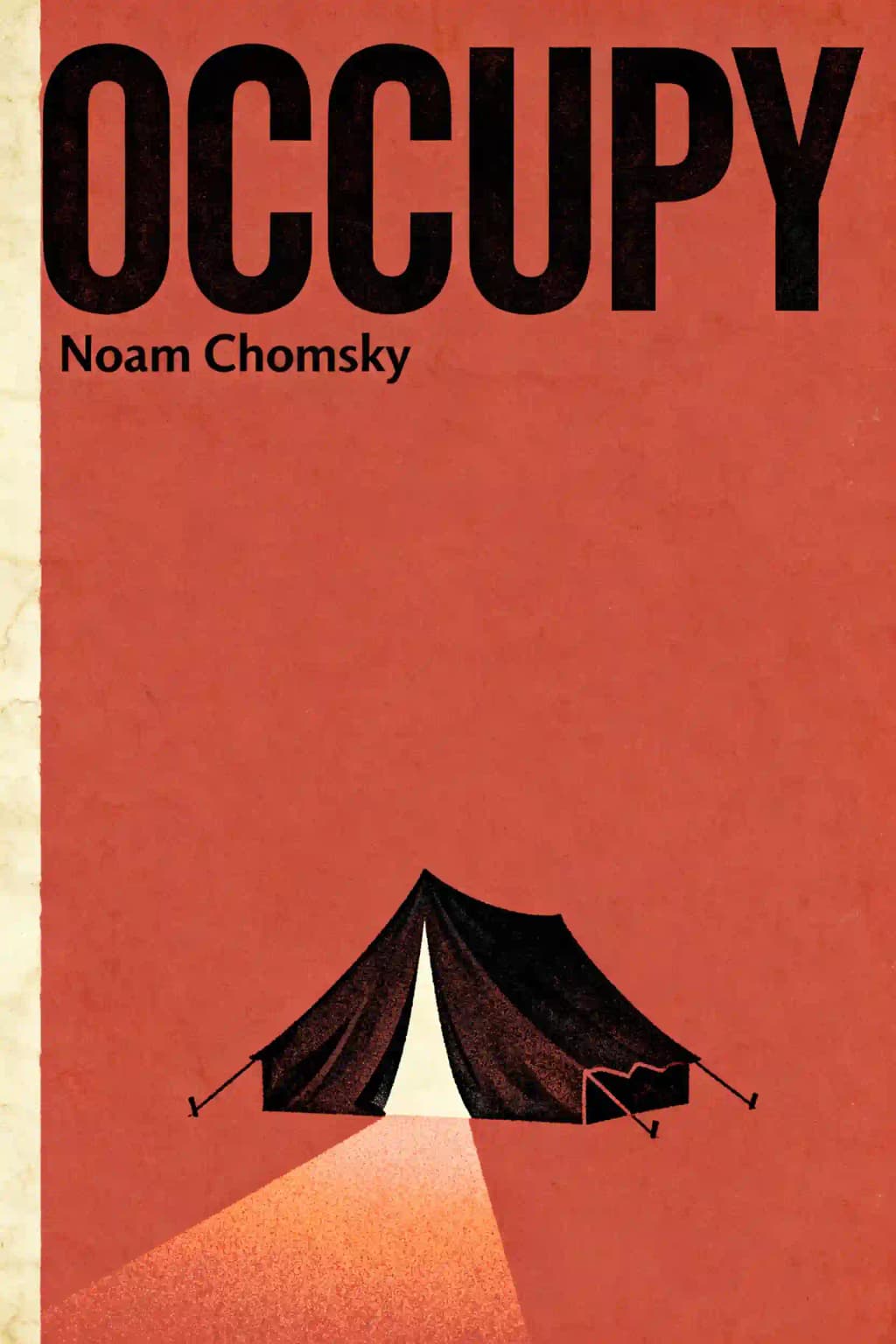
Imagine a movement so powerful it could shift the entire national conversation about wealth and inequality without firing a shot. In 2011, when a small group of protesters set up camp in New York's Zuccotti Park, few could have predicted they would launch what Noam Chomsky calls "the first major public response to thirty years of class war." The Occupy movement quickly captured America's imagination, spreading to hundreds of cities worldwide and fundamentally changing our vocabulary-the "99% versus the 1%" became household terms almost overnight. Even celebrities like Mark Ruffalo and Susan Sarandon joined the protests, bringing mainstream attention to economic injustice. A 2012 Pew study found two-thirds of Americans had become aware of "strong" conflicts between rich and poor-a 19% increase in just three years. Yet perhaps most remarkable about Chomsky's analysis is his historical context: while over 7,760 protesters faced arrest, not a single banker was charged for the economic crimes that devastated millions of lives. This asymmetry perfectly encapsulates the movement's central message: America has two systems of justice-one for the powerful, and another for everyone else.
Capítulo 2
America's Economic Transformation: From Hope to Despair
The 1970s marked a profound turning point in American economic history. For centuries, America had been a developing society with general progress toward wealth and industrialization. Even during the Great Depression, there remained a sense of hope-a belief that "we're gonna get out of it." This optimism was supported by militant labor organizing and New Deal legislation that created tangible improvements in people's lives.
Today's pervasive hopelessness represents something quite new in American history. Unlike previous economic downturns, manufacturing jobs are unlikely to return. Beginning in the 1970s, the economy shifted dramatically from industrialization to de-industrialization. Manufacturing didn't disappear-it simply moved overseas while remaining profitable for corporations. The American economy transformed from productive enterprise toward financial manipulation, devastating the workforce while enriching the elite.
Before this transformation, banks served their traditional purpose in a state capitalist economy-transferring unused funds to useful purposes like home purchases or education. The 1950s-60s saw remarkable egalitarian growth where all income levels prospered equally. The 1960s' activism permanently civilized the country in many ways, expanding civil rights and creating a more inclusive society.
But the 1970s brought sharp changes: de-industrialization, offshoring, and the rise of financial institutions, alongside the development of the high-tech economy that had been nurtured in the state sector since the 1950s. This wasn't some natural economic evolution-it represented deliberate choices by those with power.
The concentration of wealth in the financial sector led directly to concentration of political power, creating a vicious cycle. Legislation accelerated this process through fiscal policies, tax changes, corporate governance rules, and deregulation. As election costs skyrocketed, political parties became increasingly dependent on corporate funding. Congressional advancement began requiring monetary contributions to party coffers rather than being based on seniority and service.
This cycle concentrated wealth in the top 0.1% while creating stagnation or decline for the majority. Ordinary Americans coped through longer working hours, unsustainable debt, and asset bubbles that eventually burst. The gap between public policy and public will grew astronomically-today's political focus on deficits rather than joblessness persists despite overwhelming public support for higher taxes on the wealthy.
Capítulo 3
The Plutonomy and the Precariat: A Society Divided
What we're witnessing today represents the nightmare scenario anticipated by classical economists. Adam Smith warned that if merchants and manufacturers moved their business abroad, they would profit while their home country suffered. He believed a "home bias" would prevent this-an "invisible hand" saving England from what we now call neoliberal globalization. David Ricardo recognized the same possibility but hoped it wouldn't happen. Over the last thirty years, however, this is exactly what has occurred.
For the 99 percent, this period has been harsh and could become an irreversible decline. For the 1 percent-especially the 0.1 percent-they're richer and more powerful than ever, controlling the political system while disregarding public concerns.
A revealing 2005 Citigroup investor brochure titled "Plutonomy" described the world dividing into two blocs: the wealthy plutonomy who buy luxury goods, and "the rest" who are essentially functionless except to maintain a powerful state that protects and bails out the wealthy. This growing "precariat"-people living precarious existences-was actually celebrated by Alan Greenspan as "growing worker insecurity" that prevents demands for better wages and benefits, creating what economists call a "healthy" economy.
The sit-down strikes of the 1930s were particularly effective because they represented a step toward industry takeover. In 1977, when U.S. Steel closed a facility in Youngstown, Ohio, workers and the community attempted to buy and run it themselves. Though unsuccessful, this effort inspired hundreds of worker/community-owned industries throughout Ohio and elsewhere-the potential basis for real economic revolution.
Similar efforts continue today, including a recent attempt by workers to buy a profitable high-tech manufacturing facility near Boston that a multinational corporation closed despite its profitability. When Obama took over the auto industry during the financial crisis, there was an opportunity to hand it to the workforce to create worker-owned, worker-managed production of needed goods like high-speed transportation infrastructure. This opportunity was missed due to class interests and lack of popular mobilization.
Beyond these domestic issues, two existential threats hang over humanity. Nuclear weapons have threatened us since 1945, and this administration is escalating that threat. Environmental catastrophe looms while most countries take halting steps to address it, but the United States is actively moving backward-even dismantling Nixon-era environmental protections. A massive propaganda system tries to convince people climate change is "just a liberal hoax," representing a regression to medieval thinking.
Capítulo 4
Occupy's Strategic Vision: Beyond Tactics to Transformation
When asked about constitutional amendments to abolish corporate personhood and remove money from politics, Chomsky emphasized these require a large, active popular base. He explained how the concept of "person" in the Constitution has evolved-initially excluding indigenous people, enslaved people, and women, then later broadened to include corporations while simultaneously narrowing to exclude undocumented immigrants. Both aspects need addressing through mass mobilization and education.
Regarding the threat of fascism, Chomsky considers an openly fascist system in America unlikely because the ruling class lacks sufficient force. About a century ago, dominant classes in Britain and the US realized they could no longer control populations through force alone and shifted to controlling attitudes and beliefs through public relations and consumerism-barriers that are easier to overcome than torture and the Gestapo.
On the question of general strikes, Chomsky cautioned they require widespread popular readiness, approval and organization. He rejected personal leadership, emphasizing "you don't want leaders; you want to do it yourselves" with recallable representatives. He praised the Occupy movement for building associations, networks and linkages that could eventually make tactics like general strikes viable after sustained organizing work.
Chomsky advocated for developing concrete proposals while allowing diverse approaches. He suggested immediate goals like stopping the deficit commission, supporting worker takeovers of industry, addressing climate change, and reforming the concept of personhood. To mobilize Americans, he emphasized direct engagement in communities, churches, schools and unions.
He outlined how primaries could function democratically with citizens setting the agenda rather than candidates, and noted that universal healthcare like other industrial nations would eliminate the deficit while meeting public needs. Regarding the deficit, he explained that Medicare's problems stem from the privatized healthcare system, and that reining in military spending could help address fiscal concerns. He emphasized that public financing of campaigns could work if implemented by an organized public, and praised the Occupy the 'Hood movement for its community integration efforts.
Capítulo 5
The Class War Behind Occupy's Rise
The Occupy movement represents the first major public response to thirty years of class warfare that has shredded democracy, concentrated wealth among the top 0.1%, and left most Americans with stagnant wages and diminished benefits. While Congress's approval ratings have plummeted to historic lows, the financial sector has benefited enormously as ordinary citizens struggle with longer work hours, unsustainable debt, and vanishing wealth-particularly among African Americans. This concentration of wealth has directly translated into political power, creating a vicious cycle of legislation favoring the wealthy and powerful.
Unlike the corporate-backed Tea Party, Occupy represents a genuine grassroots movement with broad concerns about inequality, financial misconduct, and government policies that bail out those responsible for economic crises while ignoring victims. The movement includes specific proposals on financial regulation, transaction taxes, corporate governance reform, and tax code revision, while also building cooperative communities with general assemblies, kitchens, libraries and support systems-creating vital community structures in an atomized society.
Unlike the Egyptian and Tunisian uprisings where labor movements played central roles, America's labor movement has been decimated. While Tahrir Square achieved the important goal of removing a dictator, the military regime remained in power. Egypt saw limited but meaningful gains in press freedom and labor activism, with election success going to groups like the Muslim Brotherhood that had organized among the population for years. America lacks this level of organization and the revolutionary conditions where a majority believes reform is impossible within existing institutions.
Chomsky argues America is nowhere near exhausting reform possibilities. He cites New York City Council's unanimous resolution against corporate personhood as evidence of Occupy's influence toward dismantling a century of judicial decisions granting corporations extraordinary rights. He highlights the spread of worker-owned enterprises in Ohio following a failed attempt by workers to purchase a U.S. Steel installation thirty years ago. Such developments, whether labeled reform or revolution, represent institutional changes that address people's needs and concerns across political spectrums.
Capítulo 6
Anarchism and Democratic Alternatives
Chomsky provides a nuanced interpretation of anarchism, emphasizing that it encompasses highly organized societies built on voluntary participation and democratic principles, rather than the chaos often mistakenly associated with it. He extensively discusses worker/community-owned enterprises as practical anarchist models, citing examples like the Mondragon Corporation in Spain and worker cooperatives in Argentina. In these systems, participants not only maintain ownership but actively engage in operational decision-making through democratic processes, with leadership positions being both elected and recallable.
The philosophical foundations of these ideas, Chomsky demonstrates, extend far beyond modern political thought. He traces the lineage through classical liberal thinkers like Adam Smith, who actually opposed the division of labor and advocated for worker dignity, to Aristotle's vision of democracy in ancient Greece. These thinkers shared a commitment to relatively egalitarian societies where citizens actively participate in governance. Chomsky particularly emphasizes Wilhelm von Humboldt's influence, whose ideas about human development and self-realization deeply influenced both anarchist and liberal thought.
During a significant InterOccupy conference call, Chomsky outlined three critical second-phase objectives for the movement: embedding their message in mainstream consciousness, defending essential freedom of assembly rights, and challenging corporate personhood through constitutional amendments. He analyzes how the movement successfully transformed public discourse around economic inequality, with the "99% vs 1%" framework becoming deeply embedded in political dialogue. Supporting this observation, he cites specific data from a Pew Foundation poll showing that 66% of Americans recognized class conflict as a major issue, a dramatic increase from previous years, despite often hostile media coverage and systematic attempts at suppression.
One of Occupy's most profound achievements, Chomsky argues, was the creation of vibrant communities demonstrating practical alternatives to competitive individualism. These communities established food kitchens, medical clinics, libraries, and educational programs, showing how mutual aid could function in practice. This directly challenged what Chomsky calls the "gain wealth forgetting all but self" mentality that corporate interests have promoted since the Industrial Revolution. The movement created lasting networks of solidarity across different social groups, from students to labor unions to environmental activists, demonstrating the possibility of collective action for common benefit rather than narrow self-interest.
These community bonds, Chomsky suggests, serve as both practical examples of alternative social organization and crucial defense mechanisms against state repression. He points to historical examples where strong community ties helped movements survive government suppression, from the civil rights movement to labor organizing in the early 20th century. The key challenge, he argues, lies in maintaining and expanding these connections beyond the immediate movement, creating durable institutions that can sustain long-term social change.
Capítulo 7
Building Effective Movements: Lessons from History
Speaking at the University of Maryland in January 2012, Chomsky addressed how to influence foreign policy through the same methods that have historically brought about change: electoral politics, demonstrations, resistance, and organizing public pressure. He emphasizes that Americans, especially the privileged, face minimal repression compared to countries like Egypt, creating abundant opportunities for action.
Chomsky cites several examples of successful policy changes through popular activism. The New Deal legislation emerged from large-scale activism that pressured business and government to accept progressive reforms. The 1960s antiwar movement grew so powerful that by 1968, military leaders opposed sending more troops to Vietnam, fearing they would be needed for "civil disorder control" domestically.
The Iraq War protests were historically unique, occurring massively before the war was officially launched. While some claim these protests had no effect, Chomsky argues they prevented extreme measures like chemical warfare, saturation bombing, and concentration camps that were routinely used in Vietnam. Other successful movements have made America more civilized since the 1960s, including women's rights and racial integration in universities, all achieved through extensive organizing and persistent action.
Chomsky endorses Gar Alperovitz's work on worker-owned enterprises as extremely important and feasible. He points out that standard business economics texts acknowledge no economic principle dictates shareholders should have priority over stakeholders (workers and community). When Obama nationalized the auto industry, one alternative could have been handing it to workers and communities to redirect toward societal needs rather than returning it to the same class of owners.
When asked about discursive strategies to combat ideologically-driven discourse, Chomsky emphasizes there are no special tricks-just the proven methods of speaking, writing, organizing and reaching out to others. He points to the women's movement, which began with small consciousness-raising groups that helped women identify their oppression and envision alternatives. Similarly, the civil rights movement started with small actions like lunch counter sit-ins that gradually built momentum despite brutal repression. Anti-Vietnam War protests evolved from tiny living room gatherings that couldn't even be publicly held without being attacked to massive demonstrations within just a few years.
Capítulo 8
Howard Zinn's Legacy: History from Below
Chomsky reflects on his forty-five-year friendship with Howard Zinn, the great American activist and historian who focused on "the countless small actions of unknown people" that create historic moments. Zinn's life was devoted to empowering these unknown people, from his days as an industrial worker and labor activist to teaching at Spelman College where he supported and joined students at the cutting edge of the dangerous early civil rights movement.
Chomsky recounts meeting Zinn at a civil rights demonstration in Mississippi around 1964, witnessing violent public antagonism and police brutality. Zinn's influential 1967 book "Logic of Withdrawal" argued that the U.S. should simply withdraw from Vietnam and pay reparations for its crimes. His writings and direct resistance helped shift public opinion dramatically-by war's end, 70% of Americans considered the war "fundamentally wrong and immoral."
Zinn was also a prominent supporter of the resistance movement, signing the Call to Resist Illegitimate Authority and participating in sanctuary actions that galvanized anti-war protest. Whenever needed-whether talks, civil disobedience, support for resisters, or testimony at trials-Howard was always present.
Zinn's enduring masterpiece, "A People's History of the United States," literally changed the consciousness of a generation by developing with care and comprehensive sweep his fundamental message about the crucial role of unknown people in carrying forward struggles for peace and justice. His "Voices of the People's History" brought to many the actual words of forgotten people who played valuable roles in creating a better world.
Howard's unique success in elevating the actions and voices of unknown people has spawned extensive historical research following a similar path. Though not entirely novel, nothing compared to Howard's broad and incisive evocation of "history from below," compensating for critical omissions in U.S. historical interpretation. His dedicated activism continued without break until the very end, despite severe infirmity and personal loss. Howard's life and work serve as an unforgettable model for understanding history and living a decent, honorable life.
Capítulo 9
Beyond Propaganda: Direct Interaction and Community
In an illuminating interview with Air Occupy, Chomsky delves deep into the intricate relationship between propaganda, social media, and the Occupy movement's evolution. He articulates how modern propaganda systems operate with remarkable subtlety - rather than explicitly stating doctrines, they embed them within the fabric of daily discourse, making them as omnipresent and invisible as "the air you breathe." To illustrate this, he points to specific examples in contemporary media coverage: the obsessive focus on deficit reduction despite widespread public concern about unemployment, and the persistent portrayal of Iran's nuclear program as an imminent threat, despite diplomatic alternatives being readily available but rarely discussed.
The manipulation of public discourse, Chomsky explains, occurs through careful selection of topics and framing. He cites how major media outlets dedicate extensive coverage to issues that align with corporate interests while marginializing matters of genuine public concern. For instance, discussions about cutting social programs receive disproportionate attention compared to coverage of growing wealth inequality or corporate tax avoidance. This selective emphasis shapes public perception and limits the range of acceptable debate.
Regarding social media's role in activism, Chomsky adopts a nuanced position. While acknowledging its utility for rapid communication and organizing, he highlights its significant limitations. "We can't have correspondents in the Middle East," he notes, pointing out how social media's reach remains confined to "scattered and selected sectors" of society. He expresses particular concern about how digital platforms often reduce human relationships to superficial interactions - quick likes and shares rather than meaningful engagement.
One of Occupy's most significant achievements, in Chomsky's view, was its success in creating physical spaces for direct human interaction. He emphasizes how the movement facilitated genuine community building: "People were actually working together to do something in common, with mutual support, with solidarity" - a rare occurrence in modern society where atomization and isolation have become increasingly prevalent. The experience of shared struggle and collective decision-making through general assemblies created bonds that virtual interactions cannot replicate.
Chomsky's analysis of Occupy's evolution since September 2011 is both appreciative and strategic. While acknowledging the initial occupation as "a brilliant tactic" that exceeded expectations, he recognizes that tactical approaches have "a kind of half-life" and require evolution. He points to various successful offshoots - Occupy Sandy's disaster relief efforts, the Debt Strike campaign, Rolling Jubilee's debt cancellation initiative, and organized resistance to foreclosures - as evidence of the movement's healthy adaptation and maturation.
Particularly significant is Chomsky's emphasis on the necessity of broader coalition-building. He specifically highlights initiatives like "Occupy the Hood" and "Occupy the Dream" as crucial steps toward connecting with established civil rights organizations and expanding into diverse neighborhoods. Drawing historical parallels, he stresses that labor movement revitalization, similar to the transformative changes of the 1930s, is essential for creating an effective mass movement. Without such broad-based coalition-building, he warns, the potential for lasting social change remains limited.
Capítulo 10
The Future of Resistance: Solidarity and Worker Power
Chomsky describes mutual aid efforts like Occupy Sandy as a double-edged sword: while they provide necessary community support, they potentially reduce pressure on government to fulfill its responsibilities. This dynamic serves libertarian and corporate interests who prefer government to "back off." In a truly democratic society, taxes would be seen as communal resources for collective needs, not as theft by an alien force.
The interview examines America's violent labor history, where business interests have repeatedly crushed organized labor through both legal instruments like "Right to Work" laws and propaganda campaigns. Chomsky critiques union leadership's naivety in believing they could make lasting compacts with management, citing UAW leader Doug Fraser's belated 1979 realization that "business is fighting a bitter class war." The demonization of unions has been so effective that even working-class students reject the "working class" label and view unions negatively.
Recent activist movements like Strike Debt and Rolling Jubilee have focused on debt as a potential organizing principle. While buying and abolishing medical debt helps individuals, Chomsky notes it presents the same dilemma as other mutual aid: it gives money to speculators while potentially undermining pressure for governmental solutions. He argues student debt has no economic basis-other countries don't have it, and America itself had essentially free education in the 1950s when it was a much poorer country.
Chomsky emphasizes that Occupy's most important contribution was recreating mutual support systems lacking in society, but warns these must not undermine broader solidarity. He critiques the individualistic ethos promoted for 150 years-"You gain wealth, forgetting anybody else"-which has spread even to university students. The challenge is building solidarity around shared experiences like debt, healthcare, and education while maintaining pressure for communal solutions.
In his final reflections on Occupy, Chomsky calls it "a remarkably successful tactic" that "lighted a fire all over the place," but emphasizes that tactics aren't strategies and have diminishing returns. He suggests Occupy's future lies in bringing concerns to the general population through initiatives like Occupy Sandy, Occupy Our Homes, and Strike Debt. He envisions an international movement addressing issues like worker ownership, immigration, and labor conditions abroad. Supporting worker-owned enterprises "sounds reformist, but it's revolutionary" as it fundamentally challenges who should control workplaces-banks or workers and communities.
What truly matters, Chomsky concludes, isn't the tactic of occupation but "solidarity, mutual aid, care for one another"-encouraging people to work together to overcome barriers and create a sustained movement for fundamental change. If these bonds and associations can be sustained through difficult times ahead, this moment could become truly historic.