Capítulo 1
A Day in the Life, A Lifetime in a Day
Mrs. Dalloway has captivated readers since its publication in 1925, establishing Virginia Woolf as a pioneer of the modernist movement. The novel's stream-of-consciousness technique and its exploration of a single day in post-World War I London continues to influence literature nearly a century later. Woolf's masterpiece has been adapted for stage and screen multiple times, most notably inspiring Michael Cunningham's Pulitzer Prize-winning novel "The Hours," which was later made into an Oscar-winning film starring Meryl Streep, Nicole Kidman, and Julianne Moore. Beyond its literary significance, the book remains a favorite among celebrities like Patti Smith and Emma Watson, who have cited its profound impact on their understanding of consciousness and time. Even today, Mrs. Dalloway's innovative narrative structure and psychological depth make it required reading in university literature programs worldwide, while its unflinching portrayal of mental illness continues to resonate in contemporary discussions about trauma and mental health.
Capítulo 2
The Rhythm of London: Setting and Structure
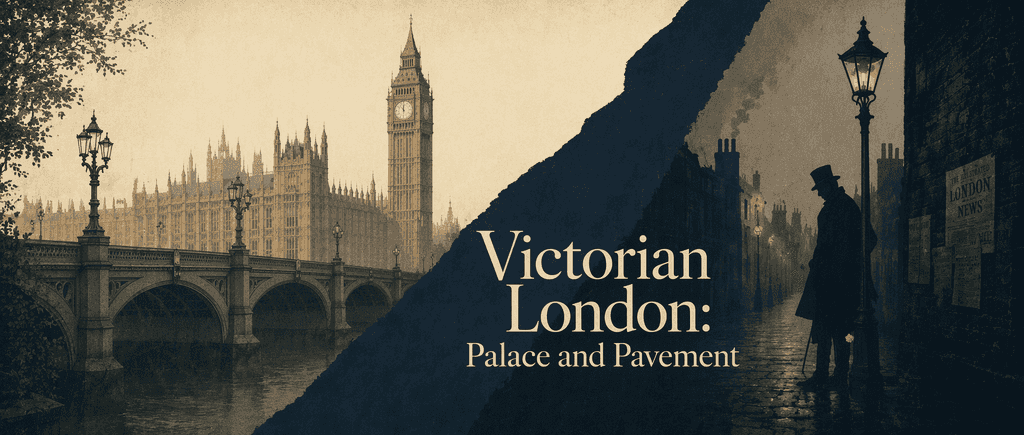
The novel unfolds on a single June day in 1923 London, five years after the end of World War I. Big Ben's striking clock serves as both timekeeper and metaphor, its sound reverberating through the consciousness of characters as they move through the city. "The leaden circles dissolved in the air," Woolf writes repeatedly, marking time's passage while suggesting its ultimate dissolution.
London itself becomes a character-vibrant, recovering from war, yet haunted by its shadows. We experience the city through multiple perspectives: Clarissa Dalloway's appreciation of its vitality as she walks through Westminster to buy flowers; Septimus Warren Smith's paranoid visions of its streets as sites of cosmic significance; Peter Walsh's observations of its changes after years abroad in colonial India. The city connects these disparate lives, its streets and parks serving as the neural pathways between consciousness.
Woolf's revolutionary narrative technique-stream of consciousness-allows us to move fluidly between external events and internal thoughts. Rather than following conventional plot structures, the novel traces the associative patterns of human thinking. A glimpse of a neighbor might trigger childhood memories; the backfiring of a car can evoke wartime trauma. This technique creates an intimate portrait of each character's mind while demonstrating how our perceptions are shaped by our histories.
The novel's structure mirrors its themes: just as Big Ben's striking hours provide structure to the chaotic day, Clarissa's party serves as the organizing principle bringing together disparate characters and storylines. This arrangement allows Woolf to explore how seemingly unconnected lives touch and influence each other across the metropolis-a modernist web of connection replacing Victorian narrative linearity.
What makes this approach so revolutionary is how it captures the texture of modern urban existence-fragmented, simultaneous, and overwhelmed by stimuli. The narrative jumps between perspectives without warning, sometimes mid-paragraph, creating a collective consciousness of the city itself. Through this technique, Woolf suggests that beneath our separate exteriors lies a profound interconnectedness, a shared human experience that transcends individual boundaries.
Capítulo 3
Clarissa Dalloway: The Art of the Hostess
At fifty-two, Clarissa Dalloway embodies contradictions. Outwardly, she's the quintessential society hostess-elegant, charming, and adept at creating moments of connection through her parties. Yet internally, she harbors profound questions about identity, meaning, and the paths not taken. "She had the oddest sense of being herself invisible, unseen; unknown... this being Mrs. Dalloway; not even Clarissa anymore; this being Mrs. Richard Dalloway."
Her morning walk through London reveals her complex relationship with life. She loves the vitality of existence-"what she loved was this, here, now, in front of her"-while simultaneously feeling its limitations. Having recovered from a serious illness, Clarissa lives with an acute awareness of mortality that both heightens her appreciation for life's beauty and sharpens her sense of its transience.
Clarissa's parties represent her art form, her way of "offering to combine, to create." Unlike traditional artistic creation, her medium is social connection-bringing together disparate people to create moments of shared experience. When she arranges flowers or plans seating charts, she's composing a living, ephemeral artwork. "What she liked was simply life," yet this simplicity masks profound purpose: creating spaces where people might transcend their isolation, if only momentarily.
Her marriage to Richard Dalloway represents safety and social standing, but lacks the passion she once felt for Peter Walsh or the intense connection she experienced with Sally Seton. The novel suggests that Clarissa has sacrificed aspects of herself for security and convention. Her attic bedroom-sleeping alone "like a nun"-symbolizes both her independence and her emotional isolation within marriage.
What makes Clarissa compelling is her self-awareness. She recognizes her own shallowness at times, her social ambitions, her failures of courage. Yet she maintains a core of authenticity-moments when she sees through social pretense to something more essential. Her parties may seem frivolous, but they represent her genuine belief in human connection as life's central value. "What does the brain matter compared with the heart?" Sally asks near the novel's end, echoing Clarissa's own philosophy.
When news of Septimus Smith's suicide reaches her party, Clarissa retreats to contemplate this stranger's death. Rather than rejecting this intrusion of tragedy, she finds in it a strange affirmation: "Death was defiance. Death was an attempt to communicate." In this moment, Clarissa's capacity for empathy reveals the depth beneath her seemingly superficial social existence.
Capítulo 4
The Shadow of War: Septimus Warren Smith
While Clarissa navigates her privileged social world, Septimus Warren Smith wanders the same London streets in a state of psychological disintegration. A decorated war veteran suffering from what we would now recognize as PTSD, Septimus represents the war's devastating psychological aftermath that society prefers to ignore.
Before the war, Septimus was a promising young poet with aesthetic sensibilities. He volunteered for service out of patriotic idealism and a desire to "save England," only to witness the death of his commanding officer and friend, Evans. When he felt nothing at Evans' death, Septimus diagnosed himself as fundamentally broken: "He had gone through the whole show, friendship, European War, death, had won promotion, was still under thirty and was bound to survive."
Now, five years after the war's end, Septimus experiences hallucinations-seeing Evans in crowds, believing trees are alive with meaning, feeling that birds sing in Greek. His perceptions have become both heightened and distorted: "The world wavered and quivered and threatened to burst into flames." Ordinary sensations overwhelm him with significance, yet he feels emotionally numb, unable to connect with his devoted Italian wife, Lucrezia.
Septimus's condition represents not just individual trauma but broader cultural damage. His breakdown mirrors the fracturing of Western civilization's confidence after the war's unprecedented destruction. His inability to feel reflects society's collective emotional numbness in the face of mass death. When he looks at his psychiatrist, Sir William Bradshaw, Septimus sees not a healer but "human nature"-the forces of conformity and control that sent young men to die in trenches.
The medical establishment's response to Septimus reveals institutional callousness. Dr. Holmes dismisses his condition as "nothing whatever the matter," while Sir William Bradshaw speaks of "proportion" while recommending institutionalization. Neither sees Septimus as fully human; both represent authority's failure to address profound suffering. Their treatment approaches-rest, isolation, forced feeding-seem designed to silence rather than heal.
Septimus's suicide-impaling himself on Mrs. Filmer's railings rather than be taken to a rest home-becomes an act of defiance against these controlling forces. "I'll give it you!" he cries before jumping, transforming his death into a final assertion of autonomy. While society views his suicide as madness, the novel presents it as a rational response to an insane world that sends young men to slaughter, then expects them to readjust without acknowledgment of what they've experienced.
Through Septimus, Woolf creates one of literature's most profound portraits of trauma, anticipating modern psychological understanding by decades. His character serves as Clarissa's double-experiencing similar sensitivities and perceptions but without her social protections or internal resources for integration.
Capítulo 5
The Past Recaptured: Memory and Identity
Memory isn't just background information in Mrs. Dalloway-it's an active force shaping each character's present experience. As Clarissa walks through Westminster, her current perceptions constantly blend with memories of her youth at Bourton, her family's country estate. The novel suggests that who we are exists across time, not just in the present moment.
For Clarissa, memories of Bourton represent possibilities-both realized and unrealized. Her recollections of Sally Seton capture a moment of romantic and intellectual awakening: "The most exquisite moment of her whole life" was when Sally kissed her on the lips during a summer evening. This memory represents a passionate intensity that Clarissa's conventional marriage lacks. Similarly, her memories of Peter Walsh contain both the excitement of intellectual stimulation and the anxiety of his demands for emotional transparency.
Peter Walsh experiences London through a double vision-seeing both its present reality and the city he knew before leaving for India. His memories of Clarissa are equally complex, simultaneously treasured and painful: "For the truth is (let her mind run on) that she had known all along that something would interrupt, would embitter her moment of happiness." When he visits Clarissa early in the novel, both are acutely aware of how their shared past continues to shape their interaction, despite the decades between.
For Septimus, memory functions differently-as trauma that refuses integration into normal experience. His memories of Evans don't emerge as coherent narratives but as hallucinations that collapse the boundary between past and present. When he sees Evans in the park, it's not remembering but re-experiencing. His condition illustrates memory's potential to become pathological when it cannot be properly processed.
The novel's treatment of time reflects Henri Bergson's influential concept of "duree"-the idea that psychological time differs from clock time, expanding or contracting based on subjective experience. While Big Ben marks the day's regular progression, each character experiences time's passage differently. For Clarissa preparing for her party, hours fly; for Septimus in his suffering, moments stretch interminably.
This complex relationship with time and memory creates the novel's distinctive texture. The narrative present constantly expands to include multiple pasts, suggesting that identity isn't fixed but fluid-a continuous negotiation between who we were and who we are becoming. When Clarissa thinks, "She would not say of anyone in the world now that they were this or that," she acknowledges this fluidity, the impossibility of fixing identity in a single definition.
What makes this treatment of memory so powerful is how it captures the way consciousness actually works-not in neat chronological order but in associative leaps across time. A song, a scent, a phrase can instantly transport us decades back, making the past as immediate as the present. Through this technique, Woolf suggests that our lives aren't linear narratives but complex webs of interconnected moments, constantly informing and redefining each other.
Capítulo 6
Love's Many Forms: Relationships and Connection
Mrs. Dalloway explores a spectrum of human connections, from passionate intensity to comfortable companionship to the tenuous threads linking strangers. Through these varied relationships, Woolf examines what draws people together and what keeps them apart.
Clarissa and Richard Dalloway's marriage represents comfortable affection rather than romantic passion. They sleep in separate bedrooms and maintain a certain emotional reserve, yet there's genuine care between them. When Richard decides to tell Clarissa he loves her but can only manage to bring her flowers instead, the moment captures both the tenderness and limitations of their connection. Their relationship offers security and respect but lacks the intensity Clarissa once felt with others.
Peter Walsh represents the road not taken-the passionate, intellectually stimulating but potentially unstable alternative to Richard. Their relationship remains charged decades later, with Peter still capable of making Clarissa feel "flayed, exposed" with his critical gaze. Their reunion early in the novel reveals the complex emotions that persist between them: "For why go back like this to the past? he thought. Why make him think of it again? Why make him suffer, when she had tortured him so infernally? Why?"
The relationship between Clarissa and Sally Seton represents another form of connection-one characterized by intellectual awakening and romantic possibility. Their kiss in the garden at Bourton remains for Clarissa "the most exquisite moment of her whole life," suggesting a depth of feeling absent from her conventional relationships with men. Sally's radical ideas and emotional openness represented liberation from social constraints, a path Clarissa ultimately didn't follow.
Septimus and Lucrezia's marriage shows connection strained to breaking point by trauma. Lucrezia's devoted care-"Far rather would she be nothing but his wife"-contrasts with Septimus's inability to feel: "When she sat sewing, when she bent over the table, her hands empty, her needle stuck in the material, he would look at her sitting there, without thinking, without feeling." Their relationship illustrates how mental illness isolates not just the sufferer but those who love them.
Beyond these intimate connections, the novel explores the tenuous links between strangers in the modern city. When a car backfires in the street, momentarily uniting diverse onlookers in shared speculation, Woolf demonstrates how urban life creates fleeting communities among strangers. Similarly, the skywriting airplane draws together disparate observers, creating temporary connection before they return to their separate lives.
Clarissa's party represents her attempt to create meaningful connection across social boundaries-bringing together politicians, aristocrats, and neighbors in shared experience. While some might dismiss her social ambitions as shallow, the novel suggests there's genuine value in her effort to "combine, to create" these moments of human communion.
What makes the novel's treatment of relationships so nuanced is its recognition that connection is both essential and imperfect. No relationship fully satisfies; each person remains ultimately separate in their consciousness. Yet the attempt to bridge this separation-through love, friendship, or even momentary shared attention-emerges as perhaps life's most meaningful endeavor.
Capítulo 7
Class and Empire: The Social Fabric
While focusing on individual consciousness, Mrs. Dalloway also provides a sharp portrait of English society after World War I. The novel's characters move through a world strictly stratified by class, with each person acutely aware of their social position and its limitations.
Clarissa Dalloway occupies a privileged position as the wife of a Conservative Party politician, yet she's conscious of the precariousness of status. Her anxiety about her party-whether the Prime Minister will attend, whether Lady Bruton invited Richard to lunch without her-reveals how social standing requires constant maintenance. When she worries about her gloves or whether she's invited the right people, it's not mere vanity but awareness that social position must be continuously performed.
The novel contrasts Clarissa's world with those of lower social classes. Septimus and Lucrezia Warren Smith represent a more precarious middle-class existence, living in a rented room in a shabby neighborhood. Their vulnerability to authority figures like Dr. Holmes and Sir William Bradshaw reflects their limited social power. Similarly, Miss Kilman, Elizabeth's history tutor, exemplifies educated women's limited options, her poverty and resentment contrasting with Clarissa's material comfort.
Peter Walsh's return from India introduces the British Empire's influence. His colonial administrative work represents how England's prosperity depends on imperial control abroad. When he observes a group of young soldiers marching in formation-"Boys in uniform, carrying guns, marched with their eyes ahead of them"-the image connects military discipline to imperial power and the recent war's mechanized destruction.
Religion and class intertwine in Miss Kilman's character, whose conversion to evangelical Christianity provides both consolation for her poverty and justification for her resentment of the privileged. When she thinks, "If only she could make her weep; could ruin her; humiliate her; bring her to her knees crying, You are right!" about Clarissa, religious righteousness barely disguises class resentment.
The medical establishment emerges as a particularly powerful social force. Sir William Bradshaw, with his "grey motor car with grey fur rugs," represents how medical authority reinforces social control. His concept of "proportion" is really about conformity to social norms, while his rest homes serve to isolate those who deviate from acceptable behavior. Through Septimus's treatment, Woolf critiques how medicine pathologizes responses to social trauma rather than questioning the society that produces such trauma.
Even nature becomes stratified in London. While wealthy characters enjoy the cultivated beauty of Regent's Park, the poor experience a different relationship with the natural world. When Septimus sits on a park bench, his access to this space is contingent and surveilled, unlike Clarissa's entitled enjoyment of her garden.
What makes Woolf's social critique so effective is its subtlety. Rather than explicit political statements, she reveals social structures through characters' thoughts and interactions. The novel suggests that while individuals may transcend their circumstances through consciousness, they remain profoundly shaped by social forces beyond their control. This tension-between individual perception and social determination-creates much of the novel's psychological complexity.
Capítulo 8
The Inner and Outer Self: Identity and Performance
A central tension in Mrs. Dalloway is between characters' rich internal lives and the social roles they must perform. This gap between inner experience and outer presentation creates much of the novel's psychological drama.
Clarissa Dalloway is acutely aware of this division. Her social identity as the perfect hostess-charming, attentive, creating beautiful moments-exists alongside private doubts about her life's meaning and value. When she thinks, "She had the oddest sense of being herself invisible, unseen; unknown... this being Mrs. Dalloway; not even Clarissa anymore; this being Mrs. Richard Dalloway," she acknowledges how her public identity has overshadowed her private self.
This division manifests physically in Clarissa's home. The drawing room where she hosts parties represents her public self, while her attic bedroom-where she sleeps alone "like a nun"-embodies her private existence. The narrow bed symbolizes both her independence from Richard and her emotional isolation. When she retreats there during her party after hearing of Septimus's suicide, it represents a momentary merging of her public and private selves.
Peter Walsh similarly performs a social role that contradicts his inner experience. He presents himself as a successful colonial administrator with romantic adventures, while privately feeling like a failure-professionally stalled, repeatedly unsuccessful in relationships, still obsessed with Clarissa decades later. His nervous habit of playing with his pocket knife reveals the anxiety beneath his cultivated exterior.
For Septimus, this division becomes pathological. His public presentation as a functional veteran masks profound internal disintegration. The gap between what he experiences-trees alive with meaning, birds singing in Greek-and what society permits him to express creates unbearable tension. His doctors insist he display "proportion" while ignoring his actual experience, demanding performance of normalcy rather than understanding.
Even minor characters demonstrate this division. Lady Bruton maintains a public persona of aristocratic authority while privately struggling with expression: "Words failed her." Richard Dalloway projects political confidence while privately doubting his achievements. Rezia tries to appear as a normal young wife while concealing her desperation about Septimus's condition.
The novel suggests that modern life intensifies this division between inner and outer selves. Urban existence requires constant self-presentation among strangers, while social conventions restrict authentic expression. When Clarissa thinks of "people whom one would never see again; people who made no impression; people one was sorry for," she acknowledges how urban life creates performance without genuine connection.
What makes this theme particularly powerful is how the novel's stream-of-consciousness technique reveals the gap between thought and speech. We experience characters' rich internal monologues alongside their often banal conversations, highlighting the limitations of conventional social interaction. When Peter and Clarissa finally meet after years apart, their spoken exchange is trivial compared to their internal responses to each other.
Through this exploration of inner and outer selves, Woolf suggests that authentic connection requires bridging this gap-allowing others glimpses of our true experience. The rare moments when characters achieve this-like Richard bringing Clarissa flowers instead of saying "I love you"-stand out as instances of genuine human contact amid social performance.
Capítulo 9
Life and Death: Existential Threads
Mortality's shadow falls across Mrs. Dalloway's single June day. Though set during a beautiful summer in peacetime, death permeates the novel-from Clarissa's philosophical musings to Septimus's suicide to the collective trauma of the recently ended war.
Clarissa begins her day with an acute awareness of life's preciousness, having recently recovered from serious illness. Her famous opening line-"Mrs. Dalloway said she would buy the flowers herself"-represents both everyday practicality and a deeper determination to engage directly with life's sensory pleasures. Throughout the morning, she experiences moments of transcendent appreciation: "In people's eyes, in the swing, tramp, and trudge; in the bellow and the uproar; the carriages, motor cars, omnibuses, vans, sandwich men shuffling and swinging; brass bands; barrel organs; in the triumph and the jingle and the strange high singing of some aeroplane overhead was what she loved; life; London; this moment of June."
Yet this intensity comes with awareness of life's brevity. Clarissa thinks of a line from Shakespeare's Cymbeline-"Fear no more the heat of the sun"-throughout the day, drawing comfort from its acceptance of mortality. When she looks in a shop window and sees her aging reflection, she confronts physical decline: "That was her self-pointed; dart-like; definite. That was her self when some effort, some call on her to be her self, drew the parts together, she alone knew how different, how incompatible and composed so for the world only into one centre."
Septimus's relationship with death is more immediate and desperate. Having survived the war when many didn't, he carries survivor's guilt alongside trauma: "It might be possible that the world itself is without meaning." His hallucinations of Evans represent death's continued presence in his consciousness. When he chooses suicide, jumping from Mrs. Filmer's window, it becomes both escape from suffering and assertion of control-choosing death rather than submitting to institutional power.
The novel connects individual mortality to broader historical death. The war's mass casualties hover in the background of London's apparent recovery. When the novel mentions "the late Prime Minister, Mr. Gladstone," or shows the aging Peter Walsh noting London's changes, it reminds us that individuals and eras pass while the city continues. Monuments and memorials throughout London commemorate historical figures now dead, suggesting how culture preserves certain lives in memory while forgetting others.
What makes the novel's treatment of mortality profound is how it balances terror with affirmation. When news of Septimus's suicide reaches Clarissa's party, she retreats to contemplate this stranger's death. Rather than rejecting this intrusion of tragedy, she finds in it a strange confirmation: "A thing there was that mattered; a thing, wreathed about with chatter, defaced, obscured in her own life, let drop every day in corruption, lies, chatter. This he had preserved. Death was defiance. Death was an attempt to communicate."
In this moment, Clarissa recognizes both death's finality and how its presence gives meaning to life's ephemeral pleasures. Her party-bringing people together in shared experience-becomes not a denial of death but a response to it. By creating moments of connection and beauty, however temporary, she affirms life's value precisely because of its transience.
Capítulo 10
The Party: Convergence and Resolution
As evening falls, the novel's disparate threads converge at Clarissa's party-a social gathering that becomes both the culmination of the day's events and a microcosm of the larger themes of connection and isolation, performance and authenticity.
The party brings together characters who have moved separately through London-Richard and Clarissa Dalloway, Peter Walsh, Sally Seton (now Lady Rosseter), and various political and social figures. This convergence creates a kaleidoscopic effect, with each character observing others through their particular perspective, creating multiple overlapping realities within the same social space.
For Clarissa, the party represents both triumph and vulnerability. As hostess, she must perform perfect social grace while navigating complex emotions about reuniting with figures from her past. When she first greets her guests, she experiences "a feeling of being something not herself, and that everyone was unreal in one way; much more real in another." This double vision-seeing both social performance and the authentic selves beneath-characterizes her experience of the evening.
Peter Walsh observes the party with both cynicism and longing. Though he mentally criticizes the "emptiness" of such social rituals, he remains drawn to Clarissa and the world she represents. His conversation with Sally reveals how both still orbit around Clarissa decades after their youth at Bourton: "But it has been a failure-his life," Sally perceives about Peter, understanding his continued emotional investment in Clarissa despite his outward success.
The party's momentum is interrupted by news of Septimus's suicide, delivered casually by the physician Sir William Bradshaw. This intrusion of death into the social gathering creates the novel's climactic moment of connection across boundaries. Though Clarissa never met Septimus, his death affects her profoundly: "Always her body went through it first, when she was told, suddenly, of an accident; her dress flamed, her body burnt."
Retreating to a small room away from her guests, Clarissa contemplates this stranger's death with unexpected intimacy. Rather than rejecting this disruption of her carefully orchestrated evening, she finds in Septimus's suicide a strange affirmation: "Death was defiance. Death was an attempt to communicate." In this moment, the novel creates its most powerful connection-between the society hostess and the traumatized veteran who never met but whose experiences mirror each other in unexpected ways.
Clarissa's return to her party after this contemplation represents a kind of resolution-not solving life's contradictions but accepting them. She reenters the social world carrying awareness of its limitations and fragility, yet still valuing the connections it offers. When Sally asks "What does the brain matter compared with the heart?" she articulates the novel's ultimate affirmation of emotional truth over intellectual abstraction.
The novel ends with Peter's perception of Clarissa's return: "It is Clarissa, he said. For there she was." This simple recognition contains multitudes-his lifelong fascination with her, the complexity of their shared history, and the mysterious way certain people capture our imagination. The party has brought no dramatic revelations or transformations, only the continued mystery of human connection across time and circumstance.
What makes this conclusion so powerful is its refusal of conventional resolution. Life continues in all its messiness and contradiction; characters remain themselves, shaped by their pasts yet still evolving. The party, like the novel itself, doesn't offer answers but creates a space where different perspectives can momentarily coexist in a fragile, beautiful whole.