Capítulo 1
The Hunger That Shapes Us: A Journey Through Body and Self
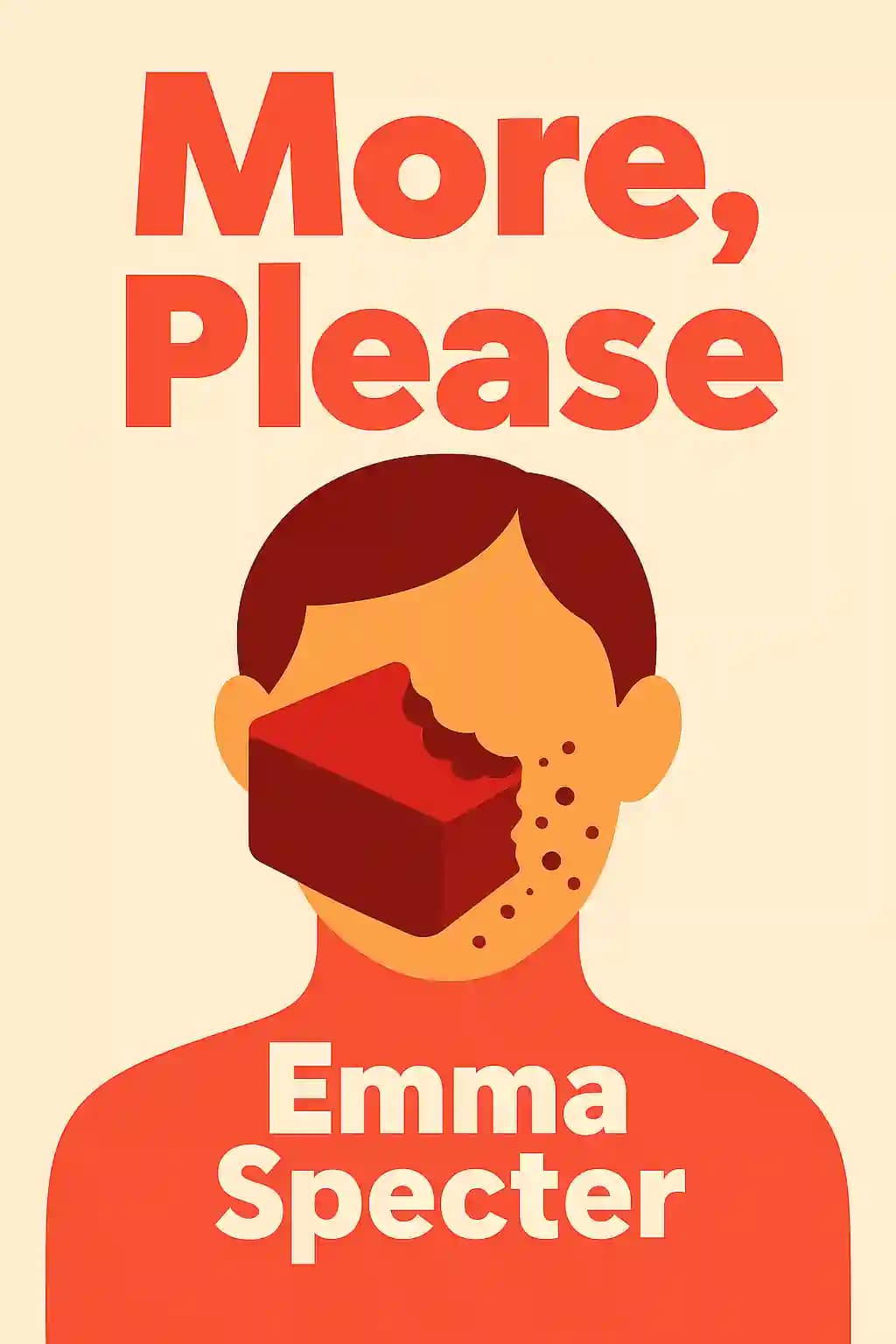
Emma Specter's memoir begins with a confession that feels like looking into a mirror many of us avoid. Her mother-conventionally beautiful with wide-set eyes, straight nose, and a perfect blond bob-looms as both inspiration and impossible standard. At sixteen, discovering her mother's old press passes triggered a panic in Emma, suddenly hyper-aware of her aquiline nose, thin lips, and fleshy thighs. This inheritance of beauty felt squandered, setting the stage for a lifelong struggle with body image that would shape her relationships with food, love, and ultimately herself. In an era where celebrities flaunt their Ozempic-induced transformations and "thin is in" once again dominates cultural conversation, Specter's raw exploration of binge eating disorder offers a radical alternative: what if we stopped organizing our lives around self-denial?
Capítulo 2
The Mother-Daughter Mirror: Inherited Body Anxiety
Our mothers cast long shadows over how we see ourselves, especially for daughters. Though Emma's mother never explicitly told her to lose weight, meaningful looks over dinner communicated volumes. Their relationship with food was complicated from the beginning-Emma's first experiences of physical satiety came at her mother's expense through breastfeeding, establishing a pattern of guilt around nourishment that would follow her for decades.
Growing up as a globally mobile child, Emma paradoxically developed a narrow palate, refusing borscht in Russia and Parmesan in Italy. Returning to New York after these international adventures, she discovered the comforting reliability of bodega candy bars and school snacks-Cheez-Its, animal crackers, birthday cupcakes-that coincided with post-9/11 anxiety. Food became her primary self-soothing mechanism as an anxious only child with working parents.
"I was using food as a reward, a bribe, a toy," Emma reflects, quoting parenting expert Karen Le Billon, "teaching myself to use food as a response to emotional needs." This pattern would be difficult to break, especially given her mother's own complicated relationship with eating. Born in 1955-the same year the first McDonald's opened and impossibly lean models began gracing Vogue-her mother survived decades of fad diets. How could she possibly have raised a daughter with body confidence?
The intergenerational nature of disordered eating becomes painfully clear when Emma describes bonding with her aunt Flavia and her mother through diet talk, performing self-deprecation as a form of protection. It wasn't until watching Frankie Shaw's SMILF that Emma finally saw genuine representation of binge eating disorder-Bridgette binging on cookies and chips, then purging before a hookup arrives. Unlike sitcoms where thin women comically devour cheesecakes without consequence, SMILF refused to look away from the grim aftermath, making Emma feel uncomfortably seen in her own secretive behaviors.
The statistics are sobering: 76 percent of parents insult their own bodies in front of their children, and 43.6 percent speak negatively about their children's bodies. This toxic cycle continues across generations, with binge eating remaining uniquely accessible as addictions go-cheaper than alcohol or drugs, and allowing sufferers to still function enough to work or parent.
Capítulo 3
The Teenage Obsession: Thinness as Salvation
Some teenage memories Emma wishes she could forget-shotgunning Mike's Hard Lemonade or embarrassing moments in English class-but none more than the image of Keira Knightley's protruding hip bones in "Bend It Like Beckham." Those hollow canyons between Knightley's low-rise jeans and sequined halter top seemed to hold all the world's mysteries to fourteen-year-old Emma. Watching with her friend Jazmine on yet another Saturday night they weren't invited out, Knightley's impossibly thin frame represented everything Emma thought a young woman should aspire to be-beautiful, sporty, and so slender that it made her want to erase her own body in comparison.
In ninth grade, Emma became obsessed with bodily camouflage-prescription deodorant applied in stealth, lace-trimmed camis stretched to mid-thigh, sweaters tied around her waist to hide her shape. After being ostracized in eighth grade at her Upper East Side all-girls school, she found herself at a competitive Riverdale private school where she met Jazmine, who became her lifeline. They bonded over Chipotle burritos and SNL jokes, using each other as social compasses when no one else spoke to them.
Though never truly overweight, Emma felt each pound like an indictment, convinced thinness would solve everything. When her Ritalin prescription suppressed her appetite, she was thrilled-finally a way to quiet the hunger she'd been fighting. Media portrayals of eating disorders, like "The Best Little Girl in the World" with its anorexic upper-middle-class white dancer protagonist, reinforced dangerous myths about who could have "legitimate" eating disorders. Emma recognized herself in the character's calorie counting and secrecy despite not fitting the perfectionist profile.
Growing up in her wealthy private school environment, thinness seemed the shortcut to social acceptance. Jazmine and Emma formed their own lonely duo, bonding over their outsider status while secretly wishing for the ease and confidence they thought thinness would bring. Like many queer youth who haven't yet come out, Emma's body dissatisfaction was intertwined with unexplored identity questions-a pattern shared by other LGBTQ+ individuals whose eating disorders are often underdiagnosed.
"There's comfort in talking with others who understand not just who you are now, but who you were years ago-hungry and afraid to take up space," Emma reflects. Discussing eating disorders with friends calms the part of her that still worries she's alone, despite knowing at least 9% of Americans will experience an eating disorder. She imagines countless kids from all backgrounds united by the certainty that their bodies are wrong-not just the stereotypical cases portrayed in media, but all those whose disorders go undetected.
Capítulo 4
Weight Watchers and the Pursuit of Disappearance
In 2010, when news broke that actress Ginnifer Goodwin had been on Weight Watchers since age nine, public backlash questioned parents who'd subject children to diet culture so early. At sixteen, Emma read these comments with smug superiority-she'd joined Weight Watchers at twelve entirely by her own choice, paying monthly dues with babysitting money. She had nobody to blame or thank but herself.
After abandoning Weight Watchers in early high school, Emma returned to it midway through her senior year of college when she stepped on a scale after a junior year in Russia and didn't like what she saw. Though she'd experimented with keto and gluten-free diets, Weight Watchers felt like a sad homecoming. She still knew the point system by heart-five points for half an avocado, four for wine, bananas are free! It had been her leaky life raft in a sea of body anxiety before, and she clung to it again.
Initially things seemed fine. She dutifully logged meals, reduced her dining hall fro-yo, and began swimming laps in the campus pool she'd previously dismissed as "jock shit." She lost weight steadily-ten pounds, twenty, thirty, forty-becoming lighter than she'd been since ninth grade. When her classmates complimented her weight loss, she glowed. After years spent alone while friends coupled up, hookups suddenly materialized-first a blond frat boy in pink polo shirts, then a sweet art major who called her by her full name like she was someone he'd thought about.
"The sex was okay," Emma admits, "but what I truly loved was seeing my thin body through their eyes-my hollow stomach, my delicate collarbone." Post-graduation, she managed brief periods of normalcy, like a Rehoboth Beach trip with friends where she put Weight Watchers on pause, enjoying crabs and lobster rolls and chlorine-tinged margaritas. Yet she's not sure any moment in her adolescent or adult life was truly untouched by her eating disorder.
The goalposts kept moving without her consent, turning target weights into examples of what she swore she'd never be again. In Los Angeles after college, she biked eight miles daily to her internship, tried on too-big size 25 jeans with secret glee, and developed a pattern of skipping meals then bingeing on stale office leftovers. At night, she'd run her hands over her prominent hip bones, imagining a boyfriend murmuring "You're too thin" with just the right balance of concern and admiration.
What Emma wanted most desperately then was a boyfriend. She believed being thin meant she was finally ready for love, yet her encounters with men left her hungry for genuine care. As Marisa Meltzer writes in "This Is Big," dieting promises a rich, abundant life but ultimately fails us. Society reinforces this-71% of plus-size women report being fat-shamed on dating apps, making many protect themselves by withdrawing from dating altogether.
"Being thin doesn't make you ready for a relationship," Emma's friend Eliza wisely noted, but Emma couldn't listen, instead blaming romantic failures on her barely-menstruating body. Weight Watchers' dating advice-snack before dinner, share entrees, carefully time your "diet confession"-perfectly described her approach. She was more focused on menu calculations than on her dates, working desperately to be someone thin, someone they'd never leave.
Capítulo 5
Hollywood Dreams and Hidden Binges
When Emma landed a high-powered assistant job on an Amazon dramedy, she should have been thrilled, but instead was consumed by fear of failure. She'd never been organized, always turned in homework late-she didn't wonder if she'd fail but how. Her binge eating intensified accordingly, finding the perfect environment to hide her disorder as "stress relief."
Food was everywhere on set-snacks, catered lunches for writers-and with everyone working until 4 AM and talking about "eating better next season," her fixation with food became an easy bonding point. As craft services kept the set stocked with food, no one noticed if family-size Cheddar Bunnies disappeared between takes.
Despite her relatively easy role compared to others, the job was far more demanding than any she'd held before. Her bosses Dana and Darlene managed every detail of the show, and Emma felt physically ill whenever she dropped a call or forgot an appointment. They weren't stereotypical showrunners but funny, generous working moms who asked about her weekends after 48-hour edit bay sessions. She didn't want to disappoint them or reveal how she actually spent her weekends-bingeing with occasional breaks for social activities.
By the time the show was canceled in fall 2017, Emma had learned some basic office skills and perfected the art of compressing her eating disorder into brief windows during workdays. She became adept at swallowing Twinkies and Uncrustables in bathroom stalls during "dinner breaks," texting with one hand while unwrapping food with the other. The craft services guys were kind dad types who would have been heartbroken to know how she consumed their carefully wrapped leftovers-alone in her Subaru, parked near the trash cans where no one ventured, avoiding her reflection as she gorged, then starving herself afterward to maintain her weight.
Television didn't give Emma an eating disorder, but it created a perfect environment for her bingeing to flourish. She avoided dating during this time, claiming her sixteen-hour workdays made relationships impossible while ignoring that half her potential dating pool kept similar schedules. Instead, she nursed an obsession with an unavailable drummer for over a year, transforming a few weeks of average sex and hasty morning coffees into an epic romance until friends banned her from discussing it.
The appeal of this fantasy relationship was its consistency and her control over it. Emma was better at fantasy than reality when it came to love-great at mentally decorating a studio apartment for two but unable to directly ask a man if he liked her or if she should stop sleeping with him. During one triumphant week at the beginning of her year with the drummer, she didn't binge at all, her appetite diminished by dopamine. But when he moved to San Francisco, sending increasingly infrequent texts, she promised herself she'd stay wanted and skinny-yet soon his texts became fewer, and the cheap fried-rice joints and Postmated doughnut orders were waiting for her right where she'd left them.
Capítulo 6
Finding a New York State of Mind
Unlike the classic "sad girl lands in New York to become a new person" trope, when Emma arrived at her Brooklyn apartment after a sweaty month in her childhood bedroom uptown, she wasn't hoping for complete reinvention. She just wanted to pay under $1,000 for a room and reconnect with college friends who knew her before depression and binge eating consumed her.
Her queer awakening happened gradually. She'd first mentioned suspicions about her sexuality to a friend freshman year, though she didn't consider that coming out-she was seeking reassurance she was "normal" rather than acknowledging feelings she'd had since childhood. Throughout college, she identified as an "unsuccessful heterosexual," insisting "If I were gay, I'd know it" while feeling intimidated by the campus queer community.
After a first date with a woman in LA that left her thinking "Hmm" when they kissed, Emma moved to Brooklyn where she dated both men and women. She felt ridiculous coming out at twenty-four when friends she considered "actually" queer had been out since high school. That fall, she played "Flirting with Her" by Sir Babygirl on repeat while running in Prospect Park, browsing queer fiction, and experiencing the lowest frequency of binging since college.
Thanks to Twitter connections, Emma landed an assistant editor role at GARAGE Magazine, Vice's art and fashion vertical. Despite feeling intimidated by the Berlin-club-ready staff, she thrived writing multiple articles daily on whatever weird topics interested her. Though she eventually burned out, she loved having people actually read her work while she frantically Googled fashion terminology to fake expertise in pitch meetings.
That fall she began dating Jen, a sophisticated mid-thirties magazine editor she met on Hinge. Despite her fears of being exposed as a "fake gay" who'd only kissed one woman before, their connection felt natural. When they made out outside a grown-up bar with real tableware and later at Jen's tidy apartment, Emma forgot her insecurities and focused entirely on the person beside her.
As she gained weight from hangover bagels and returning late-night binges, Emma worried about comparing bodies with Jen, who was smaller than her. But when they amicably broke up months later and she began dating-app adventures to make up for lost queer time, she was too consumed by new experiences to fixate on body comparisons-unlike her experience with men, where she'd once panicked trying on a male partner's jeans that wouldn't fit past her thighs.
Dating women became an exercise in learning to be seen after a lifetime of longing for bodily disappearance. For the first time, Emma actively pursued partners rather than waiting to be chosen, building resilience against rejection while separating what she actually wanted from what she'd been taught to want.
Capítulo 7
Vogue, Pandemic, and the Path to Self-Acceptance
When Emma received an interview invitation from Vogue, she panicked, splurging on expensive Black Crane pants and a denim jacket to appear worthy. Despite wearing all-black to her Anna Wintour interview (allegedly a faux pas), she landed the job in summer 2019. Her eating disorder sabotaged her first day, leaving her vomiting and emailing apologies. The intimidating Conde Nast environment initially overwhelmed her, but organizing with colleagues for the Conde United unionization campaign helped her build solidarity and recognize shared struggles with beauty standards.
Writers like Aiyana Ishmael and Marielle Elizabeth showed Emma she wasn't alone as a non-thin person in fashion media. Though she still experiences body anxiety during rare office visits, she's grown too busy with meaningful work and connections to maintain full-time self-hatred. She's learning to compassionately acknowledge all her former selves, heeding Joan Didion's advice to "keep on nodding terms with the people we used to be."
When the pandemic hit in March 2020, Emma naively thought working from home would mean just a few weeks of sleeping through commute time and enjoying home-cooked lunches. Reality quickly set in as she found herself confined to her apartment with roommates, venturing out only for necessities or distanced walks with friends in Prospect Park. Soon her roommates dispersed to stay with family, and she escaped to her dad's empty house in Hudson, seeking space, light, and the illusion of adult supervision despite his absence in California.
As quarantine stretched on, Emma began cooking elaborate meals for the first time, allowing herself to use ingredients she'd previously forbidden-butter, white bread, Parmesan-while posting artfully arranged photos on Instagram. What she didn't share were her brownie-mix binges and vacant TV-watching. Her weight gain became evident through stretch marks appearing on her stomach and clothes that no longer fit. She gained about forty pounds during the pandemic's first year, on top of thirty she'd already gained in New York.
Emma wrote professionally about body issues for Vogue, covering how people with eating disorders were faring under lockdown and eventually publishing a personal essay identifying herself as someone with binge eating disorder. When BMI qualified her for an early COVID vaccine, she wrote about the experience of being categorized as obese, generating more response than anything she'd written before, including an NPR appearance that brought both support and unsolicited criticism about her "fat acceptance" stance.
Capítulo 8
Learning to Taste Life Again
In April 2020, sprawled across her dad's guest bed during quarantine, Emma created a Notes-app list of non-binge food memories to cherish: hot dogs from Rockaway, Nora Ephron's key lime pie recipe, pear juice from Roman cartons, her mom's shepherd's pie, her friend's cinnamon-heavy coffee, blackberries she'd picked as a child and melted with chocolate. The list stretched hundreds of entries long, resembling abstract poetry more than anything coherent.
The idea came from her first nutritionist, whom she'd started seeing via Zoom when she realized she'd be alone with food indefinitely during lockdown. Though Emma resented her chirpy manner and constant explanations of portion sizes, her suggestion to create this list proved valuable. She wanted Emma to reference it whenever she felt out of control around food, reminding her that her relationship with eating existed beyond the binary of "too much" or "not enough."
As of August 2023, Emma hasn't dieted or restricted calories in over a year. Her last binge was just last night, breaking a two-month streak of abstinence, but her current nutritionist Mia reminds her not to let one slip erase her progress. There were times when she could barely string together a few binge-free days, and acknowledging that growth matters.
Now, as she writes during another "thin-is-in" cultural moment dominated by Ozempic and other weight-loss drugs, Emma is increasingly uninterested in organizing her life around self-denial. These medications, originally developed for diabetes but FDA-approved for obesity management in 2021, have become Hollywood's secret weapon against hunger, with the #Ozempic hashtag accumulating over a billion TikTok views.
Emma remembers vividly the February 2023 New York magazine cover featuring a fork stabbing a syringe with the caption "Bon Appetit." Inside, Matthew Schneier's story revealed Ozempic users surviving on "one and a half meals a day" and willing to risk thyroid cancer rather than give up their weight-loss injections. What bothers her most is knowing that her younger self would have desperately sought this drug, seeing it as a miracle cure for her "unsightly longing for food."
Now, trading her hard-won peace with food-her fatness, yes, but also her joy in cooking and eating-for thinness feels like a Faustian bargain. Though she recognizes these medications help many people, she worries they offer a quick fix to the complex journey of learning to live in a changeable, desirous body. Where would she be if she'd spent $900 monthly on weight-loss drugs in 2017 instead of finding twelve-step food groups, starting Abilify, moving to New York, reading Roxane Gay, and learning to occupy space in her own body?
Capítulo 9
Embracing Hunger as a Welcome Guest
After years of struggle, Emma has come to mostly like her hunger. She's grown accustomed to its contours, learning each morning whether cereal, a breakfast burrito, green juice, or just coffee would feel best. She follows writer Kendra Austin's advice to "eat dessert every day"-actual dessert, not diet ice cream that tastes like "Splenda-sweetened snow." Her hunger is no longer a feral animal needing sedation but a kindly invited guest whose preferences guide without overwhelming her.
Emma isn't willing to sacrifice the oceanic chill of oysters shared on a first date, the comfort of pho eaten alone with a good book, or the warmth of homemade challah she braided into a six-strand twist last Rosh Hashanah. She wants harmony with her appetite, not to chemically overwhelm it entirely.
She wishes she felt this way all the time, but she doesn't. Celebrity weight loss stories and friends being praised for looking "so good" after stomach flu still make her wonder if she should focus on losing weight. In those moments, she feeds herself compassionately while turning to writers like Bettina Makalintal, whose cooking-archive Instagram reminds her how far she's come from living on binge food, RXBARs, and anxiety.
Even food professionals struggle with disordered eating. Makalintal wonders if she likes cooking "because it feels like an acceptable way to have a relationship with food and also have the body that I have." Similarly, Shaina Loew-Banayan, chef and owner of James Beard Award-winning Cafe Mutton, described in their memoir how kitchen work distracted them from the gnawing hunger of their eating disorder.
Emma knows intimately the painful juxtaposition of relishing a good meal only to later binge on its leftovers. But she's learned to care for herself afterward-stocking frozen pork-and-ginger dumplings from Trader Joe's or kimchi buns that she can quickly prepare when nauseous the day after bingeing on pizza or ice cream. This is her version of self-care: not sheet masks and bubble baths, but preparing for her vulnerable moments with foods that will help her recover.
What truly unsettles society isn't thin people avoiding food-that's normalized in our culture. What frightens people is a fat person who doesn't fear food or at least doesn't perform that fear. Yet Emma is less worried about taking up space now than when she obsessed over fitting into size twenty-five jeans.
Her favorite food writing remains Carmen Maria Machado's "The Trash Heap Has Spoken," where she celebrates the subversive joy of being fat and relishing food: "I take second helpings, thirds... Sometimes when I talk about food, people around me laugh with surprise. Subconsciously, I think, they're not expecting it; they're expecting restraint, apology. I refuse to give it to them."
Capítulo 10
Finding Love in Food and Partnership
Emma has recently moved back to Los Angeles to be with R., her first serious partner and a food writer who has transformed her relationship with food. When they met in winter 2021, they were writing about the Mandarin Man, a Chinese immigrant who grew sweet Kishu mandarin oranges; later, they sent Emma off with a bag full of these fruits that sustained her during her drive back to Austin. Though she doesn't tell R. everything about her eating disorder, she shares more than she's ever told anyone, finding freedom in not being alone with her shame.
The fear Emma felt during quarantine about dating at her new size was her brain's attempt to protect her from rejection. After years of pursuing unavailable people and blaming her body when things failed, she found in R. a partner who made her feel secure. They celebrated her fat body so naturally that it became infectious, helping her see herself through their eyes. When they sent her a tiny crop top as her first gift, she initially thought it wouldn't fit, but it did-a stretchy 2XL that displayed her stretch marks yet somehow made her feel hot.
Recovery hasn't been a magical transformation through love. Emma still struggles with binge eating, working toward harm reduction rather than complete abstinence. But she's built a life inside of, despite, or perhaps even because of her fat body. She's trying her best, and learning to let that be enough.
Emma didn't write this book solely to heal her food wounds, but there's no version that could exist without her finding some fragile peace with her body and hunger. She wishes she could offer a clear roadmap to recovery for other compulsive eaters, but the truth is complex. Steady work she cared about helped, as did proper mental health treatment, supportive friends, coming out, falling in love, finding joyful movement, and taking pleasure in food after a lifetime of denial.
She's fat now when she wasn't five years ago, but she's also content with her life, choices, and how she moves through the world in an unprecedented way. Is it because she's fat? Not exactly, though gaining weight and learning to live with it played a role. With hindsight, she can see what she would have ridiculed five years ago: growing up helped too. What a lucky thing to get to do.