Capítulo 1
When Tragedy Becomes the Catalyst for Extraordinary Gifts
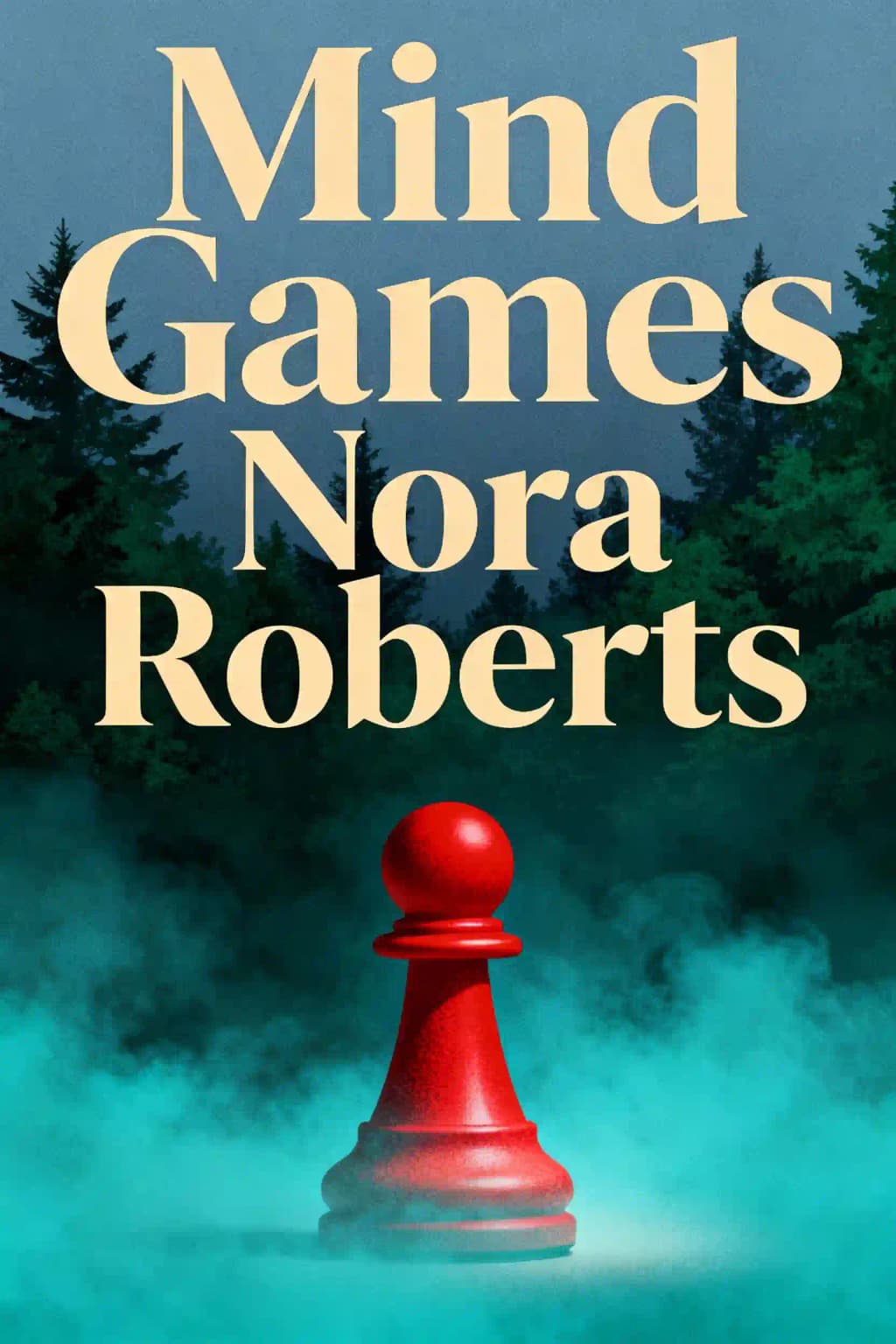
What would you do if you could see into the minds of others? For Thea Fox, this question isn't hypothetical-it's her reality. In Nora Roberts' riveting psychological thriller "Mind Games," we witness how trauma can awaken dormant abilities and how the human spirit can triumph over unimaginable darkness. This New York Times bestseller has captivated readers worldwide, with celebrities like Reese Witherspoon praising its "perfect blend of suspense and supernatural elements." The novel's exploration of psychic abilities against the backdrop of Appalachian culture has sparked renewed interest in the paranormal genre, with Roberts once again demonstrating why she remains one of the most beloved storytellers of our time.
Capítulo 2
A Childhood Shattered by Violence
Twelve-year-old Thea Fox's life changes forever during what should have been a routine summer visit to her grandmother Lucy's home in Redbud Hollow, Kentucky. The idyllic mountain setting with its herb gardens, animals, and Lucy's Mountain Magic business of handcrafted soaps and candles initially represents a sanctuary of joy and discovery. Lucy, with her distinctive black hair marked by a white streak, embodies the wisdom of the mountains, teaching Thea and her younger brother Rem about plants, crafts, and the tight-knit community where neighbors support each other through barter and shared resources.
While the children enjoy this peaceful existence, their parents John and Cora Fox are brutally murdered in their Virginia home by Ray Riggs, an eighteen-year-old criminal who targets wealthy homes. In a moment that defines the novel's supernatural premise, Thea awakens from a nightmare, somehow knowing her parents are dead. When she rushes to Lucy's room, she finds her grandmother already awake and crying-revealing their shared psychic gift.
The aftermath of this tragedy unfolds with heartbreaking realism. When Sheriff McKinnon arrives, Thea shocks everyone by describing details of the murder she couldn't possibly know: how Riggs cut a hole in the sliding door, killed her parents with pillows over their faces, stole valuables including her mother's watch, and planned to escape to Myrtle Beach in their BMW. She even provides a detailed description of the killer-"a pale young man around twenty with straggly blond hair, very light blue eyes, a skinny nose, and crooked front teeth."
This devastating moment forces Thea to confront her extraordinary abilities while processing unimaginable grief. The scene where Lucy runs into the woods to scream her sorrow into the night perfectly captures the raw emotion of loss, while establishing the grandmother as both protector and guide for Thea's emerging gift. The murder becomes both the novel's central trauma and the catalyst for Thea's journey toward understanding her psychic powers-powers that will eventually lead to both healing and danger.
Capítulo 3
The Inheritance of Extraordinary Abilities
"The gift runs in the blood," Lucy explains to Thea as they begin to address the psychic abilities they share. This inheritance forms a powerful thread throughout the narrative, connecting generations of women in ways that transcend ordinary family bonds. Lucy reveals that Thea's mother Cora possessed similar abilities but rejected them out of fear, creating a poignant contrast between mother and daughter. While Cora ran from her gift, Thea must learn to embrace hers-not just for her own sake, but to bring her parents' killer to justice.
The development of Thea's abilities unfolds gradually and realistically. Initially, her powers manifest in simple ways-knowing where lost keys are or hearing unspoken thoughts. After her parents' murder, her abilities intensify dramatically, allowing her to witness events from afar and connect with others' emotions and memories. Lucy becomes her mentor, teaching Thea crucial techniques for managing these overwhelming experiences, like visualizing closing a window or door to control the flow of others' emotions.
"You can choose when to use your gift," Lucy explains during a particularly moving scene where Thea struggles with feeling overwhelmed by the grief surrounding her parents' funeral. This lesson becomes fundamental to Thea's growth-understanding that her abilities are tools she can control rather than burdens that control her.
The novel excels in portraying the double-edged nature of psychic gifts. When detectives question Thea's involvement in identifying her parents' killer, she demonstrates her abilities by revealing personal details about the detectives that she couldn't possibly know-Detective Musk's childhood injury and Detective Howard's family situation. She even warns Howard to "be careful on the blue stairs," a premonition that later proves accurate. This scene brilliantly illustrates both the power of Thea's abilities and the suspicion they inevitably attract.
As Thea matures, her powers evolve in fascinating ways. She helps police locate missing persons, including linking Riggs to the murder of fifteen-year-old Jessica Lynn Vernon. More dramatically, she develops the ability to enter and manipulate dreams, creating elaborate mental landscapes where she can confront threats on her own terms. This progression from passive reception to active creation represents Thea's journey toward mastery of her gift and, by extension, mastery of her own life.
Capítulo 4
Growing Up in the Shadow of Trauma
Following the murder, Lucy becomes the legal guardian of Thea and Rem, creating a new family unit bound by love and shared grief. The novel sensitively portrays how trauma shapes but doesn't define the children's development. Lucy's mountain home becomes their sanctuary, with its rhythms of gardening, animal care, and craft-making providing structure and purpose during their darkest days.
The funeral scene poignantly captures the beginning of healing, with Thea meeting Maddy, the sheriff's forthright daughter who makes her laugh for the first time since the tragedy. "Just like that, on the day she buried her parents, she met a lifelong friend." This moment beautifully illustrates how life continues even amid grief, with new connections forming alongside the pain of loss.
As the narrative follows Thea through adolescence and into early adulthood, we witness milestone moments that any teenager experiences-first boyfriends, breakups, concerts, haircuts-alongside her unique challenges. At sixteen, she falls in love with Tyler Brennan, the lead singer of a band called Code Red, in what seems like typical teenage infatuation. Little does she know how significant this crush will become years later.
The novel doesn't shy away from the ongoing impact of trauma. On the fifth anniversary of her parents' deaths, Thea stands with Lucy and Rem at their graves, laying hydrangeas against the stone marked "For All Time." These ritual observances acknowledge that grief doesn't simply disappear but becomes integrated into one's life story.
Perhaps most disturbing is Thea's ongoing psychic connection to Riggs, who serves his prison sentence with growing hatred and obsession. In dreams, he threatens and taunts her, creating a persistent shadow over her otherwise successful life. This supernatural manifestation of PTSD adds a chilling dimension to the novel's exploration of trauma's lasting effects.
When Thea attends college to study computer science and art, she experiences another painful lesson about her abilities when she reveals her gift to her boyfriend Asher. His cruel rejection-calling her a "freak" and a "weird-ass loony"-teaches her that "love doesn't always mean trust, acceptance, or understanding." This heartbreak leads to an important realization: "Her gift was hers alone and no one else's business." The scene powerfully illustrates the isolation that can accompany extraordinary abilities and the careful boundaries Thea must establish to protect herself.
Capítulo 5
Finding Purpose Through Creative Expression
Thea's journey toward healing finds its most powerful expression through her work as a video game designer. Her creative talents become both professional success and personal therapy, allowing her to transform her traumatic experiences into interactive worlds where players face challenges and overcome obstacles - much as she must do in her own life. This transformation of pain into art becomes a central theme throughout her development, demonstrating how creative expression can serve as both escape and confrontation.
The novel meticulously details her development of several groundbreaking games, including "Endon," which earns her a perfect score in her Advanced Game Design class and catches the attention of Milken Entertainment, one of the world's top video game companies. The game's innovative mechanics, which allow players to manipulate time and memory, reflect Thea's own struggles with temporal perception and psychological healing. Professor Cheng's unprecedented offer to recommend her work represents a turning point in her professional life, validating her talents and opening doors to future success. His recognition comes with particular weight given his reputation for rarely praising student work, making this moment especially significant in Thea's journey.
More fascinating is how Thea incorporates elements of her psychic experiences into her games, creating a bridge between her supernatural abilities and her creative expression. When Riggs begins invading her dreams more aggressively, she creates "Perilous Island," a richly detailed mental landscape where she can confront him on her terms. The island features treacherous beaches with quicksand traps, dense jungles filled with carnivorous plants, and a volatile volcano named Edina, with deadly obstacles that cause Riggs to experience real pain when he fails. This brilliant fusion of her creative and psychic abilities represents Thea taking control of her narrative, refusing to remain a victim of Riggs's mental intrusions. The game's environment serves as both battleground and metaphor, with each hazard representing different aspects of her psychological defenses.
Her character development for "The Portal" includes a complex warrior named Tye Smith, carefully modeled after Tyler Brennan, her teenage crush who unexpectedly returns to her life as an adult. This creative choice foreshadows their eventual relationship while demonstrating how art allows us to explore desires and possibilities beyond our immediate reality. The character's journey from reluctant hero to confident warrior parallels both Thea's personal growth and her evolving relationship with Tyler, showing how art can serve as both prophecy and manifestation of our deepest desires.
The parallel between game design and life mastery becomes explicit when Thea approaches her problem with Riggs "like a game concept," developing a comprehensive strategy to free herself permanently from his mental intrusions. She creates detailed flowcharts mapping out possible scenarios, designs counter-measures for each of his typical attacks, and establishes clear victory conditions - all techniques borrowed from her game design methodology. This framework allows her to face her greatest fear with the same methodical planning and creative problem-solving she applies to her professional work, illustrating how our passions can provide unexpected tools for confronting our deepest challenges. Her approach proves that the skills we develop in pursuing our creative interests can become powerful weapons in our personal battles.
Capítulo 6
The Healing Power of Home and Community
Redbud Hollow emerges as more than just a setting - it's a living, breathing character in its own right, representing the transformative power of place and community. The mountain landscape, with its ancient forests, terraced gardens, and dramatically changing seasons, provides a stark contrast to the sterile prison where Riggs serves his sentence. This natural world, with its wild blackberry patches and morning mist rolling through the valleys, symbolizes the freedom Thea gradually achieves despite her traumatic past. The very air seems to carry healing properties, filled with the scent of pine needles and mountain laurel.
The novel lovingly details the intricate rhythms of rural Appalachian life, where community isn't just a concept but a daily practice. Neighbors help each other with everything from barn-raising to baby-sitting, operating on an informal economy of bartered goods and services. When someone's well runs dry, others share their water. When a family's crop fails, seeds and surplus are quietly shared. These acts of generosity aren't seen as charity but as the natural flow of mountain life. This becomes particularly evident when Nadine arrives at Lucy's house with a black eye and injuries from her abusive husband. Lucy's response is immediate and multifaceted - offering not just a safe haven, but practical assistance with legal paperwork, childcare, and job leads, all without an ounce of judgment. Later, when Nadine's daughter Adalaide goes missing during a spring storm, the community's response is swift and unified. While search parties comb the mountains, others organize food for the searchers, care for Nadine's other children, and pray together in the local church. Thea's eventual use of her abilities to locate the child becomes a natural extension of this communal effort to protect their own.
Home ownership emerges as a powerful symbol of putting down roots and claiming one's place in the world. When elderly neighbor Miss Leona, whose family has owned land in the hollow for generations, offers to sell ten acres of her property, it becomes a pivotal moment. Thea and Rem each purchase five acres - not just as an investment, but as a declaration of belonging. This transaction represents their conscious choice to remain in Redbud Hollow despite opportunities elsewhere, acknowledging the deep healing they've found in this mountain community. The land itself becomes a character in their story, with its steep slopes and hidden springs helping to shape their future plans.
Years later, when Thea finally builds her "mountain green cottage with blue door and wraparound porch," the achievement resonates beyond personal success. Her reflection that this home is "hers but never hers alone" captures the novel's central theme of interconnection. The house embodies not just her own dreams but the legacy of her parents and grandmother, the skills shared by neighbors who helped with construction, and the community's collective embrace of her presence among them.
Music weaves through the story as another vital thread of community connection. The spontaneous porch concert where Lucy's banjo meets Ty's guitar creates a moment of transcendent joy that bridges generations and backgrounds. Their eclectic repertoire - from ancient mountain hymns to Ty's contemporary hits to a spirited "Dueling Banjos" - draws everyone into a shared cultural experience. Young Bray's wide-eyed wonder as he learns to pick out simple tunes represents the passing of traditions to the next generation, while the gathering itself demonstrates how music can dissolve social barriers and create moments of pure, collective celebration.
Capítulo 7
Love as Redemption and Challenge
When Tyler Brennan moves into his late great-grandmother Leona's house with his young son Braydon, Thea is shocked to discover her teenage crush has become her new neighbor. Their developing relationship forms the emotional core of the novel's second half, exploring how love can both heal past wounds and create new vulnerabilities.
Ty represents a different kind of masculinity than the violent Riggs-he's a devoted father, a talented musician, and a man seeking to rebuild his life away from fame's spotlight. His backstory reveals his own wounds: betrayal by those he trusted, including Bray's mother Starla, who brought their son to him at eighteen months old before dying of cancer. Despite his parents' disapproval, Ty embraced fatherhood completely, prioritizing his son's wellbeing above all else.
Their relationship develops through small, meaningful moments: Thea bringing homemade meals when they first arrive, Ty asking for her advice about local resources, their collaboration on building Bray's play set. These ordinary interactions build trust gradually, contrasting with the instant but shallow connections of Ty's former celebrity life.
The novel doesn't shy away from the complications love introduces. When Thea accidentally reveals her psychic abilities by knowing the location of Bray's missing toy, Ty reacts with anger and suspicion, accusing her of sneaking into his house. This painful misunderstanding forces both characters to confront their fears and trust issues. For Ty, it's the fear of being used or betrayed again; for Thea, it's the risk of rejection for being different.
Their reconciliation comes only after honest communication about their respective pasts and vulnerabilities. When Ty witnesses Thea using her abilities to locate Adalaide, he finally understands and accepts this extraordinary part of her. His declaration-"I'm done with taking things slow... I'm in love with you"-marks his complete acceptance of who she is, supernatural gifts included.
The novel's exploration of love extends beyond romance to encompass family bonds, friendships, and community connections. Lucy's unwavering support of her grandchildren, Maddy's lifelong friendship with Thea, and the community's rallying around Nadine and her children all demonstrate different facets of love's transformative power.
Capítulo 8
The Final Confrontation: Reclaiming Power
The novel builds toward a climactic confrontation between Thea and Riggs that represents her ultimate reclamation of power. After fifteen years of enduring his mental intrusions and nightmares, Thea makes the courageous decision to meet him face-to-face in the maximum-security wing of Sterling State Prison. Though Ty cannot enter with her, his steady presence in the waiting room provides crucial emotional support, marking how far she's come from the isolated victim she once was.
This decision comes after months of careful psychological and physical preparation. Thea deliberately crafts her appearance to echo her mother's presence - wearing Cora's vintage Cartier watch, pink diamond drop earrings, and the same signature French perfume her mother wore. These items serve as powerful symbols of what Riggs stole from her family and her determination to reclaim them. Her support system rallies around her: Ben helps her practice meditation techniques, Sarah provides legal documentation ensuring her safety, and Maddy presents her with a carefully chosen necklace featuring a delicate key pendant, telling her sister, "This isn't just about unlocking the past - it's about having the power to unlock your own future."
The prison scene unfolds in layers of physical and psychic reality, masterfully weaving together the tangible present with the battlefield of the mind. Across a steel table scarred with years of visitor meetings, Thea faces Riggs - his once-imposing frame now diminished in standard-issue prison blues, though his eyes still burn with the same toxic hatred that has haunted her dreams. Using her now-refined psychic abilities, she breaches his mental defenses and forces him to confront his violent history in vivid detail: the neighborhood cats he tortured as a child, his first attempted murder at sixteen, the string of home invasions that preceded his attack on her family. In each memory, Thea inserts herself as an avenging presence, defeating him in increasingly powerful ways - no longer the helpless child he once terrorized.
For the final psychic battle, she pulls them both into the most painful shared memory - the night he murdered her parents. When Riggs arrogantly boasts about maintaining his mental freedom despite his physical imprisonment and threatens to continue haunting her dreams, Thea launches a precisely calculated psychic attack. The assault triggers a massive stroke in his physical body while simultaneously dismantling his psychic abilities. In a masterpiece of poetic justice, she permanently confines his consciousness within the walls of his own mind, matching his physical incarceration with a mental one that ensures he can never reach beyond his cell to harm another person.
This resolution demonstrates sophisticated moral complexity, avoiding the simplistic path of revenge while validating Thea's right to defend herself and others. By choosing to neutralize Riggs's ability to cause harm rather than end his life, she maintains her ethical principles while fully embracing her power. The scene serves as the culmination of her transformation from traumatized victim to master of her extraordinary gifts, proving that true strength lies not in destruction but in the power to protect and preserve one's own humanity.
Capítulo 9
A Future Unlocked by Courage
The novel concludes with an emotionally resonant scene of new beginnings that masterfully weaves together the story's central themes. After their dramatic departure from the prison facility, Ty takes Thea to a secluded playground nestled in the Appalachian foothills - a place where the mountain views stretch endlessly toward the horizon, symbolizing their unlimited future together. Here, in this peaceful setting, Ty shares a deeply personal creation: a song titled "I See Her" that he's carefully recorded in secret during their separation. The lyrics acknowledge not just Thea's extraordinary abilities, but every facet of her being - her strength, her vulnerability, her past wounds, and her capacity for love.
The proposal that follows feels both surprising and inevitable. Ty's plan to build their life together includes practical details that show his understanding of Thea's needs: converting part of her cherished family home into their shared space, constructing a professional music studio in Redbud Hollow where both can pursue their passions, and creating a family that honors both their dreams. His careful consideration of these elements demonstrates how thoroughly he's come to know and respect her whole self.
Thea's response - "I've loved you for years" - serves as a powerful bridge between past and present, connecting the innocent teenage crush she once harbored to the mature, tested love she now feels. Her playful insistence on having two more children to fulfill her "teenage journal fantasy" provides a moment of lightness while revealing how she's integrated her younger self's dreams with her adult reality. This detail also shows how she's finally comfortable enough to share her most private thoughts and desires.
As they stand together in the golden afternoon light, their embrace becomes more than just a romantic moment. The metaphor of unlocking their future in their beloved hometown landscape perfectly encapsulates the novel's core message: that true freedom and authentic connection come only through confronting our deepest fears and fully embracing our complete selves - including both our gifts and our wounds.
Through Thea's transformative journey from a traumatized child to an empowered woman, "Mind Games" delivers a nuanced exploration of resilience and human potential. The story demonstrates how ordinary lives can harbor extraordinary possibilities, while examining the profound courage required to claim and use our unique gifts - especially when those gifts come with significant costs. The conclusion makes clear that Thea's true extraordinariness lies not in her psychic abilities themselves, but in her unwavering commitment to use them with integrity and compassion. By choosing this path, she transforms her personal tragedy into a life defined by purpose, deep love, and genuine belonging, proving that healing is possible when we brave enough to be fully ourselves.