Capítulo 1
The Quest for Certainty in a World of Doubt
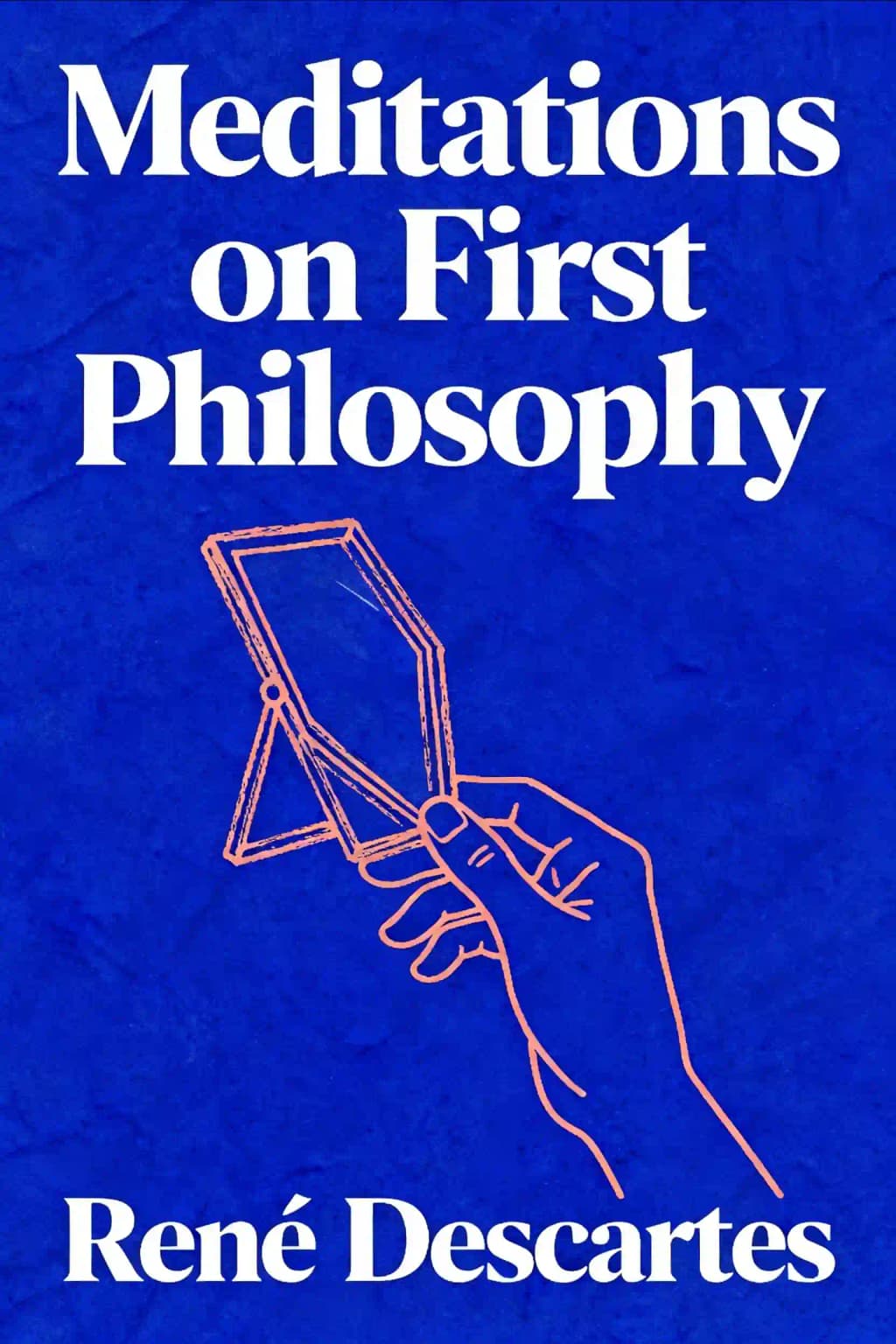
Rene Descartes' "Meditations on First Philosophy" stands as one of the most influential works in Western philosophy, fundamentally reshaping how we think about knowledge, reality, and the self. Published in 1641 during Europe's Scientific Revolution, this slim volume boldly challenged the prevailing Aristotelian worldview and established foundations for modern rationalism. Despite its brevity, the Meditations continues to captivate readers nearly four centuries later-from undergraduate philosophy students to leading thinkers across disciplines.
What makes this work so enduring? While many philosophical texts gather dust on academic shelves, Descartes' masterpiece remains startlingly relevant, addressing questions that still haunt us: How can we know anything with certainty? What is the relationship between mind and body? Can we prove God exists? The book has influenced figures as diverse as philosopher Immanuel Kant, physicist Albert Einstein, and even Apple founder Steve Jobs, who cited Descartes' methodical doubt as inspiration for questioning established ways of thinking. Beyond academia, the Meditations' core insight-"I think, therefore I am"-has permeated popular culture, appearing everywhere from science fiction films to advertising slogans, making Descartes perhaps the most quoted philosopher in modern life.
Capítulo 2
The Radical Method of Doubt
Descartes begins his philosophical journey with a revolutionary approach that shocked his contemporaries. Rather than building on established authorities or probable opinions-the standard approach of his time-he proposes to tear down the entire edifice of his beliefs and rebuild from scratch. "I will now close my eyes, stop my ears, and withdraw all my senses," he writes, initiating what philosophers call his "method of doubt."
This isn't mere skepticism for its own sake. Descartes employs doubt strategically, as a tool to discover what (if anything) can withstand the most extreme questioning. He systematically examines every source of knowledge, asking not whether each belief is probably false, but whether there's any possibility it could be mistaken. If even the slightest doubt exists, the belief must be temporarily rejected.
First, he questions sensory experience: "Whatever I have up till now accepted as most true I have acquired either from the senses or through the senses. But from time to time I have found that the senses deceive." We've all experienced optical illusions or mistaken one thing for another. If our senses occasionally mislead us, how can we trust them completely?
Descartes then escalates to more radical doubts. Perhaps he's dreaming? After all, dreams can seem utterly real while we're experiencing them. "How often, asleep at night," he reflects, "am I convinced of just such familiar events-that I am here in my dressing gown, sitting by the fire-when in fact I am lying undressed in bed!" If he can't distinguish waking life from dreams with certainty, all beliefs based on sensory experience become questionable.
But surely mathematical truths remain certain? Even in dreams, two plus three equals five. Here Descartes introduces his most extreme doubt-the hypothesis of an all-powerful deceiver: "Some malicious demon of the utmost power and cunning has employed all his energies in order to deceive me." If such a being existed, perhaps even our clearest thoughts could be manipulated.
This methodical doubt serves multiple purposes. It breaks the mind's habitual reliance on sensory experience and prepares it for purely intellectual insights. It also establishes a standard of certainty-only beliefs that can withstand even these hyperbolic doubts will qualify as genuine knowledge. Think of Descartes as an intellectual architect, clearing away unstable ground before building an unshakable foundation.
Capítulo 3
The Cogito: Finding Solid Ground
Having cast doubt on everything from sensory perceptions to mathematical truths, Descartes reaches a critical turning point in the Second Meditation. If he doubts everything, is there anything left that cannot be doubted? Yes-the very act of doubting itself.
"I have convinced myself that there is absolutely nothing in the world, no sky, no earth, no minds, no bodies. Does it now follow that I too do not exist?" Descartes asks. His answer is one of philosophy's most famous insights: "Let him deceive me as much as he can, he can never bring it about that I am nothing, so long as I think that I am something." Even if everything else is illusion-even if an evil demon is manipulating his thoughts-Descartes must exist as a thinking being for this deception to occur.
This realization-typically condensed to "Cogito, ergo sum" ("I think, therefore I am")-becomes the Archimedean point from which Descartes will rebuild knowledge. It's important to understand that this isn't a syllogistic argument but an immediate intuition. The very act of doubting proves the doubter's existence. As Descartes explains: "I am, I exist, is necessarily true whenever it is put forward by me or conceived in my mind."
But what exactly is this "I" that thinks? Descartes examines this question carefully, stripping away everything that can be doubted. He cannot be certain he has a body, since physical existence might be an illusion. What remains is pure thinking: "Thinking? At last I have discovered it-thought; this alone is inseparable from me." He defines this thinking broadly to include doubting, understanding, affirming, denying, willing, imagining, and sensing.
This leads to a profound insight about self-knowledge: we know our minds more directly than we know physical objects. To illustrate this, Descartes famously analyzes a piece of wax. When freshly taken from the honeycomb, the wax has certain sensible qualities-hardness, fragrance, a particular shape. When heated, all these qualities change dramatically, yet we still recognize it as the same wax. What remains constant isn't anything perceived by the senses but something grasped by the mind alone-the wax as an extended, flexible substance.
The wax example demonstrates that even our knowledge of physical objects depends on mental judgment rather than sensory perception. We think we know objects through our senses, but what we actually perceive are changing appearances that must be interpreted by the understanding. Thus, paradoxically, we know our own minds more certainly than the external world we habitually take for granted.
Capítulo 4
The Existence and Nature of God
Having established his own existence as a thinking being, Descartes faces a crucial challenge: how to move beyond this single certainty to rebuild knowledge of the external world. The bridge he constructs is his proof of God's existence, developed primarily in the Third Meditation.
Descartes begins by examining the types of thoughts he has. Some thoughts are like images or representations (ideas), others are emotions or desires (passions), and still others are judgments. Error occurs primarily in judgments when we affirm or deny something. Looking more closely at his ideas, Descartes categorizes them into three types: innate (built into the mind), adventitious (seemingly coming from outside), and factitious (invented by the mind itself).
His key insight concerns the "objective reality" of ideas-the degree of being or perfection they represent. Some ideas represent more complex or perfect beings than others. For example, the idea of a substance has more objective reality than the idea of a mere quality; the idea of an infinite substance has more reality than the idea of a finite substance.
Descartes then introduces a causal principle: there must be at least as much reality in the cause as in the effect. Applied to ideas, this means the cause of an idea must contain at least as much formal reality (actual existence) as the idea contains objective reality (represented existence). This principle sets up his argument for God's existence:
1. I have an idea of God as an infinite, eternal, immutable, independent, all-knowing, all-powerful being.
2. This idea has more objective reality than I possess formally as a finite, imperfect being.
3. Therefore, I could not have created this idea myself-it must have been placed in me by a being with at least as much reality as the idea represents.
4. Only God himself could have enough reality to cause the idea of God.
5. Therefore, God must exist.
Descartes reinforces this with a second argument: his own continued existence requires a cause. Either he created himself, was created by something less perfect than God, was created by God, or has existed eternally. He eliminates the first three alternatives, concluding that God must be his creator and sustainer.
In the Fifth Meditation, Descartes offers another proof of God's existence, the famous ontological argument. He argues that existence belongs to God's essence just as having three angles equal to two right angles belongs to a triangle's essence. Just as we cannot conceive a triangle without this property, we cannot conceive God without existence. Since we have a clear and distinct idea of God as a supremely perfect being, and existence is a perfection, God must exist.
This God, being supremely perfect, cannot be a deceiver-deception implies imperfection. This becomes crucial for Descartes' project, as God's truthfulness guarantees that our clear and distinct perceptions are reliable. When we clearly and distinctly perceive something, we can be confident it is true, because God would not systematically deceive us about the nature of reality.
Capítulo 5
The Source and Nature of Error
If God exists and is no deceiver, why do humans make mistakes? The Fourth Meditation addresses this apparent contradiction between divine perfection and human error.
Descartes begins by noting that error is not a positive reality but a privation-a lack of something that should be present. Just as blindness isn't something positive but the absence of sight in a being that should have vision, error is not something God creates but a deficiency in how we use our God-given faculties.
Human error stems from the interplay between two faculties: the intellect (understanding) and the will. The intellect perceives ideas with varying degrees of clarity and distinctness. The will makes judgments by affirming or denying what the intellect perceives. Error occurs when the will overreaches, making judgments about matters the intellect doesn't perceive clearly.
"The scope of the will is wider than that of the intellect," Descartes explains. While the intellect is finite, grasping only limited aspects of reality clearly, the will has a kind of infinity-we can choose to affirm or deny anything, even what we don't fully understand. This mismatch creates the possibility of error when we willingly assent to unclear perceptions.
Descartes illustrates this with an analogy: imagine standing at a crossroads without knowing which path leads to your destination. You could remain there indefinitely (withholding judgment), or you could choose a path despite your ignorance (risking error). Similarly, when faced with unclear ideas, we can either suspend judgment or risk error by affirming what we don't clearly perceive.
This analysis leads to Descartes' method for avoiding error: "I will restrain my will so that it extends to what the intellect clearly and distinctly reveals, and no further." By limiting judgments to what we perceive clearly and distinctly, we can avoid error while still making positive claims about reality.
This solution elegantly resolves the theological problem. God gave us reliable faculties and the freedom to use them. Error results not from divine deception but from our misuse of free will. God permits this possibility because freedom is a greater good than enforced correctness, and because the universe as a whole may be more perfect with beings capable of both truth and error than with beings limited to infallible but restricted knowledge.
Descartes' analysis of error reveals his deep concern with intellectual responsibility. Truth requires not just intelligence but discipline-the self-restraint to withhold judgment when evidence is insufficient. This insight remains profoundly relevant today, when information overload and partisan pressures often lead us to form hasty judgments without adequate understanding.
Capítulo 6
The Essence of Material Things
Having established his own existence, God's existence, and a method for avoiding error, Descartes turns in the Fifth Meditation to understanding the nature of material things. Even before proving that physical objects actually exist outside the mind, he examines what we can know about their essence or nature.
Descartes discovers he has clear and distinct ideas of extension (three-dimensional space), shape, motion, and position. These ideas have a strange status-they seem to represent real properties independent of his thinking. Even if no triangles exist in reality, the properties of triangles remain true and unchangeable. "The triangle itself never existed outside my thought," he writes, "and yet it has a certain determinate nature, essence, or form which is immutable and eternal, which I did not invent, and which does not depend on my mind."
This insight reveals Descartes' mathematical approach to physical reality. The essential nature of material things consists in their geometric properties-extension in three dimensions with various shapes and motions. Other qualities we associate with physical objects, like color, taste, smell, or sound, are not part of their essence but modes of our perception.
Consider a piece of wax again. When heated, its color, smell, hardness, and shape all change, yet it remains the same wax. What persists is simply an extended, flexible thing capable of countless changes in shape. The essential nature of the wax-indeed of all material things-is extension in space.
This conception of material essence represents a radical break from Aristotelian physics, which explained physical properties through "substantial forms" and "real qualities" inherent in objects. For Descartes, material reality is fundamentally mathematical. Physical objects are simply portions of extended space with different shapes and motions.
This mathematical conception of nature would prove enormously fruitful for science. By reducing physical reality to extension and motion, Descartes helped establish the mechanistic worldview that enabled Newton's physics and much of modern science. Physical events no longer needed explanation through obscure "qualities" or "tendencies" but could be described through mathematical laws governing matter in motion.
However, this conception also created a profound problem: if material things are essentially just extended substances, and the mind is a non-extended thinking substance, how can they interact? This mind-body problem would become one of Descartes' most controversial legacies, challenging philosophers for generations to come.
Capítulo 7
The Existence of Material Things
In the Sixth Meditation, Descartes finally addresses whether material things actually exist outside the mind. He begins by distinguishing imagination from pure understanding. When I imagine a triangle, I form a mental image of it, requiring mental effort. When I merely understand a chiliagon (a thousand-sided figure), I grasp its properties without forming a clear mental image. This distinction suggests imagination involves the body, while pure understanding is an activity of the mind alone.
Descartes then considers sensory perceptions, which seem to come involuntarily and contain more detail than imagined ideas. These perceptions strongly suggest external objects exist, but this isn't yet conclusive proof. The dream argument still stands-perhaps all sensory experiences are like vivid dreams.
The decisive argument comes from God's truthfulness. Descartes has a strong natural inclination to believe his sensory perceptions are caused by external objects. If no such objects existed, God would be allowing him to be systematically deceived about something fundamental. Since God is no deceiver, material things must exist.
"There is no doubt that everything that I am taught by nature contains some truth," Descartes writes. "For by 'nature' considered in general I understand nothing other than God himself or the ordered network of created things established by God."
However, this doesn't mean our sensory perceptions accurately represent external objects. Nature teaches us to pursue pleasure and avoid pain, which serves bodily preservation. But nature doesn't teach us that sensory qualities like colors or tastes exist in objects exactly as we perceive them. These sensations are useful signals about how things might affect us, not accurate representations of the things themselves.
Descartes illustrates this with the example of phantom limb pain. Someone might feel pain in an amputated foot, showing that sensations don't always correspond to their apparent locations. Similarly, someone with dropsy might feel thirst when drinking would harm them. These aren't divine deceptions but limitations of our composite nature, where sensations evolved primarily for bodily preservation rather than theoretical knowledge.
This analysis leads to a sophisticated understanding of perception. Sensations reliably indicate the presence of external objects and their effects on us, but they don't necessarily reveal the intrinsic nature of those objects. The warmth I feel near fire indicates something in the fire that causes this sensation, but doesn't mean the fire itself contains the sensation of warmth. This distinction between primary qualities (like extension and motion, which exist in objects themselves) and secondary qualities (like color and taste, which exist primarily in our perception) would become fundamental to modern philosophy of perception.
Capítulo 8
The Mind-Body Distinction
Perhaps the most controversial aspect of Descartes' philosophy is his dualism-the claim that mind and body are fundamentally different substances. In the Sixth Meditation, he presents his clearest argument for this position.
The argument begins with the observation that the mind and body are conceivable as separate. "I have a clear and distinct idea of myself, insofar as I am simply a thinking, non-extended thing; and on the other hand I have a distinct idea of body, insofar as this is simply an extended, non-thinking thing." Since God can bring about whatever we can clearly conceive, and we can clearly conceive mind and body as separate, God could create them separately. Therefore, mind and body must be really distinct substances.
This distinction explains why the mind is better known than the body. We perceive the mind directly through consciousness, while we know physical objects only indirectly through their effects on us. The mind is indivisible-we cannot divide consciousness into parts-while bodies are always divisible, at least conceptually.
Yet despite this fundamental distinction, mind and body are intimately united in human beings. "I am not merely present in my body as a sailor is present in a ship," Descartes writes, "but I am very closely joined and, as it were, intermingled with it, so that I and the body form a unit." This intimate union explains why we feel sensations as located in specific body parts and why emotions involve both mental and physical components.
The mind-body interaction occurs through a specific part of the brain-the pineal gland, according to Descartes' physiology. When external objects affect the sense organs, they cause motions in the nerves that reach this gland, producing sensations in the mind. Conversely, when the mind wills bodily movements, it affects the animal spirits flowing through the pineal gland, which then cause physical motion.
This dualism has profound implications. If the mind is a non-physical substance distinct from the body, it could potentially survive bodily death. While Descartes doesn't explicitly argue for immortality in the Meditations, his distinction between mind and body provides philosophical groundwork for this possibility.
However, dualism also creates problems. If mind and body are fundamentally different substances-one extended in space, the other non-extended-how can they causally interact? This "interaction problem" would challenge Cartesian philosophy from its inception. Later philosophers like Malebranche, Spinoza, and Leibniz would develop alternative systems partly to address this difficulty.
Despite these challenges, Descartes' distinction between mind and body profoundly shaped modern thought. It influenced everything from psychology (distinguishing mental from physical phenomena) to neuroscience (investigating mind-brain connections) to artificial intelligence (questioning whether machines can think). Whether embraced or rejected, Cartesian dualism remains a touchstone for understanding consciousness and its relationship to the physical world.
Capítulo 9
The Legacy of Cartesian Doubt
The Meditations concludes with Descartes having rebuilt knowledge on what he considers unshakable foundations. Beginning from the certainty of his own existence as a thinking being, he established God's existence and truthfulness, the reliability of clear and distinct perceptions, the mathematical essence of material things, the existence of the external world, and the real distinction between mind and body.
This systematic reconstruction of knowledge represents one of philosophy's most ambitious projects. Yet the Meditations' enduring influence stems not just from its conclusions but from its method-the radical questioning that initiates philosophical reflection.
Descartes' legacy extends far beyond philosophy proper. His mechanistic conception of nature, where physical events are explained through matter in motion rather than inherent qualities or tendencies, helped establish the framework for modern physics. His emphasis on clear and distinct ideas as standards for knowledge influenced scientific methodology. His mathematical approach to physical reality-treating extension as the essence of material things-anticipated the mathematization of nature in modern science.
The Cartesian project also transformed how we understand subjectivity. By beginning with the thinking self and treating consciousness as more immediately known than the external world, Descartes helped inaugurate modern conceptions of mind and selfhood. His famous "Cogito" established self-consciousness as a philosophical starting point, influencing thinkers from Kant to Husserl.
Yet Descartes' system also generated profound problems that continue to challenge philosophy. The mind-body problem remains unsolved-how can mental and physical substances interact if they're fundamentally different? The "Cartesian circle" raises questions about his epistemology-if clear and distinct perceptions are validated by God's existence, but God's existence is known through clear and distinct perception, isn't the argument circular?
Contemporary philosophers and cognitive scientists have largely rejected Cartesian dualism, favoring various forms of materialism or functionalism. Yet even these rejections often define themselves against Descartes, showing his continuing relevance. When philosophers debate whether consciousness can be explained in purely physical terms, they're engaging with questions Descartes helped frame.
Perhaps most importantly, Descartes' method of doubt established a standard for intellectual honesty. By willingly questioning his most basic beliefs and refusing to accept anything on mere authority, he exemplified philosophical courage. His approach reminds us that genuine understanding requires periodically stepping back from our assumptions and examining the foundations of our knowledge.
In our age of information overload and competing truth claims, Descartes' methodical doubt offers valuable lessons. Not as a path to permanent skepticism, but as a way to distinguish what we truly know from what we merely assume. His journey from radical doubt to rebuilt certainty shows that questioning our beliefs need not end in nihilism but can lead to more secure knowledge-if we're willing to follow reason wherever it leads.