Capítulo 4
The Black Tradition of Arms
Not all Black leaders supported gun control. The "Black tradition of arms" had deep historical roots that Council member Doug Moore and Detroit Mayor Coleman Young invoked in their opposition. After the Civil War, newly freed Black Americans faced terrorism with little protection from the state. The Fourteenth Amendment promised equal protection, but as Reconstruction collapsed, white supremacists used violence to subjugate Blacks while simultaneously working to disarm them. Alabama's law forbade any "freedman, mulatto, or free person of color" from owning firearms, a pattern repeated across the South.
Black Americans consistently used guns for self-defense throughout history. During Reconstruction, Black citizens in South Carolina warned would-be suppressors that "80,000 black men in this state who can bear Winchester rifles and know how to use them." In the 1919 race riots in Washington DC, Black veterans organized armed resistance that earned praise from NAACP leader James Weldon Johnson for having "saved Washington" from becoming "another and worse East St. Louis." The tradition continued through civil rights leaders from Ida B. Wells to Malcolm X.
Ironically, gun control gained momentum in the late 1960s precisely when Black people began using guns politically. California enacted strict gun control after Black Panthers publicly armed themselves, and Congress targeted "Saturday night specials" favored by poor Americans. Black nationalists including Stokely Carmichael opposed these measures, with the Black United Front arguing that "D.C. gun-control legislation is a white racist means of taking away from black people an instrument of self-defense."
Despite these historical arguments, the Black political establishment had definitively embraced significant gun restrictions by the mid-1970s. The 12-1 vote for D.C.'s gun control reflected this shift. Two major factors drove this change: First, the Black tradition of arms had grown out of white-on-Black violence, but now Black-on-Black crime represented the greater threat. Second, political power had shifted. Guns had developed special meaning in Black communities as protection when government ignored or abetted Black death. But now Black lawmakers like John Wilson occupied positions of authority, promising police protection to communities long denied it.
Capítulo 5
From Integration to Enforcement
Burtell Jefferson's swearing-in as D.C.'s first Black police chief in January 1978 marked a historic moment in a century-long struggle for police integration. Jefferson, who had struggled against discrimination for three decades, focused on remedying past injustices by creating opportunities for minorities. Since Black officers already constituted most new recruits, he tackled the promotion process, the final barrier to Black advancement.
Jefferson's efforts were tremendously successful. Isaac Fulwood, who later became police chief himself, called Jefferson "the all time affirmative action person" who "broke it wide open." More than twenty senior Black police leaders, including chiefs in major cities, traced their careers to Jefferson's influence.
But Jefferson's success in advancing racial equality within the police force didn't translate to a progressive approach to policing Black communities. When interviewed about his childhood experience of being wrongfully detained alongside dice-shooting boys, Jefferson surprisingly defended the white officer's actions: "I've always been taught that if you yourself are not actually engaged in some wrongdoing, if you're with a crowd you're just as guilty."
Jefferson strongly supported mandatory minimum sentences for drug and gun offenses. In this, he aligned with most Black officers. The National Council of Police Societies had urged members to "move against pushers" in 1970, and D.C.'s rank-and-file officers cited lenient sentencing as their top concern in a 1976 survey.
For most Black officers, ideology took a backseat to practical concerns. They joined the force simply because they needed stable employment. When Nicholas Alex interviewed hundreds of Black NYPD officers in the mid-1960s, they consistently cited economic motives: "I was broke," one admitted, while another explained, "I looked around for the highest paying nonprofessional civil service job available." Police work offered steady income and advancement opportunities that were rare in the discriminatory private sector.
This economic motivation undermined the theory that integration would transform policing. Officers who saw policing primarily as a job rather than a civil rights battleground were less likely to challenge the powerful police culture. Additionally, the need to protect their hard-won economic security meant Black officers and their unions often prioritized wages, benefits, and promotion opportunities over addressing police brutality.
Capítulo 6
The Punitive Turn in Sentencing
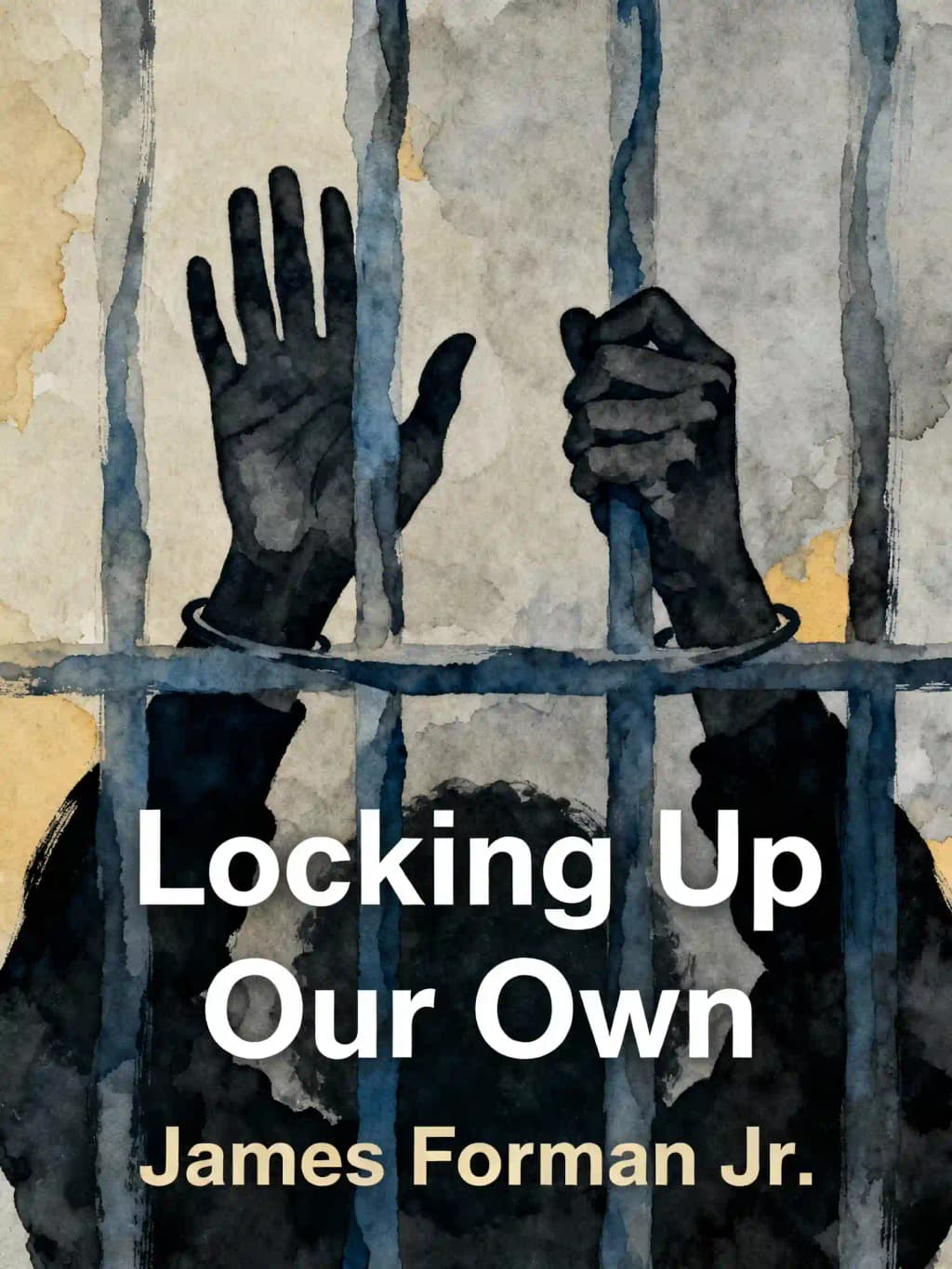
In 1996, as a newly promoted public defender in Washington D.C., James Forman Jr. represented Tasha Willis, arrested for selling $10 worth of heroin to an undercover officer. What truly concerned him wasn't just the evidence, but the severe mandatory sentence she faced. When he'd ask friends what punishment seemed appropriate for selling small amounts of drugs, most suggested probation or a few months in jail. Their shock was palpable when he revealed the truth: for first-time offenders, D.C. law mandated up to thirty years; for someone with a prior conviction like Ms. Willis, up to sixty years.
The prosecutor rejected treatment options, saying programs "don't work" for Ms. Willis who'd had "two chances" already. This common prosecutorial reasoning infuriated Forman-addiction specialists know many people relapse multiple times before achieving sustained sobriety. Yet while we treated drug program failures as disqualifying, we never treated prison's failure as a reason not to try more prison.
These severe penalties resulted from decisions D.C. had made fifteen years earlier, when city politicians and voters dramatically toughened criminal sentencing. Two prominent figures championed this change: newly-elected councilman John Ray and former police chief Burtell Jefferson, who sought to increase maximum sentences for drug sales and implement mandatory minimums for certain drug and gun crimes.
By the late 1970s and early 1980s, pressure mounted to toughen D.C.'s outdated drug laws. Communities like Shaw, U Street, and Columbia Heights-already struggling to recover from the 1968 post-King assassination riots-faced "open and notorious" drug markets. Councilman John Wilson described "droves of drug dealers, sometimes numbering fifty to one hundred" at Tenth and O Streets, while Chapin Street became known as "the McDonald's of the marijuana business."
The situation was dire, with children frequently cited as victims. One Chapin Street resident kept her children "in the back of the house so they don't see the kids selling pot in the front." When school board member Frank Smith visited Cleveland Elementary in Shaw, he was "frankly frightened" by the throng of young men surrounding the building.
Public complaints about the criminal justice system fell into two categories. First, many criticized what they saw as lackadaisical street-level enforcement by police. These complaints often carried racial overtones, with activists arguing that open drug dealing "wouldn't be tolerated in Georgetown and other [predominantly white] communities." The second target was the court system, particularly what many called "revolving door justice." For many Black observers, this revolving door seemed discriminatory-spinning fastest for criminals who victimized Black communities.
Capítulo 7
The Push for Mandatory Minimums
In spring 1981, David Clarke, chair of the D.C. Council's Judiciary Committee, proposed strengthening the District's drug sentencing guidelines. Though Clarke had fought for marijuana decriminalization years earlier, he recognized the city's shifting mood toward tougher penalties. His proposal separated drugs into classes and distinguished between possession and sale, generally reducing penalties for possession while increasing them for sales.
Police Chief Burtell Jefferson wanted even tougher measures, pushing for both higher maximum sentences and mandatory minimum sentences. From law enforcement's perspective, mandatory minimums addressed a frustrating reality: officers would make dangerous arrests only to see defendants released on bail, acquitted on technicalities, or given probation.
Jefferson found an ally in John Ray, an ambitious 37-year-old council member with mayoral aspirations. Born in rural Georgia and raised by his grandmother in a crowded two-bedroom house, Ray had worked cotton and tobacco fields as a child before graduating as valedictorian. He framed his proposals in terms of racial justice, citing NAACP and Urban League research showing that "Black crimes against blacks get very low sentences" while "Black crimes against whites get very big sentences." To Ray, mandatory minimums would eliminate the discretion that allowed rich defendants to escape punishment "while the poor lad on the street is put away in Lorton."
Despite support from community groups, Ray faced substantial opposition during council hearings in March 1981. The local NAACP president Edward Hailes acknowledged the group's outrage over crime but rejected mandatory minimums as "a club" when what was needed was "a scalpel of justice to cut crime out of the community." Most surprisingly, U.S. Attorney Charles Ruff testified against Ray's proposal, arguing that mandatory sentences would clog the system and remove necessary discretion.
On May 19, the council passed new drug legislation but rejected mandatory minimums. Nevertheless, Ray and Jefferson secured higher maximum sentences and planned to take their mandatory minimum proposal directly to voters through a ballot initiative.
Capítulo 8
The Worst Thing to Hit Us Since Slavery
The harsh treatment of Black youth had deep historical roots, but warrior policing as we know it emerged in the late 1980s with the crack cocaine epidemic. Crack devastated Black communities already struggling with economic decline, factory closures, and Reagan-era cuts to social programs. The drug created addicts rapidly and spawned unprecedented violence as heavily armed gangs fought for territory. Black leaders compared crack to slavery and the Klan, with Jesse Jackson declaring, "I won't take it from the Klan with a rope; I won't take it from a neighbor with dope." The Los Angeles Sentinel called it "the most serious threat we have faced since the end of slavery."
1988 became what Assistant Police Chief Isaac Fulwood called "Washington's Year of Shame." The year began with nineteen-year-old Michael Saunders found shot in the head with sixty packets of crack in his coat. A horrifying litany of violence followed, culminating in the thirty-seventh murder of January when Reginald Small, a fifteen-year-old eighth grader, was shot near his home. D.C. was midway through a seven-year stretch where its homicide rate tripled, earning it the title "America's Murder Capital."
The violence brought a rush of increasingly powerful guns into the city, with traditional revolvers giving way to rapid-fire weapons like Uzis. The toll fell disproportionately on black communities-in 1989, nine out of ten homicide victims were black, despite the city being 30% white. Ward 8, economically barren and almost entirely black, had a homicide rate thirty times higher than affluent Ward 3.
As crack devastated black communities, the criminal justice system responded with increasingly harsh measures. Congress established stiffer mandatory minimums in 1984, 1986, and 1988, often through hurried processes described as "political poker games" rather than thoughtful policy development. The most notorious outcome was the hundred-to-one cocaine-to-crack ratio, which punished crack offenses far more severely than powder cocaine-a distinction based on racialized fear rather than science.
As inner-city drug sellers increased their firepower, police responded in kind. Police began upgrading from revolvers to 9mm semiautomatic weapons as they found themselves increasingly outgunned by teenagers on the streets. Mayor Barry himself demonstrated the new weapons at a press event in 1988, marveling at their firing speed.
Capítulo 9
The Legacy of Warrior Policing
Operation Clean Sweep, spearheaded by Assistant Chief Fulwood, represented D.C.'s aggressive response to drug trafficking. The initiative employed "jump-out squads"-teams of officers in unmarked vehicles who would swarm corners known for drug dealing. Clean Sweep also established specialized units like the Rapid Deployment Unit (RDU), staffed by self-described "super-aggressive" young officers who "rewrote the Constitution every day." Despite Fulwood's personal ambivalence about mass arrests-partly informed by his own brother's struggles with addiction-the operation proceeded with ruthless efficiency, stopping any car with young black men inside.
Accompanying aggressive policing tactics was an expansive asset forfeiture program that allowed police to seize property connected to drug transactions. D.C. leaders embraced this approach enthusiastically, with Fulwood declaring they would "make it expensive to come into this man's town and buy drugs." Mayor Barry, who had once supported marijuana decriminalization, now advocated for seizing cars even for possession of "one marijuana joint." The seizures extended beyond vehicles to homes, jewelry, and even furniture purchased with drug money.
The crack epidemic transformed attitudes toward drug users and low-level dealers, who became targets of severe punishment. Prosecutor Albert Herring articulated the prevailing view: "There was not a single rock of crack anywhere in the District of Columbia that wasn't stained with the blood of some mother's child." This mindset justified harsh treatment throughout the distribution chain, with even users seen as morally responsible for drug-related violence.
Clean Sweep's first eighteen months produced forty-six thousand arrests-one for every fourteen D.C. residents, the highest per-capita drug arrest rate in any comparable American city. Many arrestees ended up in D.C. Jail or Lorton prison, facilities notorious for inhumane conditions that had deteriorated further with overcrowding. U.S. District Court Judge June Green condemned the "purposeless infliction of pain" in a system marked by squalid cells, violence, and negligent healthcare.
Despite Clean Sweep's aggressive approach and escalating arrests, the murder rate continued to rise under Fulwood's leadership: from 372 in 1988 to 489 in 1991. Fulwood resigned in 1992, admitting his failure to reduce homicides and expressing frustration with racial disparities: "I'm tired of seeing black children locked up every five minutes. And it's not having a significant impact." Two months after his resignation, his brother Teddy, recently released from prison, became the city's 401st murder victim that year, killed just blocks from their childhood home.
Capítulo 10
Beyond the Violent Offender Label
D.C.'s 2014 marijuana decriminalization succeeded where a similar 1975 proposal had failed because of dramatic changes in context. By 2014, America was experiencing "the great American crime decline," with D.C.'s homicides dropping from 485 in 1991 to just 88 in 2012. Meanwhile, the devastating impact of marijuana criminalization on Black communities had become undeniable-African Americans were incarcerated at five times the rate of whites, with young Black men without high school diplomas more likely to be imprisoned than employed.
The case of sixteen-year-old Dante Highsmith illustrates the limitations of current reform efforts focused exclusively on "nonviolent drug offenders." Dante was charged with armed robbery after threatening a man at a bus stop with a knife and taking $12. Despite strong evidence against him, Forman investigated his background as his public defender and found a traumatic history-removed from his crack-addicted mother at age eight, raised by his ailing grandmother, and struggling in school despite showing talent in woodworking.
When Forman tried finding alternative programs for Dante, he encountered the same barrier repeatedly: "We don't accept people charged with violent offenses." This illustrates the fundamental problem with President Obama's approach to criminal justice reform, which focused exclusively on "nonviolent drug offenders." Even if America released every prisoner held on drug charges, we'd still have the world's largest prison population. By declaring "no sympathy" for those who committed violent offenses, Obama effectively marked this larger group as permanently beyond redemption, ignoring context, mitigating factors, and individual stories.
After numerous rejections, Dante's mother Jacinda, now in recovery from addiction, found a tiny church-based carpentry program willing to accept her son. Though defense lawyers rarely approach victims, Forman visited Mr. Thomas, the robbery victim, hoping to convince him to support this alternative to incarceration. At the sentencing hearing, Mr. Thomas told Judge Walker that while he wasn't sure he could forgive Dante, he was willing to try. Because of Mr. Thomas's grace, Judge Walker granted probation instead of incarceration.
Years later, Forman encountered Dante by chance at a construction site in downtown D.C. He had grown into a man with a hard hat and steady employment. He had completed the carpentry program, earned his GED, and despite difficulties finding and keeping work, had stayed out of trouble and now had steady employment and a son of his own.
Though such incremental changes might seem meager against our vast prison system with its grotesque racial disparities, they matter immensely to those involved. And just as mass incarceration was constructed incrementally, it may have to be dismantled the same way-one person, one case, one act of mercy at a time.