Capítulo 1
The Fountain of Youth: Unlocking the Secrets of Aging
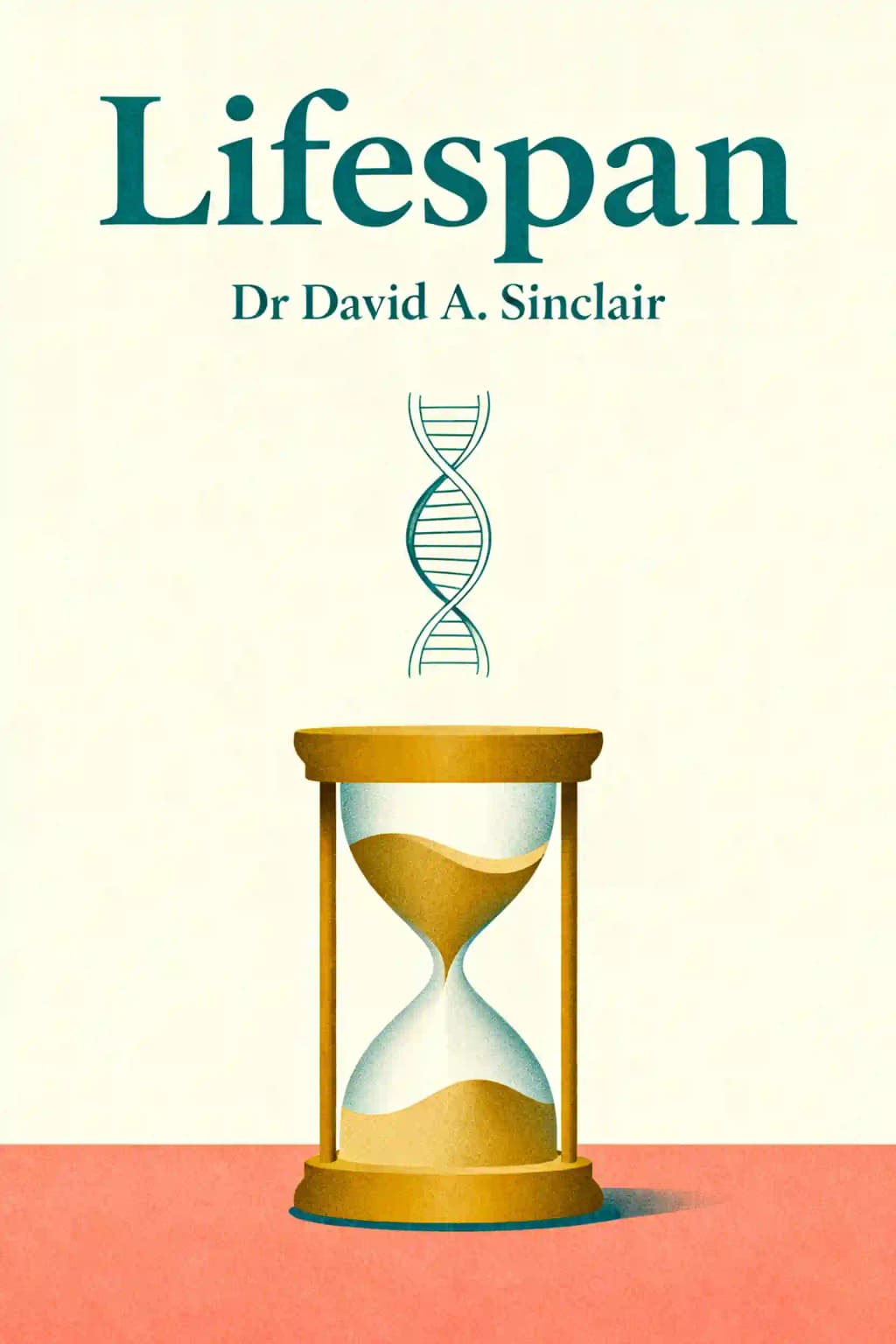
When David Sinclair steps onto the stage at TEDMED or appears on Joe Rogan's podcast, millions tune in to hear what this Harvard professor has discovered about aging. His book "Lifespan" has become a sensation among Silicon Valley executives and Hollywood celebrities alike-with everyone from Jeff Bezos to Sandra Bullock reportedly incorporating his longevity protocols. What makes this Australian geneticist's work so compelling isn't just his impeccable credentials, but the revolutionary idea at its core: aging isn't inevitable. It's a disease we can potentially treat, slow, or even reverse. In a world obsessed with extending not just lifespan but "healthspan," Sinclair offers something both scientifically rigorous and tantalizingly hopeful-a roadmap to potentially adding decades of vibrant health to our lives through understanding the fundamental mechanisms that make us age in the first place.
Capítulo 2
The Ancient Survival Circuit: How Life's First Crisis Response Became Aging's Root Cause
Four billion years ago, in the hostile environment of early Earth, a remarkable organism emerged that would change everything. Named Magna superstes ("great survivor"), this microbe developed a revolutionary genetic circuit that paused reproduction during stress to repair DNA damage. While other organisms continued dividing with damaged genomes and ultimately perished, M. superstes survived by prioritizing genome integrity over immediate reproduction.
This ancient survival circuit remains with us today-present in every plant, fungus, and animal on Earth. It represents a primordial survival kit that diverts energy to fixing DNA damage during stress while permitting reproduction only in favorable times. This elegant solution has ensured life's continued existence for billions of years. And remarkably, this same circuit is why we age.
The notion that aging has a singular cause challenges conventional thinking. Most biologists and gerontologists have focused on treating aging's consequences rather than its cause, much like cancer research before the 1970s when doctors fought symptoms without understanding why cancer happens. The discovery of oncogenes transformed cancer treatment, allowing targeted therapies instead of broad radiation and chemotherapy. Similarly, understanding aging's fundamental cause could revolutionize how we approach longevity.
Until the mid-twentieth century, most believed organisms age and die "for the good of the species"-an intuitive but incorrect idea. Evolutionary biologists later proposed that individuals are driven by selfish genes to reproduce as much as possible. We age because natural selection's power weakens dramatically after reproductive age. Thomas Kirkwood's "Disposable Soma Hypothesis" suggested species must allocate limited resources either to reproduction or body maintenance, explaining why mice live 3 years while some birds reach 100.
These evolutionary theories explain aging across species-except for Homo sapiens, which has used intelligence to overcome natural limitations through civilization, abundant food, and reduced deaths from predation and disease. Rather than waiting millions of years for evolution to extend our lifespan, we're actively developing medicines to give us the robustness of longer-lived species.
What if aging isn't just accumulated damage but something more fundamental-a loss of information? The Information Theory of Aging suggests that aging results from the breakdown of epigenetic information that controls which genes are turned on or off in our cells. This theory explains why aging can be slowed or even reversed through certain interventions, and why some animals seem to defy aging entirely.
Capítulo 3
The Epigenome: The Pianist Behind Life's Symphony
Our genome contains the blueprint for every protein in our body, but it's the epigenome-the system of chemical markers and proteins that regulate gene expression-that determines which genes are active in which cells. Think of DNA as a grand piano with 20,000 keys (our genes), and the epigenome as the pianist deciding which keys to play, when, and how loudly.
In young organisms, this pianist plays flawlessly, creating the beautiful music of life. But as we age, the pianist begins hitting wrong notes with increasing frequency. This isn't because the piano (our DNA) is fundamentally damaged, but because the pianist (our epigenome) is becoming confused and disoriented.
This confusion stems from our primordial survival circuit. When DNA breaks occur-which happens trillions of times daily from radiation, chemical exposure, and normal metabolism-sirtuins and other epigenetic regulators rush to repair the damage. These proteins temporarily abandon their gene-silencing posts, like firefighters leaving their stations to battle a blaze. If the damage is extensive or frequent enough, some regulators never return to their original positions, causing genes to be improperly expressed.
This epigenetic noise-the accumulation of errors in gene expression-manifests as all the hallmarks of aging we recognize: wrinkles, gray hair, diminished organ function, increased disease susceptibility, and ultimately death. The Information Theory of Aging suggests that this noise, not the DNA damage itself, is the primary cause of aging.
The evidence for this theory comes from remarkable experiments. When researchers added extra copies of the SIR2 gene to yeast cells, providing enough sirtuins to both repair DNA and maintain proper gene silencing, the yeast lived 30% longer. Similar results have been observed across species, from worms to mice. Even more striking, techniques that reset the epigenome, like cellular reprogramming, can reverse age-related changes in cells and tissues.
Conrad Waddington's 1957 "epigenetic landscape" metaphor helps visualize this process. Imagine embryonic stem cells as marbles rolling down a mountain into valleys representing different cell types. The epigenome guides this differentiation and normally keeps cells in their proper valleys. However, DNA damage creates "earthquakes" that gradually shift these marbles, causing cells to "ex-differentiate"-losing their proper identity and becoming dysfunctional hybrids.
Unlike digital information, our analog epigenome accumulates noise over time, with valley walls eroding and cells losing their identity. This epigenetic noise, caused by the survival circuit repeatedly shifting resources to repair DNA damage, is the fundamental cause of aging.
Capítulo 4
Aging as Disease: The Medical Revolution We've Been Missing
On May 10, 2010, while London was distracted by Chelsea's football championship and Gordon Brown's resignation, nineteen leading scientists gathered at the Royal Society to present a revolutionary idea: aging itself is a disease.
This notion remains controversial despite aging's mathematical predictability. In 1825, Benjamin Gompertz formulated his "Law of Human Mortality," describing aging as two co-existing causes: random chance and exponential deterioration. This model accurately predicts death patterns across species, with mortality rates doubling approximately every eight years for humans.
Despite modern medicine extending average lifespans by twenty years since 1960, the fundamental ceiling remains-only 3 in 100 reach age 100, with survival beyond 115 being mathematically improbable under current conditions.
Our medical system treats diseases individually rather than addressing their common cause-aging. Hospitals organize by specialty, with researchers siloed in separate departments fighting specific conditions. This fragmented approach means that curing one disease barely impacts overall lifespan-eliminating all cardiovascular disease would add just 1.5 years to average life expectancy, while curing all cancers would add only 2.1 years.
Why? Because aging continues exponentially increasing our risk of all diseases. By age 70, cancer risk is a thousandfold higher than at younger ages. Unlike a bushwalk where rest and nutrition help you continue, aging resembles sprinting over ever-higher hurdles-eventually, one will trip you.
Aging fulfills every criterion of disease-physical decline, limited quality of life, specific pathology-except one: it affects more than half the population. The Merck Manual calls aging "inevitable" and "irreversible," but we once said the same about cancer, diabetes, and gangrene.
This framing has prevented us from properly funding aging research and developing treatments. The absurdity becomes clear through thought experiments: if most people lived to 150 while your family aged rapidly at 80, doctors would certainly classify your condition as a disease. Or consider Werner syndrome, which causes premature aging-nobody questions calling that a disease or seeking treatments.
Aging is the deadliest, costliest disease on the planet, yet almost no one is working on it. The Information Theory of Aging could change everything, allowing us not just to slow aging but potentially eliminate its symptoms altogether.
Capítulo 5
The Longevity Toolkit: Molecules That Turn Back Time
The dream of extending human life has ancient roots, but scientific understanding of aging is relatively recent. To truly comprehend aging, we must examine the subcellular world-where the reasons for our mortality become apparent. Despite what many believe, there are no biological laws that say life must end; aging is simply an increase in entropy that could potentially be reversed with the right interventions.
On Rapa Nui (Easter Island), scientists discovered the bacterium Streptomyces hygroscopicus in the 1960s, which produced rapamycin. Initially studied as an antifungal compound, later research revealed rapamycin's immune-suppressing properties and, more importantly, its ability to extend lifespan in various organisms by inhibiting the TOR pathway.
Metformin, derived from French lilac, was developed in the 1950s to treat type 2 diabetes. This inexpensive medication has revealed surprising benefits beyond controlling blood sugar. Studies show metformin users experience healthier lives with reduced rates of dementia, cardiovascular disease, cancer, frailty, and depression. In mice, even low doses increase lifespan by about 6%, equivalent to five human years.
After discovering that Sir2 was a cause of aging in yeast cells, researchers began searching for ways to increase sirtuin activity in mammals. They found that resveratrol, a compound in red wine, significantly extended lifespan in yeast cells. The molecule worked through the same pathway as calorie restriction and required the SIR2 gene. When given to obese mice, resveratrol dramatically improved their health, giving them healthy organs, more mitochondria, less inflammation, and lower blood sugar levels.
NAD (nicotinamide adenine dinucleotide) is a powerful sirtuin-activating compound that boosts all seven sirtuins. NAD levels decrease throughout the body with age, compromising sirtuin function. Researchers discovered that nicotinamide riboside (NR) and nicotinamide mononucleotide (NMN), found in foods like milk, avocado, and broccoli, can increase NAD levels by about 25% in a couple hours, similar to fasting or exercise.
Studies show NMN treats type 2 diabetes symptoms, restores mitochondrial function in old mice, improves endurance, and protects against kidney damage and neurodegeneration. In old mice, NMN treatment resulted in pristine eggs identical to those of young mice, suggesting it might restore fertility in women past menopause.
These molecules create just enough stress to activate longevity genes that suppress epigenetic changes and maintain youthful programming, thereby reducing the informational noise that causes aging. By boosting silencing proteins like sirtuins, they help maintain the youthful epigenome despite DNA damage, potentially preventing Waddington's marbles from escaping their valleys or even pushing them back-essentially achieving partial age reversal.
While formal human studies are still in progress, many people have begun their own experiments based on promising results in animal models. The author's father, in his mid-70s with declining health, began taking metformin and NMN. After six months, he reported feeling less tired, less sore, and more mentally aware. His liver enzymes normalized after twenty years of abnormality, and he became remarkably active-hiking mountains, riding three-wheelers, and even starting a new career on a university ethics committee.
Capítulo 6
Beyond Pills: The Next Frontiers in Longevity Science
Aging, once thought impossibly complex to address, is now recognized as surprisingly manageable-even easier to tackle than cancer. By understanding the universal regulators of aging that function across species from yeast to humans, we can now see aging as a single disease with clear intervention points.
Senescent cells-"zombie cells" that stop dividing but refuse to die-accumulate with age and release inflammatory cytokines that damage surrounding tissues. Research shows that eliminating these cells in mice extends lifespan by 20-30%, improves kidney function, strengthens hearts, and reduces various age-related conditions.
About half of the human genome consists of "junk DNA"-selfish genes called LINE-1 retrotransposons that can jump around and reinsert themselves elsewhere in our DNA. In young cells, sirtuins bundle and silence these mobile elements. As we age, however, sirtuins become scattered throughout the genome as they're recruited to repair DNA breaks, and declining NAD levels further compromise their function. Without sirtuins to maintain chromatin structure and silence transposon DNA, these "endogenous viruses" become active, creating genome instability and epigenomic noise.
Scientists have developed immunological approaches that could potentially eliminate senescent cells just as they're now fighting cancer. Researchers theorize that senescent cells, like cancers, evade immune detection by displaying molecular signals that say "No zombie cells here." If they're right, we could develop vaccines that unmask these cells to the immune system.
What if we could reset the aging clock entirely, preventing cells from ever losing their identity? The DNA blueprint for youth remains in our cells even when we're old-the information is just obscured by epigenetic "noise." Two approaches exist: use a better "player" (as demonstrated by cloning experiments), or "polish the disc" to restore the original information.
Researchers have shown promising results using Yamanaka factors-genes that can reset cells to an embryonic-like state. By carefully controlling this process, they've achieved remarkable regeneration of damaged tissues without causing tumors. Graduate student Yuancheng Lu used this approach to restore vision in aged mice and reverse glaucoma damage. This suggests cells retain a "backup" of youthful information that can be accessed to reset the epigenome.
Cellular reprogramming represents the next frontier in aging research, potentially allowing regeneration of any tissue damaged by age. However, ethical questions remain about who should access this technology, when it should be used, and whether it should be preventive or only for the already ill.
Capítulo 7
The Future of Medicine: From Reactive to Proactive
Our healthcare system's reactive approach is failing us-patients typically wait nearly a month to see physicians, with wait times in medical hubs like Boston reaching fifty-two days. The problem isn't payment systems but the bottleneck of physician-only diagnosis.
This will soon change through technologies enabling video home visits and portable diagnostic devices. Within a decade, gum-sized devices will allow home collection of samples for metabolite and genetic analysis. Over 100 companies are developing rapid DNA tests for early disease detection, including blood tests that can identify cancer years before symptoms appear by detecting circulating cell-free DNA (cfDNA).
Beyond genomics, personal biosensors are transforming health monitoring. While modern cars have nearly 100 sensors tracking every aspect of performance, we know surprisingly little about our own bodies. This is changing rapidly with wearable technology monitoring heart rate, sleep cycles, and vital signs. The future includes jewelry-sized monitors, skin patches, and eventually implants that will track everything from oxygen levels to hormones, allowing data-driven health decisions.
These technologies will not only optimize wellness but prevent millions of deaths by detecting arterial blockages, heart irregularities, and strokes before they become critical. They may even help prevent global pandemics by enabling early detection of infectious disease outbreaks.
Beyond detection, we're revolutionizing disease prevention through advanced vaccines. Vaccines have dramatically extended lifespans by eliminating diseases like smallpox and polio, while protecting the most vulnerable through herd immunity. After a golden era of vaccine development in the mid-20th century, progress slowed as costs skyrocketed. Today, we're experiencing a vaccine renaissance, with development tripling between 2005-2015.
When all other technologies fail, we'll need organ replacements. With over 114,000 Americans on transplant waitlists and demand growing sixfold between 1988-2006, the shortage is critical. Geneticists are editing pig genes to eliminate retroviruses that prevent xenotransplantation, while other scientists are modifying inkjet printers to create 3D-printed living tissues. Soon we'll print custom organs from our own stored stem cells, eliminating both the organ shortage and rejection issues.
Capítulo 8
Living in a World Without Aging: Challenges and Opportunities
Let's do conservative math on how emerging technologies will extend lifespans. DNA monitoring will detect diseases years earlier. Cars will alert you to irregular heartbeats. Breath analyzers will detect immune diseases. These innovations alone could add a decade of healthy life.
People embracing aging as preventable will adopt better habits-fewer calories, reduced animal proteins, more exercise, and cold exposure. These accessible interventions could add five years. Molecules activating longevity genes could add another eight years. Within decades, epigenome resetting, senescent cell clearing, and organ replacement could add ten more years.
That's 33 additional years beyond today's 80-year life expectancy-a conservative estimate of 113 years. And the longer we live, the more we'll benefit from unforeseen advances. Eventually, for every month you stay alive, you'll gain another week, then two weeks, then three.
But this future raises profound questions. What if giving billions longer, healthier lives enables greater harm to our planet? Throughout human history, population grew slowly until recently. Today, we've reached what many scientists consider Earth's carrying capacity of 8 billion.
When polled, 82% of scientists believe Earth lacks sufficient resources for its growing population. The problem isn't just population but consumption and waste. Americans consume three times the food they need and 250 times the water, producing 4.4 pounds of trash daily. Their carbon footprint is five times the global average.
The political implications are also profound: what happens when the natural progression of social change through generational turnover is dramatically slowed? The economic consequences are equally challenging. Social Security was designed when only half of men who reached 21 would live to 65, and those who did could expect just thirteen more years of life. Today, three-quarters of Americans who reach 21 also reach 65, and can expect twenty more years of life.
Economic models simply don't exist for societies where people live 40+ years past traditional retirement age. Without revolutionary reforms accounting for dramatically increased lifespans, social insurance programs worldwide face inevitable strain.
The longevity gap between economic classes has also widened dramatically. In the 1970s, upper-middle-class Americans lived just 1.2 years longer than those in the bottom half. By 2018, the richest 10% lived thirteen years longer than the poorest 10%. Unless aging is classified as a disease-making treatments covered by insurance rather than elective luxuries-only the wealthy will initially access longevity advances.
Capítulo 9
A Path Forward: Reimagining Society for Extended Lives
To prepare for a world of extended lifespans, we need fundamental changes in how we approach aging, work, and resource use.
First, we must officially define aging as a disease. This would allow aging researchers to compete equally for grants with those studying other diseases, attracting brilliant scientists currently forced to work in other fields. The first nations to recognize aging as a disease will gain tremendous advantages-their citizens will benefit first, their medical industries will thrive, and their economies will see significant returns.
Our healthcare system is built on ageism. Doctors often limit treatment options for older patients, assuming degradation is normal, while financial constraints prevent discussing treatments patients can't afford. This must change. A 90-year-old deserves the same enthusiasm and support as a 30-year-old.
The way we die today is barbaric. We endure extended periods of decline, pain, confusion, and fear that traumatize both us and our loved ones. We need to end the patchwork of laws that force people to travel great distances to end their lives peacefully. No one with a sound mind over 40 should be denied the right to die on their terms, and anyone with terminal illness or chronic pain should have the same right.
Our planet's future depends not on population control but on revolutionizing consumption. We're already witnessing positive change through "dematerialization"-replacing physical goods with digital products and services. Yet we still waste unconscionable amounts of food, water, and energy. Technology must help solve these problems, particularly through genetically modified crops that could feed billions more people with less environmental impact.
Just as the Industrial Revolution transformed labor practices, creating weekends, work-hour limits, and safety regulations, the coming longevity revolution will demand equally profound workplace innovations. The notion of retirement based on chronological age will soon become obsolete. We'll need new structures like "skillbaticals"-government-supported paid years off for every decade worked-allowing workers to retrain, learn new skills, or simply refresh with "miniretirements."
Our greatest problem is viewing the future as someone else's concern. Few of us knew our great-grandparents, so we struggle to imagine our great-grandchildren as anything more than abstract concepts. When people expect to meet not just their grandchildren but their great-great-grandchildren, we'll become directly accountable for our past decisions. Multiple generations living together will compel us to confront immediate challenges rather than pushing them down the road.
The coming longevity revolution demands we become more empathetic, compassionate, forgiving, and just-in short, more human. As Sinclair concludes, "Nothing is inevitable."
Capítulo 10
Bushwalking Toward Immortality: One Scientist's Personal Journey
Returning to his childhood neighborhood in Sydney's northern suburbs, Sinclair walks the same trail his grandmother Vera once took him on. The path through Garigal National Park marks the transition from city to bush, where one could walk for days through consecutive parks without encountering others.
While hiking offers exercise and serenity, Australian "bushwalking" also seeks wisdom. During this visit with his wife Sandra, father, and twelve-year-old son Benjamin, he reflects on the continuity of generations. His father, now 80, lives vibrantly unlike Sinclair's grandmother who lost her will to live at the same age.
Benjamin dreams of working in Sinclair's lab someday to "finish the job," while Sinclair's older children forge their own paths. Looking at his father's health and optimism, Sinclair hopes they'll return to this place for generations to come-with children, grandchildren, and beyond-sharing serenity, stories, and wisdom.
While Sinclair doesn't give medical advice, he shares his personal regimen: daily 1 gram each of NMN, resveratrol, and metformin, plus vitamin D, K2, and aspirin. He minimizes sugar, bread, and pasta intake, practices intermittent fasting, monitors his biomarkers through regular blood tests, exercises with his son, eats plant-based foods, avoids smoking and radiation exposure, keeps cool, and maintains optimal BMI.
His 80-year-old father follows a similar regimen and remains remarkably active, traveling extensively and enjoying life more than ever. Sinclair, now 50, feels as vibrant as he did at 30, with heart imaging confirming his cardiovascular youth.
Critics claim aging researchers are engaged in an unnatural campaign to change human nature. This view reflects zealotry rather than reason, exemplified by a 2003 White House bioethics report that warned against aging research for violating the "orderly cycle" of life. Sinclair dismisses these concerns, noting that our "natural life cycle" historically involved most people dying before developing gray hair or wrinkles. The report's suggestion that frailty provides "coherence and sustaining significance" to life strikes him as absurd.
The Harvard Medical School Genetics Department houses an extraordinary collection of scientific talent. In Sinclair's lab, a diverse team of 30-40 scientists from around the world works on groundbreaking aging research. Their projects range from extending mouse lifespans with gene therapy to protecting astronauts from cosmic radiation using tardigrade genes.
This is just one lab among many. Across Harvard, MIT, and research institutions worldwide, brilliant scientists are working to understand and combat aging. Private enterprise is simultaneously developing AI-based drug discovery, gene analysis, and disease detection technologies to extend human lives.
Unlike a decade ago when aging research was marginal, today there's an army of researchers making tremendous progress. Those who claim "it can't be done" echo those who once said vaccines wouldn't work or humans couldn't fly. And for those who argue "it shouldn't be done" on moral grounds, Sinclair has no patience at all.



![[ab2332d7-580e-488f-b07c-b087c019bf7f:c0000] Lifespan.txt p1-1](/_next/image?url=https%3A%2F%2Fd1y2du6z1jfm9e.cloudfront.net%2Fassets%2Fpodcast%2Fpurple.png&w=1024&q=50)
![[ab2332d7-580e-488f-b07c-b087c019bf7f:c0001] Lifespan.txt p1-1](/_next/image?url=https%3A%2F%2Fd1y2du6z1jfm9e.cloudfront.net%2Fassets%2Fpodcast%2Fblue.png&w=1024&q=50)


