Capítulo 1
The Art of Doing Less: A Revolutionary Approach to Reclaiming Your Time
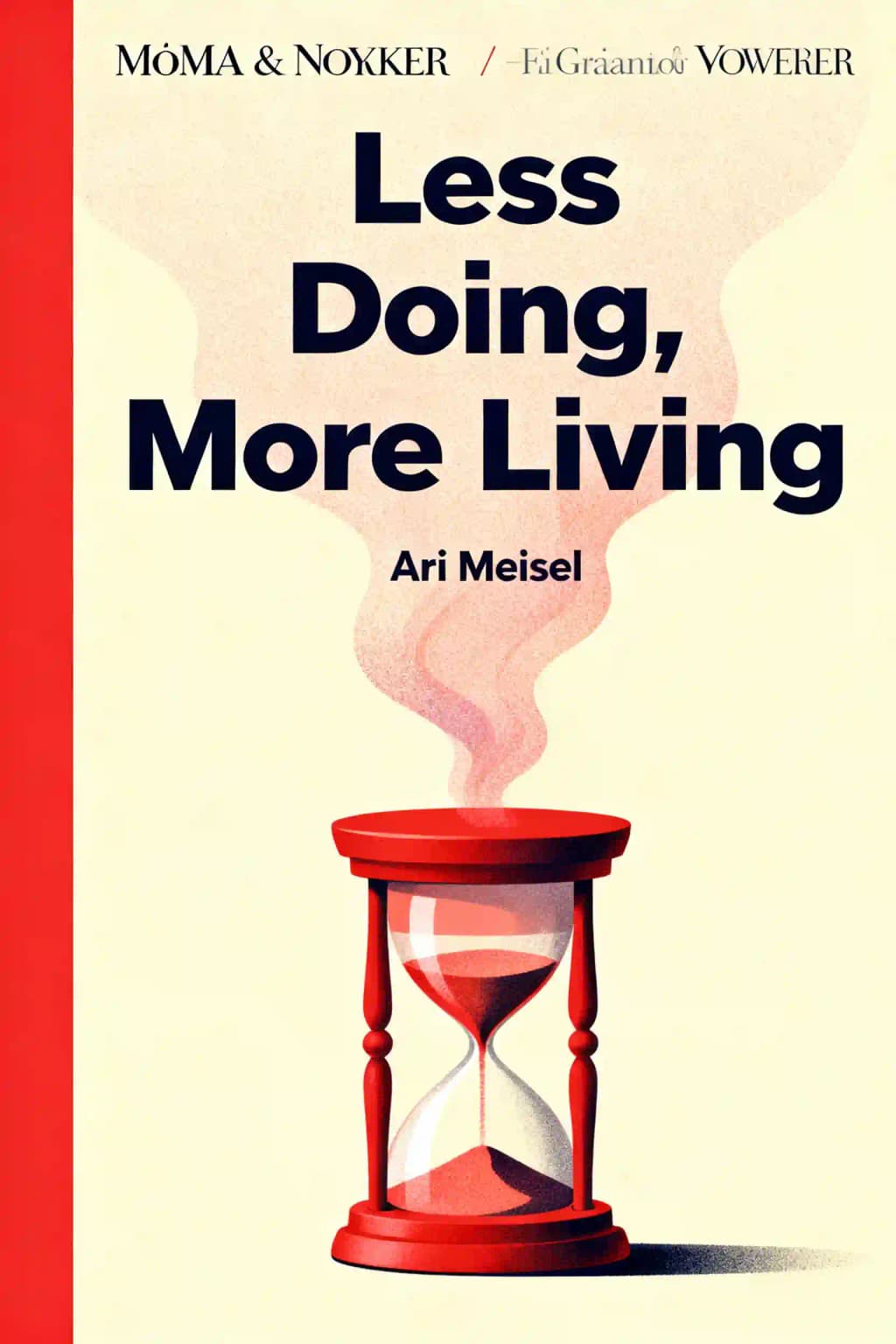
Have you ever felt like there simply aren't enough hours in the day? When Ari Meisel was diagnosed with incurable Crohn's disease while working 18-hour days on construction projects, he faced this dilemma in the most extreme way. Doctors told him stress would kill him, yet his business demanded his time. Rather than accepting this impossible situation, Meisel developed a revolutionary system that not only helped him overcome his disease (which doctors declared "incurable") but also complete an Ironman triathlon. His Less Doing philosophy has since become a global movement, endorsed by productivity experts like Tim Ferriss and adopted by thousands of entrepreneurs and executives. At its core lies a counterintuitive truth: the path to accomplishing more isn't working harder-it's systematically doing less through optimization, automation, and outsourcing. This isn't just another productivity system; it's a complete reimagining of how we approach work and life.
Capítulo 2
The 80/20 Principle: Your Foundation for Reclaiming Time
The cornerstone of the Less Doing philosophy is the Pareto Principle, or the 80/20 Rule. Italian economist Vilfredo Pareto first observed that 80% of Italy's wealth belonged to 20% of its population-a pattern that appears with remarkable consistency across different domains. In business, 80% of profits often come from 20% of customers. In personal productivity, 80% of your results likely come from 20% of your efforts.
This insight is transformative when applied correctly. Rather than spreading yourself thin across countless tasks, identify the vital few activities that generate most of your results. But here's the challenge: you can't improve what you don't measure. Without tracking how you spend your time, energy, and attention, you're essentially operating in the dark.
Start by implementing tracking systems in key areas of your life. For digital work, tools like RescueTime monitor computer usage and can block distracting websites during focused work periods. For daily accomplishments, services like iDoneThis send an email each evening asking what you accomplished, creating a record of your progress. Even your physical health can be tracked-tools like InsideTracker analyze blood biomarkers to optimize your wellness.
Once you understand where your time goes, break down your processes into their simplest components-like those IKEA assembly manuals that use pictures instead of words. Create what Meisel calls a "Manual of You" by documenting routine tasks as if explaining them to someone who's never met you. This exercise reveals redundancies and inefficiencies you never noticed.
When I first tried this approach with my content creation process, I discovered I was repeating several steps unnecessarily. By streamlining the workflow from sixteen steps to nine, I saved hours each week. Include "If This, Then That" instructions to handle potential problems, making your processes truly delegable.
Remember, Less Doing isn't about eliminating enjoyment-it's about freeing your time and mental space for what truly matters. Separate tasks into just two categories: Essential and Optional. I follow over 150 blogs but prioritize reading only twenty essential items each morning while walking my dog. The rest I get to when convenient.
The ultimate goal? Allocate only 20% of your energy to work, with the remaining 80% invested in rest and self-improvement. This counterintuitive approach creates a powerful cycle where your investments in recovery and growth make you exponentially more efficient during work hours.
Capítulo 3
Creating Your External Brain: The Key to Mental Freedom
Have you ever had a brilliant idea in the shower, only to forget it minutes later? Or felt mentally exhausted trying to remember all your tasks and commitments? This mental burden is what David Allen, author of Getting Things Done, calls "open loops"-unfinished tasks that occupy mental bandwidth even when you're not actively working on them.
The solution is creating an "external brain"-a reliable system for capturing and retrieving information so your biological brain can focus on thinking rather than remembering. When I implemented this approach after years of mental overload from 18-20 hour workdays, my creativity flourished in ways I hadn't experienced since childhood.
The foundation of your external brain is note-taking. Ideas in your mind work like traffic-they need to move in a single-file line to exit properly. Even seemingly worthless ideas should be recorded, as they might be blocking more valuable thoughts or could combine with other concepts to form something brilliant.
Evernote stands as the ultimate tool for this purpose. Unlike traditional note-taking apps that require manual organization, Evernote accepts any format-text, pictures, scanned documents, web pages-and makes everything searchable. When you search Google, Evernote can display related notes from your collection, making previously saved items suddenly relevant again. With thousands of notes stored, it functions remarkably like our brains naturally organize information.
For capturing ideas in unusual situations, specialized tools help. AquaNotes provides waterproof notepads for those shower epiphanies. FollowUp.cc sends automatic email reminders based on timeframes you specify, freeing mental energy from tracking follow-ups. IFTTT (If This Then That) automates tasks between web services, while Contactually manages relationships by reminding you when you've been out of touch with important contacts.
Email inboxes are particularly notorious for breeding mental clutter. Transform yours by creating just two folders-Essential and Optional. Filter messages containing "Unsubscribe" (but not "FW" or "RE") into the Optional folder, immediately reducing inbox volume by 40-60%. For remaining emails, follow three principles: if it's finished, delete it; if you can do it in two minutes or less, do it now; if not, defer it using FollowUp.cc.
Perhaps most controversially, eliminate your to-do list entirely. These lists become psychological traps through what psychologists call the Zeigarnik effect-our natural drive to finish unfinished tasks. The problem is that many items are either too vague ("write book") or dependent on others before action is possible. Instead, replace your list with a timing system using your email inbox and FollowUp.cc. For each task, either do it now, defer it to the right time, delegate it, or add it to Evernote if it's just an idea.
Capítulo 4
The Virtual Assistant Revolution: Outsourcing Your Life
Imagine having a team of capable professionals handling your mundane tasks while you focus exclusively on what only you can do. This isn't a luxury reserved for executives-it's accessible to almost everyone through virtual assistants (VAs).
Two models exist: on-demand assistants (ideal for beginners with few tasks or advanced users with many) and dedicated assistants (best for those in between). Services like Zirtual offer dedicated U.S.-based assistants starting at $197 monthly for 10 hours of work, while Fancy Hands provides on-demand assistants who complete discrete tasks.
The beauty of on-demand assistants is their "bombproof" nature-if one assistant leaves, you're not affected. They're also highly scalable-you can assign 100 tasks simultaneously and they'll be completed within an hour by different people. Most hesitation about VAs isn't about price but concerns about training time and identifying appropriate tasks.
A "task" typically takes up to 20 minutes, which forces you to streamline your processes. Communicating through email rather than phone creates a searchable record of all requests and eliminates inefficiencies. Start by delegating simple research tasks: "Find me the three highest-rated Italian restaurants within walking distance of my hotel in Chicago" or "Research the best portable scanner under $200."
The ultimate achievement in outsourcing is automating the process itself. Using IFTTT, I created a system where tasks are automatically sent to my assistants without my involvement. For example, when a new blog post is published, IFTTT sends an email to my Fancy Hands assistant instructing them to submit it to StumbleUpon. This creates a "perpetual motion machine" of outsourcing that works even with on-demand assistants who change regularly.
You can set up triggers based on Instagram tags, weather forecasts, or Foursquare check-ins that automatically generate assistant tasks. When I check in at an airport, my system automatically emails my assistant to research restaurants near my destination hotel. This approach makes your system future-proof, bombproof, and idiot-proof, allowing you to focus solely on what only you can do.
Capítulo 5
The Power of Customization: Getting Exactly What You Need
We live in an era of unprecedented customization possibilities. From personalized vitamin regimens and custom-fitted clothing to tailored workout plans and individualized meal delivery services, the ability to get exactly what we need-and nothing we don't-represents a revolution in efficiency and personal optimization. This shift from mass production to mass customization has transformed how we approach both everyday needs and complex challenges.
When products are designed for everyone, they're rarely perfect for anyone. The principles of customization focus on three core benefits: saving time, saving money, and creating better solutions. In our world of abundant, cheap, readily available products, creating custom solutions may be easier and more cost-effective than you think. For instance, rather than buying an off-the-shelf desk that's almost right, you might find a local craftsperson who can build exactly what you need for a similar price.
The digital marketplace has revolutionized access to customization services. Sometimes a quick internet search will find exactly what you need, from custom-sized window blinds to personalized educational materials. For less tangible needs like software development, content creation, or travel planning, platforms like Upwork connect you with contractors worldwide who bid on your project. The platform's escrow system protects you from paying for unsatisfactory work, while detailed reviews and portfolios help you find the perfect match for your needs.
Another valuable resource is Fiverr.com, where people perform tasks starting at just five dollars. While some offerings are quirky (Christopher Walken impersonators making birthday calls), many provide genuine business value (professional logo design, SEO optimization, or social media management). By combining these resources creatively, you can solve almost any customization challenge with minimal effort and often at a fraction of traditional costs. For example, you might combine a custom website template with personalized copywriting and unique illustrations to create a distinctive online presence.
Consider how customization might transform your daily routines. Instead of wasting time with generic productivity tools, find or commission solutions tailored to your specific workflow. This might mean creating custom keyboard shortcuts, developing specialized spreadsheet templates, or commissioning a simple app that automates your unique processes. Rather than settling for mass-market products that almost meet your needs, seek out or create alternatives that fit perfectly, whether it's a custom-organized closet system or a personalized supplement routine.
The customization mindset extends beyond products to services and experiences. Why follow standard operating procedures when you can design systems optimized for your unique circumstances? This might involve creating custom email templates for recurring communications, developing personalized customer service protocols, or designing flexible work schedules that align with your peak productivity hours. This approach aligns perfectly with the Less Doing philosophy-by getting exactly what you need, you eliminate waste and reclaim precious time and mental energy while achieving superior results.
The key is to identify areas where customization can provide the greatest impact. Start by analyzing your daily activities and noting where you consistently encounter friction or inefficiency. These pain points often represent opportunities for customized solutions that could dramatically improve your productivity and satisfaction.
Capítulo 6
Choose Your Own Workweek: Redefining When You Work
Tim Ferriss popularized the concept of the four-hour workweek, and while the title is somewhat facetious (Ferriss certainly works more than four hours weekly), the underlying principle is revolutionary: you must define what constitutes a workweek and decide how much of your life it should occupy.
This fundamental centers on timing-matching tasks to your optimal performance periods and setting clear boundaries around when you're available to others. My personal workweek has evolved from the standard five days down to just Tuesday and Wednesday, 10 a.m. to 4 p.m. This doesn't mean I only work two days-I work whenever I'm inspired, often seven days weekly. But 95% of my interactions with others happen during these designated times.
This structure creates five-day weekends and forces batching on everyone's part, since most inefficiencies come from interactions with others. I chose mid-week days to avoid Monday drowsiness and Friday inattention, plus escape weekend traffic. The result is intense but productive workdays and tremendous psychological freedom.
Two key tools make this possible: ScheduleOnce and Right InBox. ScheduleOnce provides a public scheduling interface where people can book appointments with you-but they only see your designated availability. This eliminates the average seven emails needed to schedule a meeting and prevents awkward conversations about fitting into your schedule.
Right InBox works with Gmail to delay sending emails, track opens and clicks, and set reminders. This lets you handle emails immediately but schedule delivery for your workweek. For example, I might write emails Wednesday but delay delivery until Tuesday when I'm back in work mode.
While exceptions occasionally happen, limiting communication to your workweek trains people to interact with you on your terms. The psychological benefits are profound-knowing that Thursday through Monday are entirely yours creates a sense of freedom that traditional weekends can't match.
Ask yourself: What would your ideal workweek look like? When are you most productive? When do you need uninterrupted time for deep work? By aligning your availability with your natural rhythms and setting clear boundaries, you can dramatically increase both productivity and satisfaction.
Capítulo 7
The End of Errands: Automating Life's Mundane Tasks
What if you never had to run another errand? Errands are perhaps the most inefficient use of time-they're impossible to optimize, often involve waiting, and frequently require driving to multiple locations. They're a complete waste of your time.
Amazon Subscribe and Save is my top recommendation for eliminating errands. You can subscribe to nonperishable items like dog food, toilet paper, and toothpaste with flexible delivery schedules and immediate 5-15% discounts. Once set up, these subscriptions eliminate thousands of hours of shopping over your lifetime.
The service effectively becomes your digital pantry, and Amazon Lockers solve delivery challenges for those without doormen. Subscribe and Save works brilliantly for products with timing issues-like water filters or smoke detector batteries-turning deliveries into automatic reminders for maintenance tasks.
For errands that can't be eliminated through subscription services, platforms like TaskRabbit let you outsource real-world tasks to background-checked providers at competitive rates. Need groceries picked up? Packages mailed? Dry cleaning dropped off? All can be handled by others while you focus on more valuable activities.
This approach extends beyond personal errands to business tasks as well. Services like Shyp (though now defunct, similar services exist) would pick up items you needed to ship, package them professionally, and send them via the most cost-effective carrier. Virtual mailbox services scan your physical mail and email you the contents, allowing you to handle correspondence from anywhere in the world.
The financial calculation is simple: if your time is worth more than what you'd pay someone else to run your errands, outsourcing is the rational choice. Even if the financial equation doesn't clearly favor outsourcing, consider the mental and emotional benefits of eliminating these tasks from your life.
Imagine reclaiming all the hours spent in checkout lines, traffic, and waiting rooms. What could you accomplish with that time? How would it feel to never again spend a Saturday afternoon running from store to store? By systematically eliminating errands from your life, you create space for what truly matters.
Capítulo 8
Financial Optimization: Becoming a Fiscal Sushi Chef
The Less Doing lifestyle naturally translates to financial efficiency as well. Like a skilled sushi chef who removes all excess fat, leaving only the most flavorful parts, you can trim financial waste while preserving what brings value to your life.
Start by gaining complete visibility into your financial landscape. To manage various accounts-checking, savings, credit cards, investments-use services like Mint.com. By supplying your login details, Mint pulls all your financial information daily, categorizes transactions, and gives you a comprehensive overview of your financial health. It alerts you about low balances, large deposits, and can set spending budgets based on past behavior.
For business accounts, services like InDinero offer similar features with accountant access. For deeper analytics, OneReceipt automatically pulls e-receipts from your email and lets you add paper receipts by taking pictures. It generates monthly expense reports showing exactly where your money goes.
Specialized tools address specific financial concerns: Slice tracks online purchases and deliveries, while BillGuard monitors suspicious credit card transactions. For document management, FileThis.com automatically collects e-statements from utilities, credit cards, and other providers, converting them to searchable PDFs in Evernote for easy organization and sharing.
Once you understand where your money is going, optimize with services like BillShrink. By providing details about your driving habits, checking account, cell phone usage, and television service, BillShrink shows personalized options for saving money. In just ten minutes, I discovered I could save about fourteen thousand dollars over two years. The site emails you as new deals become available, helping you overcome the inertia that keeps you with current providers despite better options elsewhere.
For ultimate simplicity, especially if you travel frequently, consider using only debit cards instead of credit cards. Modern debit cards offer many of the same benefits as credit cards-loyalty rewards and purchase protection-without the risk of debt, interest, or late fees. The principle is simple: if you don't have money in your account, you can't spend it.
By applying Less Doing principles to your finances, you not only save money but also eliminate the mental burden of financial management. The result is a leaner, more efficient financial life that supports rather than constrains your goals.
Capítulo 9
The Power of Limits: Organization Through Constraint
Organization isn't about elaborate systems or perfect aesthetics-it's about creating functional limits that prevent accumulation and force regular evaluation of what's truly necessary. My simple method requires only moderate discipline and focuses on setting clear boundaries.
I use a "First In, First Out" system with strict upper limits. For example, I replaced my closet full of electronic gear with a single egg crate. This box is my absolute limit for storing electronics. When something new comes along, I must remove something else, forcing me to evaluate what's truly necessary. It's incredibly satisfying to have one small box instead of an entire closet of clutter.
You can set limits on anything-emails (I never have more than ten in my inbox), clothing items, books, or social media time. Don't forget minimum limits too, especially for things like travel, fitness, and home cooking. The key is choosing realistic limits and sticking to them. If you consistently exceed your limits, you need to optimize your system further.
I've applied this philosophy to my technology use as well-I keep everything in the cloud and have only two programs on my computer: Dropbox and Chrome. This means I can be up and running on any device within minutes if my computer fails. I've even tested running my entire business from just my iPhone for a week. While not ideal for daily use, knowing I can operate from minimal technology gives me tremendous flexibility.
This approach to organization extends beyond physical possessions to how you structure your time and commitments. Set limits on meeting durations, working hours, and project scopes. When faced with new opportunities, apply the "one in, one out" rule-for each new commitment you accept, identify one you'll eliminate.
The beauty of organization through constraint is its simplicity. Rather than complex filing systems or elaborate organizational schemes, you simply establish upper bounds and then operate within them. This creates natural pressure to regularly evaluate what's essential and what can be eliminated, keeping your life streamlined and focused.
Capítulo 10
The Wellness Foundation: Sleep, Fitness, and Nutrition
No matter how technologically efficient you become, poor sleep or nutrition will limit your potential. Wellness forms the foundation of productivity, providing the energy and mental clarity needed for optimal performance. During my Ironman training, I spent over 20 hours weekly exercising-effective but inefficient. For most people, there's a much better approach that requires significantly less time.
My three-part formula for optimal fitness requires minimal time commitment: one part strength/skill (like squats or rock climbing), one part high-intensity interval training (CrossFit, Insanity, or short bursts of maximal effort), and one part mobility (yoga or stretching). Each segment needs only 30 minutes, spread across three days or combined into one weekly session.
Excessive exercise can actually hinder weight loss by disproportionately increasing appetite. A typical week for me includes swimming intervals on Tuesday, strength training on Thursday, and yoga on Sunday-just 90 minutes total, yet more effective than hours of moderate activity.
Sleep quality trumps quantity as the cornerstone of wellness. Diet and exercise significantly impact sleep-eating too late disrupts quality, while proper exercise helps burn energy and reset mentally. Poor sleep increases ghrelin (increasing hunger) and decreases leptin (suppressing appetite), creating a willpower battle you'll likely lose.
To improve sleep: take vitamin D with breakfast, avoid blue light devices an hour before bed, consider sleep tracking apps, and align your bedtime with 1.5-hour sleep cycles to avoid waking mid-cycle. Being off by just 15 minutes can leave you groggy all day.
Your diet should fuel your life while protecting you from environmental toxins. Track everything you eat for a week along with your mood to establish a baseline. Then focus on unprocessed foods, minimal sugar, and increased healthy fats like olive oil and avocado.
I've found high-fat/low-carb diets (not Atkins, but emphasizing healthy fats) most effective. Our brains function like hybrid engines-they can run on ketones from fat or glucose from carbs. Even thin people have about 30,000 calories stored as fat-enough energy for two Ironman races. Getting your body to burn fat instead of carbs will improve focus, energy and mental clarity.
While you should get most nutrients from a good diet, I recommend three essential supplements: krill oil (more effective than fish oil) for reduced inflammation and better insulin response; probiotics for digestive balance and immune support; and vitamin D for immune function and sleep. Most indoor workers with insufficient dietary fat are vitamin D deficient.
The key to wellness is balancing fitness, sleep, and nutrition-they all interact. If you eat more, you need to work out more and sleep more. If you sleep less, you need to work out less and eat less. Sleep is the cornerstone-if you train for a marathon, you'll need more sleep. With perfect diet and sufficient sleep, you can maintain a responsive body with just daily movement like standing at your desk and taking stairs.