Capítulo 4
Democracy's Rapid Collapse
When Windrip wins the election, democracy crumbles with shocking speed. Within eight days of his inauguration, he declares martial law and arrests over a hundred opposing Congressmen when they reject his demand for complete control. Lee Sarason explains to the press that the arrested officials are being "safeguarded" from threats. When riots erupt and protesters gather at the district jail where the Congressmen are held, Windrip addresses his Minute Men (M.M.s)-his private army-via loudspeaker, calling them "the highest lords of the land" and urging them to action. They open fire on the crowd, bayoneting those who flee. Congress, now intimidated and depleted, passes Windrip's constitutional amendments, while Supreme Court justices find themselves confined to their homes by Minute Men squads.
Bishop Paul Peter Prang, who had been Windrip's most powerful supporter, flies to Washington to confront his former disciple. After six hours at the White House, he emerges pale and staggering. When a crowd threatens him outside his hotel, Minute Men "rescue" him to the district jail. The government announces they are protecting him from "mysterious plotters," but opposition papers suggest he's been imprisoned for criticizing Windrip. When Prang's hometown organizes a protest train to Washington, they learn upon arrival that the Bishop has gone "melancholy mad" and been committed to an asylum. No one ever sees Bishop Prang again.
Windrip's first major proclamation justifies his actions as necessary during a "Crisis" caused by "powerful and secret enemies." He compares himself to Lincoln during the Civil War and likens his actions to a fireman rescuing a girl from a fire-whether she wants it or not. The country largely accepts this explanation, with citizens like Shad Ledue (Doremus's former handyman) caring only about promised financial benefits.
Capítulo 5
The Corporate State Takes Shape
Windrip announces the dissolution of all political parties, including his own League of Forgotten Men, replacing them with the American Corporate State and Patriotic Party-the "Corpos." Following Italy's model, all occupations are organized into six classes with workers and employers arranged in Syndicates and Confederations under a National Council of Corporations chaired by Sarason. Strikes are forbidden, unemployment "disappears" as workless men are forced into labor camps where they earn a dollar a day (later three dollars due to inflation) but pay most back for board and lodging.
The regime's most dramatic change divides America into eight "provinces," eliminating states. Doremus now lives in "Northeastern Province, District 3, County B, township of Beulah," with layers of commissioners above him. Citizens resent losing state identities almost as much as not receiving their promised $5000 government payments, which remain unfulfilled despite cheerful bulletins.
The Minute Men, initially presented as a temporary campaign force, become a permanent institution with 562,000 members by June. Their ranks mimic military hierarchy with titles like "inspector," "cornet," and "brigadier," paying from $10 weekly to $16,000 annually for High Marshal Sarason. Many recruits come from college students (trained as officers), YMCA gymnasiums, young farmers, factory workers, and former criminals whose past is forgiven for their skills with weapons.
Capítulo 6
The Machinery of Oppression
As the regime consolidates power, its racial policies evolve from subtle discrimination into systematically enforced oppression. Social workers face a cruel choice: become informants against their own communities or face deportation to concentration camps operated by M.M.s - facilities that exist entirely outside normal prison regulations and judicial oversight. These camps, strategically placed in remote locations across the country, operate with impunity and without documentation of their activities.
Local M.M. officers effectively become warlords in their districts, creating and enforcing their own arbitrary laws. They specifically target Jewish professionals - particularly doctors and musicians - along with Negro journalists, socialistic professors, and women who dare question the disappearance of their husbands, brothers, and sons. These designated "traitors" face escalating violence, from public beatings in broad daylight to midnight arrests on fabricated charges. The pattern becomes grimly predictable: first comes the warning, then the assault, and finally disappearance into the camp system.
The propaganda war between the New Underground resistance and the Corpos reveals a stark imbalance in resources and reach. While resistance writers maintain their commitment to factual reporting and verified information, the Corpo propaganda machine deploys an arsenal of influential voices - prestigious college presidents, popular radio personalities, and sophisticated corporate PR experts. Newspapers systematically purge liberal viewpoints and international news, replacing them with lurid content: comic strips that mock the Underground, sensationalized drawings of crime scenes, and manufactured statistics claiming economic improvements and reduced military spending. Government officials commandeer radio airwaves daily to address "their Masters," while state-subsidized films glorify M.M. military might through carefully choreographed demonstrations of power.
The distinctive American humor that many believed would set U.S. fascism apart from its European counterparts vanishes within twelve months. In its place emerges a familiar pattern of brutality - arbitrary arrests, systematic torture, and indefinite imprisonment - mirroring the methods of dictatorships worldwide. The regime's financial reporting becomes an exercise in creative accounting, masking economic collapse through elaborate deception. Military expenditures are buried in education budget lines, while wage statistics undergo mathematical gymnastics to conceal the extensive use of forced labor in the camps. Even basic economic indicators are manipulated - unemployment figures exclude camp prisoners, while production statistics count their coerced output as voluntary labor.
The transformation is complete when citizens begin to self-censor, watching their neighbors and measuring their words, knowing that casual conversations can become evidence of sedition. The machinery of oppression runs not just on violence, but on the fear that makes people willing participants in their own subjugation.
Capítulo 7
Doremus Jessup: The Reluctant Revolutionary
At the center of this political maelstrom stands Doremus Jessup, the sixty-year-old editor of the Fort Beulah Daily Informer. Born in 1876, Jessup represents nineteenth-century individualism rather than twentieth-century conformity. His intellectual interests mark him as different-he reads widely from publications across the political spectrum. Though he describes himself as merely "a mild, rather indolent and somewhat sentimental Liberal," he dislikes pomposity and self-importance in public figures while harboring genuine hatred for cruelty, intolerance, and contempt of the fortunate for the unfortunate.
Doremus initially adopts a "wait and see" policy toward the Corpo regime, but this becomes increasingly untenable as oppression tightens. The breaking point comes when Secretary of Education Macgoblin murders two scholars during a drunken, anti-Semitic rampage and is acquitted on grounds of "self-defense" against an alleged "ritual murder" plot. Doremus writes a scathing editorial condemning the "murderous extirpation" of honest opposition and calling Windrip and his gang "pirates."
The next morning, an angry mob gathers outside the newspaper office. Commissioner Shad Ledue-Doremus's former handyman, now risen to power-arrives with armed M.M.s and announces the Corpos will take over the newspaper plant. Doremus is arrested, imprisoned, and subjected to a mockery of a trial. When his son-in-law Dr. Fowler Greenhill bursts in demanding to know what the "comic judges" are doing, he is summarily executed in the courtyard.
After his release, Doremus is forced to work under Emil Staubmeyer, the new editor of the Informer. Though he manages small acts of resistance, like his "Yow-yow editorials" where he states strong anti-Corpo arguments followed by deliberately weak rebuttals, Doremus hates this "filthy slavery" and constantly questions why he stays. Like countless others under dictatorships worldwide, he is caught between conscience and practicality, especially with "a wife and family to support."
Capítulo 8
The Underground Resistance Forms
When Walt Trowbridge, Windrip's defeated presidential opponent, makes a dramatic escape to Canada by airplane, he establishes "The New Underground" - a sophisticated network designed to assist refugees and coordinate resistance against the Corpo regime. The organization's reach extends across the northern states, with particularly strong cells in New England. Trowbridge's first act is to establish safe houses and escape routes, drawing on his extensive political connections from his campaign days.
The resistance makes contact with Doremus through Mr. Dimick, who initially appears as nothing more than a mundane insurance salesman making his rounds in Fort Beulah. This careful facade masks his true role as a key operative in Trowbridge's organization. The New Underground operates through four distinct but interconnected divisions: a propaganda printing operation that produces newsletters and pamphlets; a distribution network that disseminates these materials through seemingly innocent channels like grocery deliveries and church bulletins; an intelligence division that meticulously documents Corpo brutalities and corruption; and an elaborate smuggling operation that helps endangered citizens escape to Canada.
Doremus throws himself into the resistance work, establishing a secret printing operation in Buck Titus's basement - chosen for its remote location and Buck's reputation as a wealthy socialite above suspicion. Working with Dan Wilgus's expertise as a printer, they produce increasingly sophisticated propaganda materials, including their most impactful piece, "How Many People Have the Corpos Murdered?" which catalogs specific instances of regime violence. Their local newspaper, "Vermont Vigilance," becomes a vital source of uncensored news, distributed through an intricate network of trusted carriers.
The Fort Beulah resistance cell grows into a diverse group united by their opposition to fascism. It includes Doremus's daughters, who use their social positions as cover; Buck Titus, providing both his basement and financial support; Lorinda Pike, Doremus's secret lover who runs a hotel that serves as a message center; Julian Falck, whose youth makes him an effective courier; Dr. Olmsted, who treats wounded resistance members; John Pollikop, bringing his labor organizing experience; and Father Perefixe, whose church offers sanctuary to fugitives.
Mary Greenhill undergoes the most dramatic transformation following her husband Fowler's murder by the regime. She abandons her widow's weeds for bright clothing - a deliberate strategy to appear frivolous and above suspicion - while becoming the cell's most audacious operative. She leads increasingly dangerous missions, even pushing the typically cautious Buck Titus into riskier operations. Meanwhile, Sissy embarks on a dangerous intelligence-gathering mission, attempting to manipulate information from Shad Ledue by feigning romantic interest - a strategy that nearly ends in disaster when Ledue becomes violent. Julian makes the bold decision to infiltrate the M.M.'s, positioning himself as a valuable double agent who can provide advance warning of raids and arrests to Doremus's group.
Capítulo 9
The Price of Resistance
The resistance pays a terrible price. When Doremus, Buck Titus, Truman Webb, and Dan Wilgus are arrested, they face torture and interrogation. Doremus is brought before Provincial Commissioner Effingham Swan for trial, where Francis Tasbrough and Shad Ledue testify against him. Based on this testimony and Doremus's own writings, Swan sentences him to a concentration camp with a minimum of seventeen years, plus a suspended death sentence that would be enacted if he attempts escape. Swan orders twenty lashes as immediate punishment, and guards force castor oil down Doremus's throat before whipping him with a steel fishing rod until he loses consciousness.
At Trianon concentration camp, Doremus is assigned as a cell sweeper and toilet cleaner. Through his cell window, he witnesses horrors: his cousin Henry Veeder being executed after an escape attempt, Julian Falck and his grandfather brought in as prisoners, Julian being repeatedly tortured as an example, and the elderly Reverend Falck reduced to stealing bread from garbage cans. When Doremus refuses to betray Julian, guards bring in Reverend Falck, claiming each had betrayed the other. After an M.M. kicks the elderly minister to the floor, Mr. Falck, on his knees, prays not for forgiveness but for God to curse his tormentors "for they know what they do!" before collapsing, dead.
Mary Greenhill takes the ultimate step in resistance. After enlisting in the Corpo Women's Flying Corps and mastering aviation, she pursues Commissioner Swan's official plane with stolen grenades. When her grenades miss their target, she makes the ultimate sacrifice, diving directly at the wing of Swan's descending plane. In her final seconds, she thinks of her childhood memories and wishes she'd spent more time with her son David, as the planes collide in an appalling crash.
Capítulo 10
The Dictators Devour Each Other
After two years as dictator, Berzelius Windrip becomes increasingly paranoid and power-obsessed. Though he claims to want citizens healthy in "purse and mind," he grows angry when neighboring countries reject his imperial ambitions. Demanding constant praise, he suspects anyone who doesn't flatter him of plotting against him. He expands his bodyguard but distrusts them all, once even shooting at them.
Meanwhile, Lee Sarason methodically consolidates power, becoming the true master of Corpoism. Buzz Windrip grows increasingly insecure, desperately seeking Lee's approval and friendship. Late one night, President Windrip awakes to find Lee Sarason, Dewey Haik, and Dr. Hector Macgoblin at his bedside-Sarason holding a bowie knife. Terrified, Windrip pleads, reminding Lee of past kindnesses. Rather than killing Windrip, they exile him to France.
Sarason proclaims himself President, claiming Windrip had embezzled public funds and plotted with Mexico. In the once-decorous White House, Sarason holds Roman-style orgies with "weaving limbs and garlands and wine in pretty fair imitations of Roman beakers." Secretary of War Haik scolds Sarason for his negative influence on the nation and troops, but Sarason dismisses these concerns, calling Haik "just an accurate military bookkeeper."
Just one month after usurping the presidency, Haik marches into the White House with storm troops, finds Sarason in violet silk pajamas among his companions, and shoots them all dead. When Dewey Haik becomes President, America truly begins to suffer. Unlike Windrip and Sarason who tolerated merriment if it could be taxed, Haik dislikes such things on principle. He treats America like a well-run plantation where slaves are better fed than before but kept so busy they have no time for "debilitating vices" like laughter or complaint.
Capítulo 11
The Resistance Continues
With the help of Lorinda Pike and Squad-Leader Aras Dilley, Doremus escapes from Trianon concentration camp. After hiding in barns, spruce groves, and once atop a coffin in an undertaker's establishment, he arrives at an abandoned farmhouse where Lorinda and Sissy await him. The women transform his appearance-dyeing his hair and mustache black and shaving his beard. After three days of reunion, Doremus says goodbye to his two women and trudges into Canadian exile.
In Montreal, Doremus serves in the Department of Propaganda and Publications for the New Underground, led by Walt Trowbridge as General Chairman. Though he initially expects Canadians to thrill to his tale of imprisonment and escape, he discovers ten thousand refugees have preceded him, and his hosts have grown weary of pumping up new sympathy. Despite this, Doremus efficiently directs the N.U. office's distribution of anti-Corpo literature while hoping for more dangerous assignment as a secret agent back in America.
His opportunity comes in July 1939, when the Corpo regime manufactures a crisis with Mexico to distract from domestic problems. America "rises as one man" to answer this threat, drafting five million men to invade Mexico "as soon as it should be cool enough." But the plans are interrupted by a popular rebellion against the Corpo regime that spreads across America's traditionally "radical" regions-from Sault Ste. Marie to Seattle. The rebellion gains legitimacy when General Emmanuel Coon, Chief of Staff of the regulars, declares for Walt Trowbridge as Temporary President.
As William Barton Dobbs, a traveling salesman for harvesting machinery, Doremus works undercover in Minnesota. Operating as a secret N.U. agent with sixty operatives under him, he travels between farms organizing resistance, using tailored propaganda for different ethnic communities. Though he questions some of his tactics, he finds joy in seeing his converts jeering at frightened Minute Men recruits marching to Mexico. The novel ends with Doremus escaping a Corpo posse, heading to a hidden cabin where "quiet men awaited news of freedom," with Lewis reminding us that "a Doremus Jessup can never die."
Capítulo 12
The Warning That Still Echoes
Lewis's novel presents fascism not as a sudden revolution but as already embedded in American ideological worldviews. He draws clear parallels between his fictional elements and real fascist regimes: Windrip's "Zero Hour" mirroring Hitler's "Mein Kampf," the Minute Men resembling Storm Troopers, and characters modeled after Nazi officials like Goebbels and Goring. The novel meticulously traces how democratic institutions gradually erode through seemingly minor compromises and concessions, each step making the next easier to justify.
The transformation unfolds through familiar channels - local newspapers being pressured into self-censorship, community organizations falling in line with new political expectations, and neighbors beginning to view each other with suspicion. Lewis shows how fascism exploits existing social divisions, particularly economic anxiety, racial resentment, and cultural grievances. Windrip's promises of restored greatness and economic revival resonate deeply with a population feeling left behind by rapid social change and financial instability - much as similar promises had attracted followers to European fascist movements.
When Doremus reflects on his own complicity in fascism's rise, he realizes: "The tyranny of this dictatorship isn't primarily the fault of Big Business or demagogues. It's the fault of Doremus Jessup!" This self-indictment carries particular weight because Doremus represents the educated, liberal middle class - those who should have recognized the danger signs. He blames himself and other comfortable, respectable citizens who hadn't protested fiercely enough against encroaching fascism, who dismissed early warning signs as temporary aberrations or exaggerated threats.
The novel's most unsettling aspect is its portrayal of how ordinary citizens accommodate themselves to fascism - not through immediate conversion to its ideology, but through small acts of compliance and rationalization. Business owners who once opposed Windrip begin to see advantages in the new system. Intellectuals find ways to justify their silence. Neighbors report neighbors, not out of genuine belief in the regime, but from fear or opportunity for personal gain.
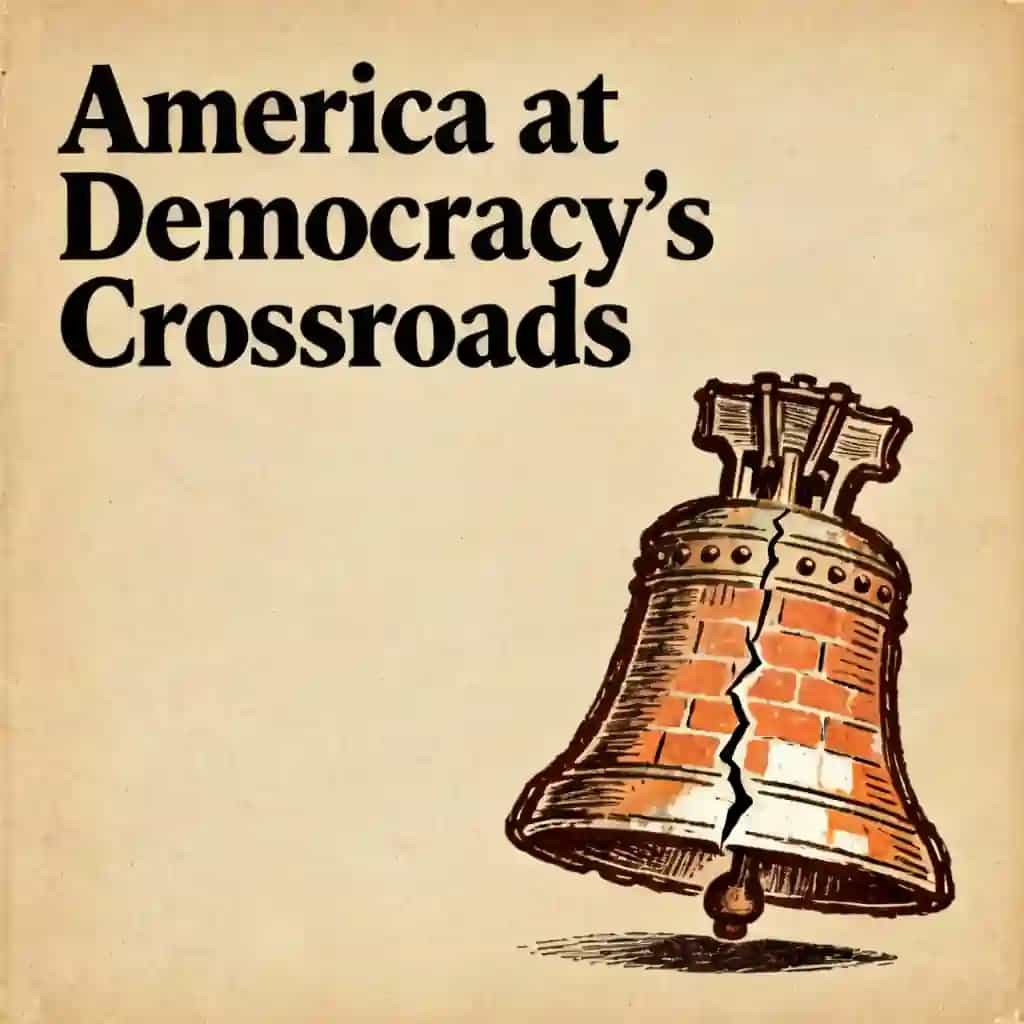
This remains perhaps the novel's most powerful message - that democracy's greatest threat isn't external invasion but internal complacency, the belief that "it can't happen here." Lewis shows how democratic societies can unravel not through dramatic upheaval, but through the accumulated weight of small surrenders, each seemingly reasonable in isolation but devastating in their totality. The warning resonates beyond its historical moment, suggesting that the mechanisms of democratic decay remain remarkably consistent across time and place.