Capítulo 1
From Rock Bottom to Redemption: A Journey Through Hell and Back
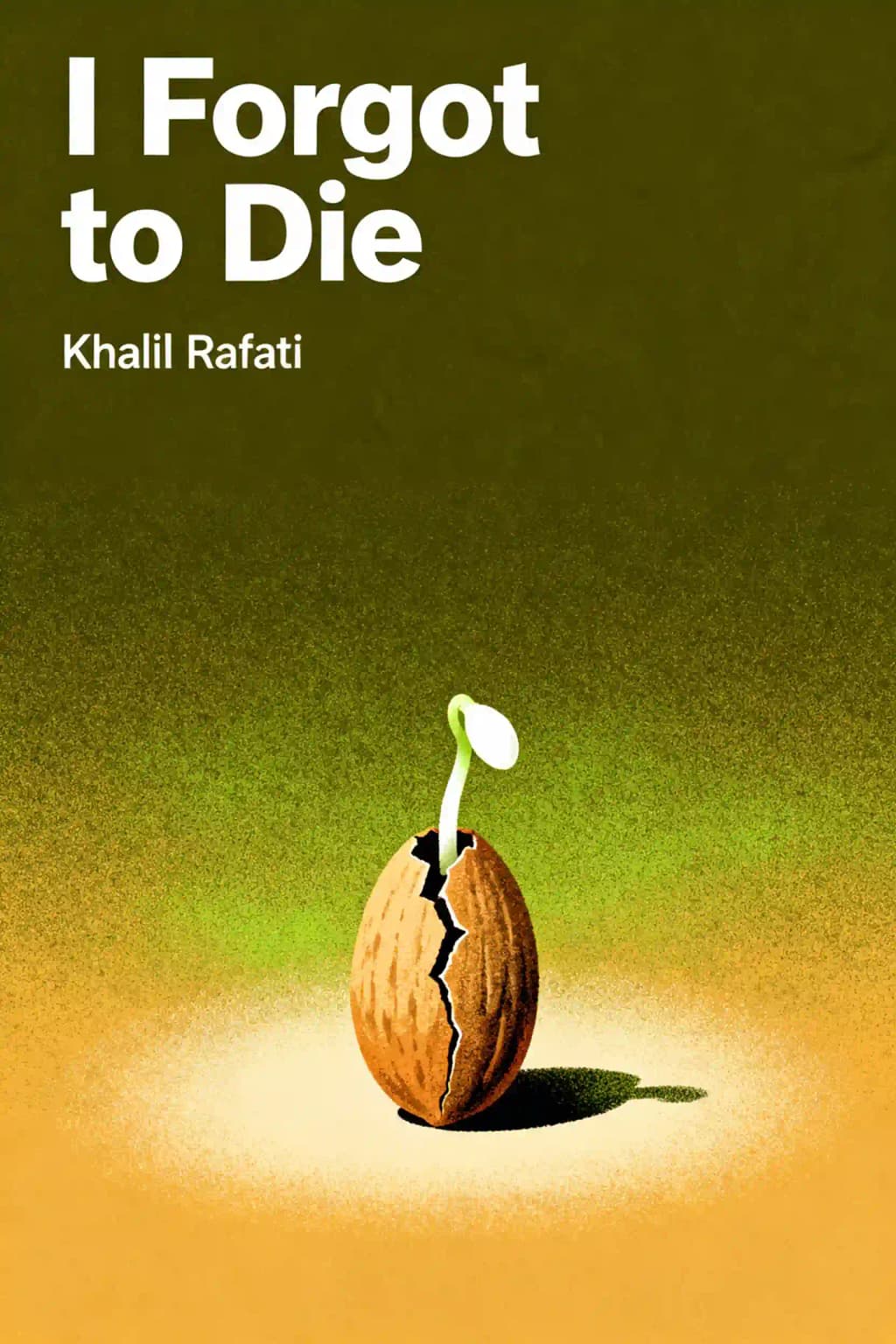
In a world obsessed with success stories, Khalil Rafati's "I Forgot to Die" stands as one of the most harrowing and ultimately triumphant memoirs of our time. This isn't just another addiction story-it's a descent into the darkest corners of human existence and an almost miraculous return. The book has become required reading in many recovery programs nationwide, with celebrities like Russell Brand praising its unflinching honesty. What makes Rafati's story particularly compelling is that his rock bottom wasn't just a metaphor-it was literal. At his lowest point, he was a 109-pound heroin addict covered in scabies and staph infections, living on the streets of Los Angeles, willing to do anything for his next fix. Today, he's the founder of SunLife Organics, a multimillion-dollar juice empire with a cult following among celebrities and health enthusiasts alike. His transformation isn't just impressive-it defies explanation without acknowledging what Rafati himself calls divine intervention.
Capítulo 2
Roots of Addiction: A Childhood Without Love
Khalil's journey into addiction began long before he touched his first drug. Growing up in Toledo, Ohio, his early life was marked by rejection and instability. By age 14, both his parents had effectively abandoned him-his father changing the locks after Khalil was expelled for a violent fight that hospitalized another student. His only source of stability came from Gus, his first employer at the Oak'en Bucket restaurant, who arranged for Khalil to live with his ex-wife Debbie and daughter Nicole.
The pattern of violence and trouble continued. At 15, Khalil was arrested for threatening kids with a broken shotgun-charges initially as serious as attempted murder before being reduced to aggravated menacing. His father turned him in, deepening the wound of parental rejection. Despite these troubles, Gus continued supporting him, providing both employment and occasional financial help when needed.
Perhaps the most poignant moment of Khalil's youth came when he stayed at his friend Pete's house and witnessed something he'd never experienced: a loving family watching Saturday morning cartoons together in matching pajamas. The stark contrast between this scene of domestic harmony and his own fractured existence shattered something inside him. He felt fundamentally broken, "cursed with a rotten soul," and contemplated suicide but lacked the courage to follow through.
"I knew I had to escape Toledo somehow," Khalil writes, capturing the desperate need for reinvention that drives so many young people from troubled backgrounds to seek new beginnings elsewhere. This desire would eventually lead him to California-and into the waiting arms of addiction.
What's striking about Khalil's early years is how clearly they established the emotional void that drugs would later fill. Without experiencing love, stability, or acceptance in childhood, he was primed to seek artificial versions of these feelings through chemicals. His addiction wasn't just about getting high-it was about medicating an unbearable emptiness.
Capítulo 3
Escape to California: The Beginning of the End
At sixteen, Khalil got his first taste of a world beyond Toledo through his coworker Tony Song, who introduced him to Detroit's underground club scene. Inside The Shelter, he discovered music that resonated with his wounded soul-The Cure, Sisters of Mercy, The Smiths-describing it as "a baptism by fire that saved me in a profound way." Music became his first true escape while his life in Ohio continued spiraling downward into dealing pot, selling stolen merchandise, and arson.
After a brief visit to California at 17, Khalil became obsessed with moving there but lacked the courage until one drunken night when his friends mocked his empty promises about leaving. The next morning, hungover but determined, he packed his car with just $600 to his name. His father's dismissive "good luck" as he left Toledo only strengthened his resolve to never return.
The drive west across America was both terrifying and liberating. Arriving in Los Angeles past midnight, he crested a hill near Pomona to witness the vast expanse of city lights below while Jane's Addiction's "Mountain Song" played-a perfect soundtrack to his arrival. That first night, he slept in his car near USC, a harbinger of homelessness to come.
His first eighteen months in Los Angeles brought chaos: the LA riots, devastating Malibu wildfires, a major earthquake that collapsed freeways, and El Nino flooding. The relative safety of boring Ohio made him question if moving to California had been a mistake. Yet he persisted, renting a $500 room in a historic but dilapidated Santa Monica Canyon mansion with an ocean view.
Tired of being a bad employee, Khalil started his own car detailing business, eventually landing lucrative gigs with luxury car dealerships that paid up to $225 per car. This entrepreneurial spirit-which would later serve him well in recovery-led to unexpected connections with celebrities. He maintained Slash's car collection (and met his declawed but dangerous-tongued cougar), worked for Axl Rose in Malibu, and even served briefly as a "houseboy" at Elizabeth Taylor's estate.
What's fascinating about this period is how Khalil seemed to be building a legitimate life while simultaneously laying the groundwork for his addiction. His success brought him into wealthy circles where drugs were plentiful, and his entrepreneurial nature soon led him to see drug dealing as simply another business opportunity.
Capítulo 4
The Descent: When Drugs Become Everything
Working for wealthy clients inevitably led to requests to "score" drugs. Khalil connected with suppliers from Humboldt and Marin counties, buying premium marijuana at $4,000 per pound and selling it for $600 an ounce. The business proved far more lucrative and exciting than detailing cars, and he quickly amassed significant money.
His first major legal trouble came when he attempted to transport marijuana from California to Ohio. Despite explicit instructions to maintain 60mph and avoid attention, his friend Brian got pulled over for going 66mph just minutes after taking the wheel while Khalil slept. The Texas police performed an illegal search, and Khalil faced 7-10 years in prison after Brian abandoned him. Through a chain of connections, he eventually got help from a wheelchair-bound attorney who threatened the prosecutor into offering him five years deferred adjudicated probation.
The real turning point in Khalil's addiction came through his friendship with Perry Farrell, former frontman of Jane's Addiction. After taking ecstasy at Perry's concert, Khalil experienced unprecedented euphoria that eliminated his fear of psychedelics. When he discovered he'd taken ecstasy cut with heroin, rather than being scared, he was thrilled and immediately sought more.
His drug business expanded rapidly to include GHB, Ketamine, and pharmaceuticals smuggled from Mexico. During one terrifying Tijuana trip, he barely escaped being robbed by pretending to have a gun. Despite close calls with police and death, he felt untouchable.
The introduction to heroin came as a direct experience at a friend's party, when Khalil traded ecstasy for it when challenged. His description of that first high is chilling in its seduction: "The warm numbness provided the childhood comfort I never had-no depression, anxiety or pain." Soon after, he was introduced to crack cocaine (called "freebase" in Malibu) by an actor, experiencing an overwhelming rush that felt "dead wrong" yet irresistible.
The progression was swift and devastating. Within days of trying crack, Khalil was back smoking it, using heroin to counteract the terrible crash afterward. After a three-day crack binge, he discovered massive amounts of heroin would counteract the negative feelings until he fell asleep. When friends tried to intervene, he laughed them off, claiming he could handle drugs better than they could.
This section of Khalil's story illustrates the insidious nature of addiction-how quickly recreational use becomes dependency, how the brain's reward system is hijacked, and how the addict's denial system works to maintain the addiction despite mounting evidence of disaster. What began as excitement and pleasure rapidly transformed into a desperate need to avoid the pain of withdrawal.
Capítulo 5
The Nightmare of Withdrawal and Relapse
When challenged to stop using heroin, Khalil's ego wouldn't let him back down. He threw away his paraphernalia and headed toward Tijuana to get pills to ease withdrawal. Three hours into the trip, he became violently ill with relentless vomiting and diarrhea. In a hotel room, he suffered through what seemed like an exorcism, covered in bodily fluids and screaming through the night while his girlfriend and her sister watched helplessly.
"I realized this was withdrawal-my body had replaced natural dopamine with heroin and couldn't function without it," Khalil writes, capturing the biological reality of dependency. A doctor at Exodus rehab center helped him despite his lack of insurance, giving him a Clonidine patch that immediately eased his symptoms.
After five days of acute withdrawal, Khalil swore he was done with drugs. His sobriety lasted about a month before a movie director called asking for heroin. Though Khalil bought extra for him, he initially refused repeated offers to join in using. Left alone in the director's beach house, he succumbed to what he describes as "spiritual warfare"-the heroin calling to his soul. One hit made him vomit violently, but he kept smoking more.
Within hours, he was worse than before, now lying to those who loved him. He'd wake at dawn to get his fix before making everyone breakfast, hiding his growing $300-a-day habit. Unlike his initial honeymoon period with heroin, this relapse was like "falling off a cliff into darkness."
The progression continued when Khalil met Manny, an older ex-junkie who'd been clean from intravenous heroin for 23 years. Though Manny wouldn't smoke heroin with Khalil, claiming he was "wasting it," he eventually revealed a padlocked toolbox containing hermetically sealed syringes, tourniquets, and alcohol swabs that he kept "in case the world ends." Despite his ominous warning that "there's no Christmas for junkies," Manny prepared Khalil's first injection.
The sensation was immediate-"warm milk pouring down my neck, spreading through my body, erasing all pain and sadness." This tiny $10 shot delivered more euphoria than hundreds of dollars worth of smoked heroin. Within a month, Khalil was mixing cocaine with heroin to make speedballs, reaching what he calls "the apex of oblivion."
This section of Khalil's story is particularly valuable for understanding the cycle of addiction. The initial withdrawal, the sincere promises to quit, the rationalization of "just one more time," and the rapid descent into deeper addiction than before-these are patterns familiar to anyone who has struggled with substance abuse or loved someone who has.
Capítulo 6
Rock Bottom: When There's Nowhere Left to Fall
Khalil's descent continued until he reached complete hopelessness. After a suicide attempt, the staff at St. John's Hospital treated him with contempt. When he asked about his friends, the doctor revealed no one had come for him. He left the hospital in just jeans and a hospital gown, dopesick and desperate, taking a taxi to Santa Monica to buy more drugs and check into a hotel to finish what he'd started.
When his girlfriend Jennifer left for Europe, Khalil blew through $26,000 of her grandmother's inheritance money on drugs in just three weeks. Upon her return, seeing his deteriorated state (109 pounds with staph infection, ringworm and scabies), her first words were "Where's mine?" They pawned her family heirlooms, including a six-carat diamond necklace, and continued their descent.
During a cocaine-fueled drive, Khalil crashed through five mailboxes before rolling the car multiple times, landing in the front yard of the secretary from the local Narcotics Anonymous meeting. Despite his honest admission to the police about being high and carrying drugs, the officer inexplicably let him go with the advice: "This is your moment of clarity. Go tomorrow and get some fucking help."
Days later, Jennifer's father broke down their door and took them to Spencer Recovery Center, with Khalil's final desperate plea-"GOD HELP ME"-smeared in blood on the bathroom wall.
This wasn't the end of Khalil's addiction, however. After another attempt at recovery, he found himself back on the streets. His last connection to his old life was Dana, his former neighbor. After getting high with her for three days, he stole her car and disappeared for nearly a week. When he returned, she had reported the car stolen. They fought until she gave him money, and he stole her jar of quarters before fleeing.
In LA, he immediately scored crack and spiraled into paranoid psychosis, convinced "they" were coming to kill him. In his delirium, he dove into a police car at a gas station, begging the officers not to shoot him. When he tried to destroy his crack pipe by smashing it on the pavement, it bounced intact between them. "You are one dumb motherfucker," the Arab-American officer said before arresting him on multiple bench warrants.
The psychological torture of jail was worse than any overdose. After two and a half weeks, Khalil was shackled and bussed to Malibu Courthouse, where his public defender bluntly told him he was going to state prison for 18 months. Miraculously, a woman named Penny from Telesis Foundation appeared to speak on his behalf, and despite all odds, he was released.
Back in society, Khalil made pacts with God to stay clean but quickly rationalized having occasional beers. One night at a restaurant, he drank half of his friend's abandoned Jack and Coke, instantly awakening his addiction. Spotting a local dealer, he demanded cocaine, snatched it, and fled to a crackhead's apartment where he broke in and injected the drug using dirty needles-knowing the owner had Hepatitis C.
He descended instantly back into homelessness and addiction, finding himself downtown on Christmas Day without even realizing the date. He traded food stamps for drugs, panhandled, and eventually let a dealer play with his feet in exchange for crack. His mother finally cut him off after one last money transfer, and even his Jamaican cocaine dealer refused his business, begging him to "get some help."
After an overdose that left him paralyzed in a gully covered with leaves and dirt as bugs crawled over him, Khalil experienced a moment of complete surrender. As dawn broke and birds began singing, he prayed desperately for another chance. This time he meant it completely-he couldn't continue existing this way.
Capítulo 7
The Long Road Back: Recovery Begins
On June 15th, 2003, Khalil arrived at Pasadena Recovery Center, where he slept for three days straight. Upon waking, he prayed sincerely for help and felt an immediate lightness-not a dramatic vision, just a profound knowing that God would take care of him. He refused all medication, determined to face withdrawal completely sober. June 18th, 2003 became his sobriety date.
The next two weeks were hellish-no sleep except for brief terrifying hallucinations, abscesses covering his body, constant vomiting, and skin turning yellow-green. But sharing his horror stories in group brought unexpected laughter and connection, making even this suffering better than where he'd been before.
As his 30 days at Pasadena Recovery Center neared completion, Khalil faced the terrifying prospect of leaving. Though skeptical about AA/NA, he cherished the safety, shelter, and food the facility provided. He proposed to Bob Forrest that he stay on as a janitor, finding unexpected solace in the cleaning work that seemed to purify his "filthy soul."
Khalil's recovery journey continued with spiritual exploration. He began regularly visiting the Self-Realization Fellowship Lake Shrine Temple to meditate and watch swans glide across the water. On Sundays, he joined the vibrant community at the Hare Krishna Temple, feasting on their free vegetarian food and sometimes even joining their ecstatic chanting and dancing.
His friendship with Sean French, who had tried desperately to help him during his darkest days, miraculously resumed. Sean introduced Khalil to superfoods and health concoctions, beginning his obsession with nutrition that would later become central to his business ventures.
A pivotal moment came when Khalil spotted Fred Segal, owner of The Canyon, an upscale Malibu treatment center. Impulsively approaching him, Khalil declared he'd do anything to work there. Despite his lack of qualifications, he was hired for overnight shifts and as a day shift substitute.
The Canyon became Khalil's education. Though he got written up monthly for boundary issues with clients, the staff worked tirelessly to help him grow. What he lacked in education he made up for with hustle, volunteering for every possible shift. Soon he was working double and triple shifts, making decent money with medical benefits.
Capítulo 8
Finding Purpose: From Interventionist to Entrepreneur
After two years at The Canyon, Khalil's outlook improved dramatically through self-help books and a pivotal conversation that challenged him: "Who would you be without your story?" This forced him to stop defining himself by his trauma and addiction.
When he was eventually fired from The Canyon for refusing to complete paperwork and follow rules, a new opportunity emerged just 90 minutes later. Parents of a former client called desperately needing help extracting their daughter from a dangerous situation in Long Beach.
Khalil tracked down the young woman to a cheap motel. The room was filled with drugs and paraphernalia, and a dangerous-looking man who quickly fled when Khalil threatened him with jail. He got her to a sober living facility in Malibu, and her parents were so grateful they paid him $5,000.
This success led to more work with wealthy families. When a successful businessman's son finally agreed to treatment after a decade of resistance, his grateful father not only paid Khalil but mentored him and introduced him to his network. This pattern continued-Khalil would help the children of influential people, and they'd spread his name through their circles.
His most challenging case began with a call about a wealthy family's daughter living on the streets of Venice. After finding her, Khalil tricked her into meeting by offering drugs. He bought heroin and needles to gain her trust, then helped her get high in a Coffee Bean bathroom so she wouldn't flee. After a nightmarish ordeal, he got her to Panama where her ex-boyfriend lived, and spent 38 days there watching her through withdrawal. Eventually she recovered completely, and they remain friends today.
During this period, Khalil also met Hayley at the Vitamin Barn in Malibu, beginning a relationship that would become central to his continued recovery and future success.
Capítulo 9
Building a Legacy: Riviera Recovery and SunLife Organics
Khalil's dream of opening his own sober living facility came true when he established Riviera Recovery in a house he'd been secretly staying in. Clients began moving in before renovations were complete, drawn by his reputation for handling difficult cases.
His unorthodox methods included taking clients to concerts, Vegas, health spas, and even sailing the Bahamas. They practiced daily paddleboarding, yoga, fasting, and various detox therapies that many considered extreme. Despite criticism, his methods worked.
One particularly moving success story involved a client named Sarah who arrived chain-smoking, heavily medicated, and constantly declaring "I don't fucking care, I want to get high." Despite her hostility toward their health-focused lifestyle, Khalil persisted in showing her compassion. After six months, she finally tried his vitamin drink and immediately felt better. This led to smoothies, quitting smoking, and eventually stopping all medications against doctor's orders. Her transformation was miraculous-seven years later, she remains sober, has regained custody of her children, attends church regularly, and even started her town's first organic farmer's market.
After five years, Riviera Recovery began taking a toll on Khalil. Many clients had no genuine interest in recovery, merely going through "The Tour" of Malibu's treatment centers. When one of his best friends running the place relapsed and let things fall apart, Khalil sold Riviera Recovery cheaply to a recovered addict from Malibu.
By 2011, Khalil seized the opportunity to open SunLife Organics in vacant spots at Point Dume Village in Malibu. Despite having no business plan, financing, or food service experience, he pursued this dream with his characteristic obsession. The process nearly destroyed his relationship with Hayley when stress caused him to lash out, but she stood firm.
They pushed forward despite the economic downturn, focusing on sourcing exceptional ingredients, hiring local youth with fair wages, and creating community. On opening day, they served over 250 people-far exceeding Khalil's hope for just 100 customers. Today, SunLife has expanded to multiple locations, employing over 130 people.
Capítulo 10
The Straight and Narrow: Finding True Meaning
After decades searching for meaning through drugs, spirituality, exotic travel, and countless healing modalities, Khalil found a simple truth: there is only the straight and narrow path. The wisdom he needed was in the Bible all along-love God and love your neighbor as yourself.
"Each day I fall short but wake grateful for another chance to do my best," Khalil writes. "It saddens me how close I came to missing it all, unable to even kill myself correctly. In the midst of all that madness, grace, and beautiful recovery over these 12 years, I forgot to die. Now I will always remember to live."
What makes Khalil's story so powerful is not just the dramatic contrast between his lowest moments and his current success, but the universal truths it reveals about human nature. His journey illustrates how our deepest wounds can become our greatest strengths, how our most shameful experiences can become the foundation for helping others, and how even the most desperate circumstances can be transformed through persistence, faith, and the willingness to change.
Today, Khalil Rafati is a speaker, author, and health-and-wellness entrepreneur. He owns Malibu Beach Yoga and SunLife Organics, a growing chain of juice and smoothie bars in California. He serves on the board of the Tashi Lhunpo Monastery in Bylakuppe, India. And perhaps most meaningfully, he purchased a house for his mother-which he considers his greatest accomplishment.
His story reminds us that no one is beyond redemption, that purpose can emerge from pain, and that sometimes the most broken among us have the most to offer once they've been put back together.