Unlock the genius mindset of history's greatest polymath. Learn to think, create, and innovate like Da Vinci through seven principles that transformed minds worldwide. What Renaissance secret could revolutionize your problem-solving today? The ultimate guide to unleashing your untapped creative potential.
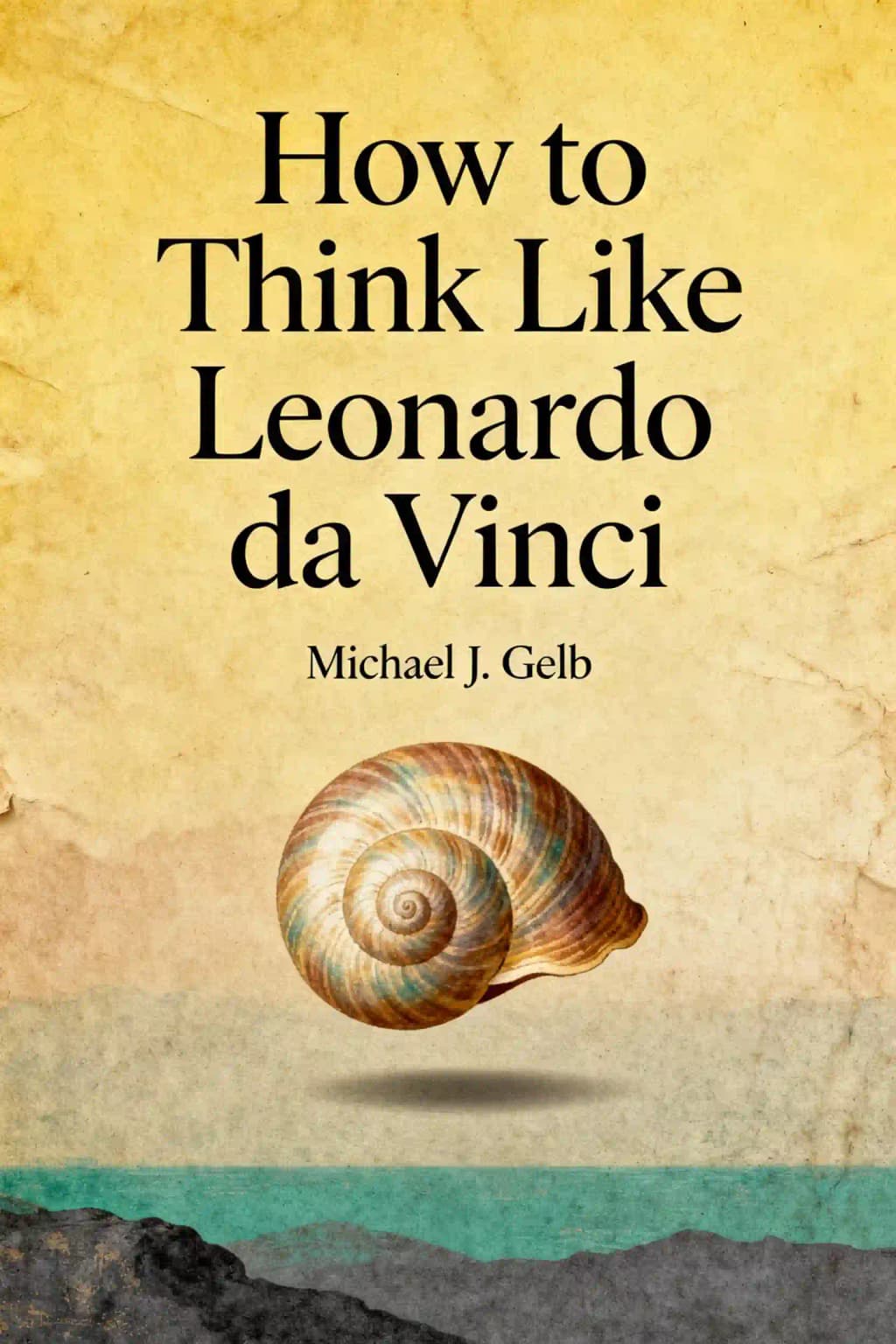
Michael J. Gelb is the bestselling author of How to Think Like Leonardo da Vinci: Seven Steps to Genius Every Day and a pioneering authority on creative thinking and innovative leadership. A Clark University and Goddard College graduate, Gelb combines his background in psychology, mind-body coordination, and executive coaching to teach timeless strategies for unlocking human potential.
His expertise spans 18 books, including Innovate Like Edison and The Art of Connection, which blend historical genius principles with modern personal and professional development.
As a senior fellow at Fordham University’s Center for Humanistic Management and Batten Institute Research Fellow, Gelb’s frameworks are used by organizations like Microsoft, Nike, and YPO. A fifth-degree aikido black belt and former Rolling Stones juggling performer, he infuses his work with unconventional insights on holistic learning.
How to Think Like Leonardo da Vinci has sold over 1 million copies worldwide, been translated into 25 languages, and earned Gelb the 1999 “Brain-of-the-Year” award alongside Stephen Hawking and Bill Gates. His companion workbook extends the da Vinci methodology for practical application.
How to Think Like Leonardo da Vinci explores seven principles inspired by Leonardo’s genius—Curiosità, Dimostrazione, Sensazione, Sfumato, Arte/Scienza, Corporalità, and Connessione—to help readers cultivate creativity, problem-solving, and holistic thinking. Gelb combines historical insights with practical exercises, such as journaling and observational techniques, to teach actionable strategies for personal and professional growth.
This book is ideal for professionals, creatives, educators, and self-improvement enthusiasts seeking to enhance innovation, critical thinking, and mindfulness. It’s particularly valuable for leaders aiming to foster resilience, adaptability, and a growth mindset in fast-paced environments.
Yes—the book blends historical wisdom with modern psychology, offering timeless tools for creativity and problem-solving. Readers praise its actionable exercises, such as “100 Questions” for curiosity development and “Think Visually” for improving observational skills.
The seven principles are:
Gelb recommends keeping a “Da Vinci Notebook” to jot down questions, observations, and reflections daily. He also suggests practicing the “10 Power Questions” exercise, like “What if?” and “How else could this be approached?” to stimulate inquisitive thinking.
Connessione emphasizes seeing relationships between disparate ideas, fields, and experiences. Gelb encourages readers to use mind-mapping, analogical thinking, and interdisciplinary exploration to foster innovation—mirroring Da Vinci’s ability to connect art, science, and nature.
Gelb analyzes Leonardo’s journals to extract habits like daily reflection, sketchnoting, and iterative experimentation. Exercises include sketching challenges, writing backward (mirror script), and “stream-of-consciousness” journaling to unlock creativity.
Yes—it teaches Sfumato (tolerance for ambiguity) and Dimostrazione (testing knowledge through experience). Techniques like “Defy the Routine” (changing habits to gain new perspectives) and “Shift Your Assumptions” help reframe challenges.
Gelb advocates journaling as a tool for self-discovery, idea generation, and tracking progress. He shares Da Vinci’s method of categorizing notes by themes (e.g., “Daily Observations,” “Inventions”) and revisiting them to identify patterns.
The Arte/Scienza principle teaches balancing analytical and creative thinking. Exercises like drawing problem diagrams or using metaphors to explain scientific concepts help readers integrate both hemispheres of the brain.
Some critics argue Gelb oversimplifies Da Vinci’s complexity into a self-help framework. Others note the exercises require sustained effort, which may challenge casual readers. However, most praise its practicality for modern applications.
In an era of AI and rapid change, its focus on adaptability, creative resilience, and systemic thinking aligns with demands for innovation. Concepts like Connessione resonate with interdisciplinary tech and sustainability challenges.
Sinta o livro através da voz do autor
Transforme conhecimento em insights envolventes e ricos em exemplos
Capture ideias-chave em um instante para aprendizado rápido
Aproveite o livro de uma forma divertida e envolvente
Great minds ask great questions.
Buy it. Read it! Live it!
The greatest deception men suffer is from their own opinions.
Divida as ideias-chave de How to Think Like Leonardo da Vinci em pontos fáceis de entender para compreender como equipes inovadoras criam, colaboram e crescem.
Destile How to Think Like Leonardo da Vinci em dicas de memória rápidas que destacam os princípios-chave de franqueza, trabalho em equipe e resiliência criativa.

Experimente How to Think Like Leonardo da Vinci através de narrativas vívidas que transformam lições de inovação em momentos que você lembrará e aplicará.
Pergunte qualquer coisa, escolha a voz e co-crie insights que realmente ressoem com você.

Criado por ex-alunos da Universidade de Columbia em San Francisco
"Instead of endless scrolling, I just hit play on BeFreed. It saves me so much time."
"I never knew where to start with nonfiction—BeFreed’s book lists turned into podcasts gave me a clear path."
"Perfect balance between learning and entertainment. Finished ‘Thinking, Fast and Slow’ on my commute this week."
"Crazy how much I learned while walking the dog. BeFreed = small habits → big gains."
"Reading used to feel like a chore. Now it’s just part of my lifestyle."
"Feels effortless compared to reading. I’ve finished 6 books this month already."
"BeFreed turned my guilty doomscrolling into something that feels productive and inspiring."
"BeFreed turned my commute into learning time. 20-min podcasts are perfect for finishing books I never had time for."
"BeFreed replaced my podcast queue. Imagine Spotify for books — that’s it. 🙌"
"It is great for me to learn something from the book without reading it."
"The themed book list podcasts help me connect ideas across authors—like a guided audio journey."
"Makes me feel smarter every time before going to work"
Criado por ex-alunos da Universidade de Columbia em San Francisco

Obtenha o resumo de How to Think Like Leonardo da Vinci como PDF ou EPUB gratuito. Imprima ou leia offline a qualquer momento.
What if history's greatest genius wasn't born extraordinary but instead cultivated specific thinking patterns anyone could learn? Leonardo da Vinci - artist, scientist, engineer, anatomist - achieved mastery across countless disciplines not through superhuman talent but through deliberate mental strategies we can adopt today. His approach to learning and creativity wasn't just revolutionary in the Renaissance; it remains transformative five centuries later in our own era of rapid change and technological advancement. Like those who lived through the original Renaissance, we're experiencing unprecedented acceleration of knowledge and innovation. The medieval certainties have given way to a world of constant flux - creating both tremendous opportunity and profound challenge. Leonardo's example offers not just inspiration but practical guidance for navigating our own renaissance moment. Through careful study of Leonardo's notebooks and works, we can identify seven principles that defined his approach to thinking and learning: Curiosita (insatiable curiosity), Dimostrazione (testing knowledge through experience), Sensazione (refining the senses), Sfumato (embracing ambiguity), Arte/Scienza (balancing art and science), Corporalita (cultivating physical grace), and Connessione (recognizing interconnectedness). These principles don't operate in isolation but work together as an integrated system. Leonardo's genius emerged from their combined application - and so can yours.