Capítulo 1
When Failure Becomes Your Greatest Teacher
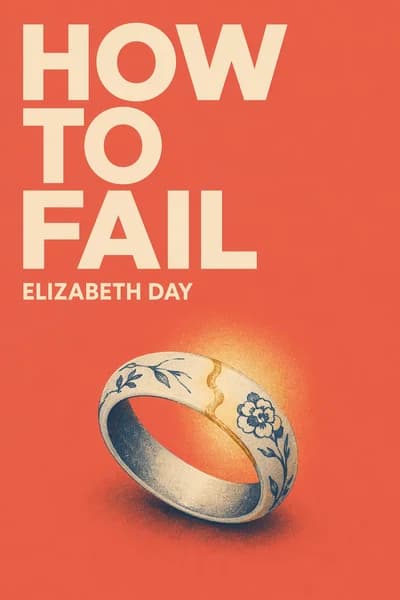
Elizabeth Day's "How to Fail" has become a cultural touchstone for a generation seeking authenticity in an age of curated perfection. This refreshingly candid memoir-cum-self-help book emerged from Day's wildly successful podcast of the same name, which rocketed to #3 on iTunes charts with over 200,000 downloads in just eight episodes. Beloved by celebrities like Emma Thompson and Phoebe Waller-Bridge, Day's exploration of failure has struck a chord precisely because it counters our social media-driven obsession with flawless lives. As Day herself discovered after a devastating breakup approaching her 39th birthday, it's our failures-not our successes-that often teach us the most profound lessons about ourselves.
Capítulo 2
Embracing the Outsider Perspective
Growing up in Northern Ireland during the Troubles with her precise English accent, Day experienced the sting of not belonging from an early age. At four years old, she was transplanted from suburban Surrey to a place of civil unrest, where her family's attempts to assimilate-Irish dancing lessons, acquiring sheep and a donkey cart-couldn't disguise their foreignness. While bombs exploded in shopping centers and soldiers manned checkpoints on her school route, Day stood out immediately, marked as different by her accent and mannerisms.
Secondary school in Belfast only heightened her awareness of difference. Walking home, she once passed through the aftermath of a bomb attack-a warped car and the Europa Hotel with every window blasted out. At school, her English accent marked her as the "hated occupier," and being put up a year made her the youngest in her class, further isolating her. The breaking point came when popular girls mockingly called her school photo "pretty" when she clearly wasn't. She realized she was the school joke-the weird, ugly English girl with bad clothes.
This rejection led to a coping mechanism that would last into adulthood: internal dislocation. She stopped participating in class, cheated on tests, and developed two distinct personalities-home self and school self. Eventually refusing to return, her parents enrolled her in an English boarding school where she approached popularity with Machiavellian intent-identifying the most popular girl and copying her. She bought River Island trousers, claimed to fancy Robbie Williams, drank Cinzano straight from the bottle. On the surface, she belonged.
Yet she never entirely fit in anywhere-in Ireland because she spoke like a foreigner, in England because she hadn't grown up there. This social failure had unexpected benefits: it made her an observer of human behavior, a skill invaluable to her writing career. Many successful people she's interviewed experienced similar alienation-particularly comedians from military families who moved frequently, using humor to adapt to new environments.
Not fitting in taught Day resilience and independence. While condescending adults told her schooldays were "the best of my life," they categorically weren't-she still has nightmares about them. Her failure to fit in had mixed effects: it made her a people-pleaser desperate for acceptance, causing her to lose touch with her authentic feelings until her life "imploded" at thirty-six. Yet without that outsider perspective and work ethic fueled by insecurity, she might not have achieved professional success or developed such meaningful friendships.
Capítulo 3
The Testing Trap: When Worth Becomes a Number
The testing culture Day encountered after transferring to secondary school in England marked a dramatic shift in her academic life, transforming her into a straight-A student with glowing reports-a stark contrast to her Belfast experience. Life became an endless series of evaluations that touched every aspect of her development: weekly subject tests, end-of-term exams, musical grade assessments, GCSEs, A levels, and even routine medical evaluations like eye tests. This testing culture has only intensified since she left school in 1997, with concerning implications for student wellbeing. Childline reported over 3,000 counseling sessions specifically focused on exam stress in 2018, with half of these sessions involving children aged 12-15 who were struggling to cope with overwhelming workloads and persistent grade anxiety. Many students reported physical symptoms including insomnia, panic attacks, and loss of appetite.
With the proliferation of standardized tests throughout education, failure becomes almost mathematically inevitable at some point, reducing complex human worth to red marks and percentage points. Day's 47% Chemistry result from Belfast haunted her disproportionately for years, partly because she felt she was disappointing her surgeon father, who deeply loved science and had built his career on academic excellence. The experience revealed how tests tap into deeper psychological issues beyond simple academic measurement-her Chemistry failure became emblematic of her broader unhappiness and lost confidence after social rejection in Belfast. The grade became not just a measure of chemical knowledge, but a reflection of her perceived personal inadequacies.
Being labeled as "academic" became a fundamental part of her identity, bringing both privileges and hidden psychological burdens. As acclaimed novelist Jessie Burton noted during her appearance on Day's podcast, academic success can function as a mask for underlying vulnerability and create a destructive pattern of constantly seeking external validation. When Burton's first novel "The Miniaturist" became an international bestseller, she found herself questioning "Who am I?" because adult life lacks the clear signposts and validation markers of academic achievement. This highlights how academic identity can become a crutch that makes navigating real-world success and failure more challenging.
Day's driving test failure proved particularly devastating because it shattered her entitled belief that effort plus intelligence automatically equals reward-a formula that had seemingly worked throughout her academic career. Coming from a family where everyone had passed their driving test on the first attempt, this failure exposed not just her limitations but her underlying arrogance. Surprisingly, during her second attempt, freed from the weight of expectations and her own perfectionism, she passed despite making numerous minor errors that could have failed her on her first attempt. This experience taught her a crucial lesson: true success at tests means developing a healthy relationship with evaluation where you don't define your entire self-worth by the outcome. While exams matter-providing necessary structure, discipline, and opportunities for advancement-they represent just one measure of capability among many and should never become the sole determinant of personal worth.
Capítulo 4
Navigating the Wilderness of One's Twenties
After graduating, Day upgraded to a place with a kitchen in Clapham, joining the masses of middle-class graduates pursuing media careers. She had grand visions of a This Life-style existence with cool housemates, stylish decor, and perpetually sunny mornings where she'd sip espresso before heading to work in silk blouses and designer shades.
The reality fell short. Though her Clapham house was lovely with nice housemates, her twenties became a constant struggle between adult responsibility and youthful impulse. She tried hosting weekend roasts but once disastrously roasted broccoli that tasted of "charred grass." Everyone else seemed to be wildly experimenting while she felt pressure to conform to this non-conformity.
Her job at the Evening Standard's Londoner's Diary required attending glamorous parties and questioning celebrities, but as an introvert, she found it nerve-wracking. She'd clutch champagne and lurk by walls, gathering courage to approach someone vaguely famous. Some celebrities were kind (Pierce Brosnan), others less so.
At twenty-two, her sense of self was unmoored, and she became a desperate people-pleaser, particularly in relationships. She contorted herself to fit others' lives until she genuinely couldn't even decide what she wanted for lunch. Between ages nineteen and thirty-six, she was single for only two months.
Her twenties were haunted by cultural representations that made everyone else seem to be having a fabulous time. The reality was a decade of putting on a good show while groping blindly for meaning-building careers that felt too slow, dating without finding "the one," and feeling the pressure of time running out.
As a Generation X-er born in 1978, Day entered her twenties with mixed messages: forge a career but also expect marriage. She kept finding herself in serious relationships while trying to carve out the perfect career, feeling she was failing at both. For millennials entering the job market during the 2008 financial crisis, it's even worse-hyper-connectivity, social media comparison, high rents and job insecurity.
Her twenties were also when she first encountered mortality-losing her grandfather, a beloved ex-boyfriend killed in Iraq, and colleagues. It was when she first went to therapy, where she learned to see this period as a necessary "gestation period." By thirty, she felt relieved to have made it through, a little wiser and more self-aware. As novelist David Nicholls noted, "we're not fixed at twenty-two, twenty-three, that life is long."
Capítulo 5
The Dating Battlefield: Lessons in Vulnerability
Post-divorce at thirty-six, Day discovered dating had undergone a seismic change. Meeting someone online was now normal, and her friend Francesca gently explained that "no one meets anyone in bars anymore." Despite her terror of meeting an "axe-murderer," she signed up for Bumble, where women must initiate contact.
Online dating proved exhausting-endless sexual innuendos and "banter" that felt like writing sub-par scripts for Carry On films. Many connections just turned into exchanges of filthy jokes before fading into silence. The actual dates were disappointing: Kenny with his post-Hoffman Process intensity, Alec who drew flowers and wrote songs about her before they'd even properly met, the man who complained about his ex's IVF journey, and the Deepak Chopra enthusiast who bombarded her with spiritual quotes.
She tried real-life dating too, accepting blind dates from friends. The pattern was predictable: anticipatory build-up through texts, hopeful thoughts about "the one," then immediate chemistry-free disappointment upon meeting, followed by obligatory drinks and wasted evenings.
Her most educational experience came through Jonathan-age-appropriate, bright, funny, financially stable with no ex-wife baggage. Though lacking passionate chemistry, she rationalized that her usual types had all failed. Jonathan had quirks-excessive punning, bow-ties with casual shirts, Bart Simpson socks, and compulsively smelling every flower they passed. By their second meeting, he sulked when she mentioned weekend plans, claiming she'd triggered his "abandonment issues" and complaining about her mattress.
She ignored these red flags, thinking she shouldn't be picky. By their fourth date, Jonathan buzzed her door with a "surprise"-a camp bed to solve his sleeping problems on her mattress. After sleeping beside his camp bed, she woke with sudden clarity: "I cannot be this man's girlfriend." When breaking things off, he cruelly remarked her "ovaries will have dried up" in six months-something particularly hurtful given her known fertility issues.
Day realized dating successfully requires trusting your instincts rather than drowning them in anxiety about every signal. The key is remembering who you are, not obsessing over who they are. We waste too much time imagining others' motivations instead of focusing on our own happiness.
Her dating failures taught her valuable lessons: the importance of maturity, kindness, reliability over empty promises, and a healthier approach to rejection. Being vulnerable isn't weakness but strength-allowing yourself to be open to love means risking heartbreak, but it's never fatal. Once she started applying this wisdom, she became more honest about who she was. Dating became a coaching exercise preparing her for something real, with micro-rejections building her strength.
Capítulo 6
Finding Your Sport: The Physical Self Beyond Competition
Despite her mother's belief that tennis was the most "sociable" sport, Day endured "casual knockabouts" on group holidays where competitive men displayed their skills while she floundered, missing shots and collecting balls like a humiliated dog. Her mother, a skilled player herself, insisted she learn tennis partly because of an annual tournament in Ballycastle, Northern Ireland, which attracted "the right kind of friends" she hoped Day would make. Despite numerous lessons emphasizing "footwork" and dreams of becoming Steffi Graf, Day remained mediocre-not even interestingly bad, just inconsistent with misjudged lobs and weak backhands.
This tennis failure became inextricably linked with her perceived social inadequacy. Sport failures are rarely just about the activity-they almost always reflect deeper insecurities. Many interviewees linked sport failure to musical instrument failure. Novelist David Nicholls lamented his piano failures despite genuine effort: "There was this gulf between what my brain was telling me to do and what my fingers could manage."
During one tennis lesson, after missing a backhand and berating herself, her coach Brad delivered a profound insight: her problem wasn't her technique but that she dug herself "into a pit of self-loathing" after every mistake, making recovery impossible. She needed to brush off failures and focus on the next shot.
This wasn't just advice for tennis but for life. Day realized she needed to learn from failures and move forward. She gave up tennis but discovered she hadn't failed at sport-she simply hadn't found the right sport for her. She later discovered yoga, running, and spin classes, activities she genuinely enjoyed without Olympic aspirations.
As she aged, she understood exercise wasn't about winning or losing but feeling stronger in herself. After years of considering running "the devil's exercise," she properly embraced it during her mid-thirties while navigating a miscarriage, marriage breakdown, and leaving her home, job, and country. During this chaotic period, running reconnected her with her physical strength when all outward stability markers had disappeared.
Running gave her mental space-when she forgot to think, paradoxically, she had her best thoughts. Though she'll never complete marathons and still struggles with hills, she runs without judgment, at whatever pace feels maintainable, refusing to measure distance. Running gave her back herself.
Capítulo 7
When Relationships End: The Aftermath of Love
The painful aftermath of failed relationships often forces us to confront our deepest insecurities and past patterns. When Day's marriage ended, she found herself in surreal situations she never anticipated-like digitally removing herself from wedding photos to sell a once-cherished dress on eBay.
Despite feeling professionally indomitable in her career, her romantic relationships revealed deeply traditional patterns. Despite often earning more than boyfriends, she did all shopping, cooking and cleaning-confusing "having it all" with "doing it all." She deferred to partners' wishes, even foregoing makeup when one preferred her without it, despite feeling vulnerable. She shaped herself around men's stronger preferences rather than discovering what she truly wanted.
Looking back, she sees a younger self with dwindling self-worth, seeking validation from men rather than finding herself worthy of her own respect. She became Flynn's "cool girl," pretending nonchalance when boyfriends disappointed her, using concert tickets as breadcrumbs to win back someone who'd broken up with her, tolerating a partner who failed to help her move apartments.
Despite loving her ex-husband differently from previous partners-valuing his thoughts "about everything"-she didn't truly know herself, having spent years trying to please others in relationships. Her anxious attachment style stemmed from childhood experiences where she appeared mature but secretly feared abandonment. This manifested as people-pleasing and constant evaluation of her partner's affection. In marriage, she diminished herself, folding "into ever-smaller squares" to avoid placing demands on her husband. The breaking point came when her desire for motherhood couldn't be suppressed.
Her LA healing continued as she found diverse friendships: a Detroit lawyer married to a glamorous screenwriter with "pure and unencumbered" love despite childlessness; relaxed parents who viewed children as part of life rather than its definition; and women in her exact situation-single, childless, late-thirties. Los Angeles, built on storytelling and reinvention, proved the perfect place to follow "unexpected plot twists." She truly healed there, her heart "patched up and returned to the beating world," accepted for who she was rather than as someone's wife.
Despite everything, Day still believes passionately in love. She doesn't view any relationship as a failure-they taught her invaluable lessons and existed exactly as long as they should. As Andrew Sean Greer writes in Less: "Twenty years of anything with another person is a success... Is the sun a failure because it's going to end in a billion years? No, it's the fucking sun."
Capítulo 8
Body Battles: Rejecting the Pursuit of Perfection
After her marriage ended, Day eventually met J, refreshingly straightforward and mature. But early in their relationship, during a pub conversation about body insecurities, he accidentally called her "big" instead of "tall." Though he quickly corrected himself and insisted he found her body sexy, that three-letter word took up residence in her mind, despite her rational knowledge that at 5'11" and size 10, she's not overweight. She's maintained roughly the same size throughout her life, was briefly scouted as a model, and approaches exercise for strength rather than thinness. Yet despite her intellectual rejection of thinness as "a fool's errand," she still battles the desire to be thinner, haunted by childhood comments about her appearance.
The pursuit of thinness seems intellectually foolish, yet emotionally she always wants to be thinner. We're living under the curse of imagined perfection, comparing ourselves not just to peers but to celebrities whose careers depend on projecting beauty with resources beyond our means. Social media blurs the line between celebrities and us, making us feel they're "just like us" while simultaneously making us compare ourselves unfavorably. This phenomenon is epitomized by Gwyneth Paltrow, whose lifestyle brand Goop (now worth 250 million) makes her perfect life seem both aspirational and accessible.
Day once spent a week living as Gwyneth for the Sunday Times, trying her recommended LA haunts: vegan meals at Cafe Gratitude where dishes have names like "Whole" and "Brilliant"; an "urban sweat lodge" where she burned calories in a metallic sleeping bag; a $2,000 laser facial where the dermatologist suggested she also needed eye fillers; and the infamous vagina steam that made her $50 poorer with no discernible benefit. What she learned: looking like Gwyneth is essentially a full-time job that only the wealthy 1% could sustain.
The modern female body ideal seems shaped by two influential industries-fashion and porn. Fashion historically employed gay male designers who favored boyish physiques, while pornography presents hairless, surgically enhanced women as the standard. The proliferation of online porn means impressionable adolescents grow up with deeply unrealistic expectations about bodies and sex.
In her early thirties, Day went through a period of disordered eating, refusing breakfast and lunch, surviving on chickpeas and cucumber salads, denying herself even avocados for being "fatty." She grew accustomed to the light-headed feeling of hunger, interpreting it as triumph. After unsuccessful fertility treatments and a miscarriage, her relationship with her body transformed. She realized that all her efforts to be thinner or sexier hadn't helped her body do what biology intended-perhaps they'd even hindered it.
After her fertility struggles and marital breakdown, she began seeing her body differently-appreciating its internal complexity rather than just its external appearance. For the first time, she valued what her body could do rather than how it looked. When she recently asked a former partner to describe her body objectively, he called it "strong"-not like a weightlifter, but "really good at being a body in the world, graceful... You look like you're good at moving around." This beautiful assessment suggested she inhabited her body well, that she was connected to it. After so long trying to shrink herself, she's now considering how radical it might be to simply cherish her body instead.
Capítulo 9
The Power of Claiming Your Own Story
For the finale of her podcast's first season, Day switched roles and was interviewed by Dolly Alderton. After weeks of expecting vulnerability from others, it seemed only fair to expose herself to the same scrutiny. During their hour-long conversation, she was more honest than she'd ever been about grief, infertility, divorce, and her failure at tennis. The experience left her spaced out and exhausted, similar to an intense therapy session.
When her producer Chris sent the raw footage for editing, she was in America preparing to interview Dakota Johnson. Listening to herself discuss her failures on a train to East Hampton was unexpectedly emotional, even though she'd lived through these experiences. She worried about releasing something so personal: Was it self-absorbed? Was she ready for strangers to form opinions about her revelations?
With encouragement from Chris and Dolly, she published the episode. The response was immediate and overwhelming-within hours, it became the third most downloaded episode. Women contacted her saying they felt relieved hearing someone else had experienced similar struggles. Her boyfriend was unfazed, saying he "had known it anyway"-proof he truly understood and loved all of me, even the parts she tried to hide.
Many listeners called her brave, which she initially rejected-protesting dictatorships or speaking against sexual predators seemed truly brave, while she was just telling her truth about relatively ordinary experiences. Then a university friend messaged that her openness was "disarming and uplifting." When she responded that honesty was "really the only way to be," her friend replied that such public vulnerability wasn't the only way but was "certainly a brave and deeply humane way to be."
This made Day realize that perhaps the unexceptional nature of her failures made the conversation valuable-not everyone feels able to be as open as she naturally is. Her guiding principle is E.M. Forster's "only connect"-connecting our inner prose with our inner passion, but also connecting externally with others. She writes and speaks honestly hoping to make others feel less alone. We exist in this mystifying world together, and the greatest beauty comes from grasping those flashes of fellow feeling.
During a low period, she listened to Eckhart Tolle explain that we exist apart from our thoughts-that negative thoughts could be silenced and we'd still be ourselves. He suggested treating everything that happens to us as if we'd chosen it, containing valuable lessons we were meant to learn. This resonated with her as a version of Taoist philosophy: success and failure start as emptiness, and our reaction defines them as negative or positive.
Day isn't claiming enlightenment-she still worries, panics, compares herself to others, and battles self-loathing. But she believes starting honest conversations about what we fear discussing helps us feel connected rather than alienated. Solidarity is powerful; togetherness is unstoppable. Her book is for anyone who has ever failed-which means everyone. She doesn't have all the answers, but if you finish these pages feeling recognized and less alone, then she's happy. That means this book about failure is not, itself, a failure.