Capítulo 1
The Psychology Behind Financial Decisions: More Than Just Numbers
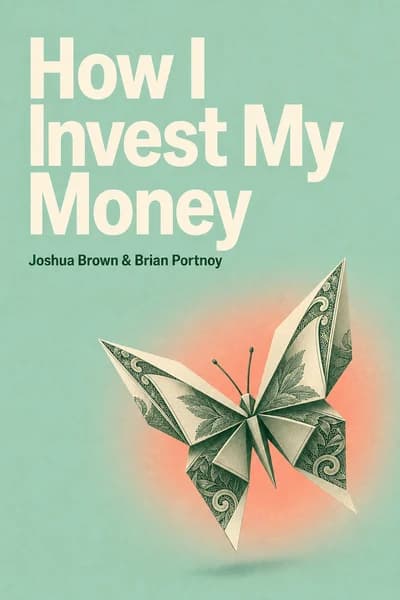
What if the most successful financial professionals don't actually follow the advice they give to clients? This provocative question lies at the heart of "How I Invest My Money," a groundbreaking collection that pulls back the curtain on the personal financial lives of leading investment experts. While countless finance books tell you how to invest, this refreshing work reveals what financial professionals actually do with their own money-and more importantly, why they make these choices. The book has become a sensation among both financial professionals and everyday investors seeking authentic guidance beyond theoretical models. Even celebrities like Ashton Kutcher have praised its honest approach to the emotional side of money management, making it one of the most influential finance books of recent years for its recognition that investing is deeply personal rather than purely mathematical.
Capítulo 2
The Gap Between Financial Advice and Personal Practice
Half of all US mutual fund portfolio managers don't invest any of their own money in their funds, and another quarter invest less than $100,000. This startling statistic highlights a fundamental truth: there's often a substantial gap between what makes sense theoretically (what people recommend) and what feels right personally (what they actually do). As billionaire investor Sandy Gottesman wisely asks potential hires: "What do you own, and why?"-not what stocks they think are cheap or which economies might face recession. This approach cuts through theoretical analysis to reveal true conviction and risk tolerance.
This disconnect isn't limited to finance-medical professionals often choose different end-of-life treatments for themselves than they recommend to patients. Studies show that doctors are more likely to choose less aggressive treatments for themselves, preferring quality of life over longevity. Similarly, estate planning attorneys often structure their own wills differently from what they typically recommend to clients. These differences aren't necessarily hypocritical; they simply underscore that with complicated, emotional issues affecting your family, there is no universal truth-only what works for you and allows you to sleep well at night.
While basic financial principles must be followed, important money decisions aren't made in spreadsheets but at dinner tables, often prioritizing family security over maximum returns. A financial advisor might recommend an 80/20 stock-bond split for optimal returns, but personally maintain a more conservative 60/40 portfolio due to their own risk tolerance or family circumstances. What works for one person may not work for another. This explains why financial experts might make seemingly "irrational" choices with their own money-like keeping excessive cash reserves or paying off low-interest mortgages early-that contradict the optimization-focused advice they give clients.
The psychology behind these decisions reveals that money management isn't just about mathematics; it's about creating a financial life that aligns with your values, personal history, and emotional needs. For instance, someone who lived through the Great Depression might maintain larger cash reserves despite low interest rates, while an entrepreneur might keep minimal savings but invest heavily in their business. Real estate investors often concentrate their wealth in properties despite preaching diversification, because they understand and feel comfortable with that specific market.
These personal choices reflect deeper truths about human behavior and decision-making. Financial decisions are ultimately personal decisions influenced by individual circumstances, risk tolerance, family dynamics, and emotional comfort levels. The most sustainable financial strategy isn't necessarily the one that maximizes returns on paper, but the one you can stick with through market cycles and life changes while maintaining your peace of mind.
Capítulo 3
Independence: The True Goal of Wealth Building
"I did not intend to get rich. I just wanted to get independent." This profound statement from Charlie Munger captures the primary motivation behind many financial professionals' personal money management. For Morgan Housel and others, independence-the ability to wake up each day and do whatever you want on your own terms-represents the ultimate financial goal, not maximum returns or leveraged assets for luxury. This perspective shifts the focus from wealth accumulation to wealth utility.
This independence-focused mindset leads to seemingly counterintuitive financial decisions that prioritize psychological comfort over mathematical optimization. Many contributors maintain substantial cash reserves despite knowing the long-term opportunity cost, often keeping 1-2 years of living expenses in readily accessible accounts. They pay off mortgages early despite historically low interest rates. They choose simple, automated investment approaches over complex strategies that might theoretically yield higher returns. For instance, many opt for broad-market index funds with regular automatic investments rather than attempting to time markets or select individual stocks.
These choices reflect a deeper understanding that true financial success isn't about having the highest possible net worth but about creating a life free from financial anxiety. Independence means different things to different people-for some, it's the ability to change careers without worry; for others, it's the freedom to spend time with family or pursue passion projects without financial constraints. Some define it as having enough passive income to cover basic expenses, while others seek complete financial autonomy.
The pursuit of independence often begins with establishing a moderate lifestyle and maintaining it despite rising income-what Morgan Housel calls getting your "lifestyle goalpost to stop moving." This approach naturally pushes savings rates higher over time, creating a virtuous cycle where financial independence becomes increasingly attainable. For example, someone earning $100,000 who lives on $50,000 and maintains that lifestyle even as their income grows to $200,000 automatically increases their savings rate from 50% to 75%.
Financial independence also provides protection against external forces beyond one's control. During economic downturns or career disruptions, those with substantial savings and modest lifestyles have more options and face less stress. This buffer creates what some call "sleep-well-at-night money," which often proves more valuable than maximizing investment returns.
The path to independence typically involves creating multiple income streams, reducing or eliminating debt, and building a robust emergency fund. Many practitioners advocate for the "4% rule" as a benchmark, suggesting that accumulating 25 times your annual expenses provides a reliable path to financial independence. However, the exact number varies based on individual circumstances, risk tolerance, and desired lifestyle.
Capítulo 4
The Power of Simplicity in Investment Strategies
Despite their sophisticated financial knowledge, many contributors embrace remarkably simple investment approaches. Christine Benz, Morningstar's Director of Personal Finance, maintains minimal accounts: respective 401(k)s, taxable assets and IRAs at Vanguard, a health savings account, and basic checking/savings accounts. Morgan Housel's entire net worth consists simply of a house, checking account, and Vanguard index funds. Similarly, Burton Malkiel, author of "A Random Walk Down Wall Street," keeps over 90% of his portfolio in broad-market index funds, demonstrating that even market experts prefer straightforward approaches.
This simplicity isn't due to ignorance-these are people who understand financial markets deeply. Rather, it reflects a profound insight: complexity often undermines long-term investment success by increasing costs, taxes, and the likelihood of behavioral mistakes. As Dan Egan puts it, "Money should be a wonderful servant but never your master." Warren Buffett himself has repeatedly advocated for simple investment strategies, famously advising that most investors would be better off with a low-cost S&P 500 index fund.
Many contributors follow systematic, automated investment approaches-regular contributions to diversified portfolios of low-cost index funds, with minimal tinkering. They recognize that investment success depends far more on consistent saving, patience, and avoiding major mistakes than on picking the next hot stock or timing market movements. Jack Bogle's research showed that investors who traded frequently underperformed the market by an average of 1.5% annually due to transaction costs and timing mistakes.
This simplicity extends to their overall financial lives. They minimize accounts, automate contributions, and create clear systems for managing cash flow. Christine Benz attributes her success to consistent employment enabling regular savings, shared financial values with her husband, beneficial company stock compensation, equity-heavy allocations, and automation-not complex investment strategies. David Swensen, Yale's legendary investment chief, maintained that individual investors should stick to a simple portfolio of index funds, rebalanced annually.
The professionals' embrace of simplicity offers a powerful lesson: financial success often comes not from sophisticated strategies but from establishing simple systems that align with your values and that you can maintain consistently over decades. Research from Vanguard shows that behavioral coaching and maintaining portfolio discipline during market volatility can add up to 1.5% in annual returns, far outweighing potential gains from complex trading strategies.
Studies consistently demonstrate that simple, diversified portfolios of low-cost index funds outperform actively managed portfolios over long periods. The SPIVA scorecard regularly shows that about 80% of active managers underperform their benchmarks over 15-year periods. This data reinforces the wisdom of keeping investment strategies straightforward and focusing on what truly matters: saving consistently, keeping costs low, and staying the course during market turbulence.
Capítulo 5
The Role of Human Capital in Wealth Building
While most financial advice focuses on investment portfolios and market returns, many successful contributors identify their own human capital-their ability to earn income through work-as their most valuable asset. Dan Egan, director of behavioral finance at Betterment, estimates his human capital represents approximately 75% of his total wealth, far exceeding his financial investments. Since beginning work at age 16, his hourly wage has grown nearly 10-fold through consistent reinvestment in himself through education, skill development, and strategic career moves.
This perspective fundamentally shifts the focus from purely financial investments to personal development and career enhancement. Contributors describe investing in education, skills development, networking, and career advancement as their highest-returning investments. Advanced degrees, professional certifications, leadership training, and specialized technical skills often deliver returns far exceeding traditional market investments. Carolyn McClanahan, a physician turned financial planner, emphasizes: "invest in yourself. Your ability to work is your safest and highest returning asset." She points to her own career transition as evidence, noting how her medical background combined with financial expertise created unique market positioning.
For entrepreneurs like Joshua Brown, Shirl Penney, and Alex Chalekian, their businesses represent their largest and most successful investments. Chalekian provides compelling mathematics: purchasing a financial practice with $100,000 in recurring revenue for $250,000 is equivalent to a 40% yield investment-far exceeding typical market returns. Similarly, Penney keeps a substantial portion of his net worth concentrated in his wealth management platform, Dynasty Financial Partners, despite conventional diversification wisdom. This approach has generated returns multiple times higher than broad market indices.
This focus on human capital significantly influences other financial decisions and strategies. Many successful professionals maintain larger cash reserves than theoretically optimal-often 12-24 months of expenses-to provide flexibility for career transitions, additional education, or entrepreneurial opportunities. They strategically invest in experiences, relationships, and networks that might not generate immediate financial returns but enhance their long-term earning potential and life satisfaction. Conference attendance, professional memberships, mentorship programs, and even social activities are viewed as investments in future earning potential.
The emphasis on human capital reveals a more comprehensive view of wealth building than traditional investment advice typically provides. This holistic approach recognizes that your career trajectory, specialized skills, professional relationships, and personal health often matter more to your financial success than your investment selections. Many contributors suggest that young professionals focus on maximizing their earning potential through skill development and career advancement before becoming overly focused on investment returns. They emphasize that a 20% increase in salary typically impacts net worth more significantly than a 20% investment return.
The most successful wealth builders maintain a dual focus: growing their investment portfolio while simultaneously developing their human capital through continuous learning, relationship building, and career advancement. This balanced approach creates multiple engines for wealth creation and provides greater financial security through diversification of income sources.
Capítulo 6
The Influence of Childhood Money Experiences
"I was never supposed to make it this far." This poignant reflection from Leighann Miko exemplifies how profoundly childhood experiences with money shape adult financial behaviors and attitudes. Growing up in financial volatility with a single mother dependent on welfare, Miko learned early that society often equates personal worth with financial status. At just 13, she found herself shouldering adult responsibilities, making desperate calls to utility companies begging to reconnect essential services and negotiating with landlords to prevent eviction. These moments created lasting impressions about financial security and self-worth.
These early experiences created what financial psychologists term "money scripts"-deeply held beliefs about money that operate below conscious awareness and influence financial decisions throughout life. For Miko, this manifested in an 18-year struggle between extreme behaviors: compulsive shopping sprees followed by periods of anxious money hoarding, despite her professional success as a financial expert. This pattern demonstrates how childhood financial trauma can create lasting psychological impacts that persist even after achieving financial stability.
Nina O'Neal's story parallels Miko's, describing a complex love/hate relationship with money stemming from childhood financial instability following her parents' divorce. As a teenager, she worked multiple jobs-from retail to babysitting to lawn care-pursuing financial independence with determination. This early self-reliance became the foundation for her later success in building her own business, though it also led to workaholic tendencies and difficulty delegating financial responsibilities.
Not all formative money experiences stem from hardship. Blair duQuesnay's first significant money memory was watching the church offering plate being passed-a weekly ritual that demonstrated how money could be a tool for community support and collective good. This positive early association continues to influence her approach to finances, emphasizing generosity, community investment, and viewing wealth as a means to benefit others rather than purely personal gain.
Ryan Krueger's investing journey began with a pivotal moment at age 13 when he approached his father about investing his summer job earnings in the stock market. Rather than simply buying shares, his father helped him research companies and understand market fundamentals. This early lesson about the connection between work, investment, and value has shaped his entire investment philosophy and approach to client education.
These diverse stories illuminate how our earliest experiences with money create emotional patterns and beliefs that can either support or undermine financial success in adulthood. Some develop hypervigilance around savings, others struggle with spending impulses, while some learn to view money as a tool for positive change. Understanding these deep-seated patterns allows individuals to make more conscious financial choices rather than unconsciously repeating childhood programming. Many financial professionals now recognize that addressing these emotional dimensions of money is crucial to their work, incorporating psychological insights alongside traditional financial planning to help clients develop healthier relationships with money.
The impact of these early experiences extends beyond personal finance into professional approaches, with many advisors drawing on their own financial histories to better understand and serve their clients. They emphasize the importance of acknowledging and working through money-related emotional patterns while developing practical financial strategies.
Capítulo 7
Beyond Financial Capital: Investing in What Truly Matters
"When you come from humble beginnings, and you are blessed enough to acquire financial knowledge, it's important to pass it on." This sentiment from Tyrone Ross reflects a common theme among contributors: their most meaningful investments often extend beyond financial assets to include family, community, and legacy.
Bob Seawright shares how his mother-in-law Mimi's legacy lives on through the Adirondack cottage she purchased specifically to create a gathering place for family. This retreat became where his children spent their summers forming meaningful relationships-"a place where conversations were had, values were imparted, lessons learned, relationships repaired, memories made." Following her example, Bob and his wife purchased their own cottage nearby despite it being "overweighted in real estate" and "a lousy investment" financially-but "the most important financial investment we'll ever make" for their family legacy.
Dasarte Yarnway's investment approach reflects his values and appreciation of time as a finite resource. Beyond his firm, he invests in affordable housing in gentrifying neighborhoods and in entrepreneurs, believing that "by investing in people in the smallest ways, you can realize the biggest alpha."
Ryan Krueger considers his "GRINdex account"-time spent coaching his kids' sports teams and creating videos of each season-his most valuable investment. "That box of videos is priceless to me-the only thing I took during hurricane evacuations."
Dan Egan purchased 10 acres in upstate New York so his daughter could have exposure to nature, just as he had growing up spending summers at a camp on the Chesapeake. He doesn't expect monetary returns, just memories with family and friends.
These stories reveal a more expansive definition of investing-one that encompasses not just financial capital but social capital (relationships and community) and experiential capital (meaningful experiences and memories). True wealth, in this view, consists of having the resources to fund what matters most to you, whether that's family time, community impact, or personal growth.
Capítulo 8
Balancing Present Enjoyment with Future Security
"My favorite investment is my monthly deposit for a dream 40th birthday vacation." After losing her brother to suicide, Debbie Freeman realized she'd spent 34 years following expectations without prioritizing experiences. Now she saves for meaningful adventures with her family, understanding that life requires both long-term discipline and present enjoyment.
This tension between enjoying life now and saving for the future runs throughout the contributors' stories. While they emphasize the importance of saving and investing for long-term goals, they also recognize the danger of postponing all enjoyment to some future date that may never arrive.
Perth Tolle describes investing as both a creative pursuit and form of expression-not just accumulating notes on a page, but turning them into life. Joshua Rogers follows the Law of Giving, keeping wealth circulating through giving and receiving care, value, appreciation, and love. "Money works like blood circulation," he explains. "Being tight-fisted cuts off proper flow."
Brian Portnoy approaches money through the lens of "funded contentment"-defining true wealth as the ability to underwrite a meaningful life rather than simply accumulating more. His financial goals center around funding deep connections and experiences while preparing for major expenses like college for his three children and retirement.
This balanced approach recognizes that money is a means to an end-not an end in itself. The goal isn't to die with the largest possible account balance but to use financial resources wisely to create a life of meaning, purpose, and joy. As Ted Seides puts it, contentment means stability for loved ones, shared experiences, and freedom from financial worry about necessities.
The contributors' stories suggest that financial success isn't just about the numbers but about creating a life where money serves your values rather than the other way around.
Capítulo 9
The Evolution of Investment Philosophy Over Time
"I started my career as a stock picker with about 25 individual stocks, but I've shifted entirely to low-cost index funds." Morgan Housel's evolution reflects a common pattern among contributors-their investment approaches have changed significantly over time, often becoming simpler and more focused on what they can control.
Carolyn McClanahan began investing in "hot stocks" during the 1990s but later realized her investment success was mostly luck. Her brief foray into day trading proved disastrous, teaching her valuable lessons about risk. Today, she's a convert to diversification and long-term investing, eventually moving fully to passive investments.
Ted Seides spent years as an institutional investor restricted to tax-inefficient hedge funds with less risk than personally optimal. Now finding his footing as an individual investor, he maintains a cash buffer for stability while staying fully invested in global equities. He's learned he excels as a contrarian buyer and serene long-term holder but struggles with short-term trading and selling decisions.
Blair duQuesnay entered finance as a stock picker admiring Warren Buffett but transformed after reading Charles Ellis' "Winning the Loser's Game," which convinced her that trying to beat the market is futile. She now prioritizes saving through automatic contributions to retirement accounts and children's 529 plans, with a globally diversified portfolio of low-cost funds.
These evolutions reflect both professional growth and life changes. As contributors gained experience, they often shifted from complex strategies focused on outperformance to simpler approaches emphasizing consistency and peace of mind. As they established families and businesses, their priorities shifted from maximum returns to reliability and risk management.
The willingness to adapt investment approaches based on new information and changing life circumstances represents a key strength. Rather than dogmatically sticking to one approach, these professionals continuously evaluate what works best for their current situation.
Capítulo 10
Finding Your Own Financial Path
"Personal finance is more personal than finance-there is no single right way to manage money." This concluding insight captures the book's central message: while financial principles matter, their application must be tailored to your unique circumstances, values, and goals.
The contributors' diverse approaches demonstrate this principle vividly. Jenny Harrington focuses almost exclusively on dividend-paying stocks, valuing the consistent income and tax advantages they provide. Howard Lindzon, a venture capitalist, maintains a portfolio split between high-beta growth stocks and a substantial cash position due to the illiquid nature of his venture investments. Ashby Daniels invests 100% in equities across diversified index funds, rejecting the conventional wisdom of holding fixed income since he has no short-term goals and can withstand volatility.
These differences don't mean some are right and others wrong-they reflect different priorities, risk tolerances, and life situations. What works for a venture capitalist with substantial business assets won't necessarily work for a financial planner with young children or a retiree seeking stable income.
The book's power comes from showing real portfolios rather than theoretical ideals. These financial professionals don't always follow textbook advice-they make "suboptimal" choices like holding excess cash, paying off low-interest debt early, or maintaining concentrated positions in their businesses. Yet these choices reflect a deeper wisdom about what allows them to sleep at night and stay consistent over decades.
The invitation to readers is clear: explore your own financial story-your values, priorities, and emotional relationship with money-and create an approach that works for you. Financial success isn't about following someone else's formula but about developing a sustainable strategy aligned with your unique circumstances and goals. As Joshua Brown advises: "Create a portfolio that makes sense for your personal situation and never argue with others about investment choices."