Capítulo 1
The Illuminating Journey from Darkness to Light
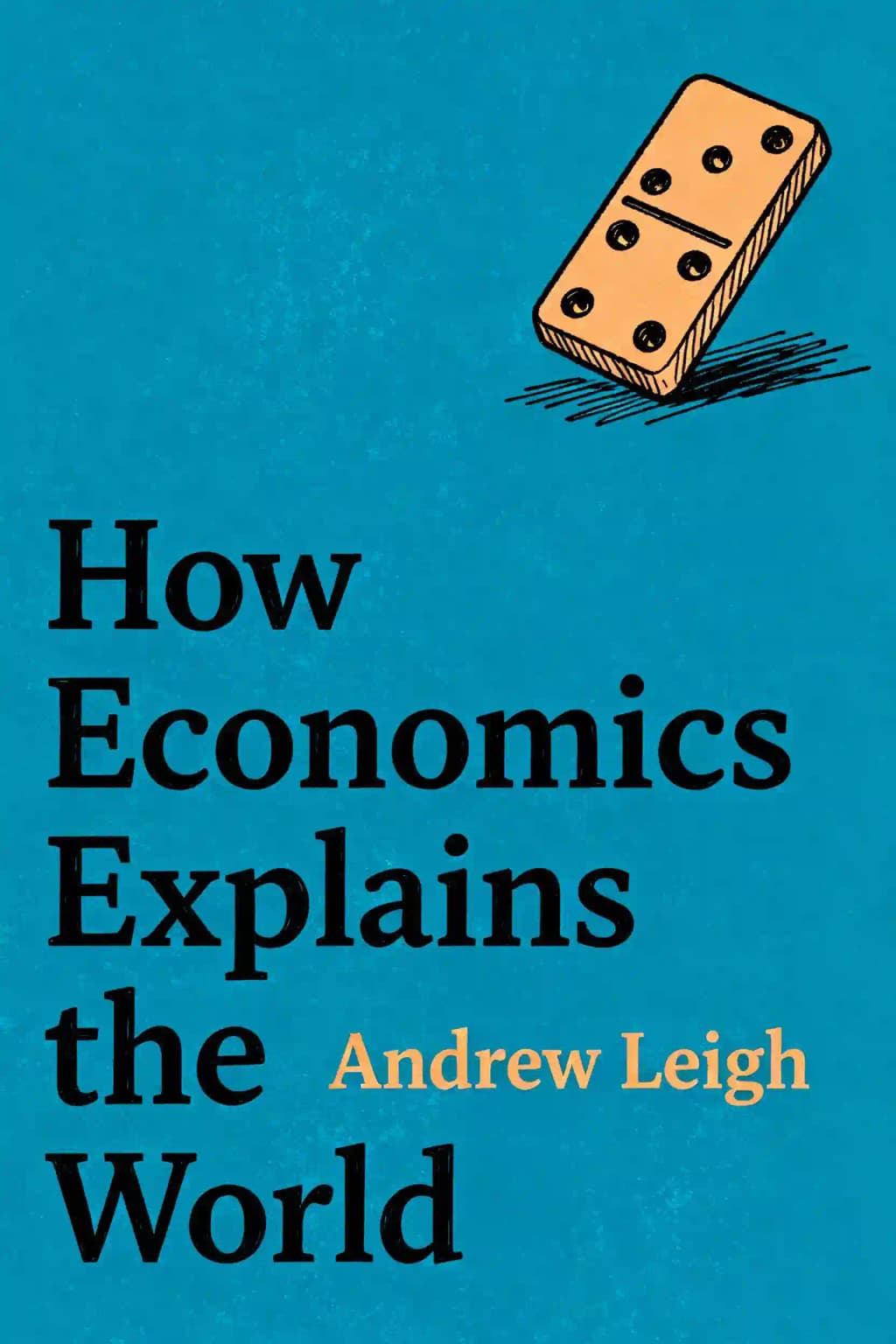
In prehistoric times, it took 58 hours of timber foraging to produce one hour of artificial light. Today, less than one second of work buys the same illumination-a 300,000-fold improvement that perfectly encapsulates economics' transformative power. This remarkable journey from scarcity to abundance forms the backbone of Andrew Leigh's exploration of how economics explains our world. The book has garnered praise from Nobel laureates and policy makers alike for its accessible approach to complex economic concepts. Beyond academic circles, it's become required reading in business schools worldwide and frequently appears on the bookshelves of tech CEOs and political leaders seeking to understand the invisible forces shaping our societies. What makes this book particularly compelling is how it transforms the "dismal science" into a vibrant narrative of human progress, revealing that Thomas Carlyle's famous dismissal of economics actually originated as an attack on economists' belief in human equality-not their analytical approach.
Capítulo 2
From Hunter-Gatherers to Agricultural Innovators
Life for our prehistoric ancestors was indeed "solitary, poor, nasty, brutish, and short," as Thomas Hobbes famously described. With 40% infant mortality, life expectancy of just 33 years, and up to 15% of people dying violently, hunter-gatherer existence was precarious at best. Archaeological evidence reveals mixed approaches to caring for the vulnerable-some communities carved walking canes and pre-chewed food for the toothless elderly, while others abandoned those who couldn't keep pace during migrations. Studies of remaining hunter-gatherer societies like the Hadza in Tanzania and the !Kung in the Kalahari Desert provide additional insights into these early social structures, showing both cooperation and harsh pragmatism in survival strategies.
The agricultural revolution, beginning around 10,000 years ago, marked humanity's first great economic transformation. In northwestern India's Kalibangan, archaeologists discovered the world's oldest ploughed field, dating back to 2800 BCE. Similar evidence from the Fertile Crescent, including ancient grain storage facilities in Jericho and early irrigation systems in Mesopotamia, demonstrates humanity's shift from nomadic foraging to settled farming. This transition enabled food surpluses, consumption smoothing across seasons, and the development of specialized skills beyond mere survival. Early agricultural communities in places like Catalhoyuk in modern-day Turkey show evidence of complex social organization, including dedicated craftspeople and religious specialists.
The plough itself was revolutionary, making agriculture 5-6 times more productive than foraging. The introduction of animal-drawn ploughs in different regions - from the ards in ancient Egypt to the heavy ploughs of Northern Europe - transformed both landscapes and social structures. However, this technological leap had profound social consequences. As farming required upper body strength for ploughing, societies shifted from relative gender equality among hunter-gatherers to male-dominated agricultural communities. Archaeological evidence from burial sites shows this transition, with earlier hunter-gatherer graves showing similar treatment of men and women, while later agricultural societies display marked status differences.
Geography played a crucial role in agricultural development. Eurasia's east-west orientation allowed crops and farming techniques to spread across similar climate zones, creating a vast agricultural network from China to Europe. In contrast, Africa and the Americas' north-south orientation meant plants adapted to one latitude often failed elsewhere - corn from Mexico, for instance, took thousands of years to adapt to North American growing conditions. Additionally, Eurasia possessed more domesticable plants and animals - 13 of the 14 major domesticated mammals came from Eurasia - providing further advantages that accelerated development.
While agriculture created potential for specialization and innovation, it initially worsened nutrition and disease. Archaeological evidence shows decreased height and increased dental problems in early farming populations. The proximity to domesticated animals led to new diseases like smallpox and influenza, while dense settlements facilitated their spread. Yet agriculture ultimately provided the foundation for intellectual pursuits like mathematics, writing, and astronomy. The world's earliest writing systems, such as Sumerian cuneiform and Egyptian hieroglyphs, emerged primarily to track agricultural surpluses and trade, demonstrating how farming laid the groundwork for civilization's broader achievements.
Capítulo 3
Water, Words, and Wealth: Medieval Economic Transformations
Water transport revolutionized ancient economies by dramatically reducing costs. Moving goods by sea or river was approximately twenty times cheaper than land transport, explaining why coastal regions developed faster. China's Grand Canal, stretching over 1,600 kilometers between the Yellow and Yangtze Rivers, exemplifies this advantage. Initially built during the Sui dynasty (581-618 CE) to collect grain taxes, it sparked interprovincial trade and contributed to China's remarkable prosperity. By 1000 CE, Chinese living standards exceeded England's, with daily per-person income equivalent to US$3.36 versus England's US$3.15.
Maritime commerce transformed coastal cities like Genoa and Venice. Venetian merchants pioneered the colleganza, a risk-sharing system allowing poorer traders to finance sea voyages by splitting profits with investors. This innovation created unprecedented social mobility until established families eventually restricted access, replacing merit with patronage and triggering Venice's economic decline.
Social mobility varied dramatically across medieval societies. China's fengjian system, India's caste structure, and European feudalism all rigidly determined status by birth. Remarkably, economist Gregory Clark's research using rare surnames reveals extraordinary persistence of social status across centuries. Samuel Pepys's descendants attended Oxford and Cambridge at twenty times the general population's rate, while similar patterns appear with elite surnames in the United States, Japan, China, Chile, and Sweden-where social status persists even over ten generations.
The spread of innovations like reading glasses (Italy, 1290), maize cultivation in China (1300s), and Gutenberg's moveable-type printing press (Germany, 1440) transformed medieval economies. The printing revolution produced more books in fifty years than the previous millennium combined. Ideas, unlike physical goods, are "non-rivalrous"-they can be shared without diminishing their value. While this encouraged innovation's spread, it reduced incentives to invent, eventually leading to patent laws beginning with Venice's 1474 statute.
Religion influenced economic development in surprising ways. The Protestant Reformation boosted literacy by encouraging Bible reading, effects still measurable in modern Germany. Jewish communities excelled in moneylending through trust networks, Islam's merchant origins facilitated commerce, and the First Crusade represented the Catholic Church's attempt to expand its economic and spiritual monopoly.
Capítulo 4
Sailing Ships and Economic Shifts
Europe's maritime technology advances-three-masted ships with sturdier hulls, better rudders, improved sails, and navigational tools like compasses and astrolabes-enabled global exploration and transformed commerce. These innovations drove expeditions like Columbus's 1492 Atlantic crossing, da Gama's 1498 sea route to India, and Magellan's 1519 circumnavigation attempt-all motivated by economic interests in new products, markets, and lands.
The resulting "Columbian exchange" brought crops like corn, potatoes, and chili peppers to Europe while introducing oranges, sugar, and livestock to the Americas. Tragically, European diseases decimated indigenous populations, killing over four-fifths in some regions. Even more abominable was the Atlantic slave trade, which trafficked over 12 million people between 1501-1866. During the 1700s, Europeans transported about 10% of Africa's population across the Atlantic, with over one-tenth dying during the journey. Slave labor powered labor-intensive crops like sugar, cotton, and tobacco, generating approximately 5% of British national income by the late 1700s.
The Medici family exemplifies how economic power translated into cultural influence during this era. Originally textile traders from northern Tuscany, they established Europe's largest bank in 1397, pioneering double-entry bookkeeping. As bankers prioritizing economic stability, they formed alliances with powerful Florentine families and ruled the city throughout most of the 1400s. Their artistic patronage supported Renaissance masters like Brunelleschi, Botticelli, Da Vinci, Michelangelo, and Raphael, while also funding astronomer Galileo and creating Florence's iconic Boboli Gardens and Uffizi Gallery.
This period also witnessed history's first documented financial bubble-the Dutch tulip mania. When tulips arrived from the Ottoman Empire in the mid-1500s, their intense colors captivated Europeans. Dutch botanists created diverse varieties, discovering that mosaic virus infection created uniquely streaked petals. In the Netherlands' robust financial markets, infected tulip prices surged to extraordinary levels-reaching 2000 guilders (approximately US$16,000 in modern terms) for a single Semper Augustus bulb in 1625. When prices crashed in 1637, it became known as one of history's first speculative bubbles, though economists note the collapse was less dramatic than often portrayed and didn't significantly harm the broader Dutch economy.
Capítulo 5
The Industrial Revolution's Economic Awakening
Before the industrial revolution, economic growth rarely improved living standards-Japan's average daily income rose just 10 cents between 1000 and 1700 CE. The industrial revolution changed everything, doubling life expectancy, increasing real incomes fourteen-fold, and adding 10cm to average heights. This transformation emerged from interlocking revolutions: England's productive agriculture freed workers for urban industries, cities fueled commercial innovation, and technological breakthroughs like Hargreaves' spinning jenny and Watt's steam engine harnessed coal power.
Modern economics emerged alongside these developments when Adam Smith published The Wealth of Nations in 1776-just one day after James Watt's first profitable steam engine entered the market. The eccentric, passionate Smith-who once walked 19 kilometers in his dressing gown while contemplating economics-began by describing a pin factory where specialization increased productivity from one pin per person daily to 4,800. He showed how self-interest in markets benefits society: "It is not from the benevolence of the butcher, the brewer, or the baker, that we expect our dinner, but from their regard to their own interest." Unlike later economists, Smith worried about monopolies, business influence on politics, and collusion, noting that businesspeople rarely meet "but the conversation ends in a conspiracy against the public."
As the industrial revolution progressed, political revolutions emerged on both sides of the Atlantic, with the American Declaration of Independence (1776) and French Revolution (1789) championing individual liberty. Markets aggregate individual preferences into prices, while democratic elections aggregate preferences to choose governments. The synergy between markets and democracy emerged as feudalism collapsed-as people gained economic independence by choosing careers, they naturally wanted a say in choosing governments.
Economic thinking during this period was rooted in philosophy, particularly Jeremy Bentham's 1776 utilitarian principle: "the greatest happiness of the greatest number." Despite occasionally uncomfortable implications, utilitarianism became economics' primary framework. William Stanley Jevons added mathematical rigor, explaining diminishing marginal utility-why we enjoy the first glass of water on a hot day more than the second. This principle explains diverse preferences and justifies progressive taxation. John Stuart Mill developed the concept of Homo economicus (humans as rational utility-maximizers) and opportunity cost-the value of alternatives foregone.
Capítulo 6
Mass Production and Market Expansion
At the turn of the twentieth century, Alfred Marshall became economics' most influential figure. His 1890 textbook Principles of Economics used mathematical insights to explain how economics could improve social wellbeing. Marshall's supply and demand model-known as the "Marshallian Cross"-showed supply lines sloping upward (as higher prices attract more suppliers) and demand lines sloping downward (reflecting diminishing marginal utility). Where these lines intersect is market equilibrium. Though a skilled mathematician, Marshall's popularity came from his ability to convey ideas through diagrams and real-world examples, advising economists to use math as "a shorthand language" but ultimately to translate findings into plain language with practical illustrations.
The Federal Reserve's creation began with J.P. Morgan averting the 1907 banking crisis by summoning colleagues to his mansion and securing financial pledges. Three years later, major US commercial bankers secretly met on Jekyll Island, Georgia-pretending to be duck hunting-to design what would become the Federal Reserve System. Established in 1913, the Fed comprised twelve regional banks with currency-issuing authority. While central banks had existed since the 17th century, they increasingly took on economic stabilization roles in the 20th century. By guaranteeing deposits, central banks prevent bank runs without necessarily spending money-the guarantee itself creates stability.
The automobile industry was revolutionized by the assembly line, proposed by Ford executive Peter Martin after visiting Chicago slaughterhouses where carcasses moved between specialized workers. This innovation dramatically increased production speed, leading Henry Ford to standardize car colors to black because the paint dried fastest. Ford famously declared customers could have "any color that he wants so long as it is black." This radical approach-moving cars toward parts rather than vice versa-became standard in manufacturing worldwide.
Retail underwent similar transformation in the early 1900s. Harry Selfridge opened his revolutionary London department store in 1909, making shopping entertaining by allowing customers to handle merchandise, training staff in product specialization, and coining "the customer is always right." Meanwhile, Frank Woolworth pioneered "five-and-dime" stores operating on the "pile 'em high and sell 'em cheap" principle. By 1912, Woolworth had 596 stores and used this scale to negotiate lower supplier prices-a strategy modern retail giants like Walmart and Aldi continue to employ.
Capítulo 7
Depression, War, and Economic Rebirth
The Great Depression began with the 1929 stock market crash, when the market lost 89% of its value by 1932. Just days before the crash, Yale economist Irving Fisher had declared stocks had reached a "permanently high plateau"-a catastrophic misjudgment. Though most people didn't own stocks, the crash quickly infected the broader economy as businesses stopped investing and frightened citizens reduced spending. US unemployment reached 25%, tent cities appeared in major urban parks worldwide, and Latin American economic hardship contributed to military juntas seizing power in Argentina and Brazil in 1930.
The Depression sparked a fundamental economic debate between John Maynard Keynes and Friedrich von Hayek. Keynes argued recessions were painful and unnecessary, advocating government intervention to smooth economic cycles. Hayek viewed downturns as necessary corrections, arguing that artificially low interest rates caused imprudent borrowing, making recessions inevitable like hangovers following drinking binges. Their personal lives reflected their philosophies: Hayek was austere and reserved with few close friends, while Keynes was cosmopolitan, confident, and socially connected-a wealthy art collector who kept detailed diaries of his numerous sexual encounters.
The Depression's extraordinary duration resulted partly from nations pursuing austerity rather than following Keynes's advice. By 1939, a decade after the crash, unemployment remained above 10% in many countries. Protectionist policies like the Smoot-Hawley Tariff Act worsened conditions despite 1,028 economists urging President Hoover to veto it. Immigration restrictions tightened globally, with Australia imposing fees equivalent to a quarter of average annual wages, Thailand introducing literacy tests, and New Zealand closing its immigration department entirely.
World War II proved more devastating than World War I due to technological advances in warfare. The war's outcome could have been predicted from resource fundamentals-the Allied powers possessed twice as many people, seven times more territory, and 40% higher combined income than the Axis powers. While Germany's early victories came from tactical innovations like blitzkrieg, the war ultimately became a contest of industrial production. The Allied powers maintained their decisive advantage in resources, exemplified by their construction of nine-tenths of all aircraft carriers produced during the war.
Capítulo 8
The Post-War Economic Order
The post-war peace proved more durable than its predecessors largely because nations deliberately learned from the catastrophic mistakes of the interwar period. The Marshall Plan, launched in 1947, provided $13 billion (equivalent to about $150 billion today) to Western Europe, focusing on rebuilding industrial capacity and infrastructure. In occupied Germany and Japan, the Allied powers emphasized economic restoration rather than punitive measures, recognizing that economic devastation had contributed to the rise of extremism after World War I. This approach included currency reform, breaking up monopolies, and encouraging democratic labor unions.
The 1944 Bretton Woods conference in New Hampshire marked a pivotal shift away from economic isolationism. The conference created three key institutions: the World Bank, tasked with raising living standards in developing nations through infrastructure projects and economic development; the International Monetary Fund (IMF), designed to provide temporary financial support to countries facing balance of payments crises; and a new monetary system. This system partially restored the gold standard, with major currencies pegged to the US dollar at fixed rates, while the dollar itself was fixed to gold at $35 per ounce. This arrangement provided both stability and flexibility, allowing countries to adjust exchange rates under specific circumstances.
Post-war macroeconomics evolved significantly, building upon Keynes's theoretical framework. Paul Samuelson at MIT developed "pragmatic Keynesianism," which became the dominant school of thought. His analysis showed how sticky prices and wages - those slow to adjust to changing economic conditions - prevented markets from achieving full employment independently. This justified government intervention during economic downturns through fiscal and monetary policy. Samuelson's landmark 1948 textbook "Economics" revolutionized economic education by formalizing Keynesian ideas mathematically, shifting the discipline from narrative description toward mathematical modeling. He particularly emphasized Ricardo's principle of comparative advantage, demonstrating how nations benefit from trade even when one country is more efficient at producing everything, through specialization in areas of relative strength.
The post-war period saw a dramatic reversal of 1930s protectionism. The 1947 General Agreement on Tariffs and Trade (GATT), signed by 23 countries representing over 80% of world trade, reduced or eliminated 45,000 tariffs. This agreement established core principles like non-discrimination in trade and the reduction of trade barriers, setting the foundation for today's World Trade Organization. World War II also catalyzed welfare state expansion as governments, having mobilized resources for war, maintained higher taxation and social programs afterward. In Britain, the influential Beveridge Report of 1942, authored by economists William and Janet Beveridge, identified "five giant evils" - squalor, ignorance, want, idleness, and disease - and proposed comprehensive national insurance schemes to address them. This vision of universal social protection proved so compelling that Churchill's Conservatives, despite their wartime leadership, lost the 1945 election to Clement Attlee's Labour Party, which promised to implement cradle-to-grave social security. This marked the beginning of Britain's modern welfare state, including the National Health Service, and influenced similar developments across Western Europe.
Capítulo 9
Prosperity, Inequality, and Modern Challenges
The post-war decades saw remarkable prosperity that countries proudly named-"les Trente Glorieuses" in France, "il boom economico" in Italy, and "das Wunder am Rhein" in Germany. This era democratized consumption as Europeans bought their first cars and Americans their first freezers. Home ownership expanded dramatically, rising from 23% to 58% in Britain. Women entered the workforce in unprecedented numbers, aided by household technologies like vacuum cleaners and refrigerators that simplified domestic work.
Rising educational attainment significantly reduced inequality during this period. One theory suggests inequality results from the relative growth rates of education versus technology-when education expands faster than technological change, society becomes more equal. Another perspective from Thomas Piketty focuses on the relationship between economic growth (g) and return on capital (r). When r > g, inequality typically rises, but post-war decades saw unusually low returns on capital alongside exceptionally high economic growth, reducing inequality across advanced economies.
The late 1970s marked a global turning point toward market economics. In 1978, eighteen villagers in China's Xiaogang village secretly contracted to divide collective land into private plots, risking execution but dramatically increasing agricultural output. This experiment became China's model for economic reform under Deng Xiaoping. Simultaneously, the West saw Margaret Thatcher and Ronald Reagan champion market-oriented policies, including privatization, tax cuts, and deregulation.
Today's economic challenges include persistent gender inequality-worldwide, women's hourly wages remain 20% less than men's. Harvard economist Claudia Goldin identified the "motherhood penalty" as perhaps the largest contributor to the modern gender pay gap-when women have children, their earnings typically fall or flatline as they spend more time out of the workforce. Consequently, mothers' lifetime earnings average only about half of men's.
The COVID-19 pandemic triggered the worst economic downturn since the Great Depression, with global income falling 5% in Q2 2020 and approximately 400 million jobs lost worldwide. As lockdowns lifted, pent-up consumer spending combined with Russia's invasion of Ukraine sparked inflation rivaling that of the 1970s. The failure to predict this inflation highlighted a fundamental challenge in economics: forecasting is inherently difficult, especially when unexpected shocks disrupt slow-moving economic variables.
Capítulo 10
The Economic Horizon: Progress and Peril
Looking forward, artificial intelligence poses both transformative opportunities and existential risks. Expert AI researchers predict the "singularity"-when machine intelligence exceeds human capabilities-will likely occur around 2059, with a median estimate of 5% chance for "extremely bad" outcomes like human extinction. Two-thirds of these researchers believe society should prioritize AI safety more highly. Even small chances of disaster carry large expected costs, making this an economic risk management priority. Recent developments in large language models and autonomous systems have accelerated these concerns, while simultaneously demonstrating AI's potential to revolutionize industries from healthcare to transportation.
Despite these challenges, economic development has transformed countless aspects of life. Workers now earn more in a day than their 1900 counterparts earned weekly, with real wages in developed nations increasing nearly tenfold over the past century. Technology from ploughs to the internet has revolutionized economic activity, while specialization and trade have boosted prosperity globally. China's economic transformation alone has lifted over 800 million people out of extreme poverty since 1978, representing the largest poverty reduction in human history. Living standards have improved dramatically-smallpox eliminated in 1980, average IQ scores rising 3 points per decade (the Flynn effect), murder rates plummeting by over 50% in most developed nations since 1990, and attitudes becoming more progressive on issues from gender equality to racial tolerance.
Contrary to the "Easterlin Paradox," which suggested that increased national wealth doesn't improve happiness, recent extensive surveys across 164 countries show that higher incomes do correlate significantly with greater happiness both within and across countries. People with more money report feeling more well-rested, respected, and experiencing more positive emotions daily. A doubling of income is associated with a 0.5 point increase on a 10-point life satisfaction scale. Yet challenges remain: inequality has increased within many nations, with the top 1% capturing an increasing share of income growth, and massive income gaps persist between countries, where GDP per capita can vary by factors of 50 or more.
As we face climate change, technological disruption, and geopolitical tensions, economics offers powerful tools for understanding and addressing these challenges. By internalizing externalities through carbon pricing and pollution controls, designing effective markets for everything from emissions trading to renewable energy credits, and balancing efficiency with equity through targeted redistribution and universal basic services, economic thinking can help create societies where prosperity is both sustainable and widely shared. The remarkable journey from scarcity to abundance that began with agricultural innovations thousands of years ago continues, but requires careful management of new risks and thoughtful application of economic principles to ensure benefits are broadly distributed. Recent innovations in behavioral economics and mechanism design offer promising new approaches to achieving these goals while accounting for human psychology and institutional constraints.