
Resumo de Esperança para cínicos
A Surpreendente Ciência da Bondade Humana
3.92(1829 Reviews)
Visão geral do Resumo de Esperança para cínicos
Em "Hope for Cynics", o psicólogo de Stanford Jamil Zaki revela a ciência da bondade humana em um momento em que a confiança nos outros despencou. Adam Grant o descreve como "um raio de luz para dias sombrios" — oferecendo um "ceticismo esperançoso" para transformar a maneira como vemos o potencial da humanidade.
Temas principais do Resumo de Esperança para cínicos
- cynical genius illusion
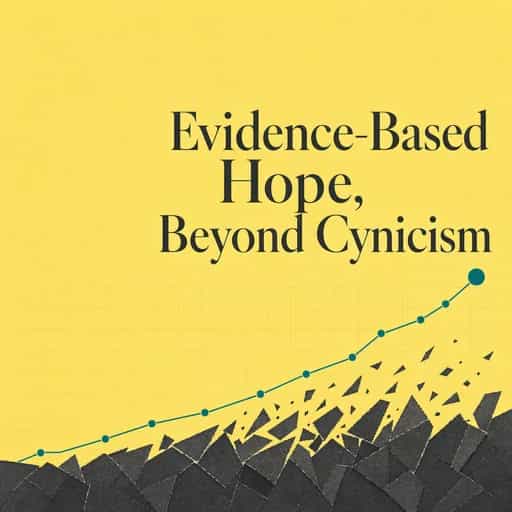
- evidence-based hope
- science of trust
- social skepticism
- human cooperation
Melhores citações do Resumo de Esperança para cínicos
Humans are "chemically engineered" for community.
Cynicism functions as a theory.
Inequality creates a zero-sum mentality.
Cynics merely sneer from a position of defeated detachment.
The wisest approach is skepticism.
Personagens do Resumo de Esperança para cínicos
- Jamil ZakiStanford psychologist and the book's author
- Emile BruneauLate peace researcher and friend of the author
- DiogenesAncient Greek philosopher and original Cynic
- Mary AinsworthResearcher who studied infant attachment and trust
- Andreas LeibbrandtResearcher who studied trust in fishing villages
Baixar resumo de Esperança para cínicos
Obtenha o resumo de Esperança para cínicos como PDF ou EPUB gratuito. Imprima ou leia offline a qualquer momento.









![[e0b8fe7a-5d97-48f1-81d4-8dc815cbae26:c0000] How to Cultivate a Positive, Growth-Oriented Mindset | Dr. Jamil Zaki p1-1](/_next/image?url=https%3A%2F%2Fd1y2du6z1jfm9e.cloudfront.net%2Fassets%2Fpodcast%2Fyellow.png&w=1024&q=50)
![[e0b8fe7a-5d97-48f1-81d4-8dc815cbae26:c0001] How to Cultivate a Positive, Growth-Oriented Mindset | Dr. Jamil Zaki p1-1](/_next/image?url=https%3A%2F%2Fd1y2du6z1jfm9e.cloudfront.net%2Fassets%2Fpodcast%2Fgreen.png&w=1024&q=50)
![[e0b8fe7a-5d97-48f1-81d4-8dc815cbae26:c0002] How to Cultivate a Positive, Growth-Oriented Mindset | Dr. Jamil Zaki p1-1](/_next/image?url=https%3A%2F%2Fd1y2du6z1jfm9e.cloudfront.net%2Fassets%2Fpodcast%2Fblue.png&w=1024&q=50)


