Capítulo 1
The Church of Scientology's Labyrinth of Power and Belief
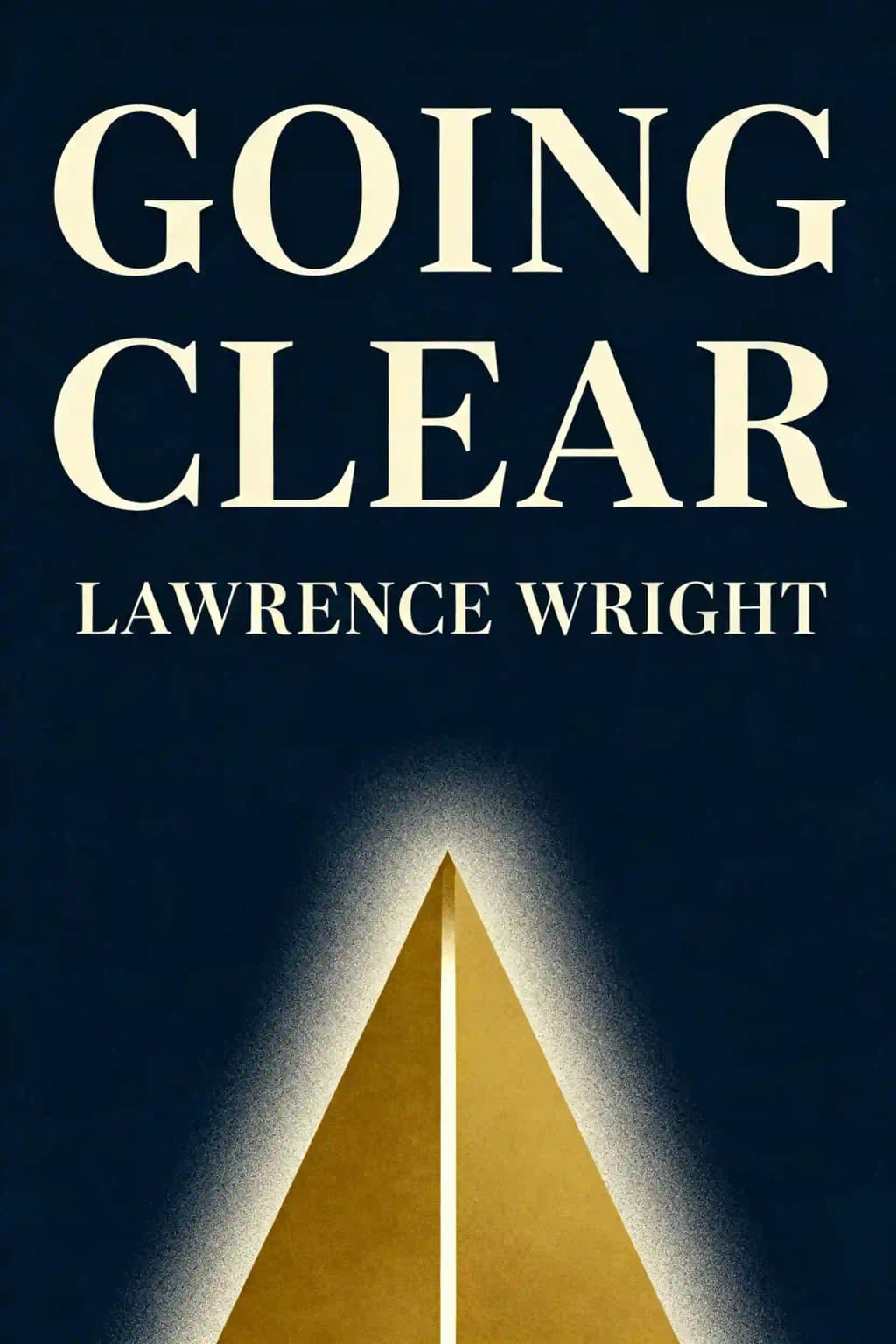
In a world where celebrities wield enormous influence, one religion has mastered the art of leveraging star power like no other. Scientology, the controversial church founded by science fiction writer L. Ron Hubbard, counts among its adherents some of Hollywood's biggest names-Tom Cruise, John Travolta, and Elisabeth Moss among them. Lawrence Wright's meticulously researched expose "Going Clear" pulls back the curtain on this secretive organization that claims millions of members worldwide while independent surveys suggest the number is closer to 25,000 in America. Despite this disparity, Scientology's influence far outweighs its size, bolstered by approximately $1 billion in liquid assets and vast real estate holdings. The book, which inspired an Emmy-winning HBO documentary, became a cultural phenomenon upon its 2013 release, offering unprecedented insight into what former members describe as a dangerous cult masquerading as a religion. What drives intelligent people to surrender their autonomy to an organization that demands absolute loyalty? And how did a pulp fiction writer create a belief system that continues to attract followers despite increasingly troubling revelations about its practices?
Capítulo 2
The Making of L. Ron Hubbard: Mythmaker Extraordinaire
L. Ron Hubbard was neither the "most important person who ever lived" as his followers claim, nor simply "the world's greatest con man" as critics assert. The truth lies somewhere in between-a man of genuine charisma and vision who constantly inflated his actual accomplishments to mythic proportions.
Born in Nebraska in 1911, young Lafayette Ronald Hubbard crafted an elaborate personal mythology from an early age. He claimed to have ridden broncos at three-and-a-half and studied Freudian philosophy as a child. A pivotal moment in his narrative was a supposed encounter with Commander Joseph "Snake" Thompson, who allegedly tutored the young Hubbard in Freudian theory during a 1923 voyage. Thompson's maxim "If it's not true for you, it's not true" deeply impressed Hubbard and would later appear in Dianetics.
Hubbard claimed extensive travels in China where he studied with Buddhist monks, but his actual journals reveal a brief ten-day YMCA trip with his parents, showing imperialist attitudes rather than philosophical inquiry: "The trouble with China is, there are too many chinks here."
This pattern of embellishment continued throughout his life. At George Washington University, he proved a poor engineering student but excelled at storytelling. In 1932, during the Great Depression, he organized the "Caribbean Motion Picture Expedition," recruiting young men who paid to join. The expedition was disastrous-the antiquated schooner faced either dead calm or violent storms, the crew went hungry, and Hubbard couldn't pay the professional sailors. After enduring four days in the Sargasso Sea, the disgusted crew hung Hubbard in effigy. Despite this failure, Hubbard later called it a "glorious adventure."
This gap between reality and Hubbard's interpretation would become the source of what some called his genius and others his insanity. His ability to float above evidence while extracting lessons others would find irrational became a defining characteristic that would later inform his religious teachings.
Capítulo 3
From Pulp Fiction to Spiritual Revolution
When his wife Polly became pregnant in 1934, Hubbard turned to pulp fiction to support his family. The pulp magazines of Depression-era America paid poorly-just a penny a word-but their voracious appetite for content provided opportunity for writers with speed and imagination. Hubbard excelled at both, reportedly producing 100,000 words of fiction monthly, typing on rolls of butcher paper and tearing off completed stories with a T-square.
Hubbard longed for Hollywood success but found only limited opportunities. After a brief stint with Columbia Pictures, he fled back to Washington, blaming "dumb Jew producers" and returned to writing pulps with renewed cynicism, advising a friend never to write about unusual characters or reality, which he called "a very detested quantity" in the pulp market.
On New Year's Day, 1938, Hubbard had a life-changing experience during dental surgery. Under gas anesthetic, he believed his heart stopped and he experienced sliding "helter-skelter down into a vortex of scarlet." According to his literary agent, Hubbard claimed his spirit rose from his body and passed through an ornate gate where he discovered "an intellectual smorgasbord of everything that had ever puzzled the mind of man."
In a fever of inspiration following this experience, Hubbard wrote a manuscript titled "Excalibur," which reduced all wisdom to a single command: "SURVIVE." He claimed the first six readers went insane from its revelations and one publisher's reader jumped from a skyscraper after reading it. The book was never published.
In 1938, Hubbard received an offer to write for "Astounding Science-Fiction" under editor John W. Campbell Jr., a nurturing editor who transformed inexperienced writers into cultural icons. Campbell considered science fiction to be prophecy, not mere entertainment, giving the genre a mystical allure. Hubbard found his greatest talents in science fiction, a field that allowed him to explore alternative worlds and pose questions about meaning and destiny-skills that would later inform his theological constructions in Scientology.
Capítulo 4
The Birth of Dianetics and Scientology
After World War II, where Hubbard served in the Navy with a far less heroic record than he would later claim, he settled in Southern California-then a hotbed of exotic new religions filled with Theosophists, Rosicrucians, and Vedantists. This fertile environment for spiritual experimentation would prove crucial to his next venture.
By 1949, Hubbard had developed techniques he claimed could cure physical and mental ailments. "Been amusing myself making a monkey out of Freud," he wrote to a friend, claiming nightly sessions where he had "people writhing in my Hollywood office, sending guys out twice as tall as superman." He promised a book "risen from the ashes of old Excalibur" that would solve "all the problems of the ages."
In May 1950, Dianetics: The Modern Science of Mental Health appeared. Hubbard positioned it as the culmination of "fifty thousand years of thinking men without whose speculations and observations the creation and construction of Dianetics would not have been possible." In Scientology, it's known as Book One, with the church claiming "18 million copies sold" making it "indisputably the most widely read and influential book on the human mind ever published."
Hubbard's theory divided the mind into two parts. The analytical or conscious mind is rational awareness, storing all past perceptions perfectly. The reactive mind holds nightmares, insecurity, and unreasonable fears. It records painful emotions even during unconsciousness or in the womb, embedding them physically in cellular structure as "engrams" that can reproduce in new cells. "Cells are evidently sentient in some currently inexplicable way," he claimed.
Written in a bluff, quirky style with patronizing footnotes that did little to substantiate its bold claims, Dianetics nonetheless became a sensation, spending twenty-eight weeks on the New York Times best-seller list and establishing the template for postwar self-help books. "Dianetics is no solemn adventure," Hubbard promised. "For all that it has to do with suffering and loss, its end is always laughter, so foolish, so misinterpreted were the things which caused the woe."
Capítulo 5
From Psychological Method to Religious Movement
Dianetics arrived at a perfect moment-amid the aftershocks of World War II when trauma lurked beneath victory's exhilaration. Religious certainties had been shaken by atomic weapons, mental hospital populations were swelling, and psychoanalysis remained suspiciously European, time-consuming and expensive. Meanwhile, psychiatry had entered a brutal phase of lobotomies and electroshock therapy. Hubbard promised results "in less than twenty hours of work" superior to "several years of psycho-analysis"-and for free!
The scientific community responded with hostility. Nobel physicist Isidor Isaac Rabi wrote that Hubbard's book "probably contains more promises and less evidence per page than has any publication since the invention of printing." Erich Fromm denounced it as "exactly the opposite of Freud's teachings" with "no respect for and no understanding of the complexities of personality."
One contradictory feature of Dianetics was Hubbard's continual reference to the powers of "Clears" without producing a single one for inspection. He claimed Clears had "complete recall of everything which has ever happened to him or anything he has ever studied" and could perform mental computations "in ten or fifteen seconds" that would take a normal person half an hour. In August 1950, he presented the "World's First Clear" at the Shrine Auditorium in Los Angeles. Sonia Bianca, a nervous physics student, was brought on stage but failed spectacularly when asked basic questions about Hubbard's necktie color or formulas in her own field.
In the space of a year, Hubbard had risen from destitution to great wealth and international renown, only to experience a crashing descent. His Dianetics Foundation plummeted into debt and declared bankruptcy. Close supporters like John Campbell deserted him. Dianetics had swept the country like a fad, infatuating tens or hundreds of thousands before burning out faster than a hula hoop.
Despite these setbacks, several factors salvaged Hubbard's movement. He had unwavering self-confidence and a core of devoted followers who'd experienced meaningful breakthroughs using his techniques. He introduced a new device called the E-Meter in March 1952, which replaced the Dianetic reverie with what appeared to be a more scientific approach. Most significantly, he rebranded his movement with a new name: Scientology.
Capítulo 6
The Sea Organization and Hubbard's Descent into Paranoia
Learning from Dianetics' mistakes, Hubbard determined to exercise total control over Scientology. He wasn't just the founder but "Source"-the final authority whose every pronouncement was scripture. Converting to a religious structure solved multiple problems: it provided tax advantages, created long-term associations rather than finite "cures," and offered the eternally marketable commodity of salvation.
By 1967, facing increasing government scrutiny and legal problems, Hubbard created the Sea Organization (Sea Org), an elite group forming the committed inner core of the religion. Members signed billion-year contracts pledging to serve Scientology through multiple lifetimes. Hubbard appointed himself Commodore of a small fleet of ships, sailing international waters to avoid legal jurisdiction.
Life aboard Hubbard's flagship was characterized by extreme discipline and bizarre punishments. When crew members displeased him, Hubbard ordered them thrown overboard from the ship's bridge-a drop of about four stories. Julia Lewis Salmen, a sixty-year-old Scientology executive, was bound and blindfolded before being thrown overboard. "She screamed all the way down," recalled one witness, and nearly drowned before a deckhand jumped in to save her.
Hubbard increasingly turned his wrath on children, who were becoming a nuisance on the ship. Four-year-old Derek Greene was confined in the chain locker-a dark, damp, cold container where the massive anchor chain is stored-for two days and nights without blankets or bathroom access after dropping a Rolex watch overboard. When his mother pleaded for his release, Hubbard reminded her of the Scientology axiom that children are actually adults in small bodies.
In December 1968, Hubbard wrote in the ship's log about an organization he called SMERSH-a name taken from James Bond novels-describing it as a "hidden government that aspired to world domination!" Psychiatry was the dominating force behind this sinister institution. "Recently a check showed that we had never seen or heard of an 'insane' person who had not been in their hands," he wrote, questioning whether insanity existed at all outside what psychiatrists manufactured.
Capítulo 7
The Rise of David Miscavige and Scientology's Transformation
After fleeing legal troubles in the United States, Hubbard went into hiding in 1980. His whereabouts became a closely guarded secret within Scientology, with members told only that he was "over the rainbow." Meanwhile, a young Sea Org member named David Miscavige was rapidly ascending the organization's ranks.
Born in Willingboro, New Jersey, Miscavige had severe asthma that led his father to seek Dianetics counseling for him. At just twelve, he became one of the church's youngest auditors-nicknamed "the Wonder Kid." At fifteen, he attained Clear status, and on his sixteenth birthday in 1976, he dropped out of tenth grade to join the Sea Org, citing "declining moral situation in schools" and "rampant drug use."
Miscavige quickly rose to become Hubbard's essential conduit, reporting only to Pat Broeker while serving as head of Special Project Ops. At just twenty-three years old, Miscavige and the slightly older Broeker became the gatekeepers who determined what information reached Hubbard.
On January 24, 1986, Hubbard died in his Blue Bird bus at his ranch in Creston, California. Broeker and Miscavige quickly crafted a narrative: Hubbard hadn't died but had intentionally "dropped his body" to move to a higher level of existence. After Hubbard's ashes were scattered in the Pacific, Miscavige announced to assembled Scientologists that Hubbard had "moved on to the next level" where "the body is nothing more than an impediment."
Every religion faces an existential crisis following its founder's death. Hubbard's final Flag Order had promoted himself to Admiral and created a new rank of "Loyal Officer" for Pat and Annie Broeker, seemingly designating them as his successors. David Miscavige, though not mentioned in Hubbard's final declaration, recognized the threat.
To eliminate Hubbard's designated successors, Miscavige needed a lieutenant with similar qualities of remorselessness and total commitment. He found this in Mark "Marty" Rathbun, who came from a troubled background. Together, they systematically undermined the Broekers' authority, eventually forcing them out completely. In April 1988, Miscavige formally canceled Hubbard's final directive naming the Broekers as Loyal Officers, claiming Pat had fabricated it.
With his rivals eliminated, Miscavige had secured complete control of Scientology.
Capítulo 8
Celebrity Power and the Tom Cruise Connection
Scientology has always understood the power of celebrity endorsement. When the church was officially founded in Los Angeles in February 1954, it entered a city with established traditions of religious celebrities and celebrity religions. Hubbard deliberately designed his church to court famous people, defining celebrities as "opinion leaders" in their fields. By 1955, the church was actively recruiting celebrities, publishing lists of desirable prospects including Marlene Dietrich, Walt Disney, and Howard Hughes.
The church's real genius was appealing to the constant stream of aspiring actors, writers and directors arriving in Hollywood. These ambitious but often undereducated young people were promised both a method for getting ahead and access to a whispered network of Scientologists in the industry.
No celebrity has been more valuable to Scientology than Tom Cruise. After achieving stardom with Top Gun in 1986, his first wife Mimi Rogers introduced him to Scientology. When David Miscavige learned of Cruise's involvement in 1989, he arranged to have the star brought secretly to Gold Base, assigning his top people to audit and supervise him.
Miscavige demonstrated an instinctive understanding of catering to celebrity entitlement. He created a fairy-tale environment at Gold Base for Cruise and his second wife Nicole Kidman-preparing a special bungalow with private rose garden, rehabilitating a tennis court, and even having Sea Org members plant a meadow of wildflowers when the couple fantasized about running through one together.
The two men bonded over their similar builds, East Coast personalities, and love of motorcycles, cars and adventure sports. When Cruise and Kidman married in Telluride in December 1990, Miscavige served as best man. Despite promises of payment, Sea Org members who cooked for the wedding were left with hundreds in credit card debt they struggled to pay on their $50 weekly Sea Org salaries.
Following Cruise's divorce from Kidman in 2001, his relationship with Scientology deepened dramatically. Marty Rathbun provided him with over 200 hours of auditing, while Tommy Davis (son of actress Anne Archer) became Cruise's church liaison. Cruise became not just a figurehead but an activist, donating millions to the church and lobbying international leaders to support Scientology.
Capítulo 9
The Dark Side of Scientology Under Miscavige's Leadership
By 2003, David Miscavige had transformed Scientology's Gold Base into a prison-like environment. Executives who fell from favor were confined to "the Hole"-a facility consisting of double-wide trailers housing 40-50 people who slept on ant-infested floors, showered with hoses, and ate reheated leftovers while standing. In desert temperatures exceeding 100 degrees, Miscavige would sometimes cut off electricity.
The captives were forced to continually rearrange the church's organizational chart and participate in "seances"-grueling confession sessions about their crimes in this and previous lives. Executives were physically abused, forced to race around on hands and knees until their knees bled, and subjected to humiliation.
In a cruel psychological game, Miscavige ordered about seventy senior Sea Org members to play musical chairs while Queen's "Bohemian Rhapsody" played. He announced that only the last person with a chair would remain on base-everyone else would be "offloaded" or sent to remote locations, with marriages forcibly ended. As chairs diminished, executives violently fought each other, tearing clothes and breaking furniture. The ironic lyrics "Is this the real life? Is this just fantasy?" floated over the desperate scene.
While Miscavige lives with extraordinary opulence-awakening at noon to fresh-ground Starbucks coffee, enjoying five gourmet meals daily prepared by two full-time chefs, and possessing custom-tailored clothing, multiple motorcycles, and armor-plated vehicles-Sea Org members exist in near-poverty. They eat in a mess hall with meals costing about seventy-five cents, are issued just two sets of clothes for life, and nominally paid fifty dollars weekly, often reduced by fines.
Despite declining membership, money floods into Scientology's coffers. Donors gain status based on contribution size-$25 million for "Patron Maximus," $10 million for "Patron Laureate." The International Association of Scientologists reportedly holds over $1 billion in offshore accounts. Scientology coursework can cost up to $400,000 to reach OT VIII, plus materials and the $4,650 E-Meter.
Capítulo 10
Paul Haggis: A Believer's Journey to Disillusionment
Academy Award-winning screenwriter Paul Haggis spent 34 years as a Scientologist before becoming one of its most high-profile defectors. When Haggis joined Scientology, he entered the mind of L. Ron Hubbard-not a divine prophet but someone who claimed to discover existential truths through research. This apparent rationalism appealed to Haggis, especially since Scientology didn't demand belief in a god.
Despite his public enthusiasm for Scientology, Haggis was increasingly troubled by contradictions within the church. He found the auditing process useful but couldn't embrace the religious aspects, especially the "intergalactic spirituality" after OT III. Still, having paid for the complete package, he continued advancing on the Bridge, hoping his concerns would eventually be addressed.
Haggis's relationship with Scientology fractured over Proposition 8, the California initiative banning same-sex marriage. When Haggis, whose two daughters were gay, discovered the Church of Scientology of San Diego was listed among the proposition's supporters, he was outraged. He demanded Tommy Davis, the church's spokesperson, issue a public statement supporting gay rights.
Following this dispute, Haggis began investigating the church online, something most prominent Scientologists avoid. He discovered a CNN interview where Tommy Davis claimed "There's no such thing as disconnection"-a blatant lie that Haggis knew firsthand was false. His wife Deborah had twice disconnected from her parents when they questioned Scientology.
Haggis also discovered websites like Exscientologykids.com, created by Jenna Miscavige Hill (the leader's niece), who joined Sea Org at twelve. Many children had their formal education halted upon entering the organization, leaving them unprepared for outside life. "They were ten, twelve years old, signing billion-year contracts-and their parents go along with this!" he said. "And they work morning, noon and night... Scrubbing pots, manual labor-that so deeply touched me. My God, it horrified me!"
On August 19, 2009, Haggis wrote a scathing letter to Tommy Davis, confronting him about lying on CNN regarding the church's disconnection policy and revelations about Scientology abuses. He concluded his letter by resigning from the Church of Scientology after 35 years, stating: "I am only ashamed that I waited this many months to act."
Capítulo 11
The Legacy of Scientology: Religion, Business, or Cult?
The epilogue reflects on Scientology's place among religions, noting Hubbard's claim that Scientology represents "the old religion" that predates all others. Drawing parallels between Scientology and other faiths, it acknowledges that practices like disconnection exist in other religions, from Amish shunning to Catholic excommunication.
Scientology should be understood as a philosophy of human nature rather than science, with Hubbard's "often ingenious" behavioral observations overshadowed by his personality's "bogus elements." The text compares Scientology to psychotherapy, noting parallels between Hubbard's reactive/analytical minds and Freud's ego concepts.
While acknowledging Scientology's religious status and noting that all faiths contain "bizarre and uncanny elements," Wright suggests Scientology lacks the artistic traditions that infuse older religions with mystery. Instead, Scientology's aesthetic appeal comes from Hubbard's "authoritative but folksy" writing voice and his comprehensive self-portrait that reveals traits of an artist-explaining why he identified with creative communities.
The epilogue examines Scientology's celebrity-oriented marketing strategy, with Miscavige claiming "five thousand people hear [Tom Cruise's] word of Scientology every hour." It notes that Cruise benefits enormously from his membership while bearing moral responsibility for Sea Org abuses. Apart from Haggis, no prominent Hollywood Scientologist has publicly condemned the church's alleged abuses.
Marty Rathbun, once Miscavige's enforcer who later defected, categorizes Scientology defectors into three groups: those who reject Hubbard's teachings entirely (like Haggis), those who believe completely but think Miscavige corrupted the church, and a third category of those unwilling to either accept all dogma or discard their valuable insights.
Perhaps the most revealing insight comes from Stephen "Sarge" Pfauth, who served as Hubbard's security chief during his final days. Pfauth revealed that six weeks before dying, Hubbard told him he was "dropping his body," naming a specific star he would circle, and stating he had "failed" and wouldn't return to Earth-contradicting the church legend of Hubbard's eventual return.
In the end, Wright's exhaustive investigation reveals a complex organization that defies simple categorization-part religion, part business enterprise, part cult of personality. What remains clear is that beneath the celebrity endorsements and science fiction theology lies a system that has brought both profound meaning and devastating harm to those who've fallen under its influence.