Capítulo 4
Trauma and the Search for Voice
Mia's selective mutism serves as a powerful central theme throughout the narrative, symbolizing both her devastating past trauma and her complex journey toward healing. At age eight, she endured a horrific kidnapping where her captor made an unthinkable threat - anyone she told about the experience would be killed. This psychological torture led her to retreat into complete silence, a defense mechanism that would persist for eleven years. During this time, she adapted to communicating exclusively through sign language, her voice quite literally stolen by the weight of her traumatic experience.
The novel masterfully employs this silence as both metaphor and plot device, weaving it through multiple layers of storytelling. Mia's inability to speak represents not only her powerlessness in the face of trauma but also society's broader tendency to silence victims. Her mutism serves as a mystery that propels the narrative forward, creating tension and intrigue that keeps readers invested. Landon becomes increasingly fixated on hearing her voice, first encountering it in fragments during her violent nightmares - moments when her subconscious breaks through her careful control. His eventual mission to help her reclaim her voice becomes both a source of conflict and connection between them.
What emerges as particularly poignant is the stark contrast between Mia's external silence and her formidable inner strength. Though unable to verbally communicate, she demonstrates remarkable resilience and agency. She maintains fierce independence, shows unwavering protection of her family, and consistently stands her ground against Landon despite his intimidating presence and dominant personality. Her silence, rather than defining her character, serves to highlight how trauma can create seemingly impenetrable barriers while leaving one's core identity and determination intact.
The breakthrough arrives in a dramatic moment of crisis when Landon is shot by Mia's former nanny - a woman ultimately revealed to have been complicit in her childhood kidnapping. In this pivotal moment, faced with potentially losing someone she's grown to love, Mia breaks through eleven years of silence to scream his name. This cathartic moment powerfully illustrates how love - even complicated, problematic love marked by power imbalances and mutual damage - can sometimes reach depths that years of professional therapy and family support couldn't access.
However, the novel skillfully avoids falling into the trap of simplistic resolutions or magical thinking. Mia's regained ability to speak doesn't serve as an immediate cure-all for her trauma or instantly transform her into a completely different person. Instead, finding her voice represents one significant step in an ongoing healing process, acknowledging the reality that recovery from profound trauma rarely follows a linear path and is seldom truly complete. The story continues to explore her struggles with verbal communication, her trust issues, and her ongoing journey of reconciling her past with her present, presenting a nuanced and realistic portrayal of trauma recovery.
Capítulo 5
The Dark Side of Family Bonds
Family relationships form another crucial dimension of the narrative, with both protagonists shaped by their family dynamics in profound ways. Mia comes from a close-knit Russian mafia family headed by her father Kyle and mother Rai, with her twin sister Maya serving as her constant companion and protector. Landon belongs to the aristocratic King family, with his twin brother Brandon representing his moral opposite-kind and empathetic where Landon is calculating and cold.
The novel explores how family can be both sanctuary and prison. Mia's family provides her with unconditional love and protection, but their overprotectiveness sometimes stifles her independence. When her brother Nikolai and cousins discover her relationship with Landon, they resort to violence, kidnapping and beating him in a misguided attempt to protect her. This forces Mia to assert her autonomy, telling them, "I'm not a child anymore. I get to decide who I want in my life."
A devastating revelation comes when Mia learns that her twin sister Maya unwittingly assisted in her kidnapping by providing information to their nanny, Mrs. Pratt, who orchestrated the crime. Maya's subsequent silence about recognizing the kidnapper was motivated by fear of rejection, creating a web of guilt and secrecy that poisoned their relationship for years. This betrayal forces Mia to reevaluate everything she thought she knew about her closest relationship, illustrating how family bonds can be built on complicated foundations of love, guilt, and unspoken truths.
Landon's family dynamic is equally complex. Though materially privileged, he grew up emotionally isolated due to his psychological differences. His parents and siblings recognized his genius but struggled to connect with him emotionally. His mother Astrid tells Mia, "He participated in so many activities to fill an emptiness inside him," revealing how Landon's extraordinary achievements were partly driven by an attempt to compensate for his emotional deficits.
The contrast between the two families-Mia's emotionally rich but sometimes suffocating family versus Landon's materially privileged but emotionally distant one-creates an interesting commentary on different forms of family dysfunction and how they shape individual psychology.
Capítulo 6
Art as Expression and Obsession
Landon's identity as a sculptor provides a complex thematic layer to the story, exploring the intricate relationship between creativity, obsession, and human connection. Described as "the genius of his generation," Landon has been creating sculptures since age two, fashioning figures from Play-Doh before graduating to clay and eventually marble. Despite his work being featured in prestigious galleries worldwide and commanding six-figure prices, he has never felt satisfied with his creations - a perfectionism that borders on self-destruction.
When he encounters Mia, particularly when she freezes in fear before him, he experiences an unprecedented creative surge that consumes him entirely. Working for twelve hours straight, he creates dozens of miniature sculptures, each capturing a different aspect of her terror-stricken pose. His fingers bleed from working the clay, yet he can't stop - the compulsion to capture her essence overwhelms his physical discomfort. Yet even these pieces, praised by critics as his most emotionally raw work, leave him unsatisfied. Something crucial remains elusive, like trying to capture smoke with bare hands. This artistic frustration parallels his emotional limitations; just as he can't fully capture Mia's essence in his art, he struggles to understand and express his feelings for her.
Art becomes both Landon's primary language and his fundamental limitation. When words fail him - during arguments, intimate moments, or attempts at comfort - he retreats to his studio, expressing through his sculptures what his voice cannot convey. This culminates in his groundbreaking exhibition "The Mystery of a Muse," featuring thirty life-sized statues of Mia in different situations from their relationship. Each piece tells a story: Mia laughing in the rain, Mia curled protectively around herself, Mia dancing with abandoned joy. The centerpiece - a haunting statue of Mia with lips sewn shut, one wing proud and one broken, raising both middle fingers - becomes his most celebrated work, capturing both her trauma and her defiance. The piece demonstrates a depth of understanding that Landon struggles to express in words, earning him both critical acclaim and Mia's tears of recognition.
Yet his obsession with artistic perfection also reflects his problematic tendency to objectify people, treating them as subjects rather than individuals. He initially sees Mia as merely a source of inspiration - a muse to be captured and preserved in marble rather than a person with her own agency and complexity. His studio becomes filled with sketches of her hands, her profile, the curve of her neck, while he struggles to remember her favorite food or the names of her siblings. His growth throughout the novel involves the painful recognition that art alone cannot sustain a relationship. He must learn that Mia isn't just his muse but "the reason I create at all" - not an object to be perfected but a person to be loved, flaws and all.
Capítulo 7
The Chess Game of Power and Desire
Chess serves as both literal activity and extended metaphor throughout the novel, weaving a complex tapestry of strategy, power dynamics, and psychological manipulation. Mia and Landon are both skilled chess players who meet at the Riverside Chess Club, where their initial encounter sets the tone for their intricate relationship. Their shared mastery of the game reveals not just their intellectual compatibility but also their similar approaches to life - calculated, strategic, and always thinking several moves ahead.
When they play their first match, Landon immediately recognizes Mia as his blood-prank assailant and threatens her sister as leverage. The way he delivers this threat - calm and methodical, like a carefully planned chess opening - establishes their relationship as deeply adversarial. Each subsequent interaction becomes a careful dance of moves and countermoves, with both players constantly assessing their position and seeking advantage. Their games are marked by long pauses, intense eye contact, and subtle psychological warfare that extends far beyond the wooden board before them.
During another pivotal chess match, Landon proposes a loaded bet: if he wins, they discuss Mia's "kinks," and if she wins, he becomes her "slave boy" for a week. The stakes of this game exemplify how chess becomes a proxy for their power struggle - each move carries weight beyond the immediate tactical advantage. His victory in this match shifts their power dynamic dramatically, though Mia's response shows she's already thinking several moves ahead, turning apparent defeat into strategic positioning.
Beyond these literal chess games, their entire relationship operates like a complex match with multiple pieces in play. Landon views people as pawns to be positioned on his mental chessboard - from his business associates to his romantic interests - while Mia attempts to maintain her independence by anticipating and countering his moves. When Professor Kayden, a grandmaster himself, observes them playing, he tells Mia she's "playing a treacherous war-like game" rather than chess - a perceptive comment that applies equally to her relationship with Landon and foreshadows coming complications.
The chess metaphor extends throughout the novel's structure, with characters making strategic sacrifices, protecting vulnerable positions, and occasionally achieving unexpected checkmates against each other. Just as in chess, apparent weaknesses sometimes become strengths - Mia's initial vulnerability regarding her sister transforms into a source of power when she learns to protect her position while maintaining offensive capability. The novel's subplots mirror chess strategies: careful pawn advancement (building alliances), knight forks (forcing impossible choices), and queen sacrifices (strategic concessions for greater gain).
What elevates this metaphor beyond cliche is how it evolves throughout the story. Initially, Mia and Landon approach each other as opponents in a zero-sum game where one must win and one must lose. Their early interactions mirror aggressive chess openings - all attack and counterattack. Gradually, they learn to play alongside rather than against each other, combining their strengths against external threats like Mrs. Pratt, much like coordinated pieces controlling the center of the board. By the novel's conclusion, they've moved beyond the chess metaphor entirely, replacing strategic calculation with genuine partnership - demonstrating that sometimes the greatest victory comes from refusing to play the game at all.
Capítulo 8
The Complexity of Consent and Desire
"God of Ruin" navigates difficult territory in its exploration of consent, desire, and power imbalance. Landon's dominant personality and Mia's response to it create scenarios that blur traditional boundaries, raising questions about agency and autonomy in relationships with unequal power dynamics.
Their sexual encounters often involve elements of chase, capture, and submission, with Landon frequently pushing Mia's boundaries. In one scene, he wakes her by initiating sex while she's asleep (somnophilia), an act that would be clearly non-consensual in most contexts. Yet the narrative presents Mia as not only consenting retroactively but discovering her own enjoyment of such scenarios.
What prevents these elements from becoming simply problematic is the novel's careful attention to Mia's internal experience and agency. Despite Landon's domineering behavior, Mia maintains her independence throughout, challenging him when he goes too far and setting boundaries he ultimately respects. When she tells him she'll destroy him if he hurts her family again, he takes her seriously. When she signs "I love you" and he asks if she wants him to say it back, she recognizes his emotional limitations and doesn't pressure him to feign feelings he doesn't understand.
The novel also explores how trauma can complicate desire. Mia's childhood kidnapping left her with complex psychological responses, including a fear of darkness that paradoxically disappears when Landon is present. Her attraction to his controlling nature might seem counterintuitive given her history, but the narrative suggests that with Landon, unlike her kidnapper, she retains fundamental agency despite superficial submission.
This nuanced approach doesn't excuse Landon's more problematic behaviors but instead examines how complex human sexuality can be, particularly when shaped by trauma, power dynamics, and psychological differences. By maintaining Mia's perspective and agency throughout these encounters, the novel avoids glorifying toxic dynamics while still acknowledging their complicated reality.
Capítulo 9
Redemption Through Understanding
The novel's resolution hinges not on Landon becoming conventionally "good" but on both characters developing deeper understanding of themselves and each other. Landon doesn't transform into a typical romantic hero-his antisocial personality disorder doesn't magically disappear. Instead, he learns to channel his possessiveness into protection rather than control, to recognize Mia's needs alongside his own, and to express his version of love through actions when words fail him.
When Mia questions whether Landon loves her, he explains he doesn't subscribe to conventional definitions: "For me, it's not about letting someone go but protecting them until my dying day." This moment represents not a complete transformation but a translation-Landon finding ways to express his feelings within the constraints of his psychological makeup.
Mia, meanwhile, comes to accept Landon's limitations while recognizing his genuine commitment to her. "He was born different and will always be, but that's exactly who I've fallen for," she realizes, choosing to love him as he is rather than hoping he'll become someone else. This acceptance doesn't mean ignoring his flaws but understanding them as part of a complex whole.
The novel's epilogue, set two years later, shows this mutual growth. Landon has created an art exhibition dedicated to Mia, finally achieving the artistic perfection that eluded him. When proposing marriage, he acknowledges how she's changed him: "While I once believed I had no soul, she filled that emptiness with hope and determination." Though he still admits, "I may not believe in love as an emotion," he has found his version of commitment in his devotion to Mia.
This resolution avoids both the trap of suggesting love can "cure" psychological disorders and the cynicism of denying the possibility of growth within their constraints. Instead, it offers a more nuanced vision of redemption through mutual understanding and acceptance of difference-not perfect, but genuine in its imperfection.
Capítulo 10
The Lasting Power of Unconventional Love
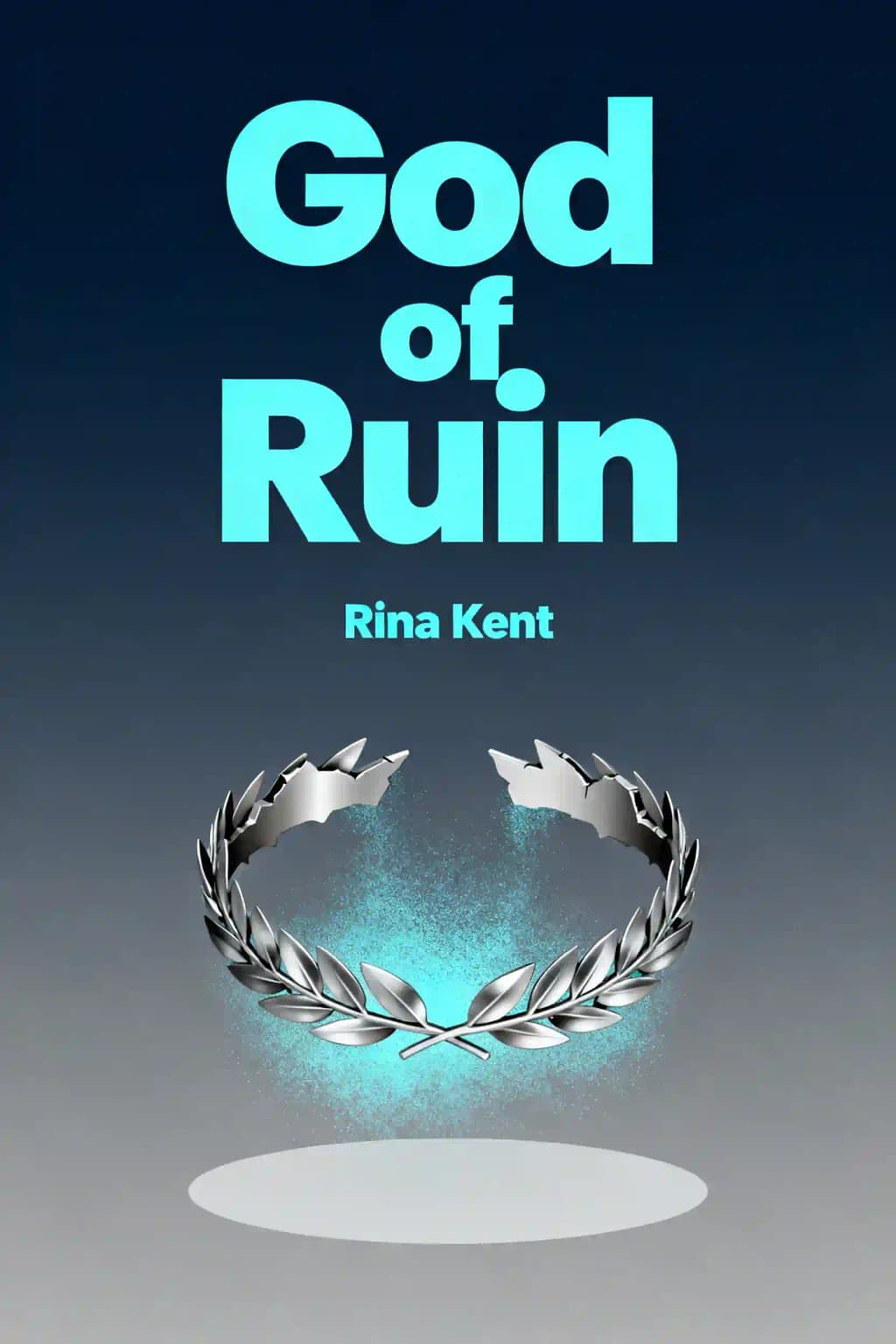
"God of Ruin" ultimately challenges conventional notions of romance while still affirming the transformative potential of deep connection. Through Mia and Landon's complex journey from enemies to lovers, the novel explores how love can manifest in unexpected ways, even between people society might deem incompatible or damaged.
Their relationship doesn't follow traditional romantic patterns-it begins with revenge, develops through obsession, and solidifies through shared trauma. Yet despite these unconventional foundations, they forge a connection that allows both to heal in ways they couldn't alone. Mia regains her voice after eleven years of silence, while Landon finds purpose beyond his art and learns to form genuine attachments despite his emotional limitations.
What makes their story compelling isn't its adherence to romantic ideals but its messy authenticity. Both characters remain fundamentally themselves throughout-Mia fierce and independent despite her trauma, Landon calculating and possessive despite his growth. Their love doesn't erase their differences or magically solve their problems; instead, it creates a space where they can navigate those differences together.
In the final epilogue, when Landon proposes and Mia accepts, their exchange captures this balance of change and continuity. "I love you," she signs, expressing the emotion he still struggles to name. "I love you too," he whispers in response, adding, "While I may not believe in love as an emotion, I believe in you." This moment encapsulates the novel's central message-that love isn't about conforming to societal expectations or transforming into someone else, but about finding someone who sees your authentic self, complications and all, and chooses to stay anyway.
In a literary landscape often dominated by either idealized romance or cynical deconstruction, "God of Ruin" offers something more nuanced-a vision of love that acknowledges darkness without surrendering to it, that recognizes flaws without requiring perfection, and that suggests even the most unconventional connections can have lasting power when built on genuine understanding.