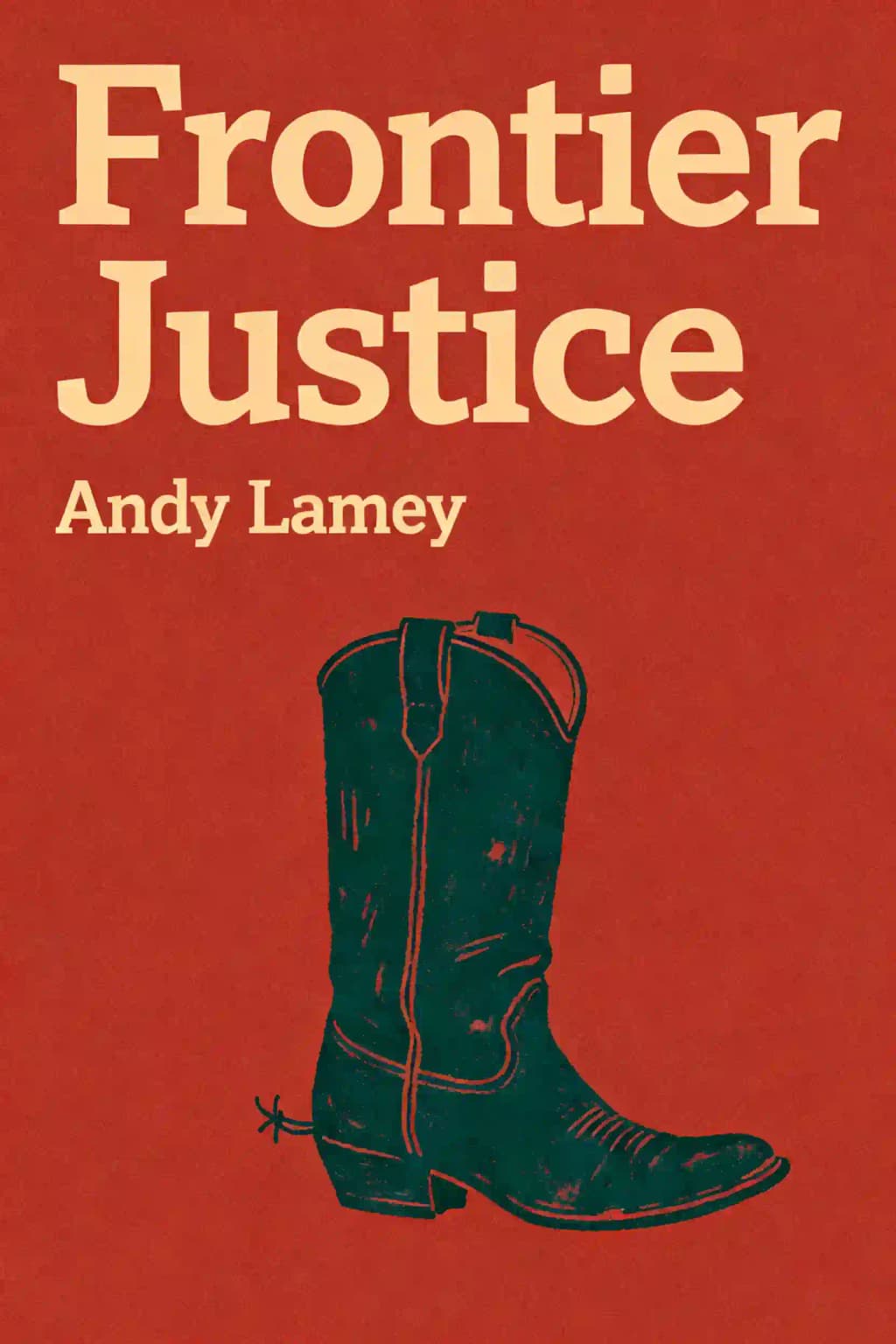
In "Frontier Justice," Andy Lamey exposes the global refugee crisis with heartbreaking clarity. Praised as "compulsively readable" by literary journalist Jeet Heer, this thought-provoking work challenges hypocrisy in refugee politics. What rights do humans deserve beyond borders? The answer might reshape your worldview.
Andy Lamey, author of Frontier Justice: The Global Refugee Crisis and the American Sanctuary Movement, is a philosopher and ethicist renowned for his work in political philosophy and applied ethics. A teaching professor at the University of California, San Diego, Lamey specializes in themes of human rights, immigration policy, and animal ethics, blending academic rigor with real-world relevance. His critically acclaimed book Duty and the Beast further establishes his expertise in ethical dilemmas, offering innovative perspectives on animal rights and plant agriculture.
Lamey’s writing in Frontier Justice draws from historical analysis, legal battles, and firsthand refugee accounts, reflecting his deep engagement with justice and multiculturalism. His insights have been featured in The Walrus, where he examines minority rights and Canada’s role in refugee protection.
In addition to his academic work, Lamey contributes to public discourse through platforms like PhilPeople and lectures on topics ranging from free speech to libertarianism. Frontier Justice is available for loan worldwide via WorldCat, underscoring its reach and relevance in contemporary debates on global asylum policies.
Frontier Justice examines the global refugee crisis through a blend of investigative journalism, historical analysis, and political philosophy. It highlights systemic rights violations against asylum-seekers, featuring cases like Guantánamo Bay detainees, Iraqi refugees navigating perilous journeys, and the Millennium bomber’s asylum claim. The book proposes a Canadian-inspired framework to enforce refugee rights and reimagine humanitarian policies.
This book is essential for policymakers, human rights advocates, and students of political philosophy or international law. General readers interested in migration, social justice, or global crises will also gain insights into the asylum process, terrorism-refugee intersections, and multiculturalism’s hidden benefits.
Yes—it combines gripping real-world stories with rigorous analysis, offering both critique and actionable solutions. Lamey’s accessible writing bridges academic research and journalism, making complex legal and ethical issues understandable. The Canadian refugee model proposal alone sparks critical dialogue.
Lamey documents cases like Yale law students defending Guantánamo detainees and an Iraqi family’s dangerous escape to Australia, illustrating systemic asylum-process failures. He argues that refugee rights are often subordinated to national security or political agendas, leaving millions in legal limbo.
The book advocates adopting Canada’s refugee hearing system, which emphasizes fairness and transparency. Lamey argues for decoupling asylum claims from geopolitical biases and creating international accountability mechanisms to uphold human rights over citizenship-based privileges.
As a philosophy professor and journalist, Lamey merges ethical theory with on-the-ground reporting. His CBC radio documentary experience enriches the narrative with oral histories, while his academic rigor grounds policy proposals in human rights philosophy.
Lamey challenges anti-multiculturalism rhetoric by showcasing its societal benefits, such as fostering innovation and reducing intergroup tensions. He argues diversity strengthens host nations when paired with equitable asylum policies.
Using Ahmed Ressam’s case (the Millennium bomber), Lamey reveals how extremists exploit asylum systems but notes their low success rates. He critiques “security-first” policies that penalize legitimate refugees due to isolated abuses.
The book traces refugee crises from WWII-era displacements to modern conflicts, emphasizing recurring themes of statelessness and bureaucratic indifference. Hannah Arendt’s critiques of nation-state systems frame these historical parallels.
Lamey condemns detention centers, accelerated deportations, and restricted access to legal counsel. He highlights how wealthy nations externalize borders through offshore processing and interdiction campaigns.
Canada’s system allows independent tribunals to assess claims, reducing political interference. Lamey praises its emphasis on procedural fairness and suggests scaling similar reforms globally to prevent rights violations.
While exposing systemic flaws, Lamey underscores moments of progress, like successful refugee-led advocacy. His blueprint for rights enforcement offers a pragmatic yet hopeful vision for aligning national laws with universal human dignity.
Sinta o livro através da voz do autor
Transforme conhecimento em insights envolventes e ricos em exemplos
Capture ideias-chave em um instante para aprendizado rápido
Aproveite o livro de uma forma divertida e envolvente
the abstract nakedness of being human was their greatest danger.
Guantanamo as "a rights-free zone"
government's policies "arbitrary, capricious and perhaps even cruel."
violent courage of life.
essential reading for understanding the refugee crisis.
Divida as ideias-chave de Frontier Justice em pontos fáceis de entender para compreender como equipes inovadoras criam, colaboram e crescem.
Destile Frontier Justice em dicas de memória rápidas que destacam os princípios-chave de franqueza, trabalho em equipe e resiliência criativa.

Experimente Frontier Justice através de narrativas vívidas que transformam lições de inovação em momentos que você lembrará e aplicará.
Pergunte qualquer coisa, escolha a voz e co-crie insights que realmente ressoem com você.

Criado por ex-alunos da Universidade de Columbia em San Francisco
"Instead of endless scrolling, I just hit play on BeFreed. It saves me so much time."
"I never knew where to start with nonfiction—BeFreed’s book lists turned into podcasts gave me a clear path."
"Perfect balance between learning and entertainment. Finished ‘Thinking, Fast and Slow’ on my commute this week."
"Crazy how much I learned while walking the dog. BeFreed = small habits → big gains."
"Reading used to feel like a chore. Now it’s just part of my lifestyle."
"Feels effortless compared to reading. I’ve finished 6 books this month already."
"BeFreed turned my guilty doomscrolling into something that feels productive and inspiring."
"BeFreed turned my commute into learning time. 20-min podcasts are perfect for finishing books I never had time for."
"BeFreed replaced my podcast queue. Imagine Spotify for books — that’s it. 🙌"
"It is great for me to learn something from the book without reading it."
"The themed book list podcasts help me connect ideas across authors—like a guided audio journey."
"Makes me feel smarter every time before going to work"
Criado por ex-alunos da Universidade de Columbia em San Francisco

Obtenha o resumo de Frontier Justice como PDF ou EPUB gratuito. Imprima ou leia offline a qualquer momento.
Picture a house split between two worlds - one half in Nazi Germany, the other in Czechoslovakia. In March 1933, a young Jewish woman and her mother slipped through this architectural loophole, escaping Hitler's tightening grip without passports or permission. That woman was Hannah Arendt, who would later become one of the twentieth century's most influential philosophers. Her harrowing flight wasn't just a personal survival story - it became the foundation for understanding a brutal paradox that still haunts us: we proclaim human rights as universal, yet refugees discover these rights evaporate the moment they cross a border. What happens when the very governments meant to protect human dignity become the ones who decide whose humanity counts? Arendt's journey from Berlin to Paris, then to a muddy internment camp at Gurs, and finally to America revealed a devastating truth: without citizenship, you have no rights at all. France initially seemed like refuge, but as Hitler's shadow spread across Europe, French society turned hostile. Refugees became "undesirables," subject to arbitrary detention and deportation. When war erupted in 1939, Arendt's husband was imprisoned as an "enemy alien," and she soon followed - not for any crime, but simply for existing without papers. Her escape from Gurs led to months sleeping on floors in abandoned buildings, joining thousands of desperate people with nowhere to go. Then came an unexpected moment of grace: walking down a street in Montauban, she spotted her husband in the crowd. Their reunion, against all odds, renewed what she called her "violent courage of life" - the stubborn refusal to surrender hope even when the world offers none. Through extraordinary persistence and luck, Arendt reached New York in 1941. But her experience left an intellectual scar. In her 1951 masterwork, she concluded that refugees discover "the abstract nakedness of being human was their greatest danger." Beautiful declarations about human dignity mean nothing when you're stateless. States protect their citizens - everyone else exists in a legal void.