Capítulo 1
The Midlife Awakening: When Your Soul Demands More
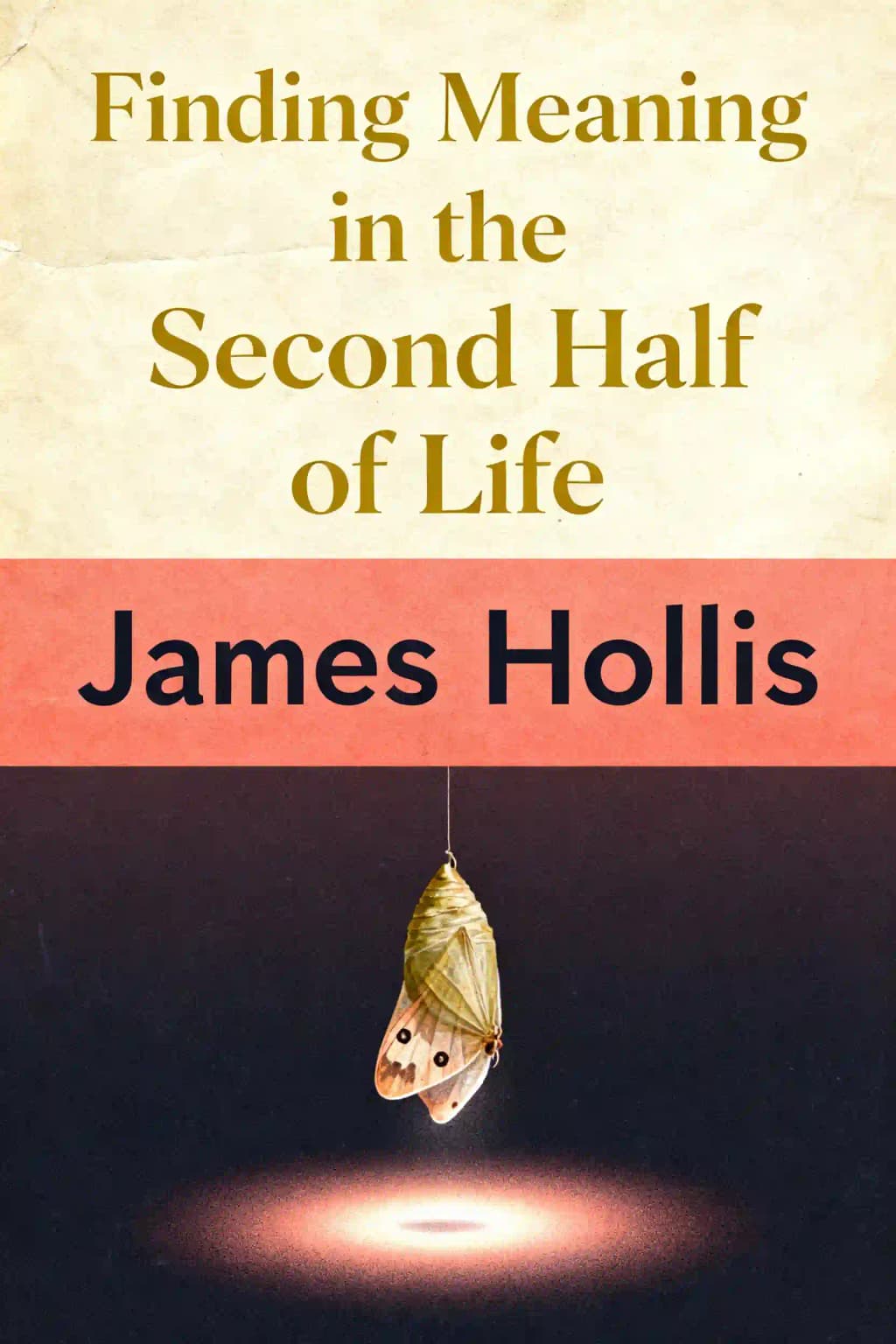
Have you ever found yourself standing in the middle of your carefully constructed life, feeling like an imposter? Perhaps you've achieved everything society told you to pursue-career success, family, financial stability-yet something essential feels missing. You're not alone. James Hollis's "Finding Meaning in the Second Half of Life" has become a touchstone for millions experiencing this profound midlife reckoning. This work has earned praise from luminaries like Oprah Winfrey, who featured it in her "Soul Series," and has been embraced by therapists worldwide as essential reading for clients navigating life transitions. The book's enduring popularity stems from its rare combination of psychological depth and practical wisdom, offering a roadmap through what Dante called "the dark wood"-that disorienting territory where our old maps no longer guide us, and something deeper within demands expression.
Capítulo 2
When Your Carefully Constructed Life No Longer Fits
We often discover, to our dismay, that we've been living someone else's life - following scripts written by family, society, or our own limited understanding of who we should be. Consider the retired academic who fell into depression without his professional structure, weeping uncontrollably while driving home from therapy. In his dreams, he was taking an exam for which he was unprepared-finally recognizing how his mother had always set his goals. His identity had been so thoroughly wrapped in academic achievement that retirement left him facing an existential void. Or the 38-year-old sales VP who, flying over Nebraska, suddenly thought: "I hate my life." Despite identifying herself with professional achievement and outward success, depression lurked beneath her carefully maintained facade. She had climbed the corporate ladder only to find it was leaning against the wrong wall.
These experiences represent what Hollis calls "an insurgency of the soul"-a rebellion against the ego's limited understanding that invites more conscious living in life's second half. Like Dante finding himself midway through life in a dark wood, we encounter confusion, disorientation, and disappointment despite our best intentions. This crisis often emerges in our late thirties or forties, when the pursuits and identities that once gave our lives meaning begin to ring hollow. The comfortable patterns we've established - our careers, relationships, beliefs - suddenly feel like constraints rather than foundations. This apparently autonomous process that disrupts our lives actually has meaning, healing, and wholeness as its motive, though it rarely feels that way in the moment.
The dark wood represents those disorienting periods when our carefully constructed lives no longer feel authentic. These psychological dislocations often make us feel victimized, unable to see the enlarging purpose arising from our suffering. We might experience this as career dissatisfaction, relationship upheaval, or spiritual emptiness. Physical symptoms like insomnia, anxiety, or unexplained ailments may manifest as the psyche demands attention. Yet something purposeful moves through these difficult transitions. The breakdown of old certainties, while painful, creates space for new understanding and growth. Later, we may recognize that even suffering enlarged us and made us more richly human, developing capacities we didn't know we possessed. As Aeschylus observed thousands of years ago, "from suffering alone comes wisdom," bringing greater dignity and depth to our lives. This wisdom often comes with the recognition that our previous life, while perhaps successful by external measures, was too small for our expanding soul.
The process of dismantling our carefully constructed life isn't just about personal discomfort - it's about the soul's imperative for growth and authenticity. Many find themselves questioning long-held beliefs, reconsidering relationships, or feeling called to entirely new directions. This middle passage, while challenging, offers an invitation to live more authentically and deeply in life's second half.
Capítulo 3
The Silent Passage into the Second Life
Before the last century, most people lived according to the first half of life's agenda, constrained by social institutions and shorter lifespans. In 1900, North Americans lived an average of only forty-seven years, mostly serving the agenda of survival and social adaptation. Today, with twice the adult lifespan and eroded social constraints, we face unprecedented opportunity to live consciously and ask: "Who am I apart from my roles?" and "What is the second half of life about if not repeating the script of the first half?"
The midlife transition typically begins in the mid-thirties to mid-forties, though some appear to sail smoothly through. By this age, sufficient ego strength may have developed to enable self-examination and value reconsideration. This radical life review isn't accomplished through weekend workshops but requires swimming into the deepest ocean, uncertain of reaching any new shore.
Even in his earliest months as a therapist, Hollis noticed a pattern among all his patients. Despite their varied backgrounds and problems, what united them was a fundamental shift in self-understanding. Their life plans, conscious or unconscious, simply weren't working anymore. None came to therapy as a first choice. They tried denial first, then redoubled efforts with their old strategies, then sought external changes through new jobs or relationships. Only after these failed did they reluctantly enter therapy-frustrated, angry, defeated, and humbled.
Midlife distress, while internally driven, typically manifests first in intimate relationships, then career, then personal symptoms like depression. Relationships carry our deepest expectations for home, identity, and nurturing. As partners prove flawed, we blame them when our projected scripts collapse. Similarly, careers often fail to provide lasting satisfaction despite material success.
The psyche speaks through progressive signals: ennui, boredom, resistance, and finally eruptions like sleep disturbances, affairs, troubling dreams, or addictions. The common thread is the exhaustion of scenarios we expected would serve us. We ask, "I've done everything expected, so why doesn't my life feel right?"
Capítulo 4
The Twin Gremlins: Fear and Lethargy
Our journey begins with the traumatic yet gift-bearing birth of consciousness-the separation from womb that initiates both development and neurosis. From this moment, we're torn between progression and regression, between moving toward growth and retreating to safety.
Each morning, the "twin gremlins" of fear and lethargy challenge us. Fear of the unknown and the comfort of familiarity seduce us into spiritual stagnation. As D.H. Lawrence illustrates in his poem "Snake," we often attack what represents the depths we fear confronting in ourselves.
This archetypal drama presents a fundamental choice: anxiety or depression. Anxiety accompanies growth into unfamiliar territory, while depression results from refusing to choose. "Choose anxiety and ambiguity," Hollis advises, "for they are developmental, always, while depression is regressive. Anxiety is an elixir, and depression a sedative."
Jung understood that fear represents "the spirit of regression" threatening us with "bondage to the mother"-symbolizing not our literal parent but all safe harbors that prevent development. Our choices, conscious or not, create our patterns and determine our futures. When we fail ourselves by choosing comfort over growth, we also fail those around us, particularly our children, who must then either follow our limited example or compensate by living what we could not.
The word 'tragic' has been debased in our time, reduced to meaning something calamitous rather than what our ancestors intuited twenty-six centuries ago. Their tragic vision recognized how we often intend certain outcomes yet wind up somewhere entirely different due to our own choices. Two human liabilities fuel our tendency toward wrong choices: hubris (our self-deception that we possess all facts when making decisions) and hamartia (our "wounded vision" that biases choices through our psychological history).
Capítulo 5
How We Become Who We Think We Are
Our life journey begins with inevitable wounding. Through "magical thinking" in our formative years, we internalize our experiences as statements about our worth: "I am as I am treated." One woman who came from indifferent parents concluded, "I have never been loved. I have always believed it is because I am not worth loving." Children also absorb the psychological atmosphere of their parents and environment as fundamental truths about the world's safety and reliability.
The first category of inevitable childhood wounding is overwhelmment-our essential powerlessness against our environment. When faced with overwhelmment, we develop three logical responses: retreat and avoidance, attempts to seize control, or accommodation by "giving them what they want."
The second major wounding is insufficiency-the message that we cannot rely on the world to meet our needs. This may result from parents who were emotionally absent or caught in their own problems. From this wounding, we develop protective responses: internalizing absence as "I am not worth being met," overcompensating through seeking power and status, or developing an anxious need for reassurance from others.
These fortuitous, causal events have nothing to do with the child's essence, yet they dominate the adult's relationship with the world. The Self produces symptomatic protests against this submission, but these early messages work unconsciously, guiding our choices away from what the soul truly desires.
Capítulo 6
The Collision of Selves
A profound mystery we rarely grasp until it overwhelms us is that a transcendent force within us works to overthrow our ego. This force is paradoxically the Self-the architect of wholeness operating from a perspective larger than conventional consciousness. The ego cannot comprehend that its overthrow comes from within, engineered by transpersonal wisdom that has our being's interests at heart even in our darkest moments.
Two competing force fields exist within us: conscious life with its repetitive survival strategies, and the Self's natural inclinations toward wholeness. The ego craves comfort, security, and satiety; the soul demands meaning, struggle, and becoming. This contention sometimes tears us apart, crucifying ordinary consciousness between these polarities. Yet within our suffering and symptoms lie profound clues to meaning, though the healing path requires the ego to open to something larger than itself.
Depression serves as a powerful messenger of the psyche. When the ego invests energy in directions that no longer serve our deeper development, the psyche withdraws that energy, often pulling the ego inward with it. This withdrawal feels like defeat to the ego, but contains profound therapeutic potential. Depression signals that something within us has reached its end while simultaneously announcing something new wanting to emerge. At the bottom of depression lies a clear task: to ask what the psyche wants, not what parents, culture or ego want.
Capítulo 7
The Dynamics of Intimate Relationship
Our deepest fantasy is finding someone who will make our life work-healing our history and meeting our needs. This romantic ideology may be even more powerful than the fantasy that material goods bring happiness, perhaps together serving as surrogates for belief in God.
All relationships begin in projection-imposing past experience onto new situations to avoid reinventing ourselves constantly. Unfortunately, this unconscious process risks compromising each unique encounter with historical baggage. Transference then provides the script, the programmed repetition that follows projection.
These mechanisms explain why relationship patterns repeat so predictably. The abused child unwittingly seeks either an abusive partner or someone easily controlled. Those who grew up with impaired parents are drawn to troubled souls, reenacting familiar caretaker roles. Our intrapsychic imago becomes charged by archetypal energy, activating our entire relationship history with each new encounter.
When two people become caught in mutual projection, they experience either strong repulsion or powerful attraction. In the latter case, the projective identification is called "romance," a state universally desired for its intoxicating effects on spirit and body. Yet behind every projection stands a mere human being whose imperfect reality inevitably wears through the fantasy. "You've changed; you're not the person I thought you were," we lament, though they were always different from our projections.
A mature relationship isn't based on childhood dependency but on embracing the "otherness" of our partner. The immature psyche craves confirmation and agreement, but we grow through experiencing our differences. The capacity to include these differences into an ever-broader range of choices is the chief gift of an evolving relationship.
The paradox is stark: the more we wish another to repair our wounds and protect us from growing up, the more dissatisfying the relationship becomes. When we recognize relationship as a summons to growth through encountering our partner's otherness, it supports each person stretching beyond where they began.
Capítulo 8
Finding Your True Vocation
The first half of life properly builds ego strength through ambition, but overidentification with roles ultimately fails to satisfy the soul. As Jung noted, "We cannot live the afternoon of life according to the program of life's morning." Material achievements often leave us with emptiness, as Dante illustrated by placing materialists in hell, perpetually pushing dead weight.
We may choose careers, but vocation chooses us. "To choose what chooses us" brings inner harmony, even amid conflict and personal cost. Breaking free from history's tyranny requires courage, as illustrated by a gifted teacher who abandoned his spirit-draining law career to create a charter school despite family disapproval.
The second half of life requires the ego to relinquish identification with others' values and face potential loneliness. Paradoxically, this surrender to something larger brings newfound abundance and freedom to do things because they're inherently meaningful. Vocation becomes a summons to what is divine-becoming our authentic selves through repeated submissions of the ego.
The "sandwich generation" must consciously balance caregiving for both children and aging parents while preserving time for personal growth. Neglecting oneself leads to resentment, illness, or depression-that crankiness which is leakage of repressed anger. The difficult task is finding balance between personal freedom and others' needs.
The modern family must evolve beyond being merely a division of labor or economic unit. Its highest value should be nurturing all individuals within it-supporting growth and individuation of each member. The ultimate test of family is not safety and predictability, but whether each person can leave freely and return freely as a larger person.
Capítulo 9
Navigating the Swamplands of the Soul
Our culture harbors a fantasy of progress that confuses material advancement with spiritual growth. While scientific and technical advances have improved our comfort and longevity, they've facilitated no comparable moral progress. Our preoccupation with health, youthful appearance, and resistance to aging reveals this fantasy most clearly.
No amount of right thinking will spare us "swampland visitations"-those dark places where fate and our own psyches take us. If we live long enough, we face necessary appointments with death, loss, betrayal, anxiety and depression. When we arrive in these swamplands, we're faced with a task: "How do I enlarge consciousness here? How embrace life amid peril? How find meaning in this suffering?"
Guilt serves as a necessary companion to a life of value where responsibility and moral vision matter. Maturity means assuming responsibility for harm we've caused, attempting to redress wrongs wherever possible. Without this restorative task, guilt falls into the unconscious, producing self-defeating behaviors that intensify addictive cycles.
Loss seems to be the inevitable price of abundance, the silent companion to life's richness. Grief, etymologically related to "gravity" (from Latin "gravis" - to bear or carry), corresponds to our commitment to life. The more we soar, the more we're bound to earth's rhythms of attachment and loss. Natural as it is to hang on, loss teaches us to treasure what we have precisely because of its impermanence.
Doubt is a profound spiritual motivator. Without it, no truism is transcended, no new knowledge found, no expansion of imagination possible. Those drawn to ideologies promising certainty will never grow-they court the death of the soul, whose nature forever churns possibility. Doubt often feels like guilt but is actually the anxiety of being on one's own spiritual journey.
Depression manifests in three distinct forms: chemical imbalance requiring medication, reactive depression from loss, and intrapsychic depression-when our soul protests the life we've chosen. This last type is particularly common in midlife, as the soul escalates its objections to ego-driven choices. Rather than merely medicating or distracting ourselves from depression, we must ask what meaning it holds.
Capítulo 10
Recovering Soul in a Material Age
A mature spirituality requires us to internalize that our egos are only part of a larger mystery-one at work outside us in the cosmos and within us as well. This mystery manifests in the patterns of nature, the depths of human consciousness, and the inexplicable synchronicities that pepper our lives. We must ask more courageous questions, scrutinizing both the world around and within with greater depth, moving beyond superficial explanations to explore the profound undercurrents that shape our existence.
Whatever moves us deeply is religious, regardless of its source - be it art, nature, music, or human connection. Our culture's preoccupation with sexuality and violence illustrates how primal energies course through our lives even when walled off from conscious practice. These forces manifest in entertainment, advertising, politics, and social media, revealing our collective psyche's preoccupations. Ancient cultures recognized these as gods-Ares and Aphrodite-requiring respect to prevent harm. They understood that these energies needed conscious acknowledgment and ritual containment. When rejected or repressed, these energies invade as neuroses, fantasies, projections, or social disorders, emerging in destructive ways through addiction, violence, or obsession.
The images carrying energy for us come from the mundus imaginalis-the spirit world animating the material world. This realm exists between pure spirit and dense matter, where archetypes, symbols, and meaningful coincidences reside. This autonomous activity of the soul, which Jung called "the transcendent function," seeks to bridge conscious and unconscious realms through symbols, art, ritual, and meaningful experience. Dreams exemplify this function-we don't summon them, yet they visit us six times nightly, a tremendous expenditure of purposeful energy. These nightly journeys process our experiences, connect us to deeper wisdom, and offer guidance through symbolic language.
Finding mature spirituality requires honoring what resonates within, regardless of tradition or ego's will. This might mean finding meaning in nature walks, creative expression, meditation, or service to others. The new myth will not come from above-only totalitarian ideologies do that. Rather, it rises from the depths of individual and collective experience, greeting the tribe through shared symbols and stories, summoning individuals to serve what enlarges rather than diminishes. This emergence happens through authentic engagement with our depths, through listening to our dreams, following our genuine interests, and respecting the mystery that moves through all things.
The recovery of soul in our material age demands we recognize the sacred in the ordinary, the spirit in matter, and the profound in the everyday. It requires developing a capacity for depth and meaning while maintaining practical engagement with the world. This integration of spirit and matter, conscious and unconscious, known and unknown, creates the foundation for genuine psychological and spiritual maturity.
Capítulo 11
The Soul's Questions That Heal
The healing of the soul requires returning to fundamental questions about our journey. Our dreams reveal the psyche's deeper wisdom. One man's dream showed him living in an old Victorian house (his inherited ego structure), engaged in therapy while feeling irritated yet successful by worldly standards. His relationship with his inner feminine (anima) was troubled-he both disapproved of and encouraged "prostituting" his soul. Only when music appeared did dust animate and his soul spring to life.
We feel betrayed because we impose the vast agenda of the soul upon finite things, fragile people, and limited roles. No person or career can carry the complete aspirations of the soul-only our move toward wholeness can. Youth needs projections to leave home-believing careers will satisfy emotionally, relationships will provide homecoming, children will fulfill unlived parental dreams. The first half of life feeds on these projections, but they erode in the second half, leaving disappointment and malaise.
We learn to conceal when revelation proves risky. In unsupportive environments, children protect themselves by hiding needs or adapting chameleon-like to others' demands, eventually becoming strangers to themselves. What begins as childhood adaptation becomes an adult liability-the daily sacrifice of integrity. When we recognize we are a truth meant to be lived, whose denial harms ourselves and others, we can speak more candidly.
As children, we believe "big folks" know what's happening and are in charge. We imagine there's a script waiting for us, wise and supportive, that will guide us where we need to go. How dismaying to discover "they" don't exist, there is no wise script, and while many scripts are given us, no one knows who wrote them or what they're really about.
The soul (anima, alma, ame, Seek, psyche) is simply our intuited sense of a presence larger than the ego and sometimes in conflict with it. It's the archetype of meaning and agent of organic wholeness. This idea intimidates ego consciousness-here's something beyond its control. As Jung reminds us, "It is not I who create myself, rather I happen to myself."
Our age offers much that is evil, much that is good, but far more that is trivial and distracting. Don't expect help from contemporary culture, peers, or family in reconnecting with soul. Politicians and theologians infantilize through fear-mongering, while scientists and psychologists trivialize by addressing only what can be empirically verified. Yet you're not alone-a hidden community of individuals walks this path, often feeling estranged from former comforts, their very solitude signaling they've embarked on the journey that brings life's richness.
Here you are in this mysterious now, with history receding and future rushing toward you. Now is the only moment in which consciousness can make a difference. Perhaps consciousness's highest achievement isn't self-glorification but acknowledging it's been called to witness and serve something larger. There is room in you for a second, timeless, larger life.