Discover how soil health directly impacts your wellbeing. Dr. Daphne Miller's revolutionary approach connects sustainable farming to human vitality, earning praise from agricultural thought leaders. Can the microbiome in your garden prevent disease? This physician's journey through seven innovative farms reveals surprising medical insights.
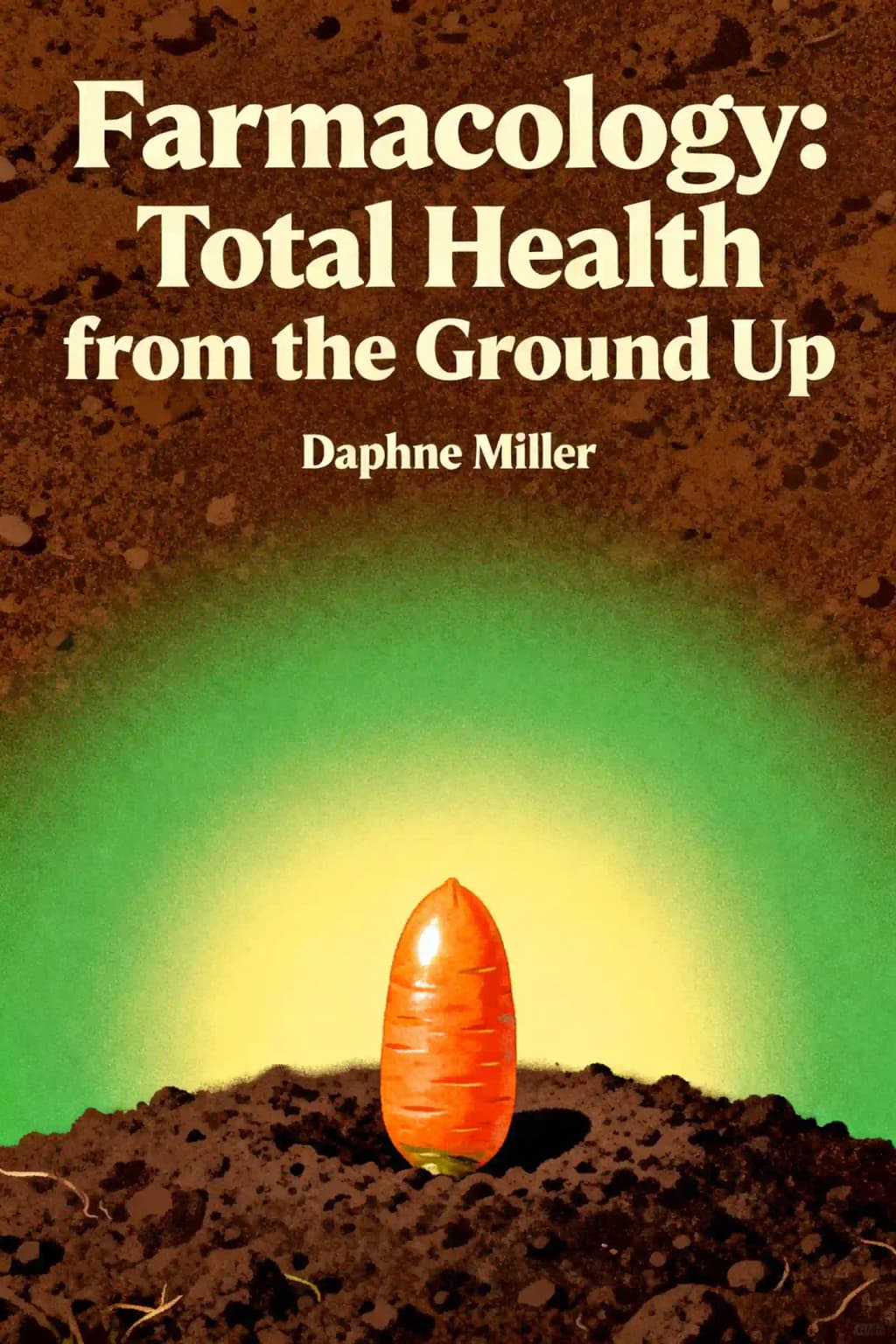
Daphne Miller, MD, is a physician, scientist, and acclaimed author of Farmacology: Total Health from the Ground Up, a groundbreaking exploration of the vital connection between soil health, sustainable agriculture, and human well-being.
A practicing family physician and Clinical Professor at the University of California San Francisco, Miller combines her medical expertise with a passion for environmental stewardship through her Research Scientist role at UC Berkeley’s School of Public Health, where she founded the Health from the Soil Up Initiative.
Her work has been featured in The Washington Post, The New York Times, and the award-winning documentary In Search of Balance. Miller’s earlier book, The Jungle Effect: The Science and Wisdom of Traditional Diets, examines global dietary patterns for disease prevention.
A sought-after speaker, she has advised the United Nations Food and Agriculture Organization and pioneered "park prescription" programs linking nature exposure to health outcomes. Farmacology has been translated into four languages and inspired interdisciplinary dialogues among healthcare providers, farmers, and policymakers worldwide.
Farmacology explores the profound connection between agricultural practices and human health. Daphne Miller, MD, visits seven innovative farms to uncover how soil health, polyculture farming, and sustainable practices like pastured poultry or vineyard pest management can inform medical care. The book links concepts like microbial diversity in soil to gut health and stress resilience, offering insights into holistic wellness rooted in ecological principles.
This book is ideal for healthcare professionals, farmers, environmentalists, and anyone interested in integrative health. Readers curious about sustainable agriculture’s impact on nutrition, stress management, or chronic disease prevention will find actionable insights. It also appeals to those exploring connections between community well-being and urban farming.
Yes—its unique blend of medical science and agrarian wisdom offers a fresh perspective on health. Miller’s farm visits and research-backed examples, such as how vineyard ecosystems inspire cancer treatment strategies, provide practical takeaways for personal and community wellness. The book’s interdisciplinary approach has been praised for bridging gaps between medicine and agriculture.
Miller argues that healthy soil microbiomes mirror human gut microbiomes, both thriving on diversity and balance. Farms avoiding monocultures and synthetic chemicals foster nutrient-rich crops and resilient ecosystems, which parallel dietary and lifestyle habits that prevent chronic diseases. For example, polyculture farms reduce pest outbreaks, akin to how diverse diets boost immunity.
Pastured hens experience “good stress” through natural foraging, which strengthens their resilience—contrasting with chronic stress in confined industrial settings. Miller applies this to humans, advocating for moderate physical activity and exposure to nature to build stress tolerance rather than avoid stressors entirely.
Vineyards using integrated pest management (IPM) balance ecosystem health rather than eradicating pests. Miller compares this to oncology’s shift toward targeted therapies that strengthen the body’s defenses instead of aggressive treatments. Both approaches prioritize long-term system resilience over short-term fixes.
Yes—Miller highlights urban farms that reduce neighborhood crime by fostering social connections and purposeful work. These spaces also lower stress through green exposure and physical activity, demonstrating how food systems impact mental health and community cohesion.
Aromatic herb farms practicing regenerative agriculture show how plant compounds used in skincare (like lavender or rosemary) thrive in chemically balanced soil. Miller ties this to holistic beauty rituals that prioritize internal health and environmentally friendly products over synthetic treatments.
As a family physician and UC Berkeley researcher, Miller bridges clinical expertise with agroecology. Her fieldwork on farms and collaborations with soil scientists provide evidence-based parallels between agricultural sustainability and preventive medicine, enriching the book’s credibility.
Some readers note the book’s heavy reliance on anecdotal farm visits, urging more robust clinical studies to validate connections. Others highlight its niche focus, which may overwhelm those unfamiliar with agricultural terms. However, most praise its innovative interdisciplinary lens.
While The Jungle Effect examines traditional global diets, Farmacology delves deeper into ecological health, linking farming practices to modern diseases. Both emphasize prevention through natural systems but cater to distinct audiences: food enthusiasts versus sustainability advocates.
The book suggests:
Sinta o livro através da voz do autor
Transforme conhecimento em insights envolventes e ricos em exemplos
Capture ideias-chave em um instante para aprendizado rápido
Aproveite o livro de uma forma divertida e envolvente
"You can change a microbiome in a day."
"quit cold turkey" on conventional inputs.
Divida as ideias-chave de Farmacology em pontos fáceis de entender para compreender como equipes inovadoras criam, colaboram e crescem.
Destile Farmacology em dicas de memória rápidas que destacam os princípios-chave de franqueza, trabalho em equipe e resiliência criativa.

Experimente Farmacology através de narrativas vívidas que transformam lições de inovação em momentos que você lembrará e aplicará.
Pergunte qualquer coisa, escolha a voz e co-crie insights que realmente ressoem com você.

Criado por ex-alunos da Universidade de Columbia em San Francisco
"Instead of endless scrolling, I just hit play on BeFreed. It saves me so much time."
"I never knew where to start with nonfiction—BeFreed’s book lists turned into podcasts gave me a clear path."
"Perfect balance between learning and entertainment. Finished ‘Thinking, Fast and Slow’ on my commute this week."
"Crazy how much I learned while walking the dog. BeFreed = small habits → big gains."
"Reading used to feel like a chore. Now it’s just part of my lifestyle."
"Feels effortless compared to reading. I’ve finished 6 books this month already."
"BeFreed turned my guilty doomscrolling into something that feels productive and inspiring."
"BeFreed turned my commute into learning time. 20-min podcasts are perfect for finishing books I never had time for."
"BeFreed replaced my podcast queue. Imagine Spotify for books — that’s it. 🙌"
"It is great for me to learn something from the book without reading it."
"The themed book list podcasts help me connect ideas across authors—like a guided audio journey."
"Makes me feel smarter every time before going to work"
Criado por ex-alunos da Universidade de Columbia em San Francisco

Obtenha o resumo de Farmacology como PDF ou EPUB gratuito. Imprima ou leia offline a qualquer momento.
When Kentucky farmer Wendell Berry welcomed me to his porch, he understood my quest before I did: "You doctors who kicked over the traces interest me a lot. There are doctors suffering pretty badly because of that collision of technology with flesh." His words crystallized my growing discomfort with conventional medicine's limitations. I never expected to find answers to our fragmented healthcare approach in sustainable agriculture, yet that's exactly where the most profound insights emerged. The revolutionary premise-that ecological farming principles offer profound wisdom for human health-connects two worlds we've artificially separated but that fundamentally operate by the same principles.