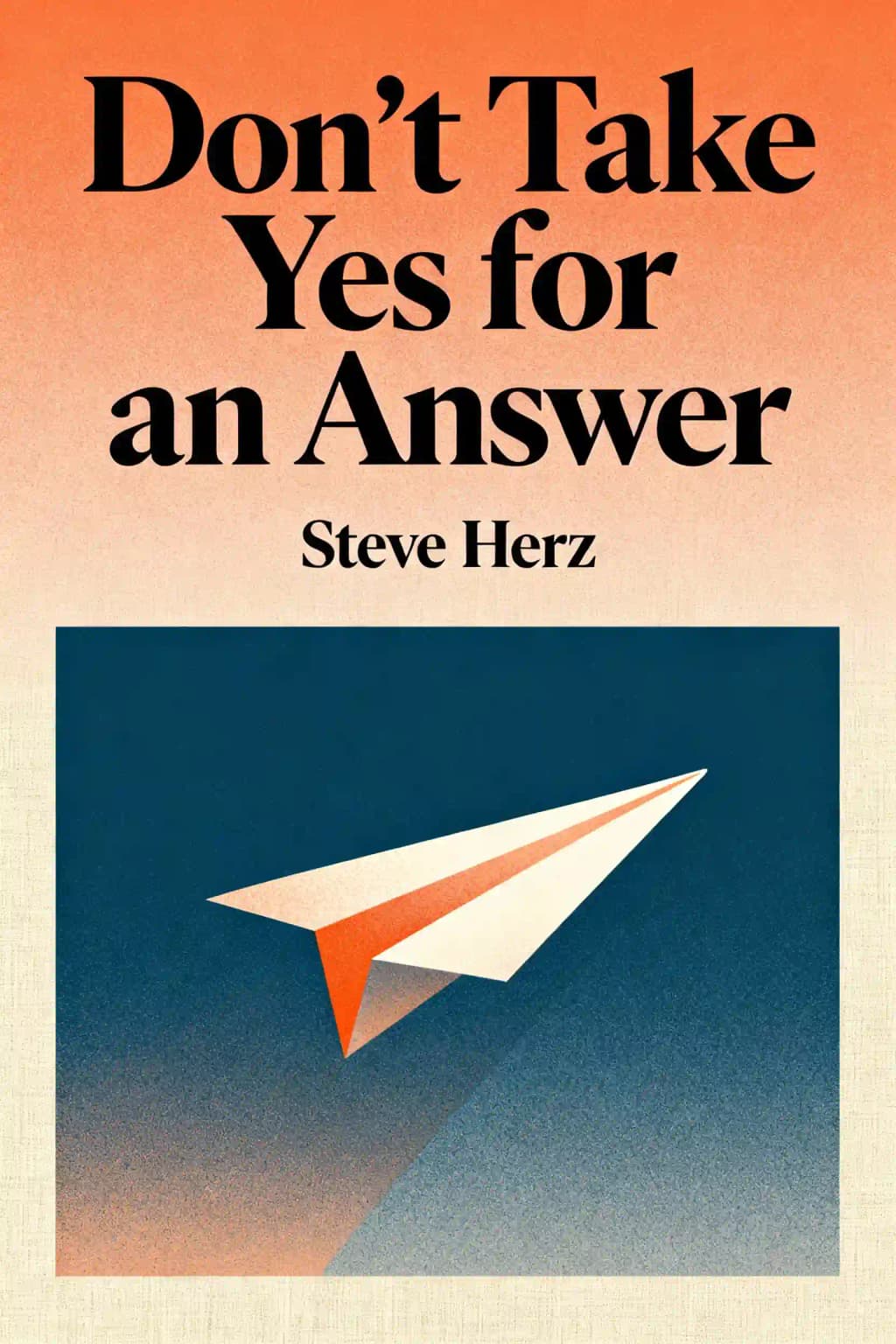
In "Don't Take Yes for an Answer," talent agent Steve Herz reveals why positive feedback can stunt your growth. Learn the AWE method - Authority, Warmth, Energy - that helped 200+ media personalities thrive. Could your career be suffering from too much "yes"?
Steve Herz, author of Don’t Take Yes for an Answer, is a leading talent agent and career advisor renowned for his expertise in communication and leadership. As President of The Montag Group, a premier agency representing top sports and media personalities like ESPN’s Scott Van Pelt and CNN’s Clarissa Ward, Herz combines decades of industry experience with actionable insights. His book, a self-help guide rooted in professional development, emphasizes mastering authority, warmth, and energy to achieve exceptional results—principles he’s honed while advising CEOs, lawyers, and broadcasters.
A Vanderbilt Law School graduate and former criminal defense attorney, Herz transitioned to talent management, founding IF Management before its merger with The Montag Group. His media contributions on CNBC, CNN, and TEDx platforms bolster his authority, while his actionable frameworks reflect his hands-on mentorship of high-profile clients. Herz’s work is further amplified through his podcast appearances and thought leadership on adaptive career strategies.
Beyond his professional achievements, Herz serves on the leadership council of Birthright Israel and volunteers as a tutor for underserved youth. His pragmatic approach, blending storytelling with exercises, has established Don’t Take Yes for an Answer as a trusted resource for professionals navigating modern workplace dynamics.
Don't Take Yes for an Answer teaches professionals to reject complacency by mastering three communication traits: Authority (projecting competence), Warmth (building trust), and Energy (inspiring engagement). Herz argues that overdependence on positive feedback stifles growth, urging readers to seek critical input to stand out in competitive fields. The book blends psychology research, celebrity coaching anecdotes, and step-by-step exercises to refine these skills.
Ambitious professionals seeking promotions, early-career individuals stuck in "potential" mode, and leaders aiming to motivate teams will benefit most. Herz’s insights are particularly relevant for media personalities, corporate managers, and entrepreneurs, drawing from his experience coaching ESPN anchors, CNN correspondents, and Fortune 500 executives.
Yes—it offers actionable strategies to avoid career plateaus, backed by real-world examples from Herz’s 30-year career as a talent agent. Readers gain tools like the AWE Scorecard to self-assess communication gaps and scripts to handle critical feedback constructively. Its focus on measurable growth over vague "self-improvement" makes it pragmatic.
The AWE framework breaks exceptional communication into:
Herz explains how over-indexing on one trait undermines effectiveness (e.g., excessive authority reads as arrogance).
Herz encourages actively seeking "hard truths" from mentors, peers, or clients—not just praise. He provides scripts to invite constructive feedback (e.g., “What’s one thing I could improve?”) and strategies to reframe criticism as growth opportunities rather than personal attacks.
Absolutely. The book shares case studies of professionals who doubled salaries or landed executive roles by refining their AWE traits. For example, a broadcaster Herz coached transitioned from local TV to ESPN by boosting warmth through deliberate vocal pacing and storytelling techniques.
Unlike generic advice (e.g., “be more assertive”), Herz’s system ties specific behaviors to neurological responses. For example, he cites studies showing that speaking 10% slower boosts perceived authority by activating the listener’s trust centers.
With remote work weakening nonverbal cues, Herz’s emphasis on intentional communication (e.g., crafting "energy pauses" in virtual meetings) addresses modern challenges. The AWE framework also aligns with Gen Z’s demand for authentic, human-first leadership.
Steve Herz is a top talent agent and president of The Montag Group, representing media icons like ESPN’s Scott Van Pelt and CNN’s Clarissa Ward. A University of Michigan and Vanderbilt Law graduate, he’s coached 200+ broadcasters and executives on career-defining communication strategies.
Some may find the AWE framework oversimplified—real-world application requires nuanced adaptation. However, Herz anticipates this by providing industry-specific tweaks (e.g., lawyers needing extra authority, influencers prioritizing energy).
Sinta o livro através da voz do autor
Transforme conhecimento em insights envolventes e ricos em exemplos
Capture ideias-chave em um instante para aprendizado rápido
Aproveite o livro de uma forma divertida e envolvente
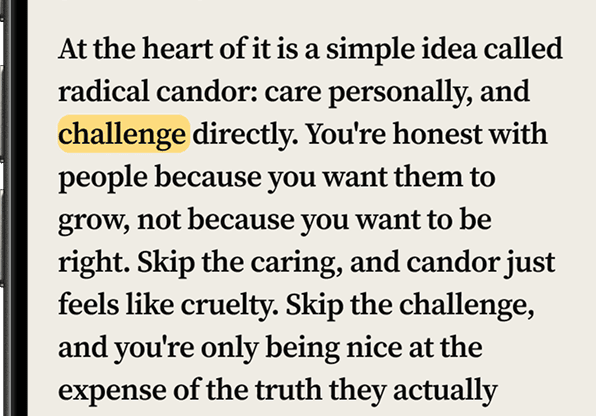
Stop taking yes for an answer.
This scenario represents not a turning point but a career dead-end.
Society has convinced us we can't handle criticism.
Grade inflation keeps us stuck in mediocrity.
Authority communicates confidence and conviction without imposing.
Divida as ideias-chave de Don't Take Yes for an Answer em pontos fáceis de entender para compreender como equipes inovadoras criam, colaboram e crescem.
Destile Don't Take Yes for an Answer em dicas de memória rápidas que destacam os princípios-chave de franqueza, trabalho em equipe e resiliência criativa.

Experimente Don't Take Yes for an Answer através de narrativas vívidas que transformam lições de inovação em momentos que você lembrará e aplicará.
Pergunte qualquer coisa, escolha a voz e co-crie insights que realmente ressoem com você.

Criado por ex-alunos da Universidade de Columbia em San Francisco
"Instead of endless scrolling, I just hit play on BeFreed. It saves me so much time."
"I never knew where to start with nonfiction—BeFreed’s book lists turned into podcasts gave me a clear path."
"Perfect balance between learning and entertainment. Finished ‘Thinking, Fast and Slow’ on my commute this week."
"Crazy how much I learned while walking the dog. BeFreed = small habits → big gains."
"Reading used to feel like a chore. Now it’s just part of my lifestyle."
"Feels effortless compared to reading. I’ve finished 6 books this month already."
"BeFreed turned my guilty doomscrolling into something that feels productive and inspiring."
"BeFreed turned my commute into learning time. 20-min podcasts are perfect for finishing books I never had time for."
"BeFreed replaced my podcast queue. Imagine Spotify for books — that’s it. 🙌"
"It is great for me to learn something from the book without reading it."
"The themed book list podcasts help me connect ideas across authors—like a guided audio journey."
"Makes me feel smarter every time before going to work"
Criado por ex-alunos da Universidade de Columbia em San Francisco

Obtenha o resumo de Don't Take Yes for an Answer como PDF ou EPUB gratuito. Imprima ou leia offline a qualquer momento.
In a world obsessed with participation trophies and grade inflation, we've created a dangerous illusion: the counterfeit yes. This false affirmation keeps us comfortably mediocre, unaware of our weaknesses, and unprepared for real-world competition. Steve Herz, talent agent to over 250 top journalists and media personalities, has built his career on being what he calls a "social assassin" - someone willing to bypass niceties and deliver hard truths that transform careers. His framework has become essential reading at companies like Google and Goldman Sachs, where leaders recognize that in today's competitive landscape, the difference between good and great often comes down to how effectively we communicate and connect. When equally qualified professionals see their careers diverge dramatically, the question emerges: why them and not me? The answer rarely lies in technical skills. After twenty-five years guiding top talent, the evidence is clear: when education, work ethic, and intelligence are equal, success comes down to communication ability and human connection. The Carnegie Foundation found only 15% of financial success comes from technical knowledge - the remaining 85% stems from personality and communication skills. This finding has been consistently replicated by Harvard and Stanford research.