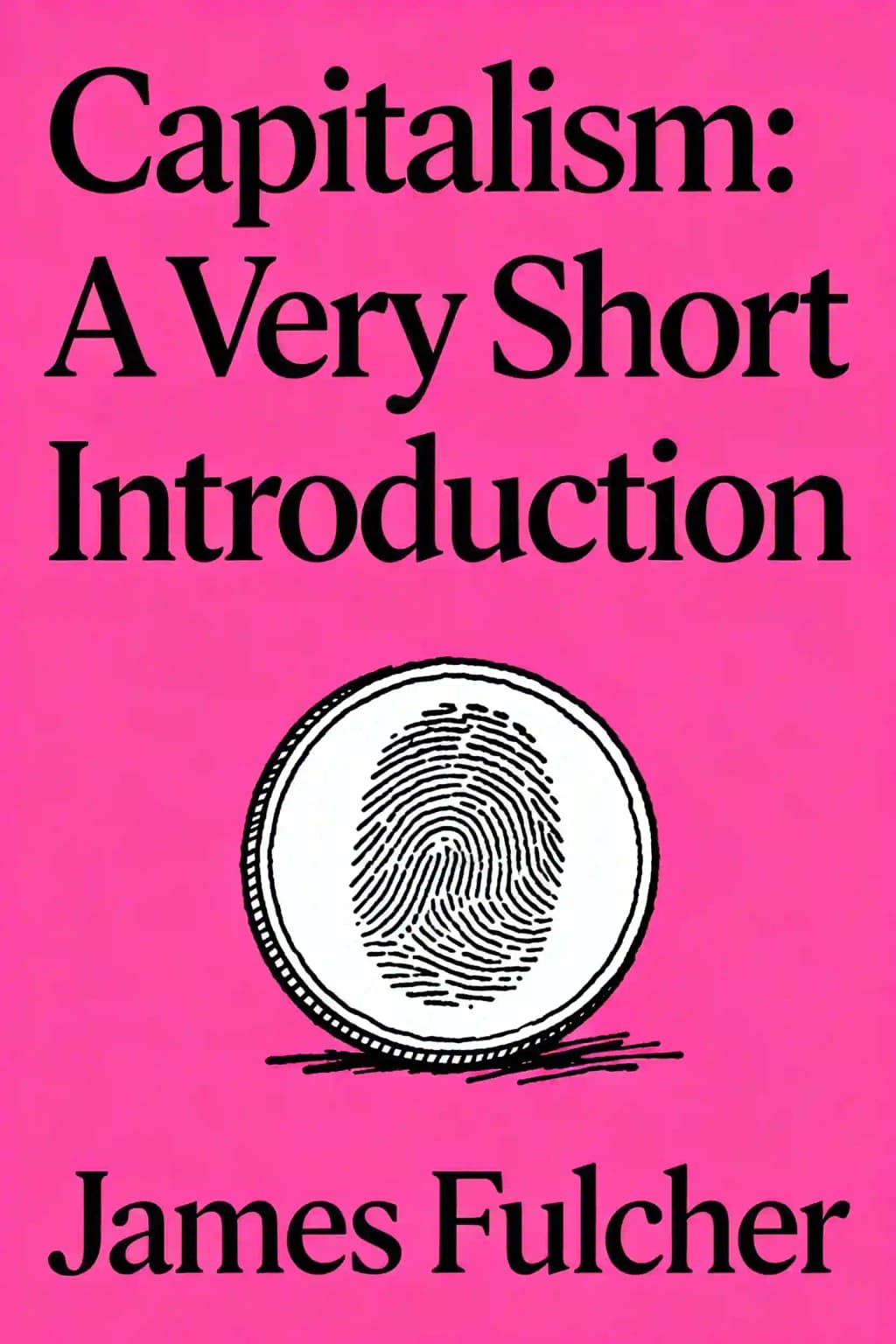
Capitalism: A Very Short Introduction unravels our global economic system's complex evolution - from merchant origins to modern crises. Oxford's acclaimed guide explores capitalism's ethical dilemmas and transformative power, offering crucial insights for anyone questioning how financial systems shape our world and what alternatives might exist.
Sinta o livro através da voz do autor
Transforme conhecimento em insights envolventes e ricos em exemplos
Capture ideias-chave em um instante para aprendizado rápido
Aproveite o livro de uma forma divertida e envolvente
Profit ultimately depended on exploiting workers-employers minimized wage costs by replacing skilled workers with cheaper labor as automation advanced.
Divida as ideias-chave de Capitalism em pontos fáceis de entender para compreender como equipes inovadoras criam, colaboram e crescem.
Destile Capitalism em dicas de memória rápidas que destacam os princípios-chave de franqueza, trabalho em equipe e resiliência criativa.

Experimente Capitalism através de narrativas vívidas que transformam lições de inovação em momentos que você lembrará e aplicará.
Pergunte qualquer coisa, escolha a voz e co-crie insights que realmente ressoem com você.

Criado por ex-alunos da Universidade de Columbia em San Francisco
"Instead of endless scrolling, I just hit play on BeFreed. It saves me so much time."
"I never knew where to start with nonfiction—BeFreed’s book lists turned into podcasts gave me a clear path."
"Perfect balance between learning and entertainment. Finished ‘Thinking, Fast and Slow’ on my commute this week."
"Crazy how much I learned while walking the dog. BeFreed = small habits → big gains."
"Reading used to feel like a chore. Now it’s just part of my lifestyle."
"Feels effortless compared to reading. I’ve finished 6 books this month already."
"BeFreed turned my guilty doomscrolling into something that feels productive and inspiring."
"BeFreed turned my commute into learning time. 20-min podcasts are perfect for finishing books I never had time for."
"BeFreed replaced my podcast queue. Imagine Spotify for books — that’s it. 🙌"
"It is great for me to learn something from the book without reading it."
"The themed book list podcasts help me connect ideas across authors—like a guided audio journey."
"Makes me feel smarter every time before going to work"
Criado por ex-alunos da Universidade de Columbia em San Francisco

Obtenha o resumo de Capitalism como PDF ou EPUB gratuito. Imprima ou leia offline a qualquer momento.
In 1601, a group of English merchants pooled their resources for a risky venture to the East Indies. When their ships returned laden with pepper, investors celebrated a staggering 95% profit. Three expeditions later, their vessels lay wrecked at the bottom of the ocean, and fortunes vanished overnight. This pattern of spectacular wins and devastating losses wasn't a bug in early capitalism-it was the feature that would reshape the world. What began as merchant adventurers exploiting price differences between distant markets evolved into something far more transformative. These early capitalists weren't just trading goods; they were pioneering a revolutionary idea: investing money with the expectation of profit. The English and Dutch East India Companies developed joint-stock structures to spread risk, and by 1688, their shares traded actively on the London Stock Exchange. Amsterdam merchants built warehouses large enough to hold grain for the entire country for over a decade, not to prevent famine, but to control prices through artificial scarcity. But merchant capitalism was merely the prologue. Industrial capitalism fundamentally transformed human existence itself. Consider James M'Connel and John Kennedy, two Scottish entrepreneurs who started with 1,770 in 1795 and built a cotton empire employing 1,500 workers by the 1830s. Their success rested on a brutal equation: profit came from exploiting labor. Children as young as seven worked 13.5-hour days in their mills. As automation advanced, skilled workers found themselves replaced by cheaper hands. Work became sharply separated from life, creating "leisure time" as a distinct concept that workers fought desperately to expand. Capitalism simultaneously commercialized this hard-won leisure, developing entire industries around rail excursions and spectator sports. The system that created free time also figured out how to profit from it.
