Capítulo 1
The Lilies That Saved My Life
In the aftermath of my twenty-fifth birthday, I found myself lying in bed at 3 PM, fully dressed in my "Girls' Night Out" outfit, with a crushing migraine and an unexplained grilled cheese sandwich beside me. I had drunk-dialed my therapist the night before, sobbing that I hated myself and saw no way out. She was so concerned she suggested I go to the hospital. This rock-bottom moment became the catalyst for my transformation from self-hating-mess-wreck-disaster to happy-stable-grateful human.
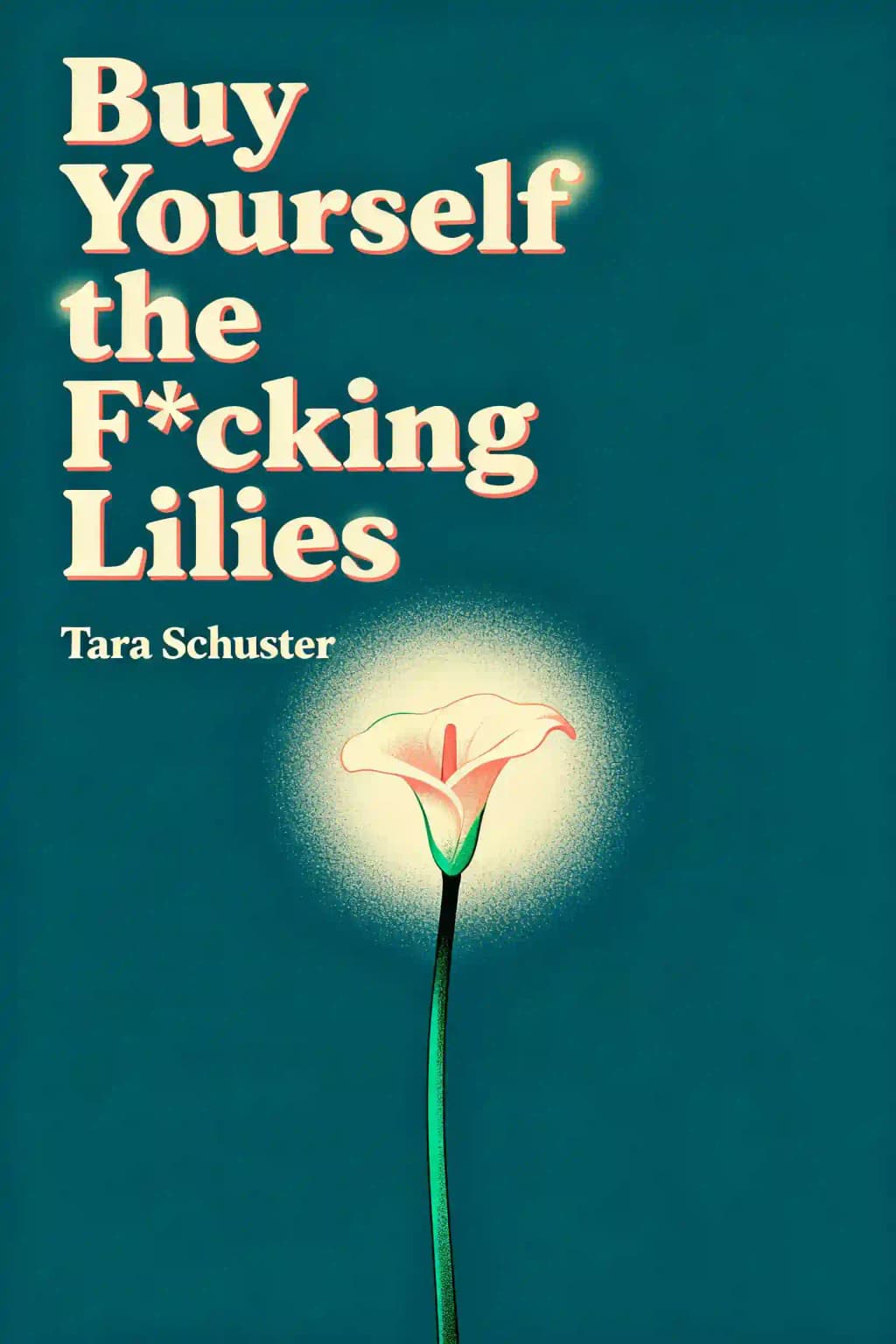
"Buy Yourself the F*cking Lilies" has become a cultural phenomenon since its 2020 release, with celebrities like Reese Witherspoon and Kristen Bell praising its raw honesty and practical approach to self-care. Author Tara Schuster, a Comedy Central executive who oversaw Emmy-winning shows like Key & Peele, crafted what The New York Times called "a brutally honest, funny personal story that also serves as a relatable self-help guide for women." The book resonated deeply during the pandemic when many were forced to confront their own emotional landscapes, making it a surprise bestseller and launching Schuster as a voice for millennials struggling with "adulting" amid childhood trauma.
Capítulo 2
When Life Gives You Emotional Neglect, Build Your Own Rescue Plan
Our family home was a place where everything perished-deer drowned in our pool, cats died mysteriously, plants withered from neglect. The house itself stood on shaky ground, earthquake-prone and landslide-endangered. My parents, a doctor and lawyer who should have provided stability, were too busy waging the endless war of their marriage to notice these problems. As a child, I became their "disempowered supervisor" rather than their daughter, taking on adult responsibilities while being told something was fundamentally wrong with me.
By age twenty-five, I'd become a burned-out hull who didn't know herself. I maintained a facade of having it together professionally while falling apart personally. I couldn't afford an Eat Pray Love journey of self-discovery, but I knew I had to change. So I took out a notepad and began listing what I knew: first, that no perfect parents were coming to rescue me, and I would have to take full responsibility for my own well-being.
This is what I call "re-parenting"-figuring out what nurturing you still need and giving it to yourself. It's a process of healing traumas both big and small by developing rituals that provide the care you never received. The approach is simple but powerful: start exactly where you are, without worrying about how far you have to go, and build better habits one tiny step at a time.
At Comedy Central, Jon Stewart once told me, "There are no big breaks. There are only a series of tiny, little breaks." I took this to heart, making it my mission to be the best at whatever task I was given. This same persistence would become my approach to healing my mind-starting exactly where I was, without worrying about how far I had to go.
Capítulo 3
The Pen Is Mightier Than Your Inner Critic
Despite my initial resistance to reading "The Artist's Way," I reluctantly tried the "Morning Pages" exercise-writing three pages every morning before checking social media or fully waking up. At first, my pages were mundane lists of complaints and errands, but soon deeper fears emerged: "You will fail," "You have no good ideas," "You will never find someone who loves you." It felt like receiving secret messages from my soul, nudging me toward places that needed healing.
Unexpectedly, I wrote about my childhood dog Giya, a black standard poodle who was "kidnapped" by a neighbor after running away-a trauma I'd never properly mourned. Through writing, I confronted how this experience had shaped my fear of dogs and made space to process the confusion and abandonment of my eleven-year-old self.
Journaling became my tool for excavating past wounds using a process inspired by Tara Brach's "R-A-I-N of Self-Compassion": admitting difficult thoughts, touching all associated feelings, getting curious about why they're surfacing now, committing to healing actions, and finding the "platinum lining" in addressing issues rather than letting them fester. Beyond processing trauma, journaling created space for dreams I hadn't allowed myself to have, connecting me to what I call my "Oprah Mind"-expansive, abundant, and full of possibility.
But journaling alone wasn't enough. I had to make another crucial decision I desperately didn't want to make-giving up weed. When I confronted my dad about his weed smoking making me uncomfortable, he looked me in the eye and said, "Tara, don't make me choose between the weed and you." That was the precise moment I decided to start smoking too. By twenty-five, weed had successfully helped me outrun my childhood, but if I was going to untangle the clusterfuck in my mind, I'd need to be not-high long enough to feel my own feelings.
I threw my pipe in the trash, covered it with yogurt so I couldn't retrieve it, flushed my weed, and posted notes around my apartment: "Weed no longer works for you, I'm so sorry." What's your weed? What substance or behavior do you run to when uncomfortable that you know isn't good for you? The problem with self-medicating is it doesn't work. These might blunt pain momentarily but can't heal root causes.
Capítulo 4
Movement Is Medicine for the Anxious Mind
Without weed to dull my restlessness, I began experiencing my anxiety fully for the first time. A constant knot lived in my chest above my left breast. I would knead it all day, hoping to work it out. The pain radiated into my armpit-now I was the girl rubbing her breast and armpit on street corners. Cute. I'd wake with mystery migraines, biting down so hard that black dots flew into my vision.
When I asked my perpetually calm friend Julia her secret, she simply said she went for a run when stressed. I was skeptical-my anxiety felt too important, too deep for something so simple. As an "indoor kid" who'd hidden between treadmills in high school, I had every excuse: painful bouncing boobs, bad ankles, no proper shoes. To every paper-thin excuse, Julia had an easy solution. Fucking Julia.
I reluctantly bought a stupid purple sports bra and bulky dad sneakers. Starting with small goals-run for one Feist song, run from one stop sign to the next-I began repeating "Yes, I can do this" even when I thought I couldn't. Though I hated the actual running, where I used to feel dread pushing on my chest like bricks, I now began to feel room to breathe.
Running blasted through that anxiety knot. The movement broke up harsh thought loops in my head. My journal went from tallying days of panic to celebrating "Day TEN of no crushing anxiety!!!" Working out became non-negotiable-my preventive measure against lurking anxiety. I'm not disciplined (I just ate a three-day-old cookie I found in my living room), but I never regret showing up to the gym. Exercise gets me out of my spinning head into a moving meditation that forces me to feel my body and be present.
If running isn't your thing, try alternatives that might be less terrible (though all working out is a little terrible). I PROMISE that regular exercise WILL MAKE YOU HAPPIER-it's nuts how effective it is, but you have to stick with it! Try a class at your gym where others suffer with you, find Internet videos to do at home, take long walks during lunch breaks, or exercise with friends instead of brunching. Whatever you choose, make sure it's something you can actually do regularly. Don't go from "never working out" to marathon training. Choose something small you can do consistently.
Capítulo 5
The Gratitude Revolution: From Cynicism to Abundance
I was incorporating new practices into my life-journaling, not getting high enough to forget myself, and miraculously exercising regularly. After six months, I started feeling better. My BFF Isabelle invited me to Maine with her WASP family (they came on the ARBELLA, in the same fleet as the MAYFLOWER). Despite our political differences, I accepted.
In Maine, I was distracted by thoughts of Matt, a rocket scientist I was dating who was "meh" about me, and my ex Keats. When I complained about my negative thought patterns to Isabelle's cousin Eliza (Harvard grad, ballerina-turned-lawyer), she suggested positive psychology and writing daily gratitude lists. I was skeptical but agreed to try it for a month.
My early lists were cynical ("This is such a waste of time"), but I forced myself to write simple appreciations: espresso, cold bedsheets, wet hair on my back. Surprisingly, deeper gratitudes emerged: strangers' smiles, my apartment, my health. I realized trauma and gratitude could coexist. Nine years later, I still write ten things daily I'm grateful for-32,850 blessings that have shown me how much good surrounds me. Gratitude flips the "I'm not enough" narrative by showing you, on paper, how much you truly have.
I write thank-you notes like my life depends on it-because it does. Whenever I feel hopeless, depressed, or anxious, I write a card to someone. My formula for the perfect thank-you includes selecting a card reflecting your personality, beginning with a warm salutation, recalling a specific shared experience, expressing genuine thanks for something particular, sharing vulnerable feelings, adding something lighthearted, and signing with love.
I keep blank cards with me everywhere, like emergency Xanax-you never know when you'll need the sweet relief of gratitude. No one has ever complained about receiving too many thank-you notes when the sentiment is authentic. Don't overthink the timing either-it's never too late to be grateful, whether it's for a professor who changed your life or just a dinner party from months ago.
Capítulo 6
Silencing Your Inner Frenemy and Defining Your True Self
Do you ever feel like self-critical thoughts have hijacked your body? You're just trying to enjoy Shark Tank and Indian food when a Gollum-like presence crawls out from inside you, whispering that you're unlovable, a fraud, or questioning your food choices. That's my Frenemy Within-super mean yet somehow always invited to my dinner parties.
I discovered her in my journal-the voice continually slamming me like a never-ending diss track. She was born on my mother's bathroom floor, where I was pinned down for eyebrow waxing as a child, told my body was wrong, and made to feel like a failure. My mother would inspect me under harsh lighting, dye my hair against my wishes, and tell me I was bad at math and dyslexic like it was an inoperable tumor.
Rather than avoiding her, I confronted her by writing down her judgments: that I'm a fraud, have the wrong job, am disorganized for not buying wedding gifts, ruined my chance with an ex, and "look like a soup dumpling." Then I wrote a cease-and-desist letter, systematically dismantling each accusation with humor and self-compassion.
This technique works because it lightens the mood (laughter is the enemy of self-loathing), builds self-defense reflexes, and feels exhilaratingly powerful. Being mean to yourself is counterproductive, feels awful, and takes more energy than being kind. Identify your inner critic as separate from yourself-you wouldn't let someone else speak to you this way, so why let someone in your head be this cruel?
After defeating my Frenemy Within, I needed to replace "You suck" with something affirming. Inspired by a Yom Kippur service and its prayer guide that mapped out spiritual renewal, I created my own personal blueprint on the back of my door. Using index cards and hot-pink tape, I built a three-panel map of myself. The bottom panel holds the three sources of my self-esteem: writing, exercise, and being a good friend. The middle contains my six principles: gratitude, authenticity, enjoyment, integrity, awareness/presence, and kindness. The top panel lists "Things About Myself I Want to Be True"-qualities I hope people will remember me for. This physical reminder helps me approve of myself when life disappoints, showing me who I am and who I'm becoming.
Capítulo 7
Creating Your Support System: The People Who Matter
Growing up in a house of constant criticism, I developed a terrible habit of dismissing compliments while treating criticism as absolute truth. When my playwriting teacher Kate told me I had raw talent, I couldn't accept it. Instead of embracing her encouragement, I rushed to prove myself in an advanced class with Professor Laurie-cold, distant, and unhelpful. When I invited Laurie to my student play about Anna Nicole Smith, she never showed despite my reserved glitter-name seat. Meanwhile, Kate came and gave me a loving hug. As the audience erupted in laughter at my comedy, I realized I'd been seeking validation from the wrong person while ignoring those already in my corner.
This taught me to identify my support system: my "Hype Men" who offer encouragement, my "Road Warriors" who provide career guidance, and my "ABSOLUTELY NOT" list of people who make me feel small. I keep these lists on my office wall to remind me who truly supports my dreams versus who might undermine them.
Growing up, I never learned how to have friends. My parents treated everyone as potential enemies, and I was taught to be suspicious of everyone. But through therapy, I learned that "the only thing that matters in the long run is the bonds you create," which shifted my entire approach to relationships.
My Lady Harem isn't always perfect. Sometimes friends cycle out temporarily, sometimes we fight or need distance when someone is hurt. Sometimes we're petty and selfish. But these relationships bend and grow like trees, with roots so deep that even damaged friendships can heal. When called to action, we quickly get over our issues and show up for each other like warriors.
The people you surround yourself with determine your life's quality. They reflect your values and how you spend your precious time, so be ruthless in your choices. Choose ONLY people who lift you up and make you feel awesome. When building your Lady Harem, look for these qualities: Kindness above all (no time for judgmental people); Confidence (secure enough to celebrate your achievements); Self-awareness (able to discuss issues maturely); Curiosity (engaged in your life while sharing theirs); and your personal "Secret Sauce" need (mine is friends from "good families" since I didn't have one). Most importantly, ask: Do you feel GOOD in their company?
Capítulo 8
From Scarcity to Abundance: The Lilies and Beyond
My parents' relationship with money shaped my own in profound ways. Our home was filled with expensive gadgets we couldn't use-Japanese SEGA Dreamcasts without English instructions, laser disc players, even an in-home tanning bed-while basic needs went unmet. Our living room looked like a warehouse of unused stuff because my parents equated possessions with happiness. Despite appearances of wealth, they were often deeply in debt, with unpaid bills stacking up like an impending hurricane everyone ignored.
I witnessed my first car repossession at ten, watching from a fire escape as my mother's Mercedes was taken while she protested she was "too busy saving lives" to pay her bill. Even during financially flush periods, we neglected basics like regular doctor visits. When both parents lost their jobs simultaneously, their marriage collapsed-money had been the only glue holding us together.
I grew up feeling like a financial burden, especially when my father complained about my private school tuition driving him into debt. This chaotic relationship with money followed me into adulthood, where I'd agonize over buying basic necessities while paradoxically spending on destructive indulgences. I'd debate for ages whether I deserved $7 lilies, my favorite flowers, often putting them in my cart only to abandon them before checkout.
After years of financial anxiety and extensive reflection, I've developed clear principles about money: Buy the fucking lilies-you deserve small pleasures that make life better, whether that's flowers, exercise classes, or guacamole with tacos. Make basic appointments and purchases-necessities aren't burdens but luxuries many can't afford, so appreciate having socks without holes and regular doctor visits. Never stretch your finances-this isn't yoga, so don't strain toward what you can't afford. Avoid unnecessary debt-it's okay to skip expensive events if they'll put you in the red.
Despite my full-time corporate job and tendency to overplan, I've learned to prioritize time for myself. I'm not independently wealthy with unlimited free time-I'm rushing to work after journaling and gym, hair wet in a bun, scrambling through meetings all day. My problem is saying yes to everything out of fear and scarcity thinking: every comedy show, every networking opportunity, every friend gathering. But when I say yes to others, I say no to myself, leaving me drained and barely present.
My solution is blocking off Monday nights as "BUSY WITH ME"-sacred time to enjoy my own company without checklists or achievements. If Monday doesn't work, I reschedule for another night, but never skip it entirely. Society glorifies "busy" as a badge of honor, but busy just means preoccupied and distracted-not important, worthy or happy.
Capítulo 9
Honoring Your Body and Space: The Physical Rituals
Over two and a half years, my rituals for calming my mind had paid off tremendously. No longer weeping in my work cubicle or walking around with constant anxiety, I still occasionally slipped into negative self-talk but now had tools to return to self-care. When my boss unexpectedly moved to Los Angeles, I seized the opportunity to move too, recognizing that relocation offered a clean slate to create new physical routines. In New York, I'd avoided confronting my physical body, but under the bright California sun, I committed to learning to cherish it.
After my mother's health scare, I finally accepted she would never be the nurturing mom I craved. This realization highlighted the void in my life-I'd never experienced those seemingly superficial but culturally important mother-daughter rituals like spa days, makeup tips, and shopping for special occasions. So I decided to create my own rituals for getting ready, teaching myself to "perform" the role of being a woman on my terms.
I turned to Cleopatra as my aspirational icon-a shrewd empress who ruled with intelligence and power. I transformed my morning routine: placing Elizabeth Taylor as Cleopatra on my vanity for inspiration, organizing my makeup brushes in pretty mason jars, investing in quality beauty products, and discovering the luxury of pedicures. Now each morning, I treat myself like a powerful empress-burning sage, playing empowering music, applying perfume, and facing the day with confidence.
What I've learned is that self-kindness builds strength. Beginning your day acknowledging your power creates a potent foundation. When you treat yourself like royalty-through witchy morning brews, lighting ceremonial fires, playing empowering music, taking time with your appearance, adorning yourself meaningfully, and saying affirmative prayers-the world responds accordingly. This isn't vanity or narcissism-it's recognizing your inherent worth.
I challenge myself to do one nice thing for me every day, just because. Sometimes I'm nice to myself for no reason at all. It's astounding how difficult this assignment can be, yet when you actually go through with being intentionally kind to yourself, the results are stunning. You'll feel more secure and notice how daily insults and slights roll off more easily.
When you keep a list of nice things you can do for yourself and commit to one daily act of self-kindness, you guarantee treasuring at least one part of your day. You can't control how the outside world treats you, but you can and must decide how you treat yourself.
Capítulo 10
Breaking Relationship Patterns and Finding True Connection
After years of self-care success in most areas of my life, romance remained my Achilles' heel. I kept dating men who looked great on paper-impressive schools, fancy jobs-but carried flaming emotional baggage. Like Ben, the Harvard-educated advertising exec who'd flamed out professionally and whose own dog hated him. When Ben bailed on meeting my best friend's family for squats, I had an epiphany while staring at their family history quilt: I couldn't build a life with emotionally damaged men.
I journaled about my past relationships and uncovered my pattern: First, find someone impressive on paper but emotionally broken, believing I could fix him. Second, get invested too quickly while ignoring red flags. Third, shape-shift into whoever I thought he wanted. Fourth, grow resentful of pretending, then collapse when it ended. Fifth, repeat the cycle.
These men mirrored my father's emotional unavailability-impressive credentials but incapable of genuine connection. I'd chase their approval just as I had my dad's, trying to earn love that should be freely given. From childhood, I learned that love meant neglect and mistreatment, taking it all as "love" because that was better than nothing. We all develop relationship patterns based on what we believe we deserve, creating well-worn paths we keep walking even when they lead through snake pits.
I wanted to make my breakup with Danny memorable-cooking a special meal and giving thoughtful gifts-not because he was a bad person, but because he wasn't MY person. By creating this deliberate ending ritual, I hoped to physically remember that starting relationships without excitement never leads to happiness. Like ill-fitting stilettos that will never stretch enough to fit properly, no amount of trying would make Danny right for me.
If you're considering settling because you want to feel loved or fear you'll never have another chance, stop right there. YOU ARE NOT READY TO SETTLE. EVER. If you're allowed to be picky about your diet or drinking water, you're absolutely allowed to be picky about who you spend your life with. We all deserve genuine love that makes us feel excited and valued-not just "fine." Settling doesn't solve loneliness; it follows you into the relationship where you'll feel alone together, like paper dolls rigidly playing house.
The right person is out there. I can't predict when you'll find them, but I know that time spent with the wrong person delays finding love. I'm seeking someone secure, optimistic and loving-someone I feel "fuck yeah" about or I'd rather be alone. I want to tap-dance from the Hollywood sign about how much I admire him and feel superb in his company. I want someone who brings brightness to my life and whom I can introduce to my Lady Harem.
Capítulo 11
Life Is to Be Enjoyed, Not Just Endured
All the tools I've shared-journaling, replacing self-medication with exercise, gratitude practices, thank-you notes, battling the Frenemy Within, buying the lilies-didn't heal me overnight. I built these rituals one by one with urgency and attention because I desperately wanted a better life.
Growing up in chaos, I naturally created disorder in my adult life. I thought life was just a series of problems to tackle until you survived another day, only to face new disasters. In that turmoil, I merely survived, barely present for a life that felt like it was happening to me.
About eighteen months into developing my self-care regimen, I had an epiphany while journaling after a run. The phrase "I can be a remarkable person" had popped into my head, and as I explored what that meant-giving back, making the world better, connecting with interesting people-I realized something shocking: I was enjoying myself.
My sweaty workout clothes, my candle-scented tiny apartment decorated exactly to my taste, my desk with inspirational quotes I'd hand-calligraphed "just for fun"-I loved it all. I LOVED MY LIFE. This revelation produced a phrase that came through me like electricity: "Life is not a series of crises to be endured. Life is to be enjoyed."
This isn't naive optimism but a powerful, pragmatic tool. I don't believe in a singular God, but I believe whatever wild energy created this universe wants me to lead a remarkable life. What's the alternative? Wallowing in trauma? Two things can be true simultaneously-you can acknowledge pain while appreciating its lessons, hate your job while cherishing your singing lessons.
Living the life you want is the least selfish thing you can do. Like putting on your own oxygen mask before helping others, you must breathe to be of service. If you want to contribute to this world, grab that mask, strap it around your head, and breathe in, baby. We need you.
I ended this book with a frivolous story about buying a luxury handbag in Paris as a victory lap of re-parenting-the bag symbolizing my survival and transformation from a painful past to a thriving present. I want you to have your own "trip to Paris," your own talisman declaring independence and self-trust. Too many people never truly live, playing assigned roles without questioning if they want them, getting comfortable with uncomfortable circumstances. But not you-if you've come this far, you won't be among those who regret not living authentically or allowing themselves happiness. For you, I envision a consciously lived life that you curate and cultivate, where you're self-aware, grateful, loving and beloved-a life you're passionately engaged with like a soulmate. So what's your Paris? What are your lilies? What are you waiting for? It's your turn now.