Capítulo 1
Take Control of Your Career: The Ultimate Guide to Self-Empowerment at Work
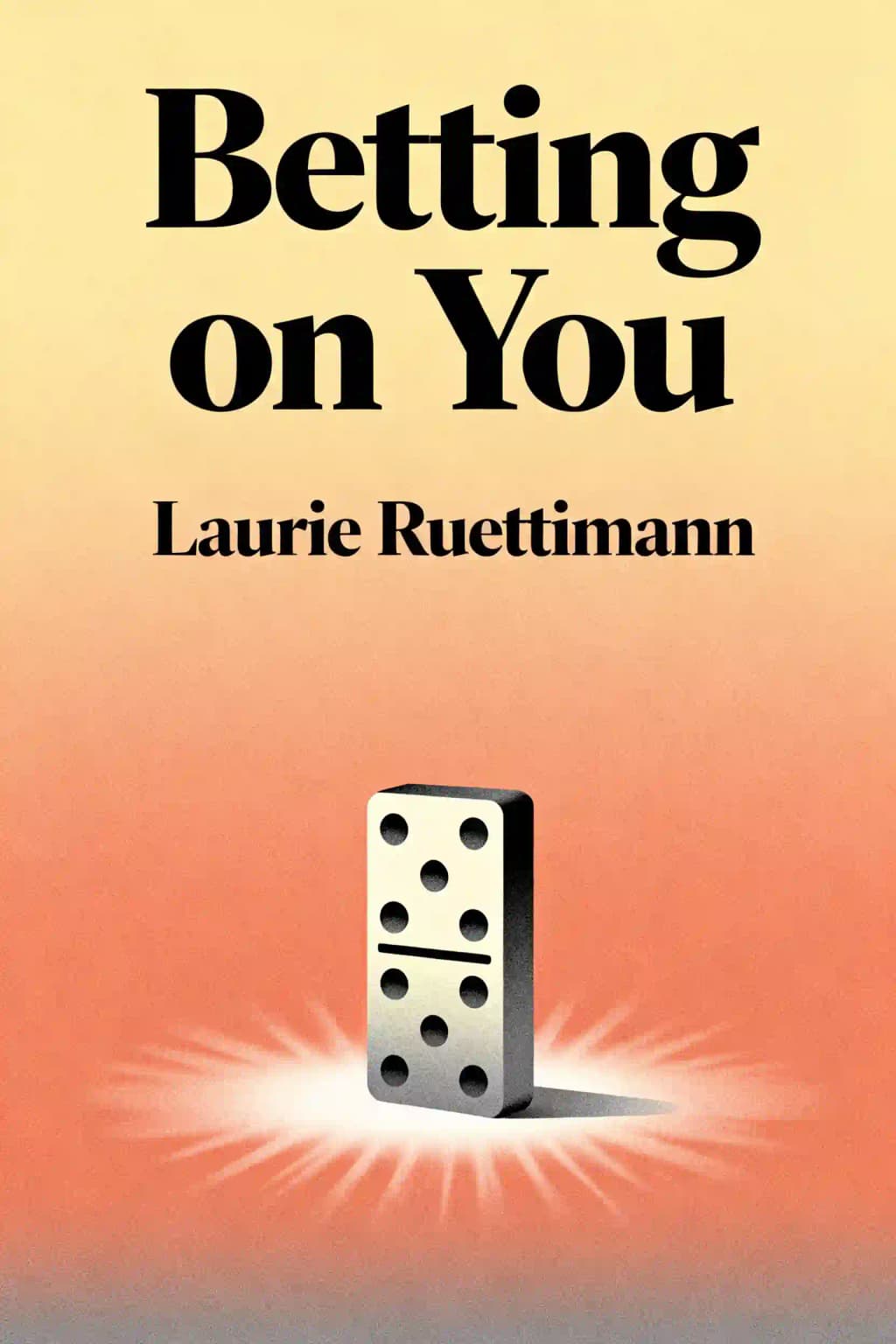
You're not alone if you've ever hated your job. Even HR professionals like Laurie Ruettimann, who once worked at pharmaceutical giant Pfizer, can find themselves trapped in toxic workplaces. Despite her impressive credentials and burning career trajectory, Ruettimann discovered her strategic HR role was actually about flying to remote locations to lay people off. The promised collaborative environment? Nonexistent. This revelation sparked a personal revolution that transformed her approach to work and life. "Betting on You" has become a workplace bible for millions seeking to reclaim control of their careers, earning praise from business leaders and career coaches alike. The book's practical wisdom resonates deeply in our post-pandemic world where workplace dynamics have fundamentally shifted and employees increasingly demand better treatment and work-life balance.
Capítulo 2
Finding Your Breaking Point: When Enough Is Enough
We've all been there-stuck in jobs that drain our souls while we convince ourselves things will improve. At Pfizer, I experienced the worst of corporate culture: middle-aged IT professionals and uptight women with French manicures who communicated in meaningless buzzwords while executives commuted by helicopter. As employees lost jobs, I developed Stockholm syndrome, volunteering for unwanted responsibilities to prove my worth to people who would never appreciate me.
Human Resources showed me the darkest side of workplace behavior-adults unable to resolve basic conflicts, bizarre incidents like employees wearing diapers at Halloween parties, and the same employee claiming their dog died three separate times as an excuse for absences. I cycled through five bosses in three years, each worse than the last. When my husband Ken lost his job during Pfizer layoffs, I felt completely trapped-someone needed to provide health insurance, and that someone was me.
With 51% of workers disengaged and 17% actively sabotaging their workplaces, workplace misery is practically an epidemic. Stanford professor Bob Sutton advised quitting toxic jobs, but that wasn't immediately possible for me. Instead, I started anonymously blogging about HR's behind-the-scenes reality while my health deteriorated-at five feet tall, I ballooned to 159 pounds, couldn't catch my breath crossing airports, and cycled through countless antidepressants with no success.
The turning point came during a particularly bleak business trip when I read a tabloid claiming Courtney Love had weight-loss surgery in Mexico. This sparked a realization: money solves problems by creating options. Corporations routinely reallocate budgets to maintain market dominance without anxiety-they put themselves first. If I wanted to fix my relationship with work, I needed to play a bigger game, question whether I was truly stuck, and consider what short-term sacrifices might improve my long-term options.
Capítulo 3
Taking Radical Action: The Power of Betting on Yourself
Despite my husband's concerns, I contacted a Tijuana clinic and wired $8,000 via PayPal for weight-loss surgery. I withdrew $1,000 in cash for potential bribes and flew to San Diego, then crossed into Mexico where streets once filled with tourists now stood eerily deserted. At the clinic, I was initially rejected for being too light at 159 pounds, but $200 in cash magically qualified me. The procedure went smoothly, and I returned without incident, using my remaining bribe money for an Admiral's Club membership-"Just like the rich do it!"
This decision transformed my life. When I returned to Pfizer, people noticed my changed demeanor before any physical transformation. I carried myself differently, with greater agency and control. I stopped craving junk food, became vegetarian, started training for a 5K, and began therapy. Meanwhile, my anonymous blog caught fire as people searched terms like "my job sucks" and "I hate HR." Within six months, I left Pfizer to ghostwrite for websites, started my consulting agency, and joined the Conference Board as a contributing editor.
The key lesson wasn't about weight loss but about implementing small changes and experiments that prioritize well-being. As Chuck Palahniuk noted, many people cling to their problems rather than face the unknown-but I discovered the unknown isn't that scary. You fix work by fixing yourself first, claiming what's yours just like companies do. You don't owe anyone an explanation for prioritizing self-care.
This experience taught me that betting on yourself isn't about making reckless decisions-it's about recognizing when you're stuck in patterns that no longer serve you and having the courage to break free. Sometimes the most radical act of self-care is simply acknowledging that you deserve better and taking concrete steps toward change, even when those around you don't understand your choices.
Capítulo 4
Embracing Strategic Slacking: Work Less, Accomplish More
There's no universal definition for a slacker, but it loosely describes someone who avoids work. Every family and team has one-the person who comes in late, leaves early, and contributes minimally. While slackerism was celebrated in 90s pop culture through films like Office Space and The Big Lebowski, it became harder to maintain during economic crises and the rise of digital surveillance.
Our #hustleporn culture pushes constant productivity, making slacking risky, especially for people of color. Yet ironically, embracing aspects of slackerism might save your soul. Professional detachment-treating your job like a puzzle rather than your identity-can be the key to work-life balance, as Deanna discovered when she established boundaries, reduced after-hours emergencies by 90%, and prioritized family and well-being without sacrificing her leadership role.
Marcus, who had quit his HR job to become a consultant despite my warnings, discovered the harsh reality I predicted. After two years of struggling to launch his business while his health deteriorated, savings depleted, and his wife's patience wore thin, he came back asking for help finding corporate work again. I agreed to help on three conditions: he needed to get a physical to determine if his slump had biological, psychological, or environmental causes; track his steps to ensure he wasn't just sitting at his desk all day; and schedule more time for fun away from screens.
We found him a job similar to his previous role, but with a crucial difference-a new mindset. I convinced him to give his "best 72 percent" instead of 110%, saving the rest for family and personal life. The key lesson: fix yourself first through better health, improved mood, and realigned priorities, then bring that goodness to work. Professional detachment and being a strategic slacker leads to greater success than burning yourself out.
When my husband Ken went to couples' counseling, he was genuinely confused when asked about his "self-care habits"-he'd never heard the term and hilariously thought it might be about masturbation. While the core concept of self-care is simple-prioritize your well-being by slowing down and focusing on health-it's been corrupted into a commercial enterprise. Today's self-care industry preys on insecurities, selling exotic beauty products, meditation apps, and wellness subscriptions that promise happiness but deliver little.
True self-care doesn't require spending money-it means prioritizing sleep, fresh air, nutritious food, physical movement, screen-free time, family connections, hobbies, community involvement, and acts of service. Start by observing people living balanced lives and gradually incorporate their practices. The key is crafting an identity bigger than your job.
Capítulo 5
Taking Calculated Risks: The Art of the Premortem
My friend Scott Stratten exemplifies the happenstance career. After graduating university, he worked as an HR generalist at Goodwill in Toronto. When Scott caught an employee stealing and wanted to press charges, his boss insisted on settling rather than fighting on principle. This moment showed Scott the job wouldn't let him flourish. Instead of quitting immediately, Scott identified his dream of becoming a motivational speaker like Les Brown and reverse-engineered the steps to get there.
His path wasn't direct-after dabbling in entrepreneurship, he discovered Twitter in 2009, growing from 1,000 to 10,000 followers in a month. When approached about writing a book, his first draft was "40,000 terrible words" until a Twitter follower named Alison volunteered to revise it. He later married her. Now they've co-authored six books, co-own UnMarketing Inc., and co-host a podcast. Scott achieved his dream of becoming a hall of fame speaker, but it didn't happen overnight.
My mentor Chris Ostoich, co-founder of LISNR, introduced me to the concept of the "premortem" during a conversation about risk and failure. We discussed the Space Shuttle Challenger tragedy, where engineer Bob Ebeling had predicted the explosion but wasn't heard. Chris explained that while teams often conduct postmortems after failures, they rarely anticipate how projects might fail before starting. The premortem approach involves thinking about potential failures before they happen, then working backward to create preventive solutions.
Dr. Gary Klein popularized this methodology in Harvard Business Review, and research shows it improves success rates by over 30%. This concept resonated deeply with me-people from dysfunctional families already practice this "worst-case-scenario thinking" to navigate difficult situations. When Chris asked if anyone had turned this concept into an app, I saw an opportunity. We co-founded GlitchPath, a company dedicated to helping people "beat failure."
When launching GlitchPath, I faced immense pressure to balance confidence with receptiveness to feedback. Despite assembling a five-person team with diverse talents, we struggled with uneven workload distribution and missed deadlines. Being a woman in tech, I found my leadership voice somewhere between "mom and stone-cold bitch." Ironically, my team resisted using our own premortem tool on ourselves. After spending thousands on travel and meetings with little progress, I dissolved GlitchPath when the team couldn't commit to deadlines. Though I tried continuing alone, I learned the hard way that tech companies need cohesive teams.
To conduct a proper premortem, turn off distractions, envision yourself as confident and determined, then imagine completely failing at your goals. Set a timer for two minutes and list every possible way you could fail-rational and irrational. This exercise creates your roadmap to success by highlighting obstacles to address. The premortem works for everything from career moves to home renovations. It's a free, powerful tool that creates mental space to take calculated risks while improving success chances.
Capítulo 6
Mastering Money Matters: Ask for What You Deserve
Have you ever worked hard but still felt financially insecure? The truth is simple: your job isn't designed to make you rich but to make others wealthy. Corporate compensation programs pay you the minimum you'll accept while promising future rewards that rarely materialize. Executive pay has skyrocketed 940% since the 1970s, with leaders feeling entitled to earn hundreds of times more than average workers while lecturing them about frugality. When you're struggling financially, you're essentially working to cover the costs of working.
When opportunities arise but budget is tight, remember that money isn't the only currency. If you can't be paid in cash, seek other forms of compensation-expanded reputation, meaningful relationships with powerful people, discretionary PTO, workplace flexibility, or promotion opportunities. For speaking engagements, I negotiate for covered expenses, meetings with sponsors, high-quality video recordings, or free tickets for friends.
The key is simple: don't be a chump-ask for more. The worst outcome is rejection, which feels less painful than missing opportunities. Executives constantly request additional compensation and perks with entitlement. If you don't gather courage to ask as they do, you'll never receive what they're given.
Some people blow through money and hang by a thread-like my father, who worked at the phone company for 25 years while yearning for something bigger he couldn't articulate. He spent impulsively on records, movies, toys, and lottery tickets despite financial struggles. His world crashed twice: first during his 1982 divorce, leading to bankruptcy, and later when taking early retirement before moving to California without a job.
Despite outplacement help, he became essentially unemployable, eventually becoming homeless and living in his car. While spending days online, he inadvertently worked for tech companies who profited from his data and attention without compensation. His story contrasts with Donald Trump, who filed for bankruptcy four times with minimal personal consequences due to wealth and connections. The lesson: pay yourself first, ask for more strategically, and remember Toni Morrison's wisdom that work shouldn't define who you are as a person.
Capítulo 7
Continuous Learning: The Ultimate Career Insurance
Have you ever been stuck in a job with nothing to do? I once worked for an insurance company where I spent my days wandering Chicago, visiting museums, and even getting Mario Andretti's autograph because I had no actual work. I was disengaged and lonely despite having total autonomy. The turning point came when a coworker suggested I study for the SPHR certification. Those eight weeks of studying changed my life-I discovered I could love HR without loving my specific job.
When you hate work, chances are you've stopped learning. Harvard Business Review found employees who learn at work experience less anxiety and engage in less unethical behavior than those on autopilot. Learning isn't just about formal education-it can come through feedback from colleagues, mentors, or even uncomfortable moments that force growth.
While there are no simple life hacks for workplace success, mentorship comes closest. When Bella called her VP an "assbag" in a forwarded email, I flew to St. Louis to manage the crisis rather than firing her. After her tearful apology, we implemented a recovery plan based on accountability, contrition, and action. I paired her with Nancy, a seasoned IT leader who maintained optimism despite workplace challenges. Under Nancy's guidance, Bella transformed her communication style, enrolled in leadership courses, and within two years earned a promotion to senior manager.
Finding mentors can be challenging, especially for women, as some male executives avoid mentoring women due to misplaced concerns. Mentors don't even need to know you personally-I've learned from Suzy Welch's 10-10-10 decision-making rule (considering how decisions feel in ten minutes, ten months, and ten years) simply by watching her videos online.
Even for someone committed to self-improvement like me, accepting feedback can be humiliating. When my colleague Cameron pointed out that I "eat like a wild dog" at a fancy restaurant, I felt ashamed. Growing up with a grandmother who fed eight grandchildren assembly-line style with sporks meant I never learned proper table manners. Cameron's blunt suggestion to watch YouTube etiquette videos forced me to confront a blind spot I'd been ignoring. Since then, I've studied etiquette, read Emily Post, and improved my dining skills.
We all have weaknesses we ignore-whether whistling at your desk, forgetting your wallet, or making excuses like my friend John, who blamed marketing for his sales team's poor performance instead of taking ownership. His boss eventually scheduled a hackathon to improve the sales funnel-without John's input. Stop ignoring your flaws; there will come a point when it's too late to fix them.
Capítulo 8
Becoming Your Own HR Department: Advocate for Yourself
In today's workplace, the only person you can truly trust is yourself. Your bosses come and go, HR teams are often ineffective, and you must take an active role in your own outcomes. The worst day of my HR career came early when I witnessed a vice president kissing his administrative assistant across the courtyard of our office building. While everyone else watched the spectacle like entertainment, I ran to warn them that their blinds were open. My boss refused to address the situation, calling it "above our pay grade." Later, the assistant thanked me and insisted Frank would "take care of her" because they were in love. I knew better-only you take care of you.
Work is like any transaction: trust but verify. Eventually, during restructuring, Frank moved to another department and his assistant was laid off. Similarly, when my mother became ill and I took FMLA leave, my boss tried to eliminate my position. These experiences taught me that fixing work requires making brave choices that put yourself first. If we wait for others to do right by us, we'll be waiting forever.
People often confide in me due to my "open face"-a trait inherited from my mom where strangers feel compelled to share their life stories. During one airplane conversation, an executive asked me point-blank why HR sucks. His question was valid-the HR experience is often terrible from start to finish. Job applicants wait endlessly for responses, new hires experience chaotic onboarding resembling Lord of the Flies, employee orientations focus on rules rather than success strategies, and HR departments can rarely be trusted with confidential information.
Job searching is fundamentally broken. Job descriptions are merely marketing tools for roles that don't truly exist, interviews are as reliable as blindfolded dart-throwing, and the process is emotionally draining. You're expected to seem compelling while outsmarting recruiters, lie to your current employer about interviews, yet appear trustworthy to potential employers.
Mind-set is everything-put yourself first. Practice good self-care: sleep well, eat nourishing foods, and remove toxic people from your life. Avoid common job search mistakes like applying indiscriminately online or networking only with other unemployed people. Instead, connect with people who have your dream job. The most effective networking approach is being helpful and service-oriented.
The first 90 days at a job reveal whether it's a good fit based on your enthusiasm for extra work and emotional investment. Great HR departments help you connect with your team quickly, but since many companies lack effective onboarding, take charge yourself. Before starting, ask how to meet colleagues early, learn cultural norms, and ensure your technology is ready. Research your manager and teammates on LinkedIn to find common connections and shared interests. Set up Google alerts to track your company, boss, and key leaders so you can discuss relevant industry topics.
Capítulo 9
Mastering the Job Search: A Strategic Approach
Looking for a new job while employed requires stealth and discretion. Everyone quits eventually, but few can openly search while maintaining good relationships with employers-many companies will fire you on the spot if they discover you're looking elsewhere. The hospitality sector is particularly ruthless, with managers cutting hours of servers caught job hunting. Unless you have unlimited resources to withstand unemployment, you must be cautious.
Never assume your job search is confidential. You can trust doctors, lawyers, and clergy (mostly), but everyone else is suspect-including your work BFF. The moment you open your mouth or browser, you've relinquished privacy. Watch yourself online too-tech companies are tracking you, and terms of service can change anytime.
Instead of applying online, go analog: create a list of dream companies, do thorough research (off company Wi-Fi!), and connect with people who work there. Helpful people reveal themselves within minutes through positive body language and open-ended questions. Ask for confidential advice on applying. If you must apply online (which 35% of people do successfully), explicitly remind everyone involved that your search is confidential. When providing references, only share names of people who would "give you a kidney"-and warn them first.
The job search takes "as long as it takes"-but a quick and dirty search yields a quick and dirty job with the same problems you're trying to escape. True change requires shifting your mindset and habits first. Successful executives are scheduled and organized with no "zero days" where opportunities are wasted. Instead of falling down internet rabbit holes, get systematic: schedule specific time blocks for networking, applications, industry reading, and tracking your progress.
To nail interviews, be your authentic self but freshen up. Wear what you'd wear to have lunch with Oprah-not necessarily luxury labels, but something that shows respect for the process. Once your look is set, get focused-turn off your phone, be present, and put your body and mind where your heart is. Seal the deal by asking for feedback before leaving: "Do you have any concerns?" Don't ask when you'll hear back; instead, ask how and when YOU can follow up. Follow up the same day with a thank-you note, then three times afterward if needed, each six days apart.
There are two types of job seekers: smart and squishy. Smart job seekers understand life throws curveballs and learn to play the game. Squishy seekers believe everything bad happens because of something they did wrong. When waiting for interview results, being squishy means ruminating in self-doubt; being smart means recognizing you can't control external situations but can control your attitudes and actions. Practice interviewing for jobs you'd never accept just to build confidence. Rejection is inevitable in job searching, but smart people bounce back faster because they've fixed their finances, acted as their own talent agent, and built lives outside work.
Capítulo 10
The Art of Leaving: Quitting with Dignity and Purpose
The advice to never quit without another job lined up is deeply ingrained in many of us. My parents' voices still echo in my head-my dad who endured an unfulfilling phone company career and my mom who became a police officer against all odds. But hating your job isn't the same as lacking work ethic. While quitting feels satisfying, if you can't leave immediately, focus on quitting the behaviors that led to your unhappiness.
Work fewer hours, set boundaries, and address what's broken in your life before trying to fix work by quitting. Even with savings, maintaining employment during your search is wise as skills can become obsolete quickly. Instead of impulsively quitting, build wealth, conduct a thorough job search, detach from workplace drama, address emotional turmoil, and stop making excuses that keep you stuck.
Here's an HR secret: companies will pay almost anyone to leave if they sign a release promising not to sue. Put yourself first and ask. One client discovered her CEO was having an affair with his secretary and approached her boss suggesting they frame her exit as a redundancy with severance-benefiting both parties. Another client worked for a company with a toxic reputation featured in three major newspapers. Instead of simply resigning, I advised her to ask for severance pay, especially since the company was in the news for corporate shenanigans.
Companies offer severance because they want departing employees to feel good-just kidding, it's because they don't want you revealing company secrets. Find an employment attorney to help craft your request, practice with friends, and prepare for different outcomes. Even if you're escorted out for asking, you haven't lost anything if you already have another job lined up.
My first restaurant job ended in disaster when I spilled 37 ketchup bottles, creating a German horror film scene that got me immediately fired. Despite my humiliation, a server chased me down to give me my share of tips, saying it was the funniest thing he'd ever seen. My friend Jennifer McClure, a renowned leadership coach, has wisdom for those who've been fired: everybody good gets fired once. You can't innovate without occasionally angering someone.
When resigning, your goals are to communicate your last day and wrap up loose ends without making enemies. Write a clear, concise resignation letter without apologizing or listing reasons why you're leaving. Don't plan your own going-away party, but if you do have one, include everyone including your boss. Be available for an exit interview with constructive feedback-use Julie Zhuo's "twice-as-good" framework to suggest positive improvements rather than complaining.
Capítulo 11
Creating Your Own Future: It Starts with You
In 2019, nearly 200 prominent CEOs redefined corporate purpose through the "Statement on the Purpose of a Corporation," acknowledging that businesses must become good stewards of people, communities, and the planet to survive. This shift occurred because five generations of workers are tired of toxic environments, more diverse leaders demand change, and tight labor markets have empowered employees as "consumers of work."
While this declaration creates space for new conversations beyond profits and losses, it doesn't immediately help those struggling in soul-crushing jobs. Fixing work globally requires addressing systemic problems like racism and greed, but fixing your individual situation demands personal accountability. Don't wait for CEOs to change your future-change it yourself.
When I worked at Pfizer, each day felt like the movie Groundhog Day-the same crummy job, pointless meetings, and tedious commutes. After returning from Tijuana, I needed purpose beyond being "somebody's local HR lady." I started selecting one new activity at a time from a bag of ideas I'd written down-Pilates, cooking classes, volunteering, decluttering. As I introduced these new activities into my routine, my depression lifted and I became less obsessed with work and more focused on feeling good.
Try this yourself: envision six things you'd do with more time, then choose one and start today. Whether it's taking a cooking class, reading before bed, researching your genealogy, or organizing your home, you're not just choosing an activity-you're prioritizing yourself.
One of my best friends is Lars Schmidt, whom I met at a recruiting conference in California. After hearing him speak passionately about reinventing work around talented employees, I fought through the crowd and said, "I'm Laurie Ruettimann, and I want to work together." Having a best friend at work is invaluable, but as a solo consultant, I felt lonely-a common workplace problem. Cigna research shows lonely workers think about quitting twice as often and are more likely to miss work due to illness or stress.
My client Leila asked me to help her find purpose within six months because her patience had expired. I needed to understand why she continued showing up despite her misery. If you're struggling like Leila, document ten solid reasons why you go to work-student loans, rent, family support. Next, list what you gain beyond salary-health insurance, 401(k), learning opportunities. Don't overthink it; set a timer for five minutes if needed. These exercises help craft a clear statement about why you work: "I go to work to_______________, and my job gives me _______________."
Change happens slowly but surely. This book offered tools to put yourself first, prioritize well-being, and be your own HR department. We covered reclaiming work-life balance, working smarter, betting on yourself, learning, fixing your finances, self-advocacy, job searching, and leaving with dignity. But nothing changes without that initial risk-betting on yourself and putting yourself first.
You can't blame others if work is broken. Fix it yourself. My recommendations may seem daunting, but I've done them all myself. Fifteen years ago, I was an HR girl who couldn't run a mile. Five years ago, I ran marathons but hadn't written a book. Five months ago, I didn't know if this book would be published. Five days ago, my brother was diagnosed with stage III colon cancer. My purpose now? Being the best sister possible.
No journey is easy, no success straightforward, and no life exists without pain. But your job shouldn't impede your quality of life. If you hate work and complain it's broken, ask yourself: What have I done today to put myself first and take control of my career? Answer that question to fix work once and for all.