Capítulo 1
Unleashing Your Hunter Instincts in a World of Rapid Change
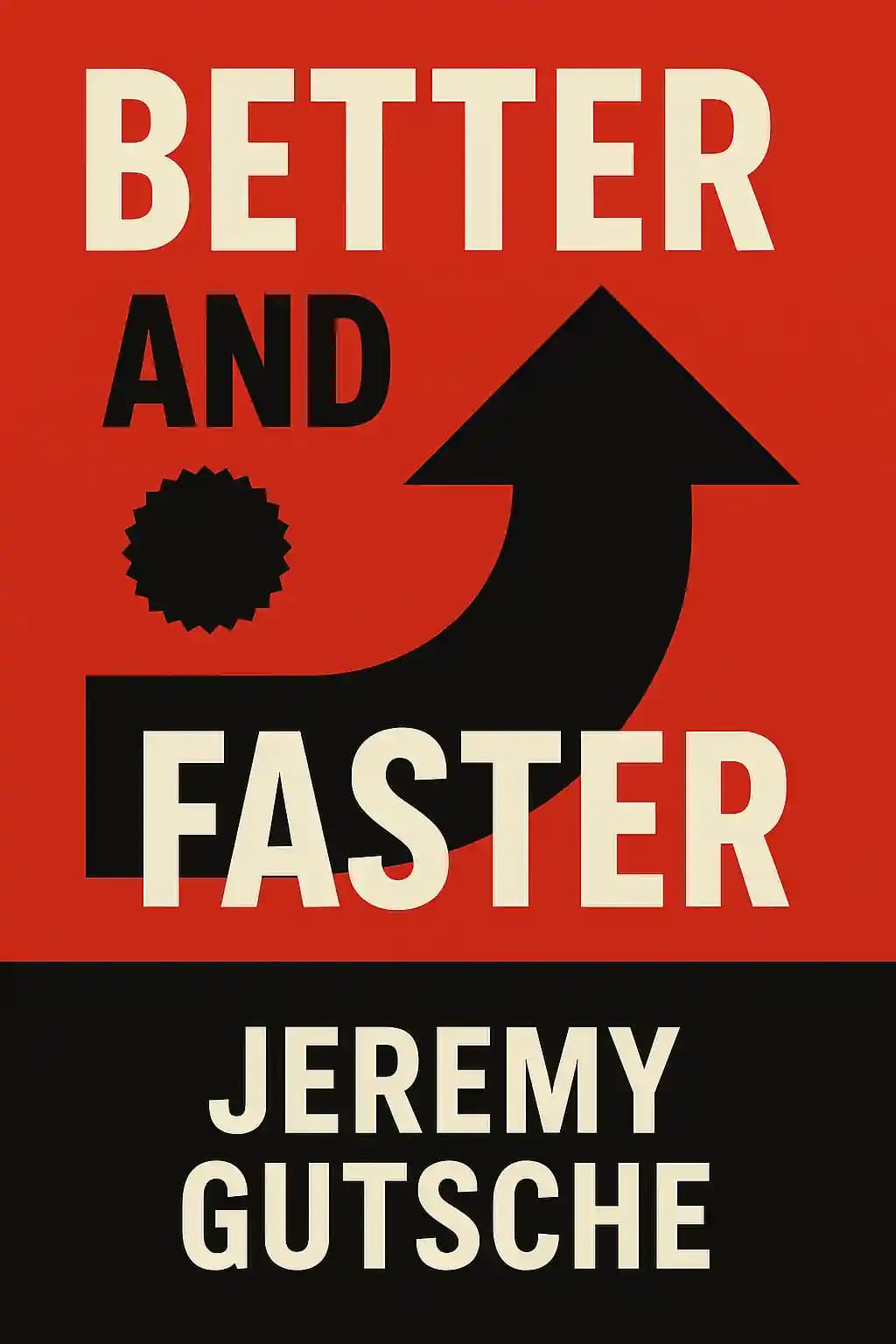
In a small first-grade classroom in California, a young boy named Robert Lang discovered an origami book that would change his life-and eventually save others. What began as folding simple paper cranes evolved into revolutionary engineering solutions for NASA, automakers, and medical devices. Lang's genius wasn't just mastering the ancient art of paper folding; it was seeing connections between seemingly unrelated fields that others missed. This pattern-recognition ability-connecting origami to engineering, mathematics, and medicine-exemplifies the core message of Jeremy Gutsche's "Better and Faster": true innovation happens when we break free from established patterns and connect ideas others don't see. The book, which has become required reading at Fortune 500 companies and was named a New York Times bestseller within its first week, draws from Gutsche's experience analyzing over 250,000 innovations with his trend-spotting firm Trend Hunter, which has attracted over 3 billion views from innovation-seeking professionals worldwide.
We live in an era of unprecedented opportunity, yet most of us remain trapped by our evolutionary programming. For 10,000 years-roughly 500 generations-humans have been farmers, neurologically wired to repeat successful patterns. Once we find fertile ground, we instinctively farm it, creating rules and procedures to protect what works. This farming mindset served humanity well for millennia but leaves us unprepared for today's rapid changes.
Consider Roy Raymond, the Stanford business graduate who founded Victoria's Secret after experiencing discomfort buying lingerie for his wife in a department store. His concept-a lingerie shop where men could comfortably purchase gifts-initially thrived, generating $500,000 in first-year sales. Yet Raymond missed a crucial insight: women buy most lingerie for themselves, not for men's pleasure. When Leslie Wexner purchased the struggling business, he repositioned everything for female consumers, transforming it into a $6 billion megabrand while Raymond's next ventures failed. Raymond's story illustrates classic farmer traps: complacency with initial success, repetitive thinking, and overprotection of beliefs.
Contrast this with Amancio Ortega, the reclusive billionaire behind Zara. Despite being one of the world's richest people, Ortega maintains a modest lifestyle-wearing the same blue outfit daily and eating in his company cafeteria. Zara revolutionized fashion retail through unprecedented speed, converting designs to store-ready products in just fourteen days versus the industry's typical months-long timeline. Their strategy includes local manufacturing, unfinished "greige" textiles that can be dyed last-minute, and limited inventory that creates urgency among shoppers. Unlike farmers who protect established patterns, Ortega remains insatiable, constantly seeking improvement and new opportunities.
Capítulo 2
Farmer Traps and Hunter Instincts: Breaking Free from Complacency
Success often triggers the very traps that hold us back. To avoid them, we must understand both the farmer traps and their corresponding hunter instincts.
Complacency destroys even mighty companies. Smith Corona, once a half-billion-dollar innovator that created spell checkers and laptop word-processors, fatally dismissed personal computers as a passing trend. Similarly, BlackBerry's focus on corporate security blinded it to the consumer market, allowing Apple and Samsung to eventually dominate both sectors. Success often breeds a dangerous complacency where people recklessly "play with the house's money."
To counter complacency, hunters cultivate insatiability-the primal drive to constantly seek the next opportunity. Richard Fairbank, Capital One's founder, built an "innovation machine" by obsessively testing thousands of financial experiments. His insatiable focus on data and personalization transformed banking from one-size-fits-all to customized offerings. Capital One's culture promoted constant adaptation, experimentation over hierarchy, and relentless customer focus.
Farmers rely on consistent routines each season-planting, tending, harvesting-never deviating from proven patterns. Similarly, companies like Blockbuster become trapped by their success, optimizing and replicating what works until they can't adapt. Despite multiple opportunities to buy Netflix, Blockbuster remained committed to its franchise model, eventually declaring bankruptcy while Netflix soared to $26 billion.
Breaking free from repetition requires cultivating curiosity. Ron Finley, a fashion designer from South Central LA, exemplifies this hunter trait. Rather than abandoning his troubled neighborhood for Beverly Hills, his curiosity led him to notice the proliferation of liquor stores and fast food creating a "food desert." Finley taught himself gardening and planted vegetables on city-owned strips, eventually founding LA GreenGrounds despite bureaucratic resistance.
Jake Bronstein's journey further demonstrates curiosity-driven success. After being fired from FHM magazine, he launched Zoomdoggle to pursue creative experiments. One experiment led to Buckyballs-magnetic balls that generated $50 million in revenue before regulatory issues shut them down. Undeterred, Bronstein next created Flint and Tinder, an American-made clothing company whose Kickstarter campaigns broke records, selling $291,493 in boxer shorts and over $1 million in hoodies.
Protectiveness blinds companies to innovation. Steven Sasson invented the digital camera for Kodak in 1976, predicting memory cards and image sharing, but management dismissed it to protect their film business. By the time they finally invested in digital technology, it was too late-Kodak declared bankruptcy in 2012.
To counter protectiveness, hunters must willingly destroy what works. Chef Eric Ripert, who earned four New York Times stars at 29 and maintains three Michelin stars, exemplifies this approach. Unlike chefs who rely on signature dishes, Ripert removes popular items from his menu to avoid stagnation, believing a signature dish means "your success is in the past" and "you're not being creative anymore." Though uncomfortable, destruction enables unrestricted creativity, flexibility, and depth that keeps innovators ahead.
Capítulo 3
Raising a Hunter: Learning from Serial Entrepreneurs
The author's father Sig exemplified hunter instincts from childhood. Growing up in a tiny house, he started selling unsold produce at eight, later expanding to door-to-door delivery of various goods. By sixteen, he'd leased a nightclub venue. Throughout his fifty-year career, Sig consistently found value in neglected business opportunities, using his natural charisma to connect with people across social strata.
When Sig became the de facto owner of the struggling Calgary Stampeders football team after extending them a loan, he faced a momentous decision. Despite the team bleeding $2 million annually with only 13,000 fans per game, he saw untapped potential where others saw failure. Applying his entrepreneurial instincts, Sig transformed the stadium experience by leveraging untapped advertising opportunities, hosting concerts, and making games social events. By positioning the team as lovable underdogs and creating a sense of urgency about their survival, he doubled attendance within months.
Growing up in rural Alberta, the author inherited his father's hunter instincts. Together they'd devour magazines and newspapers, constantly analyzing new products and business ideas. While other boys collected hockey cards, young Jeremy clipped photos of gadgets and kept a red notebook of business ideas-a precursor to his future Trend Hunter website. This "Hogwarts School for Entrepreneurship" upbringing instilled three hunter instincts: insatiable curiosity about new ideas, perpetual questioning, and willingness to destroy and rebuild rather than becoming attached to any single creation.
To awaken your inner hunter, you must recognize when complacency creeps in. Like a lion resting under a tree while hyenas encroach on its territory, successful companies often lose their hunger after achieving dominance. The modern business world demands adaptation-hunters must constantly scan for opportunities, reassess signals, and develop new patterns. Size doesn't matter; speed and customer understanding do.
Capítulo 4
Convergence and Divergence: Creating Value Through Combination and Rebellion
To find revolutionary ideas faster than competitors, you need to know where to hunt and how to leverage environmental momentum. Through Trend Hunter's analysis of a quarter-million ideas and billions of consumer choices, they've discovered that across all industries, opportunity follows six major patterns: convergence, divergence, cyclicality, redirection, reduction, and acceleration.
Convergence creates winning businesses by combining multiple products, services, or trends. Successful convergence requires thoughtful integration that creates genuine value, not just forcing awkward combinations.
Kyla Gutsche, an Oxford art history scholar, discovered this pattern after being diagnosed with ovarian cancer. While battling cancer, she found that losing her eyebrows particularly affected her sense of normalcy. Her attempts to get tattooed eyebrows resulted in disasters-first comically asymmetrical ones from hospital staff, then problematic ones causing allergic reactions during an MRI.
Forced to reconsider her life path, Kyla embraced the hunter mindset during this difficult transition. Though she knew nothing about tattooing or plastic surgery, she became passionate about creating better restorative tattoos. She studied under plastic surgeons, tattoo artists, and micro-pigmentation specialists across London, Vancouver, and Paris, even apprenticing with a Japanese ink master revered by Yakuza gangsters.
For her second breakthrough, Kyla needed to replicate human skin colors. She drew on her art history knowledge, specifically from Titian, the sixteenth-century master painter known for his luminous skin tones. By combining micro-pigmentation advances, prison tattooing techniques, and Titian's centuries-old methods, she launched Cosmetic Transformations, helping thousands of cancer patients, movie stars, veterans, and attack victims.
Dave Dahl's story further illustrates convergence. A former meth addict and convict, he transformed his life by returning to his family's bakery business after prison. Dave worked hundred-hour weeks, experimenting with recipes that became "Dave's Killer Bread"-nutrient-dense loaves packed with seeds that quickly gained distribution in major grocery chains. Dave's Killer Bread succeeded by converging multiple trends: the bad-boy redemption narrative, prison-culture fascination, social entrepreneurship, organic local sourcing, eco-manufacturing, and living wages.
Divergence represents products and services designed to oppose or break free from the mainstream, extending beyond rebellion to include personalization, customization, status, and luxury. Modern culture celebrates rebellious thinkers and counterintuitive ideas.
David Horvath's rebellious doodle of an ugly, cartoonish monster during art class caught the attention of his crush Sun-Min Kim, sparking both romance and business opportunity. When Kim was forced to return to Korea after graduation, Horvath's love letters featuring the character "Wage" inspired her to create a handmade doll version as a gift. After a friend ordered twenty for his Japanese pop-culture shop, demand exploded.
Rejecting mainstream distribution channels, Horvath marketed directly to quirky boutiques, growing to 2,500 locations by 2005. The Uglydolls' deliberate imperfection tapped into a powerful backlash against impossible beauty standards, attracting celebrity collectors and generating $100 million in annual revenue by 2012.
Red Bull's marketing strategy was built on being intentionally subversive and nonconformist. They set outrageous pricing (3-6 times that of Coca-Cola) and targeted a "state of mind" rather than demographics with the simple slogan "Red Bull gives you wings." When authority figures railed against Red Bull, it only increased the drink's appeal to youth. Even when faced with potential bans after teenagers mixed Red Bull with alcohol, the company turned government-mandated warning labels into effective marketing tools.
Capítulo 5
Cyclicality and Redirection: Leveraging Patterns and Channeling Forces
Cyclicality represents predictably recurring opportunities in retro trends, nostalgia, economic cycles, seasonality, and generational patterns. Like sea turtles that appear to wander randomly but actually follow precise 12,000-mile migration patterns, business opportunities often follow predictable cycles that are only obvious in retrospect.
In 2006, during a luxury-loving economic boom, Shu Uemura's artistic director created diamond-encrusted eyelashes for Madonna. Rather than just celebrating this celebrity connection, Uemura recognized a commercial opportunity and immediately stocked Neiman Marcus with $10,000 diamond lashes. More brilliantly, he simultaneously launched $25 faux versions for mainstream consumers, driving the company to approximately $100 million in annual revenue.
By December 2007, Trend Hunter's algorithms detected luxury losing appeal, prompting publications like "Bling Bling Boring" months before the market collapsed. While many freeze during downturns, these periods create tremendous entrepreneurial opportunities. Disney, CNN, MTV, Microsoft, Apple, and dozens of iconic firms launched during recessions.
Twenty-two-year-old Sophia Amoruso discovered her entrepreneurial calling when she began selling curated vintage clothing on eBay. After facing sabotage from jealous competitors, Amoruso recognized eBay's limitations and launched NastyGal.com in June 2008. Her timing proved perfect as the economic downturn stigmatized luxury while elevating interest in vintage clothing. While established retailers cut back conservatively during the recession, Amoruso expanded aggressively, filling a market gap by offering well-photographed vintage fashion to credit-crunched young women without access to trendy urban vintage shops. Over the next four years, NastyGal became America's fastest-growing retailer, with revenues soaring to an estimated $128 million in 2012.
In 1858, Hiram Walker built a whiskey distillery across the Canadian border from Detroit. His "Club Whiskey" branding played off the gentlemen's clubs trend, dominating both Canadian and American markets. When American competitors forced labeling of country of origin, Walker brilliantly rebranded as "Canadian Club Whisky," turning the requirement into a luxury advantage. The brand thrived through Prohibition as Al Capone's smuggled whiskey of choice and remained popular through the 1960s. But by 2005, sales had plummeted 50%. Under new ownership by Beam Inc., Canadian Club orchestrated a brilliant retro revival with a fictional "Badass Gentleman" character celebrating the brand's bootlegging heritage. By mining gold from its colorful past and emphasizing authentic storytelling, Canadian Club breathed new life into its declining brand.
Redirection is the art of channeling the power of existing trends, behaviors or needs rather than fighting against them. This approach includes techniques like refocusing, reprioritizing, rationalizing, reversing, and gamifying.
Amsterdam's water utility Waternet faced a unique problem: during Queen's Day celebrations, drunken revelers would urinate in canals, contaminating the city's drinking water. Rather than fighting this unstoppable behavior with fines, Waternet redirected it by creating "Potje Pissen" (meaning "piss off"), a competitive urinal game system that rewarded good aim. The game turned misbehavior into diligence by making proper urination fun and competitive.
Frederick the Great of Prussia couldn't convince his subjects to eat potatoes until he declared them royal vegetables, forbidden to commoners but grown in poorly guarded royal gardens. This reverse psychology made the once-rejected food desirable. Similarly, when McDonald's faced damaging rumors, their initial #McDStories Twitter campaign backfired spectacularly, becoming a "bashtag" filled with complaints. Learning from this, they launched "Your Questions Answered," where employees authentically responded to customer concerns through videos.
Diamonds weren't always considered precious or associated with romance. Despite being common carbon that can be lab-manufactured to superior quality, De Beers transformed these stones into symbols of eternal love through masterful redirection. When diamond demand plummeted in the early 20th century, De Beers hired N.W. Ayer & Son to create emotional associations between diamonds and romance. Through celebrity endorsements, product placement, and royal publicity, they manufactured desire. By 1947, they sought to make diamonds "a psychological necessity," culminating in the iconic slogan "A diamond is forever."
Capítulo 6
Reduction and Acceleration: The Power of Simplicity and Enhancement
Reduction focuses on the power of simplicity and niche specialization. While conventional wisdom suggests "bigger is better," many successful businesses thrive by focusing on smaller, more targeted concepts.
Josh Opperman turned personal heartbreak into business opportunity after discovering the poor resale value of diamond rings. When his fiancee left him, jewelers offered only a third of his $10,000 ring's retail value. Researching alternatives to pawnshops, eBay and Craigslist (which had drawbacks including scams and fake merchandise), Opperman and his sister launched I Do Now I Don't in 2007. The site quickly became the largest marketplace for unwanted engagement rings, offering sellers more than half of retail value while providing buyers significant discounts.
Fiverr demonstrates how a small idea can become massive through simplification. Founded in 2009 by Micha Kaufman and Shai Wininger, the site created a marketplace for micro-tasks starting at just $5. Their insight was eliminating the friction in hiring freelancers-no negotiation, contracts, or complex processes. Everything was designed for simplicity: transactions taking under 30 seconds, fixed pricing, and a five-minute service delivery goal. Within three years, Fiverr listed over 2 million services across categories like advertising, graphics, programming and writing, becoming one of the world's 200 most popular websites.
Jack Dorsey's fascination with simplifying complex systems began in childhood, where he coded taxi dispatching software at just fourteen years old. After hacking into Dispatch Management Services Corp to demonstrate his solutions, he was hired immediately. While working at podcasting startup Odeo, Dorsey conceived a text messaging broadcast system that became Twitter. Founded on principles of "simplicity, constraint, and craftsmanship," Twitter grew to half a billion users with its revolutionary 140-character communication format.
After being removed from Twitter's leadership, Jack Dorsey found new inspiration when his friend James McKelvey couldn't accept credit card payment for his glasswork. Recognizing a widespread problem for small vendors, Dorsey applied his simplification pattern to payment processing. The result was Square-a free card reader that attaches to smartphones with no installation fees or monthly charges. Within just three years, Square was processing $15 billion in annual transactions.
Acceleration involves identifying a critical feature of a product or business and dramatically enhancing it, even at the risk of alienating some customers. This pattern requires taking an extreme position based on market insights.
Will Dean, a former counterterrorism worker with Britain's Foreign Office, created Tough Mudder by accelerating the concept of obstacle racing. Though he was late to the party with events like Tough Guy already in its twenty-seventh year, Dean created an even more intense military-style adventure where participants would bond over shared ordeals rather than compete against each other's times. Despite skepticism from Harvard Business School judges who doubted he'd find 500 willing participants, Dean's first event attracted 4,500 people paying over $100 each. Within two years, Tough Mudder grew into a $70 million company with over a million participants.
Nicole DeBoom, a professional triathlete, transformed women's athletic wear by creating running skirts after noticing how traditional running shorts made women look masculine. Realizing she could be more motivated if she felt pretty while running, she designed prototypes and won the Ironman Wisconsin wearing one of her creations. She invested her $5,000 prize into her company, Skirt Sports, which quickly sold out at the Austin Marathon. The concept was polarizing-generating both love notes and hate mail-which DeBoom saw as evidence she'd struck a nerve.
Capítulo 7
Finding Your Hunting Ground: Identifying Opportunity Clusters
Having awakened your inner hunter and learned the patterns of opportunity, you're now equipped to find better ideas faster. The key is narrowing your focus to opportunities that are profitable yet not obvious to competitors. This requires targeting trends that are neither too big (like eco or social media) nor too small (fleeting fads), while avoiding the familiar territory your brain naturally farms.
The key to discovering great business ideas is finding opportunity clusters-groups of products or concepts following similar patterns that signal deeper consumer needs. The energy drink market exemplifies this: Red Bull pioneered a divergent approach to caffeine delivery, followed fifteen years later by Monster Energy and Rockstar. While major soda companies missed this trend, companies like Living Essentials (5-hour ENERGY) and Gu Energy Labs recognized the "caffeine ubiquity" cluster, creating innovative delivery systems from shots to gel packs.
When developing a new business concept, Gutsche recommends a seven-step trend-spotting workshop approach rather than relying on gut instinct. The process includes awakening your hunter instincts, establishing a hunting ground through research, searching related concepts, pushing boundaries with unrelated inspiration, collecting and clustering ideas, rejecting obvious first concepts, and applying the six patterns of opportunity.
During the Cold War, IBM accelerated public perception of its computing power by challenging chess champion Garry Kasparov with its Deep Blue computer. After eight years of development, Deep Blue initially lost to Kasparov, but its successor, Deeper Blue, narrowly defeated him in a rematch. Seven years after Deep Blue, IBM created Watson to tackle an even greater challenge: defeating Jeopardy! champion Ken Jennings. Unlike traditional programming with rigid rules, Watson was designed to learn by analyzing patterns across 200 million pages of content. After seven years of development, Watson decisively defeated champions Brad Rutter and Ken Jennings on national television.
Robert Hintz, unemployed and living in a tent, conceived BeautifulPeople.com after noticing attractive people on dating sites were overwhelmed with messages. His divergent approach: create an openly elitist dating site where existing members vote on applicants' attractiveness, rejecting four out of five. Despite entering a saturated market dominated by billion-dollar companies, Hintz's provocative concept thrived. The site's managing director embraced controversy with headlines like "Ugly People Forbidden" and released politically incorrect statistics comparing nations' attractiveness. The resulting media firestorm attracted 750,000 paying members and corporate sponsors.
Capítulo 8
Tracking Industry Evolution: Learning from Cross-Market Patterns
To anticipate change, we must look beyond our own industry to understand broader shifts in customer behavior. Studying multiple markets helps internalize these shifts-noticing a retro 1980s dress might connect to vintage-style beer ads, revealing cyclical opportunities across industries.
Fashion serves as an early indicator of consumer trends due to its rapid pace, competitive nature, and cultural responsiveness. Around 2000, fashion was competitive but styles were more consistent, with giant production runs and big media campaigns reducing variety. Today, divergence and personalization dominate, with fast-fashion retailers like Zara and H&M offering tens of thousands of items, shattering conventional retail wisdom. Looking forward, technology convergence will accelerate, bringing wearable tech, interactive changing rooms with augmented reality, and cross-industry collaborations.
Technology leadership rotates approximately every decade, as demonstrated by the hard drive industry. From 1980 to 1990, market leaders changed completely multiple times as drive sizes evolved from 14-inch to 2.5-inch formats. Despite the seemingly inevitable evolution toward smaller drives, industry leaders consistently failed to adapt. Today, technology has become integral to every aspect of life and business success. We're entering the age of wearable and embedded technologies, with bionic enhancements to human senses and omnipresent access to information.
The retail landscape has transformed dramatically. In the late 1990s, retail was dominated by big-box stores competing on selection and price. Today, companies are urgently upgrading store layouts, technology, and branding to emulate successful retailers like Starbucks, Urban Outfitters, and Apple. Looking forward, retailers will invest heavily in technology and physical spaces to create deep cultural experiences for niche customers-their best defense against e-commerce.
The internet and mobile technology have shifted media power from major broadcasters to millions of individual content producers, forcing traditional media to adapt or die. Meanwhile, corporations themselves have become media companies. Television broadcasters must develop immersive experiences like virtual reality, 3D, and interactive content to protect themselves from streaming services. Every company is becoming a publisher and broadcaster-brands like Red Bull have already pioneered this transition, creating their own media houses rather than merely advertising.
Capítulo 9
Cultivating Innovation: Strategies for Sustained Success
Companies typically adopt one of three attitudes toward change: confidence, desperation, or paranoia. Counterintuitively, confidence can inhibit adaptation by suppressing urgency, while desperate companies innovate knowing the status quo won't save them. Even highly successful companies like Google maintain "good paranoia," constantly experimenting and cannibalizing their own products to stay ahead.
To fight success-bred complacency, you must remain insatiably curious, open to intentional destruction, and just a little bit paranoid. As Bill Gates noted, "Success is a lousy teacher." The hunter's path is not always comfortable, but it leads to breakthrough innovation and sustained success in a world of accelerating change.
The only real certainty in life is change. By awakening your inner hunter and recognizing patterns, you become better equipped to adapt and thrive amid this constant change. Success begins with avoiding the three farmer traps and pivoting toward hunting for the six patterns of opportunity.
Though we may often feel randomly off course, paying attention to the patterns around us helps us find our way. The author leaves us with three guiding principles: be curious, be willing to destroy, and be insatiable. These hunter instincts, combined with an understanding of the six patterns of opportunity, provide a framework for finding better ideas faster in our rapidly changing world.
Remember that adversity often creates opportunity by destroying complacency. To awaken your inner hunter, you must recognize when complacency creeps in. Like a lion resting under a tree while hyenas encroach on its territory, successful companies often lose their hunger after achieving dominance. The modern business world demands adaptation-hunters must constantly scan for opportunities, reassess signals, and develop new patterns. Size doesn't matter; speed and customer understanding do.
Capítulo 10
Embracing Disruption: Turning Adversity into Advantage
Remember that adversity often creates opportunity by destroying complacency. Companies typically adopt one of three attitudes toward change: confidence, desperation, or paranoia. Counterintuitively, confidence can inhibit adaptation by suppressing urgency, while desperate companies innovate knowing the status quo won't save them. Even highly successful companies like Google maintain "good paranoia," constantly experimenting and cannibalizing their own products to stay ahead.
To fight success-bred complacency, you must remain insatiably curious, open to intentional destruction, and just a little bit paranoid. As Bill Gates noted, "Success is a lousy teacher." The hunter's path is not always comfortable, but it leads to breakthrough innovation and sustained success in a world of accelerating change.
The only real certainty in life is change. By awakening your inner hunter and recognizing patterns, you become better equipped to adapt and thrive amid this constant change. Success begins with avoiding the three farmer traps and pivoting toward hunting for the six patterns of opportunity.
Though we may often feel randomly off course, paying attention to the patterns around us helps us find our way. The author leaves us with three guiding principles: be curious, be willing to destroy, and be insatiable. These hunter instincts, combined with an understanding of the six patterns of opportunity, provide a framework for finding better ideas faster in our rapidly changing world.
When developing a new business concept, Gutsche recommends a seven-step trend-spotting workshop approach rather than relying on gut instinct. The process includes awakening your hunter instincts, establishing a hunting ground through research, searching related concepts, pushing boundaries with unrelated inspiration, collecting and clustering ideas, rejecting obvious first concepts, and applying the six patterns of opportunity.
To awaken your inner hunter, you must recognize when complacency creeps in. Like a lion resting under a tree while hyenas encroach on its territory, successful companies often lose their hunger after achieving dominance. The modern business world demands adaptation-hunters must constantly scan for opportunities, reassess signals, and develop new patterns. Size doesn't matter; speed and customer understanding do.