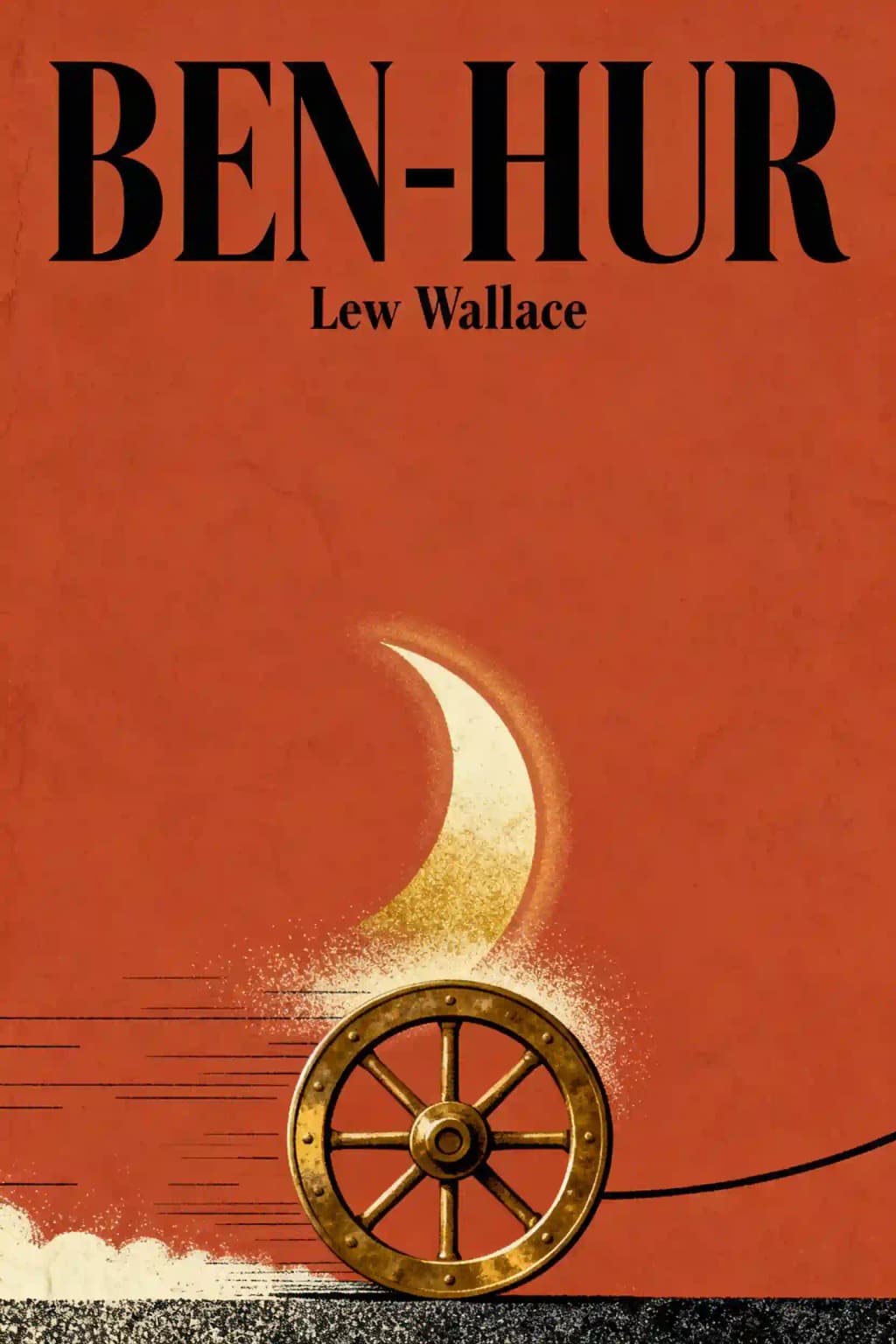
Capítulo 4
From Slave to Champion: The Rebirth of Judah Ben-Hur
For three years, Ben-Hur endures the living hell of the Roman galleys, chained to an oar and forced to row in conditions that break most men within months. The galley slaves work in shifts of six hours, their backs scarred by whips, their hands calloused and bleeding from the endless rowing. Through this ordeal, Ben-Hur's survival depends on two powerful forces: his burning desire for revenge against Messala and his unwavering faith that his mother and sister might still live. Unlike his fellow slaves who succumb to despair, he maintains a dignified bearing that catches the attention of Roman commander Quintus Arrius, who recognizes something extraordinary in this Jewish slave's demeanor.
When Arrius questions him about his circumstances, Ben-Hur's responses reveal both his noble heritage and his steadfast claim of innocence. The commander, known for his shrewd judgment of character, is particularly struck by Ben-Hur's refusal to embrace bitterness despite his unjust imprisonment. In a rare act of trust, Arrius orders Ben-Hur's chains removed before a major naval battle - a decision that will alter both their destinies.
The battle against pirates proves catastrophic when their vessel is rammed and splintered. Both men are thrown into the Mediterranean's churning waters. Despite having every reason to flee and leave his former captor to drown, Ben-Hur makes the moral choice to save Arrius. Through the long night, he supports the injured commander in the water, fighting exhaustion and rough seas until Roman rescue ships finally spot them at dawn. This act of mercy - from a man who had every justification to hate Romans - profoundly affects Arrius, leading him to adopt Ben-Hur as his son upon their return to Rome.
Under Arrius's patronage, Ben-Hur receives a comprehensive Roman education, studying philosophy under stoic masters, military strategy from veteran commanders, and athletics with particular emphasis on chariot racing - a skill that will prove crucial to his future. He learns to navigate Roman politics and society, accumulating wealth and influence while steadfastly maintaining his Jewish identity. Throughout his rise in Roman society, he never abandons his quest to uncover his family's fate.
Five years pass before Ben-Hur returns to the East, now a Roman citizen of considerable means and influence. In Antioch, he hears rumors of Simonides, his father's former servant who has become a prominent merchant despite severe physical disabilities. Hoping for news of his family, Ben-Hur visits the crippled businessman and meets his daughter Esther, whose beauty and gentle spirit immediately capture his attention. Though Simonides initially receives him with caution - having learned harsh lessons about trust - he eventually reveals an extraordinary truth: he has been secretly managing the Hur family fortune all these years, expanding it through shrewd trading ventures while awaiting the rightful heir's return. His loyalty proved unshakeable even when Roman authorities twice tortured him, breaking his body but not his spirit, as he protected his master's wealth. This faithfulness was sustained by his deep loyalty to the Hur family and his fervent hope that someday a Hur would return to reclaim their legacy.
Capítulo 5
The Chariot Race and the Price of Revenge
Fate soon brings Ben-Hur face-to-face with Messala once more. At Antioch's famous chariot racing track, he witnesses his former friend-now a celebrated charioteer-nearly causing an accident with his reckless driving. When Messala almost crashes into a camel carrying the wise man Balthasar and his daughter Iras, Ben-Hur intervenes, displaying his remarkable strength by stopping the horses. This incident leads to his meeting with Sheik Ilderim, an Arab horse breeder desperate to defeat the Romans in the upcoming races.
Recognizing an opportunity for both vengeance and justice, Ben-Hur agrees to drive Ilderim's magnificent Arabian horses against Messala. He trains rigorously, mastering the team while Simonides arranges extraordinary wagers against Messala-forcing the arrogant Roman to bet six times the standard amount. The entire city buzzes with anticipation as race day approaches, with tensions between Jews and Romans reaching a fever pitch.
The race itself unfolds as a masterpiece of strategy and skill. For six laps around the circus, Ben-Hur patiently maintains position behind Messala, studying his techniques while preserving his horses' strength. In the final lap, when Messala believes victory is assured, Ben-Hur unleashes his team's full power. As they battle for position on the final turn, Ben-Hur executes a dangerous maneuver, allowing his lower chariot hub to catch Messala's wheel spokes. The Roman's chariot shatters spectacularly, leaving Messala trampled and crippled for life while Ben-Hur races to victory.
Though he has achieved his revenge, Ben-Hur finds it brings little satisfaction. Messala, humiliated and financially ruined by the massive gambling losses, attempts one final act of vengeance by hiring assassins to kill Ben-Hur. When this plot fails, Messala reveals a devastating truth: Ben-Hur's mother and sister were imprisoned in a hidden cell beneath the Antonia Fortress all these years. Now, having contracted leprosy during their confinement, they have been released to die slowly in the Valley of the Lepers outside Jerusalem.
Capítulo 6
The Search for Healing and Purpose
Returning to Jerusalem, Ben-Hur's grief and rage intensify as he walks the familiar streets that now feel alien to him. He reclaims his family's ancestral home - once a symbol of prominence and joy - but finds only hollow rooms and dust-covered memories. His solitude is broken by an extraordinary discovery: faithful Amrah, their former servant, has survived all these years in the sealed house, sustaining herself on rainwater and whatever food she could gather, while holding onto hope that the family would one day return.
This reunion brings both comfort and renewed determination. Together, Ben-Hur and Amrah begin a methodical search through Jerusalem's outskirts for his mother and sister. Their efforts lead them to the Valley of Hinnom, where lepers are banished to live in caves and ruins. In one of the novel's most emotionally devastating scenes, Ben-Hur finally locates his family, but can only watch from a distance as his mother raises her hands in warning, crying out "Unclean! Unclean!" She absolutely refuses to let him approach, her maternal love expressing itself through this cruel necessity of separation. The scene becomes even more heartrending when she extracts a promise from Amrah to maintain silence about their condition, preferring that her son remember them as the noble women they once were rather than the afflicted outcasts they've become.
This profound tragedy transforms Ben-Hur's existing resentment toward Rome into an all-consuming mission for vengeance. He channels his pain into action, systematically building a network of resistance fighters in the desert. Drawing on his experience in the Roman military, he trains them in advanced combat techniques, while gathering intelligence about Roman fortifications and troop movements. Simonides, now a wealthy merchant, becomes his chief strategist and financier, secretly channeling resources to arm and equip the growing force. Sheik Ilderim, impressed by Ben-Hur's character and sharing his hatred of Rome, provides sanctuary in his territories and contributes his tribe's legendary horsemanship to the cause.
Ben-Hur increasingly fixates on ancient prophecies about the Messiah, interpreting them through a lens of military liberation. He envisions himself as the sword of God, ready to serve as general to a divine warrior-king who will sweep away Roman oppression and restore Jewish sovereignty. This dream sustains him through months of preparation and planning.
The appearance of John the Baptist along the Jordan River sends ripples through Jerusalem. His fierce proclamations about preparing for the Kingdom of God align with Ben-Hur's expectations, drawing him to investigate. However, the moment John identifies Jesus of Nazareth as "the Son of God" triggers an unexpected crisis of faith in Ben-Hur. He recognizes Jesus as the compassionate stranger who offered him water during his darkest hour years ago - a memory that stands in stark contrast to his vision of a conquering messiah. This gentle figure, with his message of peace and forgiveness, forces Ben-Hur to question everything he has come to believe about justice, revenge, and the true nature of divine deliverance.
Capítulo 7
The Miracle and the Ultimate Sacrifice
As Jesus's ministry grows, Ben-Hur witnesses incredible miracles: water turned to wine, thousands fed with minimal provisions, the blind given sight, lepers cleansed, and even the dead restored to life. Despite possessing such power, Jesus shows no interest in claiming earthly authority or wealth. When Ben-Hur's followers attempt to crown him king, Jesus simply walks away. This confounds Ben-Hur, who cannot reconcile Jesus's supernatural abilities with his apparent disinterest in political revolution.
When Amrah learns that Jesus heals lepers, she secretly brings Ben-Hur's mother and sister to the road where Jesus will pass. As the crowd shouts "Blessed is the King" and waves palm branches, Jesus stops before the kneeling women. With simple faith, the mother pleads, "You can make us clean." Jesus responds, "Woman, great is your faith. Be it as you wish." Instantly, their disease vanishes-their bodies restored to health after eight years of suffering. Ben-Hur, witnessing this miracle from the crowd, joyfully reunites with his family, overcome with gratitude toward the man he once offered water to in his own moment of need.
This personal miracle deepens Ben-Hur's devotion to Jesus, though he still struggles to understand the nature of Christ's kingdom. When Jesus is arrested in Gethsemane, Ben-Hur offers to summon his fighters to rescue him, but Jesus's silent look makes clear this is not his path. The next day, as Jesus carries his cross toward Calvary, Ben-Hur discovers that many of his trained soldiers have joined the mob against Christ, convinced by the priests that Jesus must die for blasphemy.
At Golgotha, Ben-Hur watches in anguish as Jesus is crucified. The sky darkens, the earth trembles, and with Jesus's final words-"It is finished"-Ben-Hur finally understands that Christ's mission was never about earthly power but spiritual redemption. In this moment, Balthasar, who witnessed both Christ's birth and death, peacefully passes away, his lifelong search complete.
Capítulo 8
Redemption Beyond Revenge
Five years after the crucifixion, we find Ben-Hur settled into a transformed life with his beloved Esther, with whom he has two children - a son and daughter who represent hope for a new generation raised in Christ's teachings. They have fully embraced the growing Christian movement, converting their palatial home into a gathering place for believers and using their considerable wealth to support persecuted Christians throughout Jerusalem. Their marriage exemplifies the peace that eluded Ben-Hur during his years of seeking vengeance, showing how love can heal even the deepest wounds.
The past resurfaces dramatically when a haggard and dying Iras appears at their door. Once the epitome of Egyptian beauty and cunning, she is now a hollow shadow of her former self. She reveals that she personally killed Messala in Rome - not for Ben-Hur's sake, but out of her own twisted sense of justice and betrayal. The confession comes as both shock and relief, closing a chapter of violence that Ben-Hur had long ago chosen to leave behind. When Esther, embodying the Christian principles she and Ben-Hur now live by, offers Iras shelter and friendship, the Egyptian woman declines with a bitter smile. "I have chosen my path," she declares, "and won't last much longer" - a stark contrast to the redemptive journey Ben-Hur has embraced.
In his final reflections, Ben-Hur contemplates how far he has come from the angry young man who dreamed of leading Christ's army to earthly victory. His "Great Plan" for Jesus as a military messiah now seems naive and worldly, a reflection of his own desire for revenge rather than true understanding. The revolution Jesus actually brought was far more profound - not the clash of swords and thunder of chariots, but the quiet transformation of hearts and souls through love and forgiveness.
Though his role proved humbler than his youthful ambitions imagined, Ben-Hur finds deep fulfillment in serving this greater purpose. He and Esther dedicate themselves to spreading Christ's message throughout Jerusalem and beyond, using their influence to protect the nascent Christian community. Their home becomes a sanctuary where former enemies pray together, and their lives demonstrate the power of forgiveness to break cycles of violence. Ben-Hur's journey from privileged youth to vengeful warrior to humble disciple completes a profound circle of transformation that mirrors the novel's central theme: true freedom comes not from defeating one's enemies but from liberating oneself from hatred's chains.
Through Ben-Hur's epic journey, we witness how personal tragedy can either consume us with bitterness or open us to profound spiritual growth. His story reminds us that even in our darkest moments - whether enslaved in a Roman galley or burning with thoughts of revenge - unexpected encounters can plant seeds of transformation. These seeds, when nurtured by love and faith, can eventually lead us from the destructive path of vengeance to the higher road of redemption and peace.
Capítulo 9
A Tale of Two Kingdoms
The genius of Ben-Hur lies in its masterful juxtaposition of two competing visions of power and salvation. The Roman Empire represents worldly might - military conquest, political domination, and material wealth. This is the kingdom Messala embraces, where strength is measured in legions, wealth in gold, and success in territorial expansion. The Romans view power as a zero-sum game: one must dominate or be dominated, conquer or be conquered. This is the world of the Colosseum, of triumph and humiliation, where mercy is weakness and victory demands blood.
In stark contrast, Jesus offers an alternative kingdom that turns these Roman values upside down. His is a realm based on spiritual transformation, forgiveness, and self-sacrifice - values that seem not merely foolish but dangerously naive by Roman standards. Yet these principles prove more enduring than marble monuments or military victories. While Rome's power depends on external force, Christ's influence works from within, changing hearts rather than territories.
Throughout the narrative, Ben-Hur stands at the crossroads between these kingdoms, embodying humanity's eternal struggle between vengeance and forgiveness. His journey from privileged Jewish prince to galley slave to champion charioteer traces an arc of transformation that goes beyond mere physical survival or social redemption. When he finally witnesses Christ's crucifixion, Ben-Hur confronts the ultimate paradox: true victory often comes through apparent defeat, and real power can manifest in willing powerlessness.
The novel's enduring appeal stems from this universal struggle between our instinct for retributive justice and the challenging path of restorative love. Ben-Hur's personal vendetta against Messala mirrors countless human conflicts - from family feuds to international wars - where cycle of revenge perpetuates suffering. His eventual transformation offers hope that even after betrayal, imprisonment, and loss, healing is possible through a radical reorientation of the heart.
In Ben-Hur's journey, we see reflected our own struggles with power, justice, and meaning. His story reminds us that while empires rise and fall by the sword, the most profound revolutions happen in the human heart. The chariots of war may write history's headlines, but it's the quiet acts of forgiveness that truly change the world. This dual vision - of worldly power versus spiritual transformation - continues to resonate because it speaks to humanity's deepest questions about justice, purpose, and the true nature of victory.