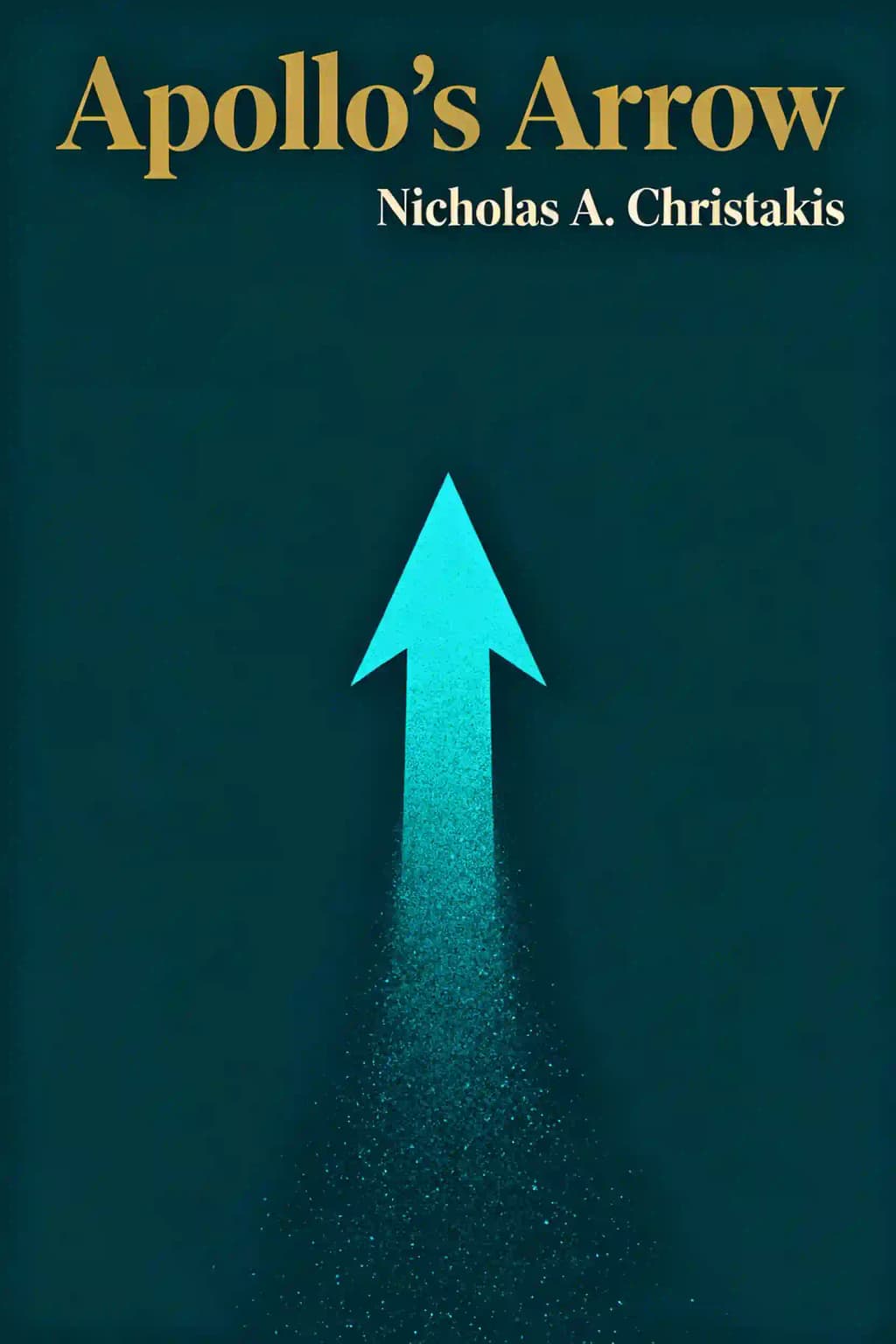
In "Apollo's Arrow," Yale physician-sociologist Christakis delivers the definitive pandemic analysis that Nobel laureate William Nordhaus calls "a powerful formula for understanding." Examining historical patterns while dissecting our COVID response, it's the urgent resource Steven Pinker says "ticks every box of expertise."
Nicholas A. Christakis, physician, social scientist, and New York Times bestselling author of Apollo’s Arrow: The Profound and Enduring Impact of Coronavirus on the Way We Live, brings decades of expertise in network science and epidemiology to this analysis of COVID-19’s societal effects.
A Sterling Professor at Yale University with joint appointments in sociology, medicine, and data science, Christakis draws from his leadership roles at the Yale Institute for Network Science and his groundbreaking research on how biological and social forces shape human behavior. His earlier works—including Connected: The Surprising Power of Our Social Networks and Blueprint: The Evolutionary Origins of a Good Society—established his reputation for blending rigorous science with accessible storytelling about collective human experiences.
Apollo’s Arrow reflects Christakis’ unique perspective as both a physician who trained at Harvard Medical School and a researcher whose work on pandemics has been cited in over 1,000 academic studies. The book was longlisted for the PEN America E.O. Wilson Literary Science Writing Award and informed by his advisory roles with organizations like the World Health Organization. His 2009 Time 100 Most Influential People recognition underscores his authority in connecting scientific insights to global challenges.
Apollo's Arrow examines the COVID-19 pandemic through scientific, historical, and sociological lenses, analyzing its immediate effects and long-term societal impacts. Nicholas A. Christakis explores how viruses shape human behavior, compares COVID-19 to past pandemics, and forecasts societal adaptations post-crisis. The book blends epidemiology, network science, and social dynamics to explain how pandemics test—but don’t destroy—human resilience.
This book is ideal for readers seeking a multidisciplinary understanding of pandemics, including public health enthusiasts, policymakers, and those interested in sociology or history. It appeals to anyone wanting insights into COVID-19’s societal disruptions, historical parallels, and the interplay between biology and human behavior.
Yes, for its comprehensive analysis of COVID-19’s societal impact and historical context. While some reviewers note it lacks groundbreaking predictions for pandemic-era news followers, its synthesis of science, history, and social theory offers enduring value for understanding pandemics’ role in human evolution.
Christakis draws parallels to historical outbreaks like the 1918 flu and the Black Death, emphasizing patterns in human responses:初期 denial, eventual adaptation, and post-crisis societal shifts. He argues that pandemics recurrently expose vulnerabilities but also catalyze innovation in public health and social cooperation.
Key ideas include “catastrophe compassion” (surge in communal support during crises), the biological-social interplay of viruses, and the “frayed collective culture” exacerbated by COVID-19. Christakis also highlights how network science explains transmission patterns and behavioral responses.
Some reviewers argue the book’s rapid publication led to a lack of novel insights for well-informed readers, with a focus on description over bold predictions. Others note optimism about vaccine timelines aged poorly, though the core sociological analysis remains relevant.
As a physician, sociologist, and hospice worker, Christakis combines frontline COVID-19 experience with expertise in network science and historical pandemics. This unique perspective allows him to dissect the pandemic’s medical, emotional, and structural impacts.
Christakis anticipates lasting shifts in telework, urban planning, and public health infrastructure. He also predicts a “post-pandemic rebound” in social connectivity and creativity, mirroring historical recoveries like the Renaissance post-Black Death.
The book critiques politicized responses to COVID-19, particularly the undermining of scientific institutions like the CDC. Christakis argues that effective leadership balances transparency, empathy, and evidence-based decision-making to mitigate crisis-driven societal fractures.
Christakis analyzes how misinformation spreads through social networks, exacerbating fear and distrust. He emphasizes the need for clear communication and community-led education to combat false narratives, citing historical examples of rumor management.
Notable quotes include:
Despite COVID-19’s evolving context, the book remains a vital resource for understanding pandemic preparedness, societal resilience, and the long-term effects of global health crises. Its lessons on misinformation, leadership failures, and adaptive recovery inform ongoing public health challenges.
Sinta o livro através da voz do autor
Transforme conhecimento em insights envolventes e ricos em exemplos
Capture ideias-chave em um instante para aprendizado rápido
Aproveite o livro de uma forma divertida e envolvente
Nursing homes nationwide would become inadvertent "pesthouses" with overwhelmed morgues.
America remained largely oblivious to the looming threat.
The virus spread rapidly during the massive Lunar New Year migration.
This unpredictability in presentation has made containment particularly difficult.
This "virgin soil epidemic" found humanity completely susceptible, with no pre-existing immunity.
Divida as ideias-chave de Apollo's Arrow em pontos fáceis de entender para compreender como equipes inovadoras criam, colaboram e crescem.
Destile Apollo's Arrow em dicas de memória rápidas que destacam os princípios-chave de franqueza, trabalho em equipe e resiliência criativa.

Experimente Apollo's Arrow através de narrativas vívidas que transformam lições de inovação em momentos que você lembrará e aplicará.
Pergunte qualquer coisa, escolha a voz e co-crie insights que realmente ressoem com você.

Criado por ex-alunos da Universidade de Columbia em San Francisco
"Instead of endless scrolling, I just hit play on BeFreed. It saves me so much time."
"I never knew where to start with nonfiction—BeFreed’s book lists turned into podcasts gave me a clear path."
"Perfect balance between learning and entertainment. Finished ‘Thinking, Fast and Slow’ on my commute this week."
"Crazy how much I learned while walking the dog. BeFreed = small habits → big gains."
"Reading used to feel like a chore. Now it’s just part of my lifestyle."
"Feels effortless compared to reading. I’ve finished 6 books this month already."
"BeFreed turned my guilty doomscrolling into something that feels productive and inspiring."
"BeFreed turned my commute into learning time. 20-min podcasts are perfect for finishing books I never had time for."
"BeFreed replaced my podcast queue. Imagine Spotify for books — that’s it. 🙌"
"It is great for me to learn something from the book without reading it."
"The themed book list podcasts help me connect ideas across authors—like a guided audio journey."
"Makes me feel smarter every time before going to work"
Criado por ex-alunos da Universidade de Columbia em San Francisco

Obtenha o resumo de Apollo's Arrow como PDF ou EPUB gratuito. Imprima ou leia offline a qualquer momento.
A virus no wider than a dust mote rewrote human civilization in weeks. By early 2020, a pathogen that had been silently evolving in bat colonies made a fateful leap into human hosts at a crowded Wuhan market-and the world would never be the same. This wasn't humanity's first encounter with catastrophic disease, yet it caught us unprepared, revealing how quickly our interconnected world could unravel. The ancient Greeks understood something we'd forgotten: Apollo, god of healing, also wielded arrows of plague. Disease has always been our companion, yet each generation seems to rediscover this truth with fresh shock. What makes a pandemic not just a biological event but a civilizational rupture? The answer lies not only in viral genetics but in how societies respond when invisible threats expose every fault line we've tried to ignore. Late 2019 brought whispers of unusual pneumonia cases clustering around a seafood market in central China. Dr. Jixian Zhang noticed something wrong-seven patients with identical symptoms, all linked to the same location. Meanwhile, ophthalmologist Dr. Li Wenliang tried warning colleagues about SARS-like cases, only to be silenced by authorities and forced to retract his statements. He would later die from the very disease he'd tried to expose, becoming a symbol of both the virus's danger and the cost of suppressing truth.