Capítulo 1
When the Ordinary Becomes Extraordinary
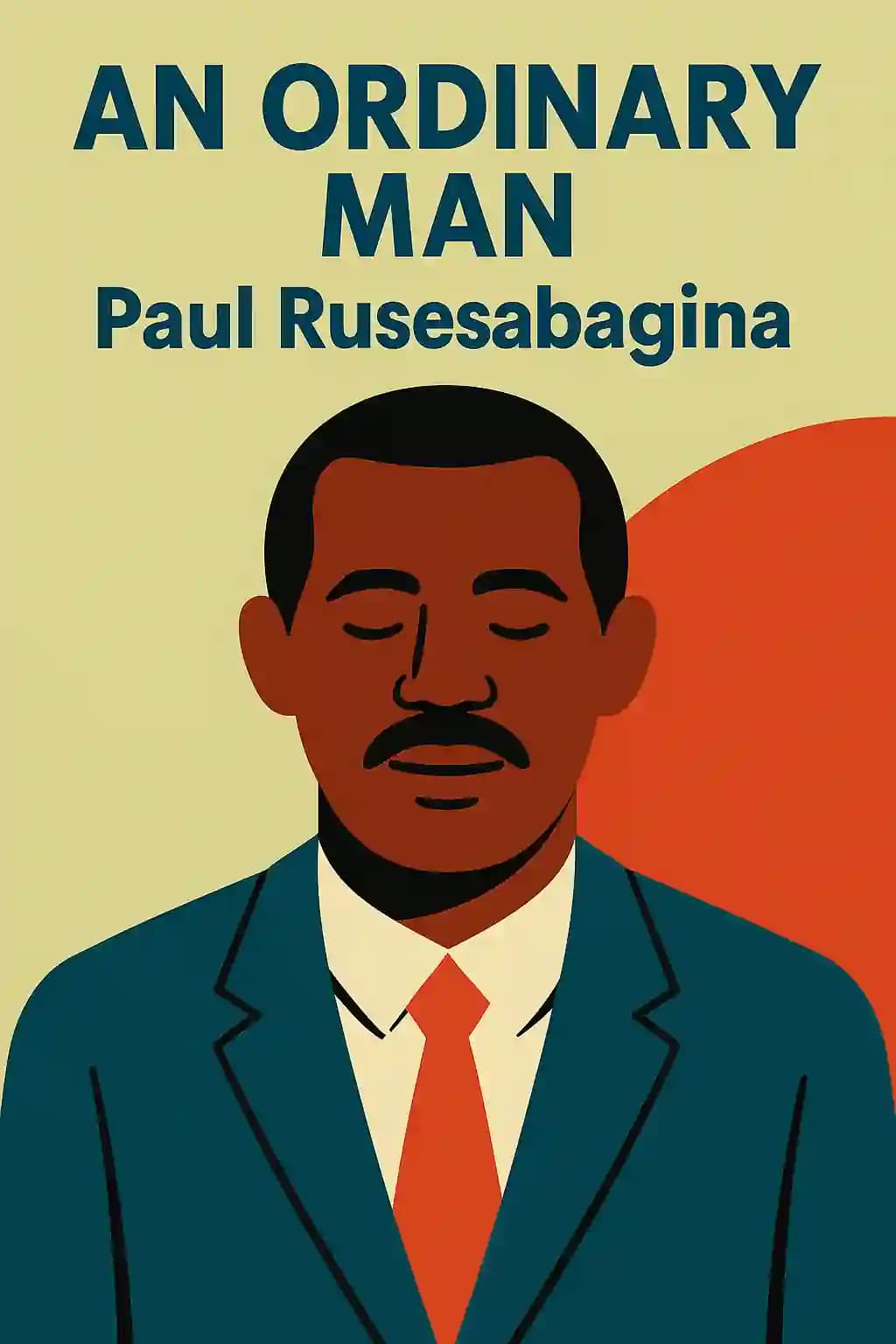
In April 1994, as Rwanda descended into one of history's most brutal genocides, an unlikely hero emerged from behind the front desk of a luxury hotel. Paul Rusesabagina, a hotel manager with no special training beyond hospitality skills, sheltered 1,268 people from certain death using nothing more powerful than words, cognac, and his unwavering sense of human dignity. His extraordinary story, captured in "An Ordinary Man," has become one of the most powerful testimonies of moral courage during genocide. The book and subsequent film "Hotel Rwanda" (which earned three Academy Award nominations) transformed Rusesabagina from an unknown hotelier into an international symbol of everyday heroism. Oprah Winfrey called his story "one of the most powerful I've ever encountered," while President George W. Bush was so moved he watched the film twice and later invited Rusesabagina to the White House. What makes this account particularly remarkable is how Rusesabagina frames his actions not as exceptional bravery but simply as doing his job-providing shelter-even as the world around him collapsed into madness.
Capítulo 2
The Roots of Identity in a Hillside Village
I was born in 1954 on a steep Rwandan hillside, the son of a farmer in a mud and stick house with three small rooms. From our swept courtyard, we could see across the Ruvayaga Valley to the opposite hill with its houses, cattle, and banana trees sparkling in the sun. We spoke Kinyarwanda, naming our world in rich vowels: bird (inyoni), mud (ur-woondo), stones (amabuye), milk (amata). As one of nine children uniquely positioned between siblings, I received special attention from my mother, who taught me daily chores like tending goats and grinding cassava.
Our family grew sorghum and bananas on two hills, making us middle class by rural African standards. Though I grew up without shoes, we laughed often, and I knew love before I knew the word for it. My father Thomas Rupfure was my greatest hero-an impossibly tall, strong man who never raised his voice and spoke in proverbs. When he first took me to school in Gitwe at age eight, he told me: "If you are willing to do it, you will be successful."
In our village, banana beer (urwagwa) was central-a symbol of hospitality and friendship requiring both simplicity and patience to brew. But the beer itself mattered less than the connections it created as people gathered at cabarets to talk and laugh together over a shared straw. This simple act created bonds that transcended differences-it's hard to hate someone with whom you've shared a beer.
My father was a respected elder in our gacaca justice system, where disputes were settled "on the grass" through community mediation rather than revenge. After determining compensation, the most important part was when adversaries shared banana beer as a sign of renewed friendship. This secular communion emphasized that solutions could always be found inside communities and inside people.
He taught me through stories about Rwandan hospitality-how we shelter strangers as a spiritual imperative. One tale described a man who sheltered a wounded lion, concluding: "if a man can keep a fierce lion under his roof, why can he not shelter a fellow human being?" I took this lesson as gospel, believing everyone felt this way. How could I have known this simple childhood teaching would one day be tested in the most extreme circumstances imaginable?
Capítulo 3
The Invention of Hatred
When I was five, strangers arrived at our home carrying spare clothes, looking frightened. My father welcomed them: "Don't worry, you're safe here." Among them was a boy my age with dirty shorts and cut feet. We slept outside that night, which seemed like an adventure until my father explained we were sleeping outdoors so we wouldn't "cook to death" if someone burned our house. These guests were Tutsis fleeing the "Hutu Revolution of 1959." Those who sheltered them became targets themselves-"to shelter the enemy was to become the enemy."
History is serious business in Rwanda-a matter of life and death. Even the poorest farmers can recite significant dates: 1885, 1959, 1973, 1990, 1994. We're obsessed with the past, each trying to make it fit their own ends. When ordinary people swung machetes at neighbors in 1994, they weren't just taking lives but trying to control the past.
The main ethnic groups-Hutu and Tutsi-share language, religion, traditions, government, and often appearance. What divided us wasn't natural differences but an invented history claiming Hutus were Bantu-speaking people from the west while Tutsis were taller people who invaded from the north. Most scholars now believe this is pure invention.
John Hanning Speke helped create the "Tutsis from the Nile" theory in 1863, making superficial observations about the tall, cattle-herding people with slightly more angular noses. He theorized they were a lost Christian tribe from the Middle East with noble bloodlines, while Hutus were cursed descendants of Noah's son Ham. This "Hamitic hypothesis" became a template for governing Rwanda.
The real origin of Rwanda's class system had little to do with physical characteristics. Those close to the king became a special class, with wealth measured in cows, not land. Those without cattle became "Hutus" or "followers," often entering client relationships called ubuhake with local strongmen.
I first experienced this poison at nineteen when my best friend Gerard was expelled from school in 1973. We'd grown up together with similar mixed backgrounds, but Gerard's father was Tutsi and mine Hutu. Since ethnicity passes through the father in Rwanda, Gerard was considered Tutsi and I Hutu. It was my first awareness of myself not as "Paul" but as "Hutu."
In 1933, Belgian colonizers issued identity cards specifying ethnic class. These cards would later become death warrants. The doctrine of Tutsi superiority was taught in schools and churches, with Tutsis portrayed as aristocratic while Hutus were called ugly and stupid. By the 1950s, this system began falling apart as independence movements swept Africa. When our king died in 1959, Belgium called for elections, but Hutu insurgents began murdering Tutsis-the first systematic ethnic murders in Rwanda's history. The killers were rewarded with the property of those they killed.
Tens of thousands of Tutsis fled to neighboring countries, including a small child named Paul Kagame carried on his mother's back. Rwanda had not seen the last of him. The exiled Tutsis launched guerrilla raids into Rwanda, giving President Gregoire Kayibanda pretext to purge remaining Tutsis-a cheap way to consolidate power using a vague "enemy" to whip up fear.
My friend Gerard never recovered from his educational opportunity being stolen. Though talented enough to become an engineer, he could only sell banana beer by the roadside before eventually landing a clerical bank job. Our friendship was always tinged with sadness and anger-he was Tutsi by accident, destined for dead-end jobs and occasional fear for his life. It was an appalling waste of human potential.
Capítulo 4
From Seminary to Hotel Management
I became a hotel manager by accident-a laughable career prospect for a banana farmer's son. I was supposed to become a church pastor, seemingly preordained by my temperament. My peers trusted me with secrets, and teachers were impressed by my ability to memorize and explain Bible passages. I attended a Seventh-day Adventist school built by missionaries in 1921 on a hill previously used as an execution ground.
I learned French at eight and English at thirteen. After struggling the first year, my scores became among the highest, making my father proud. Despite my apparent path toward Christian modesty, I always had an entrepreneurial streak. At ten, I gathered and resold peanuts for profit. As a teenager, I painted houses in the village, earning a reputation as a tough bargainer but conscientious worker.
I was never prey to bullies, using my negotiation skills to defuse threats. I would simply look them in the eye and ask "Why?" in a firm but friendly voice, forcing verbal engagement that made violence nearly impossible. I learned it's very difficult to fight someone you're already talking with.
On September 13, 1967, at thirteen, I was baptized and chose a new first name-"Paul," after the great communicator who described himself as "all things to all people." My surname, Rusesabagina, chosen by my father, means "warrior that disperses the enemies" in our language.
Despite my gift for languages, I was painfully shy around girls. At the end of my teens, I fell in love with Esther, daughter of a powerful local church leader. We married on September 8, 1976, after I presented her father with the customary cow. Days after our wedding, we boarded our first-ever flight to Cameroon, where I had a scholarship to study theology.
Seminary proved disappointing. While I enjoyed biblical discussions, I realized pastoral life wasn't for me. I craved the modern world-airplanes, elevators, swimming pools-not the sedentary village life most pastors faced. In December 1978, Esther and I moved to Kigali, where I joined the restless drift of young men seeking fortune in the capital.
My childhood friend Isaac offered me a job at the front desk of the Hotel Mille Collines. I excelled at handling complaints, making even irate guests leave somewhat mollified by simply listening to them. When Tourism Consult's training director Gerard Rossier asked why I was working the desk, he offered me a scholarship to hospitality school in Nairobi.
In Nairobi and Switzerland, I learned about wines, spirits, bookkeeping, management, and performing courtesies discreetly. My marriage suffered, however, and Esther and I separated in 1981. I received custody of our three children-Diane, Lys, and Roger-and threw myself into hotel work for solace.
I realized my seminary years weren't wasted-they taught me to understand human motivation and present persuasive arguments. In 1987, at a wedding, I met Tatiana, a Tutsi nurse suffering workplace prejudice. After my divorce finalized, we married and eventually had our son Tresor.
At the Mille Collines, now assistant general manager, I dispensed perks to important guests and took my morning coffee at the poolside bar, where the capital's power brokers gathered. I learned to make important guests feel appreciated with small gifts like lobster dinners-satisfying the universal hunger for recognition while cementing their loyalty to both the hotel and me personally.
In 1992, I became general manager of Hotel Diplomates, a smaller but prestigious property catering to ambassadors and dignitaries. This promotion made me the company's first black general manager-a distinction I wish my father had lived to see.
Capítulo 5
The Seeds of Genocide
On August 8, 1993, Radio-Television Libre des Mille Collines (RTLM) began broadcasting, positioning itself as Rwanda's first private radio station with irreverent disc jockeys, call-in formats, and nonstop Congolese music. This revolutionary approach contrasted with the dull government pronouncements on official Radio Rwanda.
My troubles with President Habyarimana began when I refused to wear his portrait pin on my suit jacket. I considered him a criminal and blowhard. Like many African "big men," Habyarimana plastered his face everywhere. He designed medallions with his photograph that officials were instructed to wear. When I continued refusing, I was summoned to the president's office where I endured daily screaming sessions for a month.
Habyarimana was essentially a hollow man controlled by his advisers. He had risen through the defense ministry, led the 1973 purge against Tutsis, then launched a coup promising to end violence. His real power lay with the akazu ("little house")-his friends from northwest Rwanda and those close to his strong-willed wife, Madame Agathe.
Despite being an empty suit, Habyarimana maintained power through French support, particularly from President Francois Mitterrand, who even gave him a personal jet. When the RPF attacked in 1990 and Rwanda's army expanded from 5,000 to 30,000 soldiers, France provided training and up to twenty tons of armaments daily.
Meanwhile, RTLM's broadcasts grew increasingly hateful. The term "cockroach" became commonplace for Tutsis, and popular singer Simon Bikindi's song "I Hate These Hutus" targeted moderates like me who rejected racial politics. Government official Leon Mugesera's widely circulated speech contained thinly veiled threats to slaughter Tutsis and throw their bodies into the Nyabarongo river, concluding with the chilling philosophy: "Know that the person whose throat you do not cut will be the one who cuts yours."
This primitive Hutu Power ideology spread through Rwanda in 1993-94 with alarming speed, offering the seductive role of victimhood that people often embrace. The true purpose wasn't avenging sixty-year-old slights from the Tutsi court, but Habyarimana's desperate attempt to maintain power by redirecting public anger away from his government.
Few Rwandans knew RTLM was actually government-controlled, with Habyarimana himself as the largest shareholder. The station even had an emergency power line directly to the president's residence.
The hate message crept into Rwanda's consciousness gradually-starting with sneering comments and casual slurs before escalating. Stripping humanity from an entire group takes time, like a frog in slowly heating water.
Capítulo 6
When Hell Broke Loose
I still remember the sunset on April 6, 1994. The sky was hazy with spring moisture and dust, the slanted dying light turning the bottoms of clouds blood orange. Around town, people paused to watch this moment of beautiful stillness.
I was eating panfried fish on the Diplomates Hotel terrace with my brother-in-law when President Habyarimana's private jet was shot down by a portable missile while approaching Kigali Airport. Less than a minute after the crash, my wife called, saying "I have heard something I have never heard before. Get home as fast as you are able."
Driving through Kigali on the Boulevard of the Organization of African Unity, I found the city unnaturally deserted, power cut off, street lamps dark. I glimpsed cooking fires flickering behind adobe walls and occasional faces peering from shadows. Though I suspected a coup d'etat or RPF invasion might be occurring, I remained strangely calm as I drove slowly through the empty streets.
The killing could have been stopped easily at this early stage with just a fraction of the police force of any midsized American city. But the UN peacekeeping force of 2,700 soldiers was poorly equipped and under strict orders not to fire their weapons except in self-defense.
Months earlier, in January, an informant nicknamed "Jean-Pierre" had warned UN commander General Romeo Dallaire about the Hutu Power movement's plans: 1,700 Interahamwe members trained as extermination squads, secret weapons caches throughout Kigali, and death lists of Tutsis being compiled. The informant even revealed their strategy to provoke UN withdrawal by targeting Belgian soldiers.
Dallaire sent an urgent cable to UN headquarters requesting permission to raid the arms caches, but was rebuffed by peacekeeping chief Kofi Annan, who told him such action was "beyond the mandate" of the United Nations. Instead, Dallaire was instructed to take his concerns to President Habyarimana himself-the very man whose government was planning the genocide.
When I arrived home, the phone was ringing. It was Bik Cornelis, manager of Hotel Mille Collines, informing me that President Habyarimana and Burundi's president had been murdered when their plane was shot down. My wife and I exchanged horrified glances-we both understood Rwanda's history of violence. As political moderates, with Tatiana being Tutsi, we were both in danger.
With Rwanda decapitated, Colonel Theoneste Bagosora took control at Army headquarters. When General Dallaire urged them to allow moderate Prime Minister Agathe Uwilingiyimana to take power legally, they refused, calling her a traitor. The next morning, despite fifteen UN peacekeepers arriving, Agathe was discovered hiding in a neighbor's toilet. A police officer shot her in the head at close range. Meanwhile, the ten Belgian UN soldiers were brutally tortured and killed, fulfilling the plan to provoke UN withdrawal.
RTLM radio became a murder broadcast, instructing listeners to "do your work"-unmistakable code for killing Tutsis. Interahamwe militias established roadblocks where those with Tutsi identity cards were hacked with machetes. The Presidential Guard systematically murdered prominent Tutsis and opposition figures.
The next morning, I was shocked to see neighbors like Marcel, a gentle banker, now wearing military uniforms and carrying blood-dripping machetes. When I commented on his transformation, he replied coldly: "The enemy is among us. The enemy is within us. Many of the people we have been mixing with are traitors."
What I didn't tell Marcel was that I was harboring thirty-two "enemies" in my home-neighbors who knew they were on the Interahamwe's lists. I recalled how my father had opened our tiny hillside home to refugees during the 1959 Hutu Revolution.
Capítulo 7
Negotiating with Killers
While corpses of neighbors stacked up around me, I obsessively focused on returning to Hotel Diplomates, where I felt responsible. On April 9, two Army jeeps arrived with soldiers demanding I open the hotel. Seeing an opportunity, I agreed if my "family" could come-secretly planning to include all my neighbors.
Following the Army convoy, we were stopped where bodies were piled alongside the road. The captain thrust a rifle at me, demanding I kill the "cockroaches" in my vehicles as my initiation. But I noticed something crucial-he wouldn't look me in the eye. In that small gesture, I sensed room to maneuver.
"I don't know how to handle a gun," I told him, "and what would killing these people accomplish?" When morality failed, I switched tactics: "My friends, you cannot be blamed. You're tired, hungry, thirsty. This war has stressed you." I was aiming for one thought: cash.
We negotiated the price of lives, eventually settling on one million Rwandan francs for everyone. At the Diplomates, I retrieved the money from the safe and paid the captain. Though loathsome to reward potential killers, I never break promises-in Rwanda we say, "With a lie you can eat once, but never twice." More importantly, I learned I could negotiate with evil.
I soon discovered why I'd been spared-they needed my keys. Rwanda's interim government had taken over the Diplomates as headquarters. Once I opened the suites and bar, my life became expendable. When rebels started firing mortar shells at the hotel, the government hastily packed to relocate to Gitarama.
I planned to use their convoy as cover to reach the Hotel Mille Collines, where four hundred refugees had already taken shelter. On April 12, I drove my family in a Suzuki jeep behind the government convoy, telling my children not to look at the bloodstains along the roadside.
Capítulo 8
The Hotel as Sanctuary
All over Rwanda, people fled to places they thought might offer safety. Churches became favorite hiding spots, having provided sanctuary during past troubles. But these sanctuaries became traps, with RTLM radio falsely claiming churches were rebel staging areas.
I needed to eliminate the roadblock outside the Mille Collines-it endangered everyone inside. After securing my family in Room 126, I retreated to the manager's office and retrieved my most formidable weapon: a black leather binder containing a meticulously maintained directory of Rwanda's elite.
I reached Commander Habyarimana (no relation to the assassinated president)-an officer who opposed the presidential cronies responsible for Rwanda's ethnic tensions. He promised five men to protect the hotel. I then contacted General Augustin Ndindiliyimana, commander of the National Police. Though his forces were depleted by army drafts, I carefully reminded him of our friendship and the danger we faced. Within hours, the roadblock had disappeared.
Next, I needed the hotel's master keys. After posting copies of a letter from Sabena Corporation naming me interim manager, I confronted the reception supervisor: "I want the keys right now. If you agree with me, fine. If you don't, then please: goodbye." I got my keys.
Two factors initially protected the Mille Collines from becoming another massacre site. First, the militias were still somewhat timid about attacking a high-profile target associated with the ruling elite. Second, we had five policemen stationed outside thanks to Commander Habyarimana-fragile protection but far better than what we received from the UN.
Despite having 2,700 troops in Rwanda when the president was assassinated, most UN forces evacuated with foreigners. Only about 500 peacekeepers remained in the country, with just four staying at the Mille Collines. The UN was worse than useless during the genocide-creating a fatal illusion of safety while leaving Rwanda with poorly trained soldiers who weren't even authorized to draw weapons to stop children from being murdered.
The Mille Collines was surrounded by a six-foot bamboo and wire fence that provided only an illusion of protection. Through gaps in this fence, we could see figures carrying spears and machetes passing back and forth all day.
The hotel grew increasingly crowded as word spread it was a safe haven. We charged nothing for rooms, functioning more as a refugee camp than a hotel. Wealthy guests signed letters promising to pay Sabena later, and I sold liquor to those who could afford it to help buy food.
Despite the horror outside, the hotel became a testament to humanity's ability to fight evil with decency. With no utilities, we adapted quickly. We discovered that pouring pool water into toilets would flush waste down the pipes. For food, we initially had 2,000 airline meal trays stored in the basement. When these meals ran low, I sent the hotel accountant out with a truck to purchase sacks of corn, beans and firewood from still-operating marketplaces.
The kitchen staff cooked this simple fare over fires built beneath the giant ficus tree on the lawn. We served this vegetable gruel in metal buffet trays, eating communally twice daily with hotel china balanced on our laps. This same lawn that once hosted elegant diplomatic receptions now gathered exhausted, dirty refugees, many with machete wounds and haunted eyes, all lined up for the simple act of eating that signified their determination to survive another day.
Capítulo 9
The Power of Words Against Darkness
When we lost phone service in late April, I discovered a lifeline-the fax machine's direct line still worked. I guarded this secret carefully, allowing only the refugee committee access while locking the secretary's office to prevent discovery. This phone became my weapon, as I stayed up until 4:00 A.M. sending urgent faxes to foreign governments and making direct calls pleading for help.
When journalist Thomas Kamilindi gave a telephone interview to Radio France International describing conditions at the hotel, the genocidaires immediately issued a death order. Though some refugees wanted to surrender Thomas as a peace offering, I refused. When an Army colonel I knew arrived demanding "that dog" Thomas, I invited him to my office, offered drinks, and spent hours deflecting his mission. I appealed to his vanity: "You're too high-ranking for such insulting work." I warned about living with murder on his conscience. Finally, I sent him home with wine from our cellar, promising to "compromise" tomorrow. He never returned, and Thomas survived.
These surreal conversations became routine-sitting across from men with blood on their uniforms, discussing lives as casually as kitchen equipment orders, always with alcohol lubricating the talks. I learned that people maintain contradictory attitudes simultaneously-like Nazi guards who could operate gas chambers then play with their children at home. I never saw these men as simply evil or good, but sought the "soft" places within them that I could exploit.
I operated on the principle that facts rarely persuade people-emotions drive decisions which are later justified with convenient facts. When I flattered that colonel and made killing Thomas seem beneath him, I wasn't arguing facts but appealing to his emotional need for importance.
People continued seeking refuge at the Mille Collines, drawn by rumors of safety. Among them was Augustin Hategeka, who had fled with his pregnant wife to a forest where she gave birth to their son, named Audace ("brave"). With help from Hutu friends, they reached St. Paul's pastoral center, and I sent Army soldiers to bring them to the hotel, where I ensured the newborn was washed and wrapped in clean sheets.
Despite my disgust with the UN as an institution, individual blue-helmeted soldiers displayed remarkable courage. Captain Mbaye Daigne from Senegal and Captain Senyo from Ghana became legendary for their ability to rescue refugees using white UN-marked jeeps.
Using my secret fax phone, I located my friend Odette Nyiramilimo and her family, who were hiding in their home after narrowly escaping death multiple times. I arranged for Lieutenant Nzaramba to rescue them in three separate trips.
I maintained relationships with questionable people during the genocide, including Georges Rutaganda, who supplied beer and necessities to the hotel while leading the Interahamwe. I never apologized for this-people are never completely good or evil, and fighting evil sometimes requires keeping evil people in your orbit. By late May, 1,268 people were crammed into the hotel designed for 300. Nobody was killed or beaten in the Mille Collines-I was simply doing my job as hotel manager.
Capítulo 10
Facing Death, Finding Courage
From my secret rooftop sanctuary on Kiyovu Hill, I surveyed Kigali while contemplating my likely death. I had antagonized the genocide's architects too often. I kept money in the hotel safe for one final bribe-not for survival, but for quick deaths by bullet rather than machete.
While Rwanda suffered, American diplomats avoided the word "genocide" through calculated language. A Pentagon memo explicitly warned against phrasing that might "commit the U.S. government to actually do something." The State Department's careful wording-"Acts of genocide may have occurred"-deliberately sidestepped intervention obligations under the UN Genocide Convention.
At 4 AM one morning, Lieutenant Mageza ordered an immediate hotel evacuation, spelling certain death for our thousand refugees. Hundreds of armed militia surrounded us. Through frantic calls to army generals, Colonel Ntiwiragabo arrived to rescind the order. I then boldly bluffed Colonel Bagosora, a genocide leader, threatening to close his hotel unless he returned our water truck and safely delivered hiding neighbors.
General Bizimungu later confided, "Paul, I am a soldier. We lost this war a long time ago." When the UN arranged evacuations, only those with foreign invitations could leave. I secured passage for my family but stayed behind as the refugees' protector.
During a May 3 evacuation attempt, RTLM hate radio announced my family's names as "escaping cockroaches." The convoy was attacked; militia beat refugees, including my wife, while my son surrendered his shoes to a former classmate now wielding a machete.
On May 13, warned of an impending attack, I desperately called international contacts for help. That evening, a rocket-propelled grenade hit the hotel's wall but caused no casualties. The night before another evacuation attempt, four families made a pacte de sang in Room 126, vowing to care for each other's orphaned children, sealing our oath with wine instead of blood.
In a final confrontation, militia herded everyone to the swimming pool, likely planning a massacre. General Bizimungu arrived with drawn pistol, threatening to kill any attacker. Despite their visible bloodlust, the militia retreated.
Capítulo 11
After the Storm
On July 4, the RPF captured Kigali after a brief battle, finding a ruined city. Houses destroyed, churches bloodied, hospitals looted, corpses everywhere-in closets, under desks, down wells, along sidewalks. The stench of decay filled the air. Only 30,000 people remained, a tenth of Kigali's former population. Other cities fell quickly, and by July 21, a new government was sworn in, officially ending the genocide though not the killings.
When the RPF offered to let me travel to Belgium alone without my family, I refused. Instead, we were taken back to the Mille Collines, which was in wretched condition-cooking fires on lobby tiles, hallways filthy with grease and waste, broken doors, looted supplies. I cleared out squatters, gathered remaining staff, and began cleaning. Rwanda was about to be flooded with journalists, humanitarian workers, peacekeepers, and NGOs-all those who had abandoned us during the slaughter now needed somewhere to stay. The irony was bitter, but as a hotel manager, I belonged there.
Taking a hot-wired car with my friend John Bosco, I traveled to check on our families in the south. The Rwanda we found was unrecognizable-eerily silent, devoid of the usual crowds lining the roads, with only barking dogs fighting over human remains. Dead bodies scattered the roadside so numerously we stopped noticing them. In my hometown, we found the Seventh-day Adventist college where 150 pastors and families had sought refuge, all slaughtered.
I found my elder brother Munyakayanza alive, sitting tensely in his silent home. As a Hutu, he had survived the genocide but now feared reprisal killings by rogue RPF members. In my wife's hometown of Nyanza, we discovered most of her family slaughtered by neighbors. Tatiana's mother-a sweet woman who always shared food and helped neighbors-had been murdered with her daughter-in-law and six grandchildren. Crouching in the ruins, I felt murderous hatred surge through me. I had saved over a thousand strangers but couldn't save my own family.
Rwanda slowly rebuilt itself while I continued managing the Hotel Diplomates. The government abolished ethnic ID books and made tribal labels taboo. Orphanages run by teenagers sprouted nationwide. Nearly 750,000 exiles returned-roughly three newcomers for every four genocide victims. Prisons overflowed with suspected killers.
A bizarre incident convinced me to leave Rwanda. An Army sergeant with Military Intelligence falsely accused me of stealing computers and threatened me with a gun. A government friend warned me: "They want to kill you so other business interests can take over the Hotel Diplomates. They'll pretend to arrest you, but you'll disappear." Facing constant fear and potential midnight arrest, my family and I fled to Belgium and applied for political asylum, just two years after the genocide.
I refused to live on public assistance in Belgium. With $20,000 saved from the Diplomates contract, I bought a Nissan and a taxi permit, passing the exam on my first try. I worked from 5 A.M. to 7 P.M. daily, quickly learning Brussels' tangled streets.
Among the 15,000 Rwandan expatriates in Brussels, ethnic divisions have dissolved. We're simply Rwandans now, gathering at specialty stores and attending each other's celebrations where Kinyarwanda flows freely. Yet the genocide remains ever-present in our conversations; we rarely speak for an hour without referencing those three bloody months of 1994.
Capítulo 12
The Fragility of Civilization
In a village south of Kigali, a former church stands as a genocide memorial, its shelves lined with skulls and remains of Tutsis massacred in April 1994. Despite the "Never Again" pledge following the Holocaust, genocide remains our century's pressing human rights challenge.
While genocides differ superficially, they share common elements: wartime occurrence, insecure leaders' orchestration, normalized violence, international indifference, and group psychology turning ordinary people into killers. I watched neighbors transform from gentle humans to murderers in mere days, driven by herd mentality. As one imprisoned killer noted: "At first we worked fast because we were eager. In the middle, we killed casually."
Rwanda's current silence troubles me deeply. The country teems with uncommunicative, angry people - potential kindling for future violence. Unlike post-war Europe with its Nuremberg trials, Rwanda lacks both proper justice and reconstruction. The UN tribunal has tried only about twenty-five officials, while regular perpetrators crowd overcrowded jails. The traditional gacaca courts, designed for minor disputes, prove inadequate for handling genocide cases.
This justice vacuum endangers Rwanda's future. The impunity that followed the 1959 revolution fueled the genocide, as people killed neighbors for property without consequences. Today, President Kagame's government, though ending the genocide, maintains power through an elite Tutsi group with token Hutu representation - merely switching actors while maintaining racial politics.
Yet hope existed even in darkness. Thousands of Rwandans protected others during the genocide. A Muslim man sheltered thirty people, citing the Koran. Father Hakizimana protected over two thousand at St. Paul's, while Damas Gisimba saved hundreds of children. These heroes saw beyond temporary madness, recognizing genocide as an aberration rather than inevitable tribal conflict.
Evil, though formidable, can be outmaneuvered. At the Mille Collines, we practiced extreme pragmatism - converting potential tools of death into means of survival. The swimming pool became a well; would-be killers became guards. For seventy-six days, I maintained this fragile defense, simply continuing my duty as a hotel manager providing shelter. My story shows that ordinary people can resist evil through quiet determination, hoping others will do the same when killing seasons return.