The Pulitzer-winning biography that inspired Nolan's blockbuster film unveils J. Robert Oppenheimer's brilliant yet tragic journey from Manhattan Project architect to political outcast. Twenty-five years of research reveals how one scientist's moral struggle with atomic power still haunts our nuclear age.
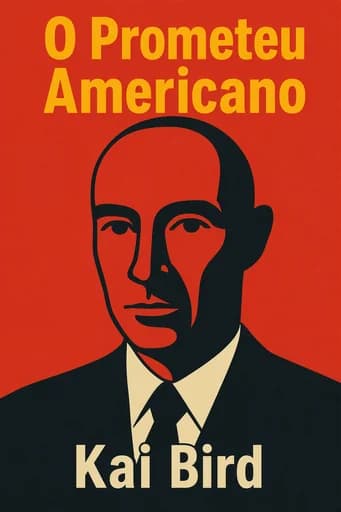
Kai Bird, Pulitzer Prize-winning biographer and co-author of American Prometheus: The Triumph and Tragedy of J. Robert Oppenheimer, is a leading authority on Cold War history and nuclear politics. A distinguished lecturer at the Leon Levy Center for Biography and recipient of the 2024 BIO Award, Bird’s work blends meticulous research with narrative depth, exploring themes of science, power, and moral responsibility.
His acclaimed biographies, including The Good Spy (a New York Times bestseller) and The Outlier: The Unfinished Presidency of Jimmy Carter, cement his expertise in profiling complex political figures.
Bird’s Pulitzer-winning Oppenheimer biography, adapted into Christopher Nolan’s Oscar-sweeping film Oppenheimer, draws on decades of archival work to illuminate the physicist’s pivotal role in shaping the atomic age. A frequent speaker at institutions like the Institute for Advanced Study, Bird connects historical insights to contemporary debates on technology and ethics.
His 2024 BIO Award honors his contributions to advancing biographical scholarship. American Prometheus has sold over 1 million copies and remains a definitive work on Oppenheimer’s legacy, hailed as “a masterpiece” by The Washington Post.
American Prometheus chronicles J. Robert Oppenheimer’s rise as director of the Manhattan Project, which developed the atomic bomb, and his later vilification during Cold War McCarthyism. The biography explores his brilliance, political activism, ethical conflicts over nuclear weapons, and the 1954 security hearing that stripped his clearance. It won the 2006 Pulitzer Prize and inspired the 2023 film Oppenheimer.
This book suits readers interested in 20th-century history, nuclear ethics, or scientific biography. Historians, political science enthusiasts, and fans of Oppenheimer (2023) will appreciate its depth on Cold War politics, McCarthyism, and Oppenheimer’s complex legacy as a symbol of scientific triumph and moral reckoning.
Yes. Critics praise its exhaustive research (25 years in the making), nuanced portrayal of Oppenheimer’s contradictions, and relevance to modern debates about science and ethics. The New York Review of Books called it “persuasively argued” and “written with sustained literary power,” though some find its detail overwhelming.
The book details his 1930s socialist sympathies, associations with Communist Party members, and later opposition to the hydrogen bomb. It argues these views made him a target during Red Scare paranoia, despite lacking evidence of treason.
Some reviewers note its dense, 720-page length and occasional excessive detail about Oppenheimer’s personal life. However, most agree it remains the definitive biography for its balance of scholarship and narrative.
It reconstructs the 1954 trial using declassified FBI files, showing how rivals like Edward Teller and Lewis Strauss conspired to discredit him. The authors frame it as a politically motivated “kangaroo court” that ruined his career.
“American Prometheus” compares Oppenheimer to the Greek Titan who gave fire to humanity—a metaphor for his atomic achievements and subsequent punishment (symbolized by his security hearing).
It emphasizes Oppenheimer’s humanity over technical physics, using personal letters and interviews to explore his charisma, flaws, and relationships. The Guardian praised its focus on “cocktails, wiretaps, and love affairs”.
Yes. It contextualizes his Bhagavad Gita quote after the Trinity test, analyzing his evolving guilt and attempts to mitigate nuclear proliferation post-WWII.
It highlights the enduring relevance of his calls for scientific accountability and arms control, particularly in modern debates about AI and climate change.
Christopher Nolan’s 2023 film adapts this biography, with Cillian Murphy’s Oscar-winning performance drawing directly from Bird and Sherwin’s portrayal of Oppenheimer’s turmoil.
Sinta o livro através da voz do autor
Transforme conhecimento em insights envolventes e ricos em exemplos
Capture ideias-chave em um instante para aprendizado rápido
Aproveite o livro de uma forma divertida e envolvente
"I need to be reborn every morning."
"physics and New Mexico" were his "two great loves".
He could cut you cold and humiliate you right down to the ground.
"the coordinator of rapid rupture"
"every new idea as perfectly beautiful."
Divida as ideias-chave de American Prometheus em pontos fáceis de entender para compreender como equipes inovadoras criam, colaboram e crescem.
Destile American Prometheus em dicas de memória rápidas que destacam os princípios-chave de franqueza, trabalho em equipe e resiliência criativa.

Experimente American Prometheus através de narrativas vívidas que transformam lições de inovação em momentos que você lembrará e aplicará.
Pergunte qualquer coisa, escolha a voz e co-crie insights que realmente ressoem com você.

Criado por ex-alunos da Universidade de Columbia em San Francisco
"Instead of endless scrolling, I just hit play on BeFreed. It saves me so much time."
"I never knew where to start with nonfiction—BeFreed’s book lists turned into podcasts gave me a clear path."
"Perfect balance between learning and entertainment. Finished ‘Thinking, Fast and Slow’ on my commute this week."
"Crazy how much I learned while walking the dog. BeFreed = small habits → big gains."
"Reading used to feel like a chore. Now it’s just part of my lifestyle."
"Feels effortless compared to reading. I’ve finished 6 books this month already."
"BeFreed turned my guilty doomscrolling into something that feels productive and inspiring."
"BeFreed turned my commute into learning time. 20-min podcasts are perfect for finishing books I never had time for."
"BeFreed replaced my podcast queue. Imagine Spotify for books — that’s it. 🙌"
"It is great for me to learn something from the book without reading it."
"The themed book list podcasts help me connect ideas across authors—like a guided audio journey."
"Makes me feel smarter every time before going to work"
Criado por ex-alunos da Universidade de Columbia em San Francisco

Obtenha o resumo de American Prometheus como PDF ou EPUB gratuito. Imprima ou leia offline a qualquer momento.
In a quiet Princeton auditorium in 1954, J. Robert Oppenheimer sat hunched before a security hearing that would determine his fate. The man who had led the creation of the atomic bomb now faced accusations of disloyalty from the very government he had served. This wasn't just any scientist being questioned - this was "Oppie," the physicist whose name had become synonymous with both humanity's greatest scientific achievement and its most terrible weapon. As he testified, his piercing blue eyes peering through wire-rimmed glasses, the world witnessed a modern tragedy unfold - a brilliant mind caught between scientific triumph and moral reckoning, having famously quoted the Bhagavad Gita after witnessing the first nuclear test: "Now I am become Death, the destroyer of worlds." What makes Oppenheimer so compelling isn't just his scientific genius but the moral weight he carried. Having unleashed atomic power, he later fought to contain its spread, embodying the 20th century's great contradiction - unprecedented scientific progress alongside ethical questions for which science alone provided no answers.