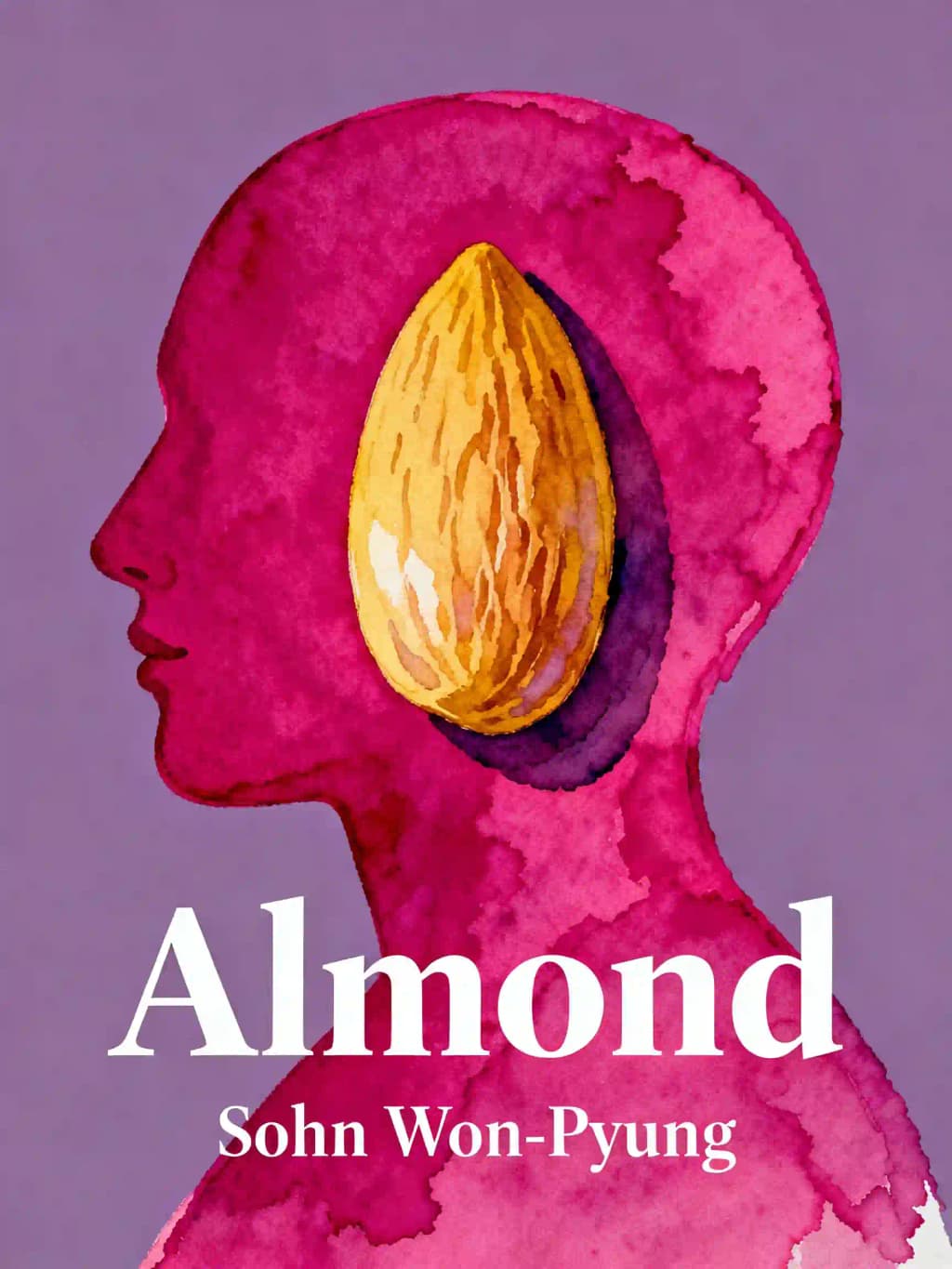
In "Almond," a boy with alexithymia struggles to feel emotions after tragedy strikes. Winner of the Changbi Prize, this haunting Korean bestseller explores what makes us human through an unlikely friendship that teaches the most powerful lesson - sometimes the greatest strength is vulnerability.
Sohn Won-Pyung is an acclaimed South Korean novelist and filmmaker. She is best known for her internationally celebrated young adult novel Almond, which explores themes of emotional resilience, human connection, and neurodiversity through the story of a boy with alexithymia.
A graduate of Sogang University with degrees in sociology and philosophy, Sohn's academic background informs her nuanced portrayals of identity and growth. Before her literary debut, she directed award-winning short films like Oooh You Make Me Sick, blending her narrative skills across mediums.
Almond earned Sohn the 2016 Changbi Prize for Young Adult Fiction and became a cultural phenomenon, selling over 800,000 copies in South Korea alone. Her other works include Counterattack of the Thirty and April Snow, which further cement her reputation for crafting emotionally charged, character-driven stories.
Translated into more than fifteen languages, Almond has been praised for its universal themes and is widely taught in schools, solidifying Sohn’s impact on contemporary young adult literature.
Almond follows Yunjae, a Korean teenager with alexithymia—a condition impairing emotional perception due to underdeveloped amygdalae (called "almonds"). After a traumatic loss, he navigates life alone until forming an unlikely bond with Gon, a volatile boy. The novel explores emotional growth, resilience, and the complexities of human connection through their evolving friendship.
This book appeals to fans of introspective young adult fiction, readers interested in neurodiverse narratives, and those exploring themes of trauma and emotional healing. Its concise, accessible prose makes it ideal for both casual readers and book clubs analyzing identity and empathy.
Yes. Critically acclaimed for its unique premise and heartfelt storytelling, Almond balances clinical detachment with profound emotional depth. It offers a fresh perspective on human relationships, making it a standout in contemporary Korean literature.
Alexithymia is a neurological condition where Yunjae struggles to identify or express emotions like fear or anger. His mother and grandmother use post-it notes to teach him social cues, symbolizing the effort to bridge his emotional disconnect.
The "almond" references the amygdalae—brain structures tied to emotional processing. It also symbolizes Yunjae’s journey to understand emotions and the fragility of human connections, mirrored by his mother’s global almond collection.
Gon, marked by anger and impulsivity, contrasts Yunjae’s detachment. Their friendship becomes a mutual lifeline: Gon learns emotional restraint, while Yunjae discovers empathy. This dynamic drives the novel’s exploration of vulnerability.
While Sohn Won-pyung is also a filmmaker, Almond remains a standalone novel. Its cinematic pacing and vivid scenes, however, make it ripe for visual adaptation.
Some reviewers note uneven pacing in the second half, with Gon’s backstory feeling rushed. Others highlight Yunjae’s emotional detachment as a barrier to reader connection early on.
Sohn’s studies in social studies and philosophy inform the novel’s focus on societal norms and identity. Her filmmaking experience shines through tightly structured scenes and dialogue.
It resonates globally by addressing universal themes—isolation, resilience, and the search for belonging—while showcasing Korean storytelling’s nuanced exploration of mental health.
Fans of The Curious Incident of the Dog in the Night-Time (neurodiverse protagonists) or Convenience Store Woman (societal outsider narratives) will appreciate Almond’s blend of simplicity and depth.
Sinta o livro através da voz do autor
Transforme conhecimento em insights envolventes e ricos em exemplos
Capture ideias-chave em um instante para aprendizado rápido
Aproveite o livro de uma forma divertida e envolvente
Don't stand out. That's all you need to do.
Divida as ideias-chave de Almond em pontos fáceis de entender para compreender como equipes inovadoras criam, colaboram e crescem.
Destile Almond em dicas de memória rápidas que destacam os princípios-chave de franqueza, trabalho em equipe e resiliência criativa.

Experimente Almond através de narrativas vívidas que transformam lições de inovação em momentos que você lembrará e aplicará.
Pergunte qualquer coisa, escolha a voz e co-crie insights que realmente ressoem com você.

Criado por ex-alunos da Universidade de Columbia em San Francisco
"Instead of endless scrolling, I just hit play on BeFreed. It saves me so much time."
"I never knew where to start with nonfiction—BeFreed’s book lists turned into podcasts gave me a clear path."
"Perfect balance between learning and entertainment. Finished ‘Thinking, Fast and Slow’ on my commute this week."
"Crazy how much I learned while walking the dog. BeFreed = small habits → big gains."
"Reading used to feel like a chore. Now it’s just part of my lifestyle."
"Feels effortless compared to reading. I’ve finished 6 books this month already."
"BeFreed turned my guilty doomscrolling into something that feels productive and inspiring."
"BeFreed turned my commute into learning time. 20-min podcasts are perfect for finishing books I never had time for."
"BeFreed replaced my podcast queue. Imagine Spotify for books — that’s it. 🙌"
"It is great for me to learn something from the book without reading it."
"The themed book list podcasts help me connect ideas across authors—like a guided audio journey."
"Makes me feel smarter every time before going to work"
Criado por ex-alunos da Universidade de Columbia em San Francisco

Obtenha o resumo de Almond como PDF ou EPUB gratuito. Imprima ou leia offline a qualquer momento.
What would happen if you watched your grandmother murdered and felt nothing? Not shock, not grief, not even fear-just clinical observation, as if watching a documentary. This is the reality for Yunjae, a sixteen-year-old boy whose amygdalae-the almond-shaped brain structures that process emotions-are unusually small. Born with alexithymia, he experiences the world without the emotional filter the rest of us take for granted. On Christmas Eve, violence erupts in his neighborhood. Six people die, including his beloved grandmother. His mother survives but slips into a coma. And Yunjae? He simply observes, his face blank as a winter sky. This isn't a story about a boy learning to be good-it's about a boy learning to be human.