Capítulo 1
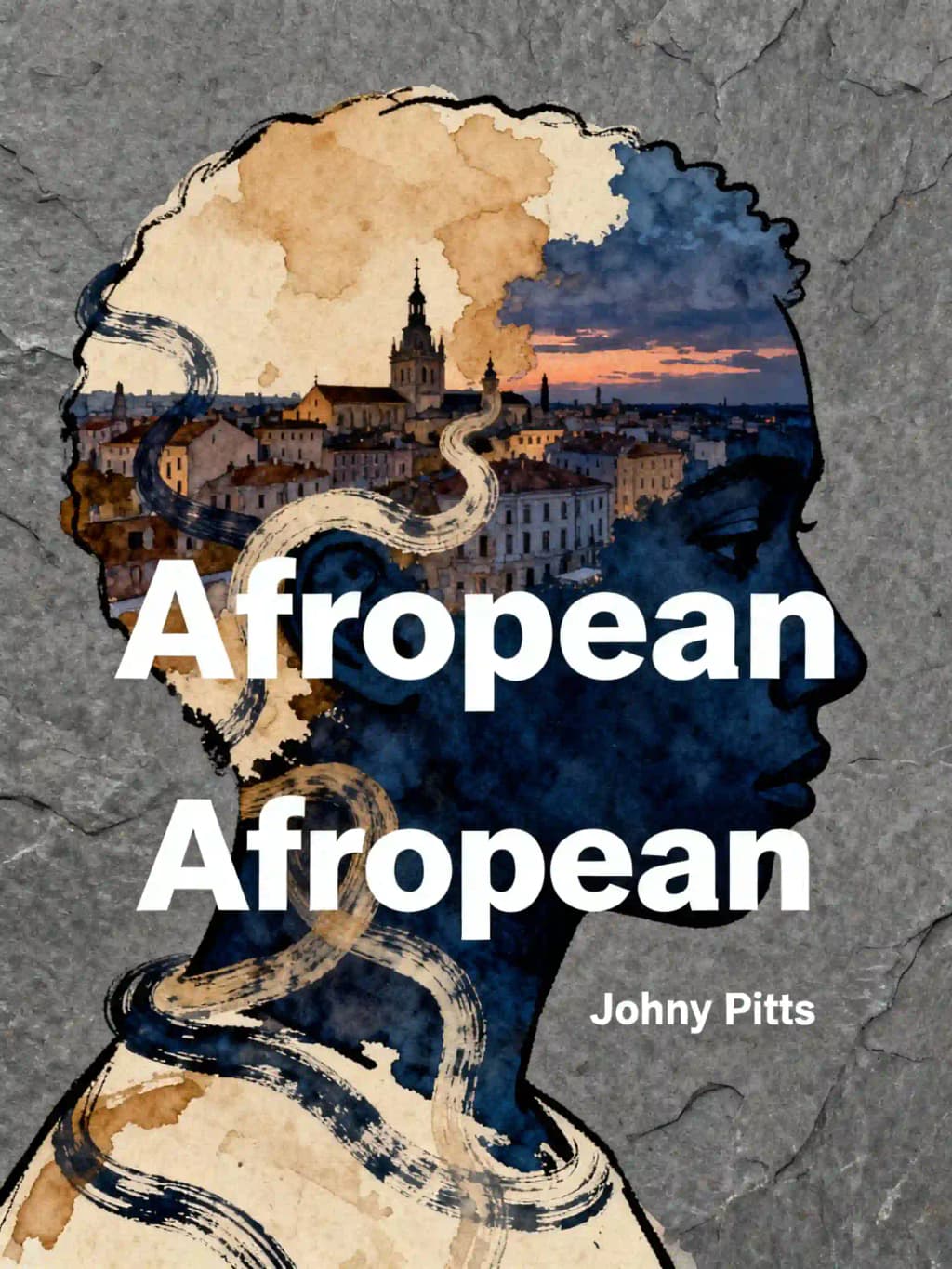
A Journey Through Black Europe's Hidden Tapestry
When Johny Pitts embarked on his five-month winter journey across Europe, he wasn't merely traveling-he was searching for something both tangible and elusive: Afropean identity. This term, borrowed from musician Marie Daulne of Zap Mama, describes a liminal space where African and European cultures merge to create something entirely new. The book has become a cultural touchstone, praised by Caryl Phillips as "an honest and often uncomfortable spotlight on areas of Europe that are rarely discussed," and winning the 2020 Jhalak Prize for writers of color. What makes "Afropean" particularly revolutionary is its rejection of both academic jargon and sensationalism, instead offering a deeply personal, street-level view of Black European life that resonates with readers across backgrounds. As Pitts navigates through forgotten neighborhoods and vibrant communities, he creates what The Guardian called "a work of extraordinary importance" that challenges conventional narratives about European identity and belonging.
Capítulo 2
Sheffield's Cultural Crossroads
Growing up in Sheffield's Firth Park, I witnessed authentic street-level multiculturalism through friends like Mohammed, who effortlessly blended his Yemeni heritage with British working-class culture. This wasn't the sanitized diversity celebrated by distant politicians, but something genuine that emerged organically through community solidarity, cultured conversation, and emphasis on spirituality and education. The Yemeni and Jamaican communities had somehow reclaimed parts of Britain, molding it through art, culture and intellectual thought despite overwhelming odds.
Yet without support, such communities could only sustain themselves so long before external pressures unraveled them. This became painfully clear before my European journey when I witnessed a violent confrontation involving Tina, a Jamaican neighbor who'd deteriorated from a bright-eyed woman who once offered to braid my Afro into a crack addict. Firth Park was full of such tragic trajectories-former childhood friends who'd become predictable statistics: murderers, victims, prisoners, or mentally ill from the trauma of maintaining themselves as Black people in a racist environment.
The difference between their fate and mine was my relatively stable home-my supportive white working-class maternal family and my African-American father who commanded respect as an entertainer. Through him, I traveled beyond our neighborhood, giving me broader parameters of success beyond local micropolitics.
As Thatcher crushed northern industry in the 80s, Sheffield's socioeconomic conditions mirrored 1970s New York, spawning a vibrant hip-hop culture. Council estates became concrete canvases and tower blocks broadcast pirate radio-a cultural counterpoint to the violence I grew up with. This creative energy emerging from post-industrial poverty was eventually suppressed rather than nurtured, with the government funding "Grime Busters" to eradicate graffiti while the city center became increasingly corporate and controlled.
Capítulo 3
Paris: Confronting Colonial Ghosts
In Paris, my idealistic notions about Black solidarity quickly crumbled during a "Black Paris" tour led by Jimmy, an African-American expatriate whose shocking xenophobia toward local African immigrants revealed deep divisions within the diaspora. After a Senegalese woman objected to being photographed, Jimmy launched into disturbing comments about "illegals draining the economy" despite evidence of their self-sufficient community. His prejudice escalated to calling Africans "stupid," "corrupt," "ignorant" and "ugly," suggesting their colorful dress was meant to hide these flaws.
The experience shattered any notion of an "unspoken brotherhood among the Black diaspora" and convinced me to "look beyond African America for answers about my situation as a Black man in Europe and orientate myself more confidently along an Afropean axis."
This reorientation led me to a sophisticated protest against French perfumier Jean-Paul Guerlain, who had casually used a racial slur on national television. About five hundred well-dressed Black French citizens gathered outside Guerlain's Champs-Elysees store, led by middle-class Black academics and intellectuals. These protesters embodied "Afropean" identity-people connected to both Africa and Europe yet transcending both, educated by Europe while often told they don't belong.
Following activist Rex Kazadi to Clichy-sous-Bois revealed the stark realities facing many Black Europeans. This notorious banlieue appeared apocalyptic: concrete "zombies" with rotting crevices, rusting metal patches, graffiti "tattoos," broken windows, and garbage-strewn streets. This environment, far worse than any British council estate, created a "grim cycle of hopelessness" that seemed to shape its inhabitants as much as they shaped it.
The area's tensions had erupted in 2005 when two local teenagers, Zyed Benna and Bouna Traore, died fleeing police. Their deaths sparked nationwide riots, representing "one senseless tragedy too many" in a long-standing conflict between immigrant children and a rejecting French state. With 40% of residents under twenty and 32% unemployment (triple the national average), Clichy embodied profound social failure and the consequences of systemic exclusion.
Capítulo 4
Brussels: Archives of Resistance
Brussels offered welcome relief after Paris's intensity, yet beneath its chocolate-and-beer tourism facade, Belgium carries the guilt of colonial brutality in the Congo. In the vibrant Matonge district, I discovered what likely inspired Marie Daulne's Afropean vision-a neighborhood where jazz clubs sat alongside Afro hair salons, serving as community centers where people gossiped and traded under-the-counter goods.
Through gallery owner Gregoire, I met Belgian-Congolese artist Mufuki Mukuna, whose moody paintings echoed Brussels' urban landscape. Mufuki described growing up isolated, feeling disconnected from both Black and white communities. When I mentioned "Afropean," he embraced it: "Maybe that's what I am!" But he preferred being seen "first as a human, next an artist, and finally an Afropean."
Belgium's colonial past remains embedded in its present, evident in the racist caricatures of "Tintin in the Congo" comics and the Royal Museum for Central Africa in Tervuren. Built for King Leopold II's 1897 world fair, this grand, eerily empty building housed stolen artifacts, stern statues of Belgian colonizers, and taxidermied African animals-all while sanitizing the brutal history of Leopold's reign, during which over 10 million Congolese were murdered for ivory and rubber.
In Liege, I met literary hero Caryl Phillips and Jamaican dub poet Linton Kwesi Johnson, whose friendship embodied what Black Britain should be: a unifying search for truth against colonial misinformation. Their conversation revealed how 1980s Black British unity came through organizations like the Black Theatre Co-operative and the Keskidee Centre, many funded by the Greater London Council before Thatcher dismantled it. When I lamented the lack of such centers today, Linton reminded me, "We went through hard times with the British Black Panthers so the next generation could thrive."
Capítulo 5
Amsterdam: Archives and Activism
Amsterdam greeted me as a cliche of itself-a sinister freak show of neon lights and rainy reflections by night, transforming into one of the world's most pleasant cities by day. The autumnal streets reminded me of my father's Brooklyn neighborhood-both sharing Dutch architectural influences like the stoep (stoop), designed to elevate home entrances against flooding. This connection extended beyond architecture into a deeper relationship between Amsterdam and New York through the city's Afro-Surinamese community.
At the Black Archives, I discovered the remarkable story of Otto and Hermina Huiswoud. After fleeing British Guyana following a devastating fire that destroyed their hotel business, they eventually settled in Harlem in 1919. Otto rose to become the first Black founding member of the American communist party, meeting with figures like Lenin, Fanon, and Nkrumah across continents. After health problems forced Otto to Suriname in 1941, he was immediately jailed for his political activities. Post-war anti-communist sentiment prevented his return to America, so he settled in Amsterdam in 1947, joined by Hermina two years later. Together they transformed the Ons Suriname association into a political organization fighting for Surinamese independence.
Hermina's meticulous documentation preserved their legacy, forming the foundation of the Black Archives' collection. Despite her caution about discussing her past (due to decades of FBI surveillance), her preservation efforts ensured this vital history of Black radical thought survived for future generations.
The Bijlmermeer housing project, built in the 1960s as a utopian vision for Amsterdam's white middle class, became home to Surinamese immigrants when the original demographic showed little interest. Jessica explained how her mother was among those who squatted in the underpopulated estate when a Dutch law prevented multiple Surinamese families from living in single housing blocks elsewhere. Despite media portrayal of "Black criminality," the Bijlmer developed into a thriving community built by disenfranchised people.
Jessica contrasted Amsterdam's racially segregated neighborhoods with Rotterdam's dispersed approach to housing Surinamese families. While Amsterdam has distinct ethnic enclaves, Rotterdam deliberately spread immigrant populations throughout the city to avoid creating "Black ghettos." This policy difference created distinct effects: Amsterdam's Surinamese community developed a stronger history of political resistance, while Rotterdam's became somewhat depoliticized but developed a thriving Black arts scene.
The controversy over Zwarte Piet (Black Pete) has exposed cracks in the Netherlands' self-image of tolerance. This character, depicted with blackface, frizzy hair and exaggerated features, is fiercely defended by Dutch society despite its obvious racist undertones. Jessica and her colleagues who organized non-violent protests against the character faced brutal arrests, condemnation, and hostility from parents claiming they were "spoiling harmless fun."
Capítulo 6
Berlin: Between East and West
Arriving in frigid Berlin, I trekked from the modern central station through wide boulevards until reaching the disheveled Friedrichshain district. The city, once divided by the Berlin Wall for thirty years, still carries psychological divisions between the poorer East and affluent West despite reunification. Initially unsettled by severe-looking locals with extreme piercings, tattoos and skinheads, I discovered many were actually leftist activists rather than the Neo-Nazis I feared.
For Black Germans, the fall of the Berlin Wall brought little celebration as a surge of racist violence emerged, with over 130 people killed in racially motivated attacks in the following two decades. The East German Nazis often targeted guest workers from socialist African countries like Mozambique and Angola, while young Germans channeled their disaffection through either far-left or far-right movements, leaving Black communities uncomfortably caught in between.
One frigid evening in Friedrichshain, I discovered Nil, a small Sudanese restaurant that became my Berlin social hub. There, I met Hishem and Mohammed who offered contrasting perspectives on life in Europe. Mohammed presented a radical view that Europeans' need to accumulate resources stemmed from their harsh climate, creating a system "always hungry to be fed," while Hishem countered that Black leadership was also problematic.
Mohammed later took me to the "real Black Berlin" at the Young African Artist Market (YAAM), a multicultural hub established in the early 90s after the Berlin Wall fell. Despite its name suggesting African art, YAAM was dominated by reggae culture-dreadlocked Rastas around fire barrels smoking sinsemilla, basketball games, and stalls selling merchandise featuring Haile Selassie and Bob Marley. This grassroots organization provided space for artists, musicians, and youth activities, becoming Berlin's multicultural heart.
At YAAM, I discovered most Rastas were West Africans who'd adopted Jamaican accents and embraced East African reverence through their faith. They spoke of Europe's ability to trap migrants who came hoping to earn enough to build homes in Africa but became stuck, unable to return empty-handed.
At a service by the Afro-gospel choir Ndembe Spirituals in Berlin's French Cathedral, I met the Helmstetters-Ulli (a white German man), Ayellet (a Jewish Israeli woman), and their adopted Kenyan daughter Shira. Their complex journey from Germany to Kenya and back revealed the challenges of cross-cultural adoption and Germany's institutional racism. When they attempted to return to Germany with Shira, they faced months of bureaucratic resistance while a white colleague's family received passports in just two days.
The Helmstetters chose Berlin for its openness and potential. "The rest of Germany has been heavily rebuilt after the war with a solid identity built into the buildings and social spaces," Ulli explained. "Berlin still feels underdeveloped, allowing capacity for change and the possibility to take part in shaping it." Their commitment to exposing Shira to multiple cultures reflects Germany's challenge: to embrace multiculturalism genuinely rather than exploiting it for political or economic purposes.
Capítulo 7
Stockholm's Hidden Hierarchies
In Stockholm's eerily quiet Mosebacke hostel, I met Saleh, a nightclub bouncer from Tunisia who'd lived in Sweden for twenty-three years. Despite his intimidating appearance, he offered sharp insights about Swedish hypocrisy: "Swedish people racist, of course, you know these fascists get in government now, but it's much worse in Denmark, Holland and Finland. People say Scandinavians are peaceful. Ha! That's bullshit!"
Saleh explained how Alfred Nobel, namesake of the peace prize, invented dynamite and made his fortune from weapons. Sweden remains the world's third-largest arms exporter per capita, with companies supplying weapons that have armed illegal wars and dictatorships. He articulated the bitter irony of European immigration: "All these people in Europe, they think they give immigrants a favour. But they don't realize that we are only here because they destroy our countries."
Yet Saleh himself demonstrated contradictions, complaining about Somali immigrants in Rinkeby: "You know, Rinkeby used to be nice place but now too many Somalians!" Despite being Arab himself (though technically Berber), he resented Somalis who rejected Arab identity.
In Rinkeby, I encountered an elderly African man who initially claimed to be Nelson Mandela's brother. He shared his remarkable life story: jailed in Botswana in 1980 as an ANC freedom fighter, later training as a guerrilla and fighting alongside Castro-backed Angolan forces against apartheid's South African Defence Force. Despite his pride in helping end apartheid, he expressed deep regret about his difficult life, urging me to "Meet woman, have pretty babies, be quiet and get job" rather than follow his path of sacrifice.
Sweden had once been at the forefront of anti-apartheid activism, yet now practiced what Trevor Phillips called "passive apartheid"-racial separation through geography. Rinkeby itself was built during the ambitious Miljonprogrammet housing initiative of the 1960s-70s, which created high-quality homes with public spaces, libraries and schools to promote social democracy. But privatization in the 90s and 00s allowed "white flight," creating economic division as those who could afford it bought property in desirable neighborhoods, leaving immigrants isolated.
Capítulo 8
Moscow's Cold Welcome
My research before visiting Russia had revealed disturbing content about racism there-from Neo-Nazi violence to attacks on African students. Despite the anti-Soviet propaganda I'd absorbed growing up in the West, I knew Russia hadn't always been so foreboding for people of color. Many Black writers and thinkers had positive experiences there in earlier decades. Claude McKay wrote in 1923 that his "Russian days were the most memorable" of his life, while Paul Robeson proclaimed in Moscow, "Here I am not a Negro but a human being... for the first time in my life."
Only after the Soviet collapse did African students begin experiencing frequent racism. In 1992, the university named after Patrice Lumumba changed its name, symbolizing Russia's shift toward insecurity and Orthodox Christianity under the familiar banner of "make our country great again."
The culture shock of Russia was immediate-the stereotypes I expected to burst never did. Arrivals staff resembled Bond villain parodies with fascinating rudeness. St. Petersburg's streets were slushy with brown ice and pollution rather than Stockholm's pristine snow. The metropolis felt like it was on "cheap under-the-counter steroids"-boulevards twice as wide, brutalist buildings twice as brutal and dramatically oversized, all haunted by the ghost of failed Communism.
At People's Friendship University, an hour south of central Moscow, I found small groups of African students against the snowy urban landscape. Unlike the anger of Clichy-sous-Bois or the banter of Rinkeby, here I encountered resigned sadness. They endured this harsh environment because it offered escape from worse conditions at home.
In a small internet cafe, I tried engaging African students in conversation about shared blackness, but realized my error-to them, blackness wasn't a conundrum. In their home countries, politicians, police and teachers looked like them; being "Black" was as banal as being white in Europe. They weren't "Black students" but simply students enduring a difficult place for qualifications. Fraser from Benin and Michael from Ghana confirmed they came for the affordable education: "We must come and get our grades and move on to get a good job and support our families."
Capítulo 9
Mediterranean Reflections
After the sullen snow of Russia, being suddenly transported to the warmth of southern Europe felt strange but welcome. In Rome, I briefly became a tourist, visiting Vatican City. Walking through St. Peter's Square, I was surprised by the large presence of Black nuns and clergymen, though I shouldn't have been; by 2025, one-fifth of the world's Catholics will be of African heritage.
The divine power channeled through human artistry, particularly Michelangelo's masterful Sistine Chapel ceiling, made me proud to be human. Yet it also quietly suggested I was less than that. Like all Vatican art, it was ferociously white-a world of pink flesh and golden resplendence nearly indistinguishable from each other.
Speeding along the French Riviera, I visited Roquebrune-Cap-Martin where I discovered Villa del Mare-a huge, frilly, baby-pink building once owned by Joseph Mobutu, former Congolese president and one of the world's most corrupt dictators. While Congo crumbled under crippling debts to Belgium, Mobutu recuperated from prostate cancer surgery in this luxury property, sitting on billions made by selling off Congo's natural resources and pocketing international aid meant for his people.
In Saint-Paul-de-Vence, I visited James Baldwin's final home. For a poor, gay Black kid born in 1920s Harlem who fled to Paris with only $40 to end his life here, picking figs in a ten-acre garden and hosting celebrities under palm trees suggested perfect emancipation. Yet this idyllic narrative obscures harder truths. Baldwin never actually owned this property-it belonged to Jeanne Faure, a wealthy white Frenchwoman from a colonial Algerian family. Despite attempting to buy the house in installments, Baldwin died deeply in arrears.
His seventeen years in Saint-Paul weren't particularly productive either-just two lukewarmly-received novels, four slim essay volumes, a children's book and poetry collection. According to biographer Jules Farber, Baldwin spent much of his time drinking, chain-smoking, battling writer's block, hosting hangers-on, and struggling financially.
In Toulon, I traced the footsteps of Frantz Fanon, who had joined the Free French Forces as an eighteen-year-old from Martinique. Despite the colonial soldiers' sacrifices, they were denied France's most glorious moment through a deliberate "blanchissement" (whitening) of the Free French Forces. When looking at footage of Victory in Europe Day celebrations in Paris, you won't see a single non-white soldier despite them comprising two-thirds of de Gaulle's forces.
Capítulo 10
Lisbon's Hidden Communities
While tourist guides paint Lisbon as a picturesque masterpiece of "cobalt skies" and "candy-bright houses," they conveniently omit how this beauty was funded by centuries of slavery and colonialism. The city bears Africa's imprint everywhere-from the Angolans and Cape Verdeans debating intensely in public squares to the multicultural atmosphere that gives this capital city the soul of a village. Yet beneath this surface lies stark inequality.
Portugal's history of disenfranchisement created its own version of favelas-the word originally referring to Brazilian settlements formed by civil war veterans. In 1960s Lisbon, inflation led to shanty towns called "barraca" populated first by poor white farmers, then increasingly by Cape Verdean immigrants.
Entering Cova da Moura felt like stepping into Rio's Rocinha favela or a South African township-the Global South right in Europe. Despite being technically illegal and unrecognized by Lisbon authorities, the settlement had evolved from makeshift shacks to permanent structures adorned with vibrant murals of global Black icons from Tupac to Mandela. The streets buzzed with life-children playing Double Dutch, old men chattering in doorways, women cooking chorizo on improvised grills, and music drifting from colorful stone huts.
The community had created impressive infrastructure through the Associcao Cultural de Juventude, offering a kindergarten, recording studio, citizens' advice bureau, and literacy courses. Despite Avelino's confidence that "Cova da Moura is here to stay," real estate speculation threatens this vibrant community. As Lisbon becomes marketed to wealthy tech workers and entrepreneurs as "entering a new golden age" with cheap rents and grand palazzos, the displacement of Cova da Moura's residents looms.
Capítulo 11
Finding Afropea
As Carnival season spread across Portugal, marking the end of my journey, I departed Lisbon by early morning train. After five months of budget travel, I'd grown accustomed to strange places at strange hours-a necessity when searching for Black Europe often meant finding people forced to work unsociable hours or live on the periphery.
I chose Gibraltar as my endpoint, hoping to see Africa from Europe's southernmost tip. Instead of an allegorical vista, I found myself in a pastiche of 1980s Britain-fish-and-chip shops with Union Jack flags amid gray postwar architecture, all under pouring rain that obscured any view of Africa.
Taking a nearly empty bus to Europa Point, I found myself the sole passenger as we emerged dramatically at the rocky coast. With just twelve minutes before the return journey, I ran through the rain toward a lighthouse at the deserted building site. Standing drenched amid scaffolding, I realized I didn't need to see Africa looming in the distance-Africa was right where I stood.
Throughout my journey, I'd discovered that Black Europe wasn't a place without culture, history or geography as I'd been led to believe. I'd connected with the knowledge production of myriad communities and learned about bold, empowering Black and working-class traditions I'd been kept from my whole life. These scattered fragments of Afropean experience had formed a mosaic in my mind-not monolithic, but not entirely amorphous either. I'd experienced an Africa that was both in and of Europe.
Looking once more into the fog hanging over the sea, I closed my eyes to feel Africa's presence as the wild surf spritzed my face. Then, turning to face the tumultuous old continent where I'd been born and raised, I went back to where I came from.