Capítulo 1
The Body's Magnificent Journey: A Medical Odyssey Through Our Inner Landscape
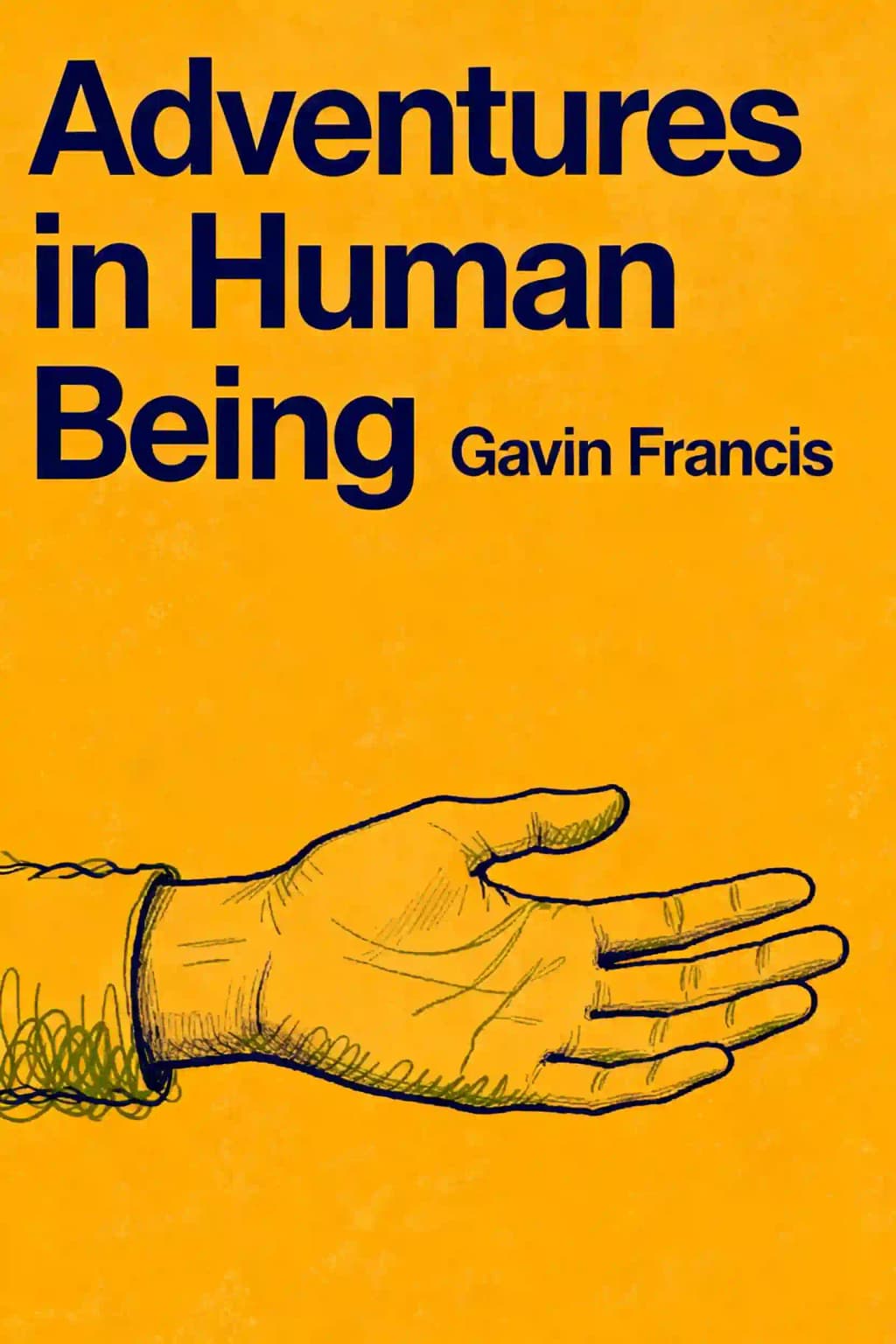
As a child, Gavin Francis dreamed of becoming a geographer, enchanted by maps and atlases that revealed the hidden world. But his fascination with exploration eventually turned inward-from mapping Earth's terrain to charting the human body's intricate landscapes. This shift created "Adventures in Human Being," a book that has captivated readers worldwide since its publication, earning praise from literary critics and medical professionals alike. Named a "Best Book of the Year" by The Economist and shortlisted for multiple literary awards, Francis's work stands alongside classics like Oliver Sacks's writings in its ability to blend scientific precision with profound humanity. The book's enduring appeal lies in its universal subject-the body we all inhabit yet rarely fully understand-presented through the compassionate eyes of a physician who sees each patient as both a medical case and a unique human story.
Capítulo 2
The Brain: Where Consciousness Meets Medicine
I first held a human brain at nineteen during my second year of medical school. It was heavier than expected-gray, firm, laboratory-cold with a slippery surface like an algae-covered river stone. The three-pound organ felt dense yet delicate, its gyri and sulci forming an intricate landscape of ridges and valleys. After a whirlwind first year learning anatomy, biochemistry, and physiology of every organ except the brain, we finally entered the Neuroanatomy Teaching Laboratory, a Victorian building whose stone lintel declared "SURGERY ANATOMY PRACTICE OF PHYSIC"-emphasizing anatomy's primacy over other medical skills.
Inside, forty brains waited in buckets of preservative solution, their pale gray matter transformed by formaldehyde into something more rubber-like than living tissue. Our Icelandic lecturer, Dr. Magnusson, demonstrated the brain's lobes and divisions with practiced precision-frontal, parietal, temporal, occipital-each with its specialized functions. He revealed its deceptively smooth exterior hiding complex interior chambers called ventricles, ancient spaces filled with cerebrospinal fluid that cushion and nourish the brain. Cradling that brain, I tried to imagine the consciousness it once supported-the memories, dreams, and personality it had contained. My dissection partner, a former philosophy student, showed me the pineal body-"the seat of the soul" according to Descartes-a tiny pine cone-shaped structure that seemed too humble for such profound implications.
Years later as a trainee neurosurgeon, I worked with living brains daily, treating them as bruised organs among many cases of strokes, tumors, and trauma. The geodesic-domed operating theater seemed to demand reverence, its 1950s design embodying that era's technological optimism. The gleaming instruments, powerful microscopes, and sophisticated monitoring equipment created an almost sacred atmosphere. Amid long days treating injured brains-evacuating blood clots, removing tumors, clipping aneurysms-philosophical reflection was rare-until my professor requested help with a special case.
Claire suffered from severe epilepsy originating near her speech center, with seizures that regularly interrupted her life and work as a primary school teacher. With her partially awake during surgery, a speech therapist showed her cards with simple objects to name-cup, house, dog, tree-while the professor stimulated different brain areas with tiny electrical currents. When he touched certain spots, her speech halted mid-word, as if someone had pressed a pause button. "Eloquent brain," he called it, carefully marking these areas to avoid damage. The rest-"non-eloquent" brain tissue causing seizures-could be removed, a delicate balance between treating disease and preserving function.
I studied this eloquent brain carefully but saw nothing visibly special about this crucial neural tissue enabling Claire's speech. The gray matter looked identical to its surroundings, yet it held the key to her ability to communicate. Days after surgery, she greeted me with a smile, joking about her stapled scalp making her look "like Frankenstein's monster"-but most importantly, she'd had no seizures. Her words flowed freely now, each one a small miracle of neural engineering. In that moment, I glimpsed how the physical brain and the conscious mind mysteriously coexist, separated by a boundary science can approach but never fully cross-a reminder that even as we master surgical techniques, consciousness remains medicine's greatest mystery.
Capítulo 3
Windows to the Soul: Vision and Perception
My Edinburgh office has a large east-facing window where I typically examine patients in natural light. However, when checking vision complaints with an ophthalmoscope, I must darken the room and approach the patient closely-an intimate examination where my cheek often brushes theirs.
Looking into someone's eye through this instrument is disorienting-like gazing at the night sky through a telescope. The retina reveals a landscape of medical signs: diabetes creates pale spots like cumulus clouds, high blood pressure produces silvered arteries resembling lightning, and blocked veins create "stormy sunset" hemorrhages. The curved interior of the eyeball reminds me of medieval diagrams depicting the heavens as an upturned bowl.
Ancient Greeks believed vision came from divine fire within the eye, with the lens transmitting energy outward. This theory persisted for centuries until astronomers like Kepler discovered images project onto the retina upside down. Newton even inserted a bodkin between his eye socket and eyeball to test vision distortion. Modern understanding reveals that photons traveling from the sun strike our retinas, causing proteins to bend and trigger perception.
Our vision uniquely connects us to distant celestial bodies, unlike our other senses which operate at much shorter ranges. Jorge Luis Borges, who lost his sight gradually through cataracts and retinal detachments, wrote about spherical forms and compared the eye to celestial bodies. He described blindness not as darkness but as "roiling mists of green light," losing colors progressively with red disappearing first while yellow remained "faithful." Despite this loss, blindness led him to deeper literary exploration.
Cataract surgery, practiced for over two thousand years, has evolved from crude "couching" procedures to modern operations taking just minutes. John Berger, who wrote extensively about seeing before having his own cataracts removed, described the post-surgery world as having a quality of "firstness," with colors renewed and blues especially vibrant. He compared cataracts to forgetfulness, their removal a "visual renaissance" returning him to childhood perception, where whites appear purer and blacks heavier-a baptism of light.
Have you ever considered how much of your identity is tied to what you see, and how profoundly different your world would be if that vision changed?
Capítulo 4
The Face: Our Most Expressive Canvas
When I dissected faces as a medical student, I found the facial muscles remarkably delicate-fragile salmon-pink fronds nestled in buttery fat that required careful handling. These muscles revealed much about their owners' lives: well-developed zygomaticus muscles suggested a life of laughter, while withered ones hinted at misery. Other muscles like corrugator supercilli (for frowning), levator labii superioris alaeque nasi (for snarling), and orbicularis oculi (for blinking and squinting) all told stories about their owners' habitual expressions.
Leonardo da Vinci understood this connection between facial muscles and emotion profoundly. Working in Milan in the late fifteenth century, he studied facial anatomy with unprecedented detail, believing muscles communicated directly with the soul. His masterpiece The Last Supper captured a storm of human emotions through carefully rendered facial expressions. Leonardo would follow interesting faces through Milan's streets, and later at Pavia's medical school, he meticulously documented facial muscles, labeling them according to the emotions they expressed.
I met Emily Parkinson in my emergency clinic after she woke one morning with the left side of her face paralyzed. Her secretary had gasped, "You look like you've had a stroke." Examining her, I noticed her right side smiled normally while her left remained slack. I diagnosed Bell's palsy-inflammation of the facial nerve where it passes through a narrow skull tunnel-and prescribed steroids to reduce swelling, reassuring her it would likely improve within weeks.
Emily's palsy worsened over the following week, leaving her embarrassed and unable to return to work. Her left eye constantly teared, making her feel as though she was "weeping for the loss of my face." After six months with minimal improvement, she remained socially isolated. I referred her to plastic surgeons who, paradoxically, used Botox to paralyze her good side, creating facial symmetry. Though initially pleased with the results, Emily eventually declined further treatments, explaining: "My feelings are more real when I can show them. I don't want to go through life wearing a mask."
Charles Bell, the Scottish surgeon who first described this palsy, combined surgical expertise with artistic talent. During the Napoleonic Wars, he treated wounded soldiers while sketching their injuries, particularly facial wounds that affected expression. This connection between expression and emotion works both ways-research confirms Darwin's observation that adopting angry expressions can actually induce anger, while preventing such expressions might diminish negative emotions.
In our age of filtered selfies and cosmetic procedures, Emily's choice reminds us that our faces are not merely aesthetic objects but living canvases of our emotional lives-perhaps imperfect, but authentically ours.
Capítulo 5
The Heart: A Muscular Poem
Before stethoscopes existed, physicians pressed their ears directly against patients' chests-an intimate yet clinical experience I've occasionally had to employ when forgetting my equipment on urgent house calls. With one finger blocking your free ear, you can hear blood coursing through the heart's chambers and valves, reminiscent of ocean sounds in a conch shell. The ancients imagined this as blood mixing with vital pneuma from the lungs, like wind churning sea waves.
The heart's four valves create distinctive sounds as they close-the mitral and tricuspid valves during systole (contraction), followed by the pulmonary and aortic valves during diastole (filling). Healthy valves make soft percussive noises like gloved fingers tapping leather, while diseased ones produce characteristic murmurs that reveal their dysfunction. As a medical student, I trained my ear by listening to recordings of these various murmurs, finding something oddly comforting in these rhythmic sounds, perhaps echoing a primal memory of my mother's pulse.
This pulsation defines life itself. When the heart catastrophically fails, clinical language describes "rapid hemodynamic deterioration" while patients experience what doctors call angor animi-"anguish of the soul"-a profound conviction of imminent death that usually proves correct. I once witnessed a woman at her seventieth birthday party grip my arms in the emergency room, eyes wide with horror, gasping "I'm dying" before her pulse vanished completely.
In the emergency department where I once worked, a concealed door led to a small yard where the already-dead arrived. Certifying death requires three simple checks: pupils for light response, carotid artery for pulse, and chest for breath sounds. One night, examining a suicide victim who had jumped from a bridge, I noticed something unusual-a popping sensation under my fingertips and crackling sounds through my stethoscope. His lungs had burst on impact, allowing air to escape into surrounding tissues-a definitive sign of death as profound as his vacant, pupil-fixed stare.
Lungs, our lightest organs, derive their name from an Indo-European word meaning "light." Ancient healing traditions viewed them as the interface between spiritual and physical realms, where invisible energies-qi, prana, pneuma-entered the body. Their delicate membranes, arranged to maximize exposure to air much like tree leaves, would cover over a thousand square feet if stretched flat. When healthy, they produce sounds like leaves rustling in a breeze, but disease transforms these acoustics, producing distinctive whistles, clatters and crackles that reveal consolidation, tumors or infection.
The heart and lungs work in constant partnership-one pumping blood, the other refreshing it-a dance so fundamental we barely notice it until something goes wrong. Together, they embody our most essential rhythm: the endless cycle of taking in and giving out that defines not just respiration, but life itself.
Capítulo 6
The Healing Gift: Kidneys and Transplantation
In the Himalayas, I witnessed traditional Tibetan healing using kidney-shaped stones, though I remained skeptical about their efficacy against actual kidney disease. Western understanding of kidneys developed slowly-even Renaissance anatomist Gabriele de Zerbis incorrectly believed kidneys contained a filtering membrane that didn't exist. De Zerbis, who advised eating viper meat and ground gold to prevent aging, met a gruesome end when sawn in half after a patient died.
Vesalius revolutionized anatomy by describing what he actually saw rather than following ancient texts. True kidney function wasn't understood until microscopes revealed their structure-Malpighi discovered kidney tubules in the 1660s, though complete understanding took until the early twentieth century. Willem Kolff invented the first functioning dialysis machine during Nazi occupation using cellophane and Ford parts, saving his first patient in 1945.
The kidney's relatively simple structure made it the first organ successfully transplanted in 1954 between identical twins. I witnessed a transplant where the recipient's new kidney transformed from gray to pink as blood flowed through it, beginning to produce urine immediately. Transplants often arise from tragedy-I recall a young asthma victim whose parents generously donated her organs after her death, benefiting multiple recipients across the country.
Modern transplantation has evolved to include "gift circles" where compatible strangers can donate in chains. David McDowall, a Middle East historian in his sixties, donated a kidney altruistically after receiving lifesaving blood transfusions years earlier. He recovered quickly and finds joy in knowing his kidney might be in someone he passes on the street.
The liver, another vital organ, possesses remarkable regenerative abilities reflected in the myth of Prometheus, whose liver regrew daily after being eaten by eagles. This regeneration allows living donors to give portions of their livers to others, with both parts growing back to full size. Before the heart's pumping function was understood, the liver was believed to generate blood that flowed to the heart. As the presumed source of life, it became a symbol of power and mystery. Shakespeare referenced blood in the liver as a measure of vitality, while ancient cultures practiced hepatoscopy-examining sacrificed animals' livers to divine the future.
These organs remind us that our bodies contain extraordinary capacities for both giving and receiving-a biological metaphor for our social nature as humans. In what ways might you someday become a gift to others, whether through organ donation or the countless smaller ways we sustain each other's lives?
Capítulo 7
The Intimate Mysteries: Reproduction and Creation
Contemplating conception reveals profound questions about human existence. Did life begin when cells implanted in the womb-a process that fails for many women? Or when sperm fused with egg-impossible for men with sluggish sperm? Perhaps during meiosis in the testes-which some men cannot properly complete? Or when an egg was selected for ovulation-often disrupted by menstrual disorders? Our biological origins trace back decades before conception, as a mother's eggs form while she herself is in the womb.
Rob and Helen visited my clinic after eighteen months of trying to conceive. Helen, thirty-seven, worried they might need IVF, especially since Rob's brother had required it to conceive his daughter. After explaining that couples have roughly 85% chance of conceiving within a year of regular unprotected sex, I arranged the standard tests: semen analysis for Rob and hormone tests at specific points in Helen's cycle.
Their test results were normal, but the fertility clinic later found Helen had "depleted ovarian reserve." Despite the indignities of invasive examinations and painful injections to stimulate egg production, they proceeded with IVF. The clinic harvested eggs, fertilized them with Rob's sperm, and implanted the best embryo, but the procedure failed. Left with frozen embryos and uncertainty about trying again, Helen made a bitter joke about being "frigid"-her embryos would "feel right at home" in the freezer.
Despite two failed IVF attempts that depleted their savings, Helen and Rob found unexpected joy. When they returned to my clinic, Helen's demeanor had transformed completely. "You'll never guess," she announced before even sitting down, "I'm pregnant!" Their natural conception had succeeded where technology failed.
The womb stands as both creator and destroyer, as demonstrated in the case of Harriet Stafford, whose cancer-riddled uterus-once the nurturing home of her now-adult children-was killing her through unstoppable hemorrhage. When I arrived at her modest home, I found her pale as candle wax, blood pressure barely recordable, as her womb expelled "slick clots of crimson." With morphine administered for comfort and after consulting her children, they decided against hospitalization. Hours later, I returned to find a priest had administered last rites. By morning, with the bleeding finally slowed, Harriet took a final rattling breath and was gone, her daughter sobbing silently as her pregnant granddaughter offered comfort-three generations connected through the same organ of creation and mortality.
Despite medical advances, much about fertility remains mysterious. Only in the 1960s did scientists unravel the delicate hormonal interplay between brain, pituitary gland and ovaries, while the first IVF baby wasn't born until the late 1970s. I've witnessed remarkable fertility challenges: women whose immune systems attacked embryos as infections until immunosuppressive drugs allowed pregnancy; a couple whose decade of miscarriages ended after discovering lead-contaminated drinking water; and partners deemed "infertile" together who conceived easily with new partners.
Capítulo 8
Our Foundation: The Evolution of Walking
In Granada's Arab quarter, a friend's house-Carmen del Menique (House of the Little Toe)-contains a shrine to the owner's amputated toe. Each October, Chemi holds a romeria where the mummified toe is unearthed, paraded through streets as an "uncorrupted relic," and reinterred after celebration-transforming pain into festivity. Though often overlooked by anatomists, the foot reveals something essential about humanity's evolution from tree-dwelling apes to upright walkers.
Mary Leakey discovered three sets of 3.5-million-year-old footprints in Tanzania's Laetoli plain-a family of Australopithecus afarensis walking through volcanic ash, preserved by rain. One figure paused momentarily before continuing. Despite having small, gorilla-like brains and no stone tools, they walked upright like modern humans. The Laetoli discovery proved that bipedalism preceded increased brain size in human evolution-walking upright freed our hands and brains to manipulate concepts and materials, stepping us into our humanity.
The foot, though often neglected in medical education, is an engineering marvel with three weight-bearing arches supported by keystone-shaped bones, ligaments, and tendons functioning like bridge components. Without these arches, our feet couldn't bear our weight properly. Walking too long leads to "march fractures" in metatarsals, while other common foot problems include plantar fasciitis, gout, and Morton's neuromas.
Gordon Findlater, a former telephone engineer turned anatomy lecturer, challenged students by asserting the foot, not the hand, was more specialized and uniquely human. While preparing dissections under his guidance, I experienced wonder at our physical intricacy. Body parts were tagged, wrapped in preservative-soaked rags, and stored in bins in the building's basement.
The basement catacombs held centuries of anatomical specimens: deflated brains, wax kidney models, sectioned eyeballs, cochlear displays, and facial muscle casts. Near the floor sat a bear skull beside a bear foot skeleton-bears, like humans, walk heel-first, which is why Leonardo da Vinci studied bear feet when human specimens weren't available. After viewing these specimens stored in darkness, Gordon and I returned to the dissecting room, emerging "from a tomb and back into life." The basement represented centuries of intellectual curiosity about the human body-not just a macabre collection, but evidence of mankind's attempts to understand anatomy, ease suffering, and heal.
Footprints mark our human origins and passage through the world, from the three-million-year-old Laetoli prints to those now preserved in lunar dust. We express our relationship to space through foot-related phrases like "set foot" and "one foot in the grave." Though anatomists once focused on collecting and preserving body parts, modern scientists studying footprints continue the tradition of using anatomical knowledge to answer fundamental questions about humanity.
Capítulo 9
The Body as a Living Map
In my Edinburgh medical office, I journey through patients' bodies-listening to lungs, manipulating joints, gazing through pupils-experiencing the human body as a landscape charged with meaning and memories. My practice spans wealthy homes and impoverished estates, allowing me to witness both birth and death across social boundaries. Between appointments, I visit a nearby graveyard where familiar surnames from my patient records appear on stones, where rich and poor lie democratically side by side. Some memorials celebrate long lives, others mourn early deaths.
The umbilical cord, seemingly delicate yet remarkably tough, connects a baby to life for nine months. After delivery, this lifeline becomes obsolete as the baby's body undergoes a symphony of vascular changes-closing shunts, opening new vessels, and transforming from blue to pink with oxygenated blood. The placenta itself, that remarkable organ designed to last only months rather than decades, separates from the womb in the "third stage" of labor.
Both Greek "omphalos" and Latin "umbilicus" convey being at the center-of body or world. The Greeks considered the Omphalos stone at Delphi the earth's geographic center. The landscape of childhood retains special power, often becoming sacred even without formal ritual. Seamus Heaney described this in his radio essay "Mossbawm," calling the water pump behind his childhood home his "omphalos"-the center of his world.
From brain to foot, our bodies contain worlds within worlds-each organ and tissue telling stories of our evolutionary past, our present condition, and our future possibilities. Medicine provides me a lexicon of human experience, reminding me daily of our frailties and strengths. Beginning a clinic is like setting out through the landscape of others' lives-familiar terrain, but always with new trails and panoramas to discover.
As a child I wanted to be a geographer, drawn to maps and atlases as tools for exploring the hidden world. Later, my focus shifted from mapping the external world to the one within-trading geographical atlases for anatomical ones. The similarities were striking: branching veins and arteries resembled rivers and roads, both reducing natural complexity to something comprehensible. Early anatomists saw the body as a microcosm of the earth-our calcium skeleton like limestone, rivers of blood flowing into the deltas of our hearts, skin contours resembling landscapes.
In this journey through the human body, we discover not just a collection of organs and tissues, but a living map of our humanity-where science and art, medicine and mystery, life and death converge in the most intimate geography we'll ever explore.