Overview of Elon Musk
Dive into the mind reshaping our future: Isaacson's intimate portrait of Elon Musk reveals childhood trauma, autism spectrum traits, and the crisis-driven genius behind Tesla, SpaceX, and X. What psychological forces create a visionary who terrifies and inspires in equal measure?
- Elon Musk’s first principles obsession drives Mars missions over earthly problems like malaria
- Walter Isaacson reveals Musk’s factory floor sleeping habit to solve Tesla production crises
- Childhood bullying and abusive father shaped Musk’s ruthless management style at SpaceX
- Musk’s 72-hour work sprints force engineers to achieve “impossible” rocket landing deadlines
- Tesla’s near-bankruptcy led to Musk’s centralized production mantra: control every component
- Musk abandoned OpenAI over fears Larry Page would misuse artificial intelligence
- Walter Isaacson documents Musk’s Ukraine drone warfare involvement via Starlink satellite control
- X/Twitter acquisition disaster tied to Musk’s impulsive “dumb Pelosi conspiracy tweet”
- High-intensity deadlines demand stripping systems to essentials then accelerating relentlessly
- Musk vs Gates feud: Mars colonizer clashes with mosquito-eradication philanthropist priorities
- Tesla founders ousted when Musk discovered global supply chain cost disasters
- Survival camp lesson at 12: Break bullies’ noses to gain respect permanently
About the Author of Elon Musk
Walter Isaacson, the acclaimed biographer behind Elon Musk, is renowned for his deeply researched portraits of visionary innovators who shape technology, science, and culture. A bestselling author and Pulitzer Prize finalist, Isaacson has chronicled pioneers like Steve Jobs, Leonardo da Vinci, and Albert Einstein, blending rigorous historical analysis with insights into creativity and ambition.
His works, including Benjamin Franklin: An American Life and The Code Breaker: Jennifer Doudna, Gene Editing, and the Future of the Human Race, explore themes of genius, invention, and ethical responsibility—themes central to his examination of Musk’s transformative impact on industries from electric vehicles to space exploration.
A former CEO of CNN and editor of Time, Isaacson brings decades of journalistic expertise to his narratives. He serves as a professor of history at Tulane University and chairs multiple boards, including Bloomberg Philanthropies.
His 2011 biography Steve Jobs became a global phenomenon, selling over 4 million copies and cementing his reputation for capturing tech’s most enigmatic figures. Elon Musk continues this legacy, offering an unflinching look at the entrepreneur’s drive and controversies. Translated into 35 languages, Isaacson’s books are frequently featured in top publications like The New York Times and adapted into documentaries, underscoring their cultural and academic influence.
FAQs About Elon Musk
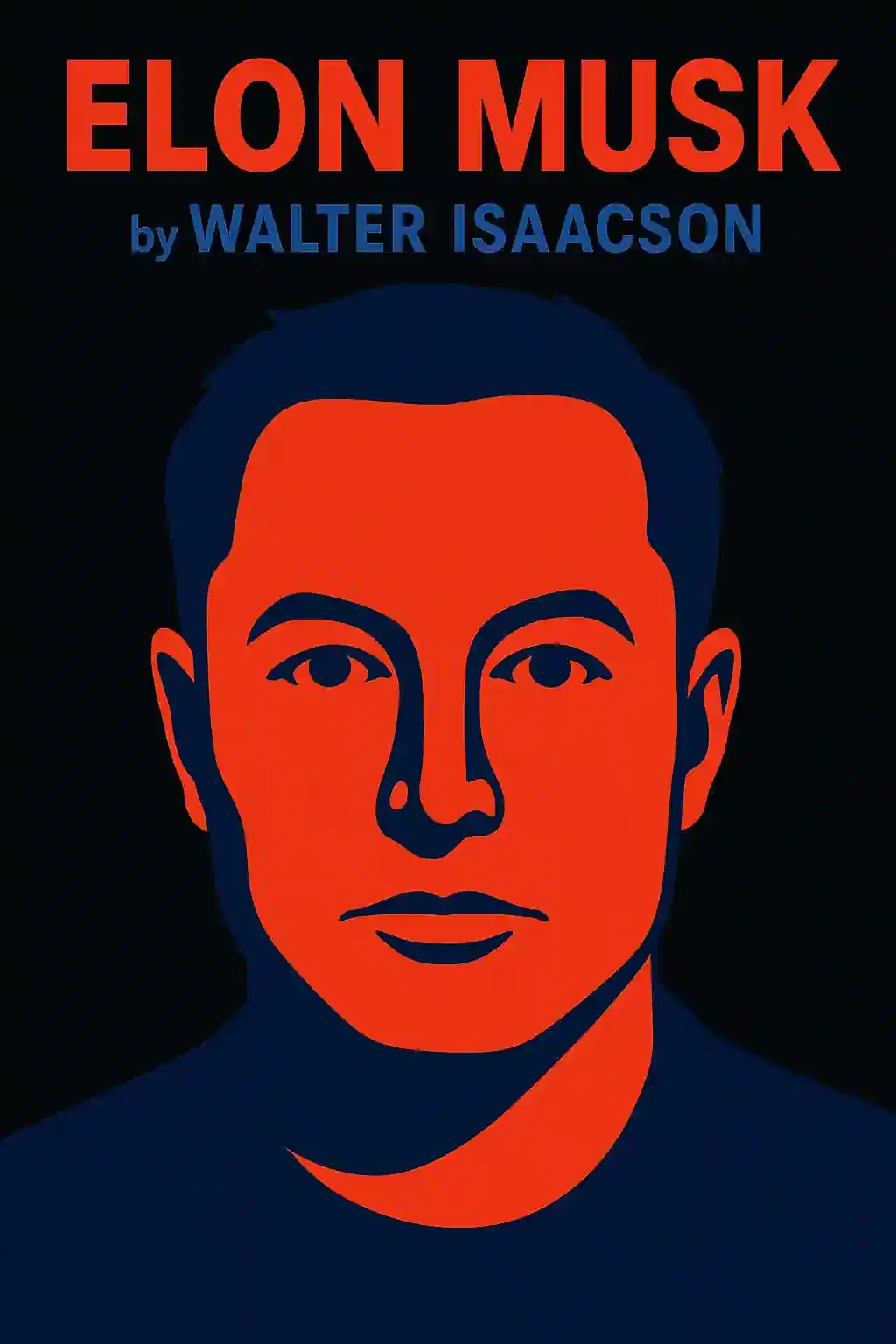
What is Elon Musk by Walter Isaacson about?
Walter Isaacson’s biography chronicles Musk’s life from his challenging childhood in South Africa to founding Tesla, SpaceX, and other ventures. It analyzes his "algorithm" for innovation while exposing his controversial leadership style and relentless drive to colonize Mars.
Who should read Elon Musk by Walter Isaacson?
Aspiring entrepreneurs, tech enthusiasts, and leadership studies students will gain insights into Musk’s innovation strategies. HR professionals and management teams can study the利弊 (pros and cons) of his demanding leadership approach.
Is Elon Musk by Walter Isaacson worth reading?
Yes – it provides unparalleled access to Musk’s inner circle and business tactics, though critics note it occasionally glosses over controversies like crypto manipulation and lacks deeper analysis of his interpersonal impacts.
What is Elon Musk’s "algorithm" for success?
Musk’s five-step process includes:
- Questioning every requirement
- Deleting unnecessary components
- Simplifying designs
- Optimizing processes
- Automating only after previous steps
This method drove Tesla and SpaceX breakthroughs but often caused employee burnout.
How does the book address Musk’s leadership style?
Isaacson documents Musk’s "demon mode" management – alternating between technical brilliance and harsh criticism. Employees face impossible deadlines but achieve accelerated innovation through his "surge" work cycles.
What childhood experiences shaped Elon Musk?
The biography details how school bullying in South Africa and estrangement from his father fueled Musk’s resilience and obsession with sci-fi-inspired missions like Mars colonization.
Does the book cover Musk’s acquisition of Twitter/X?
Yes – it explores Musk’s $44B Twitter takeover as part of his pattern to control platforms aligning with his vision, though analysis of the aftermath remains limited to pre-2023 events.
What criticisms does the book receive?
Critics argue Isaacson underanalyzes Musk’s promotion of cryptocurrency schemes and fails to sufficiently challenge his "save humanity" narratives. Some portrayals of corporate drama lack deeper psychological insights.
How does this biography compare to Ashlee Vance’s Elon Musk?
Isaacson’s version offers updated events (through 2023) and greater executive access but less technical depth about SpaceX/Tesla engineering than Vance’s 2015 work.
What key quotes define Musk in the book?
Notable lines include:
- “When something is important enough, you do it even if the odds are against you” (reflecting his risk-taking)
- “Your level of effort must exceed the requirements” (demanding work ethos)
How does the book explain Musk’s success with SpaceX?
It highlights his hands-on rocket engineering involvement, reusable booster innovations, and willingness to risk bankruptcy – contrasting NASA’s bureaucratic approach.
Feel the book through the author's voice
Turn knowledge into engaging, example-rich insights
Capture key ideas in a flash for fast learning
Enjoy the book in a fun and engaging way
Key Themes in Elon Musk
Quotes from Elon Musk
"Adversity shaped me," Elon Musk would later reflect. "My pain threshold became very high."
"He is a drama magnet. That's his compulsion, the theme of his life."
"Ever since I was a kid, if I start to think about something hard, then all of my sensory systems turn off," Elon explains.
"My dad was lonely, so lonely, and I felt I should keep him company. He used psychological wiles on me," he recalls.
"I was concerned that if I didn't study business, I would be forced to work for someone who did."
Characters in Elon Musk
Quick Summary Mode - Read or listen to Elon Musk Summary in 9 Minutes

Break down key ideas from Elon Musk into bite-sized takeaways to understand how innovative teams create, collaborate, and grow.

Flash Card Mode - Top 10 Insights from Elon Musk in a Nutshell

Distill Elon Musk into rapid-fire memory cues that highlight key principles of candor, teamwork, and creative resilience.

Fun Mode - Elon Musk Lessons Told Through 21-Min Stories

Experience Elon Musk through vivid storytelling that turns innovation lessons into moments you'll remember and apply.
Personalize Mode - Read or listen to Elon Musk Summary in 0 Minutes

Ask anything, pick the voice, and co-create insights that truly resonate with you.

From Columbia University alumni built in San Francisco
"Instead of endless scrolling, I just hit play on BeFreed. It saves me so much time."


"I never knew where to start with nonfiction—BeFreed’s book lists turned into podcasts gave me a clear path."


"Perfect balance between learning and entertainment. Finished ‘Thinking, Fast and Slow’ on my commute this week."
"Crazy how much I learned while walking the dog. BeFreed = small habits → big gains."
"Reading used to feel like a chore. Now it’s just part of my lifestyle."

"Feels effortless compared to reading. I’ve finished 6 books this month already."
"BeFreed turned my guilty doomscrolling into something that feels productive and inspiring."

"BeFreed turned my commute into learning time. 20-min podcasts are perfect for finishing books I never had time for."
"BeFreed replaced my podcast queue. Imagine Spotify for books — that’s it. 🙌"

"It is great for me to learn something from the book without reading it."
"The themed book list podcasts help me connect ideas across authors—like a guided audio journey."
"Makes me feel smarter every time before going to work"
From Columbia University alumni built in San Francisco
"Instead of endless scrolling, I just hit play on BeFreed. It saves me so much time."
"I never knew where to start with nonfiction—BeFreed’s book lists turned into podcasts gave me a clear path."
"Perfect balance between learning and entertainment. Finished ‘Thinking, Fast and Slow’ on my commute this week."
"Crazy how much I learned while walking the dog. BeFreed = small habits → big gains."
"Reading used to feel like a chore. Now it’s just part of my lifestyle."
"Feels effortless compared to reading. I’ve finished 6 books this month already."
"BeFreed turned my guilty doomscrolling into something that feels productive and inspiring."
"BeFreed turned my commute into learning time. 20-min podcasts are perfect for finishing books I never had time for."
"BeFreed replaced my podcast queue. Imagine Spotify for books — that’s it. 🙌"
"It is great for me to learn something from the book without reading it."
"The themed book list podcasts help me connect ideas across authors—like a guided audio journey."
"Makes me feel smarter every time before going to work"
"Instead of endless scrolling, I just hit play on BeFreed. It saves me so much time."
"I never knew where to start with nonfiction—BeFreed’s book lists turned into podcasts gave me a clear path."
"Perfect balance between learning and entertainment. Finished ‘Thinking, Fast and Slow’ on my commute this week."
"Crazy how much I learned while walking the dog. BeFreed = small habits → big gains."
"Reading used to feel like a chore. Now it’s just part of my lifestyle."
"Feels effortless compared to reading. I’ve finished 6 books this month already."
"BeFreed turned my guilty doomscrolling into something that feels productive and inspiring."
"BeFreed turned my commute into learning time. 20-min podcasts are perfect for finishing books I never had time for."
"BeFreed replaced my podcast queue. Imagine Spotify for books — that’s it. 🙌"
"It is great for me to learn something from the book without reading it."
"The themed book list podcasts help me connect ideas across authors—like a guided audio journey."
"Makes me feel smarter every time before going to work"
"Instead of endless scrolling, I just hit play on BeFreed. It saves me so much time."
"I never knew where to start with nonfiction—BeFreed’s book lists turned into podcasts gave me a clear path."
"Perfect balance between learning and entertainment. Finished ‘Thinking, Fast and Slow’ on my commute this week."
"Crazy how much I learned while walking the dog. BeFreed = small habits → big gains."
"Reading used to feel like a chore. Now it’s just part of my lifestyle."
"Feels effortless compared to reading. I’ve finished 6 books this month already."
"BeFreed turned my guilty doomscrolling into something that feels productive and inspiring."
"BeFreed turned my commute into learning time. 20-min podcasts are perfect for finishing books I never had time for."
"BeFreed replaced my podcast queue. Imagine Spotify for books — that’s it. 🙌"
"It is great for me to learn something from the book without reading it."
"The themed book list podcasts help me connect ideas across authors—like a guided audio journey."
"Makes me feel smarter every time before going to work"

Get the Elon Musk summary as a free PDF or EPUB. Print it or read offline anytime.