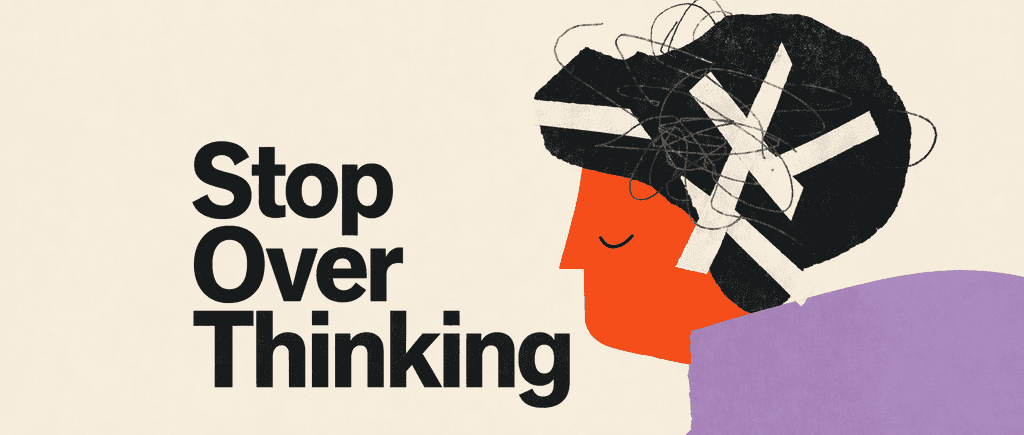
Struggling to keep your train of thought? We explore why associations loosen and how to rebuild the psychic skin that keeps your identity stable.
Best quote from When Thoughts Get Too Loose
“
The goal isn't to become a brick wall; it’s to become a healthy skin. We want to be porous enough to love and be loved, but solid enough to not lose ourselves in the process.
”
F
Generated by Freedee_C80FE9AB
Input question
Personality being too lose meaning phycologically he was talking and to tune the page he said too lose
Host voices
Lena
Blythe
Knowledge sources
Frequently Asked Questions
A loosening of associations occurs when the logical bridges between thoughts vanish, causing a person’s conversation or internal monologue to become disjointed. Instead of following a linear path, the mind might jump between topics based on random stimuli, such as shifting from a discussion about the weather to a history of locomotives simply because the word "rain" sounds like "train." This is often described as a "leaky container" or a dissolving membrane where the psychic skin that usually keeps ideas separate begins to fail, leading to a fragmented sense of self.
The ego boundary is a psychological mechanism that acts like a "psychic skin," functioning as a filter to distinguish between the self and the external world. When this boundary becomes porous or thins, a person may experience ego boundary loss, where the line between their own emotions and the environment blurs. This can lead to phenomena like somatic merging, where an individual physically feels the sensations or pain of another person, or a radical confusion regarding whether a specific thought or feeling originated from within themselves or from someone else nearby.
These levels represent a spectrum of structural stability within the psyche, often compared to the state of a snowman. The neurotic level is like a "frozen snowman" where the personality is rigid but the building is solid and reality testing is intact. The borderline level is described as a "melting snowman" where the sense of self is inconsistent and fluctuates between a need for intense closeness and a fear of being invaded. The psychotic level represents a "melted snowman" where the boundaries between the self and the world have completely dissolved, often leading to primitive defense mechanisms and a fear of total annihilation.
These are specific symptoms that occur when the psychological container of the mind fails to hold its own content. Thought insertion is the terrifying experience of believing that external agents are placing thoughts directly into one's mind, representing a total breakdown of the internal-external boundary. Conversely, thought broadcasting is the sensation that one's private thoughts are escaping the mind and being transmitted to others, as if the person has a megaphone attached to their brain. Both indicate a profound failure in the brain's "source monitoring" filters.
Rebuilding the self involves a process of structural repair that often starts with creating a predictable external environment or "container." This can be achieved through therapy that emphasizes stable boundaries, or through practicing "mentalization" to identify which thoughts and feelings are truly one's own. Practical daily techniques include grounding exercises to reconnect with the physical body, narrative reconstruction to create a coherent life story, and establishing stable routines like regular sleep and organized spaces to provide external scaffolding for the internal mind.
From Columbia University alumni | built in San Francisco
BeFreed Brings Together A Global Community Of Curious Minds
4.7
avg rating
7.84k+ App Rating
BeFreed Community
Seriously I haven’t even explored this app fully yet but from using it the last few days I am so impressed... BeFreed is on a different level from any other learning app I have used. This makes it ultra engaging and can actually improve your concentration which is great for all the doom scrollers!
@ladyInfinity
I bought BeFreed exactly 23 days ago, and I have used it every single day since. It has completely embedded itself into my daily workflow and learning habit.
@jayallen
The truth is, the app has exceeded all my expectations. I can ask it to generate audio on any topic, whatever it may be, and the result is impressive. My professional field is a specialization in psychotherapy and it is multidisciplinary; however, the answers are very accurate.
@Raguipa
What I appreciate most is how much it's reduced my scrolling – I'm spending less time searching and more time absorbing information. The combination of full audiobooks, podcasts, the learning plans are brilliant.
@colonyofcreatorsNGO
I have been a PhotoReading Accelerated Learning Instructor for the past 24 years... books and reading and learning are my thing, and BeFreed has done a great job in providing an innovative approach to disseminating and delivering information in an easy to consume way.
@BeFreed user
It is not just a book summary app, I have used the 'fun reading' option and it's a much better summary and way to grasp ideas the traditional way, that alone is worth this deal.
@austinakon
I love this app. Used it for several days and I cannot stop listening. Such a great way to start.
@jcrules328
I really like the program; I have already tested it for around one month, and I feel that it's an amazing gem. It works so well because I can use BeFreed to create my own topics, and the voice is so good with unlimited choice of narrations.
@DanielCZ
Seriously I haven’t even explored this app fully yet but from using it the last few days I am so impressed... BeFreed is on a different level from any other learning app I have used. This makes it ultra engaging and can actually improve your concentration which is great for all the doom scrollers!
@ladyInfinity
I bought BeFreed exactly 23 days ago, and I have used it every single day since. It has completely embedded itself into my daily workflow and learning habit.
@jayallen
The truth is, the app has exceeded all my expectations. I can ask it to generate audio on any topic, whatever it may be, and the result is impressive. My professional field is a specialization in psychotherapy and it is multidisciplinary; however, the answers are very accurate.
@Raguipa
What I appreciate most is how much it's reduced my scrolling – I'm spending less time searching and more time absorbing information. The combination of full audiobooks, podcasts, the learning plans are brilliant.
@colonyofcreatorsNGO
I have been a PhotoReading Accelerated Learning Instructor for the past 24 years... books and reading and learning are my thing, and BeFreed has done a great job in providing an innovative approach to disseminating and delivering information in an easy to consume way.
@BeFreed user
It is not just a book summary app, I have used the 'fun reading' option and it's a much better summary and way to grasp ideas the traditional way, that alone is worth this deal.
@austinakon
I love this app. Used it for several days and I cannot stop listening. Such a great way to start.
@jcrules328
I really like the program; I have already tested it for around one month, and I feel that it's an amazing gem. It works so well because I can use BeFreed to create my own topics, and the voice is so good with unlimited choice of narrations.
@DanielCZ
I love the fact that I can get useful, condensed, information and ideas in a 8 - 15 minute podcast style audio. I'm not a general fan of podcasts because of all the fluff, but this cuts through all that.
@BeFreed user
I am finishing up my doctorate, and have to read a lot of unfamiliar material... With BeFreed, you simply enter a prompt, and the app finds source material for you and generates an audio podcast. I find the process in BeFreed to be more streamlined than NotebookLM.
@Brad
I often search YouTube for something to listen to whilst making breakfast, when I'm out walking, commuting, etc, and BeFreed has provided an even more targeted approach, without the adverts and the fluff!
@BeFreed user
The absolute best part about this platform is its versatility. There is literally no subject that is off-topic. It handles whatever you throw at it... It is rare to find an learning tool with zero limitations that actually delivers on its promises.
@jayallen
BeFreed is fantastic. The user-friendly design means I spend less time navigating and more time learning. The mix of audiobooks, podcasts, and learning plans is a genius combo that has completely changed my daily routine.
@BeFreed user
At the start I needed a while to understand how to create podcasts in italian language and boom! It is so great! I can ask to explain every argument and it does so well and so smartly!
@matteo77
BeFreed has become my daily app for audio books tools... What I like the most is the way you put your text and come with an audio that you can listen on the go.
@kotanzu1
I love the fact that I can get useful, condensed, information and ideas in a 8 - 15 minute podcast style audio. I'm not a general fan of podcasts because of all the fluff, but this cuts through all that.
@BeFreed user
I am finishing up my doctorate, and have to read a lot of unfamiliar material... With BeFreed, you simply enter a prompt, and the app finds source material for you and generates an audio podcast. I find the process in BeFreed to be more streamlined than NotebookLM.
@Brad
I often search YouTube for something to listen to whilst making breakfast, when I'm out walking, commuting, etc, and BeFreed has provided an even more targeted approach, without the adverts and the fluff!
@BeFreed user
The absolute best part about this platform is its versatility. There is literally no subject that is off-topic. It handles whatever you throw at it... It is rare to find an learning tool with zero limitations that actually delivers on its promises.
@jayallen
BeFreed is fantastic. The user-friendly design means I spend less time navigating and more time learning. The mix of audiobooks, podcasts, and learning plans is a genius combo that has completely changed my daily routine.
@BeFreed user
At the start I needed a while to understand how to create podcasts in italian language and boom! It is so great! I can ask to explain every argument and it does so well and so smartly!
@matteo77
BeFreed has become my daily app for audio books tools... What I like the most is the way you put your text and come with an audio that you can listen on the go.
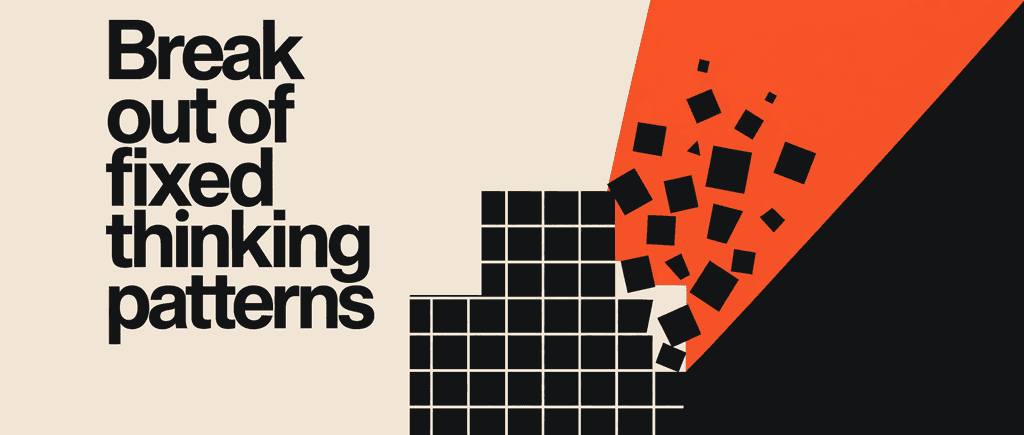
When thoughts feel like a record player stuck in a scratch, the brain has become too rigid. Explore how new science aims to reset our neural circuitry.