The Day an Excavator Rewrote the History of Civilization
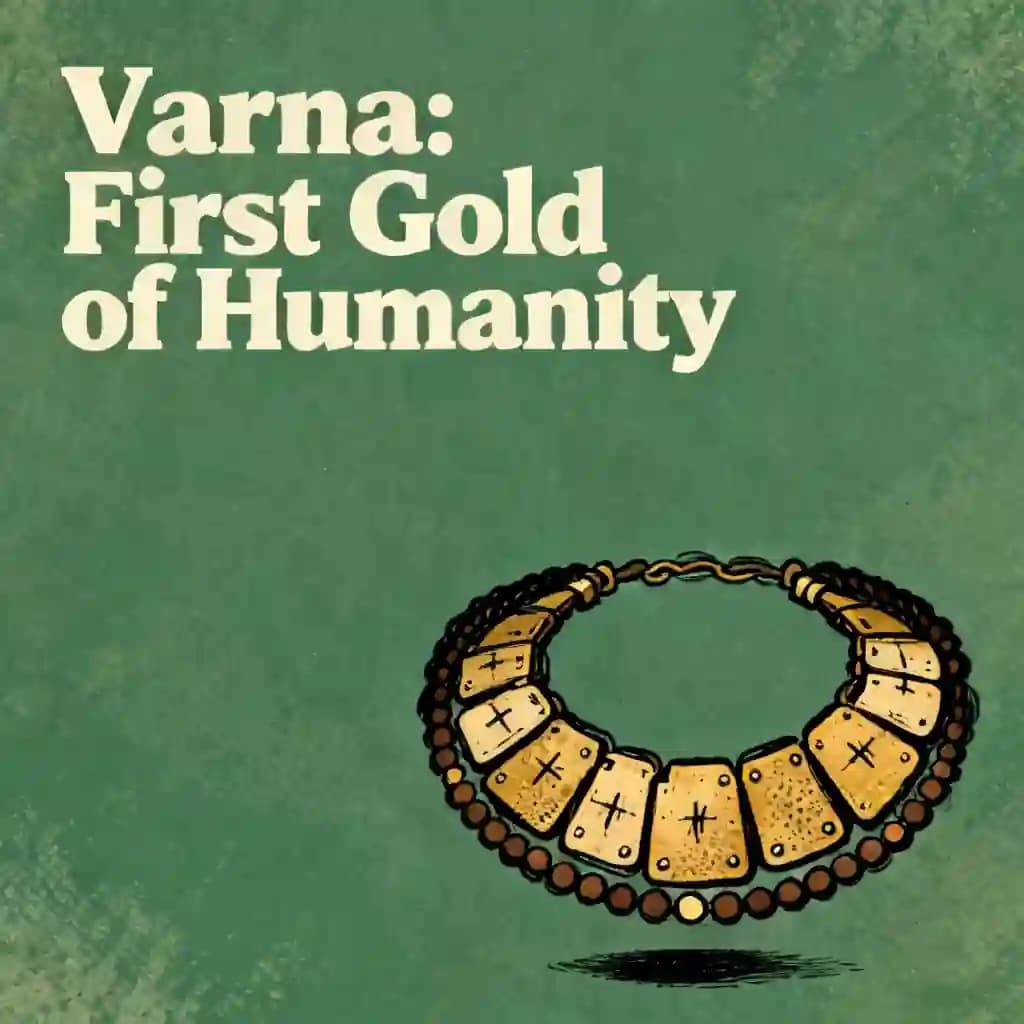
Imagine you are Raycho Marinov, a regular excavator operator working in the western industrial zone of Varna, Bulgaria, in the autumn of 1972 . It is a Tuesday in October—a day that started like any other, focused on the mundane task of digging a trench for an electric cable . But as the steel teeth of your machine bite into the earth just half a kilometer from Lake Varna, you don't hit the usual clay or limestone. Instead, you see a flash of yellow—a glint so bright and pure that it stops you mid-breath . You climb down from the cab, brush away the dirt, and realize you haven't just found a few trinkets. You have accidentally stumbled upon a treasure that would eventually be recognized as the oldest gold jewelry ever crafted by human hands, dating back over 6,500 years .
This moment changed everything we thought we knew about the roots of human inequality and social complexity. Before this discovery, the history books told us that the first great civilizations—the ones with kings, specialized craftsmen, and massive wealth—started in Mesopotamia or Egypt. But the Varna Necropolis pushed that timeline back by centuries, revealing a sophisticated "climax" culture in the Balkans that was mastering metallurgy and social stratification while the rest of Europe was still in the relatively egalitarian Stone Age . Why does this matter to you today? Because Varna is the "Patient Zero" of the modern world's social structure. It is one of the earliest direct pieces of archaeological evidence for social hierarchy in human prehistory, where some individuals were literally covered in gold while others had nothing .
In this episode, we are going to dive deep into this lost world of the Chalcolithic—or Copper Age—and explore how a community of traders and smiths in northeastern Bulgaria created a society so wealthy it possessed more gold than the entire rest of the world combined at that time . We will look at the stunning Grave 43, the symbolic "empty" burials that suggest a deep religious mystery, and the prehistoric salt mines that fueled this ancient economy. We are going to see how these people weren't just survivors; they were the architects of a new kind of human existence, one defined by prestige, power, and the soft, eternal glow of gold . So, let's take a step back into the fifth millennium BC and see how a chance discovery in an industrial zone upended our understanding of who we are.