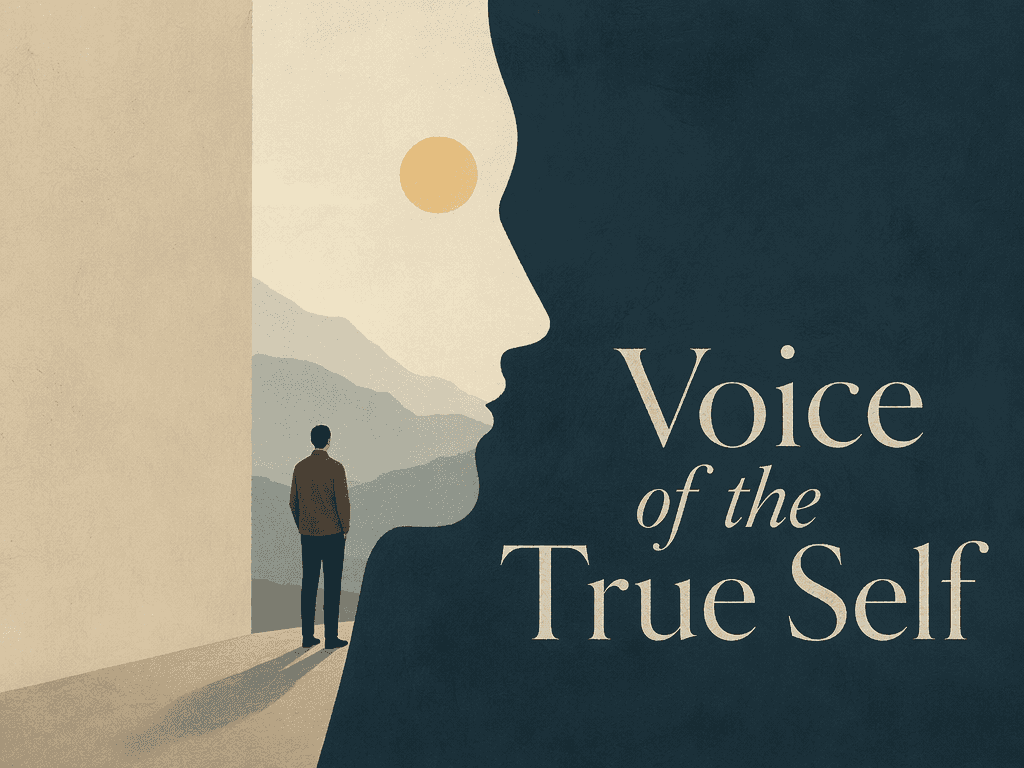
Tired of being stuck in your own head? Learn how to observe your thoughts without being controlled by them so you can live with more freedom and joy.

If you can hear the voice, it can’t be you. If you were the voice, who would be listening? The voice is the object, and you are the subject—the one watching the whole show.
From Columbia University alumni built in San Francisco
"Instead of endless scrolling, I just hit play on BeFreed. It saves me so much time."
"I never knew where to start with nonfiction—BeFreed’s book lists turned into podcasts gave me a clear path."
"Perfect balance between learning and entertainment. Finished ‘Thinking, Fast and Slow’ on my commute this week."
"Crazy how much I learned while walking the dog. BeFreed = small habits → big gains."
"Reading used to feel like a chore. Now it’s just part of my lifestyle."
"Feels effortless compared to reading. I’ve finished 6 books this month already."
"BeFreed turned my guilty doomscrolling into something that feels productive and inspiring."
"BeFreed turned my commute into learning time. 20-min podcasts are perfect for finishing books I never had time for."
"BeFreed replaced my podcast queue. Imagine Spotify for books — that’s it. 🙌"
"It is great for me to learn something from the book without reading it."
"The themed book list podcasts help me connect ideas across authors—like a guided audio journey."
"Makes me feel smarter every time before going to work"
From Columbia University alumni built in San Francisco

Lena: You know, Miles, I was thinking about how often we feel completely at the mercy of our own minds. It’s like there’s this constant roommate in our heads that just won't stop talking, right?
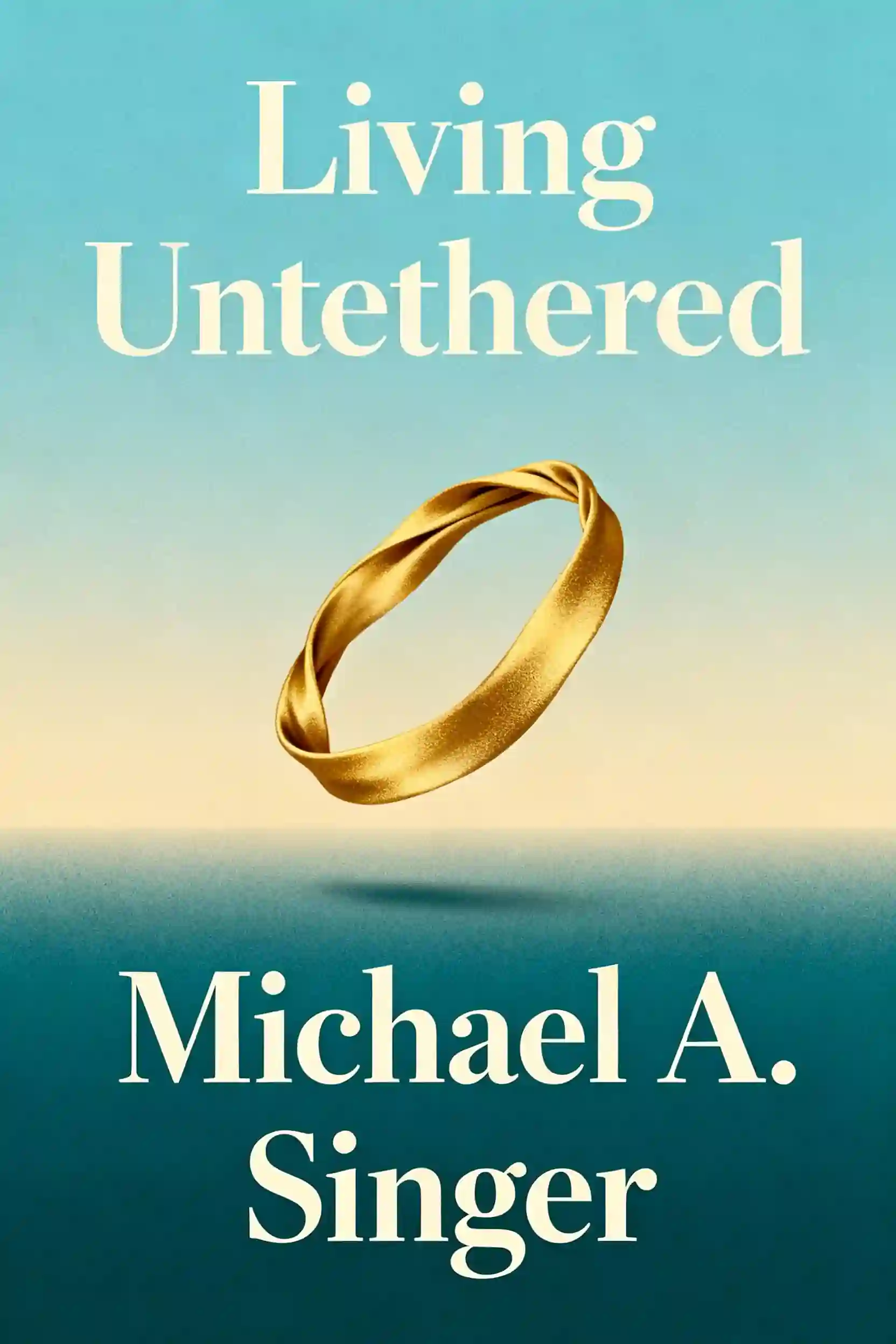
Miles: Exactly, and that’s the relatable struggle Michael A. Singer taps into. It’s fascinating because his book, *The Untethered Soul*, has actually touched over a million readers since it first came out nearly nineteen years ago. He suggests that we don't have to be tethered to those habitual thoughts and painful memories.
Lena: I love that idea of being "untethered." It sounds so liberating to think we could actually soar beyond our own boundaries.
Miles: It really is. Singer’s background is so unique—he went from a master’s in economics to a deep inner awakening that led him into seclusion for yoga and meditation. He eventually founded the Temple of the Universe back in 1975.
Lena: So he’s really lived this journey into "inner space." Let’s explore how we can start to change our relationship with that inner voice.
Miles: It’s so wild to think that he was a doctoral student in economics when this shift happened. You usually associate that field with spreadsheets and market trends—not exactly the "nature of the soul." But he really emphasizes that this journey isn't just for monks on a mountain. It’s for the person sitting in traffic or dealing with a stressful deadline. And to get there—to that "untethered" state—he says we have to understand the "tethered" one first.
Lena: Right, the one currently tied down by all that mental chatter. You mentioned the "roommate" earlier. I think we’ve all had those moments where we’re trying to fall asleep and this voice is just replaying an awkward conversation from three years ago. It’s relentless!
Miles: It really is. And Singer’s point is that if you can *hear* the voice, it can’t be you. I mean, think about it—if you were the voice, who would be listening? There has to be a subject and an object. The voice is the object, and you are the subject—the one watching the whole show.
Lena: That’s such a simple distinction, but it’s actually really profound when you sit with it. It reminds me of those ancient philosophies he draws from—like Samkhya. I was reading a bit about how that’s one of the oldest schools of Indian thought, and it basically provides a blueprint for this exact thing.
Miles: Exactly. Samkhya splits everything into two categories: *Purusha* and *Prakriti*. *Purusha* is the pure consciousness—the Witness. And *Prakriti* is everything else—nature, matter, and most importantly for us, the mind. The "tethered" soul is basically what happens when we confuse the two. We get so caught up in the movements of *Prakriti*—the thoughts, the moods, the physical sensations—that we forget we’re actually the *Purusha* watching it all happen.
Lena: So it’s like we’re at a movie theater, and we’ve become so immersed in the film that we’ve forgotten we’re sitting in a seat. We’re literally ducking when a car on screen drives toward us.
Miles: That’s a perfect analogy. We’re ducking at our own thoughts! Singer calls the Witness the "Seat of the Self." When we practice stepping back into that seat, we’re training ourselves to stop being the voice and start being the one who notices the voice. It’s like moving from the turbulent surface of the ocean down into the deep, still waters where the storms don't reach.
Lena: I love that. But I have to ask—how does that actually help when I’m having a "bad day"? If I’m feeling really anxious or frustrated, does just "noticing" it really make a difference?
Miles: It makes all the difference because it breaks the identification. Think about a bad mood. Usually, we say "I am angry" or "I am sad." But from the Seat of the Self, it becomes "I am noticing a feeling of anger passing through my consciousness." It’s a subtle shift in language, but a massive shift in experience. You’re no longer *in* the anger; you’re the space *around* the anger.
Lena: So the anger is just a cloud passing through the sky. The sky doesn't have to do anything about the cloud—it just lets it pass.
Miles: Precisely. The sky isn't "tethered" to the cloud. The clouds come and go, but the sky remains untouched. Singer says our problem is that we’re constantly trying to "fix" the clouds or push them away, which just keeps our attention locked on them. We’re so busy narrating and judging every little mental movement that we never actually experience the vastness of the sky itself.
Lena: It’s interesting because he’s essentially modernizing this ancient dualism. He’s taking these heavy concepts like *Purusha* and making them accessible by talking about this annoying "roommate" in our heads. It makes the "inner work" feel less like a chore and more like... well, like reclaiming your own house.
Miles: "Reclaiming your life"—that’s exactly how he puts it. He says right now, your life isn't your own; it belongs to your inner roommate, the psyche. You have to take it back. And you do that by standing firm in that seat of the witness. It’s about realizing that the one inside who is aware that you are talking to yourself is always silent. That silence is the doorway.
Lena: It’s a bit of a paradox, isn't it? To find your true self, you have to find the part of you that doesn't say anything at all.
Miles: It really is. And once you start to inhabit that silence, you realize that the roommate is actually just a narrator. It’s like a computer translating data into bits of information. Your mind translates your experiences into thoughts and gives them a voice, but you don't actually *need* the voice to experience reality. You can feel the cold without a voice telling you "It’s cold."
Lena: Right! The narration is just an extra layer of filters. We’re experiencing the interpretation of life rather than life itself. It’s like we’re living inside a translated version of a book instead of the original text.
Miles: And the translation is often biased! The roommate has opinions about everything—what’s "good," what’s "bad," what "should" be happening. If we don't wake up to that, we’re just living in a world of mental constructs. We’re tethered to the realm of thoughts instead of reality.
Lena: You know, Miles, thinking about the "roommate" is one thing, but actually pinning down who is *watching* the roommate feels like a whole different level. It reminds me of that question Michael Singer poses: "Who am I?"
Miles: It’s the ultimate question, right? And it’s not just a Singer thing. He’s deeply influenced by Ramana Maharshi, this legendary Indian master who taught something called *Atma-Vichara*, or Self-Inquiry. The whole goal is to find the source of the observer.
Lena: I was reading about Maharshi—he had this fascinating way of describing the ego as a "ghost." He said it doesn't have a form of its own; it just survives by feeding on the forms of the body and mind. Like a ghost that haunts a house but isn't actually the house.
Miles: That’s such a vivid image. And the idea is that once you actually scrutinize the ghost—once you turn around and look it right in the eye—it disappears. It’s like when you’re a kid and you’re scared of a shadow on the wall, but then you turn on the light and realize it was just a pile of clothes.
Lena: So the "I" we usually think of—our labels, our roles, our memories—that’s the shadow?
Miles: Exactly. We build this whole identity out of "I am a teacher," "I am a parent," "I am someone who likes coffee." But those are all just objects of awareness. If you can observe your thoughts, you are not your thoughts. If you can observe your personality, you are not your personality. Maharshi’s method is to trace that "I-thought" back to its source. Instead of getting lost in the *story* of your life, you keep asking, "To whom is this happening?"
Lena: "To whom is this happening?" I tried that the other day when I was stuck in a long line at the grocery store. I was getting so impatient, and I just asked myself, "Who is experiencing this impatience?" And for a split second, there was this gap. The impatience was still there, but *I* wasn't the one being impatient anymore. I was just the one watching it.
Miles: That’s it! That’s the process of *Viveka*, or discrimination. It’s learning to tell the difference between the witness and the witnessed. Singer says that the untethered soul isn't something you have to *achieve* through massive effort. It’s something that’s already there, like the sun behind the clouds. You don't have to create the sun; you just have to stop identifying with the clouds that are blocking it.
Lena: It’s such a relief to think about it that way. Like, I don't have to build a "better" version of myself; I just have to stop clinging to the fake ones. But it’s hard, Miles! The "knot" between our awareness and our mental noise is so tight.
Miles: It really is. We’ve been practicing being "tethered" for our entire lives. We’ve been trained to believe that our thoughts are the most important things in the world. Singer points out that we’ve given our minds this impossible task—we’ve asked our minds to manipulate the outside world so that we can feel okay inside.
Lena: Oh, that hits home. "If I can just get this promotion, or if this person would just stop being annoying, then I’ll finally be at peace."
Miles: Right. And it’s a trap because the mind can't control the world. It can't control the weather, it can't control other people, it can't even control what thought pops up next! When we give the mind that job, it breaks. It becomes neurotic and hyperactive because it’s trying to do something it’s not designed to do.
Lena: So we’ve essentially put a toddler in charge of a nuclear power plant and then we wonder why we’re stressed out.
Miles: Ha! Exactly. And the "Self-Inquiry" part is about stepping back and saying, "Wait, I’m not the toddler. I’m the one watching the toddler." Maharshi’s point is that the "I am that I am" is the whole truth. You don't need to be "this" or "that." You just need to *be*.
Lena: It reminds me of a reflection activity I saw in some of these teachings. You set a timer for five minutes and just keep asking "Who am I?" Not looking for a verbal answer, but just feeling into that source. Have you ever tried that?
Miles: I have. It’s actually pretty disorienting at first because the mind wants to give you answers. It says, "I’m Miles, I’m a podcaster, I’m tired." But you just keep pushing past the labels. Eventually, you hit this wall where there are no more words, and there’s just this... vastness. This silent awareness.
Lena: And that’s the "untethered" part. The part that isn't dependent on anything happening in the outside world.
Miles: Precisely. It’s the realization that you are the sky, not the clouds. And once you find that seat, you realize that the "inner thorn"—the things that normally trigger you or make you close your heart—they don't have the same power over you. You don't have to build a whole life around avoiding discomfort because you’re no longer identifying with the part of you that feels uncomfortable.
Lena: It’s like we’re moving from protection to freedom. Instead of building a wall around our hearts, we’re learning to stay open by realizing the "Self" can't actually be hurt by a thought or an emotion.
Miles: That’s the big shift. If you protect yourself, you’ll never grow. But if you realize that the one watching doesn't *need* protection, the whole game changes. You stop being a victim of your own impulses and start becoming a conscious observer.
Lena: It’s fascinating how Singer bridges these different worlds. We’ve talked about the "Witness" from Samkhya and the "Inquiry" of Ramana Maharshi, but then there’s this whole other layer—the evolution of consciousness. That really brings in the work of Sri Aurobindo, right?
Miles: Absolutely. Aurobindo is such a powerhouse in this conversation. While Maharshi focuses on that ascent into the silent Self—kind of pulling back from the world—Aurobindo is interested in the *descent* of that silence into our actual lives. He sees the ego not just as a "ghost" or a mistake, but as a temporary tool.
Lena: A tool? That’s an interesting way to put it. Like a set of training wheels?
Miles: Exactly! In his work, *The Synthesis of Yoga*, he describes the ego as an "instrumentation of Nature." It’s something the soul uses to navigate physical existence until it’s ready for something bigger. The problem is we get stuck in the training wheels and think that’s the whole bike.
Lena: So the goal isn't just to escape the world and hide in a cave of "pure awareness," but to bring that awareness *into* the world?
Miles: Right. Aurobindo’s Integral Yoga is all about transformation. He says that becoming the Witness is just the *first step* toward the soul’s freedom and mastery. It’s not the finish line. Once you’ve stepped back into that Seat of the Self, you can actually participate in the world with way more power because you’re not a victim of your impulses anymore.
Lena: That sounds like moving from being a passenger in a car to being the driver. Or maybe even the engineer who understands how the whole car works.
Miles: I think it’s more like realizing you aren't the car at all, but you’re the one using it to get somewhere meaningful. Aurobindo talks about "self-imprisonment" in habitual action. We get stuck in these narrow rounds of ego-driven desires—"I want this, I fear that"—and it keeps us small. But when we untether, we start to act from a place of "vastness."
Lena: I love that word—"vastness." It makes the spiritual life sound so much more dynamic. It’s not just about being "calm"; it’s about being *limitless*.
Miles: It’s about becoming a conscious co-creator. Think about it: if you’re not constantly triggered by your "inner roommate" or trying to protect your "inner thorns," you have all this extra energy. Singer talks about this too—how there’s a constant flow of energy, like Chi or Spirit, available within us. When we’re tethered and closed, we’re literally blocking our own power.
Lena: That makes so much sense. When I’m in a "bad mood" or I’m ruminating, I feel exhausted. It’s like my battery is being drained by a bunch of background apps I didn't even know were running.
Miles: That’s a great way to put it! And those background apps are often what Singer calls *Samskaras*. It’s a term from yogic philosophy that basically refers to stored past energy patterns. Think of them as unfinished business. Something happened to you in the past—maybe someone said something mean—and instead of letting that energy pass through you, you tightened up. You resisted it. And now that energy is just cycling around inside you, waiting for something to trigger it.
Lena: So a *Samskara* is like a mental "knot" that keeps us tethered to the past. And every time a similar situation happens, it hits that knot and we relive the whole thing.
Miles: Precisely. You don't experience the present moment as it is; you experience it through the filter of that old pain. Singer says we’ve collected thousands of these impressions over our lives, and they’re all stored in our energetic heart center. That’s why we "close" our hearts—we’re trying to protect ourselves from feeling those old knots.
Lena: But the irony is that by closing, we’re keeping the knots trapped inside!
Miles: Right! We’re essentially locking ourselves in a room with the thing we’re afraid of. Aurobindo’s vision is that we can eventually transform our nature itself into a vessel for the spirit. We don't just "let go" to get away; we "let go" to become clear enough that the higher consciousness can actually flow through us.
Lena: It’s a complete shift in perspective. Instead of being a "limited and separate" self, we’re part of this evolutionary transition. It makes me wonder—what’s one habit I have that keeps me feeling "limited"? Probably my need for approval. That’s a massive tether.
Miles: We all have them. For some, it’s a need for control; for others, it’s a fear of failure. But Aurobindo reminds us that these are just "habitual rounds." They aren't who we are. When we stand free as the conscious observer, we gain what he calls "inalienable power."
Lena: "Inalienable power." That sounds a lot more reliable than the fleeting "power" we get from winning an argument or getting a like on social media.
Miles: Definitely. It’s the power of presence. It’s the difference between reacting and responding. And as we integrate these ideas—the architectural rigor of Samkhya, the direct inquiry of Maharshi, and the evolutionary vision of Aurobindo—we see that the "Untethered Soul" is a living, breathing reality that’s accessible right now.
Lena: You know, Miles, we’ve talked a lot about the mind, but Singer spends a lot of time talking about the *heart* too. And not just in a poetic way, but almost like an energy center. He says the heart opens and closes just like a valve.
Miles: It’s a huge part of his teaching. He calls it the "energetic heart." Think about when you’re in love or you’re really inspired—you feel this rush of energy, right? You feel light, you feel like you could take on the world. That’s an open heart. But then something happens—a criticism, a disappointment—and it’s like a door slams shut. Suddenly, you’re tired, you’re heavy, you’re "closed."
Lena: I can literally feel that physical tightening in my chest when I’m stressed. It’s like a clench. And Singer says our goal should be to "stay open no matter what." Which, let’s be honest, sounds impossible when life is throwing curveballs at you.
Miles: It *is* the ultimate challenge. But he’s got this really interesting take on it. He says the reason we close is because of those *Samskaras* we mentioned—those stored past energies. When something happens that "hits" one of those old wounds, it’s painful. So we instinctively close to try and stop the pain.
Lena: But he says that’s exactly where we go wrong. He says we should "let the energy pass through." What does that actually look like in practice?
Miles: It’s about "conscious relaxing." Imagine you’re driving and someone cuts you off. Your immediate reaction is probably a "clench"—your heart starts to close, the roommate starts shouting about how rude that person was, and you’re starting to build a story. Singer says in that exact moment, you have a choice. You can follow the roommate into the story, or you can notice the tightening and... just relax.
Lena: "Just relax." It sounds so simple, but in that moment of anger, it feels like the hardest thing in the world.
Miles: It really does! But he’s not saying you should pretend you’re not angry. He’s saying you should feel the *energy* of the anger without attaching a story to it. Don't analyze *why* you’re mad or what you should do about it. Just feel the heat, feel the tension, and consciously relax your shoulders, relax your chest. Let the energy move.
Lena: So it’s like the energy is a wave, and if you clench, you’re trying to hold the wave back, which just makes it crash harder. But if you relax, you let the wave wash over you and move on.
Miles: Perfect analogy. If you let it pass through, the *Samskara* actually starts to clear. You’re letting that old, stored pain move out of your system. He famously says, "It was stored with pain, it will be released with pain." So yeah, it might hurt for a second, but then it’s *gone*. You’ve untethered a little piece of your soul.
Lena: Wow. So the "negative" emotions aren't actually the problem—it’s our resistance to them that keeps them stuck.
Miles: Exactly. "Resistance creates suffering." That’s a core principle. We think we’re protecting ourselves by closing, but we’re actually just creating a "Heart Wall." I think I saw that in some other work—this idea that we build these energetic barriers that eventually block out the good stuff too. If you’re closed to the pain, you’re eventually going to be closed to the joy.
Lena: That’s a heavy thought. By trying to avoid the "bad" feelings, I’m accidentally muting the "good" ones. I’m living in a gray world because I’m afraid of the dark.
Miles: And the way out is through. Singer says you are only limited by your ability to stay open. Imagine if nothing that happened in life was important enough for you to be willing to close your heart over it. That’s what he calls "unconditional happiness."
Lena: Unconditional happiness. That feels so different from how we usually think about it. Usually, it’s "I’ll be happy *if* I get the job" or "I’ll be happy *when* the weekend comes."
Miles: Right. Those are conditions. We’ve made our happiness a hostage to the outside world. But if you decide that your job is to stay open—to keep that energy flowing no matter what—then happiness becomes your permanent state. You might still feel sad or angry, but those are just things passing through the open space of your heart. They don't "tether" you anymore.
Lena: It reminds me of the "Middle Way" in some of these traditions. You’re not being passive and just letting life walk all over you, but you’re also not trying to control everything with an iron fist. You’re engaging fully, but you’re staying unattached internally.
Miles: "Engage fully, stay unattached." That’s the sweet spot. And it takes constant practice. Singer says this isn't a one-time decision; it’s a moment-to-moment commitment. Every time you feel that "inner thorn" get poked, you have to choose: remove the thorn or build a life around avoiding it?
Lena: I think most of us spend a lot of time building lives around avoiding the thorns. We change our routines, we avoid certain people, we stay in our comfort zones—all to keep from feeling that little poke.
Miles: And that’s the "mental prison" he talks about. We think we’re being "safe," but we’re actually just trapped. Going beyond always means letting go of the effort to keep things within our defined limits. It’s about realizing that life is actually trying to help us move out of our cage. Every challenge is just an opportunity to practice staying open and letting go.
Lena: You know, Miles, it’s one thing to talk about "staying open" when things are going okay, but Singer asks this one question that really stops you in your tracks: "Do you want to be happy, or do you not want to be happy?"
Miles: It sounds like a trick question, doesn't it? Like, obviously, everyone wants to be happy! But he argues that most of us haven't actually made that choice. We’ve made a choice to be happy *under certain conditions*.
Lena: Right. "I’ll be happy if the traffic is light, if my coffee is hot, and if my boss is in a good mood." But if any of those things go wrong, we’ve basically given ourselves permission to be miserable.
Miles: Exactly. We’ve outsourced our well-being to a world that we have zero control over. Singer says the only way to be truly "untethered" is to make the decision to be happy *no matter what*. It’s a commitment to the "Seat of the Self" over the "roommate’s" complaints.
Lena: I love how he frames it as the "only question that matters." It simplifies everything. If I’ve committed to being happy, then when a problem arises, the question isn't "How do I fix this so I can be happy again?" but rather "Can I be happy while this is happening?"
Miles: It’s a radical shift. And he’s very clear that this doesn't mean you become some sort of passive doormat. If your house is on fire, you still put out the fire! But you don't have to be *miserable* while you’re doing it. You can act from a place of clarity and presence instead of panic and resistance.
Lena: That reminds me of the "Middle Way" concept we touched on. It’s about avoiding the extremes of total control—which is exhausting and impossible—and total passivity—which is just checked-out. It’s being fully engaged but internally free.
Miles: "Internally free." That’s the goal. And it’s interesting because there’s actually some research that backs up why this works. I was looking at some recent studies—like one from 2024—that explored how even short mindfulness practices can increase things like gratitude, elevation, and "inner peace."
Lena: Wait, even just a few minutes of practice?
Miles: Yeah! This study from late 2024 found that practices like a "body scan" or focusing on the breath can significantly increase what they call "self-transcendent" positive emotions. It’s like we’re literally training our brains to step out of that self-centered "roommate" mode and into a state of oneness or harmony.
Lena: That’s fascinating. So it’s not just "positive thinking"; it’s actually a psychological process of broadening our awareness.
Miles: Exactly. The study showed that when we move into "meta-awareness"—that "posture" of observing our own thoughts—we start to feel more "self-transcendent." And those specific emotions—gratitude, awe, elevation—are what actually build lasting well-being. They’re different from "pride," which is more self-centered and doesn't have the same long-term benefit.
Lena: That makes a lot of sense. Pride is often about "me" doing something well, which still keeps the ego in the driver’s seat. But gratitude and awe are about something *bigger* than "me." They untether us from that small identity.
Miles: And that’s the "spiral" effect they talk about. Mindfulness leads to decentering, which leads to self-transcendence, which leads to these big positive emotions, which then makes us want to practice more. It’s the opposite of the downward spiral of rumination and closing our hearts.
Lena: It’s like we’re building a "positive mental health" muscle. But I also saw some notes about the "limitations" of this philosophy. Some critics say that if you just focus on "letting go" and "being happy," you might lose your ambition or stop caring about real-world problems.
Miles: That’s a valid concern, and even Singer’s work is sometimes criticized for being "weak on execution" or goal-setting. If you take it to the extreme, you could end up in a place of "emotional flatness" or disengagement. Like, "I don't care if I lose my job because I’m just awareness."
Lena: Yeah, that doesn't sound very helpful for actually living a life.
Miles: Right. The most effective way to use this, I think, is what some call "Detached Mind + Driven Action." Your *mind* is calm, observant, and non-reactive, but your *actions* are focused, ambitious, and intentional. You’re playing the game of life with everything you’ve got, but you’re not letting the score define your soul.
Lena: I love that. "Detached Mind + Driven Action." It means I can still strive for things and work hard, but I’m not "tethered" to the outcome. If I win, great. If I lose, I’m still the sky.
Miles: And it actually makes you *more* effective. Think about an athlete who’s "in the zone." They aren't worrying about the score or what the commentators are saying. They’re fully present, their heart is open, and they’re just... flowing. That’s the "untethered" state in action.
Lena: So the choice to be happy isn't an excuse to be lazy. It’s a strategy for being fully alive.
Miles: Exactly. It’s about reclaiming the energy we usually waste on resistance and using it for creation. It’s moving from a life of "protection" to a life of "contribution."
Lena: Miles, we have to talk about the part of the book that usually makes people a little uncomfortable, but Singer says it’s actually the most liberating: death.
Miles: It’s the ultimate "untethering," isn't it? Most of us spend our entire lives trying to pretend death doesn't exist. We push it into a corner and try not to think about it. But Singer argues that death is actually life’s best teacher.
Lena: He has this really punchy way of putting it. He says death doesn't change life; it changes *you*. It puts everything into perspective instantly.
Miles: It’s that "cosmic paradox." While a teacher can tell you that you aren't your body, death *shows* you. While someone can remind you that you shouldn't cling to material things, death takes them all away in a second. It’s the ultimate equalizer—rich or poor, every race, every background—death makes us all the same.
Lena: He tells this funny story—well, "funny" in a dark way—about a conversation with the Angel of Death. Imagine the Angel shows up and says, "Okay, it’s time to go tonight." And you’re like, "No! You didn't give me any warning! I need another week!"
Miles: And the Angel says, "My God! I gave you fifty-two weeks just this past year! What did you do with them?"
Lena: Ouch. That hits hard. It really makes you think about how much time we spend being "tethered" to trivial things. Like, would I really care about that annoying email or that minor dent in my car if I knew I only had a week left?
Miles: Probably not. We spend so much energy on these tiny mental "thorns" because we have this illusion that we have forever. We treat our time like it’s infinite, so we waste it on rumination and resistance. But if you keep death "just around the corner," you start living fully.
Lena: It’s about increasing presence. I saw this mentioned in some of the recent research too—that an awareness of death actually removes those "trivial concerns" and clarifies your priorities. It’s like a spotlight that burns away the fog of the roommate’s chatter.
Miles: And it actually takes away the *fear* of death. Because you realize that fearing death doesn't prevent you from dying—it just prevents you from living. When you accept that each passing moment is a "dying moment," you learn to love it and enjoy it while it’s here.
Lena: That reminds me of the Tibetan practices he’s influenced by—like "Dream Yoga." I was looking into this, and it’s fascinating. They actually use the dream state as a way to practice this awareness. They call it "waking up within the dream."
Miles: Oh, like lucid dreaming?
Lena: Yeah, but with a spiritual twist. It’s not about flying around for fun; it’s about recognizing that the dream is a dream *while* it’s happening. And the crazy part is, they say our "waking" life is also a bit like a dream—fleeting, insubstantial, and shaped by our own minds.
Miles: That ties perfectly back to Singer’s idea that we’re living in a mental construct. If we can "wake up" in our daily lives and see the roommate as just a narrator, we’re doing the same thing as a lucid dreamer. We’re realizing, "Oh, this is a story I’m telling myself."
Lena: Right! And those "night practices" help you develop a continuity of consciousness. You start to see that the "Self"—that Witness—doesn't sleep just because the body does. It’s this steady thread of awareness that’s there whether you’re awake, dreaming, or in deep sleep.
Miles: It’s all about realizing that awareness doesn't have to be "tethered" to any particular state. Whether it’s a bad day at work, a vivid dream, or the final moment of life, that "Pure Consciousness" remains untouched.
Lena: It makes the whole journey feel a lot less scary. If I am the sky, then even the storm of death is just another cloud passing through. A big cloud, sure, but the sky is still there.
Miles: Precisely. It’s about untethering from the "limited and separate" self and standing free as the conscious observer. And when you do that, you can finally live fully. You can be free!
Lena: It’s such a powerful invitation. "Live now. Live fully." Because the only thing we actually have is this moment of awareness.
Lena: Okay, Miles, we’ve covered some pretty deep territory here—from ancient Samkhya philosophy to the evolution of consciousness and even the "Angel of Death." But for our listeners who are ready to actually *do* this, how do we turn all these big ideas into a daily practice?
Miles: Singer and the teachers he’s influenced by actually lay out a really clear "Step-by-Step Loop" for this. It’s not about doing a three-hour meditation every morning—though that’s great if you can—it’s about what you do in the middle of your ordinary, messy life.
Lena: I love that. A "Practical Playbook" for the real world. What’s step one?
Miles: Step one is Awareness. This is the "Samkhya Step." Throughout the day, you just keep noticing the distinction between your awareness and the *objects* of that awareness. When you’re eating, notice the taste, but also notice that *you* are the one tasting it. When you’re walking, notice the sensation of your feet on the ground. You’re just practicing getting back into that "Seat of the Self."
Lena: So it’s like a constant "check-in." "Where am I right now? Am I in the seat, or am I lost in the movie?"
Miles: Exactly. And then comes step two: Inquiry. This is the "Maharshi Step." When a trigger arises—maybe you feel that "clench" because someone was rude—you immediately ask, "Who is experiencing this?" Don't look for a verbal answer. Just use the question to pull yourself out of the story and back into the observer.
Lena: "To whom is this happening?" I’ve been trying that, and it’s like a mental reset button. It stops the roommate from building a whole narrative about how I was wronged.
Miles: It’s super effective. And then step three is the big one: Surrender. This is the "Singer Step." When you feel that discomfort or that tension, you relax and release. You consciously soften your shoulders, your chest, and your stomach. You lean into the discomfort instead of pushing it away.
Lena: "Lean into it." That’s the part that feels counter-intuitive. We usually want to run away from discomfort.
Miles: Right! But if you run, you’re just staying tethered to it. If you lean in and relax, you’re letting the energy—that *Samskara*—pass through you. You’re clearing the knot. And the key is to do it *right then*, in the moment. Don't wait until you’re home and can sit on a meditation cushion. Do it while you’re standing in line or sitting in a meeting.
Lena: So it’s a "Relax and Release" loop. Notice the clench, relax the body, let the energy move.
Miles: Precisely. And then the final step is Integration. This is the "Aurobindo Step." Once the energy has passed and you’ve regained your clarity, you offer that presence back into your life. You act from that place of vastness. Instead of a reactive "ego" response, you give a conscious, "masterful" response.
Lena: I love that. It’s not just about "letting go"; it’s about "showing up" with more heart and more integrity.
Miles: Exactly. And Singer gives us some "Core Principles" to memorize for when things get tough. One: You are awareness. Two: Thoughts are just noise. Three: Emotions are just energy. Four: Resistance creates suffering. And five: Letting go creates freedom.
Lena: That’s a great list. I should put those on a sticky note on my computer. "Resistance creates suffering." That’s one I need to remember daily.
Miles: We all do! And for those who want a formal practice, even just ten to twenty minutes of "mindfulness of the breath" can be a huge help. Recent research shows that longer sessions—like twenty minutes—are particularly good for "decentering" and "meta-awareness." It’s like a workout for your "Seat of the Self."
Lena: But even a five-minute session can help with "negative affect" if you’re new to it, right?
Miles: Absolutely. The key is consistency over intensity. It’s better to do five minutes every day than an hour once a month. You’re building a new habit of being "untethered."
Lena: And it’s also about "Personalization." We saw that study that said people who are lower in "agreeableness"—you know, maybe more prone to conflict—actually benefit a lot from those shorter practices to start with.
Miles: Right! It’s about finding the "dose" that works for you. There’s no "one size fits all." The goal is just to start where you are and keep practicing that "relax and release" loop.
Lena: It’s a lifelong journey, isn't it? But every time we let a little energy pass through, we’re a little more free. We’re a little less "tethered" to the roommate’s drama.
Miles: And eventually, that freedom becomes your natural state. You’re no longer a victim of life’s curveballs; you’re the one who watches them pass by with an open heart.
Lena: Wow, Miles. We’ve really gone on a journey today. It’s a lot to take in, but at its heart, it feels so... simple. Like we’re just being invited to come back home to ourselves.
Miles: It really is. As we bring this to a close, I think the biggest takeaway is that shift from "protection" to "presence." We spend so much of our lives building walls and avoiding thorns, but Singer reminds us that the "Self"—that Witness—doesn't actually need a wall. It’s already free.
Lena: "Untethered." I’m going to be thinking about that word all week. It’s such a beautiful image—just soaring beyond our own mental boundaries.
Miles: And it’s a living reality. Whether you’re using the "Self-Inquiry" of Maharshi, the "Evolutionary Vision" of Aurobindo, or just Singer’s "Relax and Release" loop, the goal is the same: to untie the knot of identification and stand free as the conscious observer.
Lena: It reminds me of that quote we started with: "There is nothing more important to true growth than realizing that you are not the voice of the mind—you are the one who hears it."
Miles: Exactly. And once you realize that, the whole world opens up. You can engage with life fully, love unconditionally, and act with that "inalienable power" we talked about.
Lena: So for everyone listening, maybe the challenge for today is just to notice the roommate. When you’re doing the dishes or driving to work, just listen to that voice for a minute and realize: "That’s not me. I’m the one listening."
Miles: And when you feel that little "clench" in your heart—no matter how small—just try to relax and release. Let that little bit of energy pass through. Every time you do, you’re untethering a little more of your soul.
Lena: It’s a practice of courage, really. The courage to stay open when it’s easier to close.
Miles: It is. But as Singer says, "You are only limited by your ability to stay open." Why not see how far you can go?
Lena: I love that. Thank you so much for exploring this with me, Miles. And to our listeners, thanks for joining us on this journey into "inner space."
Miles: It’s been a pleasure. We hope these insights give you a little more room to breathe today. Take a moment to just sit with that silence for a second.
Lena: Yeah, just a moment of "being." No "this" or "that." Just "am."
Miles: We’ll leave you with one final question to reflect on: If you weren't constantly trying to "fix" or "protect" your mental story, what would you do with all that extra energy? What would you create?
Lena: That’s a powerful thought to end on. Thanks again for listening, everyone. Take care of your soul!