Is "follow your passion" the worst career advice?
Is common career advice actually sabotaging your future? Explore why mastery and meaning often matter more than pre-existing interests for success.
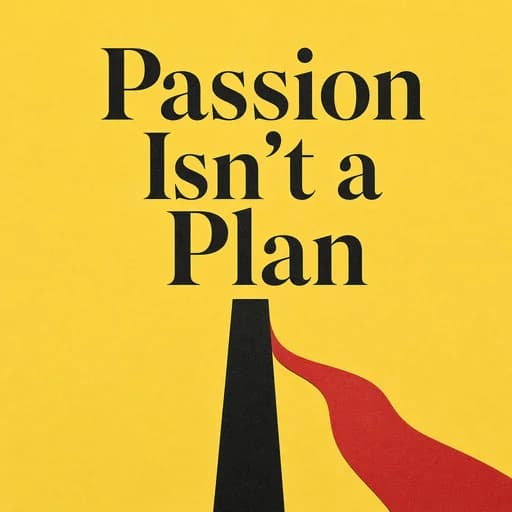
Best quote from Is "follow your passion" the worst career advice?
Passion is the destination, not the starting point. The evidence-based career arc goes from curiosity to skill to mastery—and then passion and autonomy arrive as the reward for becoming exceptionally good at something valuable.
Generated with BeFreed
Is "follow your passion" the worst career advice?






Frequently Asked Questions
The Passion Mindset is the belief that you should focus on what a job can offer you in terms of fulfillment and joy. This approach is risky because it often leads people to ignore the value they can offer the world, focusing instead on whether a job perfectly fits their soul. Research indicates that this mindset can lead to the "Ambition Trap," where individuals accept lower salaries—a "passion discount"—and face higher risks of burnout and financial instability because they lack the rare and valuable skills needed for professional leverage.
The Craftsman Mindset flips the traditional advice by suggesting you stop worrying about whether a job is your "calling" and instead focus on building "career capital." This involves developing rare and valuable skills that the market prizes. According to this perspective, passion is not a pre-existing treasure to be found, but rather a side effect of mastery. By becoming exceptionally good at something valuable, you earn the leverage to demand autonomy, impact, and creativity, which are the actual components of a dream job.
Research suggests that when people are told to follow their passions, they often fall back on socially conditioned interests and gender stereotypes. This leads women to cluster in arts and healthcare while men move toward science and business. Conversely, when individuals focus on a "Resources Ideology"—prioritizing earning potential and job security—the gender gap decreases, and more women choose high-paying STEM fields. In this way, passion advice can act as a subtle gatekeeper that nudges people toward traditional roles rather than financial independence.
A Fixed Theory assumes that passions are pre-formed and must simply be discovered, similar to finding a soulmate. People with this view often quit when a task becomes difficult, assuming the friction means they haven't found their "true" passion. A Growth Theory views interest as something cultivated through investment and persistence. Individuals with a Growth Theory anticipate that pursuing a career will be difficult at times, making them more resilient and likely to achieve the mastery required to develop long-term passion.
The transition begins by following curiosity rather than a burning passion, as curiosity is more durable and allows for experimentation. The next step is to identify the intersection of your talents and market demand, focusing on building skills that are rare and prized. This requires "deliberate practice" and pushing past the uncomfortable learning curves where most people quit. Finally, it is helpful to protect your interests by keeping them as hobbies initially to avoid "monetization fizzle," while negotiating your professional salary based on the market value of your skills rather than your level of personal excitement.
From Columbia University alumni built in San Francisco
"Instead of endless scrolling, I just hit play on BeFreed. It saves me so much time."


"I never knew where to start with nonfiction—BeFreed’s book lists turned into podcasts gave me a clear path."


"Perfect balance between learning and entertainment. Finished ‘Thinking, Fast and Slow’ on my commute this week."
"Crazy how much I learned while walking the dog. BeFreed = small habits → big gains."
"Reading used to feel like a chore. Now it’s just part of my lifestyle."

"Feels effortless compared to reading. I’ve finished 6 books this month already."
"BeFreed turned my guilty doomscrolling into something that feels productive and inspiring."

"BeFreed turned my commute into learning time. 20-min podcasts are perfect for finishing books I never had time for."
"BeFreed replaced my podcast queue. Imagine Spotify for books — that’s it. 🙌"

"It is great for me to learn something from the book without reading it."
"The themed book list podcasts help me connect ideas across authors—like a guided audio journey."
"Makes me feel smarter every time before going to work"
From Columbia University alumni built in San Francisco
"Instead of endless scrolling, I just hit play on BeFreed. It saves me so much time."
"I never knew where to start with nonfiction—BeFreed’s book lists turned into podcasts gave me a clear path."
"Perfect balance between learning and entertainment. Finished ‘Thinking, Fast and Slow’ on my commute this week."
"Crazy how much I learned while walking the dog. BeFreed = small habits → big gains."
"Reading used to feel like a chore. Now it’s just part of my lifestyle."
"Feels effortless compared to reading. I’ve finished 6 books this month already."
"BeFreed turned my guilty doomscrolling into something that feels productive and inspiring."
"BeFreed turned my commute into learning time. 20-min podcasts are perfect for finishing books I never had time for."
"BeFreed replaced my podcast queue. Imagine Spotify for books — that’s it. 🙌"
"It is great for me to learn something from the book without reading it."
"The themed book list podcasts help me connect ideas across authors—like a guided audio journey."
"Makes me feel smarter every time before going to work"
"Instead of endless scrolling, I just hit play on BeFreed. It saves me so much time."
"I never knew where to start with nonfiction—BeFreed’s book lists turned into podcasts gave me a clear path."
"Perfect balance between learning and entertainment. Finished ‘Thinking, Fast and Slow’ on my commute this week."
"Crazy how much I learned while walking the dog. BeFreed = small habits → big gains."
"Reading used to feel like a chore. Now it’s just part of my lifestyle."
"Feels effortless compared to reading. I’ve finished 6 books this month already."
"BeFreed turned my guilty doomscrolling into something that feels productive and inspiring."
"BeFreed turned my commute into learning time. 20-min podcasts are perfect for finishing books I never had time for."
"BeFreed replaced my podcast queue. Imagine Spotify for books — that’s it. 🙌"
"It is great for me to learn something from the book without reading it."
"The themed book list podcasts help me connect ideas across authors—like a guided audio journey."
"Makes me feel smarter every time before going to work"
"Instead of endless scrolling, I just hit play on BeFreed. It saves me so much time."
"I never knew where to start with nonfiction—BeFreed’s book lists turned into podcasts gave me a clear path."
"Perfect balance between learning and entertainment. Finished ‘Thinking, Fast and Slow’ on my commute this week."
"Crazy how much I learned while walking the dog. BeFreed = small habits → big gains."
"Reading used to feel like a chore. Now it’s just part of my lifestyle."
"Feels effortless compared to reading. I’ve finished 6 books this month already."
"BeFreed turned my guilty doomscrolling into something that feels productive and inspiring."
"BeFreed turned my commute into learning time. 20-min podcasts are perfect for finishing books I never had time for."
"BeFreed replaced my podcast queue. Imagine Spotify for books — that’s it. 🙌"
"It is great for me to learn something from the book without reading it."
"The themed book list podcasts help me connect ideas across authors—like a guided audio journey."
"Makes me feel smarter every time before going to work"