BeFreed
    Categories>Psychology>The Observation Gap: Overcoming Inattentional Blindness

    The Observation Gap: Overcoming Inattentional Blindness

    20 min
    |
    |
    Aug 22, 2026
    PsychologySelf-GrowthCommunication

    Explore The Observation Gap and learn how to overcome inattentional blindness. Discover why our brains miss obvious details and how to master active observation.

    The Observation Gap: Overcoming Inattentional Blindness
    Choose how it's told

    One episode. Many ways to hear it.

    Same ideas from The Observation Gap: Overcoming Inattentional Blindness. Pick the voice, depth, and pace that fits you. Switch anytime.

    Transcript & chapters

    Chapter 1

    The Invisible Gorilla and the Illusion of Attention

    If you were asked to watch a video of people passing a basketball and count exactly how many times the players in white shirts moved the ball, you would probably feel pretty confident in your ability to get it right. But in a famous study known as the "invisible gorilla" experiment, researchers found that while people were hyper-focused on that counting task, roughly half of them completely missed a person in a full gorilla suit walking right through the middle of the scene. This is the uncomfortable baseline of human perception: your brain is a filter, not a video camera. It doesn't record everything in front of you—it only processes what it expects to see or what you've specifically told it to look for. You are likely walking through your daily life in a state of "inattentional blindness," where you miss obvious, visible events because your attention is occupied by a phone, a conversation, or even just your own thoughts.

    This is what experts call the "Observation Gap." Most of us think we are observing the world, but we are actually just "passively seeing" it. Active observation, by contrast, is an intentional, sensory process where you notice, analyze, and remember specific details to extract meaning from a situation. It is the difference between noticing that a room is crowded and noticing that three people near the exit just stopped talking the moment you walked in. Whether you are a leader trying to read the room during a high-stakes negotiation, or simply someone wanting to move through the world with more confidence and safety, the ability to see what others miss is a superpower. The good news is that observation isn't a fixed talent you're born with—it's a trainable skill. Research shows that even a single 60-minute training session can significantly improve your ability to spot the small, fleeting details that reveal a person's true intentions.

    In this episode, we are going to bridge that gap. We’ll look at the science of microexpressions—those split-second flashes of emotion that can reveal concealed emotions—and explore the "Cluster Method" used by FBI analysts to read people with startling accuracy. We’ll also dive into the world of situational awareness, learning how to establish a "baseline" for any environment so that anomalies jump out at you before they become problems. By the time we’re done, you’ll have a practical playbook of exercises to sharpen your senses and a new framework for understanding the silent language happening all around you. It all starts with understanding how to focus your attention without getting trapped by it—and that’s where things get truly interesting.
    Chapter 2

    The Architecture of Awareness and the Power of the Anchor

    To understand how to observe better, you have to understand how your brain manages its energy. Nobel laureate Daniel Kahneman describes two systems of thinking: System One is reflexive and fast, handling tasks like 2 + 2, while System Two is deliberate and slow, kicking in for complex problems like 17 x 34. Your brain is naturally lazy—it follows the "law of least effort" and defaults to System One whenever possible to save energy. This is why you zone out on your commute or miss the "gorilla" in the room. To be a great observer, you have to intentionally engage System Two, but you can’t keep it on at full blast all day—it’s too mentally taxing.

    This is where Dr. David Matsumoto, a world-renowned expert in nonverbal behavior and an 8th degree black belt in judo, introduces a fascinating concept: the Anchor Principle. Matsumoto has spent decades balancing elite athletic coaching with high-level psychological research. He found that his grueling judo practice didn't take away from his academic work—it actually gave it structure. In the same way that a well-placed pillar near a doorway actually helps a crowd exit a room faster by channeling the flow, a specific constraint or "anchor" in your life helps you focus your attention. If you try to "observe everything," you will observe nothing. Your brain will simply jam up. Instead, you need to give yourself a specific focal point—an anchor—to channel your awareness.

    In the context of reading people, that anchor might be a specific part of the face or a specific habit, like scanning a room from right to left instead of the usual left-to-right pattern. Because we are hardwired to read from left to right, our brains "skim" environments. By forcing yourself to scan in the opposite direction, you break the autopilot of System One and force System Two to slow down and pick up details you would have otherwise missed. This is the foundation of "omni-awareness"—a state of being consistently, calmly present rather than just turning awareness on when you feel a "situation" has started. You want to live in what tactical experts call "Code Yellow"—a state of being relaxed but alert. You aren't paranoid; you're just paying attention. When you're in this state, you have the mental bandwidth to notice the "baseline" of your environment—the normal patterns of life—which makes anything unusual stand out like a neon sign.

    Keep learning with this episode

    Take the ideas from this episode into a guided learning experience in BeFreed.

    Chapter 3

    Reading the Split-Second Face and the Seven Universals

    Once you’ve trained yourself to actually look, the next step is knowing what to look for. One of the most powerful tools in the observer's kit is the microexpression. These are involuntary facial expressions that flash across a person's face for a fraction of a second—usually between 1/25th and 1/5th of a second—before they can consciously mask them. They are moments of "emotional leakage." Even if someone is saying all the right things, their face might betray their true feelings of disgust, fear, or contempt for just a heartbeat. Dr. Matsumoto’s research proved these expressions are hardwired into our biology; in a study of Olympic judo athletes, he found that congenitally blind athletes, who had never seen a human face, produced the exact same facial expressions as sighted athletes when they won or lost.

    There are seven universal emotions that show up the same way across every culture on Earth: happiness, sadness, anger, fear, disgust, surprise, and contempt. Each has its own specific physical "tell." A genuine smile, for instance, isn't just about the mouth; it involves the "Duchenne" markers—the crinkling of the eyes and the lifting of the cheeks. Contempt is unique because it’s the only asymmetrical expression—a one-sided pull of the lip. When you see these flash, you are seeing the person’s unfiltered reaction. But here is the critical caveat: a microexpression tells you what someone is feeling, but it doesn't necessarily tell you why. This is a trap known as "Othello’s Error"—where you correctly identify an emotion, like nervousness, but incorrectly assume the cause. In Shakespeare's play, Othello assumes his wife is nervous because she’s unfaithful, when in reality, she’s nervous because her husband is acting like a terrifying madman.

    To avoid this, you have to move beyond the "single tell" and look for what Dr. Matsumoto calls the "Cluster Method". An FBI analyst doesn't just look at one gesture; they look for a combination of signals that point in the same direction. One crossed arm might just mean the person is cold. But crossed arms combined with a tight jaw and feet pointed toward the exit? That’s a cluster indicating a desire to leave or a state of defensiveness. You are looking for "congruence"—does their body language match their words? When Lance Armstrong famously confessed to doping in 2013, experts noted that while he said "yes" with his voice, his head was subtly shaking "no". His body was literally contradicting his script. By focusing on these clusters and looking for deviations from a person's "baseline" behavior, you can increase your accuracy in reading people well above mere chance.

    Chapter 4

    The Science of Baseline and the Geometry of Safety

    Every environment and every person has a "baseline"—a normal state of being. To be a great observer, you must first become a student of the ordinary. Before you can decide if someone is acting "weird," you have to know what their version of "normal" looks like. If you’re at a coffee shop, the baseline is people typing on laptops, muffled music, and the smell of roasted beans. If the music stops and everyone suddenly looks toward the door, that’s an anomaly. If you're talking to a colleague who is usually animated and loud, and they suddenly become quiet and still, that deviation is your signal that something has changed. You aren't looking for "bad" behavior; you're looking for "different" behavior.

    This concept extends into the physical space around you through the study of "proxemics"—the science of personal space. We all move through the world inside invisible bubbles. There’s the "public distance" of twelve feet or more, where you have plenty of time to react. Then there’s the "social distance" of four to twelve feet—the range of a normal conversation. Finally, there’s the "intimate zone" of zero to four feet. If someone you don’t know enters your intimate zone quickly, your brain should trigger an alert. It’s not necessarily a threat, but it is a major deviation from the social baseline. Experts in situational awareness suggest that you should always look for ways to put "geometry" between you and a potential concern—using a table, a car, or even a different seating position to create distance. Time and distance are your greatest allies; they give your System Two brain the seconds it needs to move from a gut reaction to a deliberate plan.

    In high-stakes environments, like a security detail or a dangerous urban area, professionals use "atmospherics" to read the mood of a crowd. You’ve probably felt this yourself—walking into a room and sensing that a couple has just been arguing, even if they’re now sitting in silence. The "energy" is off. In larger settings, you can look for groups that are statistically less likely to be threats—like families or men older than 70—to help you filter your attention toward the "outliers" who don't fit the intended use of the space. If you’re at a park and everyone is playing with kids, but one person is standing alone, facing away from the playground and scanning the parking lot, they are an anomaly. They aren't following the "intended user" pattern. By identifying the baseline first, you stop trying to see everything and start seeing what actually matters.

    Keep learning with this episode

    Take the ideas from this episode into a guided learning experience in BeFreed.

    Chapter 5

    Managing the Reptilian Brain and the Power of Breath

    One of the greatest enemies of clear observation is your own physiology. When you sense a threat or even just a high-pressure situation, your heart rate spikes. As it climbs, your body begins to shut down non-essential functions to prepare for a "fight or flight" response. This is where you lose your peripheral vision and experience "tunnel vision". In this state, you are functionally blind to the details that could save you or help you win a negotiation. You revert to what experts call the "reptilian brain"—focused only on gross motor skills and simple survival, while your ability to process complex social cues or facial expressions evaporates.

    This is why calm people are better observers. To keep your System Two brain online, you have to manage your heart rate. One of the most effective tools for this is "box breathing"—inhaling, holding, exhaling, and holding again for four seconds each. This isn't just a relaxation technique; it’s a physiological hack that activates your parasympathetic nervous system and keeps your vision wide and your thinking clear. Another trick used by professionals is simply to talk. Talking forces you to breathe, which prevents your heart rate from skyrocketing into the "Black" zone of panic where mental and physical abilities break down.

    The goal is to maintain a state of "relaxed alertness," often called "Code Yellow" in the Cooper’s Color Code system. In this state, you are prepared and aware, but not stressed. You can transition easily to "Code Orange"—focused alertness on a specific potential danger—without skipping straight into a blind panic. Think of it like a professional athlete: they are most effective when they are "in the zone," which is a state of high awareness paired with physical calm. If you find yourself getting anxious or "focus-locked" on one thing, use your breathing to pull yourself back. When you are calm, you can see the hands of the person approaching you, notice the exit signs behind them, and hear the hesitation in their voice all at the same time. You become the "agent in charge of your own protection detail," as author Patrick McNamara puts it.

    Chapter 6

    The Deception Game and the Art of the Narrative

    We often think of deception as a list of "tells"—like someone rubbing their nose or avoiding eye contact. But the reality is much more complex. In fact, many liars will actually make more eye contact than usual to try and convince you they are being honest. Real deception detection isn't about finding a "magic button"; it’s about looking for "leakage" and "incongruence." Because it is incredibly difficult to control all the muscles in the face and body at once, a deceiver will often be "over-animated" in one area while being strangely still or tense in another. Their face might be smiling, but their feet are pointed toward the door, or their hands are clenched into fists.

    One of the best ways to spot a lie is to look for "mistimed" expressions. A genuine emotion usually happens slightly before or exactly as the words are spoken. If someone shakes their fist in anger after they finish their sentence, it’s likely a manufactured display. Another indicator is "eye blocking"—a subconscious attempt to shield the eyes from something we don't like or to "hide" while we are being deceptive. But again, you have to be careful. Some of the most effective deceivers don't look like villains; they look boring. Master con artists, like Victor Lustig, would intentionally use dry, technical details to bore their marks into a state of lowered awareness. They use "System One" thinking against you, hoping you'll just go along with the "nice-sounding" narrative they've created.

    If you suspect someone is being less than truthful, the best strategy is not to confront them immediately, but to let them keep talking. The more they speak, the more nonverbal data they provide. You can then ask an "uncomfortable question"—something that forces them to think on their feet—and watch their face for a microexpression of fear or disgust. This is where the "What If" game comes in handy. By mentally rehearsing different scenarios—"What if this person is lying about the price?" or "What if they aren't who they say they are?"—you pre-load your brain with a plan. This mental rehearsal makes your decision-making faster and cleaner if the situation actually escalates. You aren't being cynical; you're being diligent. You are choosing to see the world as it is, rather than how you hope it would be.

    Keep learning with this episode

    Take the ideas from this episode into a guided learning experience in BeFreed.

    Chapter 7

    The Professional’s Playbook of Daily Drills

    Knowing the science is one thing, but building the "muscle" of observation requires deliberate practice. You can start with what’s called the "Mute Challenge": watch a ten-minute interview or a movie scene with the sound completely off. Try to figure out the relationship between the people, who has the power in the room, and what emotions are actually being felt. Then, watch it again with the sound on and see how much you got right. This strips away the "crutch" of language and forces your brain to prioritize visual cues. You can also practice the "10x2 Technique": look at any scene—a park, a room, a photograph—for thirty seconds and write down ten things you notice. Then, look again for another thirty seconds and find ten more things. That second round is where you start to see the small details—the scuff on a shoe, the missing button, the way a person is leaning—that most people miss.

    Another powerful exercise is the "Baseline Game." Pick someone you interact with regularly—a barista or a coworker—and spend a week simply noticing their "normal." How do they stand? What is their typical tone of voice? Once you know their baseline, any deviation becomes impossible to miss. In your physical environment, you can play "Kim’s Game," a classic intelligence-training exercise where you place twenty random objects on a table, study them for one minute, cover them up, and then try to list every single one with as much detail as possible. This trains your short-term memory to work in tandem with your visual perception.

    Perhaps the most important "drill" you can do is the "Phone Detox" in transitional spaces. The most dangerous and "blind" moments of your day are often when you are moving from one place to another—walking to your car, waiting for an elevator, or sitting at a bus stop. These are exactly the moments when most people bury their heads in their phones. This is a neon sign to predators that your awareness is at zero. By putting your phone away and simply observing the "atmospherics" of these spaces, you are reclaiming your situational awareness. You are choosing to be present, which is the single biggest upgrade you can make to your personal safety and your ability to read people.

    Chapter 8

    From Perception to Prediction and Action

    The ultimate goal of all this observation is not just to see the world, but to "predict dangerousness" with enough accuracy to act effectively. In the OODA loop—Observe, Orient, Decide, Act—observation and orientation are the "situational awareness" phase, while deciding and acting are the "situational action" phase. Once you’ve perceived a deviation from the baseline and oriented yourself to what it means, you have to make a choice. In high-pressure situations, you often don't have time for a "perfect" plan. This is where you aim for the "80 percent solution"—a plan that is good enough to be implemented immediately. In an emergency, a "good" plan executed right now is almost always better than a "perfect" plan executed ten seconds too late.

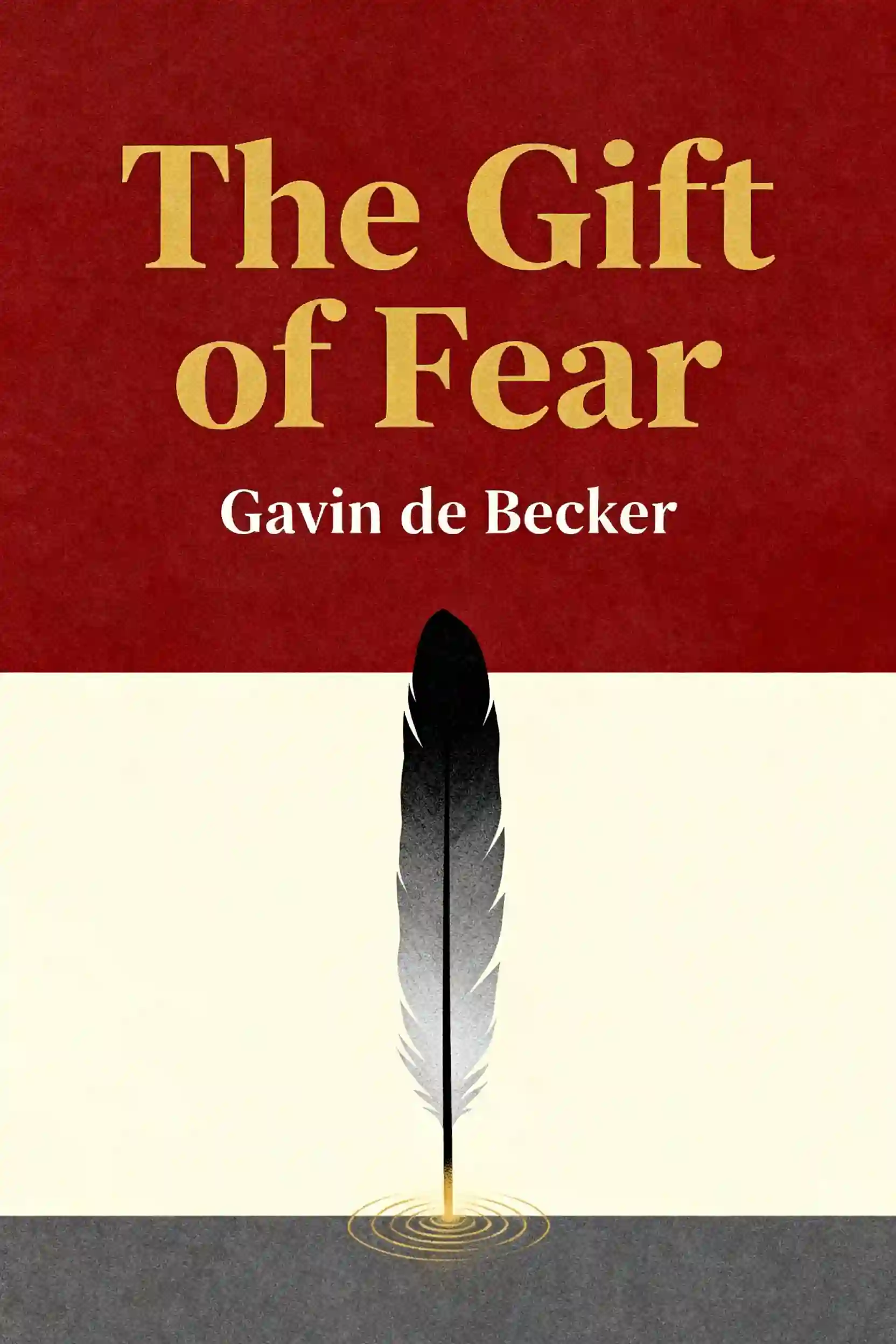
    This predictive power is what saved lives in Mosul in 2004, when a squad leader named Sergeant Tierney noticed a car that didn't fit the baseline—it wasn't aligned with traffic, the windows were up in extreme heat, and two boys inside were staring intensely at the soldiers. His "intuition"—which was really just rapid recognition of a broken baseline—told him something was wrong. He ordered his men to fall back just before the vehicle exploded. This wasn't a "gut feeling" in the mystical sense; it was a high-speed data-processing event based on his expertise. Humans are the only creatures that willingly ignore their own warning signs to avoid being "impolite" or appearing "paranoid". But as Gavin de Becker famously argues in The Gift of Fear, your "gut" is actually your subconscious mind processing thousands of tiny observations faster than your conscious mind can keep up.

    Learning to trust those signals and move from observation to action is the final piece of the puzzle. Whether it’s moving toward an exit in a crowded theater because the "vibe" feels off, or choosing to end a business meeting because someone's microexpressions of contempt are showing through their polite words, you are using your observation skills to navigate the world more effectively. You are no longer a passive passenger in your own life; you are the "agent in charge." By combining the science of microexpressions, the logic of the baseline, and the discipline of situational awareness, you develop a level of clarity that most people never even realize is possible. You start seeing the "gorillas" in every room.

    Keep learning with this episode

    Take the ideas from this episode into a guided learning experience in BeFreed.

    Chapter 9

    The World Revealed Through Your Eyes

    As we wrap up our look into the art and science of observation, I want to leave you with one final thought from Dr. Matsumoto. He often says that the skill of reading people is a tool that can be used for good or for bad. It can be used to manipulate, but it can also be used to build deeper connections, empathy, and understanding. When you truly "see" someone—when you notice their hidden sadness, their quiet excitement, or their unspoken hesitation—you are in a much better position to respond with kindness and effectiveness. Observation without response is just surveillance. Observation followed by action is leadership. It is about honoring the reality of the people and environments around you by giving them your full, unfiltered attention.

    I hope you’ll take a moment today to try just one of the things we’ve talked about. Maybe it’s the "Mute Challenge" tonight while you’re watching the news, or perhaps it’s just putting your phone in your pocket while you walk from your car to your front door. Notice how it feels to have your "System Two" brain fully online. Notice how much more color and detail the world has when you aren't filtering it through the "law of least effort." You might be surprised at what has been standing right in front of you all along, just waiting to be noticed.

    Thank you for spending this time with me. It’s been a pleasure exploring these ideas with you, and I truly hope they help you move through your world with a little more confidence and a lot more clarity. There is so much to see once you decide to look—so go out there and keep your eyes open. You’ve got the tools now; the rest is just practice. Be safe, stay observant, and enjoy the new perspective.

    ★★★★★

    You made it to the end of The Observation Gap: Overcoming Inattentional Blindness

    “23 days in and I have used it every single day. It is part of my daily habit now.”

    jayallen

    Best quote from The Observation Gap: Overcoming Inattentional Blindness

    “

    The uncomfortable baseline of human perception is that your brain is a filter, not a video camera; it doesn't record everything in front of you, it only processes what it expects to see.

    ”
    T

    Generated by Trent

    Input question

    Reading people and mastering observation skills, specifically focusing on the core principles of observation across different contexts.

    Host voices
    Lenaplay
    Knowledge sources
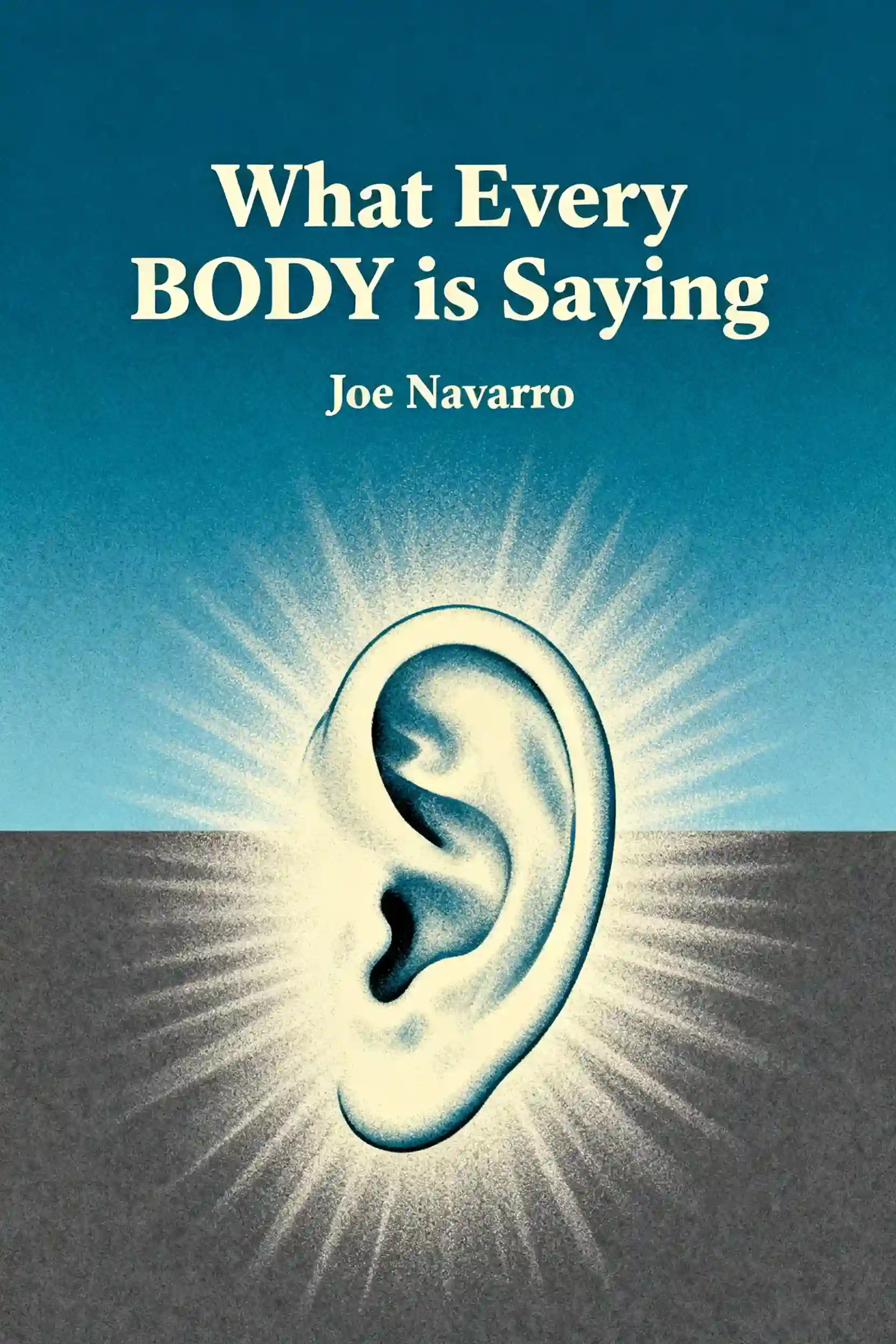
    What Every Body Is Saying
    The Gift of Fear
    How to Improve Your Observation Skills (with Science-Backed Tips)
    link
    https://www.scienceofpeople.com/observation-skills/
    How to Improve Your Situational Awareness
    link
    https://www.asisonline.org/security-management-magazine/articles/2022/09/how-to-improve-your-situational-awareness/
    How to Read People: 2 Skills You Need to Know - Shortform Books
    link
    https://www.shortform.com/blog/how-to-read-people/
    Situational Awareness Training: Full Guide
 – Centerline Tactical
    link
    https://centerlinetactical.com/blogs/the-readiness-report/situational-awareness-training

    Frequently Asked Questions

    The Observation Gap describes the difference between passively seeing the world and actively observing it. While most people believe their brains record everything like a video camera, human perception actually acts as a filter that only processes expected information. This gap leads to inattentional blindness, where individuals miss obvious details because their focus is occupied by specific tasks, thoughts, or distractions like phones.

    The famous invisible gorilla experiment demonstrates the power of selective attention and human error in perception. In the study, participants focused on counting basketball passes often failed to notice a person in a gorilla suit walking through the scene. This research proves that when the brain is hyper-focused on a single task, it can become blind to unexpected but visible events happening right in front of it.

    Passive seeing is the baseline state where the brain filters out most environmental data, whereas active observation is an intentional sensory process. Active observation involves noticing, analyzing, and remembering specific details to extract deeper meaning from a situation. For example, instead of just noticing a crowded room, an active observer might spot specific behavioral shifts, such as people stopping a conversation when someone enters.

    Inattentional blindness occurs when your attention is fully occupied by a specific task, conversation, or internal thoughts, causing you to miss obvious visual stimuli. Because the brain only processes what it expects to see or what it is told to look for, it creates a filter that ignores surrounding details. This state of sensory processing means you can be looking directly at something significant without actually perceiving it.

    From Columbia University alumni | built in San Francisco

    BeFreed Brings Together A Global Community Of Curious Minds

    4.7

    avg rating

    7.84k+ App Rating

    BeFreed Community

    Seriously I haven’t even explored this app fully yet but from using it the last few days I am so impressed... BeFreed is on a different level from any other learning app I have used. This makes it ultra engaging and can actually improve your concentration which is great for all the doom scrollers!

    @ladyInfinity

    I bought BeFreed exactly 23 days ago, and I have used it every single day since. It has completely embedded itself into my daily workflow and learning habit.

    @jayallen

    The truth is, the app has exceeded all my expectations. I can ask it to generate audio on any topic, whatever it may be, and the result is impressive. My professional field is a specialization in psychotherapy and it is multidisciplinary; however, the answers are very accurate.

    @Raguipa

    What I appreciate most is how much it's reduced my scrolling – I'm spending less time searching and more time absorbing information. The combination of full audiobooks, podcasts, the learning plans are brilliant.

    @colonyofcreatorsNGO

    I have been a PhotoReading Accelerated Learning Instructor for the past 24 years... books and reading and learning are my thing, and BeFreed has done a great job in providing an innovative approach to disseminating and delivering information in an easy to consume way.

    @BeFreed user

    It is not just a book summary app, I have used the 'fun reading' option and it's a much better summary and way to grasp ideas the traditional way, that alone is worth this deal.

    @austinakon

    I love this app. Used it for several days and I cannot stop listening. Such a great way to start.

    @jcrules328

    I really like the program; I have already tested it for around one month, and I feel that it's an amazing gem. It works so well because I can use BeFreed to create my own topics, and the voice is so good with unlimited choice of narrations.

    @DanielCZ

    Seriously I haven’t even explored this app fully yet but from using it the last few days I am so impressed... BeFreed is on a different level from any other learning app I have used. This makes it ultra engaging and can actually improve your concentration which is great for all the doom scrollers!

    @ladyInfinity

    I bought BeFreed exactly 23 days ago, and I have used it every single day since. It has completely embedded itself into my daily workflow and learning habit.

    @jayallen

    The truth is, the app has exceeded all my expectations. I can ask it to generate audio on any topic, whatever it may be, and the result is impressive. My professional field is a specialization in psychotherapy and it is multidisciplinary; however, the answers are very accurate.

    @Raguipa

    What I appreciate most is how much it's reduced my scrolling – I'm spending less time searching and more time absorbing information. The combination of full audiobooks, podcasts, the learning plans are brilliant.

    @colonyofcreatorsNGO

    I have been a PhotoReading Accelerated Learning Instructor for the past 24 years... books and reading and learning are my thing, and BeFreed has done a great job in providing an innovative approach to disseminating and delivering information in an easy to consume way.

    @BeFreed user

    It is not just a book summary app, I have used the 'fun reading' option and it's a much better summary and way to grasp ideas the traditional way, that alone is worth this deal.

    @austinakon

    I love this app. Used it for several days and I cannot stop listening. Such a great way to start.

    @jcrules328

    I really like the program; I have already tested it for around one month, and I feel that it's an amazing gem. It works so well because I can use BeFreed to create my own topics, and the voice is so good with unlimited choice of narrations.

    @DanielCZ

    I love the fact that I can get useful, condensed, information and ideas in a 8 - 15 minute podcast style audio. I'm not a general fan of podcasts because of all the fluff, but this cuts through all that.

    @BeFreed user

    I am finishing up my doctorate, and have to read a lot of unfamiliar material... With BeFreed, you simply enter a prompt, and the app finds source material for you and generates an audio podcast. I find the process in BeFreed to be more streamlined than NotebookLM.

    @Brad

    I often search YouTube for something to listen to whilst making breakfast, when I'm out walking, commuting, etc, and BeFreed has provided an even more targeted approach, without the adverts and the fluff!

    @BeFreed user

    The absolute best part about this platform is its versatility. There is literally no subject that is off-topic. It handles whatever you throw at it... It is rare to find an learning tool with zero limitations that actually delivers on its promises.

    @jayallen

    BeFreed is fantastic. The user-friendly design means I spend less time navigating and more time learning. The mix of audiobooks, podcasts, and learning plans is a genius combo that has completely changed my daily routine.

    @BeFreed user

    At the start I needed a while to understand how to create podcasts in italian language and boom! It is so great! I can ask to explain every argument and it does so well and so smartly!

    @matteo77

    BeFreed has become my daily app for audio books tools... What I like the most is the way you put your text and come with an audio that you can listen on the go.

    @kotanzu1

    I love the fact that I can get useful, condensed, information and ideas in a 8 - 15 minute podcast style audio. I'm not a general fan of podcasts because of all the fluff, but this cuts through all that.

    @BeFreed user

    I am finishing up my doctorate, and have to read a lot of unfamiliar material... With BeFreed, you simply enter a prompt, and the app finds source material for you and generates an audio podcast. I find the process in BeFreed to be more streamlined than NotebookLM.

    @Brad

    I often search YouTube for something to listen to whilst making breakfast, when I'm out walking, commuting, etc, and BeFreed has provided an even more targeted approach, without the adverts and the fluff!

    @BeFreed user

    The absolute best part about this platform is its versatility. There is literally no subject that is off-topic. It handles whatever you throw at it... It is rare to find an learning tool with zero limitations that actually delivers on its promises.

    @jayallen

    BeFreed is fantastic. The user-friendly design means I spend less time navigating and more time learning. The mix of audiobooks, podcasts, and learning plans is a genius combo that has completely changed my daily routine.

    @BeFreed user

    At the start I needed a while to understand how to create podcasts in italian language and boom! It is so great! I can ask to explain every argument and it does so well and so smartly!

    @matteo77

    BeFreed has become my daily app for audio books tools... What I like the most is the way you put your text and come with an audio that you can listen on the go.

    @kotanzu1

    See more on how BeFreed is discussed
    129.7K19.5K
    55.2K19.2K
    154.2K10827355
    48.1K2.5K
    81.2K6.6K
    82.3K1.8K
    Start your learning journey, now
    BeFreed app
    BeFreed

    Learn Anything, Personalized

    DiscordLinkedIn
    Featured book summaries
    Crucial ConversationsThe Perfect MarriageInto the WildNever Split the DifferenceAttachedGood to GreatSay Nothing
    Trending categories
    Self HelpCommunication SkillRelationshipMindfulnessPhilosophyInspirationProductivity
    Celebrities' reading list
    Elon MuskCharlie KirkBill GatesSteve JobsAndrew HubermanJoe RoganJordan Peterson
    Award winning collection
    Pulitzer PrizeNational Book AwardGoodreads Choice AwardsNobel Prize in LiteratureNew York TimesCaldecott MedalNebula Award
    Featured Topics
    ManagementAmerican HistoryWarTradingStoicismAnxietySex
    Best books by Year
    2025 Best Non Fiction Books2024 Best Non Fiction Books2023 Best Non Fiction Books
    Featured authors
    Chimamanda Ngozi AdichieGeorge OrwellO. J. SimpsonBarbara O'NeillWinston ChurchillCharlie Kirk
    BeFreed vs other apps
    BeFreed vs. Other Book Summary AppsBeFreed vs. ElevenReaderBeFreed vs. ReadwiseBeFreed vs. Anki
    Learning tools
    Knowledge VisualizerAI Podcast Generator
    Information
    About Usarrow
    Pricingarrow
    FAQarrow
    Blogarrow
    Careerarrow
    Partnershipsarrow
    Ambassador Programarrow
    Directoryarrow
    BeFreed
    Try now
    © 2026 BeFreed
    Term of UsePrivacy Policy
    BeFreed

    Learn Anything, Personalized

    DiscordLinkedIn
    Featured book summaries
    Crucial ConversationsThe Perfect MarriageInto the WildNever Split the DifferenceAttachedGood to GreatSay Nothing
    Trending categories
    Self HelpCommunication SkillRelationshipMindfulnessPhilosophyInspirationProductivity
    Celebrities' reading list
    Elon MuskCharlie KirkBill GatesSteve JobsAndrew HubermanJoe RoganJordan Peterson
    Award winning collection
    Pulitzer PrizeNational Book AwardGoodreads Choice AwardsNobel Prize in LiteratureNew York TimesCaldecott MedalNebula Award
    Featured Topics
    ManagementAmerican HistoryWarTradingStoicismAnxietySex
    Best books by Year
    2025 Best Non Fiction Books2024 Best Non Fiction Books2023 Best Non Fiction Books
    Learning tools
    Knowledge VisualizerAI Podcast Generator
    Featured authors
    Chimamanda Ngozi AdichieGeorge OrwellO. J. SimpsonBarbara O'NeillWinston ChurchillCharlie Kirk
    BeFreed vs other apps
    BeFreed vs. Other Book Summary AppsBeFreed vs. ElevenReaderBeFreed vs. ReadwiseBeFreed vs. Anki
    Information
    About Usarrow
    Pricingarrow
    FAQarrow
    Blogarrow
    Careerarrow
    Partnershipsarrow
    Ambassador Programarrow
    Directoryarrow
    BeFreed
    Try now
    © 2026 BeFreed
    Term of UsePrivacy Policy

    More like this

    Micro-expressions: The Art of Reading Faces book cover
    How to Tell If Someone is Lying - Paul Ekman GroupHow to Read Microexpressions: The 7 Facial Expressions GuideMicro-expressions: Detecting Lies In 1/25th Of A Second (2026) - Formal PsychologyUsing Body Language in Negotiation - PON - Program on Negotiation at Harvard Law School
    8 sources
    Micro-expressions: The Art of Reading Faces
    Most people miss the split-second facial cues that reveal hidden emotions. Learn to spot these universal signals to navigate high-stakes conversations.
    858 min
    The Mentalist’s Lens: Reading People book cover
    The secrets behind Patrick Jane techniquesMentalism Tricks Revealed (Mental Shape Projection)Popüler Kültürde Mikro İfadeler ve Beden Dili: The Mentalist Dizisi Örneği
    -
    Sakarya İletişimHow to Read Microexpressions and Improve Observation Skills
    8 sources
    The Mentalist’s Lens: Reading People
    Most people miss the subtle cues others broadcast. Learn to decode non-verbal tells and microexpressions to gain a silent edge in any interaction.
    667 min
    FBI Tactics to Read Body Language book cover
    Joe Navarro, world-leading expert on body languageThe Power of Nonverbal Communication | Joe Navarro | TEDxManchesterJoe Navarro - Body Language - The End of Detecting DeceptionPerspective: Detecting Deception — LEB
    9 sources
    FBI Tactics to Read Body Language
    Stop hunting for the 'Pinocchio effect.' Learn how elite investigators use issue detection to read psychological stress and uncover the truth.
    847 min
    The Micro-Expression Advantage book cover
    Reading Faces | How to Read Faces | Paul Ekman GroupHow to Read Microexpressions: The 7 Facial Expressions GuideThe Business Power of Micro-Expressions... - HumourologyMicroexpressions: The Superpower to Winning Negotiations - Foundr
    5 sources
    The Micro-Expression Advantage
    Most people miss the split-second facial cues that reveal true feelings. Learn to spot these universal signals to gain a strategic edge in any room.
    1461 min
    The Mentalist: Mastering Human Observation book cover
    15 Genius Tactics To Spot Lies — Patrick Jane Style | by Maria Marmo | ILLUMINATION | Medium
    8 sources
    The Mentalist: Mastering Human Observation
    Struggling to read between the lines? Learn Patrick Jane’s techniques for spotting micro-expressions and lies to gain an edge in any interaction.
    1293 min
    The Mentalist's Eye: Reading Social Rooms book cover
    The secrets behind Patrick Jane techniquesSo You Want to Become a Mentalist Like Patrick Jane? Here's ...15 Genius Tactics To Spot Lies — Patrick Jane StyleSo You Want to Become a Mentalist Like Patrick Jane? Here's ...
    6 sources
    The Mentalist's Eye: Reading Social Rooms
    Social events often feel like a blur of small talk. Learn to use observation and cold reading to spot the hidden details most people miss.
    926 min
    FBI Tactics to Read Body Language book cover
    4 sources
    FBI Tactics to Read Body Language
    Most people miss the silent signals of the limbic system. Learn to decode involuntary survival reflexes to understand what someone is really thinking.
    1113 min
    FBI Tactics: Reading Body Language book cover
    Perspective: Detecting Deception — LEBWhat Every BODY is SayingReading People: Behavioral Anomalies and Investigative Interviewing — LEBCurrent State of Interview and Interrogation — LEB
    8 sources
    FBI Tactics: Reading Body Language
    Human intuition is often no better than a coin flip. Learn the FBI's framework to decode silent signals and see what people are really thinking.
    1270 min