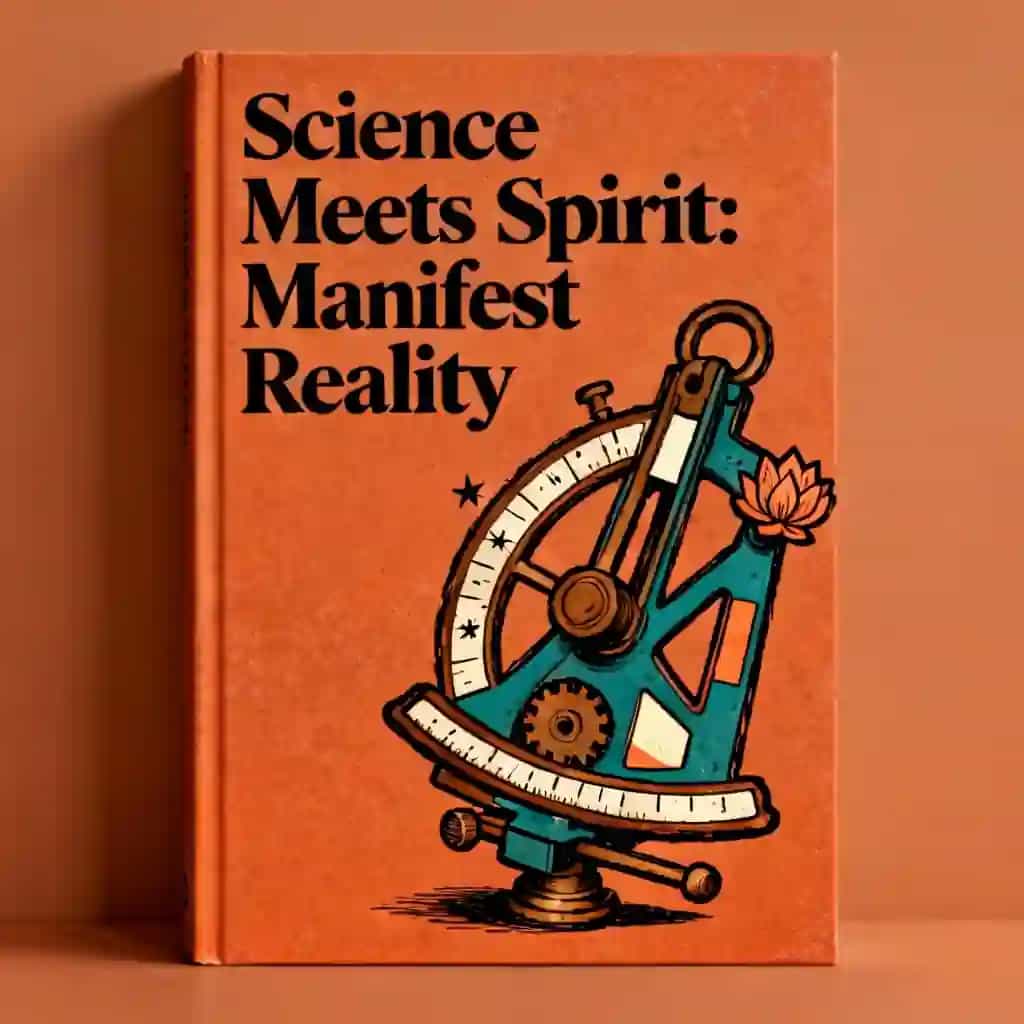
Neuroscience of Manifestation: episode overview
This BeFreed audio learning guide explores the intersection of brain science and goal achievement. By examining the psychological mechanisms behind cognitive bias, intentionality, and focus, this episode breaks down how concepts like neuroplasticity and the Reticular Activating System (RAS) play a practical role in shaping our behaviors and outcomes.
Create Your Podcast in a Click
Generated by Courtney
Input question
How to Manifesting anything and the science behind how it actually works
Host voices

What you'll learn about brain science and goals
- 1
The Science of Intentional Focus
 00:0000:00
Lena: You know, Miles, I used to think manifestation was just tossing a quiet mental wish into the universe and hoping for the best. It felt a bit like magic, or maybe just wishful thinking for the "good vibes" crowd. Miles: I totally get that. But it’s fascinating because the science actually suggests the opposite of passivity. It’s not about the universe rearranging itself for us; it’s about how our inner world influences our outer experience through neurological and biological mechanisms. Lena: Right, like that study where basketball players who only *visualized* free throws improved by 23%—almost as much as the group that actually practiced. It’s wild that our brains can’t always distinguish between a vivid mental rehearsal and reality. Miles: Exactly. It’s about training your brain to perceive and seize opportunities that were already there, using things like your Reticular Activating System to filter your focus. Let’s explore how we can actually start rewiring our neural pathways to align with our deepest intentions.
- 2
The Biological Blueprints of Belief
Lena: It is so interesting that you mentioned the Reticular Activating System, or the RAS, because I have definitely felt that in my own life. It is like when you decide you want a specific car—let’s say a vintage blue truck—and suddenly you see them at every intersection. They didn’t just appear; your brain’s filter just changed. Miles: Spot on. The RAS is basically the gatekeeper of your consciousness. We are bombarded with millions of bits of data every second—it is overwhelming—so the brain has to decide what is "spam" and what is "urgent." When we set a clear, emotionally charged intention, we are essentially giving our RAS a new search query. We are telling it, "This matters now." Lena: So, it is less about "calling things in" and more about finally noticing what was already there? Miles: Exactly. It is selective attention. But there is a deeper layer too—neuroplasticity. This is the brain’s ability to physically reorganize itself. Every time we repeat a thought or an affirmation, we are strengthening a specific neural circuit. Donald Hebb, a famous neuroscientist, put it perfectly: "Neurons that fire together, wire together." If you keep thinking, "I am not good enough," you are paving a superhighway for that belief. But you can literally carve out a new path by choosing new thoughts. Lena: I love the idea of "carving fresh trails in the snow." It feels like a gentle invitation rather than a forceful command. It takes repetition, though, doesn't it? We can't just think a positive thought once and expect a new highway. Miles: Right, it is mental fitness. You wouldn't expect to be strong after one trip to the gym. Consistency is what turns a faint daydream into a robust neural blueprint. And the cool part is that as these pathways get stronger, the new behavior starts to feel natural—not forced. You aren't "hustling" to change; you are evolving into someone whose identity matches their goals.
- 3
The Chemistry of Motivation and Reward
Lena: You know, I was reading about how dopamine plays into this. Most of us think of dopamine as the "feel-good" hit we get *after* we achieve something—like a finish line high—but it’s actually more about the chase, isn’t it? Miles: You’ve hit the nail on the head. Dopamine is the molecule of anticipation. Research shows that when we vividly visualize a successful outcome—like delivering a perfect presentation or finishing a marathon—the brain releases dopamine in *expectation* of that reward. That chemical surge is what actually provides the fuel for us to take action. It creates a positive feedback loop. We feel a "preview" of the success, and that motivates us to stay persistent when things get tough. Lena: So visualization isn’t just "pretending"—it’s actually priming the engine. It’s making the brain believe the goal is achievable and worth the effort. Miles: Absolutely. And that is why the *type* of visualization matters so much. There is a study from the University of Windsor involving surgeons and police officers. They used guided imagery to rehearse high-pressure scenarios. The ones who visualized the *process*—how they would handle the tools, how they would stay calm—actually performed significantly better and had lower stress than those who didn't. Lena: That makes sense. If you only visualize the "outcome"—the trophy or the paycheck—you might actually trick your brain into thinking you’ve already won. I’ve heard that can actually *drain* your motivation because the brain feels like the work is done. Miles: That is a huge trap in "pop" manifestation. Psychologist Gabriele Oettingen found that purely rosy fantasies can lead to lower effort. The key is what she calls "mental contrasting." You visualize the amazing future, but then you immediately look at the obstacles in your way. This creates a healthy tension—a "mental bridge" between where you are and where you want to be. It keeps your dopamine levels high but keeps your feet on the ground.
- Chapter 4
Rewriting the Subconscious Script
**Lena:** We’ve talked a lot about the conscious mind—the planning and the filters—but what about the subconscious? A lot of people feel like they have these "limiting beliefs" buried deep down that sabotage them no matter how hard they try to think positively. **Miles:** That is the "smart but gullible" part of the brain we have to address. The brain doesn't really fact-check our internal narrative. If you’ve told yourself for twenty years, "I’m bad with money," your brain just says, "Okay, that’s the rule," and it starts filtering out opportunities to save or invest. It creates a self-fulfilling prophecy. **Lena:** It’s like a detective looking for evidence of disappointment. **Miles:** Exactly. To shift that, we use tools like affirmations and scripting—writing down our goals in the present tense. Research shows that handwriting actually activates different parts of the brain than typing—the motor cortex, the visual cortex, and the limbic system all get involved. This multisensory encoding sends a massive "importance" signal to the subconscious. You are basically giving your brain new instructions. **Lena:** I’ve tried scripting before, and sometimes it feels… well, it feels a bit fake at first. Is that normal? **Miles:** That is actually a recognized psychological state called cognitive dissonance. It’s the discomfort you feel when your current reality doesn't match your new belief. If you affirm "I deserve respect" while staying in a toxic situation, your brain feels the mismatch. But here is the secret—that tension is actually a motivator. It creates an internal pressure to align your life with your new story. You start setting boundaries not because you’re "trying" to, but because the old way doesn't fit the new neural pathway you're building. **Lena:** So the "faking it" part is just the transition period while the brain is updating its software? **Miles:** You could say that. It’s about teaching the brain to recognize the desired future as "safe" and "familiar." The brain naturally avoids the unknown because it perceives it as risky. Through visualization and affirmations, we make our goals feel like a "memory of the future," so when the opportunity finally arrives, it feels like déjà vu. We act decisively because we’ve already "been there" in our minds.
Chapter 5The Power of Emotional Resonance
**Lena:** One thing I keep seeing in the research is the role of emotion. It seems like a cold, logical goal doesn't have the same "manifesting" power as one that actually makes you feel something. Why is that? **Miles:** It comes down to the amygdala and the limbic system. These are the brain’s emotional centers, and they act like amplifiers. When a thought is paired with a strong emotion—like gratitude, joy, or even a sense of relief—the brain "tags" that information as high priority. It is essentially the difference between a whisper and a shout in your neural network. **Lena:** That explains why gratitude practices are so central to this. It’s not just about being "polite" to the universe; it’s about shifting your brain into a state of abundance. **Miles:** Precisely. When you focus on what you already have, you are training your RAS to find more things to be grateful for. You are moving out of the "sympathetic" nervous system—the stress and survival mode—and into the "parasympathetic" state. In that "Green Zone," your brain has access to the prefrontal cortex—the part responsible for creative problem-solving and long-term planning. **Lena:** So when we are stressed and frantic, we are literally blocking our ability to manifest because our focus is narrowed to immediate threats? **Miles:** That is exactly it. Stress causes cortisol to spike, which can actually impair memory and decision-making. You can’t "see" opportunities if you’re in a state of lack or fear. By using things like slow breathing or grounding before we visualize, we regulate our nervous system first. We create the physiological conditions—the fertile soil—under which our intentions can actually take root and grow. **Lena:** It’s interesting how it all connects—the physical body, the chemical state, and the mental focus. It’s a whole-system approach. **Miles:** It really is. And it’s why "small wins" are so important. Every time you take a tiny action that aligns with your intention, you’re giving your brain proof. You’re telling your predictive processing system, "See? This direction is safe. This is who we are becoming." Those micro-actions are the evidence your brain needs to fully commit to the new reality.
Chapter 6A Practical Playbook for the Mind
**Lena:** This is all so empowering, but for someone listening who wants to start today—what does an "evidence-based" manifestation practice actually look like? If we strip away the magic, what are the steps? **Miles:** I think it starts with clarity and the RAS. Write down exactly what you want—be specific. Vague goals like "I want to be happy" don't give the brain a clear filter. Use the SMART framework—Specific, Measurable, Achievable, Relevant, and Time-bound. Then, move into "Mental Rehearsal." Spend ten minutes a day—maybe right when you wake up or before you sleep when your brain is in that relaxed alpha-wave state—and visualize the *process*. Don't just see the finish line; see yourself doing the work, handling the setbacks, and feeling the success. **Lena:** And then we have to add the "If-Then" planning, right? Like we talked about with implementation intentions. **Miles:** Exactly. That is the bridge to action. "If I feel discouraged, then I will look at my vision board for two minutes." Or, "If it is 8 a.m., then I will spend five minutes on my passion project." This removes the "decision fatigue." You aren't waiting for motivation; you’ve already programmed the behavior. **Lena:** I also think the "Mental Contrasting" part is huge. We have to be honest about the obstacles. It’s not about ignoring the negative; it’s about preparing for it so it doesn't knock us off course. **Miles:** Right—it’s the WOOP method: Wish, Outcome, Obstacle, Plan. It grounds the visualization in reality. And finally, keep a "win log." Track the small successes. When you notice a "coincidence" that aligns with your goal, write it down. You’re teaching your RAS that it’s doing a good job. You’re reinforcing the belief that your thoughts and actions are creating a measurable impact. **Lena:** It’s like being your own coach and scientist at the same time. You’re setting the hypothesis, doing the mental training, and then collecting the data in the real world. **Miles:** That is the perfect way to look at it. It takes it from being something "out there" in the universe and puts the power back in your own hands—literally in your own neurons.
Chapter 7Bridging Science and the Human Experience
**Lena:** You know, Miles, as we’ve been talking, I’ve realized that even though we’re looking at this through the lens of neuroscience, it doesn't actually take away the "wonder" of it all. If anything, knowing that my brain has this incredible capacity to rewire itself and change how I see the world makes the whole process feel even more profound. **Miles:** I feel the same way. There is something deeply moving about the fact that we aren't stuck with the scripts we were given in childhood or by past failures. Neuroplasticity is basically a scientific way of saying that change is always possible. We are both the artist and the canvas. **Lena:** It’s like we have this sophisticated biological machinery, and for a long time, we just didn't have the manual. But now we know how to tune the filters and prime the motivation circuits. **Miles:** Exactly. And while science might debunk the idea of "magical attraction" through vibrations, it validates the power of human intention. When you align your thoughts, your emotions, and your actions, you become a very different person. You show up differently in a room. You take risks you wouldn't have taken before. You notice doors that you used to walk right past. **Lena:** And that is how the "magic" happens. It’s not that the world changed—it’s that *you* changed, and because you changed, the world responded differently to you. **Miles:** That is the core of it. Manifestation is really just intentional living. It is the disciplined practice of choosing who you want to be and training your brain to support that vision. It’s not about wishing for a better life; it’s about building the mental and behavioral architecture to inhabit one. **Lena:** It’s a journey of self-discovery, really. Learning to trust our own ability to grow and adapt. **Miles:** It really is. It’s about moving from being a passive observer of your life to being the active architect of your reality. And the best part is, that machinery is already inside everyone listening. It’s just waiting for new instructions.
Chapter 8Moving Forward with Intention
**Lena:** As we bring this conversation to a close, I’m reflecting on how much of this comes down to just being gentle with ourselves. We are rewiring "superhighways" that might have been there for decades. It’s okay if it takes time. It’s okay if we feel that cognitive dissonance at first. **Miles:** That is such an important point. This isn't about "perfect" thinking. It’s about direction, not perfection. If you have a negative thought, you haven't "ruined" your manifestation. You just have to consciously choose a different one next time. Every moment is a new chance to fire a different neural circuit. **Lena:** I love that. So, as a final thought for everyone listening—maybe just take a moment today to check in with your internal narrative. What is the "spam filter" of your RAS currently looking for? Is it looking for reasons why things won't work, or is it looking for evidence of your own growth? **Miles:** It is a powerful question to sit with. And remember, your brain is always listening. It believes what you tell it most often. So, what are you going to tell it today? How can you start "carving that fresh trail" in the snow, even if it’s just with one small, intentional thought? **Lena:** Thank you for going on this journey with us. It’s been so enlightening to see how the "mystical" and the "measurable" actually meet right in the center of our own minds. **Miles:** It really has. We hope this gives you a new map—one that is grounded in the reality of your own potential. **Lena:** Take a moment to reflect on one goal you’ve been holding onto. How would it feel to visualize the *process* of achieving it today? Just for five minutes. See what your brain starts to notice when you give it those new instructions. **Miles:** Thanks for joining us. We really appreciate you spending this time to explore the science of how we can all shape our own reality. It’s a pretty amazing thing to hold in your hands. **Lena:** It really is. Take care of those neurons, everyone.
What people search for about the neuroscience of manifestation
Listeners seeking information on neural manifestation are often looking to separate evidence-based psychology from pseudoscientific claims. Common searches focus on how neuroplasticity scientifically supports goal-setting, the role of cognitive behavioral principles in changing habits, and the actual neurological functions of the brain when we focus our attention on specific outcomes.
A practical guide to the neuroscience of manifestation
Understanding the neuroscience of manifestation requires looking at established psychological and neurological frameworks rather than magical thinking. Manifestation, in a scientific context, is fundamentally about goal-setting theory and directed attention. When you focus on a specific objective, you engage cognitive biases that make you more aware of resources and opportunities related to that goal. This is heavily influenced by neuroplasticity. As you repeatedly focus your thoughts and, crucially, take corresponding real-world actions, your brain physically rewires itself to make those new behaviors more automatic. It is important to recognize the limitations of these biological systems; the brain's Reticular Activating System (RAS) helps you notice what is important, but it does not mathematically guarantee financial success or cure illnesses. Action and behavioral change remain the critical drivers of any manifested outcome.
Best quote from The Neuroscience of Manifestation
Manifestation is really just intentional living; it’s the disciplined practice of choosing who you want to be and training your brain to build the mental and behavioral architecture to inhabit that vision.
Knowledge sources














FAQ
Neuroscience views manifestation through the lens of neuroplasticity and goal-setting theory. Rather than thoughts magically altering reality, focusing your intentions helps rewire neural pathways, making you more attuned to opportunities and more likely to take the necessary actions to achieve your goals.
Scientifically, manifestation relies on psychology and brain function, specifically cognitive bias and the Reticular Activating System (RAS). By clearly defining goals, your brain filters out distractions and highlights relevant information, which supports behavioral changes and focused action.
Neuroplasticity is the brain's ability to reorganize itself by forming new neural connections. When you consistently focus on a goal and take action toward it, you strengthen the specific neural pathways associated with those behaviors, turning intentional effort into habit.
From Columbia University alumni built in San Francisco
"Instead of endless scrolling, I just hit play on BeFreed. It saves me so much time."


"I never knew where to start with nonfiction—BeFreed’s book lists turned into podcasts gave me a clear path."


"Perfect balance between learning and entertainment. Finished ‘Thinking, Fast and Slow’ on my commute this week."
"Crazy how much I learned while walking the dog. BeFreed = small habits → big gains."
"Reading used to feel like a chore. Now it’s just part of my lifestyle."

"Feels effortless compared to reading. I’ve finished 6 books this month already."
"BeFreed turned my guilty doomscrolling into something that feels productive and inspiring."

"BeFreed turned my commute into learning time. 20-min podcasts are perfect for finishing books I never had time for."
"BeFreed replaced my podcast queue. Imagine Spotify for books — that’s it. 🙌"

"It is great for me to learn something from the book without reading it."
"The themed book list podcasts help me connect ideas across authors—like a guided audio journey."
"Makes me feel smarter every time before going to work"
From Columbia University alumni built in San Francisco
"Instead of endless scrolling, I just hit play on BeFreed. It saves me so much time."
"I never knew where to start with nonfiction—BeFreed’s book lists turned into podcasts gave me a clear path."
"Perfect balance between learning and entertainment. Finished ‘Thinking, Fast and Slow’ on my commute this week."
"Crazy how much I learned while walking the dog. BeFreed = small habits → big gains."
"Reading used to feel like a chore. Now it’s just part of my lifestyle."
"Feels effortless compared to reading. I’ve finished 6 books this month already."
"BeFreed turned my guilty doomscrolling into something that feels productive and inspiring."
"BeFreed turned my commute into learning time. 20-min podcasts are perfect for finishing books I never had time for."
"BeFreed replaced my podcast queue. Imagine Spotify for books — that’s it. 🙌"
"It is great for me to learn something from the book without reading it."
"The themed book list podcasts help me connect ideas across authors—like a guided audio journey."
"Makes me feel smarter every time before going to work"
"Instead of endless scrolling, I just hit play on BeFreed. It saves me so much time."
"I never knew where to start with nonfiction—BeFreed’s book lists turned into podcasts gave me a clear path."
"Perfect balance between learning and entertainment. Finished ‘Thinking, Fast and Slow’ on my commute this week."
"Crazy how much I learned while walking the dog. BeFreed = small habits → big gains."
"Reading used to feel like a chore. Now it’s just part of my lifestyle."
"Feels effortless compared to reading. I’ve finished 6 books this month already."
"BeFreed turned my guilty doomscrolling into something that feels productive and inspiring."
"BeFreed turned my commute into learning time. 20-min podcasts are perfect for finishing books I never had time for."
"BeFreed replaced my podcast queue. Imagine Spotify for books — that’s it. 🙌"
"It is great for me to learn something from the book without reading it."
"The themed book list podcasts help me connect ideas across authors—like a guided audio journey."
"Makes me feel smarter every time before going to work"
"Instead of endless scrolling, I just hit play on BeFreed. It saves me so much time."
"I never knew where to start with nonfiction—BeFreed’s book lists turned into podcasts gave me a clear path."
"Perfect balance between learning and entertainment. Finished ‘Thinking, Fast and Slow’ on my commute this week."
"Crazy how much I learned while walking the dog. BeFreed = small habits → big gains."
"Reading used to feel like a chore. Now it’s just part of my lifestyle."
"Feels effortless compared to reading. I’ve finished 6 books this month already."
"BeFreed turned my guilty doomscrolling into something that feels productive and inspiring."
"BeFreed turned my commute into learning time. 20-min podcasts are perfect for finishing books I never had time for."
"BeFreed replaced my podcast queue. Imagine Spotify for books — that’s it. 🙌"
"It is great for me to learn something from the book without reading it."
"The themed book list podcasts help me connect ideas across authors—like a guided audio journey."
"Makes me feel smarter every time before going to work"