BeFreed
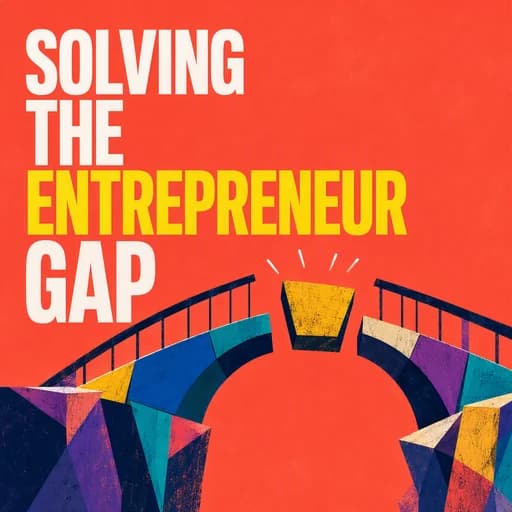
    Categories>Entrepreneurship>The Missing Middle: Solving the Entrepreneur Gap with Tavneet Suri

    The Missing Middle: Solving the Entrepreneur Gap with Tavneet Suri

    20 min
    |
    |
    Aug 16, 2026
    • Entrepreneurship
    • Finance & Economics
    • Career & Business

    Explore the 'missing middle' in development economics with MIT’s Tavneet Suri. Learn how Nigeria's YouWiN! program helps small businesses bridge the growth gap.

    The Missing Middle: Solving the Entrepreneur Gap with Tavneet Suri
    0:00 / 0:00
    Choose how it's told

    One episode. Many ways to hear it.

    Same ideas from The Missing Middle: Solving the Entrepreneur Gap with Tavneet Suri. Pick the voice, depth, and pace that fits you. Switch anytime.

    Transcript & chapters

    Chapter 1

    The Hidden Engine of the Missing Middle

    Lena: Imagine you’re walking down a street in a bustling city like Lagos or Nairobi. You see hundreds of people selling everything from phone chargers to fresh fruit, right there on the sidewalk. It’s vibrant, it’s high-energy, and it feels like everyone is an entrepreneur. But then you look for the medium-sized companies—the ones with maybe kind of 5, 10, 15 employees—and they’re surprisingly hard to find. It’s either the tiny one-person stand or a massive global corporation, with almost nothing in between.

    Miles: That’s exactly what economists call the "missing middle," and it’s a massive puzzle in development economics. Tavneet Suri, a professor at MIT’s Sloan School of Management, points out that this gap isn't just a quirk of the landscape; it’s a structural barrier to growth. If you’re a small business owner with a great idea, how do you bridge that chasm? In Nigeria, the government decided to try something radical to find out: they started handing out literal piles of cash through a program called YouWiN!.

    Lena: It sounds like a dream, right? "Here’s $50,000, go grow your business." But for someone like Lariet Alhassan, who was running a tiny paint company out of her car in Abuja, it sounded like a total scam at first. She was the production manager, the marketer, and the delivery person all in one. She couldn’t even get clients to sign contracts because she didn't have an office to invite them to.

    Miles: And that’s the trap. You need the office to get the big clients, but you need the big clients to afford the office. This "missing middle" problem is partly about a lack of capital, but it’s also about the sheer difficulty of proving you’re a good bet to a bank. Today, we’re looking at how rigorous economic experiments—the kind that win Nobel Prizes—are being used to figure out if just giving people money is the key to unlocking that middle tier of the economy.

    Lena: We’re going to explore why randomization became the secret weapon for policy makers in Nigeria and Kenya, and whether these "piles of cash" actually create long-term jobs or just temporary hype. Let’s dive into why the Nigerian government turned their business development plan into a national lottery.
    Chapter 2

    The Logic of the Business Lottery

    Miles: When Dr. Ngozi Okonjo-Iweala, who was Nigeria’s finance minister at the time, looked at the eight million young people needing jobs, she realized traditional banking wasn't the answer. Banks in Nigeria struggle to tell a "good" one-person company from a "bad" one because there are no electronic records, no tax returns, and no formal cash flow statements to look at.

    Lena: So instead of waiting for banks to modernize, she launched YouWiN!—the Youth Enterprise with Innovation in Nigeria competition. It was essentially a massive business plan competition, but with a twist that made the "serious" economists pay attention. They didn't just pick the people they liked best. They used randomization.

    Miles: This is where David McKenzie from the World Bank comes in. He suggested that after you weed out the terrible plans and identify the top-tier ones, you should pick the winners randomly from the remaining pool of qualified candidates. It sounds crazy to leave a multimillion-dollar government program to chance, but there were two very smart reasons for it.

    Lena: First, it’s a brilliant way to fight corruption. If the winners are chosen randomly, after anonymous outside judging, an official can’t just give the money to their cousin or a friend. But second—and this is what gets researchers like Tavneet Suri excited—it turns a policy into a perfect scientific experiment.

    Miles: Exactly. If you only give money to the "best" applicants, and they succeed, you don't know if the money helped or if they were just the kind of talented people who would have succeeded anyway. But if you have two similar groups and you give money to one at random, any difference in their success a few years later is definitely because of the cash. It’s the only way to isolate the "treatment effect" of the capital itself.

    Lena: For Lariet, the paint entrepreneur, it meant moving from her car into a proper showroom with furniture and a staff of sales and marketing people. She received about sixty-five thousand dollars—ten times what she’d usually make in a year. The big question for the World Bank was: would that investment actually pay off in terms of broader economic growth?

    Keep learning with this episode

    Take the ideas from this episode into a guided learning experience in BeFreed.

    Chapter 3

    Measuring the Impact of Free Capital

    Miles: The results of the YouWiN! experiment were actually quite staggering. Chris Blattman, an economist who specializes in poverty, remembers reading the report and thinking it couldn't possibly be true. The data showed that Lariat and the 1,200 other winners had created 7,000 jobs that actually stuck around for years.

    Lena: When you do the math on that, the sixty-million-dollar program cost about $8,500 per job created. In the world of development economics, that is an incredibly efficient number. Blattman even blogged about it, asking if this might be the most effective development program in history.
    Miles: What’s fascinating is that these winners weren't necessarily "rare" geniuses. Because of the randomization, we know that there’s a much larger pool of people who have that "entrepreneurial spark" but are simply held back by a lack of funds. It challenges the idea that entrepreneurship is a rare gift; it suggests that in places like Nigeria, the talent is everywhere—it’s just the capital that’s scarce.

    Lena: But Tavneet Suri points out a sobering reality. Even though Lariet’s paint business is still running years later, she still struggles to find financing to grow even bigger. The grant solved her immediate "missing middle" problem, but it didn't fix the underlying banking system.

    Miles: This is the limit of a grant program. You can’t just have the government hand out sixty thousand dollars to everyone forever. To truly fix the missing middle, Suri argues you need the boring stuff: property rights, accountants, and land surveyors. Without those institutions, a bank can’t do "cash flow lending" because they can't verify the records, and they can’t seize collateral if a loan isn't paid back.

    Lena: It’s a bit of a reality check. The grant was a brilliant "workaround," a creative way to jumpstart businesses when the system is broken. But for that growth to be sustainable across the whole country, you need more than just one-off lotteries. You need a foundation where a business can prove its worth without needing a Nobel Prize-winning experiment to back it up.

    Chapter 4

    The Busia Revolution and Evidence-Based Policy

    Miles: While Nigeria was experimenting with business grants, a different kind of revolution was happening in a small town called Busia, on the border of Kenya and Uganda. If Nigeria was about capital, Busia became the world’s laboratory for human capital—specifically health and education.

    Lena: It started with Michael Kremer, an American economist who had taught high school near Busia and wanted to see what actually helped students learn. At the time, the standard "obvious" solution was to give kids textbooks. So, Kremer set up a massive randomized controlled trial involving 100 schools.

    Miles: This is where the power of the RCT—the randomized controlled trial—really shows its teeth. Everyone assumed textbooks would raise test scores. But after four years of study, Kremer found... nothing. For the average student, the textbooks had zero impact on their scores.

    Lena: That has to be devastating for a researcher. You want it to work! But when Kremer dug into the data, he saw why. The textbooks were in English, but many kids didn't speak English at home. The books only helped the kids who were already at the top of the class.

    Miles: This failure changed the entire direction of development economics. Instead of just throwing resources at a problem based on "common sense," economists started looking for the actual barriers. They realized that if kids are missing school because they’re sick or have to work, a new textbook doesn't matter.

    Lena: This led to one of the most famous studies in the field: deworming. Another of Kremer’s students, Ted Miguel, found that giving children free medicine for parasitic worms was incredibly effective. It wasn't just that the kids were healthier; they stayed in school longer, and decades later, they had better jobs and higher incomes.

    Miles: It’s a perfect example of looking for the "binding constraint." If the constraint isn't a lack of books, but a lack of physical health to attend school, then deworming is a much better investment. Busia became so famous for these types of studies that local residents like Carol Nakassa, who started as a data entry clerk, eventually founded her own research organization to help the flood of economists coming to town.

    Keep learning with this episode

    Take the ideas from this episode into a guided learning experience in BeFreed.

    Chapter 5

    Human Capital and the Mystery of Externalities

    Lena: When we talk about deworming or education, economists like Tavneet Suri use the term "human capital". It’s a bit of a cold way to talk about people, but it essentially means the education and health that a person brings to the table. And what’s fascinating is that human capital doesn't just benefit the individual; it has what they call "positive externalities".

    Miles: A positive externality is basically when your investment benefits people who didn't pay for it. If you get a great education, you become more productive, which makes the people you work with more productive, too. If you get treated for a disease, you're not just healthier—you’re also not spreading that disease to your neighbors.

    Lena: Suri points to the "growth miracles" in Southeast Asia as proof. A huge chunk of that economic explosion was driven by investments in human capital—specifically higher education. It’s the engine that makes a whole country richer, not just a few lucky individuals.

    Miles: But here’s the rub: because the benefits are spread out among everyone (the externalities), an individual might not be willing or able to pay the full cost of that investment themselves. That’s why the RCTs in Busia were so important. They proved to governments that these programs were worth the public money because the returns to the whole society were so high.

    Lena: It’s interesting how these two ideas—the Nigerian business grants and the Kenyan health interventions—are actually two sides of the same coin. Both are trying to solve a market failure where the "right" thing isn't happening on its own. In Nigeria, the market failed to provide loans to small businesses. In Kenya, the market failed to provide health and education to rural kids.

    Miles: And in both cases, the solution wasn't just a "hunch." It was based on rigorous, randomized evidence. It takes the guesswork out of policy. Instead of arguing about whether "free money" or "free medicine" works, you can just look at the test scores and the employment numbers and see for yourself.

    Chapter 6

    The Limits of the Lab

    Miles: As much as we love the "cleanliness" of a randomized controlled trial, Tavneet Suri admits there are some real-world frustrations. You can have the best data in the world showing that a program works, but if the government doesn't have the political will or the administrative capacity to implement it, that knowledge just sits on a shelf.

    Lena: She actually says she bangs her head against the wall every day because of this. An experiment in a small town like Busia is one thing, but scaling that up to a whole nation is an entirely different beast. You run into "institutional implementation" issues—basically, the plumbing of government.

    Miles: Think about the YouWiN! program in Nigeria. It was a massive success, but then the country changed presidents, and the program was eventually shut down. Policy isn't just about what works; it’s about what’s politically sustainable.

    Lena: There’s also the "icky" factor that Suri mentions. Some people in Kenya feel a bit weird about their country being the world’s "experimental lab". Even if the knowledge helps the world, does it always help the people being studied? Suri’s answer is that while the direct effect on local policy might not be huge every single day, the impact on global knowledge is massive.

    Miles: It’s a trade-off. By being part of these trials, these communities are helping to rewrite the rulebook for how the world fights poverty. But we have to be honest about the limits. An RCT can tell you if something works, but it can’t always tell you how to make a corrupt or inefficient government actually do it.

    Lena: It’s that gap between the "lab" and the "real world." The Nigerian grant program was Copy-pasted in Kenya and Senegal because the evidence was so strong. That’s the dream—that good data travels. But the struggle to build the underlying institutions—the banks, the courts, the reliable power grids—that’s a much longer, harder road that an experiment can’t just bypass.

    Keep learning with this episode

    Take the ideas from this episode into a guided learning experience in BeFreed.

    Chapter 7

    Unlocking the Entrepreneurial Spirit

    Miles: One of the most inspiring things Tavneet Suri talks about is the sheer desire to participate in the economy that you see in places like Kenya and Nigeria. It’s not just about the money; it’s about the energy. People stand in line for hours to vote, and they work incredibly hard to run these tiny one-person businesses.

    Lena: If you’re looking for a takeaway, it’s that the "missing middle" isn't a lack of talent or drive. When Lariet Alhassan got her grant, she didn't just sit on the cash; she hired people and expanded. The entrepreneurial spirit is already there—it’s just "trapped" by a lack of capital and skills.

    Miles: So, if you’re thinking about how to apply this to your own world, the first step is identifying the "binding constraint." Are you stuck because you don't have the right skills (the human capital), or are you stuck because you don't have the "office" to get the big clients (the physical capital)?

    Lena: And don't be afraid to experiment. You might not be able to run a randomized trial on your whole life, but you can try different interventions and actually measure the results. Did that new software actually save you time, or did it just feel productive?

    Miles: The real lesson from Busia and Abuja is that "obvious" solutions—like the textbooks—often fail. The real breakthroughs come when you’re willing to test your assumptions and follow the data, even when it surprises you. Whether it’s deworming or business grants, the most effective solutions are often the ones that tackle the hidden barriers we overlook.

    Lena: It’s about being a bit more scientific with our empathy. We want to help, but we want that help to actually work. That’s the legacy of the researchers who turned a small Kenyan town into a Nobel Prize-winning hub of knowledge.

    Chapter 8

    Your Playbook for Evidence-Based Growth

    Miles: If we boil all of this down into a playbook you can actually use, the first rule is: Question the "Textbook" Solution. Just because everyone says a certain resource is necessary doesn't mean it’s what’s actually holding you back. Look for the "deworming" equivalent in your own projects—the small, high-impact health or foundational fix that allows everything else to function.

    Lena: The second rule is: Think in Terms of the Missing Middle. If you’re a freelancer or a small business owner, identify the jump that moves you from a "one-person show" to a "ten-person team". Often, that jump requires a chunk of capital—like Lariet’s showroom—that you can't just "save up" for easily.

    Miles: Third: Value Your Human Capital. We saw that the growth in Southeast Asia wasn't just about factories; it was about higher education. Your own health and your own learning are the "capital" that pays dividends for the rest of your life. And remember the positive externalities—when you get better, the people around you get better, too.

    Lena: Fourth: Use Randomization to Fight Bias. If you’re in a position to give out opportunities—whether it’s hiring or project assignments—consider how randomization can remove the "cousin factor" or hidden biases. It might feel less "intuitive," but it ensures a fairer and often more effective distribution of resources.

    Miles: And finally: Acknowledge the Institutional Plumbing. You can have a great idea, but if the "legal system" of your life or business is a mess—no clear contracts, no organized records—you’ll always struggle to get external support like bank loans. Build the boring stuff—the spreadsheets and the systems—so that when the opportunity for growth comes, you’re ready to take it.

    Lena: It’s a powerful way to look at the world. It’s not just about "trying harder"; it’s about identifying the specific, measurable levers that actually move the needle on prosperity.

    Keep learning with this episode

    Take the ideas from this episode into a guided learning experience in BeFreed.

    Chapter 9

    Beyond the Invisible Hand

    Miles: As we bring this to a close, I keep thinking about what Tavneet Suri said about the "vibe" of these African cities—that intense entrepreneurship right there on the street. By 2050, 35% of the world’s youth will be in Africa. That is a massive labor force and a massive amount of potential human capital.

    Lena: The lessons we’ve learned from the "town of solutions" in Busia and the "piles of cash" in Nigeria aren't just for developing countries. They’re for anyone who wants to understand why some ideas flourish while others fail. It’s a reminder that the "invisible hand" sometimes needs a little help from a randomized trial to find the right path.

    Miles: So, as you head back into your own work, think about that "missing middle." What’s the one intervention that would actually change your story? Is it more "textbooks," or is it time for something as radical as a "deworming" for your daily workflow?

    Lena: Thanks for joining us on this tour through Kenya and Nigeria. It’s been fascinating to see how the most rigorous science is being used to solve some of the oldest problems in human history.

    Miles: It really makes you realize that when we invest in each other’s potential, the returns can be bigger than we ever imagined. Thanks for listening.

    ★★★★★

    You made it to the end of The Missing Middle: Solving the Entrepreneur Gap with Tavneet Suri

    “23 days in and I have used it every single day. It is part of my daily habit now.”

    jayallen

    Best quote from The Missing Middle: Solving the Entrepreneur Gap with Tavneet Suri

    “

    The 'missing middle' isn't a lack of talent or drive; the entrepreneurial spirit is already there—it’s just trapped by a lack of capital and poor health.

    ”
    A

    Generated by Aditya

    Input question

    Create a high-density, intellectually rigorous audio lesson based exclusively on the Planet Money transcript 'Piles of cash and a town of solutions in Kenya, Nigeria'. Act as an expert in development economics and public policy. Focus on: 1) The 'Missing Middle' in Nigeria's business landscape. 2) The YouWiN! grant experiment and why randomization was critical for measuring impact. 3) Results of the Nigerian grant program versus its costs. 4) Michael Kremer’s textbook experiment in Busia, Kenya, and the shift toward evidence-based interventions like deworming. 5) Human capital and positive externalities. 6) A critical look at the limits of RCTs and institutional implementation. Style: Conversational, direct, leading with counter-arguments, and prioritizing causal reasoning over chronology. Original source: "Piles of cash and a town of solutions in Kenya, Nigeria (Summer School) Planet Money.txt"

    Host voices
    Lenaplay
    Lenaplay
    Knowledge sources
    Piles of cash and a town of solutions in Kenya, Nigeria (Summer School)  Planet Money.txt

    Frequently Asked Questions

    The 'missing middle' refers to a significant structural gap in the economic landscape of developing regions, where there is a lack of medium-sized companies. While there are many tiny one-person stands and massive global corporations, businesses with twenty to fifty employees are surprisingly hard to find. According to Tavneet Suri, a professor at MIT’s Sloan School of Management, this gap acts as a major barrier to overall economic growth and development.

    Nigeria's government launched a radical program called YouWiN! to address the missing middle by providing substantial financial support to small business owners. The program handed out significant sums of money, sometimes as much as sixty thousand dollars, to entrepreneurs with great ideas. This initiative aimed to provide the necessary capital for small-scale operations to bridge the chasm and scale into larger, more sustainable medium-sized enterprises.

    Tavneet Suri is a professor at the MIT Sloan School of Management and an expert in the field of development economics. In this discussion, she highlights that the lack of medium-sized businesses is not just a random occurrence but a structural barrier to growth. Her insights help frame the puzzle of why small businesses struggle to scale and how targeted interventions like cash grants might help solve the entrepreneur gap.

    Small business owners often operate at a very small scale, such as Lariet Alhassan, who ran a paint company out of her car in Abuja. These entrepreneurs face a massive chasm when trying to grow into medium-sized companies. When radical solutions like the YouWiN! program offer large sums of money to help them grow, the opportunity can initially seem like a scam because such significant support for small-scale entrepreneurs is so rare.

    From Columbia University alumni | built in San Francisco

    BeFreed Brings Together A Global Community Of Curious Minds

    4.7

    avg rating

    7.84k+ App Rating

    BeFreed Community

    Seriously I haven’t even explored this app fully yet but from using it the last few days I am so impressed... BeFreed is on a different level from any other learning app I have used. This makes it ultra engaging and can actually improve your concentration which is great for all the doom scrollers!

    @ladyInfinity

    I bought BeFreed exactly 23 days ago, and I have used it every single day since. It has completely embedded itself into my daily workflow and learning habit.

    @jayallen

    The truth is, the app has exceeded all my expectations. I can ask it to generate audio on any topic, whatever it may be, and the result is impressive. My professional field is a specialization in psychotherapy and it is multidisciplinary; however, the answers are very accurate.

    @Raguipa

    What I appreciate most is how much it's reduced my scrolling – I'm spending less time searching and more time absorbing information. The combination of full audiobooks, podcasts, the learning plans are brilliant.

    @colonyofcreatorsNGO

    I have been a PhotoReading Accelerated Learning Instructor for the past 24 years... books and reading and learning are my thing, and BeFreed has done a great job in providing an innovative approach to disseminating and delivering information in an easy to consume way.

    @BeFreed user

    It is not just a book summary app, I have used the 'fun reading' option and it's a much better summary and way to grasp ideas the traditional way, that alone is worth this deal.

    @austinakon

    I love this app. Used it for several days and I cannot stop listening. Such a great way to start.

    @jcrules328

    I really like the program; I have already tested it for around one month, and I feel that it's an amazing gem. It works so well because I can use BeFreed to create my own topics, and the voice is so good with unlimited choice of narrations.

    @DanielCZ

    Seriously I haven’t even explored this app fully yet but from using it the last few days I am so impressed... BeFreed is on a different level from any other learning app I have used. This makes it ultra engaging and can actually improve your concentration which is great for all the doom scrollers!

    @ladyInfinity

    I bought BeFreed exactly 23 days ago, and I have used it every single day since. It has completely embedded itself into my daily workflow and learning habit.

    @jayallen

    The truth is, the app has exceeded all my expectations. I can ask it to generate audio on any topic, whatever it may be, and the result is impressive. My professional field is a specialization in psychotherapy and it is multidisciplinary; however, the answers are very accurate.

    @Raguipa

    What I appreciate most is how much it's reduced my scrolling – I'm spending less time searching and more time absorbing information. The combination of full audiobooks, podcasts, the learning plans are brilliant.

    @colonyofcreatorsNGO

    I have been a PhotoReading Accelerated Learning Instructor for the past 24 years... books and reading and learning are my thing, and BeFreed has done a great job in providing an innovative approach to disseminating and delivering information in an easy to consume way.

    @BeFreed user

    It is not just a book summary app, I have used the 'fun reading' option and it's a much better summary and way to grasp ideas the traditional way, that alone is worth this deal.

    @austinakon

    I love this app. Used it for several days and I cannot stop listening. Such a great way to start.

    @jcrules328

    I really like the program; I have already tested it for around one month, and I feel that it's an amazing gem. It works so well because I can use BeFreed to create my own topics, and the voice is so good with unlimited choice of narrations.

    @DanielCZ

    I love the fact that I can get useful, condensed, information and ideas in a 8 - 15 minute podcast style audio. I'm not a general fan of podcasts because of all the fluff, but this cuts through all that.

    @BeFreed user

    I am finishing up my doctorate, and have to read a lot of unfamiliar material... With BeFreed, you simply enter a prompt, and the app finds source material for you and generates an audio podcast. I find the process in BeFreed to be more streamlined than NotebookLM.

    @Brad

    I often search YouTube for something to listen to whilst making breakfast, when I'm out walking, commuting, etc, and BeFreed has provided an even more targeted approach, without the adverts and the fluff!

    @BeFreed user

    The absolute best part about this platform is its versatility. There is literally no subject that is off-topic. It handles whatever you throw at it... It is rare to find an learning tool with zero limitations that actually delivers on its promises.

    @jayallen

    BeFreed is fantastic. The user-friendly design means I spend less time navigating and more time learning. The mix of audiobooks, podcasts, and learning plans is a genius combo that has completely changed my daily routine.

    @BeFreed user

    At the start I needed a while to understand how to create podcasts in italian language and boom! It is so great! I can ask to explain every argument and it does so well and so smartly!

    @matteo77

    BeFreed has become my daily app for audio books tools... What I like the most is the way you put your text and come with an audio that you can listen on the go.

    @kotanzu1

    I love the fact that I can get useful, condensed, information and ideas in a 8 - 15 minute podcast style audio. I'm not a general fan of podcasts because of all the fluff, but this cuts through all that.

    @BeFreed user

    I am finishing up my doctorate, and have to read a lot of unfamiliar material... With BeFreed, you simply enter a prompt, and the app finds source material for you and generates an audio podcast. I find the process in BeFreed to be more streamlined than NotebookLM.

    @Brad

    I often search YouTube for something to listen to whilst making breakfast, when I'm out walking, commuting, etc, and BeFreed has provided an even more targeted approach, without the adverts and the fluff!

    @BeFreed user

    The absolute best part about this platform is its versatility. There is literally no subject that is off-topic. It handles whatever you throw at it... It is rare to find an learning tool with zero limitations that actually delivers on its promises.

    @jayallen

    BeFreed is fantastic. The user-friendly design means I spend less time navigating and more time learning. The mix of audiobooks, podcasts, and learning plans is a genius combo that has completely changed my daily routine.

    @BeFreed user

    At the start I needed a while to understand how to create podcasts in italian language and boom! It is so great! I can ask to explain every argument and it does so well and so smartly!

    @matteo77

    BeFreed has become my daily app for audio books tools... What I like the most is the way you put your text and come with an audio that you can listen on the go.

    @kotanzu1

    See more on how BeFreed is discussed
    129.7K19.5K
    55.2K19.2K
    154.2K10827355
    48.1K2.5K
    81.2K6.6K
    82.3K1.8K
    Start your learning journey, now
    BeFreed app
    BeFreed

    Learn Anything, Personalized

    DiscordLinkedIn
    Featured book summaries
    Crucial ConversationsThe Perfect MarriageInto the WildNever Split the DifferenceAttachedGood to GreatSay Nothing
    Trending categories
    Self HelpCommunication SkillRelationshipMindfulnessPhilosophyInspirationProductivity
    Celebrities' reading list
    Elon MuskCharlie KirkBill GatesSteve JobsAndrew HubermanJoe RoganJordan Peterson
    Award winning collection
    Pulitzer PrizeNational Book AwardGoodreads Choice AwardsNobel Prize in LiteratureNew York TimesCaldecott MedalNebula Award
    Featured Topics
    ManagementAmerican HistoryWarTradingStoicismAnxietySex
    Best books by Year
    2025 Best Non Fiction Books2024 Best Non Fiction Books2023 Best Non Fiction Books
    Featured authors
    Chimamanda Ngozi AdichieGeorge OrwellO. J. SimpsonBarbara O'NeillWinston ChurchillCharlie Kirk
    BeFreed vs other apps
    BeFreed vs. Other Book Summary AppsBeFreed vs. ElevenReaderBeFreed vs. ReadwiseBeFreed vs. Anki
    Learning tools
    Knowledge VisualizerAI Podcast Generator
    Information
    About Usarrow
    Pricingarrow
    FAQarrow
    Blogarrow
    Careerarrow
    Partnershipsarrow
    Ambassador Programarrow
    Directoryarrow
    BeFreed
    Try now
    © 2026 BeFreed
    Term of UsePrivacy Policy
    BeFreed

    Learn Anything, Personalized

    DiscordLinkedIn
    Featured book summaries
    Crucial ConversationsThe Perfect MarriageInto the WildNever Split the DifferenceAttachedGood to GreatSay Nothing
    Trending categories
    Self HelpCommunication SkillRelationshipMindfulnessPhilosophyInspirationProductivity
    Celebrities' reading list
    Elon MuskCharlie KirkBill GatesSteve JobsAndrew HubermanJoe RoganJordan Peterson
    Award winning collection
    Pulitzer PrizeNational Book AwardGoodreads Choice AwardsNobel Prize in LiteratureNew York TimesCaldecott MedalNebula Award
    Featured Topics
    ManagementAmerican HistoryWarTradingStoicismAnxietySex
    Best books by Year
    2025 Best Non Fiction Books2024 Best Non Fiction Books2023 Best Non Fiction Books
    Learning tools
    Knowledge VisualizerAI Podcast Generator
    Featured authors
    Chimamanda Ngozi AdichieGeorge OrwellO. J. SimpsonBarbara O'NeillWinston ChurchillCharlie Kirk
    BeFreed vs other apps
    BeFreed vs. Other Book Summary AppsBeFreed vs. ElevenReaderBeFreed vs. ReadwiseBeFreed vs. Anki
    Information
    About Usarrow
    Pricingarrow
    FAQarrow
    Blogarrow
    Careerarrow
    Partnershipsarrow
    Ambassador Programarrow
    Directoryarrow
    BeFreed
    Try now
    © 2026 BeFreed
    Term of UsePrivacy Policy

    More like this

    Nigerian Markets: Growth Mindset Without Silicon Valley book cover
    How Nigerian businesses turn limitations into innovations - Businessday NG'Nigeria is the Tropical Savannah, Not Silicon Valley', says Interswitch Founder, Mitchell Elegbe - Trek AfricaTrek AfricaWhat Silicon Valley could learn from Nigeria's Igbo entrepreneursIGBA BOI APPRENTICESHIP: THE INGENUITY OF IGBO PEOPLE IN WEALTH CREATION - Nnewi City
    6 sources
    Nigerian Markets: Growth Mindset Without Silicon Valley
    Discover how Nigerian entrepreneurs master resilience through constraint-driven innovation, traditional apprenticeship systems, and trust networks that outperform Silicon Valley's abundance model.
    10 min
    Building Businesses That Actually Scale and Succeed book cover
    The Art of the StartInnovation and EntrepreneurshipNail It then Scale ItStrategic Marketing Management
    6 sources
    Building Businesses That Actually Scale and Succeed
    Lena and Eli reveal the systematic frameworks behind sustainable business growth, from finding real problems worth solving to scaling with purpose. Discover why meaning beats money and validation trumps assumptions.
    9 min
    Small business funding and why more cash isn't always better book cover
    What Every Angel Investor Wants You to Know (PB)Raising a Seed RoundThe Secrets to Writing a Successful Business PlanEntrepreneurial Bible to Venture Capital (PB)
    27 sources
    Small business funding and why more cash isn't always better
    Running out of money kills most startups, but the wrong debt can be just as dangerous. Learn how to map out grants, loans, and pitches to fuel growth.
    22 min
    From Startup to Scale: Business Growth Mastery book cover
    source 1source 2source 3source 4
    6 sources
    From Startup to Scale: Business Growth Mastery
    Explore proven strategies for scaling your business, from early validation to sustainable growth. Learn from top business books and real-world examples.
    9 min
    Building Businesses: From Idea to Thriving Enterprise book cover
    source 1source 2source 310 Business growth strategies for today's competitive market
    6 sources
    Building Businesses: From Idea to Thriving Enterprise
    Nia and Eli explore proven strategies for starting and scaling businesses, from customer validation to sustainable growth. Packed with real entrepreneur stories and actionable frameworks for turning ideas into profitable ventures.
    27 min
    Serial Success: Young Women Building Business Empires in Cameroon book cover
    The Young EntrepreneurBuild Like A WomanYour First MillionPower Up
    28 sources
    Serial Success: Young Women Building Business Empires in Cameroon
    Discover how young women in Cameroon are breaking barriers to build multiple successful businesses, from navigating regulatory challenges to creating systematic approaches for serial entrepreneurship.
    54 min
    The Minimalist Entrepreneur book cover
    The Minimalist Entrepreneur
    Sahil Lavingia
    Build sustainable, profitable startups without VC funding, focusing on community and profitability.
    26 min
    Finding Your Business Wedge book cover
    How to Start a Business: 13 Steps to Launch (2026) - ShopifyHow to Find Startup Ideas: 12 Patterns + 21 Sources (2026)How to Find a Startup Idea | Practical Guide for Founders | IdeaMagnifyBrainstorming Business Ideas: How To Find Business Ideas (2026) - Shopify Singapore
    8 sources
    Finding Your Business Wedge
    Stop waiting for a genius breakthrough. Learn how to turn everyday frustrations into profitable ventures by spotting the problems people already face.
    613 min