The Hundred Languages as a Map for Human Potential
Lena: Imagine you’re standing in the middle of a village in northern Italy just after the second World War—everything is in ruins, but instead of just clearing the rubble, the community decides to build a school using the very bricks from those bombed buildings . It’s such a powerful image, right? They weren't just building a roof; they were building a new way of seeing children—not as empty vessels to be filled with facts, but as strong, capable "protagonists" of their own stories . This is the heartbeat of the Reggio Emilia approach, and if you’ve ever felt that traditional education narrows a child's world down to just a desk and a workbook, this is going to feel like a breath of fresh air for you.
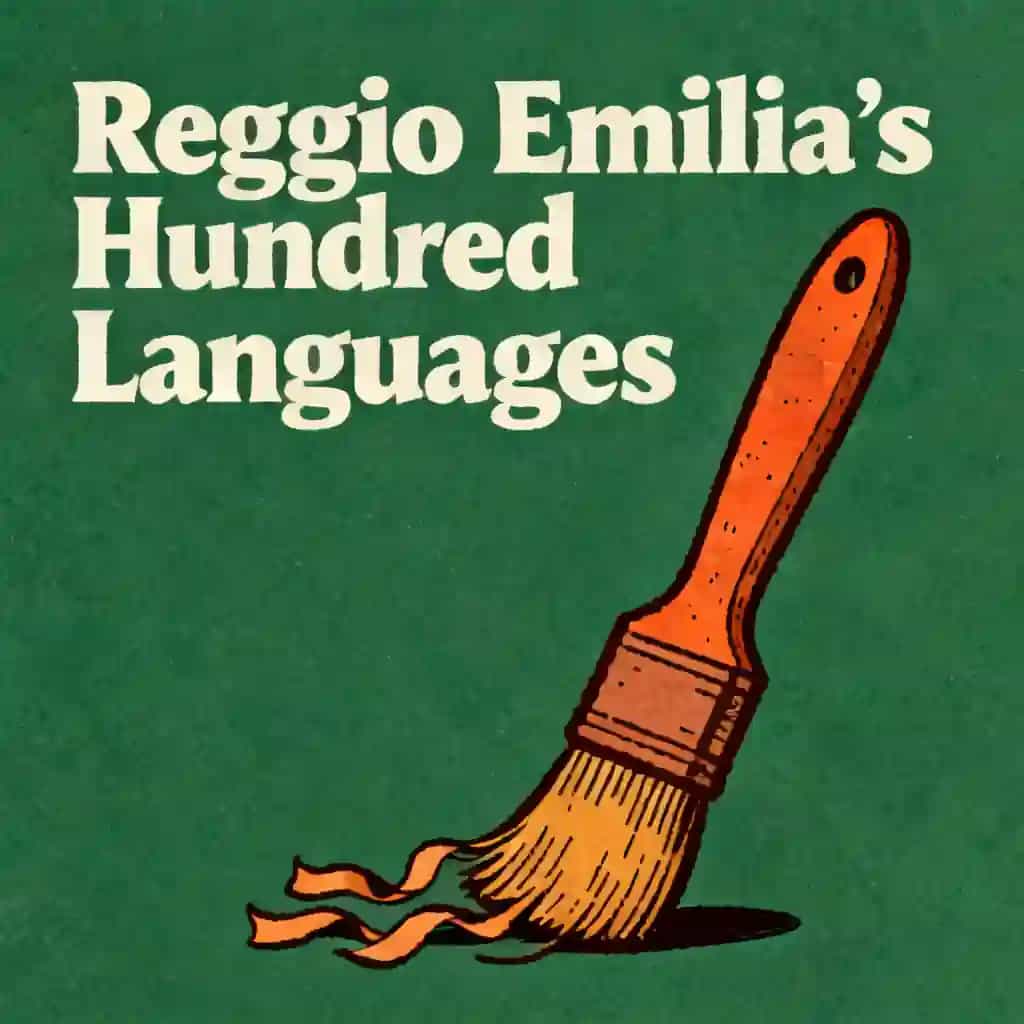
Miles: It really is like a rebellion against the "traditional" model we all know—the one where the teacher delivers the instruction and the kids just receive it . In Reggio, there’s this beautiful thematic anchor called "The Hundred Languages of Children." It comes from a poem by the central figure, Loris Malaguzzi, and the idea is that children have a hundred ways of thinking, discovering, and expressing themselves—through drawing, sculpting, dancing, even shadow play—but traditional schooling "steals ninety-nine" of them to focus only on words and numbers .
Lena: That’s a heartbreaking way to put it, isn't it? Stealing the ninety-nine. But what's fascinating for you as you explore this is that it’s not just a poetic idea; it’s a rigorous educational philosophy that views the child as a subject with rights and immense potential from day one .
Miles: And it’s not a "method" you can just buy off a shelf or get a trademark for, like some other systems . It’s more of a living, breathing set of values that says children are active constructors of their own knowledge . They’re born as researchers, trying to make sense of the world through relationships with others .
Lena: It’s almost like the school is a laboratory for life rather than a preparation for it. If you’re looking for a way to honor your child’s natural curiosity, you’re in the right place because we’re going to peel back the layers of how this collaborative "plurality" of teachers, families, and the environment itself creates a community where every child's voice is heard—in all hundred of their languages . So, let's dive into the core of where this all starts—the image of the child.