BeFreed
    Categories>History & Society>The High Kings: From Irish Mythology to Medieval History

    The High Kings: From Irish Mythology to Medieval History

    19 min
    |
    |
    Aug 20, 2026
    • History & Society
    • Fiction
    • Leadership & Corp Culture

    Explore the High Kings of Ireland, from the mythical Tuatha Dé Danann to medieval history. Discover the legends of the Hill of Tara and the Lia Fáil stone.

    The High Kings: From Irish Mythology to Medieval History
    0:00 / 0:00
    Choose how it's told

    One episode. Many ways to hear it.

    Same ideas from The High Kings: From Irish Mythology to Medieval History. Pick the voice, depth, and pace that fits you. Switch anytime.

    Transcript & chapters

    Chapter 1

    The Echo of the Shouting Stone

    If you stood atop the Hill of Tara three thousand years ago, you wouldn't just see a sweeping view of the Irish midlands—you would be standing at the literal and figurative center of a universe where the line between a god and a king was paper-thin. There is a legend about a stone there called the Lia Fáil, the Stone of Destiny, which was said to shouted the rightful king's name when he placed his foot on it. It is a striking image: the earth itself vocalizing a political endorsement. For you, exploring the High Kings of Ireland means navigating this exact space where the screaming stones of mythology meet the cold, hard tax codes of medieval history. This journey matters because the High Kingship wasn't just a job title; it was a grand cultural project that attempted to weave a thousand years of disparate tribal myths into a single, unified national identity. You are looking at one of the most successful "rebranding" campaigns in human history, where 8th-century scholars took the ancient gods of the Tuatha Dé Danann and carefully edited them into a family tree for the ruling dynasties of their own day. In this episode, we are going to look at the "Book of Invasions," the legendary text that claims Ireland was settled in six distinct waves, and we will see how the "tribe of the gods" eventually became the kings of the soil. We will trace the transition from the magical era of Nuada of the Silver Hand to the gritty political reality of Máel Sechnaill I, the first truly historical figure to be recognized as king of all Ireland. It is a story of how a people used fiction to create a fact—the fact of a nation. So, let's step onto the Hill of Tara and see if the stone still has anything to say.
    Chapter 2

    The Architecture of an Artificial Ancestry

    To understand how the High Kingship worked, you first have to understand the medieval Irish obsession with "fitting in." When Christianity arrived in the 5th century, it brought with it the Bible and the grand histories of Rome and Israel. Suddenly, the Irish scholars felt like the new kids at a very old, very prestigious party. They looked at their own chaotic, beautiful mess of oral traditions—stories of shapeshifters, sun-gods, and magical mists—and realized that none of it matched the "official" history of the world starting from Adam and Eve. Their solution was brilliant and audacious: they decided to rewrite their entire prehistory to make it look like a lost chapter of the Old Testament. This was the birth of the Lebor Gabála Érenn, or the "Book of Ireland's Taking." The scholars who crafted this text weren't just bored monks; they were architects of identity who wanted to give Ireland a pedigree that could rival Rome. They claimed the Irish were descended from Fénius Farsaid's son Goídel Glas, who crafted the Gaelic language from the seventy-two languages after the confusion of tongues that emerged after the confusion of tongues. By doing this, they achieved two things for the High Kingship. First, they gave the kings a divine right that felt "Christian-compatible." Second, they created a narrative where every major group that ever lived in Ireland was part of the same long, epic family drama. This wasn't just about the past; it was about the present. In the 7th and 8th centuries, powerful families like the Uí Néill were trying to dominate the island, and they needed a history that said they had always been in charge. They used these myths as a legal brief to justify their power. You see, the "High King" wasn't a king in the sense we think of today—someone with a standing army and a centralized bureaucracy. Instead, he was a "king of kings," an over-king who received tribute and gave protection, much like a federal chairman in a very loose, very violent confederation. The myths provided the glue for this fragile structure. They suggested that the kingship of Tara was a sacred office that reached back to the very beginning of the world. As we look closer, you'll see that the Tuatha Dé Danann were later mythic rulers of Ireland, after earlier settlers such as Cessair, Partholón, Nemed, and the Fir Bolg had already arrived.

    Keep learning with this episode

    Take the ideas from this episode into a guided learning experience in BeFreed.

    Chapter 3

    The Arrival of the Divine Craftsmen

    Imagine a thick, unnatural mist rolling over the mountains of Connacht, so dense it blots out the sun for three days. Out of this darkness emerge the Tuatha Dé Danann. They arrive in dark clouds, land on the mountains of Conmaicne Rein in Connachta, and immediately burn the ships with a mastery of magic that made the earlier inhabitants think they were gods from heaven. This is the "Mythological Cycle" at its peak. The Tuatha Dé Danann are portrayed as the quintessential High Kings because they possessed dán—which means "craft" or "skill." To be one of them, you had to be a master of something, whether it was smithing, healing, or poetry. Their most famous leader, Lugh, was called Samildánach, or "the master of all arts," because he could do everything from playing the harp to winning a battle with a spear. This sets the tone for what the High Kingship was supposed to be: a peak of human (or super-human) excellence. They brought four magical treasures with them that define the office of the High King: a spear that never missed, a sword of light, a cauldron that never ran dry, and of course, the Lia Fáil stone that shouted for the rightful ruler. But here is the fascinating part: despite their magic, they weren't immortal. They could be killed. They suffered from the same political drama that would plague the later, historical kings. Their first king, Nuada, lost his arm in a battle against the Fir Bolg, the previous inhabitants of the island. In the sacred law of the High Kingship, a king had to be "unblemished." Because Nuada was physically "broken," he had to step down. This wasn't just a fairy tale rule; it was a deeply held belief that the health of the king was tied to the health of the land. If the king was physically flawed, the crops would fail and the cows would go dry. They replaced him with a half-Fomorian named Bres, who turned out to be a disaster because he lacked the "ruler's truth"—he was stingy and didn't offer hospitality, which was the ultimate sin for an Irish king. Eventually, Nuada got a silver prosthetic arm—and later a real one made of flesh through a healing spell—and took the throne back. This mythical struggle between the "good" kings of craft and the "bad" kings of greed or deformity provided the moral blueprint for every historical High King that followed. It established that the throne at Tara wasn't just about strength; it was about a spiritual connection to the island itself.

    Chapter 4

    The Treaty of the Two Worlds

    The transition from the world of gods to the world of men is one of the most poetic moments in Irish lore. It happens with the arrival of the Milesians, who are the ancestors of the modern Gaels—the "historical" Irish. They were led by a poet named Amergin, and their conquest of the island wasn't just a series of sword fights; it was a battle of wits and magic. When the Milesians were still at sea, the Tuatha Dé Danann kings tried to use their magic to blow the invaders' ships back out to sea. But Amergin sang a song to the spirit of Ireland, calming the waves and proving that the Gaels had a right to be there. After a final, decisive battle at a place called Tailtiu, the two sides sat down to negotiate. They reached a deal that defines the Irish landscape to this day: the Milesians would rule the world above ground, while the Tuatha Dé Danann would retreat into the world below. This is how the gods became the "Sídhe" or the fairy folk. They didn't disappear; they just moved into the ancient burial mounds like Brú na Bóinne, becoming the "earthly gods" who watched over the fertility of the soil. For you, as someone interested in the history, this is the crucial "hinge" point. The medieval scholars were essentially saying, "Yes, we are the masters of the island now, but we only rule because we have the blessing of the ancient powers living in the hills." This concept of "Sovereignty" was often personified as a goddess. A High King didn't just win an election; he "married" the land. There are stories of kings encountering a hideous hag in the woods who, after a kiss or a sexual encounter, transforms into a beautiful young woman—the personification of Ireland—granting him the right to rule. This idea survived deep into the Christian era. Even in the 6th century, a king named Diarmait mac Cerbaill was still performing what looked like pagan marriage rites with the land at Tara, much to the horror of the Christian saints of the time. It shows that the High Kingship was always a dual office: half political, half shamanic. The king was the bridge between the people and the hidden, subterranean world of the Tuatha Dé Danann. If the king was "true," the two worlds remained in balance. If he was "false," the boundary between them would break, leading to chaos, plague, and war.

    Keep learning with this episode

    Take the ideas from this episode into a guided learning experience in BeFreed.

    Chapter 5

    The Rise of the Uí Néill and the Invention of Tradition

    As we move out of the mists of the Milesians and into the early centuries of the common era, we encounter the figure who cast the longest shadow over the High Kingship: Niall of the Nine Hostages. While the stories about him are still heavily layered with myth, he represents a major shift in the political reality of Ireland. His descendants, the Uí Néill, would go on to hold the High Kingship for centuries, with the southern branch in Meath and the northern branch in Ulster, while later other dynasties also held the High Kingship. This was the era when the "High Kingship of Tara" started to look less like a magical marriage and more like a dynastic monopoly. But here is the twist: modern historians have found that the "unbroken line" of High Kings stretching back thousands of years was largely an 8th-century construction. You see, the Uí Néill were very good at propaganda. They hired poets and scholars to look at the old tribal records and "rearrange" them so that every important ancient king appeared to be an ancestor of the Uí Néill. They took a regional kingship—the kingship of Tara, which was always prestigious but often localized—and claimed it had always been a national office. This is where the Baile Chuinn Chétchathaig comes in. This is an Old Irish text, one of the earliest "king-lists" we have, dating back to around 700 AD. It's written as a "prophetic vision" given to an ancient king named Conn of the Hundred Battles. In the vision, he is told the names of all the great kings who will follow him. Of course, the list just happens to validate the families who were in power when the poem was actually written. It's a classic case of "predicting the past" to control the future. During this time, the High King was not a dictator. He was more like a "chairman of the board" in a country divided into over 100 small petty kingdoms called tuatha. Each of these little kingdoms had its own king, and they were arranged in a pyramid of loyalty. The High King sat at the very top, but he only had direct power in his own personal territory—for the southern Uí Néill, this was the Kingdom of Meath. To the rest of the island, he was a symbolic figurehead who settled disputes and led the defense against foreign invaders. This fragile, symbolic unity would be put to the ultimate test when the Vikings arrived, forcing the High Kingship to evolve from a sacred ritual into a military necessity.

    Chapter 6

    The Viking Age and the Birth of the Historical High King

    When the Viking longships first appeared on the horizon in the late 8th century, the High Kingship of Ireland was still largely a ceremonial title rooted in ancient ritual and dynastic pride. But the Norsemen didn't care about the shouting stone of Tara or the "ruler's truth." They cared about silver, slaves, and land. This external threat acted as a catalyst, forcing the Irish kings to think beyond their local rivalries and consider a more unified defense. This is where we meet the first man that modern historians are comfortable calling a "High King of all Ireland" in a political sense: Máel Sechnaill I. Ruling in the mid-9th century, he was the first to be described in the annals as rí Érenn uile—the king of all Ireland. Before him, the title was an aspiration; with him, it began to look like a reality. The Viking presence changed the "business model" of Irish kingship. Suddenly, a High King needed a standing army, not just a group of loyal cousins. He needed to build forts and coordinate with other provincial kings who were formerly his enemies. This was also the time when the Church became a major player in the politics of the throne. The great monasteries, like Armagh and Clonmacnoise, realized they needed a strong central protector to keep the Vikings from raiding their scriptoria and stealing their golden shrines. In return for protection, the Church provided the High King with a new kind of legitimacy: the Christian ceremony of coronation. This integrated the old, pagan-leaning "marriage with the land" with a holy anointing that made the king a lieutenant of God. You can see the tension here between the old ways and the new. While the High King was becoming a Christian monarch, the old rules of "unblemished" kingship still held sway in the popular imagination. There is a famous story about a king named Congal Cáech who was blinded in one eye by a Domnall's bees. Even in the 7th century, people argued that he had to step down because his physical imperfection proved he had lost the favor of the supernatural powers. The High Kings of the Viking Age had to walk a tightrope: they had to be modern military commanders while still embodying the ancient, sacred wholeness that the people expected from a ruler of Tara.

    Keep learning with this episode

    Take the ideas from this episode into a guided learning experience in BeFreed.

    Chapter 7

    Brian Boru and the End of the Uí Néill Monopoly

    For centuries, the High Kingship was essentially a private club for the Uí Néill dynasty. They had convinced everyone that only they had the "blood of Tara." But in the year 1002, the unthinkable happened. A man from a relatively obscure family in the south, the Dál gCais, marched north and took the title by force. This was Brian Boru. His rise to power was a tectonic shift in Irish history. He wasn't just another warlord; he was a visionary who understood the potential of a truly centralized High Kingship. Brian didn't just claim the title of High King; he called himself Imperator Scottorum—Emperor of the Irish. He traveled the island, receiving submission from every provincial king, and he used his wealth to rebuild churches and promote learning after the destruction of the Viking raids. Some historians call him a "usurper" because he broke the Uí Néill line, but others argue he was the first king who actually earned the title through sheer ability rather than just genealogy. His reign culminated in the Battle of Clontarf in 1014. While popular legend portrays this as a grand struggle between the Irish and the Vikings, it was actually a much more complex civil war, with Irish and Vikings fighting on both sides. Brian won the battle, but he was killed in the Battle of Clontarf. His death left a power vacuum that the High Kingship never truly recovered from. For the next century and a half, the title was "with opposition," meaning there was never one man that the entire island agreed upon. The Meic Lochlainn of the North, the O'Briens of Munster, and the O'Connors of Connacht spent the next 150 years in a brutal, multi-generational game of thrones. This period saw the High Kingship becoming more "European"—the kings started living in cities, employing professional ministers, and maintaining standing armies. But they also became more vulnerable. Without the absolute, sacred legitimacy of the old days, and without a single dominant dynasty, the island was fractured and exhausted. This was the weakened state of Ireland when the first Anglo-Norman knights landed in 1169, marking the beginning of the end for the Gaelic High Kingship.

    Chapter 8

    The High King's Playbook for Your Life

    As you look back on this long arc from the Tuatha Dé Danann to Brian Boru, you might wonder what a medieval "king of kings" has to do with your life today. The High Kingship, at its heart, was a masterclass in the power of "Social Capital" and "Influence." Because the High King didn't have a centralized government, he had to lead through a complex web of personal relationships and shared stories. He had to be a master of the "Over-King" model—where his power didn't come from micromanaging every petty kingdom, but from providing a vision that everyone wanted to be a part of. The first takeaway for you is the importance of "The Ruler's Truth" or fír flaithemon. In the Irish tradition, a leader's legitimacy wasn't based on their title, but on their integrity. If a king was dishonest, the very environment around him would reflect it. In your own life, whether you're leading a team or a family, this reminds you that your "sovereignty" is tied to your character. People don't follow a title; they follow someone who embodies the "craft" of leadership. The second takeaway is the value of "Narrative Identity." The High Kingship only became a reality because modern historians believe the scheme was crafted in the 8th century from genealogical traditions to justify dynastic status. They understood that if you change the story people tell about themselves, you can change their political reality. You can apply this by looking at the "internal myths" you tell yourself. Are you operating on an old "dynastic" script that no longer serves you, or are you like Brian Boru—willing to "usurp" your own limitations to build something new? Finally, consider the idea of the "Unblemished Leader." While we don't believe in shouting stones anymore, we still have a deep, subconscious need for leaders who are "whole" in their purpose. The High Kings were a bridge between two worlds—the practical and the spiritual. The lesson for you is to find that balance: to be as technically skilled as a smith of the Tuatha Dé Danann, but as politically savvy as a Viking-era king. True "High Kingship" in the modern sense is about achieving a harmony between your inner values and your outer actions.
    Keep learning with this episode

    Take the ideas from this episode into a guided learning experience in BeFreed.

    Chapter 9

    The Long Shadow of Tara

    The story of the High Kings of Ireland officially came to a close in the late 12th century, but the idea of it proved impossible to kill. Even after the Norman conquest, the title remained a symbol of Irish resistance and unity. In a strange final chapter, the Irish lords actually offered the High Kingship to a Scottish prince, Edward Bruce, in 1315, in a desperate attempt to drive out the English. It didn't work, but it showed that the dream of a "King of all Ireland" was still the most powerful idea on the island. When you look at the Hill of Tara today, you don't see a palace; you see grassy mounds and a lonely standing stone. But the real monument isn't made of earth or rock. It's the cultural legacy of a people who refused to accept that they were just a collection of warring tribes. They used the "Book of Invasions" to transform themselves from a group of "god-men" and "un-gods" into a single, historical nation. They showed that myth isn't just a collection of lies; it's a way of organizing the truth so that people can live by it. The High Kingship was a grand, centuries-long experiment in "Synthetic History." It was the process of taking the ancient, magical past of the Tuatha Dé Danann and using it to anchor the stormy, political present of the medieval world. As you reflect on this transition from myth to history, you might realize that we are all doing something similar in our own lives—weaving our past experiences, our family legends, and our personal triumphs into a single narrative that gives us the "sovereignty" to move forward. The High Kings of Ireland remind us that the shouting stone of destiny is always there, waiting for someone with the "ruler's truth" to step up and make it roar. Thank you for spending this time on the Hill of Tara with me. I hope you'll take a moment today to think about the "shouting stones" in your own life—those moments of truth that tell you who you are and where you are meant to lead. It has been a pleasure exploring these ancient cycles with you.

    ★★★★★

    You made it to the end of The High Kings: From Irish Mythology to Medieval History

    “23 days in and I have used it every single day. It is part of my daily habit now.”

    jayallen

    Best quote from The High Kings: From Irish Mythology to Medieval History

    “

    The High Kingship was a grand cultural project that attempted to weave a thousand years of disparate tribal myths into a single, unified national identity—a story of how a people used fiction to create a fact.

    ”
    W

    Generated by White

    Input question

    An exploration of the High Kings of Ireland, blending their mythical origins (Tuatha Dé Danann and the early cycles) with the historical transition into documented rulers.

    Host voices
    Lenaplay
    Knowledge sources
    High King of Ireland
    link
    https://en.wikipedia.org/wiki/High_King_of_Ireland
    Tuatha Dé Danann
    link
    https://en.wikipedia.org/wiki/Tuath_D%C3%A9
    link
    https://en.wikipedia.org/wiki/Lebor_Gab%C3%A1la_%C3%89renn%E2%80%8E
    The Lebar Gabála or Book of Invasions of Ireland: notes on its construction
    link
    https://corkhist.ie/wp-content/uploads/jfiles/1962/b1962-011.pdf
    Baile Chuinn Chétchathaig
    link
    https://en.wikipedia.org/wiki/Baile_Chuinn_Ch%C3%A9tchathaig

    Frequently Asked Questions

    The Hill of Tara served as the literal and figurative center of the Irish universe, where the line between gods and kings was incredibly thin. It is home to the Lia Fáil, also known as the Stone of Destiny. According to legend, this stone would let out a roar heard across the entire island whenever a true king placed his foot upon it, acting as a mystical political endorsement from the earth itself.

    The transition was part of a massive cultural rebranding project led by 8th-century scholars. These scholars took the ancient gods of the Tuatha Dé Danann and carefully edited them into a family tree for the ruling dynasties of their day. This process effectively wove disparate tribal myths into a unified national identity, transforming the 'tribe of the gods' into the historical kings of the soil.

    The Book of Invasions is a legendary text that claims Ireland was settled in six distinct waves of inhabitants. It serves as a foundational narrative that bridges the gap between the magical era of figures like Nuada of the Silver Hand and the established High Kingship. By tracing these waves, the text helps explain how mythology eventually merged with the medieval history and tax codes of Ireland.

    From Columbia University alumni | built in San Francisco

    BeFreed Brings Together A Global Community Of Curious Minds

    4.7

    avg rating

    7.84k+ App Rating

    BeFreed Community

    Seriously I haven’t even explored this app fully yet but from using it the last few days I am so impressed... BeFreed is on a different level from any other learning app I have used. This makes it ultra engaging and can actually improve your concentration which is great for all the doom scrollers!

    @ladyInfinity

    I bought BeFreed exactly 23 days ago, and I have used it every single day since. It has completely embedded itself into my daily workflow and learning habit.

    @jayallen

    The truth is, the app has exceeded all my expectations. I can ask it to generate audio on any topic, whatever it may be, and the result is impressive. My professional field is a specialization in psychotherapy and it is multidisciplinary; however, the answers are very accurate.

    @Raguipa

    What I appreciate most is how much it's reduced my scrolling – I'm spending less time searching and more time absorbing information. The combination of full audiobooks, podcasts, the learning plans are brilliant.

    @colonyofcreatorsNGO

    I have been a PhotoReading Accelerated Learning Instructor for the past 24 years... books and reading and learning are my thing, and BeFreed has done a great job in providing an innovative approach to disseminating and delivering information in an easy to consume way.

    @BeFreed user

    It is not just a book summary app, I have used the 'fun reading' option and it's a much better summary and way to grasp ideas the traditional way, that alone is worth this deal.

    @austinakon

    I love this app. Used it for several days and I cannot stop listening. Such a great way to start.

    @jcrules328

    I really like the program; I have already tested it for around one month, and I feel that it's an amazing gem. It works so well because I can use BeFreed to create my own topics, and the voice is so good with unlimited choice of narrations.

    @DanielCZ

    Seriously I haven’t even explored this app fully yet but from using it the last few days I am so impressed... BeFreed is on a different level from any other learning app I have used. This makes it ultra engaging and can actually improve your concentration which is great for all the doom scrollers!

    @ladyInfinity

    I bought BeFreed exactly 23 days ago, and I have used it every single day since. It has completely embedded itself into my daily workflow and learning habit.

    @jayallen

    The truth is, the app has exceeded all my expectations. I can ask it to generate audio on any topic, whatever it may be, and the result is impressive. My professional field is a specialization in psychotherapy and it is multidisciplinary; however, the answers are very accurate.

    @Raguipa

    What I appreciate most is how much it's reduced my scrolling – I'm spending less time searching and more time absorbing information. The combination of full audiobooks, podcasts, the learning plans are brilliant.

    @colonyofcreatorsNGO

    I have been a PhotoReading Accelerated Learning Instructor for the past 24 years... books and reading and learning are my thing, and BeFreed has done a great job in providing an innovative approach to disseminating and delivering information in an easy to consume way.

    @BeFreed user

    It is not just a book summary app, I have used the 'fun reading' option and it's a much better summary and way to grasp ideas the traditional way, that alone is worth this deal.

    @austinakon

    I love this app. Used it for several days and I cannot stop listening. Such a great way to start.

    @jcrules328

    I really like the program; I have already tested it for around one month, and I feel that it's an amazing gem. It works so well because I can use BeFreed to create my own topics, and the voice is so good with unlimited choice of narrations.

    @DanielCZ

    I love the fact that I can get useful, condensed, information and ideas in a 8 - 15 minute podcast style audio. I'm not a general fan of podcasts because of all the fluff, but this cuts through all that.

    @BeFreed user

    I am finishing up my doctorate, and have to read a lot of unfamiliar material... With BeFreed, you simply enter a prompt, and the app finds source material for you and generates an audio podcast. I find the process in BeFreed to be more streamlined than NotebookLM.

    @Brad

    I often search YouTube for something to listen to whilst making breakfast, when I'm out walking, commuting, etc, and BeFreed has provided an even more targeted approach, without the adverts and the fluff!

    @BeFreed user

    The absolute best part about this platform is its versatility. There is literally no subject that is off-topic. It handles whatever you throw at it... It is rare to find an learning tool with zero limitations that actually delivers on its promises.

    @jayallen

    BeFreed is fantastic. The user-friendly design means I spend less time navigating and more time learning. The mix of audiobooks, podcasts, and learning plans is a genius combo that has completely changed my daily routine.

    @BeFreed user

    At the start I needed a while to understand how to create podcasts in italian language and boom! It is so great! I can ask to explain every argument and it does so well and so smartly!

    @matteo77

    BeFreed has become my daily app for audio books tools... What I like the most is the way you put your text and come with an audio that you can listen on the go.

    @kotanzu1

    I love the fact that I can get useful, condensed, information and ideas in a 8 - 15 minute podcast style audio. I'm not a general fan of podcasts because of all the fluff, but this cuts through all that.

    @BeFreed user

    I am finishing up my doctorate, and have to read a lot of unfamiliar material... With BeFreed, you simply enter a prompt, and the app finds source material for you and generates an audio podcast. I find the process in BeFreed to be more streamlined than NotebookLM.

    @Brad

    I often search YouTube for something to listen to whilst making breakfast, when I'm out walking, commuting, etc, and BeFreed has provided an even more targeted approach, without the adverts and the fluff!

    @BeFreed user

    The absolute best part about this platform is its versatility. There is literally no subject that is off-topic. It handles whatever you throw at it... It is rare to find an learning tool with zero limitations that actually delivers on its promises.

    @jayallen

    BeFreed is fantastic. The user-friendly design means I spend less time navigating and more time learning. The mix of audiobooks, podcasts, and learning plans is a genius combo that has completely changed my daily routine.

    @BeFreed user

    At the start I needed a while to understand how to create podcasts in italian language and boom! It is so great! I can ask to explain every argument and it does so well and so smartly!

    @matteo77

    BeFreed has become my daily app for audio books tools... What I like the most is the way you put your text and come with an audio that you can listen on the go.

    @kotanzu1

    See more on how BeFreed is discussed
    129.7K19.5K
    55.2K19.2K
    154.2K10827355
    48.1K2.5K
    81.2K6.6K
    82.3K1.8K
    Start your learning journey, now
    BeFreed app
    BeFreed

    Learn Anything, Personalized

    DiscordLinkedIn
    Featured book summaries
    Crucial ConversationsThe Perfect MarriageInto the WildNever Split the DifferenceAttachedGood to GreatSay Nothing
    Trending categories
    Self HelpCommunication SkillRelationshipMindfulnessPhilosophyInspirationProductivity
    Celebrities' reading list
    Elon MuskCharlie KirkBill GatesSteve JobsAndrew HubermanJoe RoganJordan Peterson
    Award winning collection
    Pulitzer PrizeNational Book AwardGoodreads Choice AwardsNobel Prize in LiteratureNew York TimesCaldecott MedalNebula Award
    Featured Topics
    ManagementAmerican HistoryWarTradingStoicismAnxietySex
    Best books by Year
    2025 Best Non Fiction Books2024 Best Non Fiction Books2023 Best Non Fiction Books
    Featured authors
    Chimamanda Ngozi AdichieGeorge OrwellO. J. SimpsonBarbara O'NeillWinston ChurchillCharlie Kirk
    BeFreed vs other apps
    BeFreed vs. Other Book Summary AppsBeFreed vs. ElevenReaderBeFreed vs. ReadwiseBeFreed vs. Anki
    Learning tools
    Knowledge VisualizerAI Podcast Generator
    Information
    About Usarrow
    Pricingarrow
    FAQarrow
    Blogarrow
    Careerarrow
    Partnershipsarrow
    Ambassador Programarrow
    Directoryarrow
    BeFreed
    Try now
    © 2026 BeFreed
    Term of UsePrivacy Policy
    BeFreed

    Learn Anything, Personalized

    DiscordLinkedIn
    Featured book summaries
    Crucial ConversationsThe Perfect MarriageInto the WildNever Split the DifferenceAttachedGood to GreatSay Nothing
    Trending categories
    Self HelpCommunication SkillRelationshipMindfulnessPhilosophyInspirationProductivity
    Celebrities' reading list
    Elon MuskCharlie KirkBill GatesSteve JobsAndrew HubermanJoe RoganJordan Peterson
    Award winning collection
    Pulitzer PrizeNational Book AwardGoodreads Choice AwardsNobel Prize in LiteratureNew York TimesCaldecott MedalNebula Award
    Featured Topics
    ManagementAmerican HistoryWarTradingStoicismAnxietySex
    Best books by Year
    2025 Best Non Fiction Books2024 Best Non Fiction Books2023 Best Non Fiction Books
    Learning tools
    Knowledge VisualizerAI Podcast Generator
    Featured authors
    Chimamanda Ngozi AdichieGeorge OrwellO. J. SimpsonBarbara O'NeillWinston ChurchillCharlie Kirk
    BeFreed vs other apps
    BeFreed vs. Other Book Summary AppsBeFreed vs. ElevenReaderBeFreed vs. ReadwiseBeFreed vs. Anki
    Information
    About Usarrow
    Pricingarrow
    FAQarrow
    Blogarrow
    Careerarrow
    Partnershipsarrow
    Ambassador Programarrow
    Directoryarrow
    BeFreed
    Try now
    © 2026 BeFreed
    Term of UsePrivacy Policy

    More like this

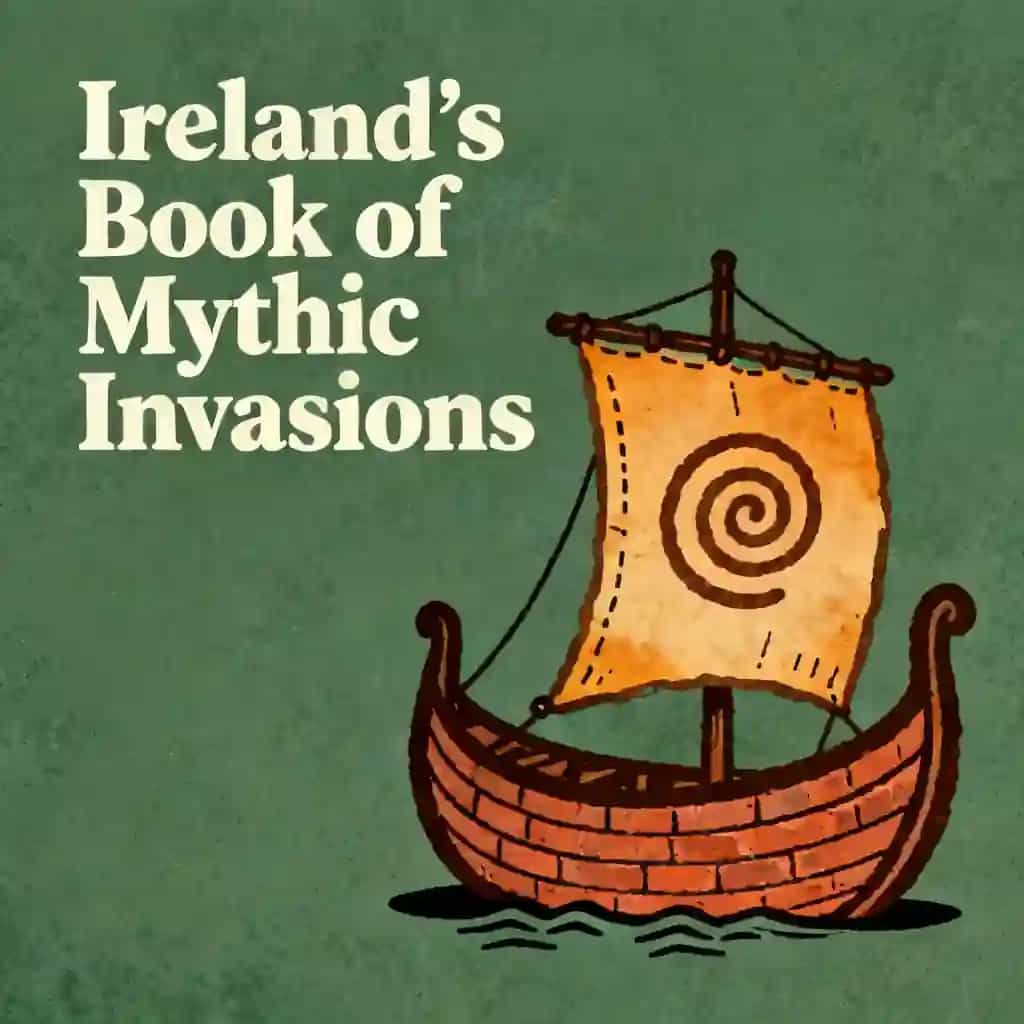
    The Book of Invasions and Ireland’s Mythic History book cover
    Norse MythologyThe SirensJonathan Strange & Mr NorrellHow the Irish Saved Civilization
    24 sources
    The Book of Invasions and Ireland’s Mythic History
    How did medieval monks blend biblical tales with Irish gods? Explore the six waves of settlers and the legends that shaped Ireland’s national identity.
    25 min
    The Book of Invasions: Ireland’s Mythic Origins book cover
    Lebor Gabála Érenn: The Book of InvasionsThe Four Jewels of the Tuatha Dé DanannThe Lebor Gabála Érenn at a Glance: an Overview of the 11th Century Irish Book of InvasionsLebor Gabála Erenn - World History Encyclopedia
    5 sources
    The Book of Invasions: Ireland’s Mythic Origins
    How did a sacred island define its identity through waves of magic and war? Explore the legendary Tuatha Dé Danann and the ancient roots of Irish lore.
    1193 min
    The Iverni: Mapping Ireland’s Ancient Roots book cover
    IverniPtolemy's map of IrelandPtomemy's Map of Ireland - Archaeology Ireland, Heritage Guide No. 21Iverni
    10 sources
    The Iverni: Mapping Ireland’s Ancient Roots
    How did a remote tribe become the face of a nation? Discover how Ptolemy’s 2nd-century map transformed Ireland from a vague shape into a living history.
    1422 min
    The Fir Bolg: Ireland’s Men of Bags book cover
    Fir Bolg - WikipediaFir Bolg — GrokipediaThe Fir Bolg • The Ancient Gods of Irish MythologyA Fir Bolg Fort in Clew Bay? - Irish Myths
    5 sources
    The Fir Bolg: Ireland’s Men of Bags
    Before the gods arrived, a group of refugees reclaimed Ireland from exile. Discover how the Fir Bolg shaped the island's provinces and resilience.
    23 min
    Old Croghan Man: The Iron Age King in the Bog book cover
    Kingship and Sacrifice | Archaeology | National Museum of IrelandClonycavan and Old Croghan Men
 - Archaeology Magazine ArchiveCSI Iron Age | Irish IndependentIron Age Food and Drink: History and significance of diet in ancient ...
    5 sources
    Old Croghan Man: The Iron Age King in the Bog
    How did a manicured aristocrat end up in a shallow grave? Explore ritual sacrifice and sacred kingship through this 2,000-year-old Irish mystery.
    1370 min
    Irish Mythology: The Four Cycles of Lore book cover
    Irish mythologyIrish Mythology: History and LegacyORAL TRADITION 1.2 - Orality in Medieval Irish Narrative: An OverviewFilí
    5 sources
    Irish Mythology: The Four Cycles of Lore
    Ancient Irish legends are more than fairy tales. Journey through the four great cycles to discover a world where gods, heroes, and history collide.
    1086 min
    Vikings: From Norse Gods to Medieval Democracy book cover
    source 1source 2source 3Vikings - History, Origins, Tactics, Religion & Society
    6 sources
    Vikings: From Norse Gods to Medieval Democracy
    Explore the complete Viking world - from their complex mythology of flawed gods facing inevitable doom to Iceland's revolutionary stateless society that functioned for 300+ years without kings or nobles.
    28 min
    Dál Riata: The Sea-Kings of Iona book cover
    Dál RiataSaint Columba and the ‘golden age’ of ancient Dalriada | The NationalDalriada - The Scottish History SocietySt Columba: How The Irish Holy Man Transformed Christianity In Britain | HistoryExtra
    6 sources
    Dál Riata: The Sea-Kings of Iona
    How did a seafaring Gaelic kingdom bridge two nations? Explore the warriors, saints, and artistry of Dál Riata to see how Scotland’s identity began.
    888 min