The Four Chapters of Russian History
Trace Russia's evolution from Viking origins and the Rurik Dynasty to the Soviet collapse. This guide delivers essential facts and simplifies complex political terms for a clear understanding of the world's largest nation.

Best quote from The Four Chapters of Russian History
Russian history follows four distinct chapters: the early princely states, the Tsardom, the massive Russian Empire, and finally the Soviet Union. It is a story of how a country has constantly struggled to define its place in the world, its relationship with its own people, and its balance between tradition and modernization.
Generated by Sab
I want to know the history of Russia teach me as if I was a student so no random talks only straightforward facts and explain difficult terms in an easy way

Frequently Asked Questions
The Varangians were a group of Scandinavian Vikings who were invited to rule and restore order in the north in the year 862. This event is considered the official start of Russian history, leading to the birth of the first East Slavic state known as Kievan Rus'. Under the Rurik dynasty, specifically the leader Oleg, the city of Kiev was seized in 882 and became a strategic hub for trade between Scandinavia and the Byzantine Empire.
The Christianization of the Rus occurred in 988 under Grand Prince Vladimir the Great, who converted from paganism to Orthodox Christianity following the Byzantine rite. This event changed the cultural DNA of the region by aligning Russia with Byzantine culture rather than the Roman Catholic West. This religious and political choice set a specific course for Russian identity that lasted for over a thousand years.
The Mongol Yoke refers to a period of Mongol domination that began after the descendants of Genghis Khan invaded and sacked major cities like Kiev between 1237 and 1240. During this time, the Mongols established the "Golden Horde," and Russian princes became vassals who had to pay tribute and show total loyalty to the Khan. To rule their own lands, these princes were required to travel to the Mongol capital to receive a "yarlyk," which was a formal charter or permission to rule.
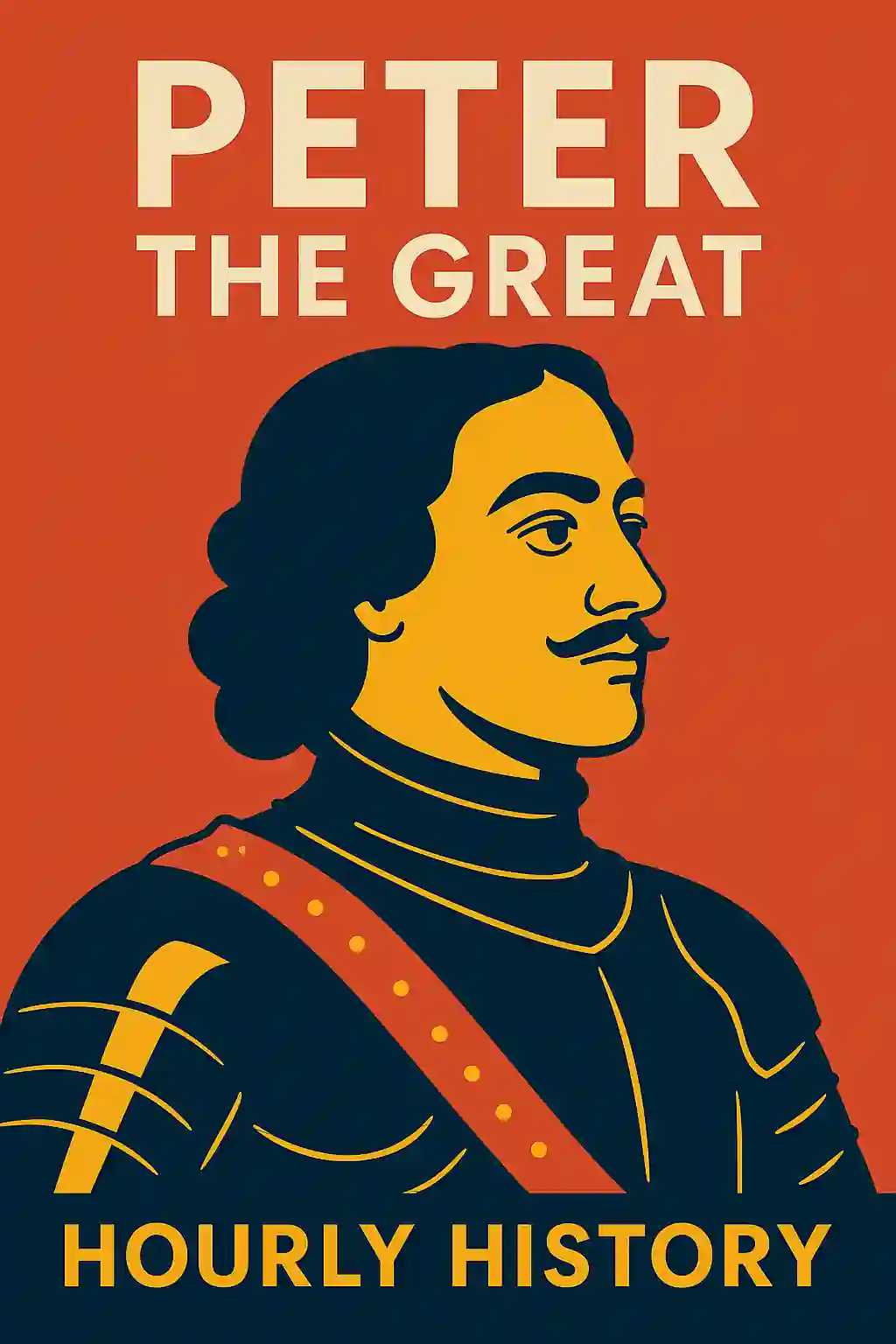
Peter the Great sought to end Russia's isolation by forcibly "Westernizing" the country after observing the technology and navies of Western Europe. He modernized the military, forced the nobility to adopt European dress, and founded St. Petersburg in 1703 to serve as a "window on Europe" with access to the Baltic Sea. By moving the capital from Moscow to St. Petersburg in 1712, he signaled a total shift in Russia's identity toward the West.
Introduced by Mikhail Gorbachev in the 1980s, Perestroika and Glasnost were reform efforts intended to save the Soviet system. Perestroika, meaning "restructuring," was an attempt to modernize the economy by introducing market mechanisms and decentralizing control. Glasnost, meaning "openness," allowed for more freedom of speech and political debate. Instead of preserving the USSR, these reforms accelerated its collapse by allowing citizens to openly criticize the Communist Party and encouraging nationalist movements to demand independence.
From Columbia University alumni built in San Francisco
"Instead of endless scrolling, I just hit play on BeFreed. It saves me so much time."


"I never knew where to start with nonfiction—BeFreed’s book lists turned into podcasts gave me a clear path."


"Perfect balance between learning and entertainment. Finished ‘Thinking, Fast and Slow’ on my commute this week."
"Crazy how much I learned while walking the dog. BeFreed = small habits → big gains."
"Reading used to feel like a chore. Now it’s just part of my lifestyle."

"Feels effortless compared to reading. I’ve finished 6 books this month already."
"BeFreed turned my guilty doomscrolling into something that feels productive and inspiring."

"BeFreed turned my commute into learning time. 20-min podcasts are perfect for finishing books I never had time for."
"BeFreed replaced my podcast queue. Imagine Spotify for books — that’s it. 🙌"

"It is great for me to learn something from the book without reading it."
"The themed book list podcasts help me connect ideas across authors—like a guided audio journey."
"Makes me feel smarter every time before going to work"
From Columbia University alumni built in San Francisco
"Instead of endless scrolling, I just hit play on BeFreed. It saves me so much time."
"I never knew where to start with nonfiction—BeFreed’s book lists turned into podcasts gave me a clear path."
"Perfect balance between learning and entertainment. Finished ‘Thinking, Fast and Slow’ on my commute this week."
"Crazy how much I learned while walking the dog. BeFreed = small habits → big gains."
"Reading used to feel like a chore. Now it’s just part of my lifestyle."
"Feels effortless compared to reading. I’ve finished 6 books this month already."
"BeFreed turned my guilty doomscrolling into something that feels productive and inspiring."
"BeFreed turned my commute into learning time. 20-min podcasts are perfect for finishing books I never had time for."
"BeFreed replaced my podcast queue. Imagine Spotify for books — that’s it. 🙌"
"It is great for me to learn something from the book without reading it."
"The themed book list podcasts help me connect ideas across authors—like a guided audio journey."
"Makes me feel smarter every time before going to work"
"Instead of endless scrolling, I just hit play on BeFreed. It saves me so much time."
"I never knew where to start with nonfiction—BeFreed’s book lists turned into podcasts gave me a clear path."
"Perfect balance between learning and entertainment. Finished ‘Thinking, Fast and Slow’ on my commute this week."
"Crazy how much I learned while walking the dog. BeFreed = small habits → big gains."
"Reading used to feel like a chore. Now it’s just part of my lifestyle."
"Feels effortless compared to reading. I’ve finished 6 books this month already."
"BeFreed turned my guilty doomscrolling into something that feels productive and inspiring."
"BeFreed turned my commute into learning time. 20-min podcasts are perfect for finishing books I never had time for."
"BeFreed replaced my podcast queue. Imagine Spotify for books — that’s it. 🙌"
"It is great for me to learn something from the book without reading it."
"The themed book list podcasts help me connect ideas across authors—like a guided audio journey."
"Makes me feel smarter every time before going to work"
"Instead of endless scrolling, I just hit play on BeFreed. It saves me so much time."
"I never knew where to start with nonfiction—BeFreed’s book lists turned into podcasts gave me a clear path."
"Perfect balance between learning and entertainment. Finished ‘Thinking, Fast and Slow’ on my commute this week."
"Crazy how much I learned while walking the dog. BeFreed = small habits → big gains."
"Reading used to feel like a chore. Now it’s just part of my lifestyle."
"Feels effortless compared to reading. I’ve finished 6 books this month already."
"BeFreed turned my guilty doomscrolling into something that feels productive and inspiring."
"BeFreed turned my commute into learning time. 20-min podcasts are perfect for finishing books I never had time for."
"BeFreed replaced my podcast queue. Imagine Spotify for books — that’s it. 🙌"
"It is great for me to learn something from the book without reading it."
"The themed book list podcasts help me connect ideas across authors—like a guided audio journey."
"Makes me feel smarter every time before going to work"