The Coercion of Capital: Unmasking the Wage Trap
Explore how the illusion of voluntary labor masks a system of structural coercion, where private investment and the 'threat of the sack' drive endless inequality and collective unfreedom.
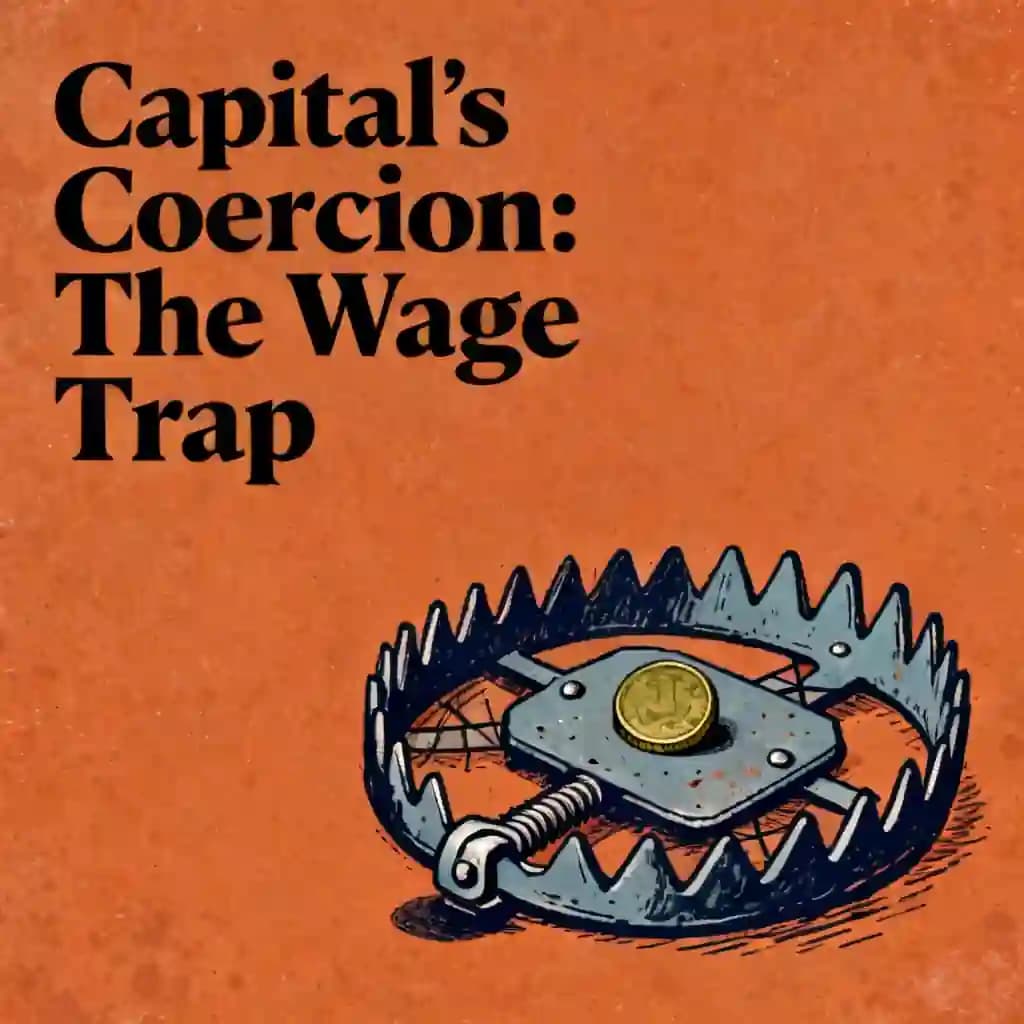
Best quote from The Coercion of Capital: Unmasking the Wage Trap
The 'freedom' to sign the contract is really just the freedom to choose which master will extract that surplus from you. The coercion is built into the very fabric of how we survive.
Generated by hassan mujtaba
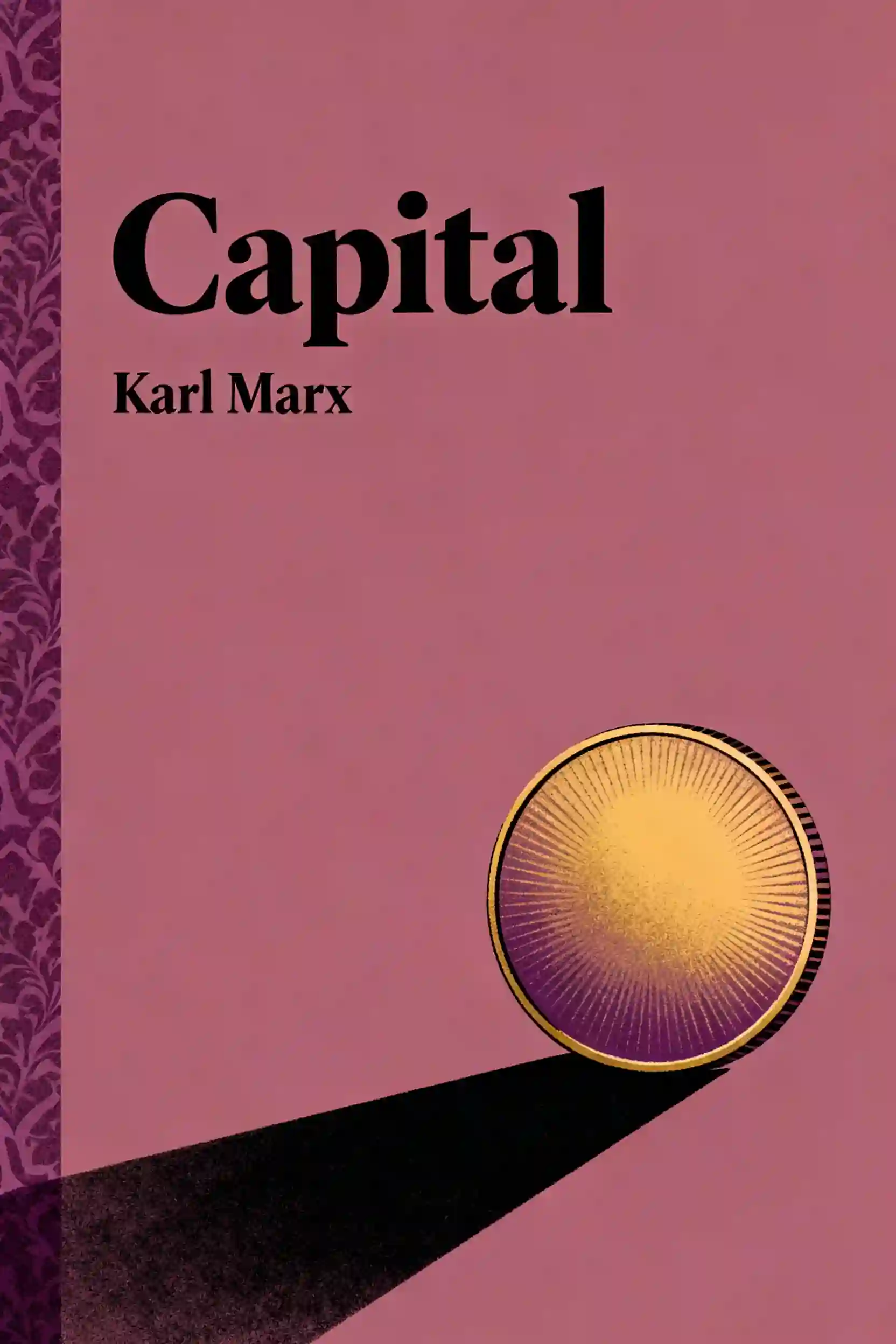
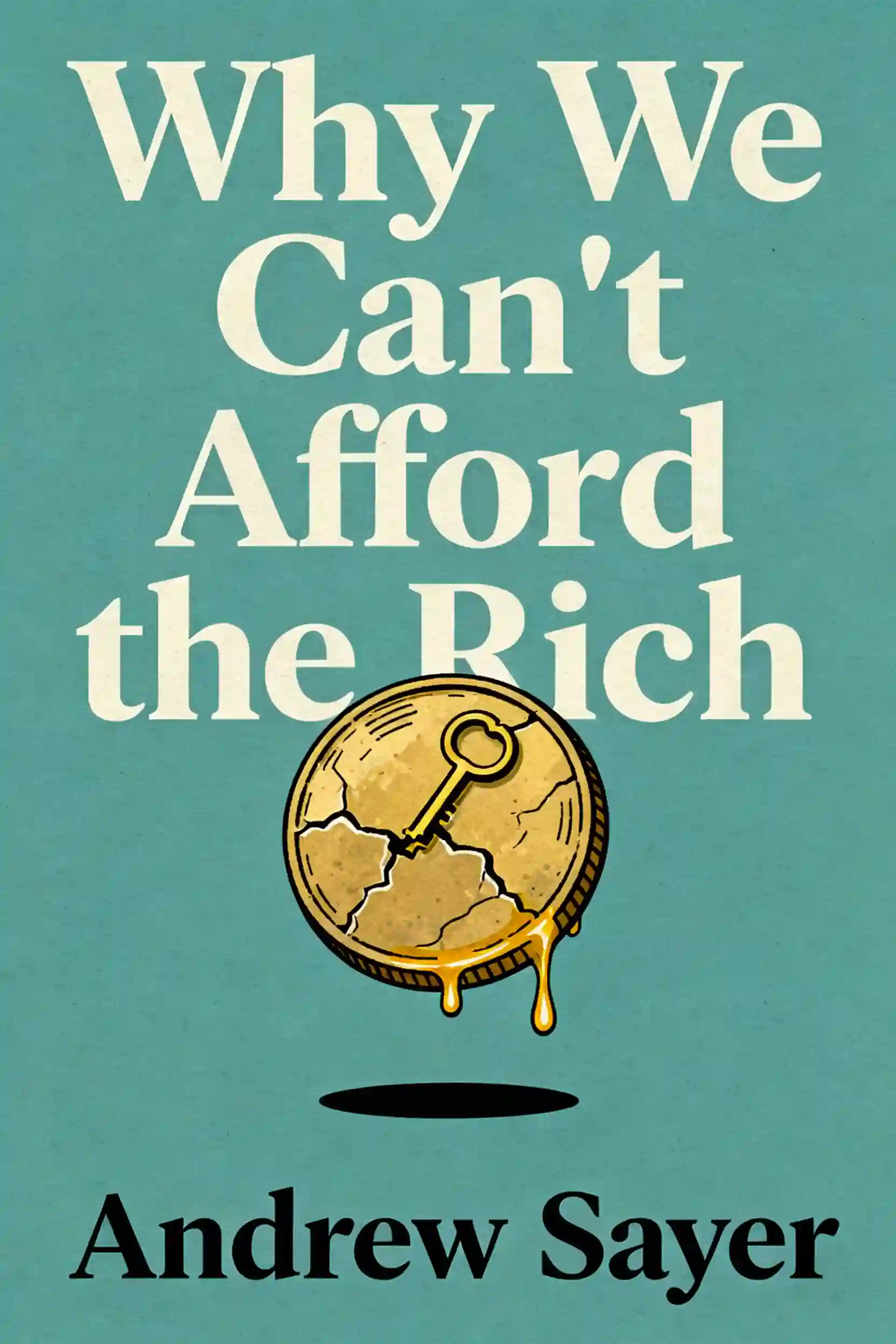
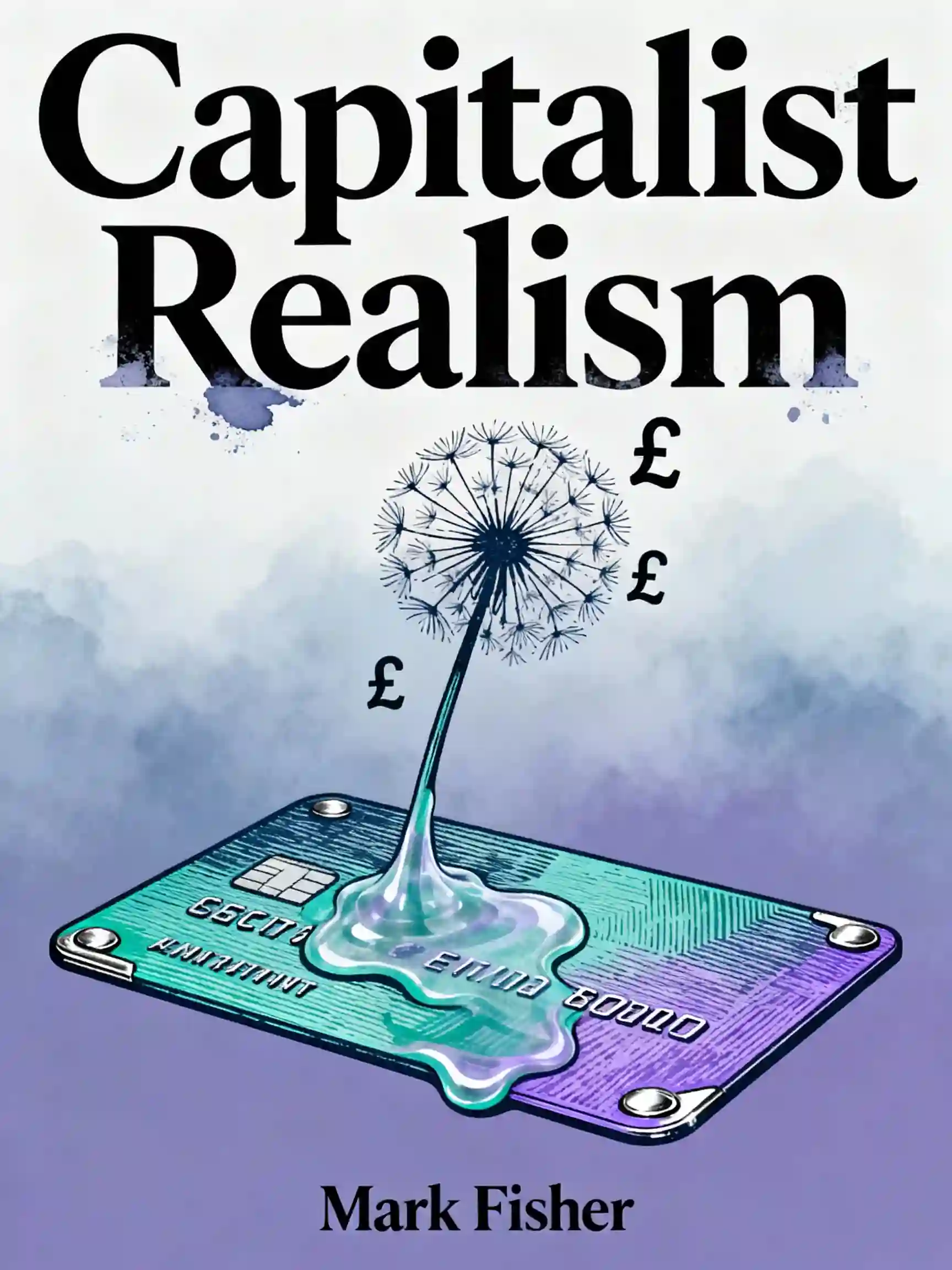
Capitalism is based on coercion. The real problems are wage labor and private investment that would keep on increasing income inequality and keep everyone slaves except for few elites.

Frequently Asked Questions
The script explains that while workers have the "legal freedom" to sign a contract, they lack "actual freedom" because they do not own the means of production, such as land, tools, or machines. This creates a structural trap where the only way to survive is to sell one's labor to a capitalist. Miles notes that while a feudal lord used physical force, capitalism uses the "threat of the sack" and the dread of being cast into the "reserve army of the unemployed" as a form of implicit coercion to keep the system disciplined.
Surplus value is the profit generated by a worker that exceeds the cost of their own wages. The script uses the "money-relation" to explain how this is concealed: because a worker receives a paycheck for their time, it appears as though every hour worked was paid for. However, a worker might produce enough value to cover their daily wage in the first three hours, while the remaining five hours of an eight-hour shift constitute "uncompensated labor" that the employer keeps as profit.
Marx viewed "equality" as a bourgeois value that often masks deeper power imbalances. In a capitalist market, "equality" means everyone is equal before the law as buyers and sellers, but this ignores the reality that a billionaire and a poor person have vastly different levels of power. Furthermore, the script notes that giving everyone the exact same resources is actually unequal because people have different needs and circumstances, such as family size or physical health. Marx’s true goal was the "abolition of class distinctions" rather than absolute mathematical sameness.
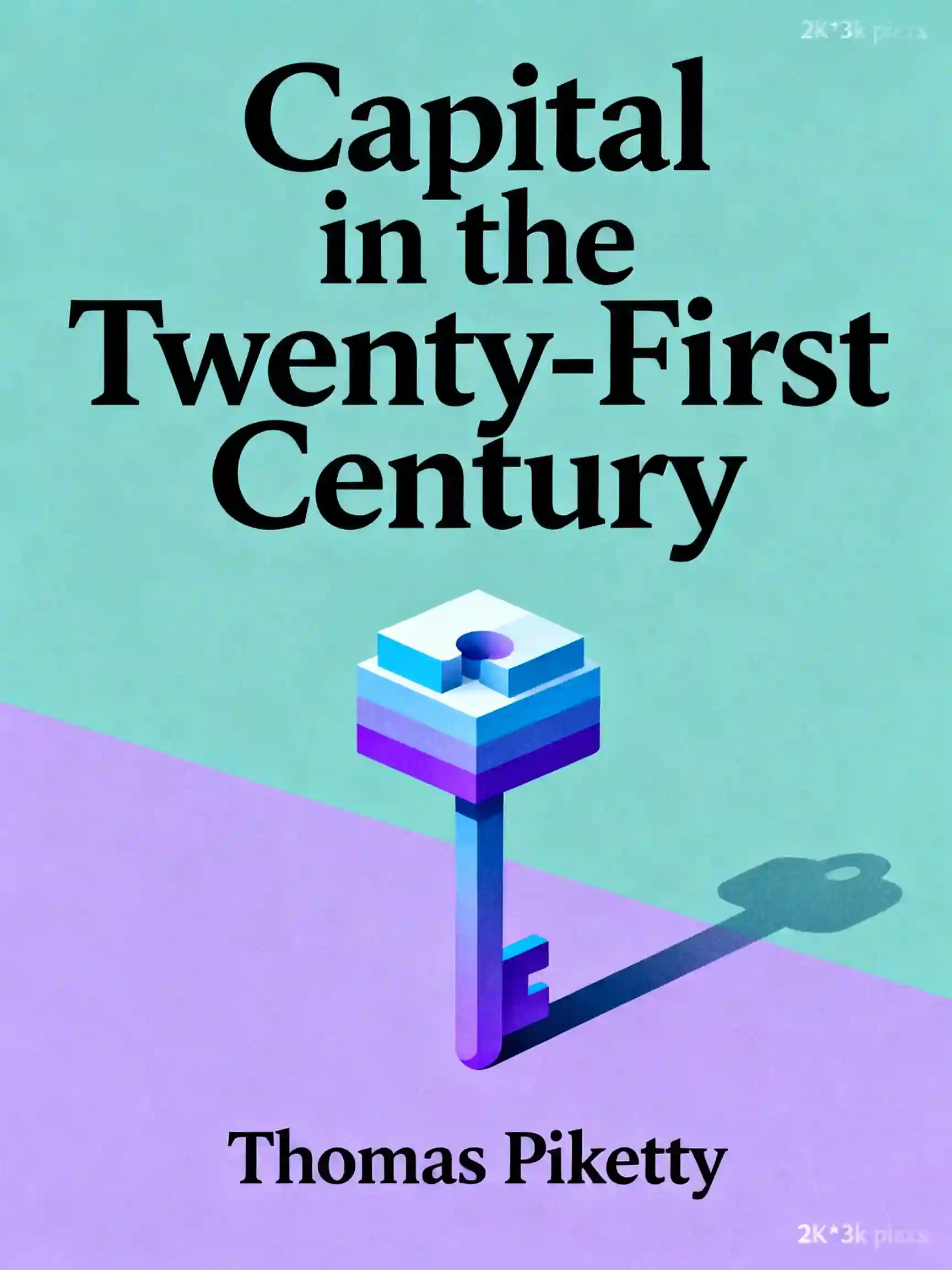
Private investment is described not as a neutral pot of money, but as "capital" seeking to grow by consuming labor. The script references Thomas Piketty’s data showing that the return on capital usually grows faster than the economy, allowing those who own assets to pull away from those who only own their labor. On a global scale, this creates an "international division of labor" where wealthy nations extract resources and "surplus value" from other regions, effectively "exporting the soil" and exhausting the natural and human resources of those areas to sustain infinite growth.
A post-capitalist society would focus on the "free development of each" rather than treating people as interchangeable "labor units." Instead of using technology to make workers redundant or unemployed, a classless society would use increased productivity to reduce the total number of working hours for everyone. This would transition society from a state of "survival" to one of "life," where individuals are "time-rich" and have the freedom to pursue their own talents and capabilities outside of the dictates of a boss or the "toll-booth" economy.
From Columbia University alumni built in San Francisco
"Instead of endless scrolling, I just hit play on BeFreed. It saves me so much time."


"I never knew where to start with nonfiction—BeFreed’s book lists turned into podcasts gave me a clear path."


"Perfect balance between learning and entertainment. Finished ‘Thinking, Fast and Slow’ on my commute this week."
"Crazy how much I learned while walking the dog. BeFreed = small habits → big gains."
"Reading used to feel like a chore. Now it’s just part of my lifestyle."

"Feels effortless compared to reading. I’ve finished 6 books this month already."
"BeFreed turned my guilty doomscrolling into something that feels productive and inspiring."

"BeFreed turned my commute into learning time. 20-min podcasts are perfect for finishing books I never had time for."
"BeFreed replaced my podcast queue. Imagine Spotify for books — that’s it. 🙌"

"It is great for me to learn something from the book without reading it."
"The themed book list podcasts help me connect ideas across authors—like a guided audio journey."
"Makes me feel smarter every time before going to work"
From Columbia University alumni built in San Francisco
"Instead of endless scrolling, I just hit play on BeFreed. It saves me so much time."
"I never knew where to start with nonfiction—BeFreed’s book lists turned into podcasts gave me a clear path."
"Perfect balance between learning and entertainment. Finished ‘Thinking, Fast and Slow’ on my commute this week."
"Crazy how much I learned while walking the dog. BeFreed = small habits → big gains."
"Reading used to feel like a chore. Now it’s just part of my lifestyle."
"Feels effortless compared to reading. I’ve finished 6 books this month already."
"BeFreed turned my guilty doomscrolling into something that feels productive and inspiring."
"BeFreed turned my commute into learning time. 20-min podcasts are perfect for finishing books I never had time for."
"BeFreed replaced my podcast queue. Imagine Spotify for books — that’s it. 🙌"
"It is great for me to learn something from the book without reading it."
"The themed book list podcasts help me connect ideas across authors—like a guided audio journey."
"Makes me feel smarter every time before going to work"
"Instead of endless scrolling, I just hit play on BeFreed. It saves me so much time."
"I never knew where to start with nonfiction—BeFreed’s book lists turned into podcasts gave me a clear path."
"Perfect balance between learning and entertainment. Finished ‘Thinking, Fast and Slow’ on my commute this week."
"Crazy how much I learned while walking the dog. BeFreed = small habits → big gains."
"Reading used to feel like a chore. Now it’s just part of my lifestyle."
"Feels effortless compared to reading. I’ve finished 6 books this month already."
"BeFreed turned my guilty doomscrolling into something that feels productive and inspiring."
"BeFreed turned my commute into learning time. 20-min podcasts are perfect for finishing books I never had time for."
"BeFreed replaced my podcast queue. Imagine Spotify for books — that’s it. 🙌"
"It is great for me to learn something from the book without reading it."
"The themed book list podcasts help me connect ideas across authors—like a guided audio journey."
"Makes me feel smarter every time before going to work"
"Instead of endless scrolling, I just hit play on BeFreed. It saves me so much time."
"I never knew where to start with nonfiction—BeFreed’s book lists turned into podcasts gave me a clear path."
"Perfect balance between learning and entertainment. Finished ‘Thinking, Fast and Slow’ on my commute this week."
"Crazy how much I learned while walking the dog. BeFreed = small habits → big gains."
"Reading used to feel like a chore. Now it’s just part of my lifestyle."
"Feels effortless compared to reading. I’ve finished 6 books this month already."
"BeFreed turned my guilty doomscrolling into something that feels productive and inspiring."
"BeFreed turned my commute into learning time. 20-min podcasts are perfect for finishing books I never had time for."
"BeFreed replaced my podcast queue. Imagine Spotify for books — that’s it. 🙌"
"It is great for me to learn something from the book without reading it."
"The themed book list podcasts help me connect ideas across authors—like a guided audio journey."
"Makes me feel smarter every time before going to work"