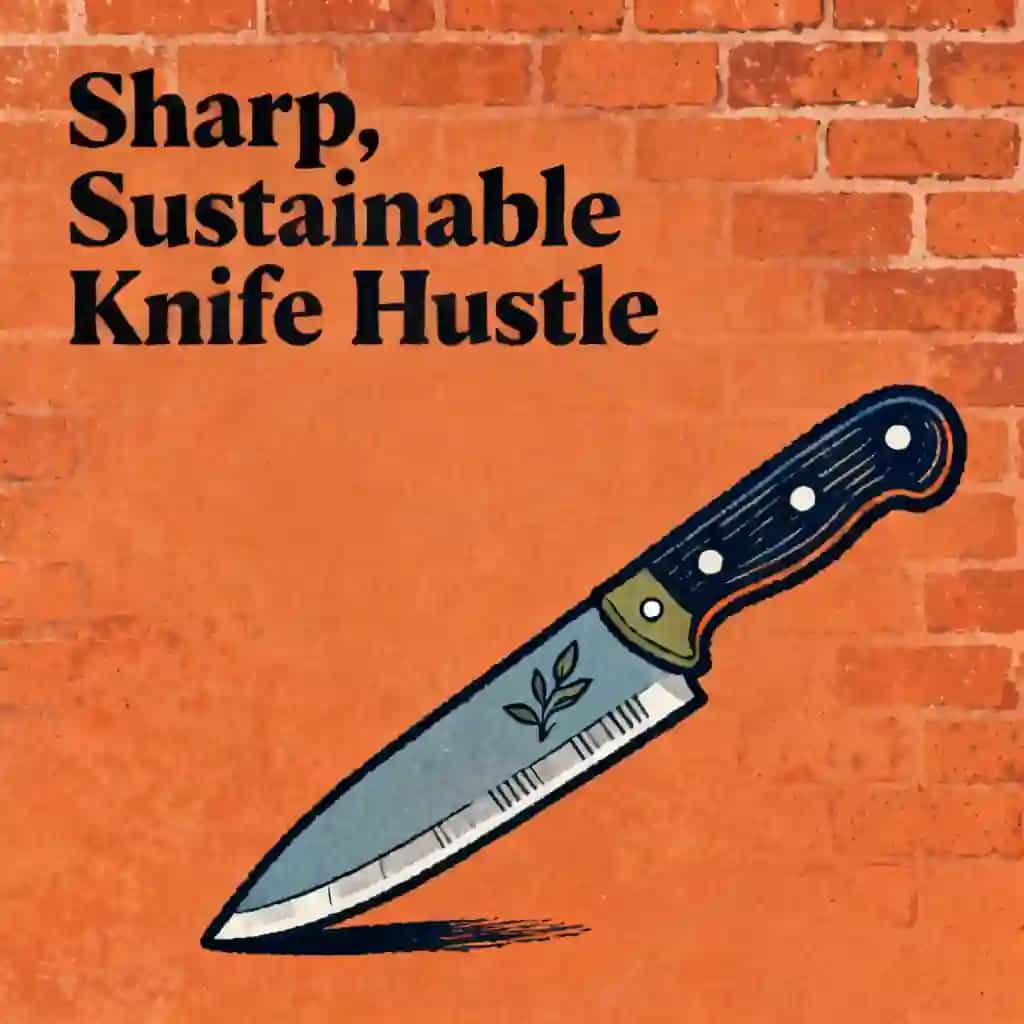
The Art of the Edge: Mastering Whetstone Sharpening
Stop struggling with dull blades and learn the precise mechanics of whetstone sharpening to transform your kitchen tools and knife skills.

Best quote from The Art of the Edge: Mastering Whetstone Sharpening
A dull tool makes you do all the work; a sharp tool does the work for you. Learning to sharpen is a way of saying, 'No, I can fix this. I can maintain this.'
Generated by April
I want to learn how to master sharpening knives and tools using whetstones.

Frequently Asked Questions
Honing and sharpening are often confused, but they serve different purposes. Honing with a rod simply straightens a folded or misaligned edge, similar to maintenance. Sharpening with a whetstone actually removes metal to reshape the steel and create a new, clean apex where the two sides of the blade meet. While honing is like a daily "toothbrush" for your knife, sharpening is the "dental work" required to restore a truly dull blade.
The key indicator that you have reached the "finish line" on one side of the blade is the formation of a burr, also known as a wire edge. As you sharpen, you are pushing a microscopic lip of metal over to the opposite side. You can feel for this ridge by gently sliding your thumb away from the edge. Once you feel a consistent burr from the heel to the tip, you have successfully reached the apex and are ready to flip the knife and sharpen the other side.
The slurry is the muddy mixture of water and stone particles that develops as you work. While it may look messy, it is actually the "secret sauce" of the sharpening process because it creates the necessary abrasion to move the metal. Beginners are often tempted to rinse the stone to keep it clean, but doing so actually slows down the process. You should keep the mud on the stone to ensure efficient sharpening.
Maintaining a consistent angle is critical to prevent "wobbling," which can round over the edge. For a standard Western kitchen knife, a 20-degree angle is recommended. A common trick for beginners is the "penny trick," where you stack two pennies under the spine of the blade to establish a rough guide for the height. Over time, the goal is to develop muscle memory by locking your wrist and moving your entire arm in a rhythmic "dance" rather than flicking the knife.
Yes, it is possible to "dub" the edge by over-polishing, especially during the stropping phase. If you spend too much time on a leather strop or use too much pressure, you can accidentally round over the microscopic apex you just created, making the knife less sharp than it was before. The best approach is to stop as soon as the burr is removed and the edge is clean, following the principle that "less is more" during the final polish.
From Columbia University alumni built in San Francisco
"Instead of endless scrolling, I just hit play on BeFreed. It saves me so much time."


"I never knew where to start with nonfiction—BeFreed’s book lists turned into podcasts gave me a clear path."


"Perfect balance between learning and entertainment. Finished ‘Thinking, Fast and Slow’ on my commute this week."
"Crazy how much I learned while walking the dog. BeFreed = small habits → big gains."
"Reading used to feel like a chore. Now it’s just part of my lifestyle."

"Feels effortless compared to reading. I’ve finished 6 books this month already."
"BeFreed turned my guilty doomscrolling into something that feels productive and inspiring."

"BeFreed turned my commute into learning time. 20-min podcasts are perfect for finishing books I never had time for."
"BeFreed replaced my podcast queue. Imagine Spotify for books — that’s it. 🙌"

"It is great for me to learn something from the book without reading it."
"The themed book list podcasts help me connect ideas across authors—like a guided audio journey."
"Makes me feel smarter every time before going to work"
From Columbia University alumni built in San Francisco
"Instead of endless scrolling, I just hit play on BeFreed. It saves me so much time."
"I never knew where to start with nonfiction—BeFreed’s book lists turned into podcasts gave me a clear path."
"Perfect balance between learning and entertainment. Finished ‘Thinking, Fast and Slow’ on my commute this week."
"Crazy how much I learned while walking the dog. BeFreed = small habits → big gains."
"Reading used to feel like a chore. Now it’s just part of my lifestyle."
"Feels effortless compared to reading. I’ve finished 6 books this month already."
"BeFreed turned my guilty doomscrolling into something that feels productive and inspiring."
"BeFreed turned my commute into learning time. 20-min podcasts are perfect for finishing books I never had time for."
"BeFreed replaced my podcast queue. Imagine Spotify for books — that’s it. 🙌"
"It is great for me to learn something from the book without reading it."
"The themed book list podcasts help me connect ideas across authors—like a guided audio journey."
"Makes me feel smarter every time before going to work"
"Instead of endless scrolling, I just hit play on BeFreed. It saves me so much time."
"I never knew where to start with nonfiction—BeFreed’s book lists turned into podcasts gave me a clear path."
"Perfect balance between learning and entertainment. Finished ‘Thinking, Fast and Slow’ on my commute this week."
"Crazy how much I learned while walking the dog. BeFreed = small habits → big gains."
"Reading used to feel like a chore. Now it’s just part of my lifestyle."
"Feels effortless compared to reading. I’ve finished 6 books this month already."
"BeFreed turned my guilty doomscrolling into something that feels productive and inspiring."
"BeFreed turned my commute into learning time. 20-min podcasts are perfect for finishing books I never had time for."
"BeFreed replaced my podcast queue. Imagine Spotify for books — that’s it. 🙌"
"It is great for me to learn something from the book without reading it."
"The themed book list podcasts help me connect ideas across authors—like a guided audio journey."
"Makes me feel smarter every time before going to work"
"Instead of endless scrolling, I just hit play on BeFreed. It saves me so much time."
"I never knew where to start with nonfiction—BeFreed’s book lists turned into podcasts gave me a clear path."
"Perfect balance between learning and entertainment. Finished ‘Thinking, Fast and Slow’ on my commute this week."
"Crazy how much I learned while walking the dog. BeFreed = small habits → big gains."
"Reading used to feel like a chore. Now it’s just part of my lifestyle."
"Feels effortless compared to reading. I’ve finished 6 books this month already."
"BeFreed turned my guilty doomscrolling into something that feels productive and inspiring."
"BeFreed turned my commute into learning time. 20-min podcasts are perfect for finishing books I never had time for."
"BeFreed replaced my podcast queue. Imagine Spotify for books — that’s it. 🙌"
"It is great for me to learn something from the book without reading it."
"The themed book list podcasts help me connect ideas across authors—like a guided audio journey."
"Makes me feel smarter every time before going to work"