How to Build Good Habits: Science-Based Strategies for Success

How To Build Good Habits: episode overview
This BeFreed audio episode explores actionable, science-based strategies for forming lasting routines. By breaking down the psychology of behavior change, you will learn how to anchor new behaviors to existing ones, set achievable goals, and use positive reinforcement to make your new routines stick without relying purely on willpower.
Create Your Podcast in a Click
Generated by Freedee_BE9DDE1A
Input question
How to Build Good Habits
Host voices

What you'll learn about building good habits
- 1
The Architecture of Change—Why Everything You Know About Habits is Wrong
 00:0000:00
If you have ever stood in your kitchen on a cold January morning—laced up your running shoes with a burst of resolve—only to find those same shoes gathering dust under your bed by mid February, you have experienced the great disconnect of human behavior. Most of us treat self improvement like a courtroom drama where we just need to provide enough evidence of why we should change for our brains to suddenly comply—but the reality is far more mechanical. Research suggests that roughly 40% of our daily actions are not deliberate choices at all—they are automatic responses to the world around us . This means that nearly half of your life is running on autopilot—and if you do not know how to program that pilot—you are effectively a passenger in your own body. The most pervasive myth that holds people back is the "magic number" of 21 days—a claim with absolutely no scientific basis that has somehow become the gold standard of productivity . If you have ever felt like a failure because a habit did not feel "automatic" after three weeks—I want you to take a deep breath. Real world data shows that building a lasting behavior typically takes months—not days. A landmark study from University College London found that it takes 66 days on average for a habit to reach peak automaticity—but that is just an average . Depending on the complexity of the task and your own unique personality—the timeline can stretch anywhere from 18 to 254 days . This episode matters to you because it shifts the burden of change from your willpower—which is a finite and fickle resource—to your environment and your biology. We are going to stop talking about "trying harder" and start talking about "designing better." When you understand that your brain is an efficiency machine—programmed to save energy by turning repeated actions into neural highways—you can stop fighting against yourself. We will explore how your basal ganglia—a region deep in the brain—stores patterns to save mental effort—and how you can use that to your advantage . By the end of this conversation—you will have a complete blueprint for building habits that actually stick—grounded in the latest data from 2026 and historical behavioral science. We are going to look at why motivation is like the weather—unreliable and prone to sudden shifts—and why systems are the only thing that can carry you through a stressful Tuesday when you are tired and overwhelmed . Here is where it gets interesting—we are going to begin by dismantling the very foundation of how we think about goals versus systems.
- 2
The Motivation Trap—Building Systems on Solid Ground
We have all been there—that "motivation wave" where we feel like we could conquer the world. You watch a documentary—read a book—or see a friend’s success—and suddenly you are signing up for a marathon or clearing out your entire pantry. But Stanford researcher BJ Fogg—who has studied this for over two decades—points out that motivation is actually the least reliable factor in behavior change . It is like a high voltage surge—great for a single—difficult task—but terrible for long term—low energy maintenance. When you build a habit around a peak of motivation—you are essentially building on quicksand . The problem is the "intention-behavior gap"—that frustrating space where you sincerely want to do something—but find yourself scrolling on your phone instead . To bridge this gap—we have to move away from outcome-based goals like "I want to lose twenty pounds" and move toward identity-based systems. When you focus on an outcome—you are focusing on the finish line—but when you focus on identity—you are focusing on who you are becoming. Instead of saying "I want to run a marathon"—try saying "I am a runner" . This shift is powerful because every single action you take is a "vote" for the type of person you wish to be. One workout does not give you six-pack abs—but it casts a vote for the identity of an "athlete" . Over time—these votes accumulate until your self image shifts—and acting in alignment with that image becomes the path of least resistance . This is where the concept of "automaticity" comes in—the defining feature of a true habit. Automaticity means a behavior requires minimal mental effort—you lack awareness while doing it—it is unintentional—and it is partially uncontrollable—meaning stopping mid-action feels awkward . Think about flipping a light switch when you enter a dark room. You do not deliberate on the physics of electricity—you just do it. That is the level of friction-free living we are aiming for with your new habits. To get there—we have to understand the neurological loop that governs every habit you have—from the good to the bad. It consists of four stages—the cue—the craving—the response—and the reward . The cue is the trigger—like the smell of coffee or the notification on your phone. The craving is the motivational force—you do not actually want the notification—you want the hit of dopamine or the feeling of being included. The response is the action itself—checking the phone. And the reward is the benefit—the entertainment or distraction. Your brain logs this loop—and the more it is repeated—the more the basal ganglia takes over—moving the behavior from the conscious prefrontal cortex to the automatic processing centers . So if you have been struggling—it is likely not a character flaw. It is a design flaw. You have been trying to use your prefrontal cortex—the part of the brain responsible for high level—effortful decision making—to do a job that should be handled by the basal ganglia. In the next section—we will look at how to shrink your ambitions to fit the reality of how your brain actually learns.
- 3
The Power of Tiny—Why Starting Small is a Biological Necessity
One of the biggest mistakes people make is trying to change too much—too fast. We think that big results require big effort—but in the world of neurobiology—the opposite is true. Habit automaticity grows from frequent repetitions in a consistent context—not from the size of each individual effort . This is why the "Tiny Habits" method—popularized by BJ Fogg and James Clear—is so effective. The rule is simple—make the habit so easy you can't say no . If you want to start a reading habit—do not commit to thirty minutes a day. Commit to reading one page . If you want to start exercising—do not aim for an hour at the gym. Start with one pushup—or just putting on your running shoes . This sounds almost insulting to our intelligence—doesn't it? We think "one pushup won't do anything." But that is missing the point. The goal of "one pushup" isn't to build muscle—it is to build the neural pathway of "someone who exercises every day." You have to master the art of showing up before you can master the art of the workout . Starting "stupidly small" removes the barrier of perceived effort . Your brain has a natural resistance to change—it views big shifts as a threat to its energy reserves. But a two-minute version of a habit is so small that it bypasses the brain’s "alarm system." Once you start—momentum often takes over. It is much easier to keep reading once you have finished that first page than it is to force yourself to open the book in the first place . These "small wins" also build something psychologists call self efficacy—the confidence that you can actually follow through on your intentions . Consider the data on complexity versus speed. A study using machine learning to analyze millions of data points found that forming a simple habit like hospital handwashing takes only a few weeks—while a complex habit like going to the gym takes months . This suggests that the more "moving parts" a habit has—the longer it takes for the brain to automate it. By shrinking your habit to its smallest possible version—you are effectively turning a complex "gym" habit into a simple "put on shoes" habit—dramatically increasing your odds of success. You should only scale up after you have completed the micro version of the habit consistently for at least two weeks . If you find yourself missing days—that is a signal from your brain that the habit is still too big. Shrink it further until it feels effortless again. This is not "cheating"—it is strategic engineering. You are laying the tracks for a high speed train—one spike at a time. Once the tracks are laid—adding more cars to the train is easy. But you cannot run the train until the foundation is secure. Now that we have the habit shrunk down—we need to find a place for it to live in your daily schedule—which brings us to the concept of habit stacking.
- Chapter 4
Habit Stacking—Piggybacking on Your Existing Neural Highways
Your brain is already full of habits you do not even think about—brushing your teeth—pouring coffee—checking your email—locking the front door. These are strong—well established neural pathways. Instead of trying to create a new trigger out of thin air—the most effective strategy is to "stack" your new habit onto an existing one . This technique—researched extensively by both BJ Fogg and James Clear—uses the existing habit as a natural cue for the new behavior . The formula is incredibly simple—"After [Current Habit]—I will [New Habit]" . For example—"After I pour my morning coffee—I will write one sentence in my journal." Or—"After I brush my teeth at night—I will do ten squats." This works because it removes the "decision fatigue" of trying to remember when and where to do your new task. The cue is crystal clear—and the momentum from the old habit carries you into the new one . In one fascinating study on dental flossing—researchers found that people who flossed immediately after brushing their teeth were significantly more likely to establish a lasting habit than those who just tried to "floss more" . The existing cue of brushing served as a physical reminder—making the flossing feel like a natural extension of the routine rather than a separate chore. This is a habit-stacking strategy—which are among the most researched techniques in behavioral science . Implementation intentions link a specific situational cue with a specific response—"If situation Y occurs—then I will do behavior X" . A meta-analysis of 94 studies found that these plans produce a medium-to-large effect on goal attainment across health—academic—and personal domains . They work because they pre-decide your behavior. You are no longer relying on your "future self" to have the willpower to make a good choice—you have already programmed the response into the situation. When you are designing your habit stack—it is crucial to choose the right "anchor" habit. The anchor should have the same frequency as the new habit you want to build. If you want to do something daily—pair it with a daily anchor like breakfast—not a weekly one like doing the laundry. You also want to make sure the "mood" of the habits matches. Pairing a high energy habit like a workout with a low energy anchor like getting into bed might create internal friction. Think about your day as a series of links in a chain. By stacking—you are not adding a new—isolated link that could easily fall off—you are weaving a new thread into the fabric of your existing life. This reduces the cognitive load on your brain—making the new behavior feel less like a "to-do" and more like "just what I do." But even with a perfect stack—your physical environment can still work against you—so let's look at how to "hack" your surroundings to make success inevitable.
Chapter 5Environmental Design—Making the Right Choice the Easy Choice
If you walk into a kitchen and see a bowl of fresh cookies on the counter—you are much more likely to eat one than if they were tucked away in a high cabinet in an opaque container. This seems obvious—but we often ignore how much our physical surroundings dictate our behavior. Research from Cornell University shows that environment shapes behavior far more than motivation or willpower ever will . If you want to change your habits—you have to stop relying on internal strength and start manipulating external friction. Friction is the number of steps—the time—or the effort required to perform a behavior . To build a good habit—you want to reduce friction. To break a bad habit—you want to increase it. It is that simple. If you want to exercise in the morning—lay out your workout clothes and shoes the night before right next to your bed. You have reduced the number of decisions you have to make when you are groggy and unmotivated . If you want to eat healthier—pre-cut your vegetables and put them at eye level in the fridge. When you are hungry and looking for a snack—the healthy choice is now the most convenient one . On the flip side—if you want to stop scrolling on social media—delete the apps from your phone. You can still check them via the browser—but that extra step—that bit of added friction—can reduce usage by up to 40% . If you want to watch less TV—unplug it after every use—or put the remote in a different room. These small "hacks" force you to pause and ask—"Do I actually want to do this?"—giving your conscious brain a chance to intervene before the habit loop completes . We also have to consider "context stability." Habits are highly context-dependent. The same person might automatically reach for a snack when sitting on their couch at home—but never think about snacking while sitting at their desk at work . This is because the couch has become a cue for eating. If you are trying to build a new habit—it is often easier to do it in a new environment or a "stable context" where you don't have old—competing habits . This is why some people find they can start a new routine easily while on vacation—but struggle to maintain it once they return to their "cued" home environment. You can also use "visual cues" to trigger your desired behavior. Put your vitamins right next to your coffee maker . Place your journal on your pillow after you make the bed in the morning so it is there waiting for you at night . The goal is to make the desired behavior "obvious and convenient" and the undesired behavior "invisible and difficult" . Your environment is essentially a silent partner in your habit formation. If it is set up correctly—it pulls you toward your goals. If it is set up poorly—you are constantly rowing against the current. Spend ten minutes today looking at your physical space through the lens of friction. What is one way you can make a good habit easier—and one way you can make a bad habit harder? Once the environment is set—we can look at how to use rewards to "lock in" the behavior in your brain.
Chapter 6The Reward Mechanism—Training Your Brain to Crave Success
We often think of rewards as something big—like a vacation after losing weight or a new gadget after finishing a project. But in the world of habit formation—delayed rewards are almost useless. Your brain’s reward system—driven by dopamine—is primarily focused on the immediate present . To turn a behavior into a habit—you need to find a way to make it feel rewarding in the moment. Dopamine is not just about pleasure—it is about the anticipation of pleasure . When you perform a behavior and get an immediate reward—your brain releases dopamine—which signals to the basal ganglia—"This was good—remember what we did right before this" . Over time—your brain starts to release dopamine just from seeing the cue—which creates the "craving" that drives the behavior . One of the most effective ways to use this is "temptation bundling"—a concept researched by Katy Milkman at the University of Pennsylvania. This involves pairing an action you need to do with an action you want to do . For example—only allowing yourself to watch your favorite addictive show while you are on the treadmill—or only listening to your favorite podcast while you are doing meal prep . By bundling these—you are providing an immediate reward for a behavior that usually only has long term benefits. Research shows this can increase follow-through by 30 to 40% . Another simple reward is the "checkmark." Visual progress tracking—like crossing an X on a calendar—is surprisingly satisfying. It creates a small hit of dopamine and provides immediate feedback that you are succeeding . This is the basis of the "Don't Break the Chain" method—where the goal is simply to keep the string of X’s going . The "reward" becomes the satisfaction of maintaining the streak itself. However—you must be careful with the types of rewards you choose. You should avoid rewards that undermine the habit itself . Rewarding a hard workout with a large—unhealthy meal can create a conflicting identity. Instead—choose rewards that reinforce the identity you are building. A new pair of high quality running socks after a month of consistent jogging is a reward that makes the habit more enjoyable and reinforces your image as a "runner." Over time—as the habit becomes more automatic—the "external" rewards become less necessary. The "intrinsic" satisfaction of the behavior—the feeling of clarity after meditation or the energy after a walk—starts to take over. But in those first 66 days—when the behavior still feels like an effort—you need to be your own "reward engineer." It is also worth noting that "enjoyment" is one of the strongest predictors of habit success . If you genuinely hate running—it is going to be incredibly difficult to turn it into a habit—no matter how many rewards you use. Finding a version of the behavior that you actually find tolerable—or even enjoyable—is a high leverage move. Maybe you don't "exercise"—maybe you play pickleball or go for a hike. The more naturally rewarding the behavior is—the less work you have to do to make it stick.
Chapter 7The Resilience Protocol—Planning for the Inevitable Lapse
Here is a hard truth—you are going to miss a day. You will get sick—you will have a family emergency—or you will just have a terrible Tuesday where everything goes wrong. Most people treat a single lapse as a total failure—the "all-or-nothing" mentality. They think—"I broke my streak—so I might as well give up for the rest of the week" . But the science of habit formation tells a very different story. One of the most encouraging findings in habit research—specifically from Phillippa Lally’s landmark study—is that missing a single day does not meaningfully disrupt the automaticity curve . Your brain does not "delete" the neural pathway you have been building just because you missed one session. The danger is not the lapse itself—it is the spiral that follows. This is why top performers focus on "getting back on track" as quickly as possible . The "Two-Day Rule" is a powerful tool here—never miss two days in a row . If you miss Monday—Tuesday becomes non-negotiable. This prevents a single mistake from becoming a new pattern of failure . One missed day is an anomaly—two missed days is the start of a new—bad habit. To make this work—you need a "Lapse Recovery Plan"—or an "If-I-Miss" plan . You pre-commit to your response before the lapse even happens. For example—"If I miss my morning workout because I overlept—then I will do a 1-minute version of stretching before I go to bed tonight" . This keeps the habit loop alive in your brain—even if the "volume" of the habit is turned down. It reinforces the identity that you are someone who does not quit. Self compassion is also a biological necessity—not just a nice sentiment. Harsh self-criticism after a lapse actually activates the stress response—which is often the very trigger for bad habits like overeating or procrastination . By treating yourself with the same understanding you would give a friend—you reduce the stress and make it easier to return to your system. Think of your habit as a long term investment. If the stock market dips for one day—you don't sell all your stocks and give up on retirement. You stay the course because you know the overall trend is what matters. Habit formation is measured in months—not days. Consistency over time will always beat perfection for a week. So—when you slip—and you will—just focus on the next "vote." What is the smallest thing you can do right now to cast a vote for your desired identity?
Chapter 8The 66-Day Roadmap—Navigating the Phases of Automaticity
Now that we have all the tools—let's put them into a timeline. We know that the "21-day" myth is dead—and that 66 days is the average time to reach peak automaticity . But what do those 66 days actually look like? It is not a linear climb—it is a journey through three distinct phases. Phase One—which we can call the "Setup Phase"—is roughly Days 1 to 7. This is the honeymoon period. Motivation is high—and the new habit feels exciting . This is when you should be doing your heavy lifting on environment design—writing your "if-then" plans—and shrinking your habit to its two-minute version. Do not mistake this early excitement for the habit being "formed." You are just getting the equipment ready . Phase Two is the "Repetition Phase"—roughly Days 8 to 28. This is the "uncomfortable middle." The novelty has worn off—and the behavior is not yet automatic. This is where most people quit—around Day 19 . Your brain is still using the effortful prefrontal cortex to perform the task—and it is looking for any excuse to save that energy. This is when you rely heavily on your habit stacks—your visual cues—and your "two-day rule." The goal here is not intensity—it is pure—unadulterated consistency . Phase Three is the "Scaling and Refinement Phase"—Days 29 to 66 and beyond. You will notice the behavior is starting to feel "easier." You don't have to debate with yourself as much about whether to do it . This is when you can gradually increase the scope of the habit. If you have been doing one pushup—maybe you move to five. If you have been reading one page—maybe you move to ten. You are also strengthening your identity—starting to think "I am a reader" or "I am a healthy eater" . It is important to remember that some habits take longer. Complex behaviors—like a full gym routine—might take closer to five months or even 254 days to feel truly "part of you" . That is okay. The timeline is just a guide—not a deadline. The goal is to reach a point where missing the habit feels "wrong"—like you forgot to brush your teeth . During this 66-day journey—tracking is your best friend. But do not let the tracking become the goal. Use a simple habit tracker—a paper calendar or a basic app—to maintain awareness and provide that hit of dopamine . If you miss a day—record it honestly. Treat that missed day as "data"—not as a "failure." Why did you miss? Was the cue not clear enough? Was there too much friction? Adjust your system—and keep moving. You are an engineer—and your life is the laboratory.
Chapter 9Your Personal Habit Playbook—Steps for Immediate Action
We have covered a lot of ground—and I want to make sure you have a clear—actionable path forward. If you are feeling overwhelmed—remember the first rule—start stupidly small. You do not need to overhaul your entire life today. You just need to pick one habit that you genuinely care about . Step One—Identify your "Identity Goal." Instead of saying "I want to lose weight"—say "I am becoming the type of person who never misses a workout." This shifts your focus from the result to the person you are becoming . Step Two—Shrink it to the "Two-Minute Version." What is the smallest possible version of this habit? If it is flossing—floss one tooth. If it is meditating—sit for one minute. If it is healthy eating—eat one piece of fruit with breakfast . Step Three—Find your "Anchor." Look at your current daily routine and find a stable—automatic habit to stack this on. Use the formula—"After I [Current Habit]—I will [New Habit]" . Step Four—Design your "Visual Cue." Put a physical reminder of your habit in your environment where it is impossible to miss. Put your yoga mat on the floor next to your bed—or your book on your pillow . Step Five—Add "Friction" to a competing bad habit. If you want to spend less time on your phone in the morning—charge it in a different room . If you want to stop eating junk food—don't keep it in the house. Make the bad choice harder than the good choice . Step Six—Create your "Lapse Recovery Plan." Decide right now what you will do when you miss a day. Remember the "Two-Day Rule"—never miss twice in a row . Step Seven—Commit to the "66-Day Roadmap." Set your expectations for the long haul. Understand that the first month will be the hardest—and that automaticity is a slow—gradual process . Your next ten minutes are crucial. I want you to pick that one habit—shrink it down—and write out your "if-then" plan. Then—go into your environment and change one thing to make that habit easier. Maybe that means putting your running shoes by the door or moving your vitamins to the kitchen counter. Do it right now—before the "motivation wave" recedes. You are not just making a small change—you are beginning the process of rewiring your brain.
Chapter 10Final Reflection—Trusting the Process of Becoming
As we wrap up—I want you to take a moment to reflect on the power of the "one percent." We often ignore small changes because they don't seem to matter in the moment. If you save a little money now—you are still not a millionaire. If you go to the gym today—you are still not in shape. We want the big transformation—and we want it now. But as James Clear notes—success is the product of daily habits—not once-in-a-lifetime transformations . These tiny behaviors—the one pushup—the one page—the one flossed tooth—are not just actions. They are evidence. Each time you do them—you are providing your brain with data that your new identity is real. You are proving to yourself that you can keep a promise to yourself. That trust in yourself is more valuable than any single outcome . Remember that your brain is designed for efficiency—and it is always learning—whether you are intentionally teaching it or not. By taking control of your habit loops—you are no longer a victim of your surroundings or your past. You are the architect of your future. It will take time—it will take consistency—and it will certainly take patience. But the 66-day average is not a prison sentence—it is a biological reality that gives you permission to be patient with yourself. Thank you for spending this time with me. I encourage you to take one idea we discussed today—just one—and apply it to your life tonight or tomorrow morning. Don't worry about being perfect. Just focus on being consistent. Every "vote" counts—no matter how small. Think about who you want to be—and then start with the two-minute version of that person. You have the tools—you have the science—and you have the ability to change. Now—it is time to let the process work.
What people search for about building good habits
When searching for how to build good habits, listeners often want practical steps to overcome inertia and establish consistent routines. Common interests include the science of habit formation, the role of self-monitoring, and actionable frameworks like SMART goal setting to achieve personal development milestones.
A practical guide to forming new habits
Building a new habit requires more than just motivation. It involves strategically modifying your environment and daily actions to support lasting behavior change.
Start small
Set the bar low initially. Help yourself do what you already want to do by making the first step incredibly easy to accomplish.
Anchor to existing routines
Attach your new habit to an action you already perform daily, creating a natural and automatic trigger.
Use positive reinforcement
Positive emotions help create the habit. Reward yourself to reinforce the behavior loop and build momentum.
Self-monitor your progress
Keep track of your actions using self-regulatory techniques like goal-setting and performance feedback to maintain consistency.
Best quote from How to Build Good Habits: Science-Based Strategies for Success
Nearly half of your life is running on autopilot, and if you do not know how to program that pilot, you are effectively a passenger in your own body.
Knowledge sources
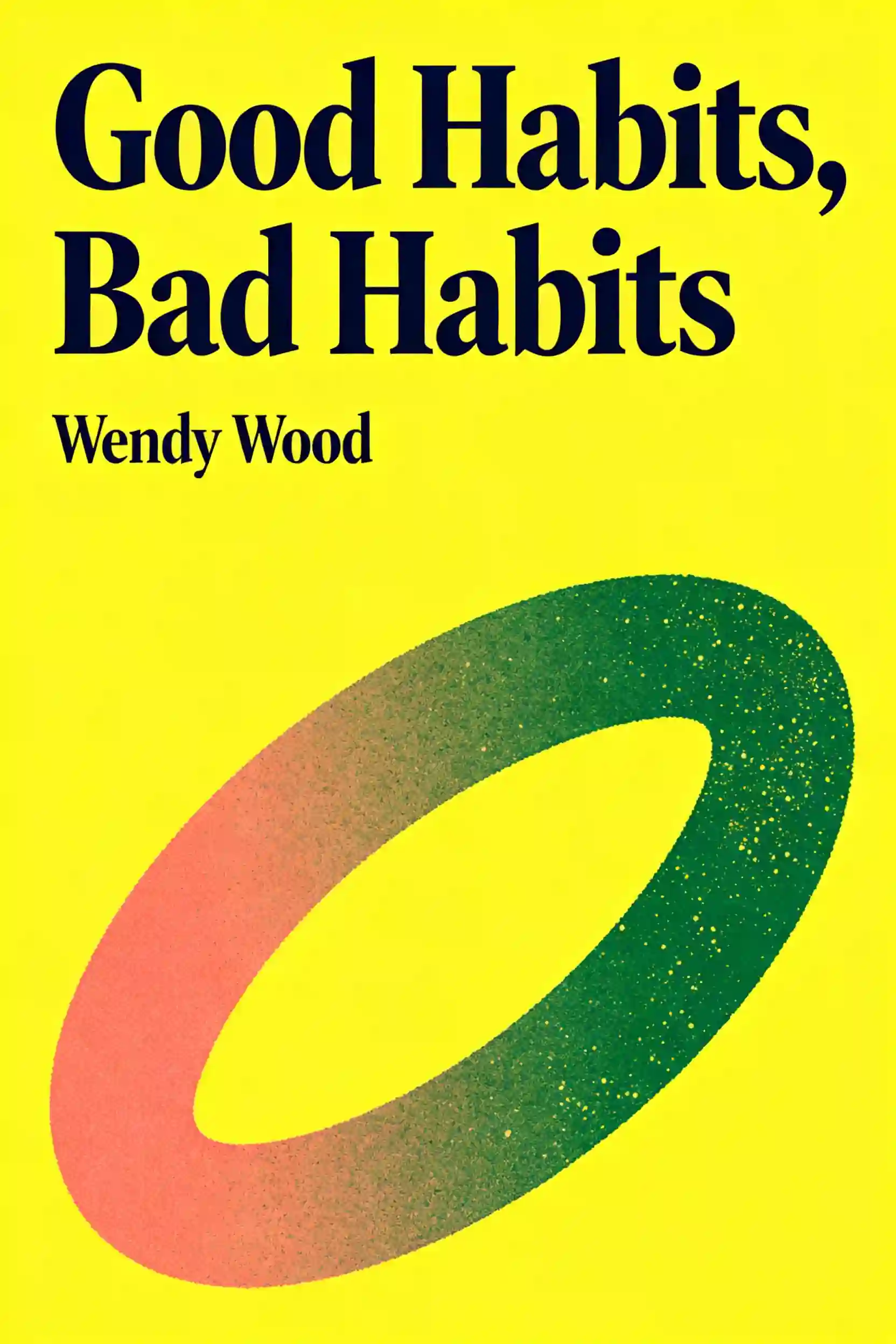




FAQ
You can develop a good habit by starting small, setting realistic SMART goals, and anchoring the new behavior to an existing daily routine. Using positive reinforcement and self-monitoring your progress also helps make the habit stick without relying solely on willpower.
The 3-3-3 rule is a popular productivity and habit-building framework that generally involves dedicating 3 hours to your most important project, completing 3 shorter tasks, and doing 3 maintenance activities. It helps structure your day to support consistent behavioral routines.
While models vary, behavior change often involves five key stages: precontemplation, contemplation, preparation, action, and maintenance. Successfully navigating these steps requires setting clear goals, problem-solving barriers, and consistently self-monitoring your daily actions.
From Columbia University alumni built in San Francisco
"Instead of endless scrolling, I just hit play on BeFreed. It saves me so much time."


"I never knew where to start with nonfiction—BeFreed’s book lists turned into podcasts gave me a clear path."


"Perfect balance between learning and entertainment. Finished ‘Thinking, Fast and Slow’ on my commute this week."
"Crazy how much I learned while walking the dog. BeFreed = small habits → big gains."
"Reading used to feel like a chore. Now it’s just part of my lifestyle."

"Feels effortless compared to reading. I’ve finished 6 books this month already."
"BeFreed turned my guilty doomscrolling into something that feels productive and inspiring."

"BeFreed turned my commute into learning time. 20-min podcasts are perfect for finishing books I never had time for."
"BeFreed replaced my podcast queue. Imagine Spotify for books — that’s it. 🙌"

"It is great for me to learn something from the book without reading it."
"The themed book list podcasts help me connect ideas across authors—like a guided audio journey."
"Makes me feel smarter every time before going to work"
From Columbia University alumni built in San Francisco
"Instead of endless scrolling, I just hit play on BeFreed. It saves me so much time."
"I never knew where to start with nonfiction—BeFreed’s book lists turned into podcasts gave me a clear path."
"Perfect balance between learning and entertainment. Finished ‘Thinking, Fast and Slow’ on my commute this week."
"Crazy how much I learned while walking the dog. BeFreed = small habits → big gains."
"Reading used to feel like a chore. Now it’s just part of my lifestyle."
"Feels effortless compared to reading. I’ve finished 6 books this month already."
"BeFreed turned my guilty doomscrolling into something that feels productive and inspiring."
"BeFreed turned my commute into learning time. 20-min podcasts are perfect for finishing books I never had time for."
"BeFreed replaced my podcast queue. Imagine Spotify for books — that’s it. 🙌"
"It is great for me to learn something from the book without reading it."
"The themed book list podcasts help me connect ideas across authors—like a guided audio journey."
"Makes me feel smarter every time before going to work"
"Instead of endless scrolling, I just hit play on BeFreed. It saves me so much time."
"I never knew where to start with nonfiction—BeFreed’s book lists turned into podcasts gave me a clear path."
"Perfect balance between learning and entertainment. Finished ‘Thinking, Fast and Slow’ on my commute this week."
"Crazy how much I learned while walking the dog. BeFreed = small habits → big gains."
"Reading used to feel like a chore. Now it’s just part of my lifestyle."
"Feels effortless compared to reading. I’ve finished 6 books this month already."
"BeFreed turned my guilty doomscrolling into something that feels productive and inspiring."
"BeFreed turned my commute into learning time. 20-min podcasts are perfect for finishing books I never had time for."
"BeFreed replaced my podcast queue. Imagine Spotify for books — that’s it. 🙌"
"It is great for me to learn something from the book without reading it."
"The themed book list podcasts help me connect ideas across authors—like a guided audio journey."
"Makes me feel smarter every time before going to work"
"Instead of endless scrolling, I just hit play on BeFreed. It saves me so much time."
"I never knew where to start with nonfiction—BeFreed’s book lists turned into podcasts gave me a clear path."
"Perfect balance between learning and entertainment. Finished ‘Thinking, Fast and Slow’ on my commute this week."
"Crazy how much I learned while walking the dog. BeFreed = small habits → big gains."
"Reading used to feel like a chore. Now it’s just part of my lifestyle."
"Feels effortless compared to reading. I’ve finished 6 books this month already."
"BeFreed turned my guilty doomscrolling into something that feels productive and inspiring."
"BeFreed turned my commute into learning time. 20-min podcasts are perfect for finishing books I never had time for."
"BeFreed replaced my podcast queue. Imagine Spotify for books — that’s it. 🙌"
"It is great for me to learn something from the book without reading it."
"The themed book list podcasts help me connect ideas across authors—like a guided audio journey."
"Makes me feel smarter every time before going to work"